Underrepresented

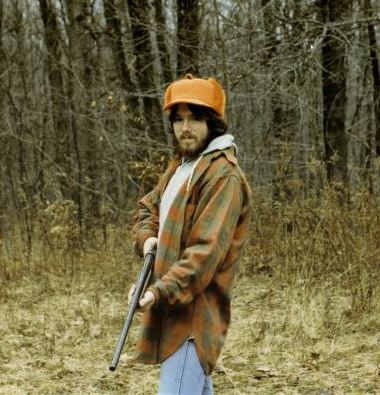
Underrepresented groups, I am told, are eagerly sought by academic institutions. The white male establishment has begun to develop a conscience, it seems. If I appear more credulous than an academic should be, it’s because I grew up poor. While I have no doubts that the entrenched power structures need to change, in an unguarded moment I wonder about the obvious overlooked financial demographic. What of the poor? I’m told by my friends with academic posts that universities are eager to find authentic poor folk—working class people who’ve worked they’re way up. To me, as one such person, this is another academic myth. Even a “white” man can struggle. If you’re born into an uneducated, blue-collar, paycheck-to-paycheck family, getting ahead is often sublimated survival. Those who’ve had me in class may not believe that I grew up with red-neck family values. Duck Dynasty? Well, in my case it was more a case of Deer Destruction, but I lived in a small, industrial, rust-belt town on the edge of the woods. From middle school on I worked to buy my own clothes for school which, I could always tell, were bargain rack compared to other kids who’s parents struggled less. In times of stress (and they are many) I find myself slipping back toward my blue-collar days and wondering just what is wrong with privileged America.

shtgn

I don’ t pretend to have grown up in abject poverty. My wife, from a middle class family, was, however, a victim of culture shock when she first visited the house I grew up in. (I still end sentences with prepositions from time to time.) And that was after the improvements. College was my choice and was paid for by my own work since parental contributions hovered somewhere around the zero line. Along the way I learned to act like others. I even became Episcopalian and most of my “peers” had no idea I didn’t really fit in. I say all this not for pity, but because of a deep conviction that the poor are the hidden demographic. We, as a society, need people to take away our garbage and plow the snow from our streets and dig our ditches. We don’t really want them educated since, well, they would be overqualified. Disgruntled. Our institutions may say they want to hire them, but they lie. The poor make the affluent uncomfortable even as they make them comfortable.

In my campus experience (which, all told, comes to over 25 years) I always found talking to the grounds or maintenance staff more comfortable than the academic staff. I understood where they were coming from. Even now as I wonder how I’m going to afford to get the car fixed, I recall conversations around the more practical matters of life with which I grew up: how to make sure poorly insulated pipes don’t freeze up in winter. Eating venison, or coming home to find carp that a neighbor caught swimming sluggishly in the bathtub were not unknown. While I didn’t go to bed hungry, the food available made me wonder what was in front of me in some fancy restaurants in San Diego. If academe is serious about understanding the poor, they’re going to have to start listening to them. And when they form a department of red-neck studies, they’ll hire someone from an established academic family with an Ivy League degree to lead it. I’ve always been more credulous than I should be.


Spirit Works

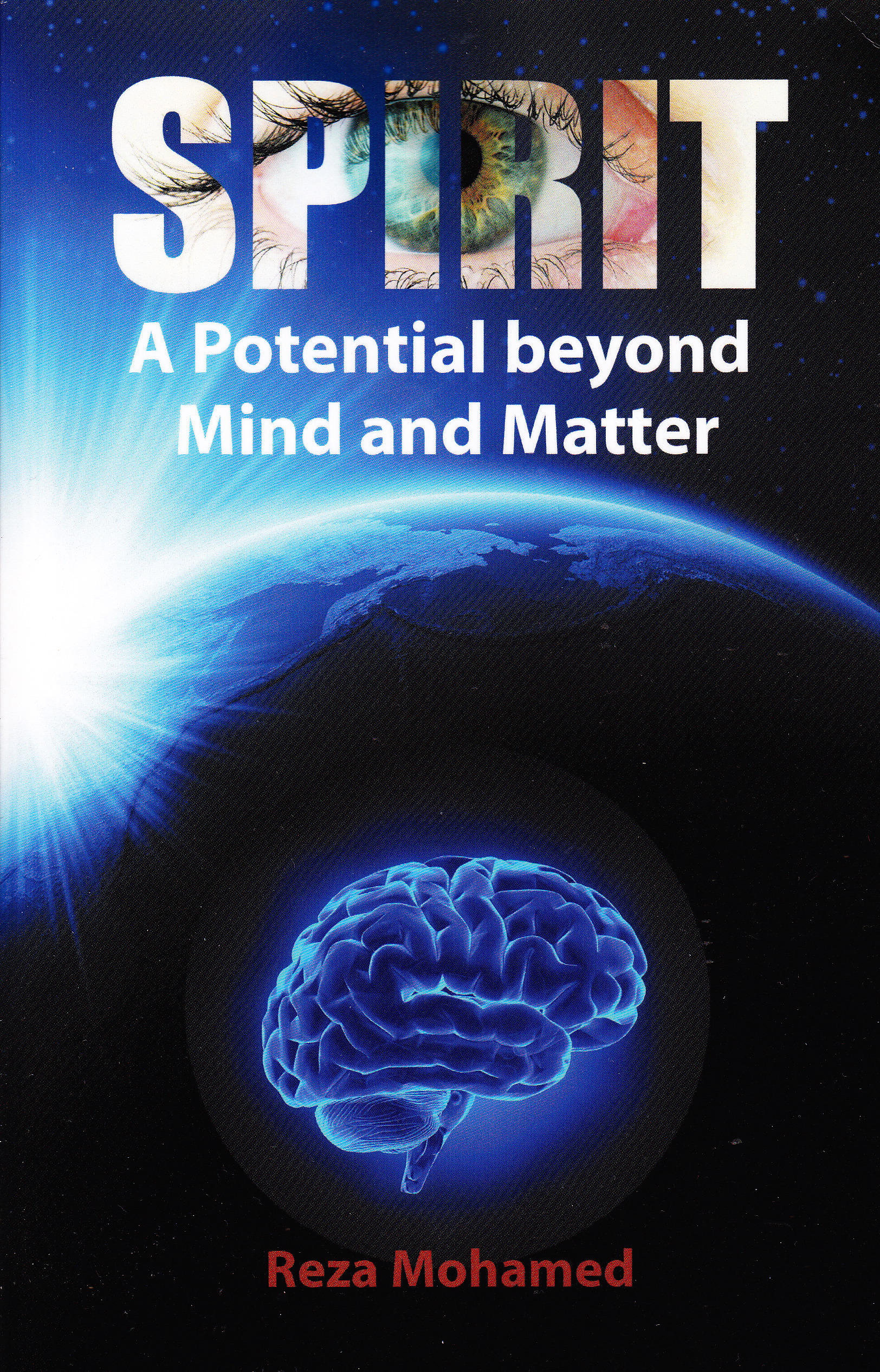
SpiritOne of the unexpected (for me) perks of the academic life was book reviews. Some journal editor would send you expensive academic books you get to keep, just for reading them and giving your opinion in writing! Most academics, truth be told—at least old school ones—would work for books. But don’t—wait. I was going to say “don’t tell the dean,” but it is clear that administration is way ahead of me on this one. In any case, I miss not having a viable academic opinion any more. Not having an institution means journals no longer care what I think about books. Also, working in publishing, there may be a conflict of interest involved. That’s why I was so happy to learn that blogging also leads to free books, on occasion. Most of them aren’t university press books, but you don’t have to be a professor to have something profound or useful to say. So it is that I came to read Spirit: A Potential beyond Mind and Matter, by Reza Mohamed.

There were several points that stopped to give me pause in this book, but about half-way through an idea caught me and has stayed with me since. It revolves around the idea of consciousness, something that Mohamed writes quite a bit about. A number of sources lately have suggested that consciousness is not unique to humans. Clearly, to my mind, animals are also conscious, and I think evidence points to consciousness, on some level, for plants as well. Perhaps even what we call inanimate, or inorganic material. Indeed, perhaps the universe itself is conscious. What occurred to me in reading Spirit, is that perhaps consciousness is the primal element. Maybe it has always existed. Could it be possible that we, like riders on a train, borrow a bit of consciousness while our bodies last, and then when we expire we simply climb off that train and consciousness continues on down the track, waiting for the next passenger?

It is nearly impossible to determine whence consciousness arises. Believing that it always existed is more plausible to me than the odd suggestion that it is just what happens when neurons get all mushy from being too close together. All creatures, as Mohamed notes, have will. Plants that follow the sun—slowly, and over years—seem to have a purpose as well. Who’s to say that it stops there? What have we lost if consciousness is endemic to the universe? Of course I don’t have any answers. Just possibilities. Ideas can spring unexpectedly from books, and as a sometime writer, I can say they even surprise an author from time to time. Then, of course, my opinion is merely that of an independent scholar. But I still find myself working for books.


Catholic Nones

In a recent issue of the Chronicle of Higher Education, an article pondered the future of Catholic universites in an age of nones—those who don’t affiliate with any religious tradition. As with so much in life, the evidence countermands expectations. Enrollment is stable and even non-Catholics are attending. Part of this, no doubt, is because a greater number of high school students are being channeled into college, but there seems to be more to it than that. Those interviewed suggest that it is often that students, nones included, favor an education with a moral grounding. Materialism doesn’t give one much to go on besides human convention. Even if students don’t accept Catholicism, there’s no doubt that the Catholic Church presents itself in a way that admits little doubt over what’s right or wrong. Even if you choose not to observe the strictures, there’s a comfort in know they’re there.

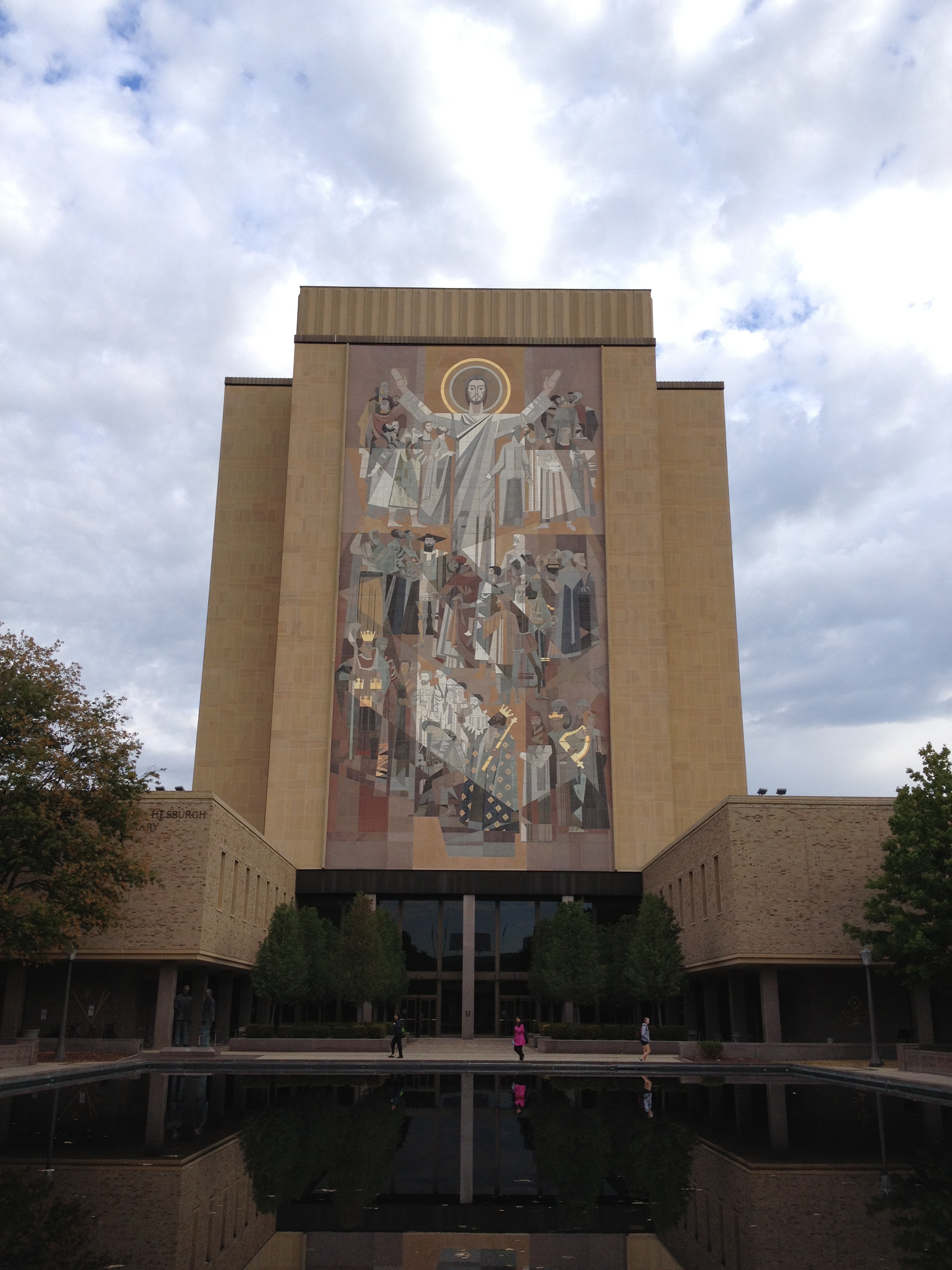
One of the schools foregrounded in the article is Marquette University in Milwaukee. While at Nashotah House I came to know some members of the Theology Department there, and I visited the campus numerous times. One of the interlocutors in the article is a physics professor who, admitting concerns at first, has found Marquette—a Jesuit university—remarkably open to science. The days of Galileo are over. Even Catholics know science is science. Indeed, the Vatican itself employs scientists and a Catholic priest was the first person to formally postulate the Big Bang. As someone who has applied to many Catholic universities over the years, and who has had a fair number of interviews, my sense is that the close-mindedness comes with theology, not science.

IMG_0990

Especially in the days of retrenchment under John Paul II, control over hiring for religion (“theology”) faculty at Catholic schools underwent renewed scrutiny. I was informed that I was not selected for positions because I was not Catholic. You could, however, be a none physicist and land a job. This discrepancy of knowledge has led me to fine tune the Chronicle’s question a bit. The Catholic Church is well funded. Its universities would only be in danger from radical drops in student numbers. This favors the hiring of mainstream professors in every discipline. Except religion. It is as if this small presence on a large campus, such as Notre Dame, could hold out against the humanist knowledge emanating from every other department. A candle, as it were, in the hurricane. And that candle, amid all the nones, must accept official doctrine. At least on paper. And all will be well.


Harboring Hopes

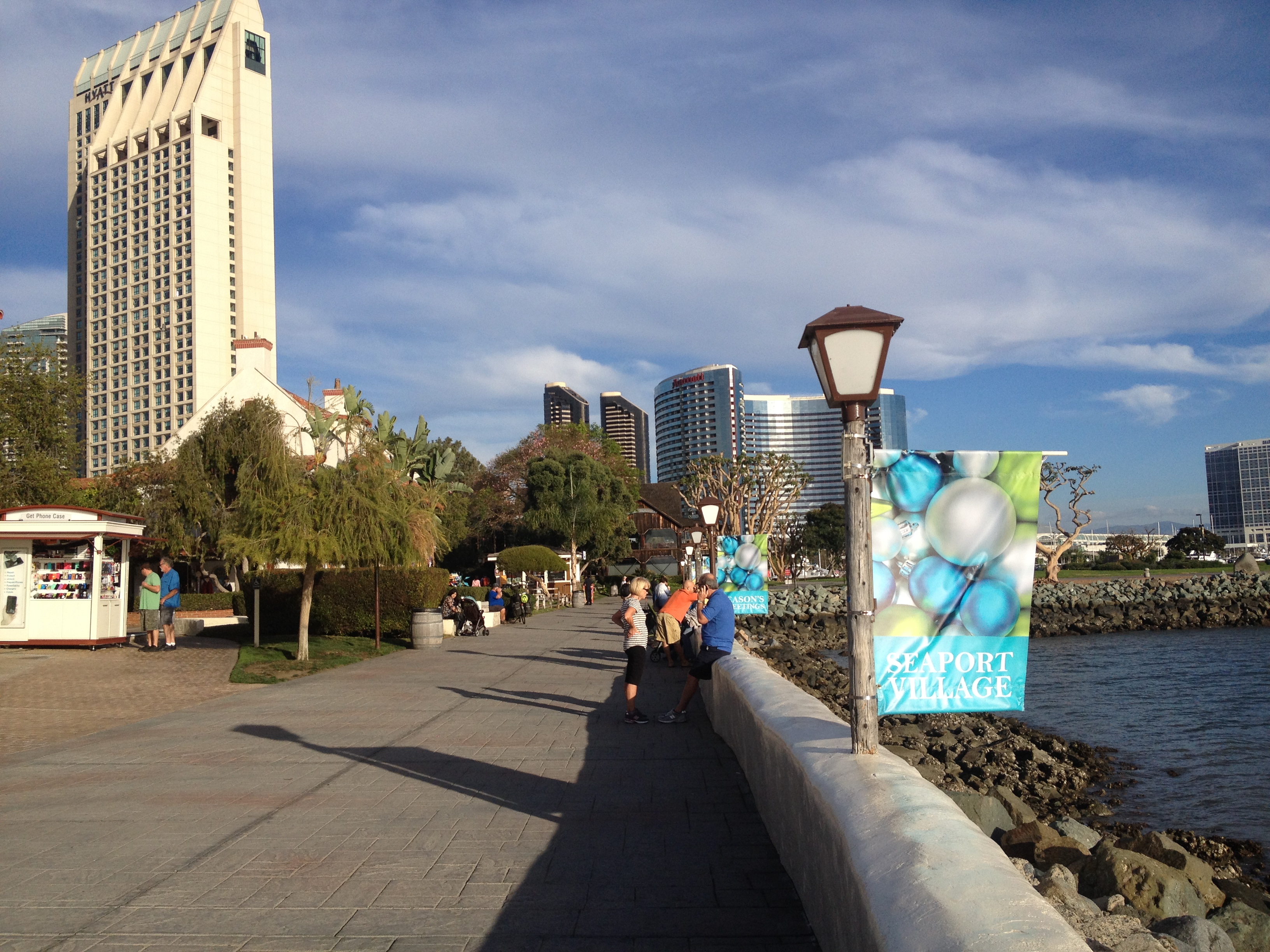
I am not what you’d call a fashion-conscious man. I literally still wear clothes I had in college. Most of them are petty much for around-the-house, given the condition they’re in, and although I wear jeans less, I have never really tried to “change my look.” I wear my hair (now grayer) the same way I did in high school, and most of my clothes, realistically, come from my teaching days. As I walked along the Seaport Village walk here in San Diego, a group of red-shirted workers, on break from unloading a truck, called out to me. Now, I know better than to talk with strangers, but working class types are my people. I am from a deeply blue collar background, and I feel that I have much more in common with them than with the priest who’s handing me a pink slip. Or the average professor. So I stopped. “Are you a professor?” one of them asked. In honesty I answered, “I used to be.” The fellow turned to his companions and said, “I knew he was a professor.” Turning back to me he said, “of what?” This is the part where crickets start to chirp and a tumbleweed blows by. “Religion,” I confessed.

This led to a spirited debate between two of the men. The one who called out told me that he’s now a Christian. He was raised Catholic but after having been out on an “effing ship like that” (the USS Midway) he found Jesus. One of his companions began arguing that religion was a terrible thing—causing people to insist that they are right and others are wrong. He argued that faith was fine, but as soon as you start calling it a religion, problems arose. I put my hand up to shade myself from the late afternoon sun. I was far from home, and I had no idea what these men wanted from me. Was I supposed to give them the answer to which was the true religion? Maybe they just wanted to be heard. I demurred and encouraged them to continue seeking. As I walked away, one of them said, “that’s a smart man.” The first said, “I told you he was a professor.”

What does a professor profess? While waiting for my plane in Newark, I heard two religion professors (actual, and ancient) discussing the fact that they’d retired. “But I want to keep on teaching,” one said. Without, I thought, considering that you’re keeping younger scholars from finding gainful employment. Yes, teaching is enjoyable—I know nothing like it—but there can be other outlets for sharing your wisdom. My wife has recently taken to MOOCs (Massive Open Online Courses). There are community events where you might not get paid, but your wisdom would be providing a service. And you’d be opening the door for others. Sounds like a religious thing to do, instead of being selfish or self-important. Or then, you could just walk along Seaport Village. Rather than turning away from the common worker, answer him or her when he or she calls out to you. It is the way of true teachers.

IMG_1809


The Past of Education

Meanwhile on earth, I have been checking up on my colleagues at General Seminary. While I’m limited in what I’m allowed to say, an article last week on Inside Higher Ed indicated that a provisional readmission of seven of eight of General’s faculty is now in place. There will be mediation. People are especially good at recognizing patterns. Some years ago, a naive and overly trusting individual, I also participated in mediation. The faculty at a certain seminary had been turned over to Conflict Management Incorporated to learn that you need to make the pie larger before slicing it up. Everyone can get enough to be satisfied. Of course, that doesn’t mean you’ll still have a job after the dessert course. Power structures being what they are, no one willingly lets go. And we’ll do just about anything to get the media off our backs.

Seminaries are probably more important to higher education than anyone would like to admit or acknowledge. The impetus to gather and educate individuals began as a religious enterprise. The earliest universities were often founded for that very purpose, and even the great intellectual powerhouses of Harvard, Yale, and Princeton were originally established to train clergy. Religion and education have been inextricably tied together since the Middle Ages and even before. Ironically, these days clergy are often cast as backward and superstitious. When’s the last time a seminary faculty landed a robot on a comet? If you ever venture to a church door, however, often the denizen of the pulpit is seminary bred. And there is power here. The collective collections can support such splendor as the Vatican. The faithful, we know, are willing to give. With a little pressure.

The Protestant traditions, despite their power structures, never officially developed a doctrine of ex cathedra truth. It is actually a difficult concept to pull off when there are over 40,000 different denominations of Christianity, and many other religions besides. But we can insist that our clergy attend special schooling. We can pay close attention to those we hire to teach them. Not everyone can read a dead language. Anyone, however, can quote scripture (or at least look it up on the internet). Seminary professors must have advanced degrees and faithful hearts. A combination that may be rarer than a comet. And we will put those individuals into a power structure that dates from the Middle Ages and wonder why it no longer works. Somewhere out past Jupiter a human device sits on a comet. Meanwhile in New York City we’re just not sure we can trust these people with our future priests. People are, however, especially good at recognizing patterns.

IMG_1275


Know It All

Perhaps it’s the fact that I had a career malfunction in the middle of my chosen vocation, or perhaps it’s a natural consequence of earning an advanced degree. Whatever the cause, I am convinced that I know less than I used to know. That’s not the same as not having learned—indeed, it is a consequence of precisely that. You see, my education has led me to believe that things I thought I knew were not, in fact what I knew them to be. We all live with false assumptions—the sun rises and sets, the earth holds still, and that we aren’t made up of particles so tiny as to be invisible and that are mostly empty space. There was a time when I believed that science gave “the truth,” but we now think of science as ever provisional—the best theory to account for the facts at this time. It is open to change. And in fact, we know very little.

A deep irony lurks in the fact that many people treat their religion as the locus of certain knowledge. This is a known fact; Jesus resurrected, Muhammad was a prophet, Maroni spoke to Joseph Smith. When confronted with contrary data, such thinking withdraws into itself claiming all the more loudly that it knows the truth already. Learning should, I think, may one more humble. More circumspect. Of course I think I’m right about things. If I thought I was wrong, I would change to the correct way of thinking. What I know, however, is a different matter. As I set out to learn a new career, I find I know less than I thought I did. I know little and I know less all the time.

As an academic I can’t help but to spend my life trying to gain knowledge. I read voraciously, I try to engage in intellectual exchange with others. If I’m lucky, I learn something. And know that much less. That which I learn teaches me that I know less than I did before. The world is vast. The universe infinite, according to our best understanding at the moment. We travel through it all, picking up information and treating it humbly as we go along. I’m moving toward knowing nothing at all. Perhaps that is the true goal of all of this—to get to the point of knowing nothing. Then we shall be truly educated. Except, of course, for the true believers who already know everything there is to know. Of course we are all mostly empty space. I think.

DSCN4907


Campus Crusade

The Chronicle of Higher Education also chronicles the trials and travails of religion in academia. A recent edition of CHE reported on how California State University withdrew official recognition of InterVarsity Christian Fellowship because its leadership is, by definition and constitution, Christian. The organization contested the decision, and, in this thorny situation, I think, rightly. The disestablishment clause cuts both ways. Government can’t establish a religion, but it can’t prevent one either. InterVarsity, although not exactly to my taste, has been a fixture on campuses for decades. It offers alternatives to pong and related forms of diversion without being pushy about faith. Indeed, it does not insist that participants be Christian, and, in my experience, doesn’t try to convert them. It offers a service that is useful for undergrads and has every right to be on campus, as much as the young republicans do. Can an organization be banned for having Christian leadership? How much can we disestablish before we become oppressors?

I recently had a conversation with a college humanist chaplain. There aren’t many of these, but they are beginning to appear on campuses, offering the services traditionally given by religious organizations. Many people don’t know what to make of this. Not all rationalists, humanists, agnostics, and atheists are enemies of spirituality. We can be both spiritual and human. Some would argue that we have no choice in the matter but to be. Some express it as Christianity. Others as a non-doctrinal recognition that being human means wanting to affirm unions and weep at funerals. Maybe it is more than just chemico-electrical signals across gray matter after all. Colleges and universities should be places to explore. Like it or not, without the influence of the church, and before that the synagogue, the concept of higher education likely would never have developed at all.

How much of the baby do we throw out with the bathwater? Evangelicals cost me my first real job. I had, however, grown up among them. Although not in InterVarsity, I did participate in Christian groups in college. I don’t think it damaged my education. How can a person learn to compare when one of the options is displaced? Will Newman House be permitted to stay? Even government officials can’t agree on exactly what it means to have a religion-free government in a religious, if post-Christian, nation. Why antagonize an organization that is only trying to offer a service? Every time I pull up to a gas pump chances are pretty good that I disagree at a pretty visceral level with the ideology behind the company supplying me my fuel. And yet, here I am, running on empty. Ideologies and services, it seems to me, are very different things. Those that don’t cause harm should be the least of our concerns.

IMG_0066


Small Town Heroes

When World War Three starts I hope someone will let me know. You see, I barely have time to satisfy the needs of employers and tax collectors to get everything done in a day, let alone read newspapers. Or Facebook. I check my page, very briefly, twice a day and get on with the business that I’m assigned in life. But yesterday I had a notice from a high school friend that one of my teachers had died. Since I don’t name people I know here without their permission, suffice it to say I took a current events course with this teacher in either my junior or senior year. Then, as now, I didn’t read newspapers. Given the small town rags available in rustic regions, there was often not much mentioned beyond deer season and local tragedy anyway. Originally enrolled in the regular curriculum, several friends told me, “You’ve got to take Current Events! The teacher is great!” Those who’ve influenced my life for the good were great teachers, and despite my reservations, I took the class. When it came time to sign up for projects, I was a bit flummoxed. What did I know of current events?

Our teacher kindly allowed me to offer evolution as a topic. It was occasionally in the news then. Six of us decided to debate the issue, three for, three against. My religion having held me in a headlock, I was the lead debater against evolution. The day for the debate came and we ran over the bell. Our teacher, with his usual calm wisdom, suggested we continue the next day. And the next. Three days of sometimes acrimonious debate and it looked, from my point of view, as if creationism had demolished evolution. How terribly naive I was. Ironically, I had just posted a piece on evolution yesterday when I saw the notice about my teacher’s demise. The position in my post was a sharp 180 from high school. It was a tribute to the love of education.

Source: Wellcome Images, Wikimedia Commons

Source: Wellcome Images, Wikimedia Commons

I was an outsider in high school. I literally lived outside of town and after school activities were not really feasible. We were poor and couldn’t afford extra-curriculars anyway. I wore a large cross on my chest and although I was shy, I felt that it said all I had to say. My teachers, to their eternal credit, let me explore. In college I learned about Fundamentalism. I had never heard the term although I grew up in it. Gently my teachers nudged me to think more deeply about things. Through three degrees delving more profoundly into the origins of religion, as well as humankind, I came to see the errors of my ways. Had I been forced in high school I would’ve fought back. Instead, a persistent, patient wisdom guided many of my teachers. I don’t know how they recognized that I might be worth salvaging, but they apparently did. They let me speak, they let me trip. Just as I was about to fall they caught me. And I hope, in my own small way, to repay this favor in kind.


Academic Freedom

Azusa Pacific University, 2013. Emmanuel Christian Seminary, 2012. Interdenominational Theological Center, 2012. University of Illinois, 2010. Carroll College, 2005. Nashotah House Episcopal Seminary, 2005. Unfortunately the list could go on and on. Academic institutions in the land of the free and the home of the brave dismissing faculty for saying or writing something that offended their doctrines. This is the land of my birth, and yet I’m still rocked by its permissiveness. That’s not permissiveness in that sense. I was latterly working on a paper called “the myth of academic freedom.” I know too many people for whom that myth has become a reality and all the while the governments, state and national, try to decide on more important issues such as whether or not to give children equal opportunity, our institutions crumble for petty points of pretentious pugilistic piety. Not only books may be banned, but those who potentially write them as well.

“You say you’re afraid for America,” Ellen Hopkins’s “Manifesto” suggests. Academics, of all people, should be afraid. Our society asks us to borrow thousands and thousands of dollars to become experts in some obscure topic only to release us from any possibility of finding employment that allows us to pay off said debt. “I don’t need no arms around me,” but I sure could use a podium in front of me. I am afraid for America. I am afraid for a nation that doesn’t defend its thinkers, instead following the wealthy to the peak of an unscalable Everest.

Academic freedom was once the guarantee that no question was disallowed, no thought anathema. We live in a time of pronounced conservative pushback, where those who feel threatened by knowledge persecute those who dare to think. Ironically in this situation many academics have become complacent. Having a place of your own, and the compunction not to make waves in this bathtub will allow your toy boat to float for many a year. Long enough to reach safe harbor. Beneath the surface shipwrecks lurk and books will never be written. Banned books are easiest to engineer at the aborted career stage. Even a pro-lifer knows that.

They don't write 'em like that anymore...

They don’t write ’em like that anymore…


Horsemanship

Hi ho Silver, away! I’ve been pondering academic freedom. (It was suggested to me that I might discourse on such.) My academic career, three years cold in the grave, seems a long way away. In religious studies it is kosher to fire someone for academic freedom issues. Doctrine permits no challenges, for it has already been decided. This doesn’t only apply to conservative religions, but to academic institutions of all stripes. Nobody likes to be challenged. Somehow, since 9/11 any academic dispute in religion is a potential threat. I have known many academics to have lost their jobs. I also know how it feels to see colleagues go from grace to grace because they have an institution that will vouch for them. I don my black mask and saddle up Silver. Those of us raised in working class families watched that show, you know, religiously. And Gunsmoke, among other campy westerns. Caricatures of good guys versus bad guys. You know the story.

In a moment of self-delusion, I thought I might be asked to deliver a paper at this year’s Society of Biblical Literature annual meeting. I plodded along in my cumbersome way, reading a few books on academic freedom and interviewing a couple of its sacrificial victims. Turns out I was, well, self-deluded. It is probably for the best since I don’t wish to put myself forward as an expert on anything. Still, it felt like arriving at the front desk on that great and terrible day to find out your name’s not in the book after all, and so, where do you go now? Academics are running along as healthily as they always have. I was not raised knowing the difference between a salad fork and a meat fork. Some colleagues insist that universities crave the voice of hoi polloi; the authentic blue collar academic who worked his or her way up from a disadvantaged start through a doctoral program. I know it’s all just fancy talk. Academics are just as xenophobic as the rest of us.

Losing an academic position is easy. It’s like falling off a horse. I speak from experience here, having fallen off a big horse during a canter while helping underprivileged kids at horse camp one summer. It didn’t seem much like the wild west at the time. Seeing the world in a side view of the horse as you’re sliding off has a way of changing your perspective. You know the ground is coming fast. You just hope that your feet have slipped the stirrups. When it was all over the horse whisperer (or whatever they were called back then) publicly berated me for letting the reins fall from my hand. I should’ve slipped them over the saddle horn on my way down. Didn’t I know that the horse might’ve stepped on them? Rubbing my sore backside, I didn’t feel like such a masked lawman anymore. Silver had gotten away. At the dining hall I could feel the uncomfortable stares. Which one is the salad fork again? I never could keep my silver straight.

By Pleasure Island Uploaded by We hope at en.wikipedia [Public domain], via Wikimedia Commons

By Pleasure Island Uploaded by We hope at en.wikipedia [Public domain], via Wikimedia Commons


Sentence

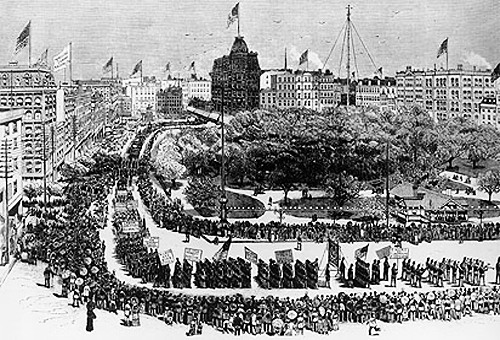
Labor Day marks the end of summer. Originally a day to commemorate all that the common laborer has contributed to society, it is now always a slightly melancholy day with the equinox fast approaching and the mighty rays of the sun growing enfeebled. Although the vast majority of us don’t have summers off any more, our employers sometimes devise summer hours to make the monotony of a commuting life a little less onerous. My academic colleagues have all switched their minds back to full engagement as students, lamenting the shortness of summer, stumble resentfully into classrooms to find out what they don’t know. To learn how to be laborers, increasingly. Once upon a time, children, higher education opened doors for you. You would climb that ladder. As an adjunct teaching night classes, I would often pass the janitor cleaning up and I would know s/he was making better money than I was. Labor Day must be upon us again.

Labor_Day_New_York_1882

Unashamedly a populist, I still think of myself as a laborer. In fact, the longer I work in Manhattan the more like my blue-collar upbringing I become. Yes, I have stood in the presence of Lords of the realm, knights in academic armor, and even a Coptic pope. I can mind my p’s and q’s. If you keep your mouth shut, you’ll appear wise even before those who are truly smart. That’s not my wisdom—I paraphrased it from the Bible. I read the Bible daily when my jobs were labor jobs. My first opportunities were heavy work—moving, pulling, brushing, and occasionally smashing. The sun was so hot that I would find a vending machine and down three Mello Yellos in a row. Summer had no time for beaches, but it offered warmer working conditions and a sense of identity.

Labor Day brings us back to work. Summer’s bright grasp has begun to slip, and already the trees have started to yawn. Like the migrating birds I feel the draw to return. Even an animal knows the place s/he belongs. Perhaps we’ve wandered a little too far from the path that should’ve been evident before us. We paid the costs and went to college and found ourselves back where we started. Labor Day is one of those holidays with no religious connections. It is purely secular. Moved from May because of the Haymarket Massacre, we put it at not the beginning of sunnier times, but at the end. I would jealously watch the sun set, but there clouds forecasted to be in the way. Besides, I have to turn in early because tomorrow is just another work day. We only have to hold out to Memorial Day, so let’s enjoy our last taste of summer and wait for its eventual return.


Future of an Illusion

AtlanticHEIf anyone’s premature death has been announced more than Mark Twain’s, it is that of higher education. September’s The Atlantic arrived in my mailbox proclaiming itself the “Education Issue” leading with an article “Is College Doomed?” While I appreciate the headiness of Atlantic articles, they run long and my time runs in the opposite direction. I have to read selectively. Things like paying bills and work vie for my time as well. I flipped it open to the article actually entitled “The Future of College?” by Graeme Wood. Four words in, and I froze. The fourth word is “entrepreneur.” Don’t get me wrong; I’m open-minded. Having seen higher education showing its teeth and claws, I know it isn’t the nice pet that the dean will tell you that it is. Nevertheless, from my viewpoint, the main problem higher education is experiencing right now is entrepreneurial in character. Perhaps it’s old school to say, “if it ain’t broke, don’t fix it,” but it is perhaps the most apt phrase to apply to colleges and universities prior to the twenty-first century. And, in my humble opinion, today, while some vestiges can be salvaged.

Oh, I know I’m a dinosaur. I literally finished my formal higher education last century. Still, the experience worked well enough. I can’t express, even with daily posts on this little blog, how much I learned sitting through bachelors, masters, and doctoral programs. None of the institutions I attended was perfect (although Edinburgh came pretty close), but they were largely faculty led, and they all recognized that their primary function was to educate, not to prep for entrepreneurial enterprises. There were business schools for that. You couldn’t learn dead languages in business schools. Or even great ideas beyond those with an economic twist. What hath Nietzsche to do with supply-chain optimization? Oh yes, the death of God. My mistake.

In my younger years, I had no preconceived notion about higher education. My high school teachers and the clergy in my life encouraged me to go to college, despite the fact that nobody in my family ever had. Even though it was only Grove City College, as soon as I got over the homesickness, I realized I was home. Higher education—my assumptions were challenged. I had to learn to weigh the evidence. By the time I was finished, I had learned to create content as well. And then I started to hear that higher education had one purpose only—to prepare the young for the job market. A place that is too often unthinking and uninspiring. We aren’t educating, we are teaching conformity. And those who don’t have jobs don’t have healthcare coverage. Survival of the fittest. Entrepreneurs by definition. A quarter of a century ago I didn’t even know that higher education was sick, let alone dying. When the future begins with entrepreneurs, however, I’m going to side with Mark Twain, even if he is really dead.


Whether the Psalms

How about that weather? Changeable, isn’t it? I have spent a large part of the last few days going over the proofs for Weathering the Psalms, the book I wrote over a decade ago. While I’m excited with having the validation that comes with publication, I worry a bit about the changes that the last decade has brought. Although I live near some impressive libraries, my time is devoted to commuting and working and anyone who has tried to be a serious scholar as a weekend warrior only knows that it is unsustainable. One element that good research absolutely and uncompromisingly demands is time. When I began commuting into New York City three years ago, I taught myself to read on the bus. As someone who easily gets car-sick, this took an enormous effort, but it paid off in the number of books I’ve been able to finish. There are limits, however. Seriously research-oriented academic books do not fare well on a noisy commute or at early hours. As much as we scholars like to think our books are riveting, try reading them at 6 a.m. Perspective makes all the difference. In short, I had to leave the main body of the text of my book as it was a dozen years ago.

There is a lot of good information there. You notice things by laying out all the Psalms that refer to weather side by side. I can’t tell you those things here, since that’s the point of the book, but suffice it to say, I still agree that the material should be published. One of the main reasons is the change in worldview over the last several millennia. Although we like to complain about the weather, for most of us it is merely the inconvenience of being outdoors that brings it to focus. We spend our days behind computer screens, living a virtual reality. But when we have to trespass outdoors—weather awaits us. For those in the world of the Bible the opposite was true. Indoors was shelter, but not insulated like today’s homes. Most of the day would be spent outdoors, weather permitting. They knew a lot more about the practical aspects than we tend to. We, on the other hand, know the science but have tended to forget the experience.

IMG_1520

My book surveys a cross-section of the biblical worldview (the Psalms) for what it tells us about the weather in ancient thought. I suspect others have begun to explore this since I wrote my humble contribution to the discussion. Today I would have done it very differently, but Weathering the Psalms was written by a scholar isolated in a seminary, literally and figuratively in the woods. The fact that other scholars had noticed the weather now and again showed me that the task, though halting, was necessary. Rereading it is like a time-capsule. These were the thoughts of a younger man, employed full-time in a kind of academic setting. Hopeful that the next job would be worthy of tenure. Believing that there was a next job. But the weather is changeable. Indeed, we know it is unpredictable. Despite its archaic cast, I look forward to Weathering the Psalms and hope that it inspires others who are isolated to keep up the effort. Even if it’s raining.


Nazis with Bibles

Some years back, when the Internet was young, I had just learned about email. Even today it seems incredible that only twenty years ago we still sent physical letters to communicate, and that we used paper maps and telephone books to get information. The main problem with email then was that not everyone was on it. I signed up for an Ancient Near East/Biblical studies discussion group. My barren inbox (being a scholar at a non-prestige school) was suddenly full every day. New discoveries, research ideas, online debates. It was all very exciting. Then someone voiced the fraught question: should we ignore the research of scholars who were later revealed to have been Nazis? The rancor raised forced the moderator of the discussion group eventually to make this a forbidden topic. Because I could not keep up with the inundation of emails and because of the vitriol (do people use the world vitriol anymore?) on the Internet universe, I eventually unsubscribed. Nothing raises hackles like Nazis. Especially in the field of biblical studies, which, naturally enough, revolves around issues of Jewish interest. I saw a blog post recently which brought this whole episode back to mind.

Photo from German Federal Archives, Wikimedia Commons

Photo from German Federal Archives, Wikimedia Commons

The issue of political conviction and professional neutrality is a vexed one. Critical study of the Bible began, to a large extent, in German universities. Biblical studies in higher education was mainly a Christian enterprise, and many of the questions were, well, only academic. If someone was a Nazi, did he (and they were pretty much all he’s) have a hidden agenda? Today the question of agenda is often raised with conservative biblical scholars. Can someone who believes in the Virgin Birth and in Moses parting the Red Sea really interact critically with the biblical text? Just throw that question out there and watch the fun. (It helps if it is tossed out on a blog that actually has readers, rather than my insignificant efforts here.) Who can make the claims for true objectivity? Can a Nazi correctly parse that verb? Do one’s political views gainsay one’s credibility?

We are all children of our environment. Even the most empirical of scientists will admit that true objectivity is not what it seems. We are not, after all, gods. And even the gods seem to have distinct tastes. Evil done in the name of politics seems slightly less heinous than evil done in the name of religion, but people are people and we have convictions sprouting out all over the place. Nobody intentionally believes falsehoods. Motivations are notoriously difficult to untangle. Can’t we all be professional about this? Emotions, however, do play favorites. If there’s any doubt, consider the question of using a person as an experimental subject with no regard for what they feel. We know it’s wrong. We won’t allow it. Of course, that’s in an ideal world. Right now there are more pressing matters at hand, such as how to hire more adjuncts without destroying our credibility. It’s not a matter of wanting to hurt others, it’s just good business. Everything else is merely academic.


On Vocation

“There ain’t no use in complaining,” Bryan Adams once wrote, “when you got a job to do.” If I may be pardoned from removing rock and roll from its love song context. As a guy who’s suffered unemployment several times, I have to agree that having a job is good. Of course, such goodness has its natural limitations. Switching jobs too often means starting out over and over again. In today’s world, that means that at half-a-century-old you might well find yourself having to earn vacation days from nothing all over again. So when family vacation plans were made this year, one of us—the one with a new job—could not be included. My family is out near the west coast while I remain here on the east. Once upon a time we were somewhere in the middle. I’m glad they have the opportunity. This post isn’t about sour grapes, or vacation; rather, it’s about vocation.

I often think about how life has become only earning for the sake of earning. People say you should get a job you like, which is fine if such jobs exist. The jobs I like are now considered beneath me. Not by me, but by those doing the hiring. Where has the sense of vocation gone? Back in the Middle Ages (and I’m not one to suggest that things were necessarily better then) the learned had opportunities. Those who had a skill could be inducted into a guild that would help to ensure job security. We’ve moved to a free agent model where someone can be removed from their natural vocation with nary a thought what they might do next. Detritus of a throw-away culture. For those with highly specialized skills—Ugaritic, anyone?—such severance is like setting one on an ice floe, only crueler. Ironically, the guild offers no help.

Reading about the Transcendentalists reminds me of how restorative the woods are. Emerson and Thoreau, heading off to the forest to commune with the divine. Since this road is blocked for me, I take the one better traveled, into Manhattan where, I’m sure, there is life. Elevators, ubiquitous pavement, quotas and tallies. Prove your worth. Among the students I knew I was accomplishing something. Since then it’s all just numbers. In the woods I don’t count the trees. I don’t demand to know what they’re producing for the good of the company. I don’t question their motives. Outside my window, if I had a window, I would see only stone, concrete, and steel. And inside all I feel are numbers. Can a soul be quantified? I think I would have to side with the Transcendentalists on this one. But that’s not what I’m paid to do.