Lower Education

Is there anything that can’t be sold? I think in the context of the free market, with its oxymoronic name, the answer must be a resounding “No!” A concept may be sold as a piece of writing or a patent or a trademark. Souls may be sold to the devil, at least according to the entrepreneurship of demons, if centuries of folklore are to be believed. A person who has betrayed his or her ideals is a sell-out. We can sell anything. Two related stories in the Chronicle of Higher Education confirm, in very different ways, this truth above all truths. The first piece, “More Notes on the Rise of Thrun Credits,” by Kevin Carey, notes how universities are in the business of selling academic credentials. Those of us who’ve gone through the educational grind-mill that leads one to poverty with the dubious benefit of a Ph.D. diploma to hang on the wall of our cardboard hovels, found this out the hard way. What matters is not what you learned or how well you learned it: where did you go to school? That is the most important commodity that a university sells—its name. It is sad that academia has gone after Wall Street, but there’s no changing the direction of this charging bull.

The second article, which I only spied because of a link on the first, was a tribute to Irving Louis Horowitz, world-renowned social scientist and founder of Transaction Press. In my days of desperation at Gorgias Press, looking for a new position that would make use of my editing and higher education (sales) background, I had contacted Transaction and ended up having three lengthy interviews with Dr. Horowitz. He was well known for his quirks, but he always had a kind word for me, and even read my book to find out more about me. Such determination and depth of investment are rare these days. In the end, I never did find a place at Transaction, although it was literally a ten-minute walk from where I taught my Rutgers classes on Livingston Campus. Publishers, it stands to reason, are also in the business of selling on the basis of reputation. Once Dr. Horowitz said as much during one of my interviews. “Without reputation, what does a publisher have to offer?” he asked.

Both of these ventures in which I have participated began as sources of disseminating knowledge. I was naïve enough to suppose that such ideals could survive the onslaught of that hissing serpent called finance, yet it is sad to be in a world where nothing falls outside its coils. Long before the birth of capitalism universities managed solvency and provided the intellectual inquiry that eventually led to its own demise. Publishers always sold their wares, but many pieces were published for the sake of their content, not their earning potential. That world no longer exists. In order to be paid you must have something to sell. All other transactions are null and void. We send our children to college to find jobs, not to learn. Maybe it’s just as well. Schools are busy with marketing and branding, so let our young ones learn the only system that works. For those interested, I have some swamp-land in Florida to sell…


Brother, Can You Spare a Term?

Last Friday the Chronicle of Higher Education had a blog post asking how NTT (Non-Tenure Track) faculty pay the rent. In the light of recent news stories about the nascent gathering of data on the forgotten generation of scholars, universities are finally starting to scratch their heads and wonder, like Frankenstein, what they’ve created. Well, the article asked a question and invited responses. I couldn’t help myself—six scary years of my life were spent in that dark chasm of no security—and since I offered a few sentences about my experience, email reminders popped up for the next several hours when other comments were added. It made for a depressing day. All day long stories appeared of women and men with PhDs who live on food stamps, fall behind in their rent, and even cancel the classes the unsuspecting parents pay so much for because they can’t afford gas for their cars. Meanwhile, let’s build a new stadium.

Education is the most important invention of all time. Without it we’d still be warming our toes around the fire in our cave, wearing smelly animal skins. The natural enemy of education is sometimes the institution. Institutions, especially those that continually turn an envious eye towards corporations (often among the least enlightened of human ventures) as a model for emulation, are steering a sinking ark. Both church and university have become poster children for the corruption that creeps so insidiously into organized structures that have lost the way of pure intentions. The call of the wealth is far more savage than the call of the wild. The wolf pack does not devour its own.

Well-paid industrial analysts, I’m sure, are being offered handsome sums to figure out how to make universities more efficient. University presidents and sports coaches drawing down six-or-seven figure salaries shrug their flummoxed shoulders—what could possibly be the problem? Perhaps we need even more upper-level administration to sit and think this out. Meanwhile parents stressed to their financial wit’s end are slowly beginning to learn that the ones teaching their daughters and sons are the adjuncts who now make up well over half the teaching force in higher education. I would not presume to guess which direction higher education is going. It does seem entirely probable, however, that when the wolves are done with this meal, a scattering of bare bones will be all that’s left. After all, in the wild a lone wolf is a dead wolf.

The corporate emblem.


Professor Little

There I was, some 3000 miles from home, in the office of a professor I’d never met before. On her desk a Gorgias Press catalogue. In that catalogue a miniscule picture with my diminutive face. Such are the little ironies of life. My ric rac career began when others started making suggestions about how being a janitor might not be living up to my full potential. Sometimes, often, I wonder if they were correct. Cleaning up after other people’s messes in the halls of our educational system seems like an incredibly honest career to me. Instead I have steered a course between the halls of academia and the halls of commerce. It is easy to suppose that I’m not really in control since even if I choose the general direction, I haven’t selected the specific circumstances. Recently I attended a conference where Gorgias Press had a booth. I looked over the tables, spying names of authors whom I had given their first start in publishing. With books struggling for elbow room in my own head, it is a bittersweet experience.

Watching the glacial ballet of higher education unfold, it often occurs to me that universities are not smart. Many brilliant minds work in them, and much light shines from them, but on an institutional level decisions are often made that jeopardize the entire enterprise. Over-emphasis on sports, over-utilization of adjuncts, over-payment of administrators—these are not signs of soaring intelligence. They are signs of institutions in a muddle as to their true identity. Are they businesses or centers of creativity and education? The basic business model is not “one size fits all,” and universities managed to maintain an enviable idealism until they began to emulate the corporate world. The tattered results lie all around us.

All through my educational journey, there was no guiding light. In my experience, higher education was a wondrous journey that suddenly terminated when I didn’t measure up to someone else’s standard of Christianity. By that point, I was ill-prepared for the savage politics of higher education. The transition from author to editor may sound simple enough, but things are seldom what they seem. Education may not make one smart, but it sure puts ideas in one’s head. Sometimes I reflect on those books that will never be written. I’ve never been any publisher’s darling, but here I am staring at a little picture of a little man. I’m sure there must be a lesson here somewhere, but I’m not smart enough to figure out what it might be.


Academic Omelets

As an erstwhile accidental adjunct, I came to see a side of the academy increasingly rare these days: the professional who must earn his or her keep. That life is less than half-a-year away and I still look to see what is happening as higher education crumbles under its own excessively disproportionately top-heavy infrastructure. An article in a recent Chronicle of Higher Education outlined how an adjunct, on his own initiative, began a survey of working conditions for those in similar academic situations. The results went viral and universities felt the need (only occasionally) to justify their actions. Expediency at the cost of a few eggheads nobody worries about, but when the news starts to leak like so many yolks, it is about time to at least act concerned. The phrase that stuck in my shell as I read the piece was this: “many adjuncts nevertheless feel they embody a lower class in academe.”

I felt like a bulls-eye had just been struck, and that bulls-eye had been painted on my forehead. Higher education has always been subject to claims of elitism and exclusivity. I entered the industry because at every stage along the way my instructors encouraged me to continue since I thrived in that atmosphere. I had entered higher education, however, from a humble, working class family. No dreams of power drove me—it was the sheer joy of learning. When I tried to situate myself among those who had had a leg-up in life, it was an uneasy fit. It’s like that uncomfortable feeling when a homeless person sits next to you on the subway. You know you could help, but you know there is an invisible wall that separates your world from his or hers. And hopefully, somewhere deep inside, you also realize that that homeless person could have been you.

The adjuncts are the working class among higher education. At some schools the full-time faculty teach very little and get to earn their lights as the brilliant minds who write books. I’ve written a couple myself. The difference is, they are bona fide. Privileged. Education used to be considered a great leveler. As in most myths, the truths in that sentiment are heavily metaphorical. Education could level the playing field if people weren’t prone to accept privilege when it is offered to them. What adjunct would not just as soon become the full professor with a light load and the fame of being featured on television and interviewed in Time? I don’t mean to single out universities—people in all situations tend to behave that way. No, I don’t single out universities. It was just that I hoped they might have been above this kind of thing.

This is your life, on adjuncts.


Nevermore

Once in a while an uncanny clarity penetrates this fog of an asphyxiating miasma that passes for a life in higher education. It was a rainy, gray day in February when I stood outside 13 West Range at the University of Virginia, looking into Edgar Allan Poe’s restored room. Poe, who is right up there with Melville and Moses among the greatest writers of all time, lived a life that was short, sad, and silenced. Or so it seemed. Dead by 40, with a career that never really got a foothold, Poe would seem to be the ideal model of a failure. His currency, however, has preserved the voice of unrest that pulses like the very life-blood through American culture. Even as a teenager, I identified with Poe. Knowing that I could never attain his level of polish and perfection, even listening to the cadences of “The Raven” can still reduce me to tears. So, standing outside his room in the gloomy rain was a private epiphany.

13 West Range

Undefined was the sense of loose ends and hopelessly tangled threads of a life I tried to weave without the blessing of Athena. I ended up at a small seminary where my influence was limited to the few students with open minds. It was truly a gothic experience, living at Nashotah House with its medieval mindset and matching physical setting. Daily watching my learning being shredded by the staunch dictates of undying dogma, I never forgot Poe. When my own career was jettisoned by a bloated theology that had no room for questions, I spent many months in a depression so deep that life had almost lost that spark of hope that makes it worth continuing. Again and again the waves crashed over me—this was the doing of the church. Those who putatively followed the teaching of a man who said, “Do unto others—” Fill in the blank.

Poe was forced out of school by an unloving foster parent who valued money more than his adoptive son. Traveling up and down the east coast looking for a place to fit his writings into a slot for a little money, he died from causes that will never be identified. Today we know he was a meteor—a brief, brilliant light in a darkened sky. He is the patron saint of all those whose voices have been silenced by an unfeeling establishment. Even in my wildest dreams, I never hope to approach the depth and grandeur of his pen, but I can stand here in the rain and commune with him. The emblem of the Raven Society stands perched in that room, and its single word is the dying word of hope in the face of an uncaring world. And that one word will be the epitaph of society that refuses, even now, to listen.


Three Degrees Below Zero

Rick Santorum has turned his attack on intelligence against American universities, according to a story in the Huffington Post. He claims the left uses colleges for indoctrination to keep themselves in power. Sounds like somebody’s been sipping a little too much communion wine. I know many people who might have a right to make such claims, but Santorum isn’t one of them. Santorum earned a Bachelor of Arts, with honors, from the wicked, indoctrinating Pennsylvania State University. He then succumbed again to the indoctrination when he, apparently accidentally, earned a Master of Business Administration from the University of Pittsburgh. Somehow he stumbled onto a J.D. with honors from Dickinson School of Law. A man this indoctrinated, I say, has no business being president.

During these senior moments (not to offend any seniors who might actually make that claim) Santorum seems to have missed that universities are among the most under-funded, crisis-ridden institutions on American soil. With rare exceptions, universities are cutting programs, canceling positions, and slashing budgets. Don’t get me wrong, I’ve vented a fair amount of criticism on our universities and I know, firsthand, that they aren’t perfect. I rage because I love. It seems that some children of privilege like to rage because it’s in fashion. If you’re going to take on those smarter than you, at least try to get the facts straight. Higher education is such a small segment of the American employment force that the only reason you’d go after them is that, well, you’re in a church. Baptist Catholic Santorum made his remarks while at a church in Florida, a state which, despite insidious power-mongering, boasts some of the finest universities in the country.

Taking stabs at Obama, Santorum claims the president wants all kids to go to college, and that’s a bad thing. You don’t want an educated electorate. It is harder to get educated people to march in goose-step with everybody else. Talk about indoctrination! Vote for me, because I will keep you safe from the horrors of an education of which I couldn’t stop my self from taking advantage. Don’t send your kids to law school. There can be real danger even in sending them to grammar school, for there they learn to spell. I wonder, if in the course of earning his three degrees, Mr. Santorum ever learned to spell the word “hypocrite.”

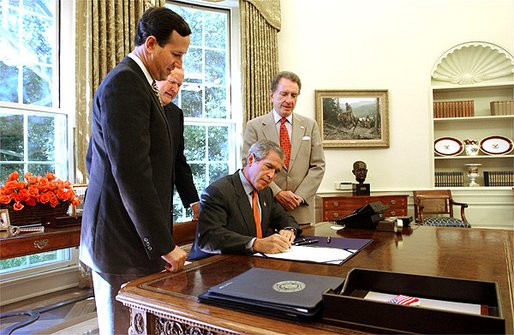
Just an average guy, hanging with his buds.


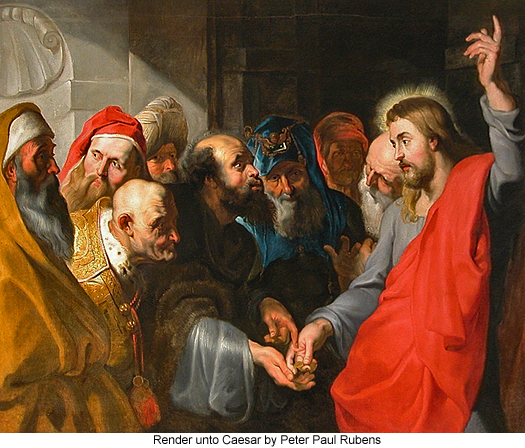
Render unto Caesar

My wife shared a very appropriate video concerning the ongoing tragedy of the GOP race for presidential nominations. Presented as an ad by Jesus, “Jesus” tells how Rick Perry has co-opted his name but not his message.

It is a fun look at a very serious issue. The serious issue is that people unable to think critically about religion are doomed to be its slaves. Where’s the proof that Jesus supports one candidate or another? When is the last time the voting, uncritical public ever demanded the proof?

Thinking back to just a few weeks ago, Herman Cain had made the spectacular claim that God told him to run for president. If the claim was sincere, how could he have withdrawn from the race? Where’s the lightning bolt (as long as we’re believing mythical images of God)? Has anyone checked his office lately to see if he’s still with us?

Religious gullibility is America’s most dangerous deficiency. We elect “the most powerful man on earth” based on his religion, and yet, very few know anything about it. But hey, it sure sounds good!

Religion is the elephant in the room. Nearly all people learn religion from their parents or guardians. Some rebel, but few study it beyond the requirements of their obviously biased religious leaders. Children trust adults to inform them of the truth. We fill their heads with images of a large, white man, bearded, sitting on a huge throne in the sky. You can’t see him, and he doesn’t answer when you talk to him, but he is very, very concerned about who you elect as president.

Many colleges and universities do not offer the opportunity to study religion with neutral experts. Those best poised to make a difference, like large state schools, often shy away from the study of religion completely. Those that do offer the chance to study often unknowingly hire a committed believer, sometimes presenting him or herself duplicitously as neutral and objective. And so the cycle continues. As the old hymn plaintively asks, “will the circle be unbroken?”

As a nation we value religious freedom, but we have set up a system to abuse that freedom. (One might say, “ritually abuse”.) Answer me honestly, Mr. Perry—is it not true? Oh, and that Frisbee is not a threat to national security.


Name Recognition

Some two and a half years ago when my brother-in-law Neal Stephenson suggested I start a blog (primarily for the podcasts to which I intend to return), he asked me what I would call such a site. “Sects and Violence in the Ancient World,” was my attempt at a witty, non-committal riposte. Since I was unemployed at the time and still hoping some deus ex machina might put me back into a full-time university post, complete with an Ancient Near Eastern religions component, the title seemed apt. I determined that I would not exploit my relationship to a best-seller author since I wanted to earn my own readership. Sects sells, does they not? Since then I’ve had a number of curious readers wonder why I tend to address modern religious issues, unlike my title suggests. The reason goes back to what I want to be when I grow up.

How many eighteen-year olds really know what their lives will hold in store? Our society asks them to select majors and pick a career path far too young. I had visions of clergyhood in my head so I majored in religion. Like many children of alcoholics, I tend to be addictive in my devotion, so after completing a Master’s in religion, I had to have just one more degree—then I’ll stop—and a doctorate in religion finished ossifying my career track. Having been weaned on the Bible, I’d stuck with it for three degrees and found that during that time the job market had evaporated around me. As I watched society from the sidelines, I saw so many people at the place I had started out, staring wistfully at the Bible, looking for answers. Uncritically, magically expecting a miracle. Just like Oral Roberts said. Once my teaching career had been derailed by misguided Fundamentalists, I realized my interests were much more in the effect religion has on people. It was too late, however, to go back to school.

My way of dealing with any dilemma is to parse its history. That’s why I studied pre-biblical religions along the way to my doctorate in Bible. A couple of things had become clear along the way: religions are very fragile and easily splinter into sects. And most of the large-scale violence in the history of the world has a religious basis. (Probably much of the small-scale violence does as well.) Its origins are literally more ancient than history. What is religion in today’s world if not the direct descendent of sects and violence in the ancient world? And since my idiosyncratic musings have passed the 200K hit mark, it seemed all right to acknowledge the role my brother-in-law has played in all this. So, in good academic fashion, I’d like to acknowledge the suggestions and support of Neal Stephenson in starting this blog, but any errors are, of course, my own.


The Self-Importance of Nothingness

Not that I’m aspiring to Sartre, but being in the presence of so many academics brings out the natural existentialist in me. Religion is a funny field to engage in higher education. We are studying an intangible. Many would say an illusion. If we are too bold about what we find, no shaking hand will deign to sign the paycheck, and so we carry on, innocuous, unperturbed, self-assured. At conferences like this I sometimes sit back and watch others walk by. Having entered the academic world from humble, uneducated beginnings, I have no pretensions about what I do. Or where I might go. Yet I hear idolatrous whispers following those who’ve made a name for themselves. God-struck grad students with that theophanic gaze leveled at the man (sometimes woman) whose name graces the cover of so many books. God’s very representative here on earth. Incarnate in this very room.

I entered religious studies because I arrived at college knowing nothing. An exasperated freshman advisor finally insisted I chose a major. I said I didn’t know. “But what are you interested in?” To me religion wasn’t as much an interest as an imperative. Some churches raise their young to believe that all else is vanity. Every moment should be spent seeking that elusive deity, the one whose very words the clergy speak. I fell into religious studies. I fell far. Reading the Bible multiple times as a teen, classes weren’t that challenging. Ideas were. There comes a time, undefined so as not to be pinpointed, when an invisible line is crossed. Then, when you look back, everything has changed. A dark secret has been planted deep in your psyche and you realize that you are a religion scholar. There is no turning back.

No Einsteins exist in the world of the academic study of religion, but gods abound. Watching colleagues who’ve achieved the dream, who’ve been tenured and pampered and paid well to deign to share their lofty thoughts with the rest of us, I feel like I’m watching shadow puppets against a blank wall. When will they get God into the laboratory and switch on their fancy, humming machines, and the one that goes “ping,” to uncover the truth of the universe? How much lower can we mere mortals stoop? It often feels like I missed that crucial first day of school. Having peered long over the ledge, however, I realize that we are all in this together. Has anyone ever bothered to count the homeless in San Francisco? Has anyone ever bothered to look into their eyes? And that guy with high name recognition? I’ll ask him to write a book. And I will fawn and coo. Why? Because I know the hand that signs the check, and I know the price of idolatry.


Eat, Love, Eat

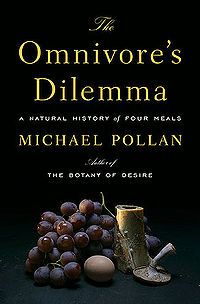
Michael Pollan’s The Omnivore’s Dilemma has been on my “to read” pile for some time. I finally finished with it this week. As a vegetarian, I really didn’t need convincing that raising other beings with feelings and some intelligence for the purpose of eating them involves dilemmas. Pollan is not a vegetarian and makes the best case I’ve ever read for justifying his position. Still, I personally can’t face being the reason animals must die for my own gain. I know this is a stance fraught with difficulties. I’ve often mused that if I could get by without even eating plants, I would. I just hate to inconvenience anyone, or anything, else. But that’s not what I want to discuss. Pollan spends the first part of his book discussing corn, or maize. I hadn’t realized what a versatile crop it is, nor how prolific. The difficulty is that it is so good at what it does that it is bankrupting the farming industry. Government subsidies make corn growing the only way that big farmers can get ahead while nearly driving them broke at the same time. (It takes Pollan chapters to explain this, so I’ll need to refer you to the source on this one.) His conclusion: the free market simply does not work for food production.

I’ve long believed that the problems with our economy come from a decidedly “one size fits all” mentality. The free market rewards those who climb over others without that gnawing sense of guilt that prevents me from eating meat. Once you have lots, you only want more. No one ends up satisfied. Okay, so we’ll let Wall Street play its game. Higher education is in crisis because, like farming, the free market model simply does not apply. Guys like me (and plenty of gals too) do not spend years of our lives earning doctorates under the delusion that we’ll get rich. Many of us are idealists who just won’t grow up. All we want is to contribute to the collective knowledge of the human race and make a reasonable living doing it. Then the free market comes and whispers into university presidents’ ears that they should be making six or seven figure salaries. They should have limitless expense accounts. Universities should be all about “branding” with corporate style logos and money-sieves called sports teams. Somewhere along the way they forgot that they need teachers too. Some very prominent universities in the United States now have 70 percent of their classes taught by adjuncts. The system is simply not working.

One of the strangest anomalies out of all of this is that Christianity, the religion started by a guy who said the rich could not enter heaven unless they gave everything away, has crawled into bed with the free market. Enthusiastically. For many people to vote with conscience is to vote for an inherently unfair system that must, by its very design, consume all others. Survival of the fattest. I’m no economist, but I am certain that many other industries have gone the way of the T-rex because they simply didn’t fit the model of unbridled gain. Education is one, and the asteroid is already about to hit. What bothers me the most is that agriculture is another. Pollan ended up scaring me more than any horror flick. Our farming industry, right here in the best fed country on earth, is very, very frail. As long as we’re converting everything to the greed-based system, we should make money edible. After the asteroid strikes, during that long, dim winter, it will be the only thing left on the planet in abundance.


Last Rites

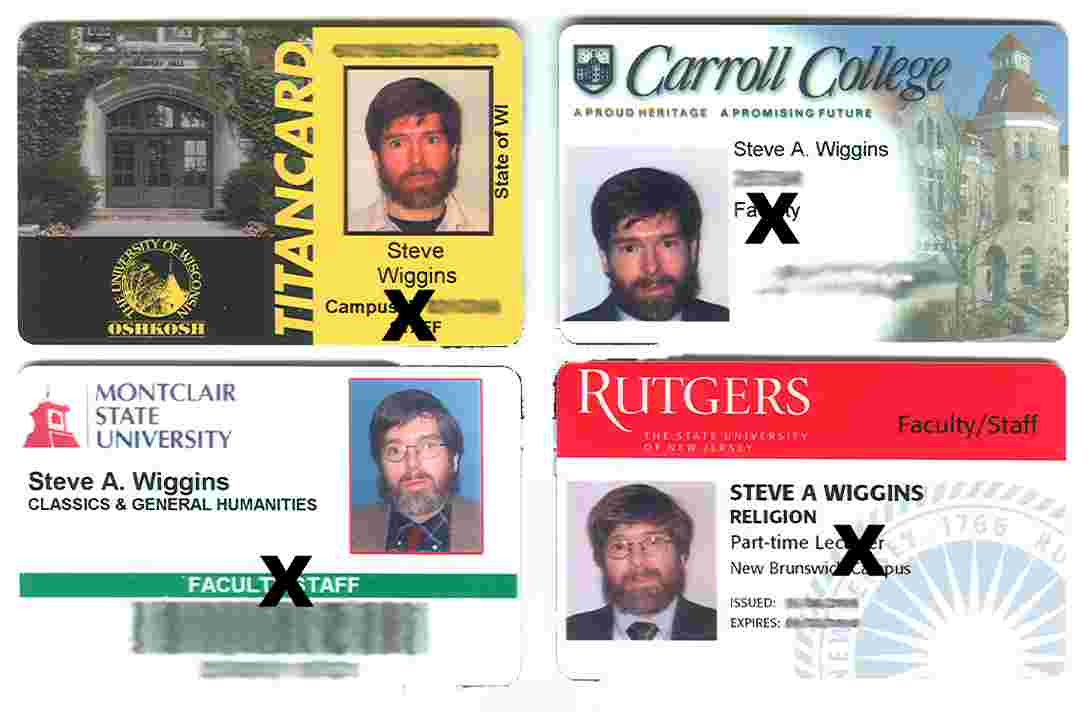
Last night at 9:40 p.m., my last class at Rutgers University ended. I began a teaching career in higher education back in 1992 when I was still younger than most of my students (that was in a seminary). Despite the difficulties of that setting, I had lowly dreams of a reasonable teaching post in a small college where good teaching was emphasized and serious research was allowed. It was never to be. Now, facing an exciting career move, it feels like a giddy run suddenly played out. The finish line crossed halfway through the race. Higher education simply never made room for the likes of me. Students have frequently commented on how they like my courses and find me a congenial instructor and wonder why no full-time positions ever emerged. My answer has always been that Religious Studies is the one field where religious discrimination is legal and regularly practiced. Denominational schools are permitted to hire on the basis of faith—I have been declined more than one position because I was not the right brand of religion. State schools are afraid of the field.

State universities, where I ultimately ended up, are very cagey about Religious Studies. I’ve known otherwise highly educated individuals who suppose that such departments are glorified Sunday Schools or Catechisms. They always seem surprised, when a religiously motivated person decides to become a mass murderer on the basis of conviction, that universities don’t know more about religions. It is, however, a dying field. Religion in America has been hijacked by the NeoCon camp. Over the years I’ve had mainstream Christian students explain to me why they are not really “Christian” since they assume that the title goes with conservative political and social values. To my humble eyes, it appears the battle may have been already lost. State schools fear interference with the establishment clause while NeoCons plow ahead to mandate a state church. It is the religious makeover of America.

I will miss teaching, but it has been a punishing career. My years at Nashotah House were filled with abusive situations and unrealistic expectations. Since then I have never had a full-time teaching post. In some cases I have spent more time driving to campus than I spent in the classroom. It is time to launch on a new career direction—even my previous editing experience was under the shadow of a conservative religious outlook. I have told many students over the years that teaching careers are not what they used to be. I have many horror stories to back me up. That doesn’t mean that a tear or two didn’t fall as I left my last classroom after nearly twenty years in the biz. It has been an education to me, and I hope a few students among the hundreds I’ve taught out there feel that it has been the same for them.

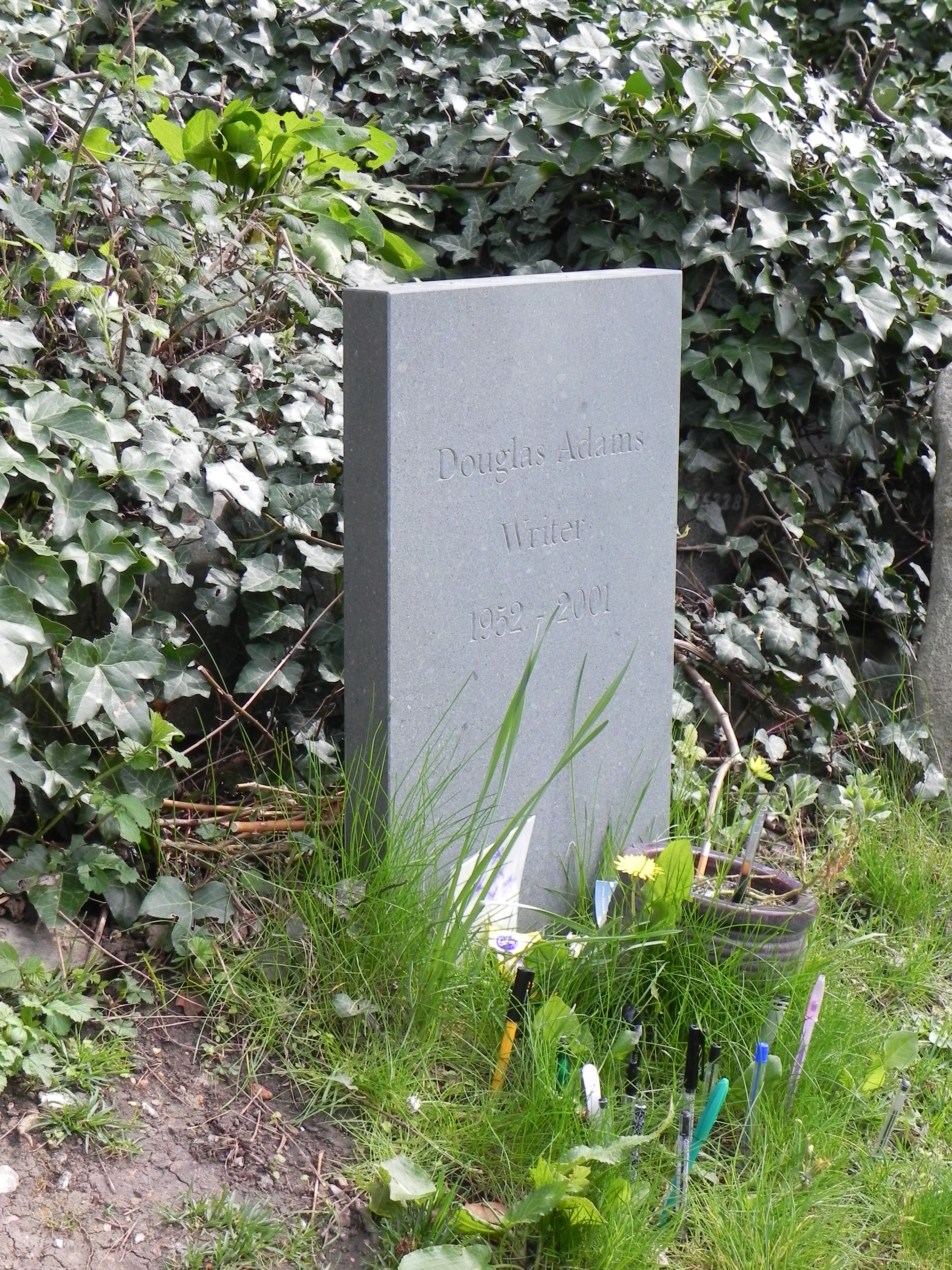
Nevermore.


Honest to God

“A lot of traditional beliefs are outside people and have grown into rigid things that you can’t touch any more”–these words come from a minister of the Protestant Church of the Netherlands, according to a report yesterday on the BBC. The title of the article, “Dutch rethink Christianity for a doubtful world,” touches on a theme mentioned earlier on this blog about the church in Sweden: clergy often live with their own doubts about God. Showing similar results to the Swedish study, the Protestant Church of the Netherlands hosts one in six clergy who are agnostic or atheist. I would suggest that the specialization of labor–as well as the persuasiveness of science–stand behind this phenomenon. In modern societies far removed from human roots, we really don’t pay much attention to the training others receive to take on their professions. We assume that higher education is doing its task and that professional bodies like the American Bar Association put up tests to deter those who make false claims. Seldom do we reflect that our off-the-farm lifestyle is a very recent human development and that we haven’t really had time to sort out whether all this complicated training ever really works.

Don't rock the boat...

When I was a seminary professor, I saw the dilemma this way: seminaries crave, indeed require academic respectability. Accrediting bodies insist that a substantial portion of faculty hold terminal degrees. Seminaries, however, are run by confessional groups that insist on certain unscientific worldviews and premises. Doctoral students, unless indoctrinated at faux institutions that block scientific evidence, are educated in a worldview that contradicts their religious training on several levels. Seminaries require educated faculty, but education itself undermines traditional beliefs. Some conservative groups have been aware of this dynamic for years and have begun establishing “universities” that intentionally bar subjects that challenge their worldview. In other words, they want clergy with false credentials who are willing to fight for the cause, while still receiving academic accreditation. Few insiders will blow the whistle since the modern church is built on this shaky foundation.

What is being discovered in northern Europe likely pulses beneath the surface of many developed nations (again, with their specialization of labor). After a person spends three years of training beyond college to receive a “Master of Divinity” degree there is high financial motivation to see the process through to the end. The faithful in the pews, far removed from the realities of theological education, expect the same old show. With employment options nearly nil outside the church, smart clergy know the score. It is better to live a life of quiet desperation, mouthing the party line, than to be thrown into that swirling maelstrom of survival called the job market. Organized religions began when people lived on the land, very few people were educated, and priests were left alone to do their job. Education is costly in far more than college tuition bills. As they are learning in the Netherlands, growing up is never easy.


American Haunted

Serendipity, although rare, still occurs in university life. As an adjunct instructor whose livelihood revolves around the number of courses that may be squeezed into a limited number of days, I have been considering online courses. As an avid watcher of horror movies—excellent preparation for adjunct life these days—I have attempted to sample the genre widely. It is therapeutic to see people in fictional situations worse than my own. While attending a training course on constructing online courses earlier this week I was surprised to find out my instructor was Brent Monahan, a versatile and talented individual of whose presence at Rutgers I was unaware. Most famously Dr. Monahan wrote the novel and screenplay for An American Haunting, a movie I had written a post on back in January.

Compulsive in my desire to be on time, I generally show up to all appointments early. For this particular session I was the first person present, so, not recognizing my teacher, we struck up a conversation about my field of studies. (He asked; I try not to lead with my chin.) He was nonplussed about the fact that I am affiliated with the religious studies department—in general this is a conversation stopper since, along with politics, it is a forbidden topic in polite company. Before I realized who he was he suggested that perhaps people go into this field because of their internal struggle with good and evil. It was a perceptive statement and it made sense when it came out that he was a writer of horror films and novels.

Since I’ve been exploring the nexus between religion and horror I have wondered what the deeper connection might be. Clearly fear of the unknown, the overly powerful, and the randomness of life in an uncaring universe play into it, but perhaps it is also the struggle of good and evil. Horror films often present the “what if” scenario: what if the side of evil were allowed free reign? Often the fount of that evil, in horror films, is religion gone awry. Certainly in An American Haunting a pious man is driven by inner demons to the abuse of his own child. That he is a religious man is made plain from the near-constant presence of a clergyman in his house once the haunting starts. While the exact relationship remains to be parsed, it is clear that fear and religion reside very near one another in our brains, perhaps as near as good resides to evil.


I Can Haz Edukashun?

Myths are alive and well. One of the most pervasive myths, along with the one that says clergy only work on Sundays, is the concept that educators take the summer off. Undoubtedly some do, but the summer is traditionally the time for professors to conduct research without having to break up their concentration with several classes a day. Those were the halcyon days. This morning’s newspaper slapped me like a fistful of razors as I read the story of Rutgers University’s president’s resignation. I knew about the resignation, but being fumblingly employed part-time by his mighty university, and having to take annual ethics training for the pittance I’m allowed, I blanched as I read these two sentences: “McCormick earns $550,000 a year as president and is eligible for a $100,000 yearly bonus, though he hasn’t taken the money in recent years due to the university’s budget troubles. Ralph Izzo, chairman of the board of governors, said he thought McCormick would be worth his [continued] $334,000 professor’s salary.” A few pages later the headline tells how Chris Christie, New Jersey’s cut and bleed governor, took a state helicopter ride to get to his son’s baseball game. Also, he wants to prevent state employees from making a viable living.

In this twilight zone of an educational nightmare, a guy with professional ethics training just wants to close his eyes and make it all go away. For what are we educating our young if not for greed? What professor is worth more than 100,000 dollars to any university? In the old days, back with ethics had intestinal fortitude, the term for such folks was “sell outs.” Is there really any drive for excellence at such pay scales? It is no wonder we are raising the “entitlement generation.” Actions used to speak louder than words. State-mandated ethics training has now corrected that little oversight. Higher education used to be about ideas; today it’s “show me the money.”

The truly sad part of all this is that we keep pretending. We preach the myth to a public easily pacified and crucify those who beg to differ. Back in my Nashotah House days a trustee once hushed me so that the board might listen to a student with “fire in his belly.” My belly’s a blackened cinder by now. Is anybody listening? Mythology, particularly in the Greek world, revolves around the concept of hubris. It is a concept with which modern university folk are clearly unfamiliar. It goes something like this: like most people I think I am better than others. In order to prove it, I’ll increase my blandishments until there is no longer any doubt. Is that Olympus straight ahead? I might as well take that as well!

I’d love to stay and lecture some more, but I’m apparently entitled to more state ethics training.


Metamorphoses

“When Gregor Samsa woke up one morning from unsettling dreams, he found himself changed in his bed into a monstrous vermin.” I borrow the opening words from Franz Kafka’s The Metamorphosis since upon rereading it yesterday I found it consonant with much of mythology. Even the title chosen by Kafka resonates with Publius Ovidius Naso’s (Ovid’s) Metamorphoses. Transformation at the hands of the gods. The idea lives on in the concept of conversion, the religious experience of profound change at the behest of God; some claim a willful hand in their conversion while others simply give God the whole credit. Kafka, one of the great existentialist writers of the twentieth century, considers the transformation without the gods and the terrifying results.

Having discovered the existentialists in high school, I was immediately taken by their writings. Characters find themselves cast into a world devoid of meaning, a world that they can’t understand and in which they often suffer unusual consequences. Little did I know that I was in training for my own experience in the academic world. Academia involves a major metamorphosis, one from which the victim cannot return, and after which she or he will find him or herself ineligible for employment. Reading The Metamorphosis as an often displaced instructor who’s only ever received positive evaluations, I saw much in the novel this time that I could not appreciate last time I read it. In short, I had metamorphosized.

Gregor Samsa, discovering he is now a bug, immediately worries about how to get to work. The painful description of his financial worries and ultimate rejection resonated a little too clearly. Is conversion a positive phenomenon? It is difficult to evaluate. In my experience, those who’ve converted tended to have been pretty decent people in the first place. As Ovid notes over and over again in his lengthy epic poem, when the gods make you into something else a sadness will pervade this new existence. If you survive. As Gregor slowly starves to death (in a fate hauntingly similar to Kafka himself) he finds no divine consolation. The situation is absurd—best just come to terms with that. Kafka could have been a struggling academic in the century after his death and he would have found the same situation applies.