Weathering the Sun

I may have given up on Weathering the Psalms a bit prematurely.  Those who know me know that the weather impacts my mood.  Now that I have a yard to mow that feeling has grown exponentially since perpetually wet grass is happy grass and is impossible to cut with a reel mower.  Today, while those of pagan inclinations celebrate the sun, there’s more rain in the forecast.  As there has been since Sunday.  If Yahweh’s the God of the sun, then Baal’s had the upper hand for some time now.  As an article on Gizmodo has pointed out, this has been the rainiest twelve months on record for the United States.  And we’re largely to blame.  We’ve known we’ve been warming the globe since the 1980s, at least.  Yet we do nothing about it.  You can’t stop the rain. 

Our species occupies that odd role of predator and prey.  Most predators, actually, are prey to somebody else.  Not being nocturnal by nature, we fear the dark when we feel more like prey.  Since we’re visually oriented, we crave the light.  Today, when the conditions are right, we have it abundantly.  Ironically, of the seasonal celebrations, the summer solstice is the only one with no notable holidays.  Easter and a host of May Day-like holidays welcome spring and Halloween and Thanksgiving settle us into fall.  December holidays around the other solstice are the most intense, but summer, with its abundant light and warmth, is perhaps celebration enough.  Or maybe we know that marking the longest day is a transition point, since now we’ve reached a natural turning point.

So, it’s the solstice.  From here on out the days start getting shorter and we slowly move toward the time of year when horror becomes fashionable again.  The light that we crave now ebbs slowly to the dark we fear.  There should be a holiday around here somewhere, for those of us outside academia continuing working right on through.  The problem is western religions, especially Christianity, place no especially memorable events here.  Resurrection’s a hard act to follow.  Calendars, apart from telling us when to plant and harvest, are primarily religious tools in origin.  When things are their darkest, six months from now, the church moved the likely spring birthday of Jesus to counteract pagan festivals encouraging the return of the light.  I, for one, would like to see a day to commemorate it, even if it’s raining again.


Time Off

Perhaps you’ve noticed it too.  Time away from work has an utterly different feel from time on the job.  Those rare individuals who really love their professions probably feel differently about it, but a timid free spirit since childhood, I’ve always noticed a difference.  And it has become more pronounced as time’s gone on.  Recently I cashed in a vacation day near a national holiday (Memorial Day) so that I could drive across the state to see my mother without feeling utterly wiped out from a twelve-hour drive on a regular weekend.  As I slipped back into work mode on Tuesday the change was palpable.  Time was no longer my own.  I tend to work well over eight hours daily—the telecommuter must prove his/her worth—and something about the quality of the time itself was decidedly unlike that of the previous four days (two of which had been spent driving).

That quality, of which we’re not encouraged to speak, is the feeling of freedom.  More precisely, auto-determination.  Okay, I’ve read enough philosophy to know this is just an illusion, but work with me here.  Few and exceptionally fortunate are those who find careers they love.  What the rest of us love is time off work.  Time when we can decide what to do.  How long to sleep.  When to cut the grass rather than waiting until the bell rings at 5 p.m. and the inevitable afternoon rain begins.  Perhaps best of all is going to bed knowing that the next day you don’t have to get up and report for duty.  I’m not dissing employment here, I’m just noticing something.  What I’m reaching toward is a concept of sacred time.  Unstructured time in which creative types thrive.

Early in life the concept of summer was instilled in my soft and malleable psyche.  It said once May was over you have three months to do whatever before facing regimentation again.  I grew to appreciate this schedule.  To love it, in fact.  It was part of why I decided higher education was the best vocational fit for someone of my particular disposition.  Every year when June rolls around I still feel it, like a migratory bird.  The reality, however, is the quality of time changes on Monday morning.  It slows down and feels more like sandpaper than silk.  I can see there’s a holiday just a month away, if I can only reach it.  And it is, perhaps with a dose of unintentional irony, call Independence Day.


World Environment Day

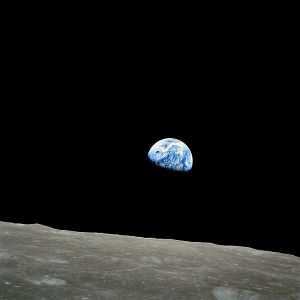
Do you like where you’re living?  Planet earth, I mean.  Today is World Environment Day.  It’s not enough of a holiday to score time off of work, but it is well worth observing nevertheless.  More than that, it’s vital.  Other holidays tend to be the decaying remains of religiously appointed observances or sops thrown to the Cerberus of patriotism, but World Environment Day impacts every one of us, all of the time.  Whether sleeping, waking, working, or playing, it’s in the context of the one planet we have.  Even those in space have to check in here to survive.  We might try to make World Environment Day an international holiday, but I’m sure we could never all agree to it.  Business would collapse if everyone took the same day off, all at the same time.  Instead we’re left to dream.

I recently watched The Lego Movie.  Although released in 2014 it perfectly anticipated 45 with “President Business.”  Overlooking for a moment that Legos represent big business, the film underscored the problem: the only thing hard enough to cut a diamond is another diamond.  And the only way to fight business is with business.  Perhaps there aren’t enough people to envision what life could be like without the constant stress of having to make more money.  It’s a sickness, really.  But it’s a pathology we worship.  There are some abysses, it seems, into which nobody dares peer.  Who doesn’t want to be in charge?  And those in charge care nothing for Mother Earth.

We have spent the past two-plus years watching helplessly as the Republican Party has done its level best to lay waste the planet.  Rolling back and abolishing environmental initiatives deemed detrimental to “business,” these are folks who need to feel what it’s like to lose a job or two and have to reinvent themselves.  Not that long ago, most of the humans on this planet lived on farms or supported those who did.  Daily in touch with the planet in a literal way that those who mow with industrial, sit-down lawn helicopters can never be—how can you be in touch when your feet never even meet the ground?—they knew that paying attention to the planet is crucial.  But that’ll have to wait.  It’s a work day, after all.  And a Wednesday, no less.  In the middle of the week-long worship at the altar of Mammon.  Still, I urge you to take a moment or two today to consider how to save the only planet we’ve got.  It’s worth celebrating.


Christmas Lights

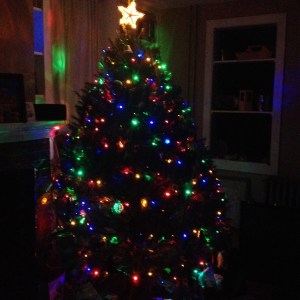
How many people read a blog on a major holiday?  The process of writing takes no vacations, however, and I often think of holidays as a time to write.  It doesn’t really matter if anyone reads it; writing is our witness to the cosmos that “Kilroy was here.”  Even if most of us have no idea who Kilroy was.  So I find myself awake earlier than most children on Christmas morning.  My long habit of rising early to catch the bus hasn’t been easy to break.   I creep down the stairs and water the tree before turning on its colorful lights.  I make a cup of coffee and wash the dishes left in the sink after a festive Christmas Eve.  And I think.  There’s always the thinking.

The meaning of Christmas, as the holiday classic tells us, eludes Charlie Brown.  Linus van Pelt gives one rendition—that of the Gospel of Luke—as the canonical meaning, but in my experience it shifts during a lifetime.  Christmas, after all, is one of a host of solstice celebrations.  My thinking these days is that it’s all about light.  Shimmering angels, glowing stars, light coming into the darkness.  These ideas seem to have, for the most part, Zoroastrian origins, but they’ve been thoroughly appropriated and, in true American style, commercialized.  The news headlines read how disappointed retailers always are.  The take could’ve been bigger.  Capitalism relies on Christmas to make the third quarter.  Light in the darkness, in its own distorted way.

As I sit for these quiet moments in the glow of only a tree, I think of those for whom the holiday has become a kind of disappointment.  Not a cheery Christmas thought, I know, but an honest one.  As families grow and diversify the childhood Christmas of excited children scrambling under the tree to excavate the next gift for me starts to fade.  Our economic system separates, and the dearth of days off around the holidays makes travel back to childhood homes difficult.  We do the best we can, but the fact is the sixties (speaking for me) are over.  Our reality is colder and darker than it used to be.  I part the curtains and look for any sign of dawn.  It will be a few hours yet before the sun brightens this winter sky, but then, that’s what the holiday has come to mean for me.  At least this year, it is the hope of light returning.  And that, alone, makes it a holiday.


The Night before Reading

Like many people bound to their circumstances by work (and now a mortgage) I see travel to far-off places is a dream.  On my personal bucket-list is Iceland.  Perhaps that’s a strange place to yearn for in winter, but it’s on my mind today because of Jolabokaflod.  I’ve posted on Jolabokaflod before, but in case the concept is unfamiliar I’d summarize it by saying Icelanders, who are exceptionally literate, give each other books on Christmas Eve and spend the dark hours reading.  For the past three years I’ve taken part in a reading challenge that lists a book in translation, and invariably I choose one by an Icelandic author.  Publishers in Iceland, being less corporate than our native species, accept books for publication somewhat more readily—I’ve been shopping a novel around for nearly a decade now and I’ve read worse.  If it doesn’t jack up the dollar signs, so nobody around here’s interested.

I’m sure it’s not all sweetness and light in Iceland.  I suspect, for one thing, it’s hard to be vegan there.  Then there’d be the need to learn Icelandic.  The nights would be even longer in winter, but then, those long nights would be filled with books.  I sometimes imagine how different America would be if we loved books that much.  I remember well—as you may also—the classmates who grumbled about “having to read” as part of their school curriculum.  And this began well before high school.  Young people’s bodies are full of energy and they want action (which can be found in books, I might add) and new experiences (ditto).  Our culture feeds them the myth that such things lead to happiness.  Instead, they find sitting still tedious.  When life leads them to commute, they fill bus time with devices.

The other day I had an electrician in our house—the previous occupants had some strange ideas about power distribution.  He, as most visitors do, commented that we have a lot of books.  I’m beginning to feel less apologetic about it than I used to.  We have books not only because it’s been part of my job to read, but because we like books.  One of the painful memories of 2018 was the loss of many volumes due to a rainstorm that flooded our garage right after our move.  It still makes me sad to go out there, remembering the friends I lost.  Nevertheless, it’s Christmas Eve, at least in my tradition, and the thought of books combined with the long hours of darkness brings a joy that I’d almost characterize as being Icelandic.  At least in my mind.  Jolabokaflod might well be translated, “silent night, holy night.”


Russian into Things

It’s the holiday season.  The people I overheard at the bus stop the other day were discussing shopping on the bus.  It can be a long trip from here, and evening traffic out of New York (ironically) is quite heavy this time of year.  Bored commuters, sitting on the bus with their phones, shop.  I couldn’t help but notice that I was the only one with the overhead light on during the fully dark ride home this week.  At one point the driver seemed to think it was a mistake on my part and snapped it off.  I carry a book light with me for just such eventualities, but I had that odd feeling one gets when everyone else got the memo but you didn’t.  In any case, I was reading a physical book, not shopping.

Then I read about a book I need for my research.  Problem is, I don’t have an institution, or a wealthy sponsor, so I often buy books used.  Back in my teaching days Amazon was new, and the idea of buying books online foreign and unfamiliar.  Now you can’t find a bookstore when you want one.  In any case, this particular book was on offer on eBay.  Now, I haven’t used eBay for quite a while.  I never think of it as a place to find reading material, but there it was.  Who would’ve thought research would ever lead in this direction?  The price was reasonable, so I signed in as a guest and placed my order.  With out of print books like this you run the risk of price-gouging or sudden unavailability—the independent researcher’s nightmare.

When the confirmation page came up, I couldn’t help but notice that the header was in Russian.  I wondered if Trump’s dream had really finally come true, or if the eBay on which I ordered an out-of-print book was really a trap.  How do you find out?  Who do you tell when your current government is completely at the beck and call of the Russian government?  I was in a brown study for a while.  The book, used, on Amazon was listed at over a thousand dollars, and this for a paperback published in 2009.  People will pay quite a lot for certain books, even if they don’t retain their resale value.  Ideas, it seems, are worth more than money.  But we no longer have a government to protect our interests.  Not even research, it seems, is safe any more.

If you squint, he could be St. Nick


Post Thanksgiving

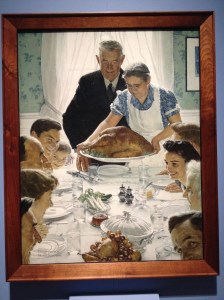
Yesterday morning, like many others mesmerized by the commercialization of holidays, I had the Macy’s Thanksgiving Day Parade on the television.  I can only speak from my own experience, of course, but I know that growing up poor we used to watch this, and that my wife’s family, from different circumstances, also watched it.  The friends with whom we ate our main meal watched it, and given the advertising revenues, I imagine many other people tune in every year as part of the holiday tradition.  What struck me were the testimonials just before or after the commercial breaks.  Celebrities shared what they liked about the holiday and many of them, unsurprisingly, focused on food.  Many indicated that overeating was pleasurable.  I began to think of what it means to be a nation of foodies.

Not everyone is of a cenobitic sensibility, but focusing on the food seems to be paying more attention to the finger pointing at the moon than to the moon itself.  Commercials for television shows of sweaty, nervous chefs wanting to be recognized as the best cooks in the world struck me as somewhat decadent.  Like many professionals I’ve had occasion to eat in “fine restaurants” from time to time.  Do I remember the food for long afterward?  No.  More often I recall the people I was with.  What we talked about.  The food, chefs may be pained to hear, was incidental.  There were deeper issues afoot.  If the internet’s any indication, I’m in the minority here.  Foodies rule.

Special foods on holidays are, naturally enough, a holiday tradition.  Many have their origins in the changing foodstuffs available as the seasons wend their way through their invariable cycle.  Thanksgiving is like the ancient festivals of ingathering—the celebration of plenty ahead of the lean months of living on what we’ve managed to store for the season when winter reigns.  Some animals cope by hibernating until food becomes available again.  Others scavenge their way through chilly, snow-covered days.  Gluttony, however, isn’t primarily a sin against one’s body; it’s the sin of taking more than one’s fair share.  Unequal distribution of wealth is a national sin that grows worse each year.  On Thanksgiving there are many people who don’t have enough to eat.  Jobs can be lost through no fault of one’s own, and want can haunt late November just as readily as jouissance.  Driving home we passed a shopping mall brimming with cars after darkness had fallen.  The larger holiday of Black Friday had begun.


Day of Memorials

I admit that I’m as guilty as the next guy of thinking of holidays primarily as a day off work. A boon from the gods of capitalism so that we can come back to the job rejuvenated and more productive than ever. It doesn’t matter the occasion—I don’t have time for things like haircuts and dentist appointments with the usual round of early to rise, early to work. Holidays become islands of blessed respite in an endless ocean of labor for the man. So I wanted to take a moment to reflect on Memorial Day. Memorial Day is a time to remember those who have died—grandfather, grandmother, America. We take a moment to consider what we have lost. Then it’s back to business as usual.

My father was a veteran. He died many years ago now and I don’t write much about him because I really didn’t know him at all. That doesn’t mean I didn’t want to please him. Any boy wants to make dad proud. I tried the hard work route, and even gave Boy Scouts a try. The things of my youth have been slowly dying. Democracy is merely the latest victim. I shouldn’t be surprised—when it no longer becomes profitable, even the least offensive system of government can be bought and revamped to fit the needs of the greedy. Never mind the will of the masses. They’re the ones who lie under the gravestones for which today stands. No one can be rich without great numbers of poor against which to measure himself. Remember that; it’s Memorial Day.

Since Memorial Day doesn’t lend itself to commodification—let’s face it, outside Halloween death’s a downer—we can make it a day of sales. While you’re earning money without working, why not spend some of it? We seem to have lost the gist of holidays. Those who’ve died in vain believed in a democracy that their heirs have thrown away in scorn. If that for which we say we believe has become moribund, it appropriately becomes the focus of Memorial Day. My grandparents lie buried far from here. They were Evangelicals who wouldn’t recognize their faith reflected in those who still cling to the brand. I remember grandma sending money to Oral Roberts. She didn’t live to see him claim God would take him unless he had even more money. Now we hear the same thing from Pennsylvania Avenue. And tomorrow we all go back to work.


Indie Bookstore Day

Although a year can seem like a long sentence, holidays are the punctuation marks that help us make sense of and organize it. Ordinary time, such as time at work, or commuting, can be endlessly tedious. Holidays, some personal, some local, others national or international, help us break up the time. Give us something to look forward to. My pity goes out to those religions that recognize no holidays and face time with a grim, Presbyterian determination to get to judgment day. The rest of us like to celebrate once in a while. So what’s today? It’s Independent Bookstore Day! Anyone who reads more than a post or two on this blog knows that I’m a lover of books. I first started taking solace in reading when things were difficult in my younger years, and reading has never let me down. In fact, I’ve often told myself that I could put up with just about any job as long as I could write.

It’s because of being in publishing that I learned about Independent Bookstore Day. Yes, it’s a promotional holiday, but it’s also a genuine celebration. As the outside world daily reminds us, those of us who read are a minority. The realistic author knows that the reading public is a small fraction of the whole. The number of people, percentage-wise, who spend their money on books is minuscule compared to those who fling their lucre elsewhere. But those of us who read appreciate the depth and reflection of each other. We may read different things, but we read. And that’s why I don’t mind going to an indie bookstore today and buying something.

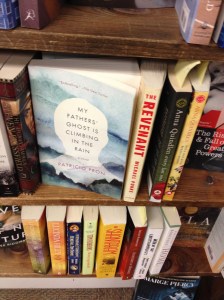
One of the simple pleasures in life—call it a punctuation mark, a comma maybe—is being surrounded by unfamiliar books. Oh, I often worry what happens when we decide to move; we have lots of books at home. The last time the movers actually complained in our hearing that we had too many boxes of books. Talk about me at the bar afterwards, but don’t castigate my simple pleasures to my face, please. Books are the rare opportunity to commune with others on a deep level. How often have you put down a book and felt that you knew the author? Their soul was revealed in their writing and you had touched it. Just being in a bookstore is cause for celebration. If you have no plans for today, why not make your way to your local indie? Stand up and be counted as the literate resistance. It’s our silent Bastille Day, after all.


All Hallows Eve

I can tell that I’ve been far too busy when I don’t have time to prepare for Halloween. I don’t mean commercially—running out and buying decorations and the like—but mentally. For reasons perhaps only understood by psychologists, Halloween is my favorite holiday. I love the comfort of being with my small family on Thanksgiving and Christmas, huddled inside while the cold whistles against our windows. The sense of relief at not having to go to work even though it’s a weekday, and that increasingly rare luxury of simple breathing space. Still, Halloween takes me back to a childhood with which I resonate in a way against which other holidays only vibrate in sympathy. The days are undeniable darker. My fears, I’m told, are not unfounded. I wear a mask and am free to be myself.

Commuting prevents me from getting out to see the decorations for which some neighborhoods have become notorious. The large, billowing, air-filled frights, however, are just hot air. Even the younger generation at the office, whispering among themselves that this is also their favorite holiday, decorate their cubicles in a way that’s more cute than chilling. No, I’m not a fan of gore—this is more subtle than that. Those who’ve long dwelt with existential angst are connoisseurs of dread. We know, for example, that it will be many months now before we step out into the morning light or come home from work able to see our way clearly. The shades of darkness aren’t always the same. There’s a texture to them. To prepare properly, you need time. The very commodity of which I’m being drained.

Those who know me as a mild, “uncomplicated” sort of person don’t know me. They’ve only become accustomed to the Halloween mask that I wear almost constantly now. Life can do that to you. Instead of the creepy novels which generally crowd my autumn, I’ve been spending time with the existentialists, listening to them reflect on death and its meaning. Or lack thereof. Religions, of course, hurl themselves into that void offering plans of escape. And yet in October that man who walks his dog before dawn wearing a white bathrobe sure looks like a ghost to me. And I’m standing on this street corner utterly alone as the wind blows down the avenue, chasing frightened leaves past me, sending a chill down my spine. I’m looking forward to sitting on a bus to get out of the cold. I’m complicit, I realize, in the death of Halloween.


Happy World Book Day

In times of distress, as well as of joy, I turn to books. Since about November there have been more of the former than the latter, so I’m cheered that today is World Book Day. The United Nations Educational, Scientific and Cultural Organization has designates World Book Day to promote literacy internationally. If only the White House would pay a little more attention to the UN maybe the world situation would improve. In any case, books are always worth celebrating. At any given time I’ve got three or four book-reading projects going on simultaneously. Well, not literally simultaneously; I have books I read in the morning, different books for the bus ride, and books I read before bed. Often there are others scattered in there as well, such as books that I take with me in case I get unexpectedly delayed somewhere and want something to read. It’s a life full of books. It’s a wonderful life.

I can’t imagine enduring the mental vacuity that must come from not reading. It sounds like torture to me. Yes, I’ve occasionally been caught up in the action-packed episode of travel and adventure (or what passes for adventure for a guy like me). Hours spent with other people in locations not at home when there’s something to do every minute of the day. But then, when the fun’s over, I open a book. I read before bed even when I’m traveling, and since I’m an early riser I read before anyone else is awake. It’s a form of communion. Having access to the intelligent minds of others is a rare privilege that shouldn’t be scorned. World Book Day should be an international holiday.

Books, strictly speaking, didn’t necessarily originate as sacred texts. Very early in the process of writing, however, such holy documents began to appear. Civilization itself grew through the cultivation of writing. Bibles, Qur’ans, Books of Mormon—for all the troubles sacred texts may cause, they’re reminders of the importance of reading. And once reading starts, it’s impossible to stop. Reading is resistance to the Zeitgeist that’s haunting the politics of the day. Had voters been informed, it is absolutely certain, neither Brexit nor Trump would have happened. We need to read, and be seen reading. Ignorance is the final enemy to be defeated. Celebrate World Book Day. Wish people happy World Book Day. And for the sake of civilization itself, get caught reading.


The Morning After

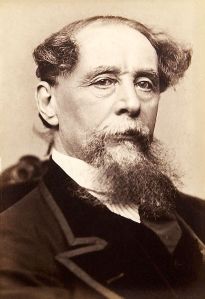
dickens_gurney_head

Quite apart from seeing a live performance of A Christmas Carol, Charles Dickens has been on my mind a bit this Christmas season. I suppose that’s not surprising since it has been suggested that Dickens “invented” the modern Christmas, but it is really, I think, because of how the wider world seems to be spinning backwards. The poor have always been a personal concern of mine. I grew up poor and I know how much suffering it entails. My case was a rather mild poverty—we were never out on the street, and we didn’t actually go hungry. We had nothing in the way of luxuries, though, and I could see the possibilities even as I could see the sky where the boards on the roof were pulling apart. It wouldn’t have taken much for us to have been cast out in a cold Pennsylvania winter. Others have it much worse.

On my daily walks to work, I see the homeless. Some sleep in cardboard boxes, some in tents. Others are out under the stars. One morning I walked by a particularly creepy and sad sight of a person sitting, shrouded in a blanket over his or her head, on a subway vent to catch some of the ambient heat. I know that I don’t have the means to buy each one a meal. Their number has been going up, not down. And I think of Bob Cratchit, threatened and bullied by Ebenezer Scrooge. He will lose his job if he’s not in early today, the day after Christmas. Because of his change of heart, Scrooge buys his clerk a pot of “smoking bishop.” And herein lies the only possible cheer.

My wife got me started on Dickens. She also sent me a story from NPR on smoking bishop. It seems, according to the story by Anne Bramley, that British Protestants delighted in making fun of church offices by naming their tipples after titles. Churchmen (and they were men) were largely exempt from being poor and, according to historians, often supported the Poor Laws that made the fate of the poverty-stricken even worse. In a kind of perverse revenge against privilege, drinks were named after various ecclesiastical offices. There’s little that the poor can do, except to try to find the scant humor in a situation where no one has the reach of a Charles Dickens anymore. Ebenezer, unlike Bob, is a biblical name. It means “stone of help.” In these chilly days dare we hope that help may come, even from a stone?


Charlie Grinch

There were probably about half-a-dozen animated Christmas specials I recall watching as a child. The two that became fixtures, and remain part of my present holiday ritual, are It’s Christmas Charlie Brown and How the Grinch Stole Christmas. I remember watching them from early days—of course you had to wait until their respective channels announced their advent in TV Guide (just writing that makes me feel older than the Grinch). Commuting wasn’t an issue then, so watching television was as common as candy canes and hopeful stockings. As an adult, though, you see things you overlooked, or simply accepted, as a child. I guess that’s what “believing in Christmas” is all about. The willful suspension of disbelief.

I’ve commented on these Christmas specials before. Charlie Brown has so many inconsistencies that an old biblical scholar can’t help but think of J, E, D, and P. What does the signage on Lucy’s Psychiatric Help booth really say? How many branches are on Charlie Brown’s Christmas tree? How does Sally get to the school before her big brother? The animation is clearly a little off—Lucy appears to emerge from the center of her booth’s wooden top as she gives advice to the woeful Charlie Brown with his Trump’s-been-elected-type depression. Still, Linus’ rendition of Luke’s Christmas story brings it home every time. Compare that with the Grinch.

Those who see a war on Christmas (there’s not) seldom cite the Grinch. How the Grinch Stole Christmas is entirely secular. No mention of a special birth. No angels or shepherds. Just a mean old man and his dog. The Grinch shares with Charlie Brown its message of looking beyond the commercialization of Christmas. In the case of the much better animated Grinch (although I still can’t figure out why that one Who’s hat repeatedly flashes from white to blue and back) it would seem that religion matters less than spirit. The Who’s Christmas song with its strange, non-English words, is a celebration of difference. Diversity. Even that angry old man who would steal Christmas itself is welcome in the end. The only war on Christmas is one that has been spawned in the imagination of those who fit the Grinch’s description in Thurl Ravenscroft’s rendering of Dr. Seuss’s lyric. Those my age will understand, and unless you were born yesterday, I suspect that you’ll get my meaning.


Abundance

img_2996

A few weeks before Leonard Cohen died I saw a story on how his song “Hallelujah” had been done to death. Covered and recovered, it seemed to be on every cover artist’s playlist. It is a haunting song, however, and the notion of a cold and broken hallelujah feels somehow appropriate this Thanksgiving. Don’t get me wrong—I am thankful for more things than I can name or would care to share with complete strangers on the internet. In fact, when I literally tried to find a job in Canada in anticipation of a horrible November surprise, one of my immediate regrets was that I’d no longer have American Thanksgiving to celebrate. Thanksgiving, to me, has been images of a cozy indoors with special food while the chill takes over outside. Two days in a row off of work. Sleeping until I’m not tired any more rather than waking according to schedule, no matter how troubling the night might have been. In short, feeling safe and secure in a world growing colder.

Since the first week of November the iciness has been growing more intense. I know it’s the circles I go around in—and perhaps they are small enough to call them semi-circles—but I have seen more sad and depressed and scared faces in the past weeks than I have seen in my previous half-century on this planet. It’s Thanksgiving Day, and even vegetarians look forward to something special by way of fancy nourishment. But it feels like a cold and broken hallelujah to me. Entrepreneurs have already been reminding us that tomorrow is Black Friday. We should get our game-faces on and our credit cards out and head to our favorite retail establishments. Pack up our troubles in the old plastic bag and spend, spend, spend.

Thanksgiving, of course, was an originally generic religious holiday. It’s hard to give thanks without someone to, well, thank. You could be Muslim, Jewish, Christian, or even one of those who thanks dharma, karma, or chance. Just be glad that we’re here right now and even though the wind is gusting and there’s perhaps a bit of snow in the air, we have an indoors where nobody hostile is looking for means to exploit us any further than we wish to be exploited. That our planet, for the time being, still supports human life. And that by any measure other than the Electoral College we all really want progress and fair treatment for all. I am thankful and mindful of those who had to sacrifice to allow us the privilege of being here today. It’s Thanksgiving, and I’m thankful.


For the People

The complex of holidays that make up the transition from light to darkness represents a different mix, depending where you are. Life on the equator, for example, experiences no real variation in daylight hours and I would expect that equinoxes and solstices are relatively meaningless. Or at least less so than where darkness encroaches. For those of us in temperate zones the difference in day length can be quite dramatic and our holiday calendar guides us through it. Getting through the darkness. So this weekend, on Bonfire Night—also known as Guy Fawkes Night, or November 5—I watched V for Vendetta again. This isn’t actually an annual practice, but some years the need to remember the fifth of November is quite strong. This is one of those years. I can’t remember having ever been this anxious about a presidential election. Tomorrow we are voting on whether we want democracy to continue or if we want a dictator who can stir hate like no candidate I’ve ever seen. He even makes Ronald Reagan look tolerable.

I’ve posted on V for Vendetta before, so I need not go over the story. The theme, however, that governments are to serve the people is a message that bears repeating. Governments are to serve the people. We’ve come to a crises point in self-government. A vote for Trump instead of Hillary is saying “I give up, I want Big Brother to take over.” Perhaps the movie I should reference is 1984. Orwell may have got the year wrong, but the story right. Make people afraid, stir the pot of negativity and they will act in desperation. Reactionary governments quickly become dictatorships and that message, mean-spirited and full of ugliness, has been placed squarely in our faces.

The point of V for Vendetta, and the point on which the movie ends, is that V is each of us. We have the ability to make smart choices just as we have the ability to act out on irrational hatred. Who would’ve thought that election years would become days of such terror? I’ve always felt strongly about social justice, and I always vote with a conscience. I have never voted for a hate-monger or someone who believes the way to help the poor is to give the rich even more. There is a deep perversity here, a cultural psychosis. And the problem is we’re locked into four years of the result. For the sake of human decency and sanity, we all need to get out and vote. And I sincerely believe that pulling that lever is a choice for self destruction (Trump) or a future of new potential (Hillary). I just hope we’re smart enough to make the right choice.

img_3024