What’s a Sukkot?

It’s not every day you see a lulav and etrog, even in Manhattan. You can tell life’s too busy when you miss that it’s sukkot. Not that I’m Jewish, but I have been invited to sukkot a time or two by a friend, and it was always a fun, relaxed occasion. A festive little booth in the back yard, sweet wine and cookies. Running the rat race in New York City it is sometimes easy to forget. On my hurried footrace to some place or another, I noticed a group of Orthodox Jews standing along East 42nd Street with lulav and etrogs in hand. So distracted was I that I only vaguely wondered, “why are they holding those at this time of year?” Several blocks later, entering the Port Authority Bus Terminal I saw a man just standing as the crowds parted around him like the Red Sea. In his hands lulav and etrog. Finally it dawned on me: sukkot. It is fall, the time of year when I used to be able to enjoy the bounty of nature and the good-natured holidays. A time before when.

800px-EtrogC

The Hebrew Bible prescribes a set of three pilgrimage holidays: sukkot, shavuot (pentecost to the Greek, or Christian), and passover. Of the three, all associated with the exodus from Egypt in some traditional way, sukkot is the most lighthearted. The command to live in booths is said to be a reminder of the dwelling in tents during the wilderness wandering. Anthropologically speaking, it probably goes back to an ancient tradition of living in huts during the harvest when you don’t always have time to go home and tuck yourself comfortably in every night. Combines hadn’t been invented, and harvesters had to work long hours to ensure that the crop was gathered in. Eventually it became a celebratory occasion. Nice of Moses to allow a bit of festivity here.

Back while at a certain seminary in Wisconsin, a local Jewish friend used to invite my Hebrew Bible class to sukkot. Numbers were small, and invariably wary—were they going to be proselytized by the other? No, but they were invited to shake the lulav and etrog, sip a little wine, and chat about Leonard Cohen. A bit of a cultural exchange in the midst of prolonged indoctrination. I often wonder if my friend continued the tradition after I was asked to leave. The Christian school never made any reciprocal invitations, of course. Ecumenism is often a one-way street. So I stopped a moment at smiled at the stranger in the bus station, solemnly holding lulav and etrog aloft. Life is a bit too busy when we can’t even take a moment to consider all the things we take for granted every day.


A Goy in the City

Getting across Midtown Manhattan quickly during rush hour involves a kind of algorithm. That means my route to and from work each day changes depending on whether I catch that light at Eighth Avenue or Third Avenue. This past week my algorithm took me down 42nd Street on the way home. As I walked past a group of Orthodox Jews handing out leaflets, they singled me out and stopped me to ask if I was Jewish. I said “No,” but took their literature anyway. At first blush, it may seem odd to be mistaken as Jewish by some local experts (New York City has its fair share), but then again, maybe not. My brother tells me he gets asked the same question. Our great-great-grandparents left Germany in the 1820s and bore the ambiguous surname Tauberschmidt. By my great-grandparent’s generation they seemed to have been Lutheran, but before that? Hey, maybe this could explain a lot. Not to stereotype, but I do have the incessant angst that many Jewish characters exhibit in Woody Allen movies. Probably it’s my imagination. I thought it was cool to be mistaken for a “minority.” I felt, for a moment, like I belonged.

Reflecting on this incident (which made my day, by the way), I ask myself what it means to be part of a religion that has become a culture. The academic lingo for this is “cultural Jews” (in this case), but there are definitely “cultural Christians” as well. I suspect most religions have their cultural commandos. Part of the dynamic at work here is that although the world is very religious, it’s not really that religious. Most religious folks have an emotional connection to their tradition that may be, in fact, cultural rather than, for lack of a better word, spiritual. A person who is deeply religious often runs afoul of life in the everyday world. There is a sinful plethora of distractions. Those truly concerned about their religions often find themselves employed by them.

Cultural religions give the world a great deal of color. People flock to St Patrick’s Day parades when rivers are dyed green and everyone wants to be part Irish (and there is a genetic bit of this in my personal mix as well). Where would December be without Christmas and its attendant holidays? Even bunnies like colorful eggs in the springtime, so I’m told. Do any of these things make people religious Christians? I suspect few would argue that they do. I’m stretching Rousseau‘s concept of civil religion a bit tight here, but degrees of religiousness fall along a continuous spectrum rather than appearing in sharply distinguished colors. Cultural faiths are generally accidents of birth. It’s up to the individual how seriously to take it. And sometimes even the faithful misidentify one of their own.

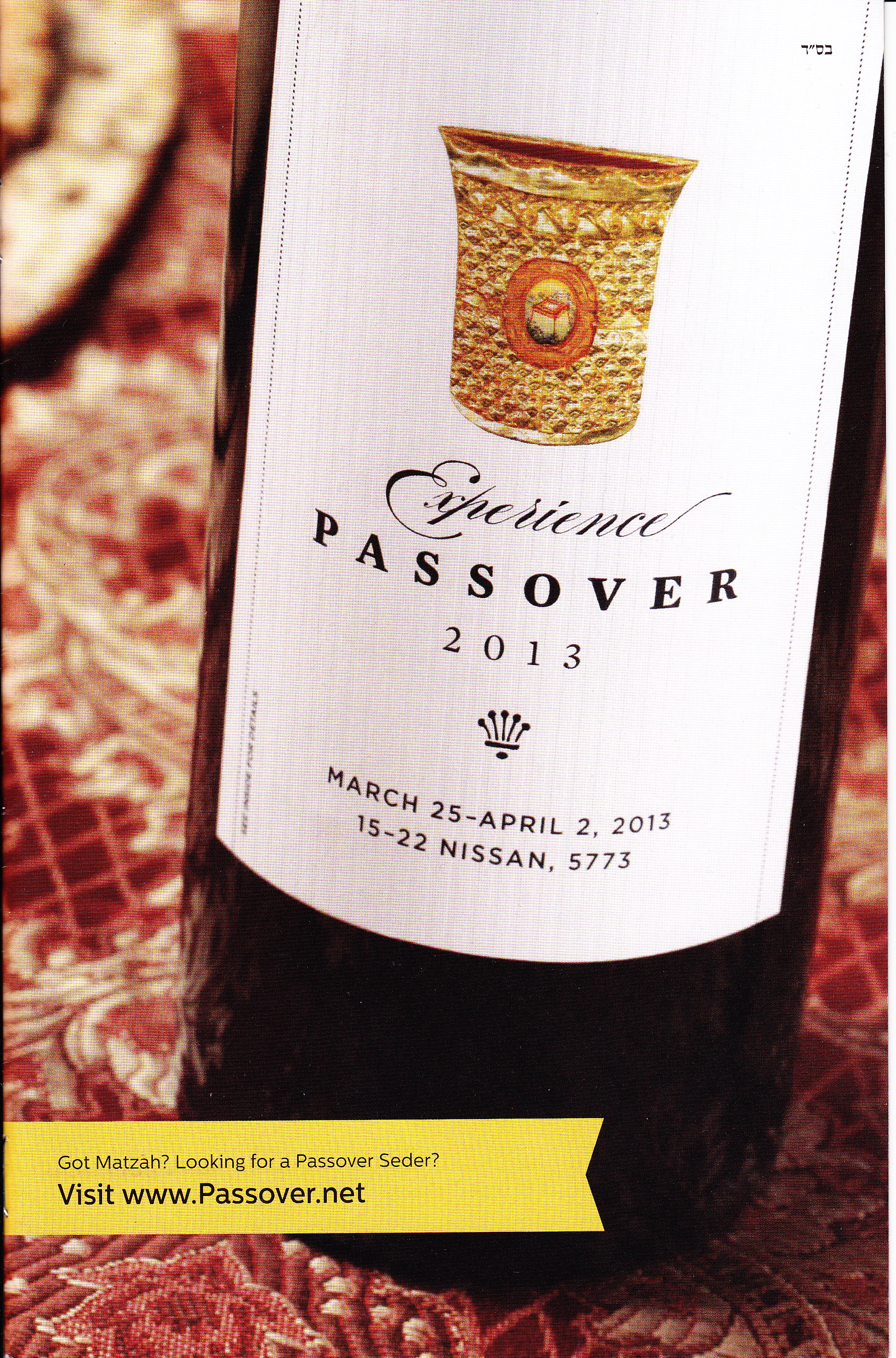
Happy Passover to my Jewish siblings!

Happy Passover to my Jewish siblings!


Christmas Incorporated

ChristmasinAmericaA number of years ago I wrote a short book on holidays for children. Like most of my books, it was never published. I wrote it when I learned that good books explaining in simple language whence various American holidays came appeared not to exist. The literary agents I contacted quickly showed me why. In any case, I remain curious about holidays and so I read Penne L. Restad’s Christmas in America: A History. There’s a wealth of gifts in this brief book. I’d researched the subject a little bit myself, so I already knew some of the origin stories, but if you’d like to know why we have Yule logs, egg nog, or why Santa prefers red, this is the book for you. As I’ve noted in previous posts, Christmas is a fairly recent star in the constellation of American holidays. In fact, those of us who work for secular companies know just how few holidays Americans officially celebrate. Having lived three years in the Scotland, I know how seriously holidays are taken in at least one corner of Europe.

Christmas didn’t really catch on in America until the nineteenth century. Industrialization was beginning and more and more was expected of the worker who made the robber barons wealthy. It is no accident that the American Christmas had many of its origins in New York City where much of the industry ran non-stop. Restad, however, makes a very good point that Christmas has always been both pro- and anti-commercial. Owners of large retail chains saw the opportunities to sell goods to time-stressed individuals while the giving of presents often promoted a selflessness uncharacteristic of those who stand to profit from consumers. Restad notes the increase in goodwill that Christmas generates in society as a whole. Indeed, I have seen more people giving to the homeless during the past two weeks than I had seen so far this year.

One aspect of Christmas that I hadn’t expected to find in Restad’s treatment was the early emergence of the “prosperity gospel.” Of course, it wasn’t called that in the early twentieth century, but in the millennia since the Christmas story actually originated, some in the church began to take their own righteousness far too seriously. Seeing that clergy who knew how to tug the soul-strings just right could easily gain wealth, they started to suggest that God wants you to be rich. They seem to have overlooked who was born in a stable because there was no room in the inn. Search the Gospels and your search will be in vain if you attempt to find words to console the rich. The “prosperity gospel” is as much a lie today as it was when it began, back in the days when dubious clergy looked for a way to excuse their comfortable lifestyles while many of their flock suffered want. Christmas in America shows itself to have a little bit of the social gospel built in, for it is clear that even the Devil can site Scripture for his own purposes.


Ruby Tuesday

If you’re reading this, you survived Cyber Monday. Not that I personally remember the Middle Ages—I have no desire to return to them—but there was a time when nearly every day of the year was known by a saint’s name. Even as an Episcopalian, nominally Protestant, I was surprised just how many red letter days there were. Black letter days seemed special by comparison. Now, however, our days are named by the shopping expectations. Not only do we have Black Friday and Cyber Monday, we have the moveable feasts of “shopping days before Christmas.” And many other holidays participate in this bonanza dedicated to Mammon. Halloween is a major cash-generating holiday and Valentines can be counted on for buying love. St. Patrick’s for buying green with gold. Ironically, all of these were once, at some remote time, holidays decreed by the church. Many of them are even older than that, going back to pagan times, but religious nonetheless.

In a sluggish economy such times are indeed anticipated. Still, I don’t hear of the one percenters suffering during these difficult times. “Let them eat cake,” Marie Antoinette once was supposed to have said. Cakes are celebratory desserts, of course. We make them everyday occurrences with birthdays that should, in theory, keep the river of cash flowing all year long. The great corporate cathedrals require the offerings of the average citizen, and they insist on far more than a tithe. Then the investment firms complain that people don’t think ahead and save their money for retirement. We see many who live long enough to experience want in their declining years. There should be an app for that.

I wonder if there is something much deeper going on. Those who run so fast usually have something from which they wish to hide. There is the story of King Herod who, according to popular reconstruction, tried to buy the favor of his subjects by monumental building. Herod was not a popular king, and he had a reputation for being bloodthirsty when enraged. It is difficult to verify, but the basics of the story still ring true; when his way of running society was threatened he decided to kill the innocents. Such stories, one might hear a pontiff declare, fall within the genre of the folktale, the story told to make a point. What might that point be? Might it not be that each day is itself a gift and that spending money is not the only way to make time sacred? Of course, as long as you’re online, why not just PayPal your way to true happiness?

A techno-log on Cyber Monday.


Leap Day

Why isn’t Leap Day a holiday? From ancient times early civilizations that used a solar calendar realized that the 365 day year doesn’t really work out. (Must have been a calculation error in the divine calculus on day one, I suppose.) Even though the solstices and equinoxes come and go with astronomical regularity, the earth’s orbit around the sun is a little out of sync with its wobble on its axis. The difference doesn’t make itself very apparent in a year, or even a decade. If you let it keep going, however, the calendrical months, like the seasons themselves, begin to migrate. Given enough time January would become summer in the northern hemisphere. Intercalary solutions ranged from adding extra days to saving them up, in some cultures, and adding an extra month to the year. The error of the gods then slipped back into mathematical precision. The one thing that the ancients recognized in common was that this extra time was a gift, a day to be celebrated. In the modern, post-industrial world, it is just another day to go to work while politicians get an extra day to campaign.

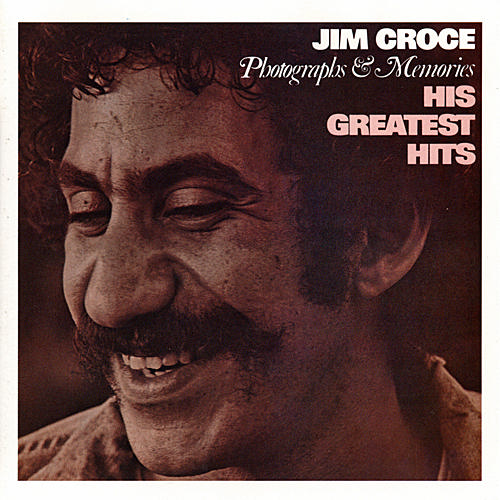
Time is perhaps the greatest theological challenge. People have limited time. Since we seek pleasure and comfort—even when we don’t attain it—most of us prefer to remain alive to try again. We sometimes forget how great a gift this is. One of my favorite songs growing up was Jim Croce’s “Time in a Bottle.” But alas, time is a bandit—as Jim Croce’s tragically short life illustrates a little too well. As the ultimately unrenewable resource, time reminds us of the folly of politicians and the fickleness of fame. Wasting time is the greatest sin imaginable.

Above all, time is a religious problem. Faced with human mortality, all religions address, in some way or other, what happens after the end. When time runs out. We can’t conceive this world without us, but as the calendar implacably shows, it’ll get along just fine. That’s why today should be a holiday. It is a freebie—one of those rare, saving up for a rainy day moments when after four years of scrimping we’re given a new day. It has celebrate written all over it. Time is a bandit, robbing us of the sensibilities of our ancient, cultural forebears who used this time to party while we use it to labor. “Time in a Bottle,” it is said, was written for Croce’s son A. J. The son is a musician like his late father. As I sit here hearing the seconds tick away on the clock, I realize that every great once in a while the bandit gives as well as takes. In that light, every day is a holiday.


Buying Salvation

October is upon us. The telltale signs are all there: trees just starting to turn, gray skies that hide an intangible menace, a coolness in the air, and Halloween stores sprouting like mushrooms. Halloween is a holiday with incredible sales appeal, I suspect, because people are still, at some level, very afraid. We evolved into who we are from a long history of being prey as well as predators. Fear governs many of our interactions in social settings, although we prefer to call it more abstract names such as “rule of law” or “peer pressure.” Deep down, we are afraid. Halloween allows us to wear that fear on our sleeves. And it isn’t just the Celts who made this confession; Día de los Muertos developed independently, giving us a different flavor of the same emotion. Savvy marketers know that where a human concern lies, there will be the purse-strings also.

Commercialization of religion—the fancy word is “commodification”—is as close to American religious experience as you can get. We live in a religious marketplace. Various religious groups offer their wares, sometimes obviously, sometimes subtly. Often the underlying motivation is fear—fear of displeasing deity, fear of eternal torment, fear of reincarnation. We are afraid and we don’t know what to do, so we try to buy our way out of it. Other times the Madison Avenue approach works. Consider the Crystal Cathedral, or even the great medieval cathedrals of Europe. These are tourist destinations, architectural marvels that draw us in. The message is still pretty much the same: the deity will get you unless you give back. How better to show respect (that is fear) than erecting a massive, complex, and very expensive edifice to the angry God?

It is simplistic to suggest that religion boils down to fear, but when all the water evaporates, fear is certainly evident among the residue. Next to the overtly commercial holiday of Christmas the most money can be coaxed out of Americans at Halloween. Or consider the appeal of horror movies. Love them or hate them, they will draw in big money at the box office. In a society that sublimates fear and tells its citizens that unimpeded growth is attainable, Halloween is the most parsimonious holiday. Perhaps the most honest, too. A full month before the creepy sight of naked trees and chill breezes that sound like screams whistling through their bare branches, the stores begin to appear. When Halloween is over they will be dormant for eleven months of the year, but like the undead they are never really gone. Only sleeping.

A parable.


Washington’s Birthday

Today’s post is an excerpt from an unpublished tween book I wrote on the origin of American holidays a few years back. Other excerpts are available on the Full Essays page of this blog.

Our founding father, a little worse for wear

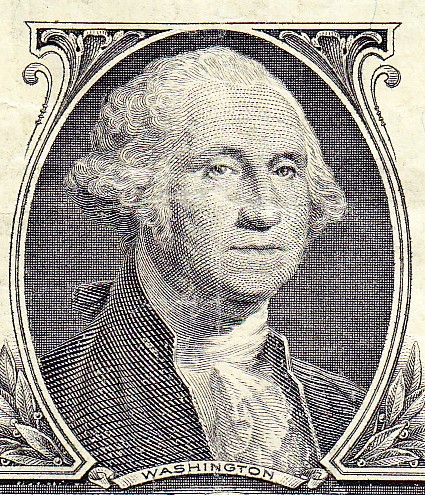
Today is the earliest of only three government holidays devoted to an individual, specifically George Washington. Also called President’s Day, this holiday comes on the third Monday in February. Washington was born February 11, 1731. In an interesting twist of fate, when the Gregorian calendar was finally accepted in the United States in 1752 Washington found his birthday shifted to February 22. Washington died in 1799, but the idea of national holidays for a single person had not yet been invented. It took almost a century for someone to do something about it. When Washington’s Birthday was first observed in 1880 only the government offices in the District of Columbia (named for Washington, of course) got the day off. Naturally, they celebrated it on February 22. Five years later, in 1885, all federal offices took the day off.

Now, the problem with government holidays is that Post Offices, which are run by the government, are also closed. That means no mail. For businesses that used to mean an interruption of work – believe it or not, before the Internet was invented nearly all business relied on snail mail! It is hard for a business to take a day off in the middle of a week, so in 1971 George Washington’s birthday was moved again so that it would always be on a Monday. Washington, being long dead, said nothing.

When I was a kid I always thought Abraham Lincoln’s birthday (February 12, 1809) was a holiday too. It came before Washington’s birthday, but still in February. Since junk mail hadn’t yet been invented, I didn’t notice whether the mail came or not. Lincoln’s birthday was printed on the calendar, but it has never been an official federal holiday. Now, here’s a funny thing: individual states have the right to set state holidays or even rename federal holidays. Lincoln’s Birthday, for example, is a state holiday in Illinois.

In the 1980s Washington’s Birthday underwent another transformation. Noticing that Lincoln’s Birthday was ten days before Washington’s (remember, on the Julian calendar Washington’s birthday was February 11) businesses could call it President’s Day and stores could offer sales. So, wait, what is this holiday called and when is it? Its official, federal name is Washington’s Birthday. Many people, and some states, call it President’s Day. It is always observed on the third Monday in February. And George Washington would have been just as confused as anybody, because he is the only president with three different birthdays!


Epiphany Perception

Our local parks and recreation department has a Christmas tree recycling program. While trees are biodegradable, it always seems crass to me to take such a symbol of joy, hope, and anticipation and have it just thrown in the landfill. The local trees are recycled into mulch, and those who own their homes are free to help themselves to the giant pile of finely chipped pine that smells like the north woods just minutes from Manhattan. The strange part is transporting a dried, outdated tree through town to the drop-off point. Pedestrians and other drivers stare at a car with a tree strapped to the top a few weeks too late for anyone’s holiday. They may find it just a little disorienting: why would someone be taking a dead tree out for a drive? It is not how we’re accustomed to seeing it done.

Perceptions, even if entirely artificial, see us through each day. Some continue to argue that perceptions are indeed reality. When we see something mildly disconcerting, we might ask what is happening. A familiar character in an unfamiliar costume is a trivial sort of dissonance, but it is enough to raise perception to a conscious level. We all know the accepted color scheme, so what (other than bad photoshopping) is going on when the Enterprise crew swaps shirts?

The issue is, however, a serious one. Many of the troubles we experience in society are based on fictitious certitudes. It is a strange human trait that me may not know why we believe something, but of that belief we are dead certain. From an absolute perspective, we have no way to determine which way space is oriented. If we see a globe facing “the wrong way” the dissonance drives us to correct that misperception. North, south, east, and west are relative terms. They are models that we overlay on our universe. Which way that universe actually tilts is anybody’s guess. Freshly hewn pine trees atop cars are common in December. When such things transpire in January, many people, to guess from the stares, believe their world has somehow gone askew.

Which way is really up?


Thanksgiving Day

This post is an excerpt from my unpublished book for young readers giving the history of American holidays:

When you think of Thanksgiving you may see visions of a big turkey dinner and a four-day weekend. If you’re like me (I hope not!) you probably think that ever since the first Thanksgiving dinner in 1621, Americans have had a big November feast every year since. This popular cozy image may be heartwarming, but it is wrong. Thanksgiving in history is a custom that goes back to the Puritan settlers. Puritans came to America so that they could practice their religion freely. They were religious people (not a great sense of humor); things had been pretty tough for them – crossing the stormy Atlantic in small ships, not knowing what to expect when they arrived, lots of people dying on the way – not an easy thing to do! Once they got here, there were no grocery stores and they hadn’t planted crops earlier in the year, they didn’t even know what would grow here. Many didn’t survive, they weren’t America-tolerant you might say.

What we think of as the first Thanksgiving involved English colonists (Pilgrims) in the Massachusetts Bay Colony and the Wampanoag tribe of Native Americans. One of the Wampanoag, Squanto, served as an interpreter – pretty big of him, considering he’d learned English from being a slave. He taught the settlers how to grow corn, which was unknown in Europe. (What the English called “corn” is what we call “wheat.” The more correct word for what we call “corn” is “maize.”) Squanto also taught the Pilgrims how to catch eels to eat – maybe he found a way to pay them back after all! The first Thanksgiving meal in 1621 followed the Pilgrims’ first successful harvest. They ate deer and some wild birds – enter the turkey! – along with their crops.

You see, both the Wampanoag and the English had traditional harvest festivals – many peoples do. “Thanksgiving,” however, has to do with, well, giving thanks. Did I mention that the Pilgrims were religious? They believed that God had successfully brought them here, so they thanked God. Not every early harvest was so great. In a bad year they had a day of mourning rather than a Thanksgiving feast. Some historians place the first “Thanksgiving” in 1923. The Pilgrims had experienced a drought. Frantically they prayed for rain, and, Flanders-like, it came. So they held a Thanksgiving. These Massachusetts Puritans held Thanksgivings in church rather than around a banquet table. For them, these irregular days of giving thanks marked the survival of difficult times, not fancy food. So they held occasional Thanksgivings, not watching football after a big meal, but praying in church. By the middle of the 1600s settlers began to have a harvest-day Thanksgiving pretty much every year, but not always on the same day. They had not set a specific date to give thanks and feast.

Puritans, you must realize, gave thanks at the proverbial drop of a buckled hat. They prayed before meals as a regular practice – something many families continue to do. To set aside a day for special prayers, like Thanksgiving, was as natural for them as women wearing bonnets. The practice of having an annual (yearly) day of giving thanks got underway in Massachusetts around 1630. Other colonies joined in, but not always at the same time. Remember, harvests come at different times in different places.

[See Full Essays for the rest of the story.]


Kupalle or Ivan Kupala

The mysteries of newspaper layout are opaque to the laity, but the basic premises are clear; important news in the front, less pressing matter behind. The human eye, while expert at pattern detection, craves breaks in a series of repetitive columns of identically sized words. Newspapers and textbooks therefore punctuate the strictly “factual” information with images that lighten the ocular burden. So it was that yesterday’s New Jersey Star-Ledger graced the World and Nation section on page 10 with a photo of Kupalle.

Photo credit: Nikolay Yastrebov, European Pressphoto Agency

The caption notes that these young ladies are celebrating the pagan summer solstice holiday of Kupalle in Minsk. The summer solstice was almost two weeks ago, so why the photo made its premiere yesterday is one of those newspaper-specialist mysteries. Nevertheless, my curiosity about Kupalle was piqued. The photo looked like a more family-friendly version of a ceremony portrayed in The Wicker Man where young ladies leap over a fire. Some research revealed that Kupala is an ancient Russian water goddess, connected in some way with Neman, a Celtic goddess (thus the Wicker Man tie-in). The festival dedicated to Kupala involves leaping over a bonfire to ensure fertility. Kupala may have been lunar in origin but her name translates as “she who bathes.”

Christianity has a long history of subsuming “pagan” celebrations, often “baptizing” them into Christian form. In Belarus, Kupalle became the festival of Ivan Kupala, “John the Bather.” Kupalle was literally baptized. June 24, as the fictive date of John the Baptist’s birth, is a saint’s day in Roman Catholicism. The timing of the holiday intentionally coincides with Midsummer, one of the most sacred times of many nature religions. Ironically, in the Baptist’s name a holiday was reborn into Christian form. In the post-communist days of Eastern Europe, not only does Orthodox Christianity appear publicly, but its precursors once again engage public interest. Even if it is two weeks late.


Sol Invictus

Perhaps for abject fear of paganism, western civilization has avoided holidays associated with the summer solstice. Being the lightest day of the year in a frequently dark northern hemisphere, it was naturally a time to celebrate the victory of light over darkness. While the winter solstice insinuated itself into the complex of Christmas holidays and Easter became intricately intertwined with the vernal equinox, the summer and autumn holidays were rejected.

This neglect of the powers of light coincides to some extent with the orthodox Christian rejection of Gnosticism. The Gnostics, able dualists like their Zoroastrian predecessors, celebrated the victory of light over darkness. Remnants of their theological outlook survived in the canonical Gospel of John and the always questionable Revelation. Ancient societies throughout the world recognized the summer solstice because, regardless of its name, the sun was acknowledged as a powerful deity. On this day the sun is at its height of strength, banishing darkness for longer than any other day of the year. It is a day not to waste.

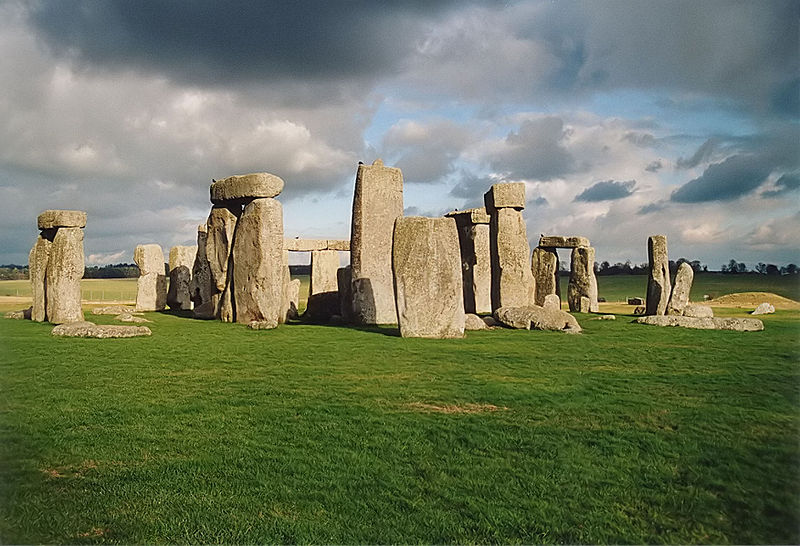
Christianity has preserved some minor holidays for the summer season, but with the advent of a leisure-based society where summer is a time to take it easy, if not cease work altogether, the solstice lost its grip. Perhaps because light is so abundant already in the longer days as winter wends its way into spring and summer and lingers pleasantly until the vernal equinox, summer itself is simply holiday enough. Those adhering to the ancient religions nevertheless gather at sites like Stonehenge and Maeshowe, or even Egypt’s famous pyramids to consider the unending influence that our special star holds for its most imaginative planet.

The stones of summer


Patriarchalism or Party?

Father’s Day is a “holiday” I treat with great ambivalence. Having barely known my own father, I applaud those dads who devote enough time and energy to their kids to earn a day of recognition. On the other hand, in a society that continues to foster privileges for men in the market and labor worlds, I wonder if men need their own holiday. I suppose one must separate “father” from “men,” since the day is the celebration of an ideal rather than a gender.

“A good man is hard to find,” so the old saying goes. Maybe that’s why there was never a father’s day in the ancient world. Anyone reading the ancient myths, the way that many fathers behaved, well, it’s no wonder they weren’t celebrated! Cronos, in some traditions Cybele’s husband, actually ate his own children. Not much of a motivation for celebration there. Were the gods made in the image of the metaphorical fathers?

In the United States the first Father’s Day was observed in Fairmont, West Virginia in July 1908. It has been suggested that a mine disaster that had killed over 350 men nearby was the inspiration for the day. About two years later in Creston, Washington, Sonora Smatt Dodd celebrated her father who’d raised six kids mostly by himself. President Woodrow Wilson was famously celebrated by his own family, and President Calvin Coolidge proposed the holiday in 1924. An early supporter of Father’s Day was the politician William Jennings Bryan, famous for his stand on what he understood as family values. President Lyndon Johnson set the day as the third Sunday in June. Father’s Day only became official in 1972, under President Richard Nixon. Still, it seems to be a day established by men for men, smacking a little too much of the self-congratulatory.

Back before cell phones were invented, Father’s Day was the biggest day of the year for collect phone calls. Perhaps that phenomenon is the essence of the holiday. From those to whom more is given, more should be expected.


St. Valentine’s Day

In keeping with my holiday series for young people, I present here my lighthearted essay on Valentine’s Day. This holiday was actually the starting point for the book project. My daughter had to do a school paper article on the holiday and had a difficult time finding information on the history of Valentine’s Day that was suitable for children. I starting writing this book at that time since there was nothing on the market. Still isn’t. In any case, here goes —

Hearts and cupids and tasty candy are a long way from the origins of this holiday! To get a grip on St. Valentine’s Day we have to go back to the Romans again. Remember that the Romans took over the known world in the first century B.C.E. Nobody has accused the Romans of having a great sense of humor! Like most empire-builders they had the serious business of looking out for their own best interests in mind.

Before Constantine (if you skipped New Year’s Day, there’s more there) the Romans worshipped lots of gods. Their religion didn’t really have a name, but it had plenty of gods, gods to spare even! So when they conquered the land where Jesus would show up, Judaea (aka “Israel”), they didn’t really need any more gods. There were so many religions around, in fact, that the Romans hated new religions.

One of the favorite Roman sports was killing Christians, because Christianity was a new and illegal religion. By a remarkable coincidence two guys by the name of Valentine were priests in the early days of the church. Although St. Valentine’s Day gets cootie points for some, the name actually means “valiant.” Well, these two Valentines were both traditionally killed on February 14 in the 200s (C.E.). So Valentine’s Day starts with blood and gore!

Read the rest here (under Full Essays).


Inter-species Prognostication

Groundhog Day is a holiday easily forgotten by all but Bill Murray fans and residents of Punxsutawney, Pennsylvania. The day, however, has a role deep in European folk religion that was reflected in the “cross-quarter days.” From ancient times, the four days of the year that fall precisely between the solstices and equinoxes were known as cross-quarter days, based on the day of the month that rent was due in England (“quarter days”). The Celts recognized this cross-quarter day in early February as Imbolc (later Christianized as Candlemas). Part of the folk religion held that animals had special powers on cross-quarter days, and that fair weather on Imbolc meant that more wintry weather was on the way.

In America, where Groundhog Day has its original burrow, the tradition began among German immigrants. The first historical reference to Groundhog Day was made in 1841 in Morgantown, Pennsylvania. By 1886 Punxsutawney had its groundhog Phil and the tradition has continued ever since.

Although it is a lighthearted holiday, I always tell my Hebrew Prophets class (which begins near Groundhog Day) that this is a form of socially accepted prognostication. Few believe that a marmot can predict the weather, but we like to believe that winter is on its way out when the cold starts to feel old and stubborn and we are ready for a few sunny days. The old tradition states that if Phil doesn’t see his shadow he won’t dash fearfully into his den and spring is on its way. Fact is, spring falls six weeks from Groundhog Day, so no matter what the rodent says, spring is on its way. Ancient religions always stress the hope that nature will continue as it has in the past and that spring will follow winter as it should. It is nevertheless a fun day to watch the largest member of the squirrel family amble out of his heated burrow, no doubt confused by all the furless bipeds standing around with cameras, and play the prophet for his fifteen minutes of national fame.

The world's hairiest prophet?


Important Days

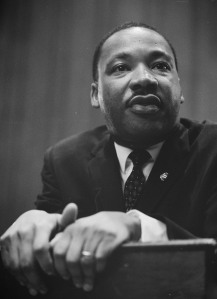
A few years back, during that nightmare called the Bush Administration, a petition was going around to try to prevent the United States from going to war in Iraq. A phone petition was put in place to encourage those against the war to telephone the White House and peacefully make their convictions known. I decided to call in. Since I worked at Nashotah House, I had forgotten that Martin Luther King Day was a national holiday (the seminary did not commemorate it). I telephoned the White House from my office only to receive a recorded message stating that the offices were closed because it was “President’s Day”! I hung up astonished. Our own government did not know what day it was (in retrospect, not such a surprise —).

A couple of years later while I was working on my book of holidays for children, I recalled the incident. It still strikes me as very odd, given the importance of today’s commemoration. I am including below my brief write-up for Martin Luther King Day from my still unpublished book:

One of the few national holidays in the United States to honor an individual is Martin Luther King Day. There are only three individual based holidays – Washington’s Birthday and Columbus Day are the other two. Martin Luther King Day is observed on the third Monday of January, and it had a hard time making it through the government process of becoming an official holiday. It seems like old prejudices die hard, since the bill proposing this holiday was introduced in 1968 but was not signed into law until 1983!

Martin Luther King Day is the only national holiday commemorating an African American individual. While school kids are probably just grateful for a day off so soon after the Christmas holidays, this holiday stands out as important for many reasons. Perhaps the main reason is that the United States were united around the idea of freedom, a basic right for all in this country.

Martin Luther King Jr. was born on January 15, 1929. His story of a courageous, non-violent challenge to unfair practices in the United States is an inspiration to all who care about justice. King was a Baptist minister and a main leader of the Civil Rights movement. He was awarded the Nobel Peace Prize in 1964 for his example of peaceful protest; King was the youngest person to have ever been awarded this honor. He was assassinated on April 4, 1968. Even so, this holiday was not officially observed in all 50 states until 2000.

The federal government (pay attention!), that is, the government over the whole country, has the right to set holidays. Anyone who works for the federal (national) government gets the day off. Individual states, however, can decide if they will observe the date as a holiday or not. That is why some state workers get a holiday off while those in another state do not.

The United States stands for equal rights for all citizens. King stands as a symbol for that belief and his life shows that sometimes it takes everything you’ve got to make sure that the right thing is done.

Another factoid about this holiday is that it shows just how different holidays can be from one another. Some are fun while others make us think.