Inter-species Prognostication

Groundhog Day is a holiday easily forgotten by all but Bill Murray fans and residents of Punxsutawney, Pennsylvania. The day, however, has a role deep in European folk religion that was reflected in the “cross-quarter days.” From ancient times, the four days of the year that fall precisely between the solstices and equinoxes were known as cross-quarter days, based on the day of the month that rent was due in England (“quarter days”). The Celts recognized this cross-quarter day in early February as Imbolc (later Christianized as Candlemas). Part of the folk religion held that animals had special powers on cross-quarter days, and that fair weather on Imbolc meant that more wintry weather was on the way.

In America, where Groundhog Day has its original burrow, the tradition began among German immigrants. The first historical reference to Groundhog Day was made in 1841 in Morgantown, Pennsylvania. By 1886 Punxsutawney had its groundhog Phil and the tradition has continued ever since.

Although it is a lighthearted holiday, I always tell my Hebrew Prophets class (which begins near Groundhog Day) that this is a form of socially accepted prognostication. Few believe that a marmot can predict the weather, but we like to believe that winter is on its way out when the cold starts to feel old and stubborn and we are ready for a few sunny days. The old tradition states that if Phil doesn’t see his shadow he won’t dash fearfully into his den and spring is on its way. Fact is, spring falls six weeks from Groundhog Day, so no matter what the rodent says, spring is on its way. Ancient religions always stress the hope that nature will continue as it has in the past and that spring will follow winter as it should. It is nevertheless a fun day to watch the largest member of the squirrel family amble out of his heated burrow, no doubt confused by all the furless bipeds standing around with cameras, and play the prophet for his fifteen minutes of national fame.

The world's hairiest prophet?


Important Days

A few years back, during that nightmare called the Bush Administration, a petition was going around to try to prevent the United States from going to war in Iraq. A phone petition was put in place to encourage those against the war to telephone the White House and peacefully make their convictions known. I decided to call in. Since I worked at Nashotah House, I had forgotten that Martin Luther King Day was a national holiday (the seminary did not commemorate it). I telephoned the White House from my office only to receive a recorded message stating that the offices were closed because it was “President’s Day”! I hung up astonished. Our own government did not know what day it was (in retrospect, not such a surprise —).

A couple of years later while I was working on my book of holidays for children, I recalled the incident. It still strikes me as very odd, given the importance of today’s commemoration. I am including below my brief write-up for Martin Luther King Day from my still unpublished book:

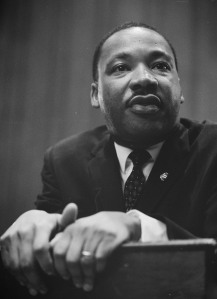
One of the few national holidays in the United States to honor an individual is Martin Luther King Day. There are only three individual based holidays – Washington’s Birthday and Columbus Day are the other two. Martin Luther King Day is observed on the third Monday of January, and it had a hard time making it through the government process of becoming an official holiday. It seems like old prejudices die hard, since the bill proposing this holiday was introduced in 1968 but was not signed into law until 1983!

Martin Luther King Day is the only national holiday commemorating an African American individual. While school kids are probably just grateful for a day off so soon after the Christmas holidays, this holiday stands out as important for many reasons. Perhaps the main reason is that the United States were united around the idea of freedom, a basic right for all in this country.

Martin Luther King Jr. was born on January 15, 1929. His story of a courageous, non-violent challenge to unfair practices in the United States is an inspiration to all who care about justice. King was a Baptist minister and a main leader of the Civil Rights movement. He was awarded the Nobel Peace Prize in 1964 for his example of peaceful protest; King was the youngest person to have ever been awarded this honor. He was assassinated on April 4, 1968. Even so, this holiday was not officially observed in all 50 states until 2000.

The federal government (pay attention!), that is, the government over the whole country, has the right to set holidays. Anyone who works for the federal (national) government gets the day off. Individual states, however, can decide if they will observe the date as a holiday or not. That is why some state workers get a holiday off while those in another state do not.

The United States stands for equal rights for all citizens. King stands as a symbol for that belief and his life shows that sometimes it takes everything you’ve got to make sure that the right thing is done.

Another factoid about this holiday is that it shows just how different holidays can be from one another. Some are fun while others make us think.


A Sigh for Cybele

As we fall out of the holiday season into that distinctly chilly and sometimes cheerless February, Cybele comes to mind. Over the past several weeks I have added posts focused on the holidays associated with December and January. In the course of my research for a children’s book on American holidays (not published), I was astonished at how frequently Cybele appeared among the origins of current holiday practices. Having researched ancient Near Eastern mythology long enough to complete a doctorate in the field, and to write a book on an ancient goddess (Asherah), the lack of reference to Cybele in my sources was unexpected. I pushed this question mark to the back of my mind, but as I was reading H. P. Lovecraft’s story “The Rats in the Walls,” I found Cybele once again.

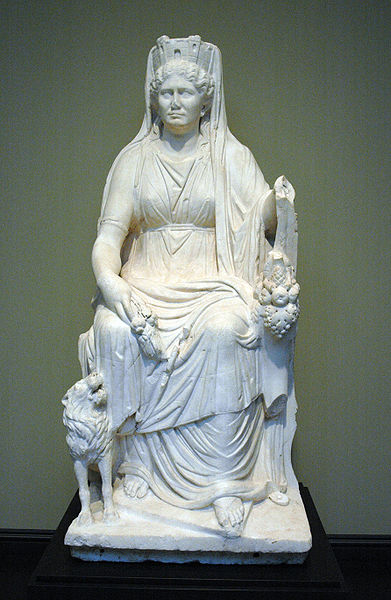
Cybele eventually became a major Roman goddess, although she was never among the Greek Olympians. Her importance shows in her connections with several Roman festivals and practices of antiquity, some of which have survived even to the present. Greco-Roman adherents to Cybele worship considered her to have been of Phrygian origin. Many scholars, however, see in her name and character echoes of a Semitic goddess named after Gebal, or the native name for Byblos in Phoenicia. If so, she is one further piece of the puzzle connecting the classical world with that of the fertile crescent.

Wikipedia Commons Cybele

A standard title for Cybele was Magna Mater, or “great mother.” As such, she was frequently associated with the earth itself, widely considered to have been a primordial female deity in the ancient Near East. In many respects she resembles Asherah, although the two are never explicitly identified. In myths where she is associated with Atys (later Attis), she becomes the spouse of a “dying and rising god.” She is prominent in festivals around mid-March, at the time of the renewal of fertility in the Mediterranean basin. Matronly, stolid, and powerful, Cybele lurks in the background of religious sensibilities. Her association with spring offers something to look forward to as the overly long, yet short, month of February starts to become visible.


Holidays Through Kids’ Eyes

A trite truism we are often subjected to states that Christmas is really for the kids. As I suggested earlier in this blog, adults also see the benefits in a holiday break, and many adults experience Christmas like kids. But how do children experience the holidays, really?

Two unrelated news stories this week demonstrate the breadth of childhood holiday experience. Last week an 8-year old boy in Massachusetts was sent home from school for a drawing. The teacher asked the students to make a Christmas drawing (a bit of December dilemma there!), and this boy drew Jesus on the cross. Well, that could be a simple holiday mix-up, an Easter Bunny in Santa’s sleigh. The problem arose when the boy said it was himself on the cross, with x’s for eyes. The boy’s father reported that they had recently visited a Catholic shrine with obvious crucifixes, and the boy seems to have thought Christmas was somehow associated with death.

A second story comes from Tennessee where a 4-year old boy was picked up outside, drinking beer and wearing a stolen dress from under a neighbor’s Christmas tree. After being treated for his condition, the boy was released to his mother who said that he was trying to get arrested to be with his father in jail. Christmas is family time, after all.

Perhaps the warm and cozy stories of animals placidly staring into a mysteriously glowing feed trough are the stuff of adult fancy. Maybe these children see the holidays in their unmasked guise — wish fulfillment in a world that is just not what it should be.