Someplace Beyond Longing

November is a month pregnant with significance. It is the month of NaNoWriMo (National Novel Writing Month; when I tried it a few years back I finished a novel in three weeks). It is the start of the “Holiday Season” with Thanksgiving kicking off a slightly more relaxed schedule for businesses and students alike. Often the first day of Advent falls near the end of the month. In many places it has already provided the first snow of the season. For scholars of religion, however, November is the month of the American Academy of Religion and Society of Biblical Literature annual meeting. This year it will be held in San Diego, and will, no doubt, impact my blogging schedule somewhat. Being a creature of consistency, I try to upload my posts around 4:30 a.m. eastern time on weekdays, as I start pulling myself together for work. I’ll be three hours off for the latter part of this week, but if trips to California conform to any pattern, I may still find myself awaking at 1:30 wondering why the city is so quiet. California, here I come!

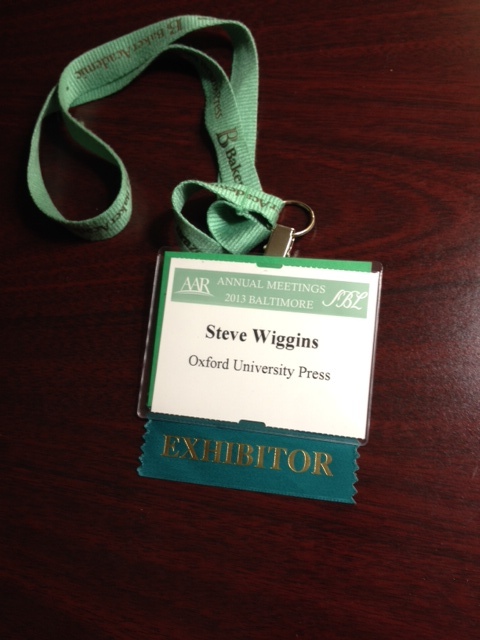
When I attended as a participant, I gave a paper nearly every year. Several of these papers were making their way toward a book that will never be published. Some produce content. Others only consume. Attending as a participant was kind of like a professional vacation—a few days off the usual teaching schedule, trying to find colleagues to catch up on, listening to papers. From the publishing perspective, it is a non-stop four-day weekend of work. As I see my colleagues on their way to late night receptions, I have to beg off. Tomorrow’s a working day for me. The exhibit halls open at eight, and I will have no idea what time it is in any case.

Ironically AAR/SBL is one of the things that has remained consistent in my professional life. It is almost a migratory feeling. I began attending in 1991, only missing the odd year here and there when something more important took its place. I was, however, never an insider. I chaired one of the sections for six years, but nobody ever contacted me suggesting we meet up. I could advance no one’s career. Now my calendar’s full. Now that I have something others want, suddenly I’m a commodity. Funny thing about a conference dedicated to disciplines associated with selflessness. As I pack my bags and make my plans to take care of details while I’m gone, my mind wanders to the purpose of it all. I used to dream that I would forget to visit the book stalls, and on the plane returning home I’d realize that I’d missed one of the most important parts of the show. That nightmare no longer plagues me. It is now the sole purpose for which I attend.

Am I that obvious?

Am I that obvious?


Keeping Time

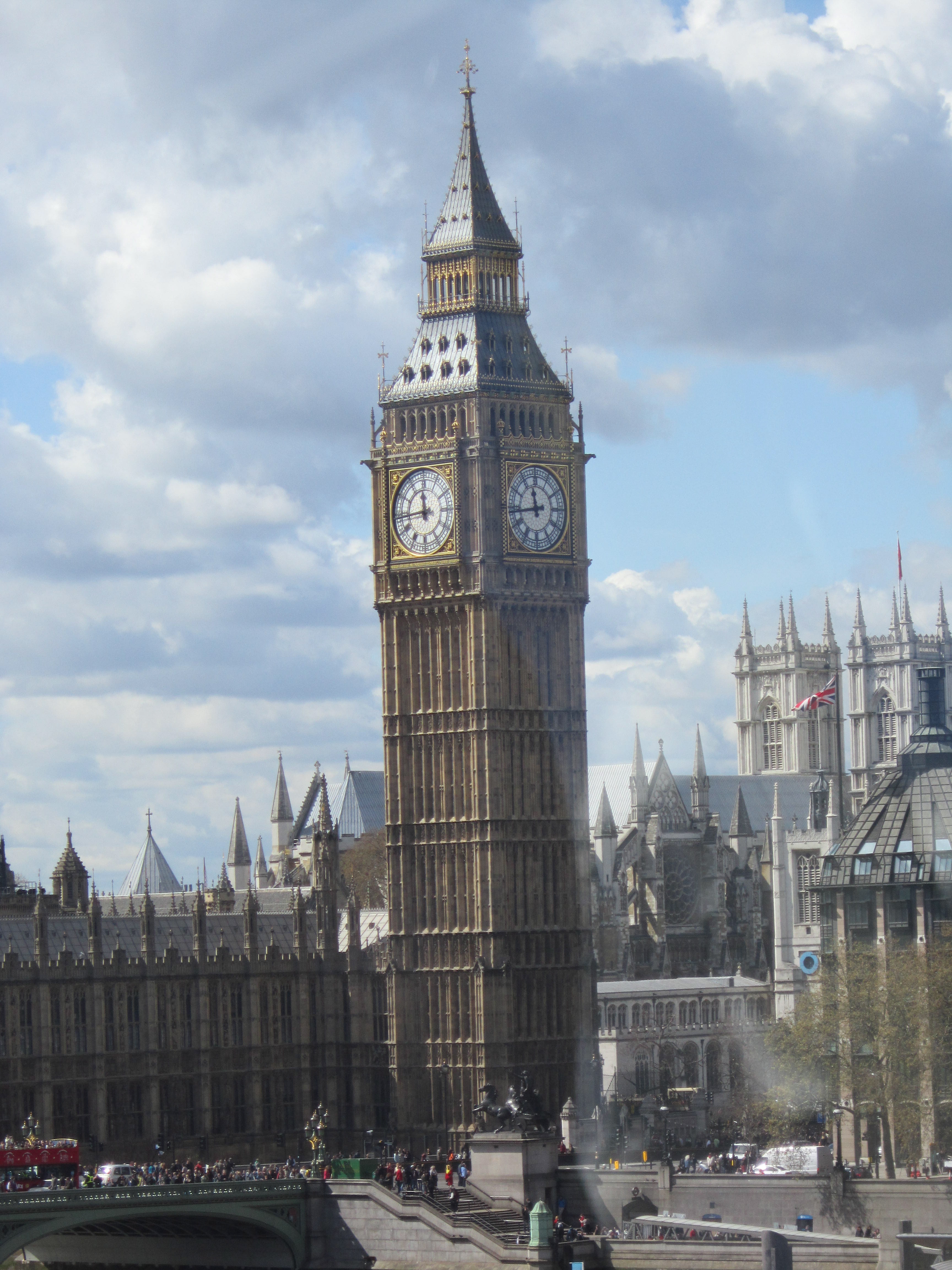
Did you remember to set your clock back? Depending on where you are (and this presumes there are any people reading this at all) it might have been a mistake. When I worked with Routledge, we had weekly trans-Atlantic meetings via conference calls. I remember the general confusion of what time it was where, and how that effected meeting times. The UK sets its clocks back at a different time then many states do this side of the ocean. As much as it is nice to have an extra hour of sleep (next weekend for most Americans, this morning for the British Isles) it really never seems worth the disruption on the other end of “standard time.” In the spring it will take several weeks to adjust to disrupted sleep patterns after long winter naps—for those who are able to sleep in, in any case. I’ve long thought it is time to do away with this practice: if daylight savings time is a good idea, why don’t we just keep it that way all year around? Greenwich Mean Time, however, could never admit to being wrong.

IMG_0320

I was always told daylight savings time was because of concerns for children walking to school in the dark. An article in The Guardian, however, gives the real reason. It was war. During the First World War (which impacted so many aspects of life that we’re still sorting them all out), Germany implemented daylight savings time to conserve fuel to support the war effort. Squeezing a few more minutes of daylight from a slumbering public meant more resources for the engines of destruction. Other nations soon followed and when we turn our clocks ahead in the spring and yawn wicked yawns all day at work and stumble about for lack of sleep, we wonder if that extra hour’s snooze in the fall was really worth it. Because of my commute, I rise early. If everyone awoke around 4 a.m., daylight savings time would quickly become moot. It does nothing to help. I already catch the bus in the dark and arrive home after dark, as I will until well into spring. It is a holiday with no meaning.

Religions have been, historically, the clock keepers of humanity. Our hours were regulated for prayer, our weeks divided up for a day of worship or rest, our years punctured by holy days. All of this was done for the sake of religion. In our secular world, there would be no reason beyond the recognition that people are more productive when they can rest to give them one day off in a week. Seven days corresponds to no natural division of time, unless you consider a quarter of the moon’s phases for 28-day months to be significant. Religions have been our time-keepers. Daylight savings time, however, was the child of war. This week our UK colleagues will be well rested and content. Next weekend the US will join them. But the second horseman of the apocalypse has sanctioned this unholy day, and when the spring rolls around, he will exact his toll. We’d better rest up in the meanwhile, and I, for one, say let’s banish the horseman all together.


Sentence

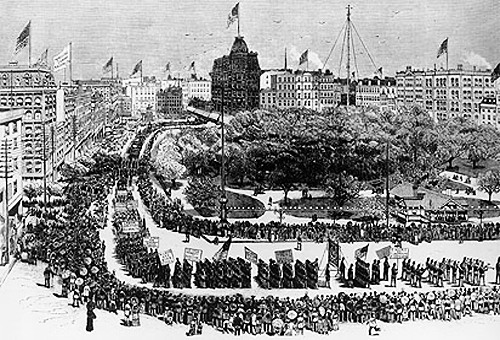
Labor Day marks the end of summer. Originally a day to commemorate all that the common laborer has contributed to society, it is now always a slightly melancholy day with the equinox fast approaching and the mighty rays of the sun growing enfeebled. Although the vast majority of us don’t have summers off any more, our employers sometimes devise summer hours to make the monotony of a commuting life a little less onerous. My academic colleagues have all switched their minds back to full engagement as students, lamenting the shortness of summer, stumble resentfully into classrooms to find out what they don’t know. To learn how to be laborers, increasingly. Once upon a time, children, higher education opened doors for you. You would climb that ladder. As an adjunct teaching night classes, I would often pass the janitor cleaning up and I would know s/he was making better money than I was. Labor Day must be upon us again.

Labor_Day_New_York_1882

Unashamedly a populist, I still think of myself as a laborer. In fact, the longer I work in Manhattan the more like my blue-collar upbringing I become. Yes, I have stood in the presence of Lords of the realm, knights in academic armor, and even a Coptic pope. I can mind my p’s and q’s. If you keep your mouth shut, you’ll appear wise even before those who are truly smart. That’s not my wisdom—I paraphrased it from the Bible. I read the Bible daily when my jobs were labor jobs. My first opportunities were heavy work—moving, pulling, brushing, and occasionally smashing. The sun was so hot that I would find a vending machine and down three Mello Yellos in a row. Summer had no time for beaches, but it offered warmer working conditions and a sense of identity.

Labor Day brings us back to work. Summer’s bright grasp has begun to slip, and already the trees have started to yawn. Like the migrating birds I feel the draw to return. Even an animal knows the place s/he belongs. Perhaps we’ve wandered a little too far from the path that should’ve been evident before us. We paid the costs and went to college and found ourselves back where we started. Labor Day is one of those holidays with no religious connections. It is purely secular. Moved from May because of the Haymarket Massacre, we put it at not the beginning of sunnier times, but at the end. I would jealously watch the sun set, but there clouds forecasted to be in the way. Besides, I have to turn in early because tomorrow is just another work day. We only have to hold out to Memorial Day, so let’s enjoy our last taste of summer and wait for its eventual return.


International Panic Day

Holidays have diverse origins. Some appear to have been made up in a fit of madness, bearing no particular relevance to anything. When I saw a publisher offering an “International Panic Day” sale, however, I supposed it was a joke. A quick web search indicated otherwise. June 18, for reasons nobody can really identify, is International Panic Day. I’m reminded of the Simpsons episode where Marge, liberated from her phobia of being mugged, runs past grandpa calling, “I’m not afraid!” to which he replies, “Then you’re not paying attention.” Fear and panic, while not the same thing, live in the same neighborhood. Many analysts point to fear as the primal emotion behind religion. We may never be able to prove that with any certainty, but I can’t think that panic has a religious origin. Many panics have emerged from religious fervor, but the panic itself seems not to have conceived religion.

Run_on_the_Seamen's_Savings'_Bank_during_the_Panic_of_1857

According to Holiday Insights (dot com, of course) no information can be found on the origins of the holiday, which makes it sound like a perfect internet invention. It is a day to feel unsettled. For some of us, that seems like most days. Again citing the wisdom of cartoons, Charlie Brown notes in the 1965 Christmas special, “I know nobody likes me. Why do we have to have a holiday season to emphasize it?” Holidays can be like that sometimes. But a panic day? I have an amateur theory that International Panic Day derives from Panic Day (about which Holiday Insights also has no information), which falls on March 9.

Some online sources have noted that the choice of June 18 is a strange one for International Panic Day because the next day is already (and has been since 1979) World Sauntering Day. This holiday is believed to have begun at the Grand Hotel on Mackinac Island in Michigan. Apparently W.T. Rabe, the holiday’s creator, was reacting to how popular jogging had become and wanted people to slow down for a day. International Panic Day would seem to suggest that running is the best option. Without a goal, of course, other than just to get away. Maybe there is a connection with religion after all. Having long been a fan of Douglas Adams, however, I am a devotee of his contra-mantra: don’t panic.

DSCN1993


Clockwork Universe

longitudeIn a clockwork universe, time is an essential interpretive factor. Those of us constantly crushed for time hardly realize just how recent of an invention it is. Time has, of course, been around forever. Human interaction with it, in the daily sense of what defines work and what defines leisure, dates only to modernity. Train schedules, in the Victorian Era, led to the need for standardized time across large land masses such as North America. Prior to that, with an uncanny precision to those of us who infrequently take the time even to look at the sky, clocks across the nation were set at noon by observing the sun at its zenith. Even though the concept of longitude existed, its measurement at sea was maddeningly difficult. The Phoenicians, the ancient mariners who circumnavigated Africa, did so by staying in sight of land as much as possible. The open ocean gives few clues as to those imaginary lines we assign to keep our location certain.

Dava Sobel’s Longitude: The True Story of a Lone Genius Who Solved the Greatest Scientific Problem of His Time, is, despite the lengthy title, a brief book laying out the story of John Harrison. Harrison, a clock-maker whose precision clocks made the calculation of longitude a much more precise science, was in a race for a royal grant to reward the discoverer of a method for giving precision to ships at sea. Harrison represented those who believed accurate clocks could solve the problem, while others argued that mapping the heavens would give sailors the best chance. Often we forget that loss of life greater than that on the Titanic could occur when ships ran aground, due to lack of knowledge concerning their longitude. Navigating the seas before GPS and before accurate watches, was often a matter of informed guessing with very high stakes. Harrison never did get to claim fully what he’d earned and we’ve all but forgotten how difficult finding the correct time was when our computers remind us, to the second, of precisely when we are.

Prior to science, the keeping of time was a religious function. Sacred calendars marked holidays—often with the ulterior motive of keeping farmers on track for when planting time for various crops, and their harvests, should commence. Telling the change of seasons by when to add or discard a layer of clothing seems eminently practical, but it doesn’t help an agricultural society to plan ahead adequately. The gods would give the time, and all they would require was a cut of the profits. It was, all things considered, a reasonable trade-off. And now holidays have mostly slipped their religious moorings to become times when we simply don’t have to go to work. Speaking of which—look at the time…


Thanksgivukkah

A moveable feast is hard to hit. Or something like that. Religious festivals are frequently tied to celestial events—the ancient Jewish holidays are based on a lunar calendar which, we all know, is out of synch with the solar one. This is the reason that for Christians Easter migrates around the spring calendar, even if different branches of Christianity peg the resurrection on various dates. Curiously, no one has suggested going back to c. 33 C.E., fixing the date of Passover that year, and giving a calendrical date for Easter. It sure would make planning a lot easier. In any case, a week or so ago there was a flurry of lighthearted commentary on “Thanksgivukkah,” the fact that Hanukkah and Thanksgiving occur at the same time this year. Both are moving feasts, and they just happened to bump into each other this year.

Thanksgiving is a modern holiday, emerging with the Protestant penchant for giving thanks for surviving in a harsh, new world. The United States government (which was not shut down at the time) finally regularized the date of the holiday to the fourth Thursday in November, giving the commercial world it’s only regular 4-day weekend. Christmas, not a moveable feast, cycles around the days of the week, giving employers a great sense of glee when it falls on a weekend so that employees may be given only a token Friday or Monday off. The day after Thanksgiving, however, is thankspending, as American a holiday as one can conceive. Hanukkah is also a roving feast. Celebrating the cleansing of the temple in Jerusalem after being defiled by the Seleucids, it has taken on many of the trappings of Christmas over the years, but it can come as early as late November, as Thanksgivukkah demonstrates.

800px-Thanksgiving-Brownscombe

Holidays, in this secular world, have come to represent something for which the Sabbath originally stood. The idea was that people needed a break from work. Despite all the studies that show more breaks make people more productive, our culture glorifies the over-worker. The reason, clearly, is not productivity, but control. I recall a lawyer once drawing a large circle on a newsprint pad and telling me, “this represents what your employer can do to you.” He drew a tiny circle in the middle of the large one and said, “and this is what your employer can do to you that is considered illegal.” Yes, we are a society that has never really gotten over the idea of indentured servitude. Little things like holidays overlapping keep us amused, while still at our desks. Hanukkah lasts for eight days. Christmas for twelve. But don’t try to take all that off—you might like coming back to work refreshed a little too much. Instead, why don’t you try making those bricks by finding your own straw? Everyone will benefit from this pyramid scheme.


What’s a Sukkot?

It’s not every day you see a lulav and etrog, even in Manhattan. You can tell life’s too busy when you miss that it’s sukkot. Not that I’m Jewish, but I have been invited to sukkot a time or two by a friend, and it was always a fun, relaxed occasion. A festive little booth in the back yard, sweet wine and cookies. Running the rat race in New York City it is sometimes easy to forget. On my hurried footrace to some place or another, I noticed a group of Orthodox Jews standing along East 42nd Street with lulav and etrogs in hand. So distracted was I that I only vaguely wondered, “why are they holding those at this time of year?” Several blocks later, entering the Port Authority Bus Terminal I saw a man just standing as the crowds parted around him like the Red Sea. In his hands lulav and etrog. Finally it dawned on me: sukkot. It is fall, the time of year when I used to be able to enjoy the bounty of nature and the good-natured holidays. A time before when.

800px-EtrogC

The Hebrew Bible prescribes a set of three pilgrimage holidays: sukkot, shavuot (pentecost to the Greek, or Christian), and passover. Of the three, all associated with the exodus from Egypt in some traditional way, sukkot is the most lighthearted. The command to live in booths is said to be a reminder of the dwelling in tents during the wilderness wandering. Anthropologically speaking, it probably goes back to an ancient tradition of living in huts during the harvest when you don’t always have time to go home and tuck yourself comfortably in every night. Combines hadn’t been invented, and harvesters had to work long hours to ensure that the crop was gathered in. Eventually it became a celebratory occasion. Nice of Moses to allow a bit of festivity here.

Back while at a certain seminary in Wisconsin, a local Jewish friend used to invite my Hebrew Bible class to sukkot. Numbers were small, and invariably wary—were they going to be proselytized by the other? No, but they were invited to shake the lulav and etrog, sip a little wine, and chat about Leonard Cohen. A bit of a cultural exchange in the midst of prolonged indoctrination. I often wonder if my friend continued the tradition after I was asked to leave. The Christian school never made any reciprocal invitations, of course. Ecumenism is often a one-way street. So I stopped a moment at smiled at the stranger in the bus station, solemnly holding lulav and etrog aloft. Life is a bit too busy when we can’t even take a moment to consider all the things we take for granted every day.


A Goy in the City

Getting across Midtown Manhattan quickly during rush hour involves a kind of algorithm. That means my route to and from work each day changes depending on whether I catch that light at Eighth Avenue or Third Avenue. This past week my algorithm took me down 42nd Street on the way home. As I walked past a group of Orthodox Jews handing out leaflets, they singled me out and stopped me to ask if I was Jewish. I said “No,” but took their literature anyway. At first blush, it may seem odd to be mistaken as Jewish by some local experts (New York City has its fair share), but then again, maybe not. My brother tells me he gets asked the same question. Our great-great-grandparents left Germany in the 1820s and bore the ambiguous surname Tauberschmidt. By my great-grandparent’s generation they seemed to have been Lutheran, but before that? Hey, maybe this could explain a lot. Not to stereotype, but I do have the incessant angst that many Jewish characters exhibit in Woody Allen movies. Probably it’s my imagination. I thought it was cool to be mistaken for a “minority.” I felt, for a moment, like I belonged.

Reflecting on this incident (which made my day, by the way), I ask myself what it means to be part of a religion that has become a culture. The academic lingo for this is “cultural Jews” (in this case), but there are definitely “cultural Christians” as well. I suspect most religions have their cultural commandos. Part of the dynamic at work here is that although the world is very religious, it’s not really that religious. Most religious folks have an emotional connection to their tradition that may be, in fact, cultural rather than, for lack of a better word, spiritual. A person who is deeply religious often runs afoul of life in the everyday world. There is a sinful plethora of distractions. Those truly concerned about their religions often find themselves employed by them.

Cultural religions give the world a great deal of color. People flock to St Patrick’s Day parades when rivers are dyed green and everyone wants to be part Irish (and there is a genetic bit of this in my personal mix as well). Where would December be without Christmas and its attendant holidays? Even bunnies like colorful eggs in the springtime, so I’m told. Do any of these things make people religious Christians? I suspect few would argue that they do. I’m stretching Rousseau‘s concept of civil religion a bit tight here, but degrees of religiousness fall along a continuous spectrum rather than appearing in sharply distinguished colors. Cultural faiths are generally accidents of birth. It’s up to the individual how seriously to take it. And sometimes even the faithful misidentify one of their own.

Happy Passover to my Jewish siblings!

Happy Passover to my Jewish siblings!


Christmas Incorporated

ChristmasinAmericaA number of years ago I wrote a short book on holidays for children. Like most of my books, it was never published. I wrote it when I learned that good books explaining in simple language whence various American holidays came appeared not to exist. The literary agents I contacted quickly showed me why. In any case, I remain curious about holidays and so I read Penne L. Restad’s Christmas in America: A History. There’s a wealth of gifts in this brief book. I’d researched the subject a little bit myself, so I already knew some of the origin stories, but if you’d like to know why we have Yule logs, egg nog, or why Santa prefers red, this is the book for you. As I’ve noted in previous posts, Christmas is a fairly recent star in the constellation of American holidays. In fact, those of us who work for secular companies know just how few holidays Americans officially celebrate. Having lived three years in the Scotland, I know how seriously holidays are taken in at least one corner of Europe.

Christmas didn’t really catch on in America until the nineteenth century. Industrialization was beginning and more and more was expected of the worker who made the robber barons wealthy. It is no accident that the American Christmas had many of its origins in New York City where much of the industry ran non-stop. Restad, however, makes a very good point that Christmas has always been both pro- and anti-commercial. Owners of large retail chains saw the opportunities to sell goods to time-stressed individuals while the giving of presents often promoted a selflessness uncharacteristic of those who stand to profit from consumers. Restad notes the increase in goodwill that Christmas generates in society as a whole. Indeed, I have seen more people giving to the homeless during the past two weeks than I had seen so far this year.

One aspect of Christmas that I hadn’t expected to find in Restad’s treatment was the early emergence of the “prosperity gospel.” Of course, it wasn’t called that in the early twentieth century, but in the millennia since the Christmas story actually originated, some in the church began to take their own righteousness far too seriously. Seeing that clergy who knew how to tug the soul-strings just right could easily gain wealth, they started to suggest that God wants you to be rich. They seem to have overlooked who was born in a stable because there was no room in the inn. Search the Gospels and your search will be in vain if you attempt to find words to console the rich. The “prosperity gospel” is as much a lie today as it was when it began, back in the days when dubious clergy looked for a way to excuse their comfortable lifestyles while many of their flock suffered want. Christmas in America shows itself to have a little bit of the social gospel built in, for it is clear that even the Devil can site Scripture for his own purposes.


Ruby Tuesday

If you’re reading this, you survived Cyber Monday. Not that I personally remember the Middle Ages—I have no desire to return to them—but there was a time when nearly every day of the year was known by a saint’s name. Even as an Episcopalian, nominally Protestant, I was surprised just how many red letter days there were. Black letter days seemed special by comparison. Now, however, our days are named by the shopping expectations. Not only do we have Black Friday and Cyber Monday, we have the moveable feasts of “shopping days before Christmas.” And many other holidays participate in this bonanza dedicated to Mammon. Halloween is a major cash-generating holiday and Valentines can be counted on for buying love. St. Patrick’s for buying green with gold. Ironically, all of these were once, at some remote time, holidays decreed by the church. Many of them are even older than that, going back to pagan times, but religious nonetheless.

In a sluggish economy such times are indeed anticipated. Still, I don’t hear of the one percenters suffering during these difficult times. “Let them eat cake,” Marie Antoinette once was supposed to have said. Cakes are celebratory desserts, of course. We make them everyday occurrences with birthdays that should, in theory, keep the river of cash flowing all year long. The great corporate cathedrals require the offerings of the average citizen, and they insist on far more than a tithe. Then the investment firms complain that people don’t think ahead and save their money for retirement. We see many who live long enough to experience want in their declining years. There should be an app for that.

I wonder if there is something much deeper going on. Those who run so fast usually have something from which they wish to hide. There is the story of King Herod who, according to popular reconstruction, tried to buy the favor of his subjects by monumental building. Herod was not a popular king, and he had a reputation for being bloodthirsty when enraged. It is difficult to verify, but the basics of the story still ring true; when his way of running society was threatened he decided to kill the innocents. Such stories, one might hear a pontiff declare, fall within the genre of the folktale, the story told to make a point. What might that point be? Might it not be that each day is itself a gift and that spending money is not the only way to make time sacred? Of course, as long as you’re online, why not just PayPal your way to true happiness?

A techno-log on Cyber Monday.


Leap Day

Why isn’t Leap Day a holiday? From ancient times early civilizations that used a solar calendar realized that the 365 day year doesn’t really work out. (Must have been a calculation error in the divine calculus on day one, I suppose.) Even though the solstices and equinoxes come and go with astronomical regularity, the earth’s orbit around the sun is a little out of sync with its wobble on its axis. The difference doesn’t make itself very apparent in a year, or even a decade. If you let it keep going, however, the calendrical months, like the seasons themselves, begin to migrate. Given enough time January would become summer in the northern hemisphere. Intercalary solutions ranged from adding extra days to saving them up, in some cultures, and adding an extra month to the year. The error of the gods then slipped back into mathematical precision. The one thing that the ancients recognized in common was that this extra time was a gift, a day to be celebrated. In the modern, post-industrial world, it is just another day to go to work while politicians get an extra day to campaign.

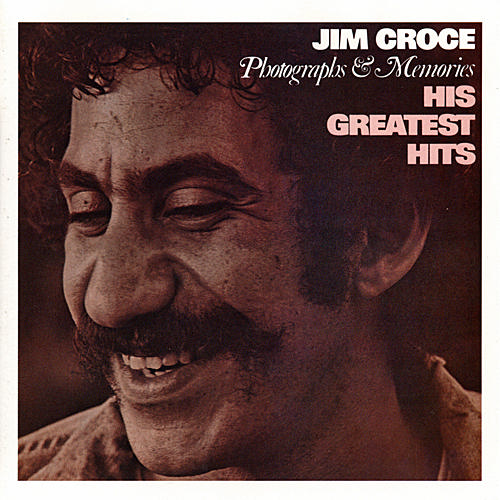
Time is perhaps the greatest theological challenge. People have limited time. Since we seek pleasure and comfort—even when we don’t attain it—most of us prefer to remain alive to try again. We sometimes forget how great a gift this is. One of my favorite songs growing up was Jim Croce’s “Time in a Bottle.” But alas, time is a bandit—as Jim Croce’s tragically short life illustrates a little too well. As the ultimately unrenewable resource, time reminds us of the folly of politicians and the fickleness of fame. Wasting time is the greatest sin imaginable.

Above all, time is a religious problem. Faced with human mortality, all religions address, in some way or other, what happens after the end. When time runs out. We can’t conceive this world without us, but as the calendar implacably shows, it’ll get along just fine. That’s why today should be a holiday. It is a freebie—one of those rare, saving up for a rainy day moments when after four years of scrimping we’re given a new day. It has celebrate written all over it. Time is a bandit, robbing us of the sensibilities of our ancient, cultural forebears who used this time to party while we use it to labor. “Time in a Bottle,” it is said, was written for Croce’s son A. J. The son is a musician like his late father. As I sit here hearing the seconds tick away on the clock, I realize that every great once in a while the bandit gives as well as takes. In that light, every day is a holiday.


Buying Salvation

October is upon us. The telltale signs are all there: trees just starting to turn, gray skies that hide an intangible menace, a coolness in the air, and Halloween stores sprouting like mushrooms. Halloween is a holiday with incredible sales appeal, I suspect, because people are still, at some level, very afraid. We evolved into who we are from a long history of being prey as well as predators. Fear governs many of our interactions in social settings, although we prefer to call it more abstract names such as “rule of law” or “peer pressure.” Deep down, we are afraid. Halloween allows us to wear that fear on our sleeves. And it isn’t just the Celts who made this confession; Día de los Muertos developed independently, giving us a different flavor of the same emotion. Savvy marketers know that where a human concern lies, there will be the purse-strings also.

Commercialization of religion—the fancy word is “commodification”—is as close to American religious experience as you can get. We live in a religious marketplace. Various religious groups offer their wares, sometimes obviously, sometimes subtly. Often the underlying motivation is fear—fear of displeasing deity, fear of eternal torment, fear of reincarnation. We are afraid and we don’t know what to do, so we try to buy our way out of it. Other times the Madison Avenue approach works. Consider the Crystal Cathedral, or even the great medieval cathedrals of Europe. These are tourist destinations, architectural marvels that draw us in. The message is still pretty much the same: the deity will get you unless you give back. How better to show respect (that is fear) than erecting a massive, complex, and very expensive edifice to the angry God?

It is simplistic to suggest that religion boils down to fear, but when all the water evaporates, fear is certainly evident among the residue. Next to the overtly commercial holiday of Christmas the most money can be coaxed out of Americans at Halloween. Or consider the appeal of horror movies. Love them or hate them, they will draw in big money at the box office. In a society that sublimates fear and tells its citizens that unimpeded growth is attainable, Halloween is the most parsimonious holiday. Perhaps the most honest, too. A full month before the creepy sight of naked trees and chill breezes that sound like screams whistling through their bare branches, the stores begin to appear. When Halloween is over they will be dormant for eleven months of the year, but like the undead they are never really gone. Only sleeping.

A parable.


Washington’s Birthday

Today’s post is an excerpt from an unpublished tween book I wrote on the origin of American holidays a few years back. Other excerpts are available on the Full Essays page of this blog.

Our founding father, a little worse for wear

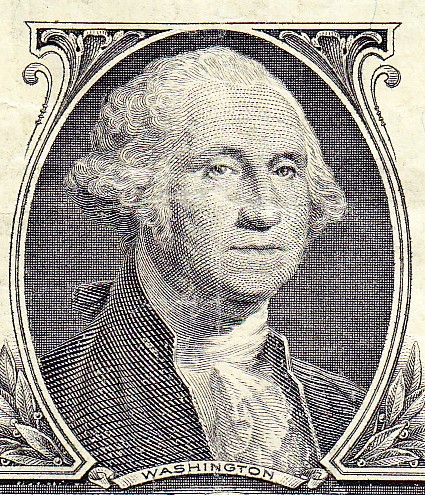
Today is the earliest of only three government holidays devoted to an individual, specifically George Washington. Also called President’s Day, this holiday comes on the third Monday in February. Washington was born February 11, 1731. In an interesting twist of fate, when the Gregorian calendar was finally accepted in the United States in 1752 Washington found his birthday shifted to February 22. Washington died in 1799, but the idea of national holidays for a single person had not yet been invented. It took almost a century for someone to do something about it. When Washington’s Birthday was first observed in 1880 only the government offices in the District of Columbia (named for Washington, of course) got the day off. Naturally, they celebrated it on February 22. Five years later, in 1885, all federal offices took the day off.

Now, the problem with government holidays is that Post Offices, which are run by the government, are also closed. That means no mail. For businesses that used to mean an interruption of work – believe it or not, before the Internet was invented nearly all business relied on snail mail! It is hard for a business to take a day off in the middle of a week, so in 1971 George Washington’s birthday was moved again so that it would always be on a Monday. Washington, being long dead, said nothing.

When I was a kid I always thought Abraham Lincoln’s birthday (February 12, 1809) was a holiday too. It came before Washington’s birthday, but still in February. Since junk mail hadn’t yet been invented, I didn’t notice whether the mail came or not. Lincoln’s birthday was printed on the calendar, but it has never been an official federal holiday. Now, here’s a funny thing: individual states have the right to set state holidays or even rename federal holidays. Lincoln’s Birthday, for example, is a state holiday in Illinois.

In the 1980s Washington’s Birthday underwent another transformation. Noticing that Lincoln’s Birthday was ten days before Washington’s (remember, on the Julian calendar Washington’s birthday was February 11) businesses could call it President’s Day and stores could offer sales. So, wait, what is this holiday called and when is it? Its official, federal name is Washington’s Birthday. Many people, and some states, call it President’s Day. It is always observed on the third Monday in February. And George Washington would have been just as confused as anybody, because he is the only president with three different birthdays!


Epiphany Perception

Our local parks and recreation department has a Christmas tree recycling program. While trees are biodegradable, it always seems crass to me to take such a symbol of joy, hope, and anticipation and have it just thrown in the landfill. The local trees are recycled into mulch, and those who own their homes are free to help themselves to the giant pile of finely chipped pine that smells like the north woods just minutes from Manhattan. The strange part is transporting a dried, outdated tree through town to the drop-off point. Pedestrians and other drivers stare at a car with a tree strapped to the top a few weeks too late for anyone’s holiday. They may find it just a little disorienting: why would someone be taking a dead tree out for a drive? It is not how we’re accustomed to seeing it done.

Perceptions, even if entirely artificial, see us through each day. Some continue to argue that perceptions are indeed reality. When we see something mildly disconcerting, we might ask what is happening. A familiar character in an unfamiliar costume is a trivial sort of dissonance, but it is enough to raise perception to a conscious level. We all know the accepted color scheme, so what (other than bad photoshopping) is going on when the Enterprise crew swaps shirts?

The issue is, however, a serious one. Many of the troubles we experience in society are based on fictitious certitudes. It is a strange human trait that me may not know why we believe something, but of that belief we are dead certain. From an absolute perspective, we have no way to determine which way space is oriented. If we see a globe facing “the wrong way” the dissonance drives us to correct that misperception. North, south, east, and west are relative terms. They are models that we overlay on our universe. Which way that universe actually tilts is anybody’s guess. Freshly hewn pine trees atop cars are common in December. When such things transpire in January, many people, to guess from the stares, believe their world has somehow gone askew.

Which way is really up?


Thanksgiving Day

This post is an excerpt from my unpublished book for young readers giving the history of American holidays:

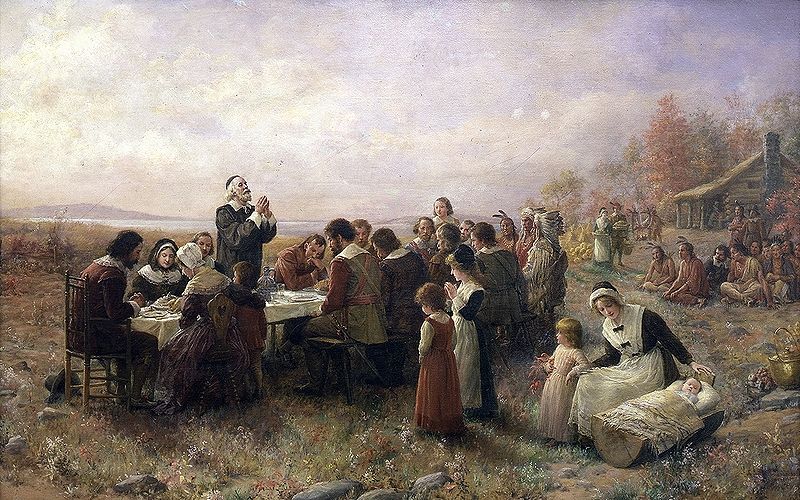
When you think of Thanksgiving you may see visions of a big turkey dinner and a four-day weekend. If you’re like me (I hope not!) you probably think that ever since the first Thanksgiving dinner in 1621, Americans have had a big November feast every year since. This popular cozy image may be heartwarming, but it is wrong. Thanksgiving in history is a custom that goes back to the Puritan settlers. Puritans came to America so that they could practice their religion freely. They were religious people (not a great sense of humor); things had been pretty tough for them – crossing the stormy Atlantic in small ships, not knowing what to expect when they arrived, lots of people dying on the way – not an easy thing to do! Once they got here, there were no grocery stores and they hadn’t planted crops earlier in the year, they didn’t even know what would grow here. Many didn’t survive, they weren’t America-tolerant you might say.

What we think of as the first Thanksgiving involved English colonists (Pilgrims) in the Massachusetts Bay Colony and the Wampanoag tribe of Native Americans. One of the Wampanoag, Squanto, served as an interpreter – pretty big of him, considering he’d learned English from being a slave. He taught the settlers how to grow corn, which was unknown in Europe. (What the English called “corn” is what we call “wheat.” The more correct word for what we call “corn” is “maize.”) Squanto also taught the Pilgrims how to catch eels to eat – maybe he found a way to pay them back after all! The first Thanksgiving meal in 1621 followed the Pilgrims’ first successful harvest. They ate deer and some wild birds – enter the turkey! – along with their crops.

You see, both the Wampanoag and the English had traditional harvest festivals – many peoples do. “Thanksgiving,” however, has to do with, well, giving thanks. Did I mention that the Pilgrims were religious? They believed that God had successfully brought them here, so they thanked God. Not every early harvest was so great. In a bad year they had a day of mourning rather than a Thanksgiving feast. Some historians place the first “Thanksgiving” in 1923. The Pilgrims had experienced a drought. Frantically they prayed for rain, and, Flanders-like, it came. So they held a Thanksgiving. These Massachusetts Puritans held Thanksgivings in church rather than around a banquet table. For them, these irregular days of giving thanks marked the survival of difficult times, not fancy food. So they held occasional Thanksgivings, not watching football after a big meal, but praying in church. By the middle of the 1600s settlers began to have a harvest-day Thanksgiving pretty much every year, but not always on the same day. They had not set a specific date to give thanks and feast.

Puritans, you must realize, gave thanks at the proverbial drop of a buckled hat. They prayed before meals as a regular practice – something many families continue to do. To set aside a day for special prayers, like Thanksgiving, was as natural for them as women wearing bonnets. The practice of having an annual (yearly) day of giving thanks got underway in Massachusetts around 1630. Other colonies joined in, but not always at the same time. Remember, harvests come at different times in different places.

[See Full Essays for the rest of the story.]