Job Months

I’m sure you’ve had them too.  Job-like months when everything seems to happen all at once.  Your bank account grows anemic, making Quicken feel more like quicksand.  Our most recent started when the roof leaked yet again during heavy storms—I sure am glad climate change isn’t real!  Can you imagine how it’d be if we had extreme weather?  This house dates from the late nineteenth century and presumably, if such super-soakers had always been common, well, the roof would’ve been replaced down to the joists.  In any case, in our fourth call to the roofers over seven years, we faced yet another scary bill.  Then the sink began to leak.  Some minor repairs I can do myself, but this house was an either a DIY’s paradise or purgatory.  For us, mainly the latter.  

A couple years back there was a leak from the upstairs toilet tank.  Now, I’ve replaced the guts of a toilet more than once.  I bought the parts and went to work.  It was then that I discovered a previous owner had purchased a fancy-brand toilet for which toilet guts couldn’t be purchased (well, maybe from Japan or China, by slow boat).  You’ll probably agree that without an outhouse, a working toilet is more or less a necessity.  I watched YouTube and my wife and I went to Lowe’s and bought a new toilet.  I’m sure angels were laughing watching the two of use wrestle this metric-ton porcelain throne up the stairs (and demons laughed as we got the old one down).  Installing it looked straightforward.  When it started to leak, the plumber—we’re on a first-name basis now—came over.  He pointed out the faulty mounting pipe and asked if I’d installed it.  It was from the previous owner with high-class taste in toilets.  He turned to his companion and said, “This is why we’ll never go out of business.”
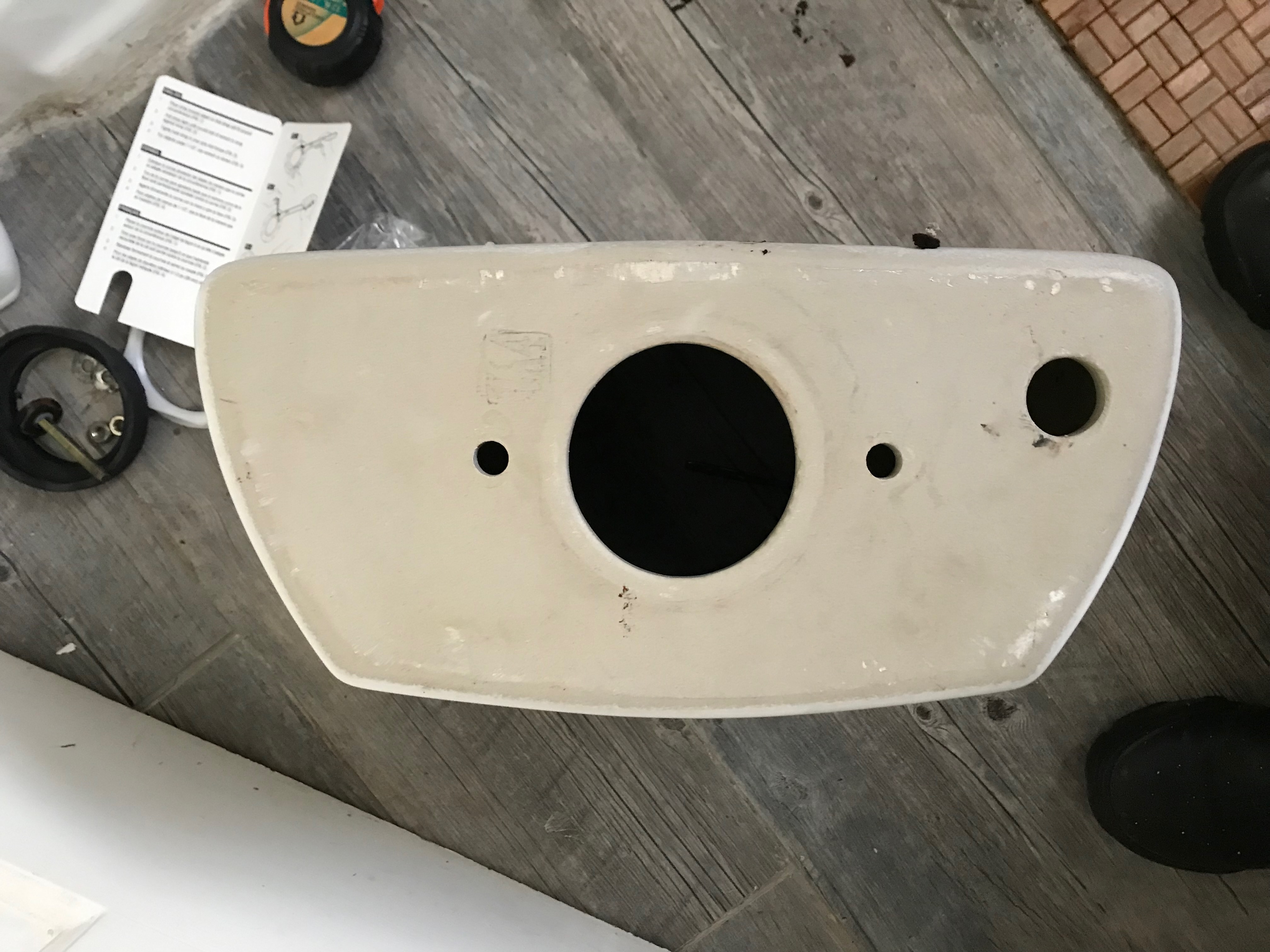
So a twenty-dollar toilet gut replacement turned into a $600 full toilet replacement.  This was in my mind when I had my head under the sink.  We seem to have stopped the water getting in from above, at least for the moment, but now it was clear that the base cabinet under the sink was going to need to be replaced as well.  I called Doug and he said he’d slot me in as quickly as he could.  I’m pretty sure Job didn’t have indoor plumbing.  He probably had to repair his own roof a time or two, though.  Only in his case, it happened just before God made a bet with Satan.  So the story goes.

Or Plastic

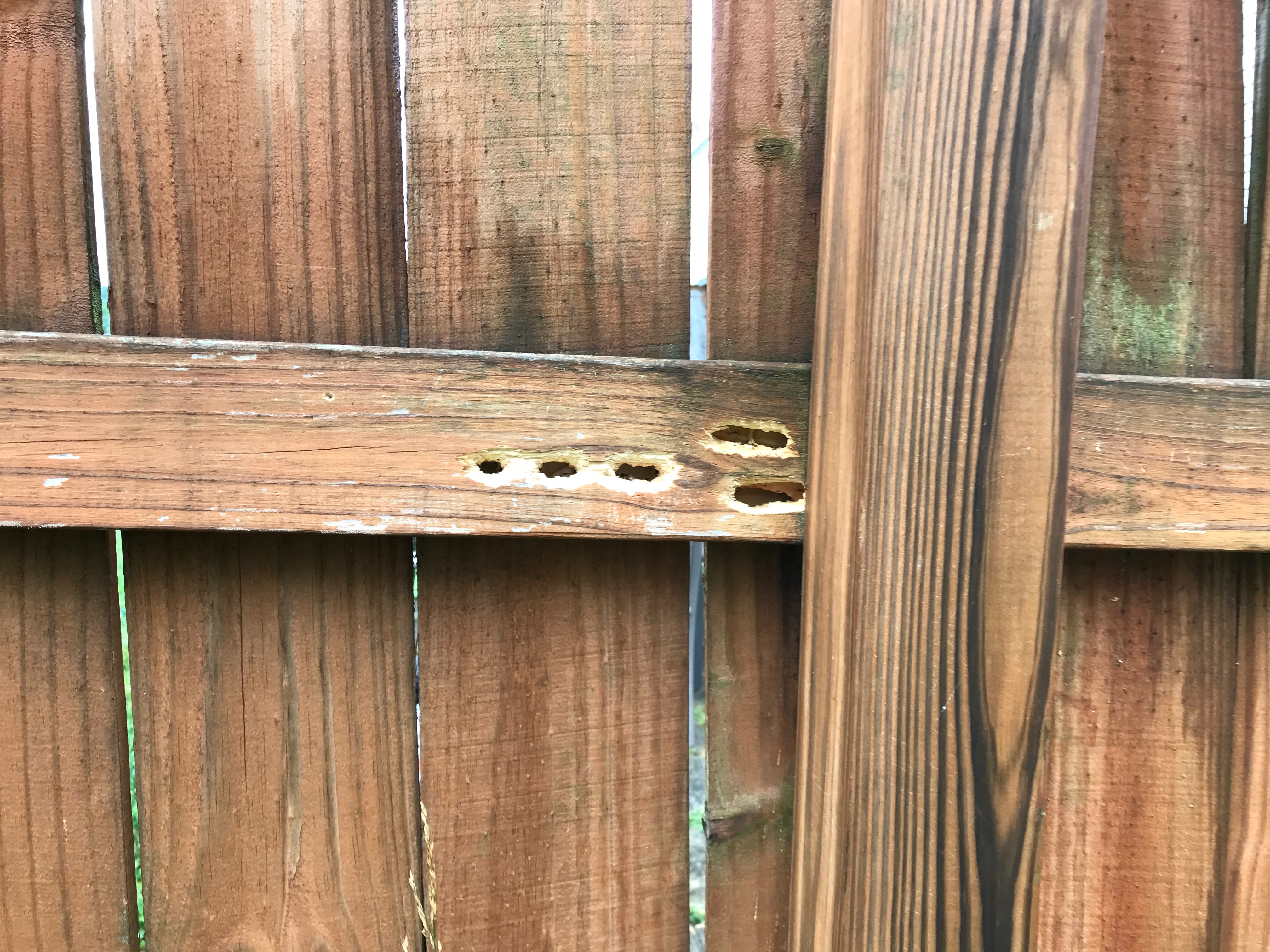
I’m no fan of plastic.  When looking for a house a non-negotiable with me was vinyl siding—nope.  In our neighborhood several houses have plastic fences pretending to be wood. I dislike materials pretending to be something else.  I was dead-set against such a thing, but our house came with a lot of neglected outdoor woodwork.  The fence was wood and had been stained, probably just before we moved in.  Then the carpenter bees arrived.  Local pest control will spray for them, but they come back each summer and unless we have the pest store on speed-dial the bees will find new things to damage.  See, the problem isn’t just the bees.  Woodpeckers, which as a kid always seemed exotic to me, love carpenter bee larvae.  I’ve watched a downy woodpecker hoping along the fence, knocking until it finds one, and then hopping a few feet further to repeat the process for another.  (If you’ve ever watched a woodpecker at work you’d not doubt animal intelligence.)

My wife and I talked it over.  The fence was in poor repair to begin with (another thing our house inspector missed).  I finally came around to seeing why plastic might be the best solution in our case.  Not for me, but for resale value.  The former owners had a thing for untreated outdoor wood.  They’d built a new back porch, but didn’t paint or stain it.  When the carpenter bees noticed, I painted it.  I couldn’t reach the ceiling, though, being short of stature.  Well, this year the carpenter bees have gone for the ceiling.  And the downy woodpeckers have followed them.  Now, when I hear knocking, I have to run downstairs to the back door to frighten off downy.  I will buy a paint sprayer to paint the ceiling, but the bees have had a head start this summer.

So I was in my office and I heard a tapping, as of a woodpecker gently rapping.  I ran downstairs and threw wide the door.  To my surprise, nobody was on the porch.  I went back to work.  Soon again I heard a tapping somewhat louder than before.  I followed my ears to the front door.  Yes, the tapping was from out front but daylight there, nothing more.  I stepped to the edge of the porch.  More tapping.  I leaned over the railing and looked down.  A rare, and large, pileated woodpecker was going at the fence post.  I was about as startled as she was.  My wife was out on an errand and when she returned home she found selfsame woodpecker working elsewhere on the fence.  I’ve learned my lesson.  While wood looks nice, and is natural, it will soon be paper thin if we don’t do something.  It’s a big fence.  And the only option to paper is, unfortunately, plastic.


Don’t Stare

Having people just outside your window all day is a bit unnerving.  We don’t have central air and I keep my windows open when possible in the summer.  My office overlooks the porch roof but the porch was converted into two interior rooms over the years.  (The house was build about 1890.)  With the extreme weather we’ve been getting (rain storms that routinely dump three or four inches of rain in a short period, especially), leaks have developed.  As of this summer, after five years of ownership, we finally have a completely new roof—we had to have it done in parts because it’s not like we have professors’ salaries.  That meant that roofers were outside my office window all day back in August.  Now this is weird.  I was literally six feet away from some of them some of the time, sitting at my laptop, trying not to watch them instead of working.  The roofers, meanwhile, completely ignored me.  Never once when I glanced up did I see any of them looking in the window.

By the end of the day I was freaked out.  You see, as much as I like performing (as any good teacher does), I don’t like being looked at while I’m working at a desk.  I deeply dislike desk jobs and my posture throughout the day becomes, well, idiosyncratic.  Being forced to act as if I were in a sea of cubicles again was difficult.  Of course, I work longer hours now than I did as a commuter (one of the reasons, I expect, many employers don’t insist on people coming back to the office).  Knowing that someone could be watching you, even if they’re not, makes me uncomfortable.  

I considered how it must be for a zoo animal.  Yes, they’re given some privacy, but it’s often limited.  Animals don’t like to be stared at.  (Despite what materialist tell us, we all know what that  feels like and it makes us fidgety.)  When I’m out jogging I find that if I don’t look directly at them, I can get pretty close to many animals.  If you make eye contact, however, they more quickly scurry away.  Those in zoos must eventually become inured to the staring over time, or at least come to realize that nobody’s going to hurt them.  Still, given their druthers, I expect most of them would rather be in the wild where they can do what they do, no matter how boring, without being watched.  And no roofs over their heads at all.


Toil et cetera

Few items are as necessary for modern day life than a functioning toilet.  If you live in town and don’t have an outhouse your other options are pretty limited.  Religion scholars tend to know quite a bit about what goes on in toilets, so I’ve repaired my fair share over the years.  When we had a leak in a fill valve, I had to wait for a weekend to do the repair.  I figured half an hour and thirty dollars at most.  I left it for an afternoon project.  Once I got the new fill valve installed, there was a problem.  The tank wouldn’t fill with water.  It had been clear that the faulty part was the fill valve, as it was hissing and sputtering and there were no leaks into the bowl.  I made a late trip to Lowes for another valve, following the logic that the one I’d bought earlier must’ve been defective.  It didn’t work either.  We had to flush by buckets of water.

Sunday after church I rushed to Lowe’s since, logic dictates, it has to be the flush valve that was the problem.  These are the only two parts inside a toilet tank that require repair.  So I got the tank off, and after running to the hardware store to buy a specialized tool to get the nut of the valve off, I learned that “fits 99% percent of toilets” left that troubling 1 percent for a reason.  Our toilet was special.  The parts were not standard size and neither my local hardware store nor Lowes had the parts in stock.  If we wanted a working toilet that day we would need to replace the entire thing.  So we went toilet shopping.  Hauling a toilet up the stairs is something I hope never to have to do again.  By late Sunday afternoon my half-hour, thirty-dollar project had turned into a multi-day, three-hundred dollar project.  I followed the installation instructions religiously, but, of course, it leaked.

I ended up having to call the local plumber we’ve got on speed-dial.  We’re in our fourth year in our house and we had plumbers here at least six times.  I picture their office assistant grimacing each time our number comes up on their caller ID.  The plumber came and, apart from generating serious tool envy on my part, demonstrated how everything from the soil pipe up had been misinstalled by over-confident DIYers.  I try not to cut corners with plumbing or electrical.  Despite how easy it is to install, or even repair, a toilet, you have to have the correct foundation.  And even scholars of religion need to admit when they’re in over their heads.

Read the fine print.

The Birds and the Bees

Our house came with a wood-plank fence surrounding the yard.  This is a dog neighborhood and just about everyone has a fenced in yard to keep their dogs in check.  It’s more the birds and bees that have me worried, though.  The fence, which is in need of some attention, is bare pine stained redwood.  As the stain fades carpenter bees find it irresistible.  These insects are great pollinators and we don’t like to gas any creatures just doing their evolutionary job.  Painting that fence will be a summer-long project and one that requires far more sunny weather than we tend to get around these parts.  So we have a fence with several carpenter bee homes.  (These are ubiquitous insects in this area, with lots of people complaining about them.  We have, however, the only wooden fence in the neighborhood.)

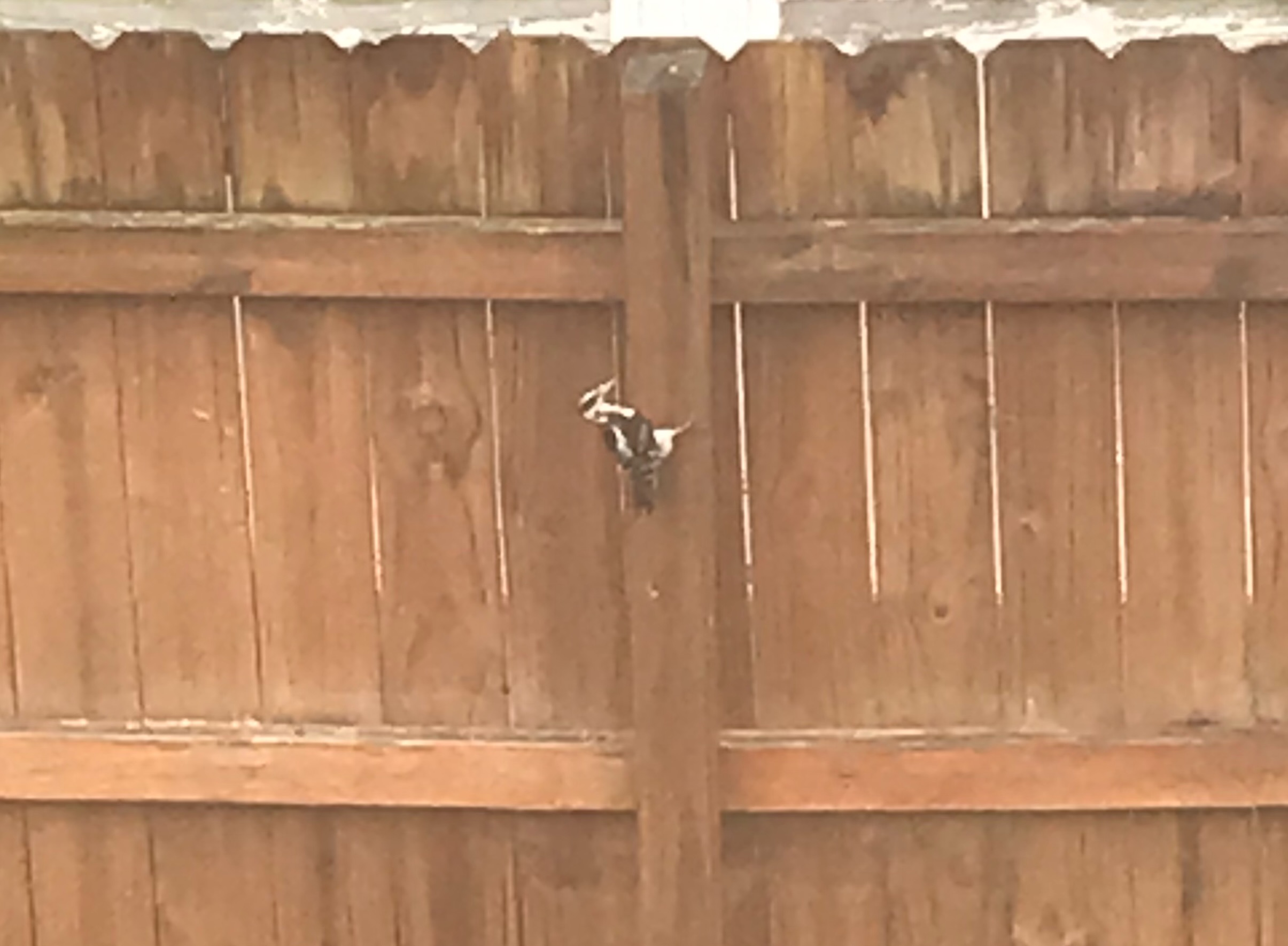
The other day I heard a knocking while I was working.  I looked out the window to see a downy woodpecker, well, pecking at the site of one of the carpenter bee homes.  This industrious little fellow had three holes in the post by the time I got downstairs to startle him or her away.  Now, you have to understand that this is a large fence.  We didn’t put it up but we have to keep it up.  Then I thought, “I was worried about the carpenter bees.  Why should I be worried about the woodpeckers?”  Holes can be patched, and fences can be painted.  I hope the neighbors don’t mind a white fence.  In any case, I left the woodpecker alone after that.  Besides, I can’t be outside all day long—I have a day job.

Over the next several days the pecker became a regular visitor.  I’d be working and then I’d hear a now familiar knocking.  I decided to watch once.  I keep a pair of binoculars in my office because I see lots of birds that I want to identify—there’s a park across the street.  At the risk of the neighbors thinking I was spying, I trained them on Downy.  It was amazing how effective its bill is on a four-by-four.  It quickly cleared a hole, stuck its beak in, and pulled out a fat carpenter bee grub.  Down it went.  A centimeter to the right it repeated the procedure.  Carpenter bees, which are so territorial when building their nests, seem to have forgotten their young.  Perhaps it’s for the best.  This bird was one well-fed flier.  And I’d finally learned what they mean about the birds and the bees.


Eclectic Electric

It all began with the internet going out.  Less than a month ago the modem was replaced, but the tech this time thought it could be the co-ax cable.  We went outside and he fed the cable through, but when he got to the box he noticed a problem.  “Your electrical drop isn’t attached to the house,” he said.  Sure enough, he was right.  “I can’t replace the rest of the cable until that’s fixed—it’s an electrocution risk.” So I called the electric company.  They said I’d need an electrician to secure the conduit to the house, but they’d send somebody out to look.  The tech must’ve been in the area because he arrived just after I spoke to our electrician.  “Your cable has never been permanently connected to the house,” he observed.  “It should be.  We can do that, but you’ve got to get an electrician to attach that conduit.”

The funny thing about this is actually two-fold.  One is that our home inspector didn’t notice that the electrical cable was not secured to the house (once the tech pointed it out to me it was perfectly obvious).  The second is that the former owner of the house claimed to be an electrician.  In fact, he runs a electrical contracting business.  The electrician we pay has said, on one of his many jobs here, “I don’t think he was an electrician.”  I, for one, believe the guy we pay.  So now we have to have him come out and secure the conduit.  Then call the electric company and have them permanently connect the cable (the house has only been here since 1890, so do a few weeks matter?).  Then we call our internet provider and have them replace the cable that’s been causing our internet issues.

We like our quirky old house.  It does seem, however, that many owners have neglected various aspects of it.  And that our home inspector was a somnambulist.  We’re just trying to get it up to code.  Well, actually, we’re just trying to get a secure internet connection because three livelihoods rely upon it.  Shoddy work has consequences, and caveat emptor reigns.  Few things are more basic to modern life than electricity.  Or even the internet, for that matter.  These things are fragile, it turns out, in ways difficult to imagine.  There’s a lesson hidden here, and it reaches back, I suspect, before the taming of electricity.

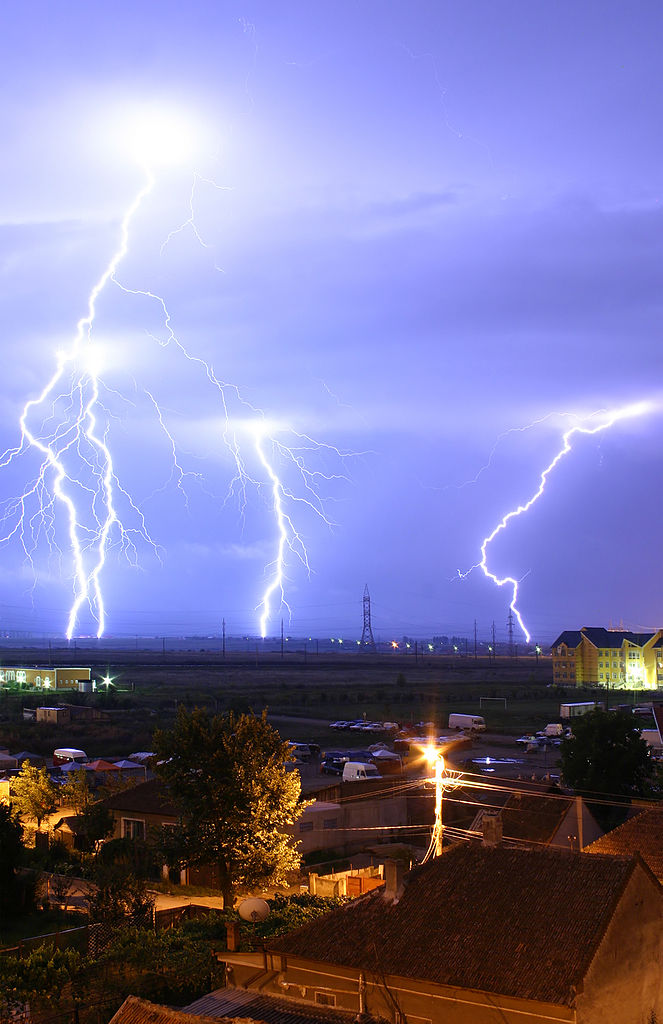
Image credit: Mircea Madau, public domain via Wikimedia Commons

Riddle

It’s an age-old question: how many Ph.D.s does it take to screw in a lightbulb?  I haven’t figured it out yet, so if you have the solution please let me know in the comments.  It’s like this—I’m a short person living in a tall house.  Even while living in apartments I had bought a six-foot ladder and an eight-footer, to reach various things.  A bit of an acrophobe, I tend not to use the latter ladder unless it’s really necessary.  Then the landing light went out.  It’s a dark time of the year and a light over the stairs is really a matter of safety.  The stairs continue up from the landing and this particular ceiling light is eleven feet above the ground.  Given how far I can safely (debatable) climb an eight-foot ladder, I can’t reach the ceiling with what I’ve got.

We had to buy a 28-foot extension ladder to reach the roof.  In its collapsed position it’s 14 feet and requires two people to carry.  I’m not sure we could get it around the corners in the house, and even if we did the math doesn’t work out to fit it in an eleven-foot space with stairs every direction.  I decided to ask YouTube.  The solution there is to buy several two-by-sixes and some heavy-grade plywood and build yourself a temporary platform.  With the pandemic-induced shortages, and therefore price increases, such a platform would cost about $100 to build, and then I’d need to unbuild it after screwing in the light.  Or we could buy another ladder.  Maybe a different house while we’re at it.

Imagine

The thing about ladders is they come in standard lengths.  Around here, anyway, a ten-footer isn’t an option.  The best bet is a multi-position ladder.  Retail cost somewhere upwards of $150.  To someone afraid of heights it feels like the safest of many less than optimal options.  Apart from perhaps carrying flashlights in the evenings that come so early now.  Still, that raises the specter of cost.  How much does it cost to screw in a 5-dollar (LED, of course, to help the environment) lightbulb?  It seems to be a $100 repair, no matter how you do it.  I could try custom-building my own ten-foot ladder.  Or I could try making some tall friends.  Apparently you can rent ladders as well, but of course we’d need to rent the truck to get it here as well.  Or we could learn to live with a shadowy stair this long winter that’s just getting started.  How many Ph.D.s does it take?  I don’t know, but the answer will be more than one.


Permanently Changing

Classifying the world of thought into “eastern” and “western” is a gross oversimplification.  Nevertheless we require some handles by which to grip this unwieldy beast of mental life.  One of the first distinctions that we’re taught is that western thinking tends towards the default of permanency while eastern thought emphasizes change.  Change, of course, is the lack of permanence.  The older I get the more I see the wisdom in accepting change as the only thing that’s really permanent.  It’s a lesson you learn as a homeowner.  In my typical western way of thinking, I assume things will pretty much stay the same, but the myriad of small, external forces work constantly toward change.  The only way to keep a house well is with constant upkeep.

The other day I found a rotted windowsill that our inspector somehow missed.  That it hadn’t happened on our watch was clear by the fact that the previous owners had slapped a thick layer of paint over what was clearly a broken and decaying sill, in essence ignoring the problem.  Change, you see, is constant.  Things really get interesting when you start to apply this to religion.  Although the Bible only hints at it (for the view isn’t entirely consistent) God is considered unchanging.  The same yesterday, today, and forever.  Meanwhile everything down here is constantly in flux—changing, evolving, decaying, reproducing.  Religions of eastern Asia tend to embrace this change as a given.  Our frustration in life, as Buddhism recognizes, has its roots in attachment to permanence.  Things inevitably change.

On the one hand this is so obvious that it might appear simplistic.  But then think how we live our lives here in the western hemisphere.  Our employers hire “change management” teams.  We suppose things will return “back to normal” after this pandemic is over.  We’ve been living the cloistered life for nearly six months now and things have been changing.  Especially in the early days people could be heard lamenting how quickly information and circumstances shifted.  Change is permanent.  For the homeowner anxious about the ability to keep up with upkeep, the constant growth of the lawn and the aggression of weeds can be their own kind of trial.  At times it feels like you need to be paid just to take care of your home since it’s a full-time job.  It is overly simplistic to draw an arbitrary line from pole to pole, but it does seem that some cultures, tending toward the east of the birthplace of monotheism, have some basic insights from which we might learn.


Jacob’s Ladder

Jacob, it is said, was quite a dreamer.  While fleeing from his brother Esau he had a dream of a ladder, or stairway, to heaven.  Well, “Heaven” as we recognize it didn’t exist then, but you get the idea.  Angels were climbing up and down on it, I’m guessing to do roof repairs.  You see, neither my wife nor I are what you might call tall.  In fact, I’m a bit shorter than the average guy and we can’t reach the top shelf in our kitchen, let alone the ceiling.  Or, God forbid, the roof.  So when tropical storm Isaias (not to be confused with the prophet) dropped upwards of five inches of rain on us, some of it got inside.  Our roofer, vexed as I was, promised to get over the next week but there’s more rain in the forecast.  I had to get up there to do some temporary patching.  I needed a ladder.

Ours is an older house.  The roof is way higher than any ladder we have.  I have one that allows me to get as high as the ceiling, but being acrophobic I don’t use it much.  It doesn’t come halfway to the lowest roof.  The hardware stores have ladders, but delivery’s a problem.  A ladder twice as long as our car seems like a road hazard, strapped to the top.  I asked about delivery at the local Lowe’s.  It would cost a third of the price again of the ladder itself, and that’s only be if they could deliver it.  Their truck was, ironically, broken down.  Wasn’t this a DIY store?  Could nobody there fix a truck?  I put a face-mask and rubber gloves on for this?  The world isn’t easy for the vertically challenged.  I really don’t want to climb that high, but with the ceiling below already coming down I’ve got to do something.

I wonder if Jacob’s ladder is still lying about somewhere, unused.  We don’t live far from Bethlehem.  Maybe I can scoot over the Bethel and pick it up.  Then again, maybe angels deliver.  I hear they can be quite accommodating.  Of course, if they’d keep the rain off in the first place that would’ve been helpful.  I’m pretty sure that Plant and/or Page had a leaky roof.  When they went to get up there they’d found somebody had already purchased the ladder (I think they call it a stairway in England).  So I find myself with a leaky roof and no way to get to heaven.


For the Squirrels

Our garage came with a house.  That’s one of the reasons we bought it.  You see, the one thing we don’t have is time.  (Well, that and money.)  When we were contemplating moving, we had no time off.  Vacation days for the remainder of the year had been allocated, and employers don’t like to encourage personal improvement.  Not on company time, anyway.  Which, of course, is as it should be.  We had to find a house with space enough to sort through things after we moved.  Ha!  As if there would be more time!  Still, the sorting would have to wait.  Our house has a detached garage with a second story.  It’s a converted barn, but I doubt its conversion story.  It still seems pretty heathen to me.  The neighborhood squirrels love it.

We store our unsorted stuff upstairs.  Shortly after we moved in, the squirrels had chewed through the stop-gap remediation the previous owners had put in place to satisfy our post-inspection demands.  It was pretty clear their solution wouldn’t keep out rodents, but our lease was about to expire and the market favored sellers, so we closed anyway.  Shortly after moving in I noticed styrofoam poking through the ceiling boards of the garage.  Then I began to find styrofoam chips in the yard nearly every morning.  I soon figured it out.  Squirrels raid the trash receptacles behind restaurants in town, and bring their carryout here.  No, seriously!  They haul styrofoam between the roof and ceiling, presumably licking off the scraps before tossing out the remaining foam.  I figure it’s a form of insulation, if nothing else.

Squirrel remediation is on our list of projects.  I’ve seen the squirrels run up the side when they spy me stepping outdoors.  When I reach the garage, they’ll stick their little heads out the hole they chewed and scold me.  This is their place, the garage.  They’ve insulated it, and the inside is a mess where the birds also get in and there are little animal parties every night.  I don’t have time to clean up after the squirrels.  It occurs to me that if we didn’t have a throw-away culture we wouldn’t have styrofoam containers for the poor beasts to plunder.  The food’s probably not healthy—the squirrels I see look plump and sassy.  They like the convenience of living in a shelter someone else built and on which someone else pays the taxes.  Perhaps I should start a zoo.  But first I’ve got some stuff to sort through, when I find the time.  If only I could teach the squirrels some other tricks beyond dining out. 


Cool Cash

The seller’s market is the place to be in a capitalist society.  Last year, when we were looking for a house, it was a seller’s market.  Our realtor said he’d never seen inventory so low and staying so low.  We found a domicile we liked, but it was older and had obviously (only after moving in) been neglected.  The previous owners, it was clear, had simply let things go (and they were younger than us, and had no excuse).  When we asked for a new roof they had flat-out refused.  With no other options (our lease was about to expire) we agreed to take it on anyway.  We’ve been having the roof done in installments—and if you’ve been getting the record levels of rain that Pennsylvania has, you know our decision was, in a literal way, short-sighted.  Ah, capitalism!

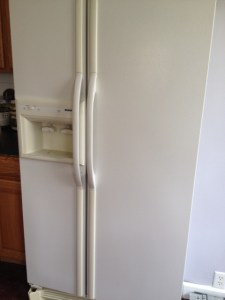
So, just after I noticed the piles of sawdust that the web tells me are carpenter ants, the refrigerator died.  Of course.  I tried to keep cool.  We don’t have what the overlords call “liquidity.”  Our cashflow is dammed at the source, as it were.  A new major appliance was not a welcome addition to the fixer-ups that appear nearly every day.  The first warning was that my soy milk was room temperature when it splashed on the cereal yesterday.  All of this made me reflect on how much we rely on our appliances, our modern conveniences.  When talking to my mother later in the day, I realized that as recently as her generation not everyone had a refrigerator.  You could live without one.  You could also live without a dishwasher, believe it or not!  

The whole episode of packing the food in ice sent me on a Calvino-esque reverie of what we keep in the refrigerator.  There are foods that must be kept cool or they’ll spoil, foods that are better if they’re kept cool but can be left at room temperature, foods that you prefer to drink cold but can be kept anywhere, and items which are technically not food.  Considering the state of our kitchen, there are also foods that you keep on top of the refrigerator because no amount of cupboard space is ever enough.  As the carpenter ants make their free lunch of our porch, we have to throw away food for which we paid because an appliance has come to the end of its life cycle.  And since it’s a holiday weekend we’ll pay for a more expensive replacement unit because it’s on a holiday sale.  For unlike my soy ice cream, I lack liquidity.


Mastering the Elements

First time home ownership is best left to younger people.  And perhaps younger houses.  The constant onslaught of things falling apart, or falling off (it has been an extreme weather year) has soured me on the idea.  You get set in your ways, you see.  The move from apartment to house didn’t come with a raise that would cover all the repairs invisible to a home inspector’s eye.  Although our house has stood for over 120 years, the last owners let lots of things go with a lick and a promise and we, the naive middle-aged first-time buyers in a seller’s market, bit.  I thought there would be repairs to make, but not all at once.  The royalties from books like Holy Horror don’t make even a small dent in the contractor’s fees.  We should maybe have bought a house in Jericho instead.  One right on the city wall.

The shake-down voyage of a ship reveals the problems, so the theory goes.  It stands to reason that people have to go through a shake-down year as well.  I’ve got the roofer on speed-dial, and I keep a wary eye on a garage that has more love than actual care poured into it.  All I want to do is read and write (which I could do just fine as a renter, thank you) in a place dry and not too cold.  The weather, however, has been unforgiving.  Rain and more rain.  There’s something primal about all this—an element of having to struggle against nature in order to survive.  In the modern world we’ve taken for granted our ability to keep the beasts and weather at bay.  Storm systems like the one that has just blown through serve to remind our species that there are things that will forever remain beyond our control.

The lament is the most numerous genre of psalm

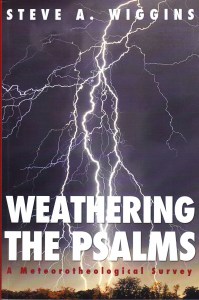
Something like this was going through my mind as I wrote Weathering the Psalms.  (We didn’t own our house at Nashotah House, though.  Whose house?  Nashotah’s house.)  Living in the Midwest gave me a new appreciation for the weather.  Some of the storms we witnessed were nothing short of theophanic.  Global warming has a way of bringing the weather front and center.  Elements of this element, however, are within our control.  We understand at least the human-driven elements of global warming.  We deny they exist to scrape together a few more pennies at the end of the day.  Meanwhile those who buy houses need to do their homework.  If need a roofer too, I’ve got one on speed-dial.


Captive to Capitalism

Some people are born capitalists, while others are not.  I recall the old TIAA-CREF ads showing some famous thinker and stating that some of us don’t have time to think about money.  Since I’m an obscure private intellectual I feel hard pressed to put myself in such exalted company as university professors, but here I am anyway.  I just don’t think much about money, other than to panic over my lack thereof.  It doesn’t motivate me and as long as I can get along without too many worries, I seldom think about it.  Or so it used to be.  Then I bought a house.  Suddenly everything is about money.  This needs to be fixed, and that requires repair.  Instead of spending weekends writing (as I’m fond of doing), I now try my hand at skills like carpentry and masonry.  At least now the grass has started to turn brown.

I was never offered TIAA-CREF as a fiduciary option.  (I can’t believe I even know what fiduciary means!)   Having grown up poor I didn’t think much about things like retirement or dental care.  These were things middle class people did.  Now that I’m technically part of the club, I think back to being a poor kid working my summers away.  I had lots of time to write in those days.  It’s not that ideas for writing have stopped—they’re rather backed up—but the concerns and cares of this world have forced me to think about that thing I’d rather not face.  You see, capitalism takes no prisoners.  Once it starts the entire world has to play its game, otherwise the rich can’t keep getting richer.  Those of us who’d like to make a living by creativity take jobs that, in turn, take our time.  And more than just 8 hours a day of it.  Some people don’t realize that money doesn’t motivate everyone.

Accuse me of being a utopian; I promise I won’t take offense.  I can imagine a world where money would be an opt-in.  I’m careful to be discreet about it, but there are frankly some of us that would work for books, should our other basic needs be covered.  Secular monks, perhaps, unleashed from dogma and allowed to roam where the human mind can go.  Once you start thinking about money it’s difficult to stop.  You want to have a cushion that will soften unexpected eventualities—which seem to be coming somewhat more frequently these days—and every time you rub your back after a fall you think that pad should be a little thicker.  Getting paid for writing?  In your dreams!  I’d say more about it but I think Lowe’s is open now.