Proof in the Pudding

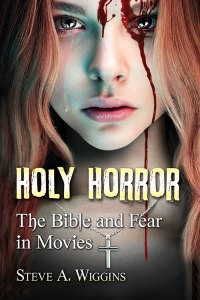
Writers anticipate and dread proofs.  After several months of delay, I have received the proofs for Holy Horror—it should be out in the next couple of months for both of you who’ve asked about it.  Anticipation is pretty straightforward, but why the dread?  Those of us who write books have to deal with the fact that publishing is, by nature, a slow business.  What I’m proofreading now is material that I wrote a couple of years ago; the final manuscript was submitted back in January.  The internet has accelerated the pace of everything, and now that I have a daily record of my public thoughts on this blog, I can see how my own outlook has changed in that time.  Reading proofs reminds you of whence you came, not where you are.

I suspect that has something to do with the internet and instant access to information.  I also suspect that’s why many of us trust books more than the “open web.”  The oak that has taken centuries to grow is a hardy tree.  The handcrafted piece of furniture lasts longer than the mass produced.  Books, hopefully, stand the test of time.  Writing is an exercise in building eternity.  These thoughts, the author hopes, will be around for some time to come.  As long as libraries endure.   Looking at the proofs, there’s pressure to get things right.  Was I correct in what I wrote down so long ago?  Since then I’ve read dozens of books more.  I’ve even written the draft of another book myself.  I face the proofs and shudder.

Part of my angst, I suppose, is that Holy Horror will likely sell better than my previous two books.  It may actually get read.  No, it won’t be any kind of best-seller, but perhaps a few hundred people will read it.  That’s a lot of pressure for those of us who’ve primarily written for other academics.  Perhaps this fear is the reason I’ve moved to writing about horror films.  Those of us blocked from the academy have to build our own credibility, one book at a time.  Reading the proofs, although already dated, I find myself liking this book.  It was fun to write, and it has a good message, I think.  Even prestige presses know that books about horror films are of popular interest.  As I read through where my mind was in days stretching back before the nightmare of Trump, I see that I had only just started on this path.  Before me are the proofs of that.

Scriptural Slashers

Let me relish this a moment.

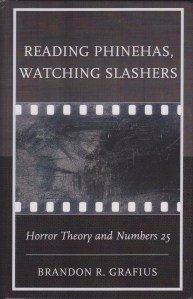
Thanks.  You still there?  It’s not too often, you see, that I get to feel like I’m near the front of the crowd.  I began writing Holy Horror when there were a small handful of books on the market concerning horror and the Bible.  I wasn’t aware of Brandon R. Grafius’ work at the time, but it sure is gratifying to see that others have noticed the connection.  Reading Phinehas, Watching Slashers: Horror Theory and Numbers 25 is pretty much what its title says.  I’ll be having more to say on it in a different venue—don’t worry, I’ll let you know—so I’ll keep to the basics here.  My spellcheck, and I’m sure not a few others, might have trouble identifying Phinehas.

In one of those weird, short, violent episodes for which the Good Book is justly famous, the story of Phinehas is clearly part of a larger, untold narrative.  Like the sons of the gods marrying the daughters of men in Genesis 6.  The grandson of Aaron, Phinehas was one of the hereditary priests of early Israel.  The Israelites wandering for their 40 years in the wilderness were nearly as xenophobic as the Trump Administration.  When one of the chosen people chose a foreign wife, Phinehas, full of zeal, grabbed a spear and skewered the couple.  Tradition says in flagrante delicto.  This act of violence stops a raging plague sent by the Almighty, so Phinehas looks like a hero in context.  If you want to read the story the subtitle tells you where to find it.  Or you could read Grafius’ excellent book.

Horror, which should be already obvious, enters the picture in the form of theory.  Yes, there is such a thing as horror theory.  Grafius uses it to analyze this story, along with other methods.  This is what I’m relishing.  I certainly wasn’t the first to notice the connection.  Many years ago Phyllis Trible wrote Texts of Terror, noting how the Bible seems less holy (my expression, not hers) when read from the perspective of a woman.  Indeed, many accounts that seem like standard issue narratives of God laying down the rules and humans disobeying tend to fall pretty heavily on females.  And the punishments used are fit for horror films.  Grafius focuses specifically on slashers, but one gets the sense that this book is just the start of something larger.  This reader, at least, hopes that is the case.


Nun Among Them

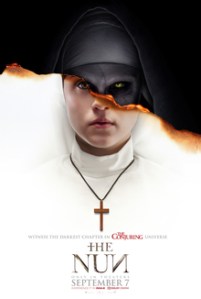
Life is sweet when watching a horror movie counts as research.  It’d be sweeter, of course, if a university paid for it, nevertheless, I went to see The Nun on its opening weekend.  My wife gamely went with me (no sponsor was paying for this) on a rainy Saturday afternoon.  Now, if you haven’t been following The Conjuring universe, you might not know about The Nun.  The full story will be revealed in Nightmares with the Bible, which is coming along nicely.  Suffice it to say it’s a movie about a haunted convent in Romania.  Those who know the Dracula tradition will perk up at the mention of the location.  The scenery is quite lovely in a horror genre kind of way.  And it also has ties to The Conjuring diegesis that bring the story full circle.

Ghostly nuns, it turns out, can be scary.  Religion, after all, involves coercion and threat as well as love and salvation.  Sister Irene, the protagonist, is a novice nun sent on a mission to investigate said convent.  The film reveals both an awareness of religious motivation and a seeming lack of research regarding monastic life.  Sister Irene, for example, tells the students at her school that the Bible isn’t to be taken literally.  It’s “God love letter to humanity.”  Well, parts of it are.  Still, the struggle with biblical literalism is a present-day issue that the movie addresses head on.  It was difficult to believe, on the other hand, that even a novice would walk into a chapel where someone is praying and call out “Hello?”.  Many years at Nashotah House taught me something.

Cloistered environments, although not part of most people’s experience, are great locations for horror.  For example, the first night she spends in the monastery Irene is told that the great silence is observed until dawn.  Did I mention that in chapel no one can hear you scream?  There’s an element about that in actual cloistered life.  The discipline of secrecy is heavy and full of threat.  We spent a great many silent days at Nashotah House and the sense of violation as sin was heavy indeed.  The part that truly stood out, however, was where the nuns used their only recourse against evil; they had to pray.  In the world of action movies, striking out with whatever is at hand is the expected response.  Spiritual entities, although the film does relent, can’t be touched except with spiritual threats.  The praying nuns looked so helpless in the presence of a demon.

There were less than a dozen people in the theater.  The Nun may not be a runaway hit.  The devoted will see it, however, and some of us will include it in our working life as a kind of spiritual exercise.


A Kind of Happening

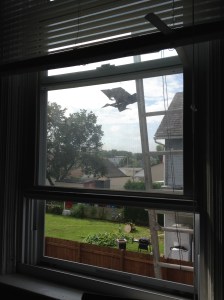
The roofers were here.  One of the things you learn only after laying down a ton of money is that those selling a house like to withhold information.  Moving during one of the rainiest summers in history, we naturally discovered leaks.  And so the roofers are here, like noisy angels banging above my head.  Given the orientation of our house, their access is outside the window of my work office.  I figured it was an opportunity to learn.  As the old shingles came raining down, however, I couldn’t help thinking of M. Night Shyamalan’s The Happening.  One of his more disappointing efforts, this horror film involved a memorable scene of mass suicide where people jumped off of a high building one after another.  Maybe other people would think of other comparisons, but the falling debris brought the film to mind in my case.

It’s a matter of framing, I suppose.  I’ve watched enough horror that it has become a framing device.  This is true although it has literally been months since I’ve seen a horror film.  (Moving proved to be its own kind of nightmare and one day I suspect we’ll be unpacked enough to watch movies again.)  Instead of losing the frame of reference, however, I find it intact.  If you spend long enough with Poe, he gets under your skin.  And changing states to M. Night Shyamalan’s eastern Pennsylvania might have something to do with it.  This is Bucks County territory, after all.  Another frame of reference, mediated by media.

As I watch the old shingles drop, I realize the window through which I’m witnessing this is another frame.  Like a camera lens, it limits my view.  At times it can be like Hitchcock’s Rear Window, seeing neighbors at their daily business.   Indulge me. For nearly the past five years I worked in a cubicle with no view of any windows whatsoever.  I was completely cut off from the outside.  (Which, for those of you who’ll admit to having seen The Happening, might not have been an entirely bad thing.)  Now that I have a window—my own framing device—I realize some of what I’d been missing.  At Routledge I had a window, but at such a level that the Manhattan outside seemed artificial.  You couldn’t see individuals down on the street.  The entire wall was a window—too much of a frame.  Gorgias Press involved working in a windowless room as well.  I’m professional enough not to let the falling material or the pounding distract me much.  There’s work to do because there are bills to pay.  And horror films prepared me for that as well.  It’s the ultimate framing device.


Watching Research

Now that Holy Horror’s been announced, I’m at work on my next book based on horror movies. Although some people might question the aesthetic of the horror genre, these films are sometimes remarkably intelligent and can indeed be good cinema. Having spent the better part of last weekend watching multiple flicks, however, I’ve come to realize that watching films for research is quite different than viewing them for fun. We all know the feeling of going to the theater to be exposed to the mythology of the present day; movies are the new mythology and are a common source of meaning and hope for individuals in a post-religion era. We go for the spectacle and the story. We leave, if the movie is good, with a renewed sense of purpose, or in a thoughtful state. That’s what mythology does.

In writing up my analyses of many films, I’ve noticed how little the detail is generally acknowledged in many synopses. They can make a flick seem banal. I’ve even had very intelligent people ask me why I think watching movies should be considered intellectual exercises. One reason for this, at least in my experience, is how often people rely on what they see in movies to inform them of important things. Historical events, for example. For the average person, an historical recreation on celluloid can provide recall better than a detail from some 400-page tome on the topic. Human beings are visually oriented by nature and evolution. It takes us years to learn how to read, and if we don’t keep up with the practice our ability to comprehend advanced writing atrophies. It’s easier to watch a film.

No doubt movie scripts are available for purchase. To get the message of a film, however, you need to watch. Immerse yourself in a kind of flickering light baptism. Research watching, however, involves multiple viewings. Taking notes. Watching again to make sure you got that detail correct. Some may doubt that this is an intellectual exercise at all. Still, one of the concerns that some scholars feel is that we’ve lost touch with what hoi polloi believe. People have turned to mythology from the beginning of time in the quest for meaning. Science tells us how the world works, but not why. For such questions we need our mythologies, ancient and modern. Since Nightmares with the Bible focuses on demons, I’ve had to construct a cinematic demonology that’s quite different from those of the Middle Ages. It requires, after all, a modern research method for a modern mythology. And movie watching. Lots of movie watching.


Horror Divine

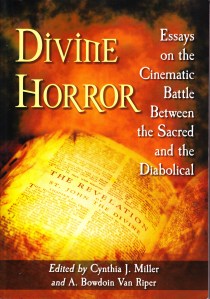
There’s a validation about finding something you figured out written in a book. For me that happened just about this season, some years back. At the Society of Biblical Literature annual meeting I found Sacred Terror by Douglas Cowan—the first book I’d discovered that discussed religion and horror films. Not only discussed them, but made the case that they have considerable common ground. Divine Horror: Essays on the Cinematic Battle Between the Sacred and the Diabolical, edited by Cynthia J. Miller and A. Bowdoin Van Riper, addresses the same theme but in more detail. Some of the essays in this volume get to the heart of the relationship between the sacred and the scary. As I mentioned, there’s a validation here for those of us who find horror movies fascinating. Others have noticed.

Genre fiction, as many fans know, comes with a subtle sense of shame. Low brow. Unsophisticated. Garish. Those with more refined tastes prefer subtlety and muted colors. Horror appeals to more basic instincts—but it’s also a form of expression that allows for the safe exploration of fear. There’s good horror and there’s bad horror. The eighteen essays in this book explore a bit of both. One conclusion that is unavoidable, however, is that religion—particularly Judeo-Christian religion—thrives in the context of horror cinema. The surprising part is that they often affirm the same message, but you need to look for it. Those who seek the origins of religion itself peer into the realms of awe and fear.

My own forthcoming book looks at similar territory. I don’t mind being classified as low brow. Raised in a blue collar world, that’s a fair assessment. What’s more, life confirms the reality of the connection between fear and religion. Consider the political moment in which we find ourselves. Much of the horror coming out of DC originates in religious “think tanks” trying to make evangelical Christianity the default faith stance of all our legislation. It means death and suffering to many, but the view of heaven for some becomes the tax haven for all. I know low brow when I see it. Horror comes in many forms—some lurid and some insidiously sneaky. Miller and Van Riper have pulled together a collection for our times here. The movies their authors discuss are part of a culture that is prominently religious and very afraid. If we want to understand what’s happening around us, we have to be willing to be scared.


More Conjuring

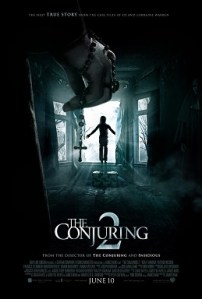
Among the most revered traditions of the horror film is the sequel. Originally a financially driven feature, sequels have now become an expectation among fans. And although in general we prefer to appeal to our higher cultural aspirations, many horror movies do remarkably well at the box office. I’m not much of a sequel-watcher, but sometimes in my effort to understand the close connection between religion and horror, I succumb. So it was I watched The Conjuring 2. As with the formula for the initial movie, cases actually investigated by Ed and Lorraine Warren are brought together with exaggerated special effects and demonic entities. Starting out in Amityville, the demon Valak is introduced. It later appears as the source of the Enfield poltergeist.

In real life controversy never strayed far from the Warrens and their investigations. Amityville and Enfield have both been implicated as hoaxes. The Hodgson girls, just like the Fox sisters in upstate New York, confessed to some faking, and, of course once that dam has been breeched, there’s no stopping the flood to follow. Nevertheless, such incidents make for good horror film fare. In the case of The Conjuring 2, bringing a named demon into the mix keeps the religious pot roiling. Ironically, the demon takes the form of a nun. This character is a complete departure from both the Amityville and Enfield of record, although demonic influences were posited for both cases. Valak appears to go back to The Lesser Key of Solomon, a grimoire familiar to watchers of the now departed Sleepy Hollow.

Even with the hoax light cast on the “based on a true story” tagline, The Conjuring is well on its way to spawning a cinematic universe. Annabelle was a spinoff, and Annabelle: Creation scored high marks this summer. The success of The Conjuring 2 has led to work on The Nun, scheduled out next year. There’s talk of a third Conjuring film as well. As religion becomes less obvious in the traditional forms of weekly worship gatherings, it crops up more in other areas of culture. Don’t get me wrong—there’s plenty of secular horror as well. What does stand out is that when religion knocks at that creaking door of horror, nobody’s especially surprised. The Conjuring 2’s climax is quickly resolved once the demon’s name is remembered. The fallen angel is banished, not so much back to Hell as to another sequel. Eternal life is, after all, a religious idea as well.


Frankly Frankenstein

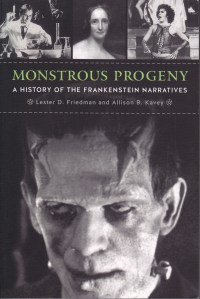
As a novel, like its monster, Frankenstein trespasses all kinds of boundaries. Is it science fiction or horror? Is it Gothic or presciently modern? Is it feminist or conventional? One thing about it is certain: it has been immensely influential. Lester D. Friedman and Allison B. Kavey have created for the world a truly wondrous treatment of this meme. Monstrous Progeny: A History of the Frankenstein Narratives is perhaps the most engaging monster book I’ve ever read (and there have been many). One of the main reasons for this is that Friedman and Kavey are keenly aware that binaries don’t necessarily exclude their opposites. Frankenstein is about both science and religion, and it treats both profoundly. Considering that Mary Shelley was only 21 when the novel was published bespeaks a rare genius in blurring boundaries and making those on each side think.

Monstrous Progeny considers multiple issues associated with Frankenstein. Should science be approached alone, or should peer review be involved at every stage? Is religion eschewed by this woman so strongly influenced by atheism, or is it the very crux of the matter? And what about the incredible and continuing afterlife of Shelley’s story? Friedman and Kavey survey not only the novel but several movies associated with, or based on ideas from, the book. Modern science, if we’re to be honest, also owes much to the fictional musings of a 19-year-old girl on a dark and stormy night. The tale of the tale is nearly as fantastic as its progeny. Challenged to write a ghost story, Shelley produced an undying Zeitgeist feature instead. Monstrous Progeny delves deeply into this unexpectedly profound idea, showing how it grips the heart of many contemporary nightmares.

Genres can be deceiving. Shelley wrote her tale as a “ghost story.” It received literary acclaim, becoming one of the best selling books in England in the nineteenth century. Only when Universal found success with Dracula in 1931 and followed it up with Frankenstein the same year did film critics want something to call movies like this. The term “horror film” was invented. There is certainly horror in Frankenstein, but there’s much more to it than that. The relationship between religion and science, and the very real ethical issue of making something because we can, are never far from the reader’s mind. Giving life to the creature only underscores the conflicts and contradictions of life in a world where to be gods risks destroying any possibility of heaven. Monstrous Progeny is a thought-provoking book that will, in its own way, brings our present fears to life.


Monsters and Men

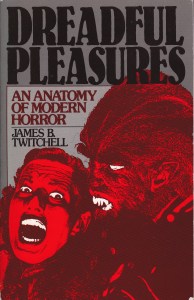
dreadful-pleasuresHorror films are something you either “get” or you don’t. I have no empirical evidence for that, but then again, “getting” is hardly a precise verb. In my recent desire to find some explanation for my own fascination with the genre, I turned to James B. Twitchell’s Dreadful Pleasures: An Anatomy of Modern Horror. This is a smart book. Twitchell, an English professor, knows to include Gothic novels in his accounting for this strange addiction. He has several insightful things to say about the differences between terror and horror. He gives a fairly complete analysis of the “big three”—vampires, Frankenstein monsters, and werewolves/wolf men/Jekyll and Hydes. Still, at the end, I have to wonder if he really “gets” the monsters he explores. Part of this is his early admission that he didn’t grow up with monsters, but that he was introduced to them academically. Another part of it is his sometimes dismissive style when talking about movies that meant a great deal to us monster boomers when they came out. Either you get it or you don’t.

Still, I recommend this book for those who want to make sense of some of the hidden dynamics of classic monsters. That the analysis is sexual should come as no surprise. Twitchell finds evidence for a sublimated incest in many of his creatures, but the true fan knows there is more to them than that. The monster does indeed cross boundaries—that’s what monsters do, after all—but that’s only scratching the surface with their claws. Of course, the book suffers from having been written perhaps a little too early. Although there is protest to the contrary, horror films have grown up considerably since the 1980s. Not all of them, of course. The same thing could be said of the kids I knew in high school.

Having a single theory to approach a phenomenon is respectable. So respectable that it’s called Occam’s Razor and everyone is expected to shave with it. I’ve never liked shaving. The more I reflect on reality, the more it seems to me that answers are more complex than single causation. Sometimes the simplest answer isn’t the most parsimonious. Sometimes there is far more going on than meets the cyclops’ eye. In my experience, limited though it may be, the horror movie has unexplored dimensions. One of them is the coping ability that they offer when evens such as 11/9 occur. There’s no simple way to understand monsters, but if we see them around enough, we might just be able to survive them.


Cinematic Reality

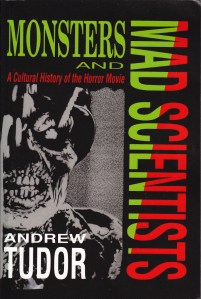
monstersmadEven without the results of the recent presidential election, I would be reading about horror movies. One of the reasons is that I wonder what the appeal might be—why do I put myself in a dark room with an uncertain future? Until recently academics had thought this was something only unreflective, uneducated people did. As is often the case, such as with the electoral college, the numbers tell a different story. Andrew Tudor’s Monsters and Mad Scientists: A Cultural History of the Horror Movie is an example of what happens when a sociologically oriented film critic explores the genre. Although not overwhelming, there are plenty of tables and charts, showing the various trends of horror films from the 1930s up through the mid 1980s. Tudor analyzes what makes us afraid and the main sources of that fear: science, supernatural, and psyche. Since these are all day-to-day things it seems that movies express the basic human condition.

Reading a book published in the ‘80s, however, makes you wonder what might have been missed. We’ve had more than three decades of further horror movies and although categories may be useful, and perhaps even stable, recent events unlock further fears. I suspect there will be a comeback of Nazis in scary movies over the next few years. Horror is, after all, a reflection of those who are willing to be honest about what scares them. There’s plenty of subject matter lying about the headlines of the past weeks.

What I found especially interesting is, at least in the 1980s, statistically the great majority of films featured a supernatural threat. Of these, Tudor notes, the vampire is by far the most popular. We’ve had a dalliance with zombies since then. And I’ve seen plenty of examples where extraterrestrials form the threat. Even ghosts have staged a somewhat unexpected comeback. And movies of demons have proliferated. The supernatural does indeed scare us. I’m not sure that we can quantify it as easily as we used to. Unlike earlier generations of scholars, I’m beginning to see the horror inherent in much of society. We’ve created a scary world with even more scary possibilities. The thing about monsters is they have no sympathy. They are cold, calculating, and all about meeting their own unnatural needs. All the rest of us are just, not to put too fine a point on it, their food. I have a feeling that we’ll be seeing much more of this in days to come.


Silverbacks

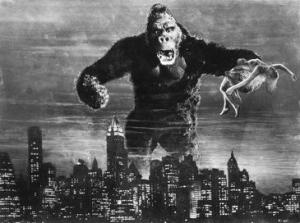
kong33promo

It’s been decades since I’ve seen the original King Kong. A none-too-subtle racist and sexist flick it may be, but it stands as one of the original “horror” films of the early thirties and it has had a profound influence on movies ever since. King Kong wasn’t very nice to Fay Wray, and had to be euthanized by biplane, if I recall correctly. I work one block from the Empire State Building, and sometimes I subtly glance up, looking for the giant ape. There are more fearful sorts in New York these days. I can see Trump Tower, for instance, from the pantry at work where I keep my lunch. But I digress. For its day, King Kong was a violent movie. Like many films, however, it is also a parable.

Recent studies have shown that some 98 percent of mass murderers are male. Men deal out, by far, more than their share of death to others. Some have suggested that when women experience failure they look internally, blaming themselves. Men, on the other hand, go postal. They seek someone else to blame. In our culture—maybe in all “western” cultures—man are acculturated to think of themselves in terms of success. Quite often this means business success—affluence and its discontents. Do you have more money than your neighbors? Good for you! You have succeeded, and, for some warped perspectives, God has blessed you. In reality, the system we’ve constructed has set many people up for failure. This is no excuse, but men who have no other way of measuring self-worth may find comfort in firearms. After all, it’s society that should take the blame. Right?

Gun lobbies claim that collecting firearms is a harmless hobby. Like collecting stamps, only a little louder. A bit of psychology might go a long way here. Might we not stop and think what happens when you give arsonists matches to play with? I suppose if we took away these toys, boys would use baseball bats, or rocks, to take out their aggression. I can’t help but wonder, however, if the problem might not be the system that measures a man by his money. Could there be a better way? There have been those throughout history who’ve made such a claim. They often die violent deaths. Once King Kong has begun his ascent with lust and violence in his eyes, we should all cast a wary eye on the Empire State Building and wonder what it all means.


Mysterium Tremendum

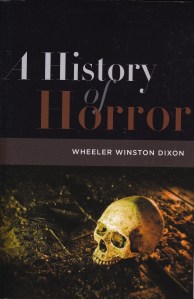
HistoryHorrorFor those of us accustomed to ancient things, horror movies are remarkably new. That doesn’t mean, however, that they are scarce or even easy to understand. While it is beginning to erode, the academic derision of popular culture has long avoided the decidedly low brow genre of horror. It doesn’t know what it’s been missing. Wheeler Winston Dixon’s A History of Horror is an insightful attempt to make some order out of a century of monsters and mayhem. Beginning at the stage when “horror film” was still just a demonic gleam in some vampire’s eye, Dixon points out that from the very earliest experiments with movies “horror” was a popular trope. It seems only natural that the idea of a full-length scary movie would be the expected development. What happened in Universal Studios in the 1930s is that business began making money out of monsters. Where there’s money, there be monsters.

Dixon takes us through the early days into the tired era in the 1950s when life was, apparently just so darned good that people weren’t really thinking about monsters. (Dixon’s analysis is a bit more sophisticated than that.) Horror films matured in the 1960’s and spun out of control in the ‘80s. His book continues up to the first decade of our current century. There’s obviously a lot that can be said about this, but what caught my attention, naturally, was how quickly religion entered the discussion. Those of us who approach horror with an open mind know that religion is its next-door neighbor. Indeed, one of the nihilistic aspects of the proliferation of horror movies since the 1980’s has been the lessening of this getting to know the neighbors. Horror, as Dixon notes, seems to have devolved to brutality and cruelty with no real message.

I’ve never been a fan of gore. I’ve watched my share of slashers, I suppose, but they’re not my favorites. Horror can—in the best of its offerings—be very profound. Indeed, it can even inspire thoughts not so terribly far from those generally classed as religious. For what is worship if not carefully managed horror? The concept of the holy as mysterium tremendum underscores this dynamic. Part of this connection is the appeal to emotion. Horror movies make you feel something, and that is a large part of their appeal. They can be more, however. A smart horror movie will feed your brain rather than just having zombies eat it. Academics, eventually, will catch up with it. Dixon starts to show the way.


Let Us Prey

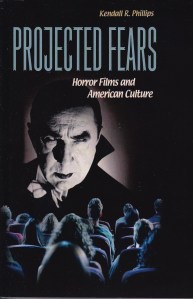
ProjectedFearsI grew up with horror films. Not that my mother encouraged or approved this behavior, but I was a kid with a lot of phobias. With no father around to protect us from what dangers might lurk out there, I tried to learn how to cope by watching others face monsters. That innocent childhood pass-time, like most simple pleasures, disappeared into the adult world of analyzing and being serious and making money. Then it came back. After a series of unsuccessful relationships the old rejection phobias led me back to my beloved monsters. I suspect that’s why I like reading about horror films so much—it’s an exercise in self-understanding. Kendall R. Phillips’ Projected Fears: Horror Films and American Culture is a pleasant Saturday afternoon’s viewing, but for adult monster boomers like myself. Phillips admits up front that academic respectability is hard to come by for horror movies, but that is starting to change. We are beginning to read the script.

Phillips walks the reader not only through the ten movies he’s selected, but also through what was happening in American culture at the time. The horror movie proper is not yet a century old, having begun with Universal’s 1931 monster pair of Dracula and Frankenstein. Phillips shows that what scares a culture changes over time. Indeed, one gets the sense that it is horror movies that lead us in our fears. Highlighting ten culturally significant films, this book guides us through the highs and lows of the last century. The last entry in the book dates from 1999, nicely encapsulating what made us afraid during a most remarkable and, if we’re honest, a most messed up century. Clearly those who purvey horror will have their own choices for significant entries. Phillips does an admirable job of justifying his choices: Dracula, The Thing from Another World, Psycho, Night of the Living Dead, The Exorcist, The Texas Chainsaw Massacre, Halloween, The Silence of the Lambs, Scream, and The Sixth Sense. Each reflects its age, and each impacted its culture.

It should come as no surprise that religious elements—both in culture and in the movies—are up for discussion here. Consciously or not, religion deals with our fears and frequently moves us into the realm of horror. Now that we’ve entered a new era—much has happened already this millennium—the nature of our fears has been changing. To assess cultural impact we need some distance. Books like this help us to understand ourselves, but only after sufficient time has passed. I am confident, however, that when future analysts look back on this insane time that they will find unexpected answers to questions we can only begin to utter. We stare at the monster in the room with us, paralyzed and unable to scream. Or even text. And they will note that religion played a role in our nightmares even as we expected technology to save us.


The Witch

IMG_2679

The Witch, by Robert Eggers, is a parable. The movie accepts, and to appreciate it the viewer must too, that there is actually witchcraft in New England. Unless the witch too is a parable. Set in the days before the Salem Witch Trials, the movie is worthy of Lars von Trier on history. William and his family are exiled from their unnamed community due to differences of religious opinion. William and Katherine are a devout couple, steeped in the Puritan belief that all people deserve Hell and those who are good have no choice in the matter. They have a family of four children, and after they set up homesteading in exile, a fifth comes along. When the baby disappears, the eldest daughter, on the cusp of sexual maturity, is blamed. Portraying well the boredom of children raised in a world with no diversion, the girl, Thomasin, tells her little sister that she is a witch. In reality, she is a fearful, sin-sick girl, frightened for her future salvation. There is a witch, but it is not she.

Tragedy follows tragedy for the isolated family. Their religion permits them to believe it can only be punishment from God. They pray, recite Bible, and work hard. Their oldest son, abducted by the witch, returns home to die. The two youngest children begin to have fits, claiming that Thomasin has confessed to being a witch. Her mother, Katherine, believes them. Her father too, convinces himself that she is a witch and urges her to confess. The paranoia grows and Thomasin accuses her two younger siblings of witchcraft, speaking to the family’s black goat as their familiar. Confused, angry, and out of hope, the father locks the children in with the goats for the night, determined to find the truth in the morning.

I won’t add any spoilers for the ending here. Suffice it to say, this is a parable. Thomasin’s very name suggests “sin,” and her doomed brother is Caleb, the Hebrew word for “dog.” His recitation of the Song of Songs is distinctly creepy. God is absent from the movie, despite the family’s constant prayers. The only voice heard is that of the Devil. This is a parable of what happens when a religion goes wrong. The family left England to exercise their religion freely and the free exercise of it turns them against each other. The only ones who seem to find peace are those who leave their faith behind. It is a movie that I’ll ponder for many days, I suspect. Less a condemnation of religion than an open probing of what it’s logical outcome might be, The Witch is one of those movies that demonstrates the ongoing power of parables.


Still There?

We_Are_Still_Here_film_festival_poster_2015

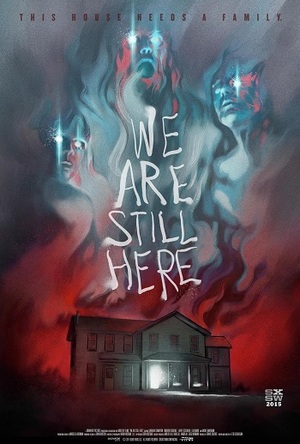
Keeping up with much of anything is hard to do, given work and commuting schedules. Often a horror movie will pass without even a notice until it’s on the sale shelf or free on Amazon Prime. On an October afternoon nothing feels more appropriate than a moody, ghost driven film. All these caveats are to introduce We Are Still Here, a movie that has received commendable ratings from the critics but which seemed pretty conventional to me. I’m not a fan of gore, and the finale has plenty to go around, still, the pacing is about right and the landscape is vacuously beautiful. I have to confess that I’m not sure of what was happening, although the newspaper shots during the credits were supposed to explain things. Haunted house, check. Townspeople acting badly, check. Spooky presence in the domicile, check. The menace is referred to in several different ways, but what is clear is that it wants a sacrifice.

To me this is what is at the heart of the connection between religion and horror. Sacrifice is wasteful by definition. Gods, who are demanding creatures, ask for people to give up something they could use to propitiate divine displeasure. We’re never really sure why gods have such anger issues, but it does seem like a universal trait. In We Are Still Here the “god” lives in the basement described as “hotter than Hell” and its choice of not slaying the intended victims is never really clearly explained. Perhaps that’s the point. Sacrifice is something that gods want. Reason has nothing to do with it. People in films like this seem to be minding their own business, doing what people do. Then the gods demand death. It is a religious trope older than the Bronze Age.

The film reminded me about the somewhat earlier and scarier Burnt Offerings. Ironically in the latter, there aren’t any burnings as there are in We Are Still Here, but there is a house that thrives on human sacrifice. Both houses demand a family and destroy it. Indeed, apart from sacrifice, such movies tend to be a critique of ownership. The house owns the people, not the other way around. And the house, in some sense, is a deity. We Are Still Here doesn’t give a full explanation. It puts the viewer through the usual paces for a horror movie with appropriate startles and grotesque deaths. Like most members of its genre, it reaches for religious backing to make it all hang together. It has the good grace not to be obvious about it as well.