Bibliography

For serial readers, my Horror Homeroom piece is now live, here.  Speaking of websites and blogs, you never know where a project might go when you start it.  This blog has a search function, as well as category options, but I know I have a few readers on Facebook and Goodreads who might never set foot here.  The other day someone asked me about a book and I had to do a search myself to see if I’d ever blogged about it.  This project has been going for more than a decade and a half and it’s nearing 6,000 posts.  I can’t remember everything.  Then it occurred to me: I could put together a bibliography for this blog.  This has to be a long-term process, though.  As a test, I scrolled through the first year, writing down the books.  There were about sixty of them.  Since there are over 170 months to go through, well, it’ll be a big bibliography when it’s done.
I’ll need to find a way to note the books I haven’t read.  Sometimes I’ll post on a book, or mention it, without having read the whole thing.  I don’t want to misrepresent myself here.  Other times I mention a book obliquely without actually citing it.  I need to include those as well.  Only, however, if I’ve actually read them.  Then there’s the problem of not remembering if I read a book or not.  After 2013 I can check on Goodreads, but between 2009 and then, I rely on memory.  Those were tumultuous years.  In 2009, just before I started this blog, Gorgias Press let me go.  I made a living for a couple of years as an adjunct professor at both Rutgers and Montclair State Universities, feeling like I was driving at night without the headlights on.  I was reading a lot, but job security was a mere myth.

Then in 2011 Routledge recruited me and my commuting life began.  I started reading about 100 books a year as I commuted my life away.  Most of those got discussed on this blog.  I was still at Routledge when I began my Goodreads account, not aware that there was employer writing on the wall.  I started my current job that same year and commuted to Manhattan for five more years, reading all the while.  It’s going to be a big bibliography when it’s done.  The nice thing is I don’t have to annotate it since that’s what this blog does.  Since I’ve got about a thousand other projects going, and a 9-2-5 job, don’t hold your breath for it.  But the bibliography’s been started and, God willing and the crick don’t rise, it’ll eventually appear here.  That’s the way of ongoing projects.

Re-Unborn

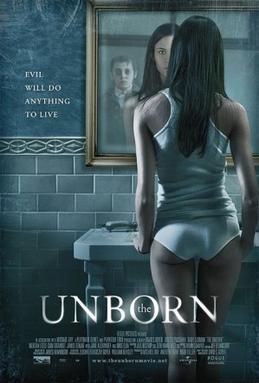
Some months ago I wrote a post about the possession movie The Unborn.  I don’t watch movies to pass the time.  I watch them to learn something.  And many horror movies are fairly smart.  In my blog post on this one I didn’t go into too much analysis because I already knew at that point that I wanted to share my thoughts on the larger venue, Horror Homeroom.  My piece, “Ecumenical Exorcism in The Unborn” has just been posted there.  The fairly small number of regular readers I have know that I post about horror movies with some frequency.  They help me to make sense of things, especially in this insane world where petty dictators keep rising to the top of the political spectrum because, apparently, we hate ourselves so much.  Horror helps prepare you for that.

In any case, The Unborn is a good example of how religion and horror work together.  They cooperate very nicely, in fact.  Religion is pervasive enough in horror that it would be an error to say “religion-based horror” is a sub-genre of the whole.  No, the two go together as naturally as chocolate (vegan, preferably) and peanut butter.  If I had a million dollars I might go back to grad school to explore just this nexus.  (I wouldn’t be looking for a teaching job either, because “fool me once, shame on you; fool me twice…”)  I’m not the only one who knows that there’s something there.  Ironically, before horror films proper were even invented, many churches actively discouraged the movies.  Perhaps they were inherently aware that these represented competition.  And there was already too much competition, what with other denominations and all.  But some films do occupy the same space as religion.  Quite often horror.

If you’re interested in how The Unborn fits into this picture, head on over to Horror Homeroom.  And yes, there is a book-length project in all of this.  It’s one I’ve been chipping away at for years.  That’s because the connection is obviously there, but I haven’t, to my own satisfaction, been able to figure out exactly what it is.  Perhaps I need to add a degree in psychology to my bucket list.  These things meet similar mental needs for a cross-section of people.  I suspect that most horror fans don’t think about it too much, which may be why my blog isn’t exactly jammed with traffic.  That doesn’t mean that the connection’s missing.  There are many things in life yet to be discovered.


Good Horror

As strange as it may seem, my goal in life has always been to bring more good into the world.  As they phrase it in Nerdfighteria, helping “to decrease world suck.”  There are many ways to do this—give encouraging words to others in a cancer support community, volunteer time (structured or otherwise) to civic organizations, even trying to help make sense of it all through an obscure blog.  My motivation in entering teaching as a profession was to help make the world a better place.  (Also, I’m pretty good at it.)  When that fell through as a profession, I began yet another odd way to try to bring good into the world.  Writing books about religion and horror.  Please hear me out—this is part of a larger plan which, in the nature of plans, may or may not work out.  It involves getting people’s attention for a moment (kind of like teaching).

There are a significant number of people who enjoy horror.  The vast majority of them are not bad people.  They find something enjoyable, or cathartic, or perhaps even spiritual in consuming horror.  I’m one of them.  My piece “Exorcising The Pope’s Exorcist” appeared yesterday on Horror Homeroom.  (Hey, it’s free—check it out!)  Exorcism, as a social/religious phenomenon, owes its popularity to a horror movie.  And if the rite brings some measure of relief to someone suffering mentally, spiritually, or physically, it has decreased—you guessed it—world suck.  It makes this planet just a little bit better for a little while.  Movies that promote exorcism can, believe it or not, help people.

Some time back I was invited to offer a course at the Miskatonic Institute of Horror Studies.  I am deeply honored because if you look at the list of names of past (and present) teachers there are some superstars in there.  By the way, my course is titled “Believing in Sleepy Hollow.”  (Maybe those of you who read daily may now understand why I’ve been posting so much on Sleepy Hollow of late.)  Teaching a course that will bring enjoyment to others is a way of bringing a small measure of good into the world.  Once you leave secondary education, you’re never obligated to take a course.  It’s something we want to do. That means if someone gets something out of my course I’ve brought just a little bit of good into the world.  It counts, I hope, toward my life’s amorphous goal.


More Water Monsters

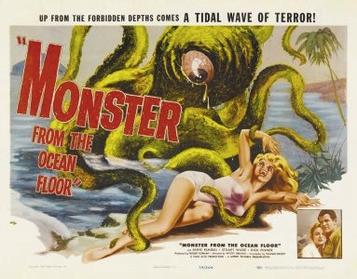
Monster from the Ocean Floor, one gets the sense, wouldn’t have merited a Wikipedia article were it not for the fact that it was the first film Roger Corman produced.  Despite its B-movie quality, there’s quite a lot to like about it.  First of all it has a strong female lead.  Julie Blair is the only gringo in Mexico to believe the locals that there’s a monster just off shore.  Steve Dunning, the scientist, is an avowed skeptic.  The plot is cheesy—the monster is an overgrown amoeba irradiated by the Bikini Island underwater nuclear tests, and it’s killed by getting a submarine in the eye—but there are some very effective cinematographic moments.  When the young boy talking to Julie in the opening turns to stare at the ocean where his father disappeared, the framing and emotion are perfect.

The theme music for the approach of the shark, and then the amoeba, anticipate Jaws by a couple of decades, and I have to wonder if John Williams hadn’t watched Monster from the Ocean Floor.  (I’m sure even cultured people watch the occasional B-movie.)  There’s also an unexpected religion angle.  A series of episodes in the film have a couple of locals trying to kill Julie as a sacrifice to the monster.  Despite the holes in the plot, it’s remarkable that in 1954 there could be dialogue suggesting that the Christian God (“the other god” according to a local woman) isn’t the God that Quetzalcoatl is.  All the same, the sacrifice is based on the folklore that the sacrifice of the “fairest” (Julie is, naturally, blonde) will appease the monster.  Maybe not the most solid theological basis, but still, not bad for a bad movie.

I’ve recently published a piece on Horror Homeroom about women and water monsters.  Having a strong woman in a 1954 film is especially remarkable.  Julie, despite the skepticism of the scientists, takes the initiative to dive right down and see the monster for herself.  It’s only when she comes up with physical proof that the men consider that she may be right (and in danger).  Of course, the men do have to rescue her—you can’t have it all.  Yes, it’s a cheaply made movie with a paper-thin plot but it was beginning to show that a woman could take the reins and with good motives (if nobody else will do something about the monster, she will).  Although she’s the love object of the movie, she’s so much more.  And a submarine in the eye—that’s gotta smart.


Othering Offering

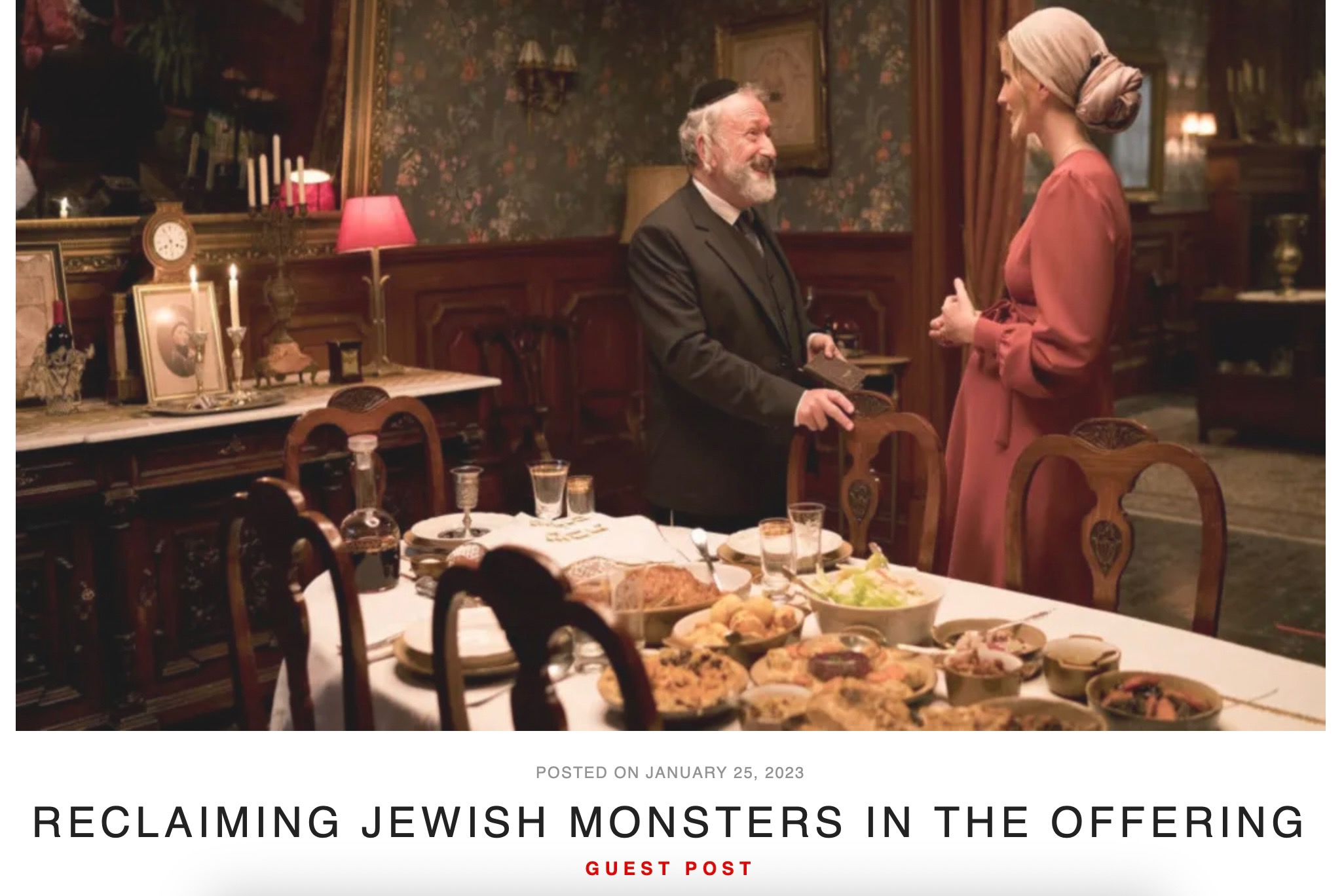
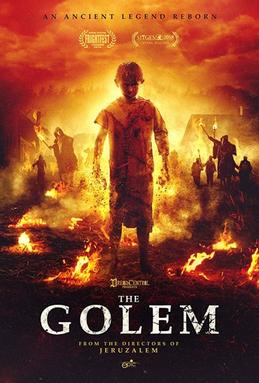
I get to feeling a bit anxious when nobody else publishes me for a while.  It’s a strange kind of validation, I suppose.  No matter my motivation, I knew as soon as I saw The Offering that I would have to write something about it for Horror Homeroom.  The article is now available here.  Horror, as one of the more intelligent genres, often has much to say about things such as religion and esoteric beliefs.  In the article I compare it to other recent Jewish horror such as The Possession, The Golem, and The Vigil.  All of them are worth watching.  Religion often addresses those things that scare us, whether secular or sacred.  Movies like these often make me ponder the sense of belonging that religious communities offer.  At least in the best of times.

These three movies each have their own posts on this blog, but the point of the Horror Homeroom article is to try to look at them together.  Judaism can be a particularly delicate topic.  Not only the Holocaust, but also subsequent political developments have led to dangerous situations for Jews in the real world.  Theirs is an old and rich culture, persecuted largely by Christians who ironically blame Jews for their own salvation.  And hate them for it.  Nevertheless Jewish culture and belief persist.  It’s telling that even when they invent a protector, such as the golem, they come to realize that it too will turn on them in the end.  Most horror movies, if they participate in religious worldviews, do so from a Christian point of view.

Some colleagues recently asked me to name some Protestant horror movies.  That’s a tricky question to answer because the American context is still largely Protestant as a whole.  And when you want to take on monsters and demons you generally call a priest.  Even movies like The Last Exorcism have Protestant clergy using Catholic crucifixes.  As I’ve stated elsewhere, Asian horror movies have also come into their own, often reflecting Buddhist or Hindu outlooks.  So we find religion and horror intermingling worldwide.  Movies are more than just entertainment.  They can be, and are, teaching tools.  We should pay attention to what goes on in their classrooms.  Not only can we learn about ourselves, we can also learn about those that we, or society, tend to “other.”  Like high school, there are a variety of classes you might take.  The day always starts, however, with homeroom.


Religious Monsters

It began with monsters.  A religious monster-boomer, I couldn’t get enough of these scary creatures as a child.  For some reason they made me feel happy, secure.  With the real monster of parental alcoholism lurking outside the door this is perhaps understandable.  Growing up I soon learned that these were childish things—religion was adult.  And very serious.  Always trying to be a good boy, I followed the trajectory to seminary and then further study.  Monsters had faded.  I still liked them, but seldom encountered them and acted disinterested if I did.  Fortunately I came out of it.  Probably it was being ousted from academia that awakened what had once been my reality.  That, and I’d learned that some academics—mostly in religion departments—were now studying monsters.  Monster may I?

Maybe a decade ago, I’d read, I thought, just about every academic book on monsters.  Then the slight shift of focus from monsters to horror films started.  You see, movies are often where we learn of monsters.  There weren’t too many academic books on the topic, and the internet sites I found often lacked depth.  (Although a shout-out is due to Horror Lex here, if you’re not visiting, you should be. And of course, Horror Homeroom.)  Editors, you have to understand, are for some reason discouraged from writing books.  I’d been noodling away on the ideas behind Holy Horror for years.  Suddenly it occurred to me—I could write a book on monsters from an angle unused before.  (Later I discovered an academic had written an article on the topic, but seems to have dropped it after that.)  Writing about horror is really my sublimated love of monsters arising.  And they do rise.

Of course, those who know the religious Steve, still trying to be the good boy, are confused.  Our culture has poisoned the well for horror, I fear.  Not everyone likes slashers.  I personally don’t care for them.  A quiet haunting is more my style.  Still, what’s available on Hulu or Amazon Prime often dictates what I see.  If you’re going to write about horror movies you have to read about them.  Lately that’s driven me more toward film department studies.  That’s the thing about curiosity—it never rests.  There are always doors to open and rocks to turn over.  And books to read.  There’s no end to it, kind of like a good scary movie.  Like a monster you have to cross boundaries to learn anything.  Religion has its monsters, and denying that will only lead to complications.


Solomon’s Rats

Some ideas keep coming back.  Since you can’t copyright an idea, retelling a story is always an option.  In fact, some writers suggest they’ve written nothing new—the classic ideas are out there and are ripe for rewriting.  I’m on the fence about Solomon’s declaration that there’s nothing new under the sun.  Some startlingly original stuff is out there, it seems.  In any case, a few months ago I watched Willard for the first time.  Although it’s quite dated in many respects, it was quite a big splash when it came out.  I remember being curious about it as a kid but although we were allowed to watch monster movies on TV, going to a theater to watch horror was out of the question.  That would have to wait for college.

Discussing Willard with a friend after seeing it, the idea came up that it had quite a bit in common with Disney/Pixar’s hit Ratatouille.  I’m not the world’s biggest fan of Pixar or Disney—it seems they try too hard much of the time, although they hit it out of the park with Wall-e.  Still, this connection seemed worth pursuing.  I’m not going to discuss the commonalities here since I just had an article published in Horror Homeroom about it.  The connections are pretty striking.  I would classify Willard as swarm horror.  Rats naturally follow people around because we give them many food options.  To gather from older movies, rat bites used to be a big concern.  These days we tend to think of them as a big city problem, but rats are not far from where people live.  The problem is the swarm.  Being overwhelmed, even by a fairly small animal, is terrifying.

Photo by Brett Jordan on Unsplash

With the warming weather, getting out and doing repair work around the house has made finding weekend time to watch horror rare.  I’ve got a long list of movies and an even longer list of repairs.  Recently another friend has struck up a conversation (via email) about horror films.  The thing is, at my article suggests, they aren’t that far removed from mainstream fare.  Many children’s films come close.  Most movies based on anything by Roald Dahl have dark undercurrents.  More recent efforts—and here I’m thinking mostly of Pixar—seem to jump from crisis to crisis without having that underlying story old Solomon seemed to appreciate (or to have been weary of).  That’s why I find such connections worth pondering.  Even classic revenge tale can be made gentle for younger viewers.


Day of the Lord

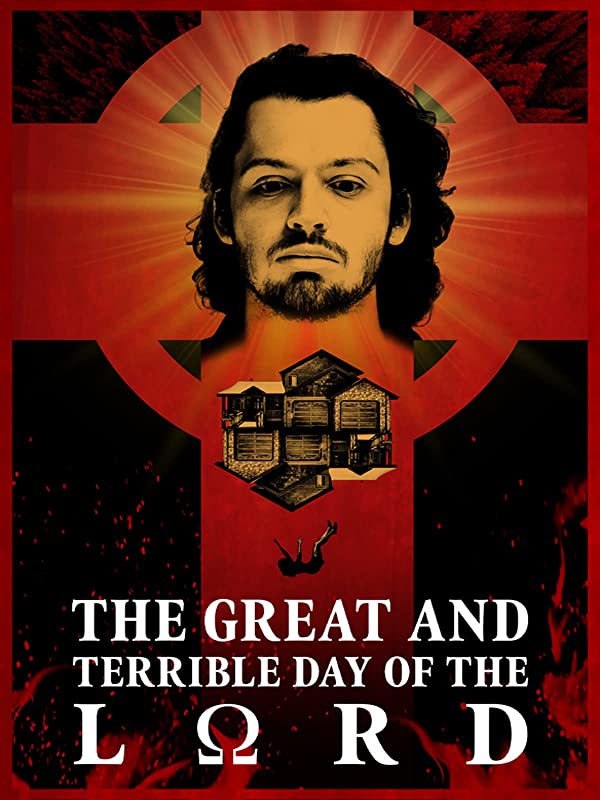
The kindly folks at Horror Homeroom recently asked me if I’d review the new movie, The Great and Terrible Day of the Lord.  Since I’ve been occasionally writing on religion and horror for them for a couple of years now, they knew I’d be interested.  The review just dropped and you can read it here.  Since this blog is a less formal place I’ll say a bit more about the film here, while encouraging you also to read the review.  They won’t be the same.  The movie, which is independent of any of the big studios, is hands-down the most theological horror I’ve ever seen.  That’s because it’s fully based on a religious idea.  It consists almost entirely of dialogue, so some will doubt it’s horror at all.  What is being said, however, can be quite scary.

Using only two characters, the movie would work well as a stage play.  The story revolves around a couple on a romantic weekend getaway.  Far from any other people, they’re enjoying a fancy cabin in the woods when suddenly he (Michael) reveals to Gabby (her), that he’s God.  Not all the time.  In fact, he’s come to her at this moment without Michael even knowing it because she’s going to die that weekend.  He wants to ensure she can get to Heaven.  Throughout the weekend Michael switches back and forth between being himself and being God.  Gabby fears she’s trapped with a psychopath, but as God Michael knows things about her that she’s never told him.  They discuss the problems with God’s existence and the issue of theodicy as Gabby slowly comes to accept she will die there.

My Horror Homeroom piece has spoilers, but I won’t put them here.  Horror fans might claim this isn’t horror at all.  There’s no bloodshed, very little violence, and no monsters play a role (unless you count the Devil).  Still, it is psychologically tense and it raises some scary questions.  I was raised as a Fundamentalist.  The fear implanted early that you might die not right with God has stayed with me all through my years of working in religious studies.  From my perspective this was a pretty scary film.  The script is very well written.  So much so that I wonder if Jared Jay Mason, the writer, hasn’t taken a course or two in theology.  My formal review gives quite a bit more detail, but you might want to watch the movie also.  I found it surprisingly effective.


Come In

It feels good.  To be invited, that is.  Like many people I know how rare it can be.  When teaching at Nashotah House, invitations were scarce.  It’s a small seminary, not widely known.  Besides, the internet was in its infancy then and a great many people (including the seminary dean) were suspicious of it.  Few invitations came.  None for peer review opportunities, none for interviews.  I was invited to the Ugaritic Tablets Digital Edition project (for which I wrote a successful grant application) but that was because I met one of the lead editors while my wife was studying at the University of Illinois.  It’s strange, but nice, to be invited to things now.  It still happens rarely, but when it does it has two things in common: the invitations come closely spaced in time, and they have to do with horror.

Photo by Stella de Smit on Unsplash

This past week two invitations came.  One was to review an independent horror movie for Horror Homeroom and the other was to have an interview on the New Books Network.  Since this is the internet and since the internet’s endlessly self-referential, I’ll be writing about them both in more detail, directing you to the end results when they arrive.  It just feels good to be included.  I didn’t have many academic mentors at Nashotah House.  I’m a first-generation college-student; I didn’t know what academia would try to do to a person.  I had no idea what a “post-doc” was.  I did publish an article a year and write a second book which, I understood, was the key to getting hired by a “real school.”  I had a few interviews, but I’m demographically challenged, I guess.

Weathering the Psalms was written at Nashotah House but it has only led to one weekend church program.  My books on horror, written post-academe, have managed to get some small measure of attention.  It always struck me as ironic that, although raised among the theology crowd I never really found acceptance among them.  Those who know there’s something to horror, however, are a welcoming crowd.  The other day I was listening to Alice Cooper’s Welcome to My Nightmare and realized, whether intentional or not, the invitation was sincere.  It remains one of the formative albums of my life.  As a child the only invitations I had were altar calls.  I responded to many.  As an adult I’m still inclined to say “yes” when someone invites me in.  Rarity only adds value.


Conjuring an Exorcist

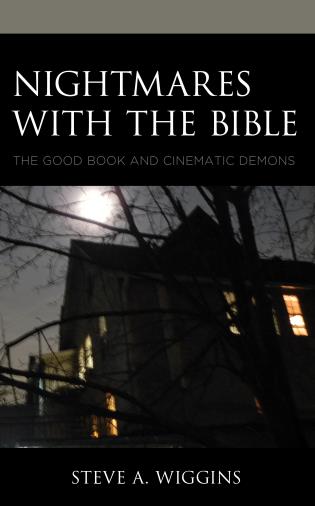
In both Holy Horror and Nightmares with the Bible I discuss The Conjuring.  In the latter I actually go through the universe that the films spin around the investigations of Ed and Lorraine Warren.  Like most series where the writers and directors shift, the story line isn’t always consistent.  I suppose that one of the features of the series that appeals to those of us who love monsters is the fact that many of the movies have more than one.  The main threat, however, always seems to be demonic.  I enjoyed exploring this in both my book and in my recent piece on Horror Homeroom—check it out here.  

This series, in financial terms, has been highly successful.  There is little that attracts attention in any media more than money.  The Conjuring universe also shows that people are very interested in the topic.  A materialistic worldview doesn’t work for everyone.  We sense that there’s more going on that what the laboratory reveals.  I’ve often wondered why we can’t consider the world “both and” rather than “either or.”  We seem to think knowledge is some kind of zero-sum game.  I suppose that’s because the spiritual interferes with the material.  If there are outside forces working against the “laws” of physics then all that hard work is open to question.  It’s far easier to suggest that human beings (and other animals) who experience something “supernatural” are deluded.  Or superstitious.  Demons are a good case in point.  If they exist it would complicate the world of science.  And yet people pay good money to see movies based on them.

The Conjuring franchise pays off most of the time.  Some of the stories—those of the main series especially—are based on cases that the Warrens actually investigated.  There’s sometimes an element of the sideshow (the amazing Warrens!) to some of their work, but that doesn’t necessarily detract from the experience of real people.  Experience is an important way to navigate this strange world in which we find ourselves.  I’m not the only one who finds horror films to be a reasonable guide through this territory.  The Warrens’ case files leave lots of opportunities to explore this strange world of demons, and there are further movies in the franchise currently under development.  The most recent film, The Conjuring: The Devil Made Me Do It, changed basic concepts from its early days.  It was delayed by the pandemic.  And yet, it made money.  There must be a lesson to be learned here.


worth a mention

It is always gratifying to see a review of a book you’ve written.  This is one area where I’ve struggled since I tend to write between categories.  Outside the discipline itself religion is a pretty suspect topic, treated with some embarrassment among academics.  Combine that with another subject (meteorology, horror movies) and journals that specialize in either discipline tend to ignore it.  Horror Homeroom, however, has proven a collegial place to explore the connections between horror and religion.  A review of Nightmares with the Bible, by John Morehead, has appeared there, and I’m honored by the attention.  When you write books between discipline boundaries you wonder what people think of them.  When they’re priced stratospherically you will wonder a long time.

Long ago I started to notice how often religion came up in horror contexts.  I’ve also been aware for a considerable time that although horror has lots more fans than religion does, the discipline hasn’t been considered a “respectable” one.  (Yes, scholars are open to prejudices as well.)   I’ve tried to keep up as well as I can with books written about horror and I’ve done my homework on the religion side, I think (although I continue to study).  The two crowds (horror and religion fans) tend to be about as opposite as you can find.  I’m learning the wisdom of publishers firsthand—if you do interdisciplinary work instead of broadening your reach you’ll find that neither discipline will touch it.  Especially if one of those disciplines happens to be religion.

Nevertheless, this is a celebratory post.  Rarely do my books get written up.  Holy Horror has been out for over two years now and not one academic review has appeared, not even in Reading Religion, where readers can request review copies.  McFarland, my publisher for that particular volume, doesn’t do much with religion and apparently doesn’t send review copies.  So I’m thrilled that Horror Homeroom has published a review.  I am genuinely curious as to what others think about my ideas.  Not only has the internet thrown a kind of lifeline to those of us without academic libraries, it has also given a voice to those the academy would rather not recognize.  Does religion have anything to do with horror?  It most certainly does.  Does horror fear anything?  Yes, it fears religion!  And so the two have much to learn from each other.  My thanks to Horror Homeroom for putting the review out there and I hope some may comment upon it.


Religions and Horrors

My latest piece on The Golem has just appeared on Horror Homeroom.  It’s free—check it out.  In it I briefly discuss Jewish horror.  I mainly write about Christian horror because that’s my immediate context.  That’s not to say other religions don’t participate in the genre too.  While I worked for Routledge I acquired the book Buddhism Goes to the Movies, by Ronald Green.  Like the title suggests, it’s about movies focused on, or made by, Buddhists.  What sold me on the project was the chapter on horror films.  Much of what’s being called “J-Horror,” or Japanese Horror these days, occurs in a Buddhist or Shinto contexts.  I’m not expert enough in these traditions, however, to spot them with the detail that I do in my own native religion. 

All religious traditions have certain commonalities.  As I’ve frequently discussed on this blog, sex and death are two of them.  Given the powerful ideas that religion trades in, it seems natural that it would appear frequently in the horror genre.  It’s just that modern viewers tend to be somewhat divorced from religion and can’t see it.  Religion is that way—it fills the cracks.  How often do we pay attention to the caulking or grout?  We tend to focus on the tile or woodwork instead.  Religion holds thought systems together, including those of the horror genre.  I just discussed no-go subjects yesterday, but even science shows religion in some of the cracks.  Learning to see it involves learning to shift your focus.

I blogged about The Golem just after I watched it, back in December.  The golem is an original Jewish monster, and Judaism is both a culture and a religion.  It’s difficult to tease them apart sometimes.  The same can be said of many traditions outside Christianity.  In fact, many cultures had no word for religion—the idea of a separate realm of life where you try to please the gods because what you do otherwise is inherently sinful.  (There’s probably a reason that capitalism grew in a Christian context.)  That means that horror particularly welcomes Christianity.  Many of the bases of fear are premised on a religion that, as culturally bound as it is, has always claimed that joining it is a choice.  If you can choose you can choose wrongly.  This is fertile ground for horror, especially when the consequences are eternal.   My Horror Homeroom piece takes a different approach than this, but religion and horror nevertheless find themselves together, often in the same room.


Ghost Stories

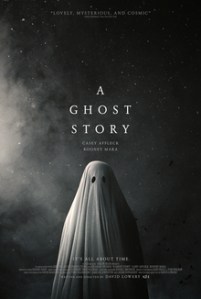
Those of us who confess to watching horror are fond of noting that the Christmas season has long been associated with ghost stories.  Charles Dickens wasn’t the first to make use of the trope and certainly won’t be the last.  After reading about elevated horror movies, I decided to watch A Ghost Story (David Lowery, 2017).  Many wouldn’t classify the film as horror at all.  It is quiet, slow paced, and has no gore.  It is nevertheless a haunting film.  I suspect its poignancy comes from a situation we can all imagine and which many people face in life—being left alone after the death of a loved one.  The idea that the dead never really leave us can be both comforting and unnerving at the same time.  The film plays to those strengths.

The premise of the film is simple: the ghost of one of a couple finds his way home and tries to reconnect with his widow.  He ends up staying there until, many owners later, the house is demolished and a high-rise is built in its place.  It’s essentially a story from the point-of-view of the ghost.  There isn’t too much dialogue included, but one significant monologue comes when a party is being held.  One of the party goers, or perhaps the current owner of the house, explains that because of what we know of physics everything on our planet will eventually be destroyed.  His beer-fueled lament is that whatever we do is therefore in vain.  He brings God into the discussion.  The ghost listens intently, but seems to disagree with his conclusions.  For someone like me the introduction of religion into the story is a Venus fly-trap, since religion and horror can’t seem to keep away from each other.

Death is a dilemma, a point that I made in a recent Horror Homeroom article on Pet Sematary.  Horror, like religion demands that we confront it.  Science can only offer cold comfort regarding the cessation of life.  Religion (and horror) open the dialog into the unknown, the realm into which mere human instruments cannot reach.  Sad and reflective, A Ghost Story hits on an essential question in the nexus of religion and science.  If a spiritual world exists, there may be some survival even of the earth’s eventual heat death.  As time passes, the titular ghost continues to learn.  Life is a learning experience, and although many modern forms of religion join in the cultural denial of death, horror is always ready to remind us that confronting it may be the wisest course of action.  Ask the ghost.  He knows.


Back to Tarrytown

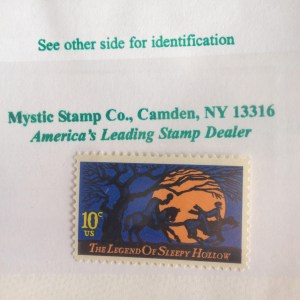
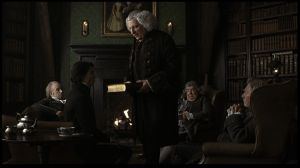
The very name “Hollow” takes me there.  It’s a resonant geonym.  Near Franklin, Pennsylvania, my early hometown, runs a route called Deep Hollow Road.  For me, with its lush, thick trees and shadowed valley, it always exemplified what the term “Hollow” intended.  And of course, there was Sleepy Hollow.  Now that my article on various movies based on the Irving story has appeared in Horror Homeroom (it’s free), I’m again thinking about my dance with that particular story.  In fact, after I submitted the article I watched yet another version of the tale, Pierre Gang’s 1999 The Legend of Sleepy Hollow.  This film on Sci Fi (before it became SyFy) purports to follow the original closely.  It nevertheless has to pad out the story and does so with religion.

Religion—specifically the Bible—and the tale as represented in Fox’s four-season series Sleepy Hollow is what started me on the current leg of my journey.  I sent an article to the Journal of Religion and Popular Culture on the topic and when it was accepted I expanded the idea into the book Holy Horror.  So it is that I’ve tried to watch as many versions of the story as I can.  There have been many made-for-television renditions.  Some are available for free on the various services that draw from my pocket monthly.  Others cause me to debate whether I want to pay for seeing a sub-par effort for the sake of completeness.  The scholar’s heart still beats within me, I guess.  The Gang version expands the story with a church scene, not in the original tale.  To inculcate the Bible, however, Tim Burton’s film of the same year was necessary.

For me no story better encapsulates October.  Perhaps it’s the crucial role of the pumpkin.  Perhaps it’s the ambiguity of the headless horseman himself—is he a hoax or something more?  These kinds of questions are answered by various filmmakers but since the viewer ultimately decides the question is left up to us.  If I were still an academic my next book project would be clear.  Instead I’m trying to bask in the wonder that is October—the season of transition from bright blue skies and colorful leaves to long, chill nights and bare trees.  Our time outdoors becomes more focused so that we might get back to the warmth inside.  And if we’re looking for a tale to read that’s not really that scary, but which captures the ghosts of the American imagination, “The Legend of Sleepy Hollow” beckons.


Not Sleepy Yet

Over a recent weekend I watched four versions of “The Legend of Sleepy Hollow.”  (I have two excuses.  One is that it’s October, and the second is that I have an article on Sleepy Hollow coming out on Horror Homeroom.  For the second, read on.)  The story is one that made an impact on me as a child, probably because of Disney’s Adventures of Ichabod and Mr. Toad.  The cartoon version, which was one of the four I watched, is silly and scary both.  It leaves it to the imagination whether the headless horseman is real or not.  Before that I watched the silent 1922 Headless Horseman staring Will Rogers.  Clearly in that film the headless horseman is what we’d now call a liberal hoax.  It was Brom Bones scaring Ichabod Crane away from Katrina Van Tassel.

The canon of characters grows with Tim Burton’s 1999 film Sleepy Hollow.  Although Burton is hit or miss for me, this strikes me as one of the best October movies I’ve seen.  The headless horseman is quite real and the spiritual world intersects with the rational, crime and punishment world in the haunted western wood.  I didn’t have time for the 1980 television movie this time around, but I decided to watch the 2007 television movie Headless Horseman.  A rather puerile splatter film set in Missouri, it posits that this is the real headless horseman behind Washington Irving’s story.  It has a lot of religious imagery, which is often what I’m looking for in horror.  The writing is poor and the characters shallow, but it isn’t a total waste of time.

What all of these films demonstrate is that Washington Irving’s story, as simple as it is, really resonated with Americans.  How can you reason or plead mercy from a headless man?  Look closely, for there is a parable here.  The headless are merciless and they have the ability to frighten.  The story is generally set in the harvest season.  The 2007 movie makes the horseman’s appearance as a crucified scarecrow.  Although the original story had no such religious elements, they’ve become a standard part of its accrued cultural heritage.  The headless horseman has gone from secular to religious, for it is an American story.  Originally set in the period after the Revolutionary War, it was part of an unsettled nation’s frustrated attempt at normalcy.  This, I believe, remains.  When we can’t make sense of our surroundings, we look back to those stories that seem to have some insight into who we are.  Headless horsemen are quite useful in that regard.