Lazarus, Come Forth

The red-cast face staring down from the giant LCD billboard this side of the Lincoln Tunnel has my attention. Having become an unwitting fan of horror movies, the genre was clear from the creepy, black-eyed gaze that found me even in mass transit. The Lazarus Effect, it said. I stored the information away knowing that it would be a movie I’d have to rent and watch alone—I don’t know many other true fans, and I don’t like going to a theater by myself. Then I started thinking about Lazarus. The man raised from the dead, according to the Gospels. When I was a child I always confused this Lazarus with the one from the parable of the rich man and Lazarus. I’d never known anybody with that name, and to find it twice in the same book must imply, at some level, that they were the same guy, right? I mean, they’re both dead. So my juvenile thinking went. In the parable Lazarus, whose wounds are licked by dogs, is taken into the comfort of heaven when he dies. The rich man, it turns out, isn’t so lucky.

769px-Bonnat01

This was a bitter cold day. Dressed like I was headed to McMurdo Station rather than central Midtown, I tried to keep my head down as the wind howled through the channels constructed by excess wealth. I am always distressed to see the homeless out and about on such days. I’ve got on more layers than an onion on steroids, and I’m still chilled through. What must it be like to face such weather threadbare? There, on Madison Avenue I saw a dog being taken for a walk. He had on a warm sweater and fancy purple slippers to keep his canine feet from touching the cold ground. That dog was better dressed against the cold than some of the people I’d passed. I thought of the dog licking the sores of Lazarus. “Father Abraham, have mercy on me,” the rich man cried.

“Son, remember that thou in thy lifetime receivedst thy good things, and likewise Lazarus evil things: but now he is comforted, and thou art tormented.” The words are almost as harsh as this wind. We’ve become a society that will spend more readily on our pets than on our compatriots. Dogs, at least the breed I saw on the street, have evolved to grow thick coats. I’ve seen pictures of huskies running across the snow like their wolfen ancestors. Indeed, the wolves, where we’ve not hunted them to extinction, still manage in the winter. But then, there’s the Lazarus Effect. I’m feeling guilty thinking about putting out the money to rent it, several months down the road. There’s a real life Lazarus who could use any spare change right now. And the well-heeled dogs, I’m sure, would be made to turn up their noses from even getting near enough to lick his wounds.


Horrorshow

Halloween may be over, and more’s the pity. Still, Halloween is simply the entry point to longer nights and opportunities to revisit what scares us in the dark. I have to admit to feeling a twinge of justification at reading Richard Corliss’s article “Never Watch Alone: Hollywood’s newest horror films remind us why fear loves company,” in this week’s Time magazine. One sentence in his piece on culture made me smile: “Horror movies are a rite of passage audiences never outgrow.” Okay, sure, the demographics may catapult me into the more geriatric of viewers, but I generally take my medicine neat. I do watch horror movies alone at night. And I never hit “pause.” To be honest, I have no idea why I do it. I do not like being scared, and I certainly don’t enjoy slashers. I am, however, seeking something profound.

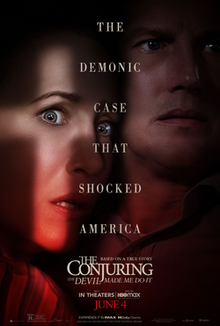
the-shiningOver the weekend my wife volunteered to watch The Shining all the way through with me. I’ve seen the movie five or six times, and I can’t seem to tire of it. The use of blood is sparing, and the pacing is positively Kubrickian, but it never fails to leave me contemplative. Don’t we all fear the madman that lurks inside? There may be ghosts in The Shining, but it is one of the least supernatural of thrillers. The monster is the protector, and nothing quite equals that disconnect for night chills. Corliss highlights the prequel to The Conjuring in his article, a movie called Annabelle. It is now on my must-see list, although dolls need not be haunted or possessed to be scary. Like Jack Torrence, they inhabit the uncanny valley of that which is close enough to human to be frightening. According to the pundits on the web, there is a real Annabelle doll collected by Ed and Lorraine Warren as a possessed toy. Debriefing with my wife after The Shining demonstrated the point Corliss was making, however. It helps to talk it out.

We spend much of our lives, I contend, trying to avoid those things that frighten us. Horror films do us a psychological service by bringing them to the surface, like desensitizing a child to spiders or snakes (at least the harmless kind). As we watch we learn what it is to be human. Religion, like horror films, is often a response to fear. Despite all our science, the world does not operate according to logic. The inexplicable happens. The horror movie allows us to explore the “what if” that science disallows. Once upon a time we went to church and held onto a crucifix. Today’s vampire is unfazed by our religious baubles. Exorcisms don’t always work—at least not completely. And the longer nights may be because the northern hemisphere is tilting away from the sun. Or maybe, just maybe, it is something more.


Fear and Dissembling

The ConjuringLast year, when The Conjuring was released, it quickly became one of the (if not the) top earning horror films of all time at the box office. Based on a “true case” of Ed and Lorraine Warren—real life paranormal investigators—the film is a demonic possession movie that ties in the Warren’s most notorious case of a haunted (or possessed) doll, with a haunting of the Perron family of Rhode Island. (The Warrens were also known as the investigators behind the Lutz family in the case of the “Amityville Horror,” showing their pedigree in the field.) Given that Halloween has been in the air, I decided to give it a viewing. As with most horror movies, the events have to be dramatized in order to fit cinematographic expectations. Apparently the Warrens did believe the Perron house was possessed by a witch. In the film this became somewhat personal as the dialogue tied her in with Mary Eastey, who was hanged as a witch at Salem (and who was a great-great (and a few more greats) aunt of my wife). Bringing this cheap shot into the film immediately made the remainder of it seem like fiction of a baser sort.

Witches may be standard Halloween fare, but when innocent women executed for the religious imagination are brought into it, justice demands separating fact from fiction. Writers of all sorts have toyed with the idea of real witches in Salem—it was a trope H. P. Lovecraft explored freely—but there is no pretense of misappropriation here. Lovecraft did not believe in witchcraft and made no attempt to present those tragically murdered as what the religious imagination made them out to be. The Conjuring could have done better here. It reminds me of Mr. Ullman having to drop the line about the Overlook Hotel being built on an Indian burial ground. Was that really necessary? (Well, Room 237 has those who suggest it is, in all fairness.) The actual past of oppressed peoples is scary enough without putting it behind horror entertainment.

A doctoral student in sociology interviewed me while I was at Boston University. She’d put an ad in the paper (there was no public internet those days) for students who watched horror movies. I was a bit surprised when I realized that I did. I had avoided the demonic ones, but I had been in the theatre the opening week of A Nightmare on Elm Street (on a date, no less) and things had grown from there. I recall my answer to her question of why I thought I did it: it is better to feel scared than to feel nothing at all. Thinking over the oppressed groups that have lived in fear, in reality, I have been reassessing that statement. What do you really know when you’re a student? As I’ve watched horror movies over the years, I have come to realize that the fantasy world they represent is an escape from a reality which, if viewed directly, may be far more scary than conjured ghosts.


Dead Certain

One look frightens me above all others. I have spent probably too many hours watching horror movies late at night, and I’ve seen actors—talented and otherwise—projecting the look of fear. It is a temporary thrill, soon banished by a more mundane reality. The look that frightens me above all others, however, is that of certainty. Well I remember it planted, etched, chiseled on the face of a man who believed without question that his duty was to deprive me of a career. I have seen it on faces devoid of any human emotion, but with a surfeit of self-righteousness. I was reminded of this when my wife pointed me to an article in the New York Times blog entitled “The Dangers of Certainty: A Lesson from Auschwitz,” by Simon Critchley. In this piece Critchley recounts watching Jacob Bronowski’s “The Ascent of Man” as a child. He focuses on the episode wherein Bronowski describes the danger of certainty, which often eclipses wonder when science alone is understood to be the basis of knowledge. And we have gone forty years further down that road.

Bronowski, in the clip provided by Critchley, describes how unwavering certainty led to the holocaust. It is a moving and poignant scene; indeed, the only one I remember from the episode as I watched it along with my classmates in the required humanities module at Grove City College. Bronowski, who had relatives murdered at Auschwitz, walks into the pond where their ashes were flushed, a man in a suit and good shoes, oblivious to the rational, and reaches down to touch whatever remains of the millions who died there. The scene has stayed in my head for over thirty years.

As an undergraduate I was certain. I knew the unflinching truths taught by my rock-solid faith. After four years as a religion major I had become more circumspect. Seminary found me still pretty well convinced, although much more temperately so. The doctorate, which required more intensive work than all the previous years combined, convinced me of how little I knew. I went to Nashotah House full of questions, and my goal was to bring my students, many of them very certain, to that human point of unknowing. We need to live with a question mark before we can be truly human. Curiosity is one of the more endearing traits people possess. Certainty disallows curiosity—questioning becomes the devil’s tool and honesty is the farthest thing from God that one might attain. In this era of easy certainty I often see a look on the faces of those in power that frightens me. I need to be reminded, along with Bronowski, that when shoes become more of a concern than human beings, we’ve already gone too far.

800px-Nazi_Holocaust_by_bullets_-_Jewish_mass_grave_near_Zolochiv,_west_Ukraine


Corn is King

For those who no longer believe in Hell, the DMV can serve a very useful function. Actually, the Department of Motor Vehicles is truly the great leveler of society—just about everyone has to cross its threshold, it is just that they all try to do it at the same time. Waiting in lines has always been a problem for me. It’s not that I think my time is more important than anybody else’s, it’s just that I have so much to do without standing in endless lines. Especially since work keeps me away from useful pursuits for over eleven hours out of every twenty-four, weekends seem somehow too sacred to be spent at the DMV. But the Devil must be paid his due. When paying the Devil, I take along Stephen King to pass the time. So it was over the weekend that I found myself reading “Children of the Corn.”

Of course, like most horror movie fans, I have seen the movie a time or two. I’d never read the story before. This is one of the King tales based most directly on religion gone wrong; the children, as any reader/watcher knows, have distorted Christianity into a midwestern corn-god religion. It may seem unlikely to urban folk, but I have stood next to corn stalks that have towered high above my head, ominously silent like triffids on a sunny Wisconsin afternoon. It can be unnerving. Almost a religious experience. But turning back to King, the story differs from the movie, of course, and what the written version makes clear is that the children distort the New Testament, but leave the Old Testament intact. King, like many horror writers, is biblically literate. Yet, this picture of Old Testament god versus New Testament god is stereotypical and a little misguided. The god of Christianity is a deity of many moods. The wrath in Revelation, or even some of Jesus’ sermons, however, stems directly from Yahweh’s darker moments.

Diablefaucheur

How do we know what is demanded by this mercurial deity? The theological ethicists argue over this daily, but nowhere in the Bible does God have a problem with people treating each other as they would want to be treated. Some of the punishments for minor infractions seem a bit severe—or very severe—but the basic principle, given the Weltanschuung in which it operates, need not cause undue fear. Women, homosexuals, gentiles, Jews, anybody reading parts of the Bible will no doubt be offended by the details. As the saying goes, the Devil is in the details. And that’s why I’m spending my entire Saturday morning at the DMV.


Lovecraft in the Woods

CabinintheWoodsYou know the basic plot: five college students—always an uneven mix of genders—travel to a remote cabin in the woods during a break. Extreme bloodshed ensues. The Evil Dead? Cabin Fever? Blair Witch Project 2? This time it was The Cabin in the Woods. With the exception of Cabin Fever, all of these films have a religious origin for the horror unleashed on our protagonists, with varying degrees of seriousness. The premise of getting away into the woods is overtly sexual in nature, often with the added vice of drinking or drug use far from the eyes of watchful society. Something inevitably goes terribly wrong. Were they a tad less graphic, most of these movies could pass for morality plays in their adherence to the convention, made obvious in The Cabin in the Woods, that the virgin is the sole survivor. Of course, this is done with tongue deeply embedded in cheek. Joss Whedon, who brought us Thor and The Avengers, knows all about gods, and they are the driving motivation behind the evil lurking in this contrived cabin in an artificial wood.

In this parody of the splatter film, the blood of the archetypal teens is collected to appease a Lovecraftian pantheon of unseen “ancient ones.” These are the gods of old, hidden deep beneath the earth in a slumber, placated by the ritual sacrifice of the whore, the athlete, the scholar, the fool, and the virgin. The sacrifice is orchestrated by techie priests who wear white shirts and lab coats, in a hermetically sealed laboratory under the cabin where they are set to unleash any variety of monsters on the kids, leading to their gruesome demise. First the protagonists must “sin”—not a difficult prospect, given the arrangements—and be punished. If the ritual fails, the world ends when the “evil, giant gods” are released; echoes of Cthulhu are rife.

Horror movies offer more than scares. If done well, they provide catharsis as well—a kind of celluloid redemption. Writers and directors, however, have moved toward self-parody to distort the horror film into a kind of comedy. Even as early as The Evil Dead, the humor is evident. Joss Whedon, however, effectively wields the evil gods, just as in The Avengers. Deities are revered less for their goodness than for their sheer power. H. P. Lovecraft, an atheist, gave us the old gods. Hollywood has run with them. Instead of catharsis, viewers are left with an undefined unease—something is not quite right with this universe that has been created. Gods, whether holy or horribly profane, demand much of humanity. The response may be abject devotion or laughter. The sins remain the same as human vices of old. It is the gods that have been transformed.


Blob Blog

Those who actually know something about movies occasionally complain that Hollywood seems to provide us with diminishing returns. How many movies have been remade? Can anyone even count all the sequels, prequels, and just plan quels? A similar trend is evident in publishing. A teen-vampire novel takes off and every publisher faces a twilight of the profits if it doesn’t spin off its own version. Sometimes I end up becoming familiar with a movie through its remake before ever viewing the original. The Blob is one example of this. I’ve seen the thirty-year remake 1988 version a few times. Just this weekend I saw the original 1958 version for the first time. It seems to me that teen movies of the late fifties and early sixties tried a little too hard to get the snappy, sassing dialogue of teens on the brink of the incredible cultural changes that were about to take effect after the extreme conservatism of the McCarthy Era. At times it is so hip that I can hardly stand it.

The_Blob_posterThe Blob falls into that category. A young Steve McQueen trades ripostes with his chums who think a drag race and a Bela Lugosi movie with your gal are pretty daring behaviors. Buried in all that innocence, however, I found a hidden warning tone. When I watch scary movies, I always keep an eye out for religious themes. Sometimes they fail to materialize. The Blob is about as secular as they come. I didn’t even spot a church or a priest (unlike the 1988 remake) in the typical American town. Just a bunch of kids that, Archie-like, try to convince the adults that they’re serious. A blob from space really is loose in town, and nobody has an idea how to stop it. All the adult men wear ties and the ladies all wear dresses. It is a world that follows the rules.

What of this warning tone I mentioned? Well, the blob itself is, apart from its disruptive raison-d’être, hardly more threatening than the stifling culture it attacks. It can’t be shot or burned, and nobody has any other ideas. It is unstoppable. Except for cold. And here’s the chilling part. As the carbon-dioxide drenched blob is airlifted to the Arctic by the military, Lieutenant Dave declares the world safe once more. Steve (Andrews, i.e., McQueen) chimes in with, “Yeah, as long as the Arctic stays cold.” The film ends with a trademark horror question-mark (this one literal) as the blob is parachuted onto a snow-covered landscape. Global warming was a future monster in 1958. The optimistic world could see nowhere but forward. Now, over 50 years later, our future looks a lot less cold. With politicians and some religious leaders decrying global warming as just another liberal myth, we might do well to remember The Blob. Something up there on our melting ice caps is waiting for us to return to the 1950s to begin its sequel of terror.


Hallowed be thy Kane

Watching the alien burst from Kane’s distended abdomen as he appeared to have eaten too much seemed somehow appropriate on Thanksgiving. I’m well aware that my taste in movies does not always match expectations and few bother to comment on my idiosyncratic observations. Nevertheless, it had been years since I’d watched Alien and on this particular holiday it felt like synchronicity. I’ve seen the film a few times before, but this is the first time since starting this blog. Not surprisingly, some biblical allusions popped out at me as I watched the crew of the Nostromo struggle with alien life. And I’d just read of NASA’s “exciting discovery” on Mars, a discovery whose official announcement for which, like Christmas, we’ll have to wait until December. Learning that the gut-busting alien was modeled on Three Studies for Figures at the Base of a Crucifixion by Francis Bacon (a contemporary one) only sweetened the analogy.

Character names hide aspects of personality and intention. Sometimes the writers may not even be aware of all the shades of gray. The alien’s first victim is Kane. On paper he seems an ordinary citizen, but on the screen the euphony with the first human child, Cain, is obvious. As Parker is lamenting how large the alien has grown in just a short time, science officer Ash whispers, “Kane’s son.” Or is it Cain’s son? Cain, the infamous ancestor of the sinful Grendel and any number of other villains of literature and cinema. Cain is, significantly, the first child born in Genesis, himself the genesis of sin in the world since his murder of his brother is the first act that the Bible declares a “sin.” The alien, born worlds away, conforms to biblical expectations.

Since Ash is actually an android and has no real feelings, he admits the alien to the ship and protects it until he is destroyed by his shipmates. He represents unfeeling science amid the horror of human bodies being invaded and rent apart. When accused of admiring the alien, the resurrected (!) science officer states, “I admire its purity. A survivor… unclouded by conscience, remorse, or delusions of morality.” Is he not really describing science itself? Religion is running rampant on the Nostromo. As Ripley sets the detonation charges and finds her escape blocked, she races back to the console and cancels the self-destruct order which the HAL-like Mother ignores. In a secular prayer Ripley calls out to Mother who, like any deity, does not answer all human pleas. And even as she escapes the detonating ship, Ripley will find that Cain’s son is still lurking in the corner of the emergency shuttle, for the science can never truly escape from Genesis.


Cabin Fervor

It’s a sure sign that work is growing overwhelming when I’m too tired to watch my weekend horror movies. Well, I decided to fight back the yawns and pull out Cabin Fever this past Saturday night. I’d seen the movie before, and I’m not really a fan of excessive gore. The acting isn’t great and the characters aren’t sympathetic, yet something about the story keeps me coming back. In short, a group of five teenagers (it always seems to be five) are renting a cabin for a week when they get exposed to a flesh-eating virus. They end up infecting just about everyone in the unnamed southern town before they all end up dead. It doesn’t leave much room for a sequel, but that hasn’t stopped one from being made. One of the unfortunate victims of the virus is torn apart by a mad dog. The locals, fearing their safety, decide to hunt down the surviving youths.

On the way to the now gore-smattered cabin, one of the locals mutters that they’ve been sacrificing someone—a natural enough conclusion when body-parts are scattered around, I suppose. He says, “it ain’t Christian.” Well, yes and no. Sacrifice is at the putative heart of Christianity, although human sacrifice (beyond infidels and women) was never part of the picture. As is often the case with horror film tropes, the victim who has been dismembered is a woman. The guys whose deaths are shown are all shot. Now, I have no wish to attribute profundity where it clearly is not intended, but there does seem to be a metaphor here. Our society and its staid religion tolerate the victimization of some over others.

One of the hidden treasures of the best of horror movies is the social commentary. George Romero made an art form of it in Night of the Living Dead and its follow up Dawn of the Dead. Many other writer/directors have managed to do it quite effectively. We can critique our world when hidden behind the mask of the improbable. While the commentary for Cabin Fever may be entirely accidental, I still find a little redemptive value in it. That, I suppose, is the ultimate benefit of social commentary—it is true whether intentional or not. Is there a larger message here? I wonder if the fact that when women are victimized no one survives is pushing the metaphor a little too far. It’s hard to say; I’ve been working a little too much lately.


Unholy Brides

Hollywood is seldom accused of being a religious venue. Indeed, carrying on from an earlier distrust of theater as idle entertainment, some Christian groups early on deemed movies as tools of the devil. (Some relaxed that harsh assessment when Cecil B. DeMille came on the scene and started offering biblically based epics.) Many directors and writers, to judge from recent vapid box office successes, consider action or titillation sufficient to draw in the dollars. Yet, movies have often proven to be an outlet for the intellect as well, with profound, intricate, and important themes unfolding against the silver screen. The movies we watch reveal much about who we are. A surprising number of them, despite early evangelical concerns, have decidedly religious themes or messages. My regular readers know of my confession to being one of the monster kid generation, and as an adult I re-watch those movies with senses attuned to their religiosity.

Last night, as I watched The Bride of Frankenstein, I was repeatedly reminded of the role religion plays throughout the film. From the opening lines of Lord Byron through to the monster’s moral judgment on humanity as he is about to pull the switch, religious language, symbols, and implications practically tumble over each other to get to the audience. The concept of life—the divine prerogative—being absconded by human scientists forms the skeleton of this story based on Mary Wollstonecraft Shelley’s original work. While Shelley can hardly be considered the poster-girl for religious scruples, her work, and its adaptation into this movie, bristle with the implications of usurping the divine. In the words of Dr. Pretorius, “To a new world of gods and monsters!”

The Bride of Frankenstein is not alone in this aspect of mixing religion and monstrosity. Hollywood of the 1930s was a money-hungry haven, but the classic monster tales that began to shape movie-watchers’ sensibilities often included religious themes. Dracula has his resurrection and aversion to crucifixes. The Mummy arises from ancient Egyptian ritual magic. The Wolfman suffers a gypsy curse. Frankenstein is the power of God incarnate. When the final reel is placed on the projector, we discover that God has rejected all these human attempts to ascend to the heavens. Hollywood gives us conventional religious endings. More recent and daring approaches have emerged, but seldom have they captured the American imagination like the creature features of the 1930s. The religious veneer may have been thicker in those days, but the underlying message could have chilled the blood of the finger-waving evangelists. Even the Bible, from the beginning, has its monsters.


The Evil Living

Returning home from my campus visits, I needed some brainless relaxation. Since we don’t have any television service at home, this means watching movies. I’d heard quite a bit about The Evil Dead over the years—a movie that was scary back in the 80’s when it appeared. Improvements in special effects and the intensity of engineered sound are capable of drawing a person into an alternate reality for a couple of hours these days, and the endless reiteration of earlier movie effects somehow robs the early thrillers of their impact. The Evil Dead, however, capitalizes on confusion about the menace and teeters on the brink of morality for the entire 85 minutes. Naturally, when looking for a source of fear, it seeks a religious agent. The source of the evil in the woods is narrated in a voice-over of the presumably dead scientist who has discovered Sumerian texts that release demons in the forest (mostly in the form of falling trees).

Sumerian is always a safe bet if you want a language that your viewers will not be able to identify. The earliest known recorded language, Sumerian is still difficult even for experts, and it conveys all the strangeness of long ago. We do know that the Sumerians recorded myths that involve what we might call “demons” today, but the possession of humans was a much later development—probably a pre-scientific way of explaining epilepsy. As our five students seek a weekend getaway in the woods, they become possessed and face the moral question of just when a person ceases to be human. At what stage does someone have the right to kill someone else? Perhaps unintentionally, the movie gives us the answer, “Never.” This kind of morality has a place in America, one of the very few “first world” nations in which the death penalty is still legal. Often promoted by those dead-set against abortion. Where do we draw the line saying a person has crossed over into the unforgivable other?

The Evil Dead has become a cult classic over the years. Its relatively low budget of less than half-a-million dollars brought an astonishing box office return on the investment. The gore, tame by more modern standards, does not mask that what is really at issue here: the question of right versus wrong. What is truly evil? Sumerians aside, what possesses people and drives them to destroy one another? The Evil Dead, like many horror films, reaches for a religious answer. As the supernatural fog begins to clear, however, we might not like what we see in the clear light of day. Religion may be an excuse, but the assaults upon one another are what Nietzsche famously called “human, all too human.” The sooner we clear our vision and pay attention to what is actually happening, the sooner we can combat the horror.


The Body Apocalyptic

We are all products of our upbringing. Our early assumptions, although sometimes challenged and overcome, are generally with us for life. So it was that my progression of education led me to a small, conservative college to major in religion. Compared to what I learned at Grove City, the historical criticism firmly in place at Boston University sounded downright sinful. Nevertheless, it made sense, so I followed reason. At Edinburgh we were way beyond historical criticism in that wonderful, European way. Somehow in the midst of all the excitement, I missed Post-Modernism. “Po-Mo” has, like most recent movements, been quickly added to the pile of the passé, but I find it refreshing. I just finished reading Tina Pippin’s Apocalyptic Bodies (Routledge, 1999). This may have been one of the first truly Post-Modern biblical critiques I have read, and it was fascinating. Pippin is taking on especially the book of Revelation. If more people had read her book there would have been less panic back around May 21.

I find feminine readings of the Bible enlightening. As a member of the gender largely responsible for a book filled with sex and violence, it is often difficult to see how the other half of the human race might read that same text. Having grown up with a literal understanding of Revelation, I never questioned whether it was a good or a bad thing. The end of the world must be God’s will, therefore, by definition, good. One of the beauties of a Post-Modern interpretation is that everything is thrown open to question. Pippin does just that. Noting the ennui associated with eternity, she asks a question that always lurked in my mind—isn’t too much of anything eventually a problem? Eternity itself becomes problematic. Where do we go from here?

Perhaps the most striking comment Pippin makes is in the context of her chapter on the monsters of the apocalypse, “Apocalyptic Horror.” She compares Revelation to horror movies and demonstrates how all the elements are there in the Bible. She notes, “There are many monsters in the Apocalypse, but the real bad ass monster sits on the heavenly throne.” Pippin explains that God, in Revelation, joys in killing off humankind. As many of us have come to learn, people are generally good; at least most people have done nothing to deserve the heinous punishments gleefully doled out in Revelation. That, of course, raises the sticky question of ethics as applied to the divine. Here the book of Job comes to mind where our hapless hero declares that even though he is innocent, God still can count him guilty. It is the human situation. And Job was a good guy. Pippin’s little book challenged many of the assumptions with which I’d grown. Anyone who can read such a book and not worry about being a good parent is more Po-Mo than me.


Buying Salvation

October is upon us. The telltale signs are all there: trees just starting to turn, gray skies that hide an intangible menace, a coolness in the air, and Halloween stores sprouting like mushrooms. Halloween is a holiday with incredible sales appeal, I suspect, because people are still, at some level, very afraid. We evolved into who we are from a long history of being prey as well as predators. Fear governs many of our interactions in social settings, although we prefer to call it more abstract names such as “rule of law” or “peer pressure.” Deep down, we are afraid. Halloween allows us to wear that fear on our sleeves. And it isn’t just the Celts who made this confession; Día de los Muertos developed independently, giving us a different flavor of the same emotion. Savvy marketers know that where a human concern lies, there will be the purse-strings also.

Commercialization of religion—the fancy word is “commodification”—is as close to American religious experience as you can get. We live in a religious marketplace. Various religious groups offer their wares, sometimes obviously, sometimes subtly. Often the underlying motivation is fear—fear of displeasing deity, fear of eternal torment, fear of reincarnation. We are afraid and we don’t know what to do, so we try to buy our way out of it. Other times the Madison Avenue approach works. Consider the Crystal Cathedral, or even the great medieval cathedrals of Europe. These are tourist destinations, architectural marvels that draw us in. The message is still pretty much the same: the deity will get you unless you give back. How better to show respect (that is fear) than erecting a massive, complex, and very expensive edifice to the angry God?

It is simplistic to suggest that religion boils down to fear, but when all the water evaporates, fear is certainly evident among the residue. Next to the overtly commercial holiday of Christmas the most money can be coaxed out of Americans at Halloween. Or consider the appeal of horror movies. Love them or hate them, they will draw in big money at the box office. In a society that sublimates fear and tells its citizens that unimpeded growth is attainable, Halloween is the most parsimonious holiday. Perhaps the most honest, too. A full month before the creepy sight of naked trees and chill breezes that sound like screams whistling through their bare branches, the stores begin to appear. When Halloween is over they will be dormant for eleven months of the year, but like the undead they are never really gone. Only sleeping.

A parable.


Monsters Are Due on Elm Street

November 1984. George Orwell’s dark vision had not fully emerged, but the veneer had worn off of the fairy-tale world promoted by the evangelical, free-market professors at Grove City College. As a blue-collar kid in a blue-blood institution, I was out of place. The campus was buzzing, however, about a new movie—A Nightmare on Elm Street—for which I finally plucked up the courage to ask a cute coed for a date. I’d never seen a slasher movie before, having sampled mostly traditional monster-flick fare as a child. I felt a sense of accomplishment since some of my college friends had to leave the theater for fear. On the big screen, with no previous knowledge of the plot, the film worked for me on many levels. Last night I decided to watch it again.

My first reaction was a sense of surprise at how much of the movie I still recalled with pristine clarity. For having been nearly thirty years ago, such clarity is a rare phenomenon for many details of life, often reserved for memories of early girlfriends. A second reaction was noticing how religion featured in the film. The girls skipping rope chant, “One, two, Freddy’s coming for you / Three, four, better lock your door / Five, six, grab your crucifix.” Indeed, the crucifix features in several scenes as an ineffectual weapon against Freddie Krueger. The days of defying vampires are over when your own subconscious turns on you. In one of the early chase sequences, Freddie, raising his infamous glove, says, “This is God!” Religion and its overarching concerns with death and suffering come together with horror in that one moment. The traditional power structures of religion have lost their power to defend the troubled teenagers. The only one well adjusted is, ironically, Johnny Depp’s Glen. Even he falls victim to the revenge sought by Krueger.

Surprisingly, the scene I had most trouble recalling was the end. I recollected the bright, hazy sunshine, but couldn’t remember how Wes Craven released his audience from the drama. Of course, there is no end. Freddie came back in countless sequels, none of which I ever watched. Although I wouldn’t know it at the time, Robert Englund based the screen presence of Freddie on Klaus Kinski’s Nosferatu in Werner Herzog’s classic remake of that silent gem. Freddie is the vampire that defies religious cures. Movie villains are among the most adept practitioners of resurrection on the silver screen. The occasional E.T., Neo, or Spock will come back from the dead, but those who repeatedly return are the denizens of our nightmares. As Orwell’s vision continues to unfold in subtle ways, 1984 looks like an age of innocence before the ineffectual god worshipped by the establishment became self-image, writ large, on Elm Street.


Religious Reflections

In a stunning display of alacrity, over the weekend I viewed the movie Mirrors only three years after it was released. Since I watch horror films with a view to how they portray religion, I was preparing myself for disappointment when well over halfway through no overt, or even subtle references seemed to have been made to any holy topic. As Ben Carson, security guard, discovers that the mirrors of his night-watch building are haunted, the story seemed to be evolving into the standard ghost movie. When the missing character of Anna Esseker was finally found, I breathed a sigh of relief—she was living in a convent (because there were no mirrors there). What I supposed was a ghost movie was really a demon movie, and I found yet another example of how fear and religion interact.

Since I’m currently preparing a program for a local church on the way that Christianity is represented in the movies, I’ve been rewatching a couple of standard films to gauge the scope of this interaction. So this weekend I also watched Constantine. This has never been one of my favorite movies, but as imbued as it is with Christian mythology it cannot really be ignored. When Gabriel is explaining to Constantine why he is bringing the devil’s son into the world, I realized that the reason coincided with some of my observations. Gabriel notes that humans need fear to appreciate God. By bringing fear into the world, Gabriel will force humans to become more pious. Intertextuality in the movies.

If I might indulge in some theological (that word makes me shudder) speculation that may not have been intended by the writers/producers, both of these movies utilize the concept that demons are trapped by mirrors. This may be a reflection truer than ever intended—we are our own demons. Mirrors reflect the vanity of visual appeal; our looks fade and our true self remains. Is that self an angel or a demon? Christian tradition states they are one and the same. Demons are only fallen angels. I’ve seen enough horror films to know that religion is not a universal element, but it often does appear in the role of producer of both good and evil. In this sense, at least, the movies are very honest.