Naming Things

There’s this thing that you saw and you don’t know what it was called.  It was, say, an architectural or engineering part of a bridge.  Specifically a railroad bridge.  You’ll find that even with dedicating quite a lot of time to it, the internet can’t tell you what is is called.  I was recollecting something that happened to me as a child that involved a railroad bridge.  I can picture the bridge quite clearly in my head, and I wanted to know what a specific feature was called.  Google soon taught me that there are far too many types of bridges to get the answer to my specific question.  No matter how many bridge pictures I examined, even specifically railroad bridges, I couldn’t come up with one sharing the feature I was remembering.

What I need is to sit down with a roomful of experts, make a drawing on the whiteboard, and see if one of them can answer the specific question: what’s this called?  The web is a great place for finding information, but the larger issue of finding the name of something you don’t know is even larger than the web.  Is that even possible?  Yes, for the human imagination it certainly is.  People tend to be visual learners.  (This is one reason that book reading is, unfortunately in decline.)  Videos online can convey information, and some even “footnote” by listing their sources in the description.  The problem in my case is, they’re not interactive.  To get a question answered, you need to ask a person.  I don’t trust AI as far as I can retch.  It has no experience of having been on a railroad bridge as a child when a train began to approach.

Technically, walking along railroad tracks is trespassing.  Mainly this is because it’s dangerous and potentially fatal.  (And somebody else owns the property.)  Growing up in a small town, however, one thing guys often do is walk along the tracks.  They are good places for private conversations with your friends.  The added air of danger adds a bit of zest to the undertaking.  Rouseville, one of my two childhood towns, was quite industrial.  That meant a lot of railroad tracks.  I had an experience on one of the bridges at one time and I really would like to know what the various parts are called.  Just try searching for illustrations of exploded railroad bridge parts.  If you do, you may find the answer to the question that I have.  But the only way I’ll know that for sure is if I can point to it and ask you, “what is this called?”


What Bots Want

I often wonder what they want, bots.  You see, I’ve become convinced that nearly every DM (direct message) on social media comes from bots.  There’s a couple of reasons I think this: I have never been, and am still not, popular, and all these “people” ask the same series of questions before their accounts are unceremoniously shut down by the platform.  Bots want to sell me something, or scam me, I’m pretty sure, but I wonder why they want to “chat.”  They could look at this blog and find out much of what they’re curious about.  I could use the hits, after all.  Hit for chat, as it were.  

Some change in the metaverse has led to people discovering my academic work and some of them email me.  That’s fine, since it’s better than complete obscurity.  Within the last couple months two such people asked me unusual, if engaged questions.  I took the time to answer and received an email in reply, asking a follow up query.  It came at a busy time, so a couple days later I replied and received a bounced mail notice.  The other one bounced the first time I replied.  By chance (or design) one of these people had begun following me on Academia.edu (I’m more likely on Dark Academia these days), so I went to my account and clicked their profile button.  It took me to a completely different person.  So why did somebody email me, hack someone’s Academia account to follow me, and then disappear?  What do the bots want?

Of course, my life was weird before the bots came.  In college I received a mysterious envelope filled with Life cereal.  The back of said envelope read “Some Life for your life.”  I never found out who sent it.  Another time I received an envelope with $5 inside and a typewritten note saying “Buy an umbrella.”  If I’m poor now, I was even poorer in college and didn’t have an umbrella.  Someone noticed.  Then in seminary someone mailed me a mysterious letter about a place that doesn’t exist.  There was a point to the letter although I can’t recall what it was without it in front of me.  No return address.  I have my suspicions about who might’ve sent these, but I never had any confirmation.  The people are no longer in my life (one of them, if I’m correct, died by suicide a couple years after the note was sent).  It’s probably just my age, but I felt a little bit safer when these things came through the campus mail system.  Now bots fill my paltry web-presence with their gleaming DMs.  I wonder what they want.


Naming the Dead

It probably just goes with the territory, but I’ve noticed something.  A big part of my job is searching for people on the internet.  (Academics, of course.)  Mostly these are folks I don’t know, some of them with very common names.  This presents special challenges, of course.  Every once in a while, though, you search for a name and pretty much every entry you find is an obituary.  I’m not talking about someone prominent who has died, but rather several people with the same name who’ve passed away.  The other day, after four or five pages of Google I found nobody alive.  That particular name wasn’t an “old fashioned” name either.  It could be (perhaps is) still a very common name.  It does get me pondering whether some names are “safer” than others.  Is anyone by this name still alive?

We place a lot of stock in our names.  Being the way that others get our attention, and identify us, they do have importance.  And many names are common—parents aren’t always the creative sort.  And the internet is a source of frustration when trying to narrow down a common name and attach it to someone you don’t already know.  Growing up, kids want to be like everyone else—no standing out in the herd.  “Wiggins,” where I grew up, was an unusual name.  We got teased for it quite a lot.  When my mother remarried, my brothers and I went by our stepfather’s common last name for a few years.  In seminary I decided to revert to my birth name—Wiggins.  I was wanting to do two things: reclaim my heritage, and stand out a little.  Even so, a web-search for Steve Wiggins will bring up at least four or five individuals not me, including an obituary or two.

Before the web, when trying to find a scholar you had to use letters.  (Or maybe the phone, but cold calls weren’t really professional). You’d send them a letter.  In a way, the web is a great equalizer.  But it favors those with names that are somewhat less common.  Some people change their names—performers and some authors do this to make their persona more to their liking—but this is a fraught activity.  I know from switching back to my birth name that the process is complex and if you try it after you’ve started to publish things it adds whole new layers of complications.  So I spend quite a bit of time searching for people who aren’t easily found.  Not infrequently I seem to be naming the dead.


Author Pages

It takes me awhile, sometimes.  Maybe it’s a generational thing.  I’ve been blogging for sixteen years now (my blog is a teenager!) and it only just occurred to me that I should be putting links to authors’ pages when I post about their books.  I know links are what makes the web go round but I assumed that anyone whose book I’ve read is already better known than yours truly.  Why would they need my humble help?  Well, I’ve been trying to carve out the time to go back and edit my old posts about books, linking to authors’ pages—there are so many!  In any case, this has led to some observations about writers.  And at least this reader.  Most commercial authors have a website.  Not all, of course.  People my age who had earlier success with writing tend not to have a site since they already have a fan base (I’m guessing).  Most fiction writers in the cohort younger than me have pages, and I’m linking to those.

I’ve noticed, during this exercise, that my reading falls into two main categories: novels and academic books.  I suppose that’s no surprise, although I do read intelligent nonfiction from non-professors as well.  In the nonfiction category, it’s fairly rare to find academics with their own websites.  They probably get the validation they require from work, and being featured on the school webpages.  Or some will use Academia.edu to make a website.  As an editor I know that promoting yourself is important, even for academic authors.  Few do it.  Then I took a look around here and realized, as always, that I fall between categories.  No longer an academic, neither have I had any commercial success with my books.  I’ve fallen between two stools with this here website.  I do pay for it, of course.  Nothing’s free. 

Almost nobody links to my website.  This isn’t self-pity; WordPress informs you when someone links to your site and that hasn’t happened in years.  Links help with discoverability on the web, so my little website sits in a very tiny nook in a low-rent apartment in the part of town where you don’t want to be after dark.  And I thought to myself, maybe other authors feel the same.  Maybe they too need links.  So I’m adding them.  As I do so I hope that I’ll also learn a thing or two.  I’m trying to learn how to be a writer.  It just takes me some time before things dawn.  Maybe it’s just my generation.


Professionalism

We’re all tightly packed together here on the internet.  Social media is a fuzzy category and now includes such platforms as LinkedIn, which I think of mainly as a place to hang your shingle while looking for a job.  I chose, many years ago, to make myself available online.  This sometimes leads to a strange familiarity.  It isn’t unusual for me to have an author hopeful to contact me through my personal email or through LinkedIn, especially, to try to push their project.  (Such people have not read this blog deeply.)  One thing acquisitions editors crave most highly is professionalism.  Being accosted on LinkedIn, or in your personal email, is not the way to win an editor’s favor.  Some of us have lives outside of work.  Some of us write books of our own and don’t blast them out to all of our contacts on LinkedIn.  Professionalism.

It’s tough, I know.  You want to promote your book.  (I certainly do.)  It seems strange to say that blogging is old-fashioned, but it is.  (Things change so fast around here.)  But you could start a blog.  Or better yet, a podcast.  Or a YouTube channel.  You can blast all you want through X, Bluesky, Facebook, Tumblr, or Instagram.  I admit to being old fashioned, but LinkedIn is for professional networking, not doing quotidian business.  It may surprise some denizens of this web world that some publishers don’t permit official business through social media.  Email (I know, the dark ages!) is still the medium preferred.  Work email, not personal accounts.  Some authors (believe it or not) still try to snail mail things in.  Publishing is odd in that many people, and I count my younger self among them, suppose you can just do it without learning how it works.  Most editors, I suspect, would be glad to say a word or two about professionalism.

Photo by Ben Rosett on Unsplash

Professionalism is what makes a commute to the office on a crowded NYC subway train possible.  We all know what’s permissible in this crowded situation.  We know to wait until someone checks in at work before asking them about a project we have in mind.  (If you’re friends with an editor that’s different, but you need to get to know us first.)  When I started this blog I was “making a living” as an adjunct professor.  I was hanging out my shingle.  I also started a LinkedIn account.  Then I started writing nonfiction books again.  Since those days I’ve been trying to figure out the best way to promote them.  Professionally done, if at all possible.


Existential Searching

Maybe you too have noticed that the internet—more specifically search engines—water everything down.  I search for a lot of weird stuff, and when I type in specifically worded search terms and phrases, Ecosia (which I tend to use first) and Google both try to second-guess what I’m looking for.  Also, they try to sell me things I don’t want along the way.  It’s no surprise that the web was commercialized (what isn’t?) but it does make it difficult to find obscure things.  I don’t pretend to know how search algorithms work.  What I do know is that they make finding precisely what you’re looking for difficult to find.  Even when you add more and more precise words to the search bar.  Tech companies think they know what you want better than you do.  In this day of people stopping at the AI summary at the page top, I still find myself going down multiple pages, still often not finding what I was asking about.

I’m old enough to be a curmudgeon, but I do recall when the web was still new finding a straightforward answer was easier.  Of course, there are over 50 billion web pages out there.  Although we hear about billionaires all the time on the news, I don’t think any of us can really conceive a number that high.  Or sort through them, looking for that needle in a haystack, from Pluto.  That’s why I use oddly specific search terms when letting the web know what I want.  The search engines, however, ignore the unusual words, which bear the heart of what I seek.  They wash it out.  “Oh, he must want to buy breakfast cereal,” it seems to reason.  “Or a new car.”

Our tech overlords seem to have their own ideas of what we should be searching for.  As a wanderer with a penchant towards paper books and mysticism, I suspect they really have no idea what I’m trying to do.  Mainly it is to find exactly what I’m typing in.  They often ask me “did you mean…?”  No.  I meant what I asked and if it doesn’t exist on the worldwide web maybe it’s time I wrote a post about it.  It may take the web-crawlers and spiders quite some time to find it, I know.  50 billion is a lot of pages to keep track of.  Some of my unusual posts here are because I can’t find the answer online.  If your search engine scrubs obscure sites, however, you might just find it here.


Unverified

Dear Google Scholar and ResearchGate,

Thank you for listing me as a scholar on your website.  I am pleased that my academic publications interest you.  I am writing to you today, however, about your verification process.  Neither of your sites will verify me since I do not have an email with a .edu domain.  Now, I fully realize that even adjunct instructors are often given a university or college email address.  This is so students and administrators can reach them.  Speaking as a former adjunct instructor at both Rutgers University and Montclair State University, I can verify that such an email address does not verify your scholarship.  It is a means of communication only.  It does not verify anyone (although it may come in handy if you need to contact someone internally).

For large companies with a great deal of resources, I am surprised at your narrow view of both “scholar” and “verification.”  I earned a doctorate at Edinburgh University before email was widely used.  I taught, full-time, for over a decade at a seminary that did not request any .edu emails until well into my years there.  I taught for a full academic year at the University of Wisconsin Oshkosh.  Had you requested “verification” earlier (pardon me, you may not have existed then), I would have been able to contact you from nashotah.edu, uwosh.edu, rutgers.edu, or montclair.edu.  Your choice.  However, since you only decided to begin your online resources after I had moved into publishing, where the emails end in a .com domain, you were simply too late.  The thing about technology is that it has to keep up.

I hardly blame you.  My doctoral university was opened in 1583, long before today’s giants were twinkles in the eyes of the likes of Bill Gates or Steve Jobs.  Scholars used to write these artifacts, called “books” on paper.  They sent them through a service called “the mail” to publishers.  I know all of that has changed.  The fact is, however, that I have published six scholarly books, and several articles.  I am still writing books.  I am simply wondering if you can answer the question of when I became unverifiable because of my email address?  I have a website that details my educational and professional history.  Academia.edu has not asked me to verify myself and my profile there gets a reasonable number of hits.  My question is when are you going to catch up with the times?  Many, many scholars do not work at .edu-domain institutions.  Of course, nobody knows who we are.  Thank you for your kind attention.

Unverified  


Fabric of Time

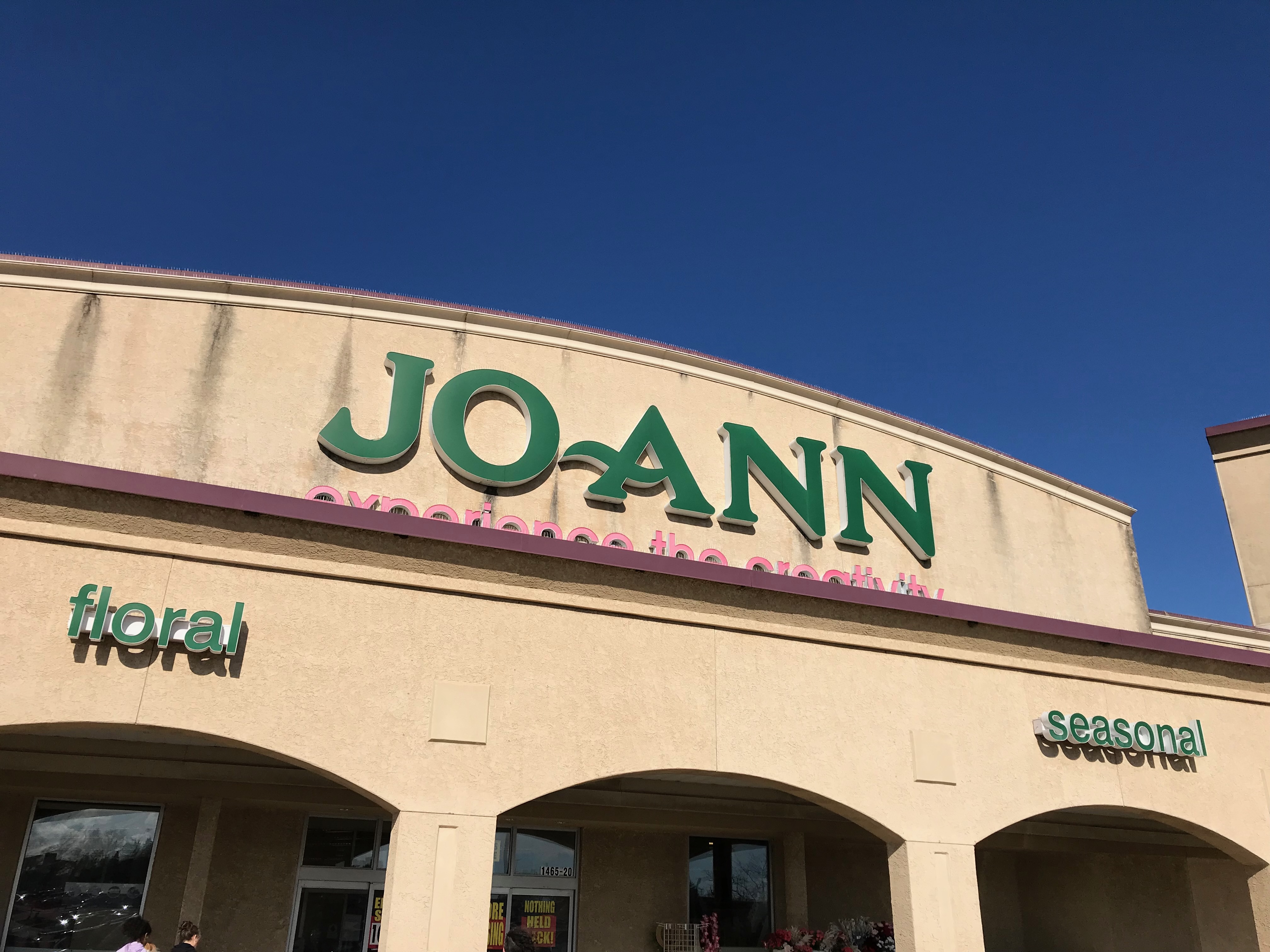
I’m not a sewer.  I mean, a person who sews.  I know people who are, though, who are quite distressed that JoAnn Fabrics is going out of business.  In an effort to console such folk, I indulged in an online search for fabric shops that led to a couple of conclusions.  One is that the internet is lousy at clean-up, and the second is that big box stores have ruined the ability to find things, funneling all purchasing to Amazon.  Let’s take these one at a time. 

If you’ve ever searched for a physical store (fabric or otherwise) online, you know that sites like Yelp are full of artifacts.  Stores that closed a long time ago and have never been removed.  In fact, when I commuted to New York City I sometimes walked several blocks on my lunchtime, looking for a store only to learn that it had closed five or ten years ago.  It still beamed happily on the web, though.  I have driven to bookstores that no longer exist, based on their location being proclaimed loudly online.  Regarding fabric, I located directories for Enright’s Fabric Warehouse, in nearby Bethlehem.  Nothing online indicated that they were long out of business.  I street-leveled the address on Google Maps and found a building I’d driven past many times; I’d actually driven by it the day before.  It obviously was a large factory-like building, but it hadn’t been a fabric store in the seven years I’ve lived in the Lehigh Valley.  This isn’t the only time I’ve searched specifically for a company/store with the query word “bankrupt” or “out of business” to find Hal-9000 saying, “I can’t let you do that, Steve.”

The second point.  Big box stories come to town, drive smaller stores out of business, then fold themselves, leaving us all poorer for it.  As big boxes go, I liked JoAnn’s.  Probably because they were failing, they had lots of things besides fabrics that I could look at on family outings.  But the fact is smaller fabric stores (which still appear online as existing) went out of business when JoAnn came to town.  There were two JoAnn stores in the Lehigh Valley.  Smaller places closed, and now we’ll be running around naked before we can find a fabric store willing to sell.  I’ve seen this happen with other industries as well.  There was a fine office supply store in Oconomowoc, Wisconsin when I was at Nashotah House.  Staples came to town and closed them down.  If you’ve been in a Staples lately, you know the writing’s on the wall.  I know we’re stuck with big boxes.  More often we turn to Amazon where a few keystrokes will get you what you need.  Check and mate.


Remaining in Shadow

Some people want to be found.  Others don’t.  Those of us who are curious shade into those who are frustrated when we can’t find someone.  People have been around for a relatively long time now, and we’ve been giving each other names because “hey you” only goes so far.  Even so, unique names are rare since, it seems, the majority of European-derived folk had something to do with smithies.  Nevertheless, the internet offers to help us find people.  I was searching for someone the other day but that person, despite publishing nearly daily on the interwebs, has a very common name.  And he styles himself without even a middle initial.  (He may not have one, I know.)  The point is, perhaps he doesn’t want to be found.  I run into authors like this—they assume their high-level monograph is sufficient fame.  You can’t find them online.

I recently joined Bluesky.  I’d like to leave Twitter, but I still have a large number of followers there (for me), although they seldom interact.  Publishers look at things like the number of X followers you have, so until Bluesky surpasses Twit, I’ll need to keep both going.  On Bluesky more people introduce themselves to you.  At least when you’re new.  Not a few are looking for relationships, sometimes of the sexual kind.  (I find that occasionally on what is called X, but mostly in the account under my fiction-writing pseudonym.)  These are people who want to be found.  The internet, strangely enough, has driven us further apart.

America has always been a polarized place, but the web has sharpened the border.  Indeed, it has militarized it.  I remember the days when meeting people actually meant going outside and stopping somewhere else.  Society had rules then.  Two topics of forbidden discussion were religion and politics.  It was easier to make friends with those rules in place.  Since I’ve chosen to put myself out there on the web, my choice of field of study does tend to come out.  And it’s one of those two forbidden topics.  Since my career goal has occasionally been ministry (still is from time to time), putting religion into the equation is inevitable, for those who really want to get to know me.  Social media is a strange country, however.  I tell new conversationalists on Bluesky that I have a blog, but it doesn’t seem to lead many people to my dusty corner of the interweb.  And it still gets me no closer to finding that guy with the tragically common sobriquet.  He may not want to be found. 

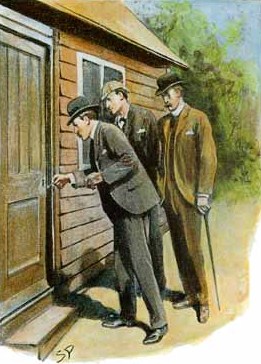
Sherlock Holmes seeks someone without the internet. Image credit: Sidney Paget (1860 – 1908), Strand Magazine, public domain, via Wikimedia Commons

Scrolling Along

I’ve got a condition.  “Oh, we know!” I hear you say.  But I mean a specific one.  Fast moving images make me nauseous.  It can be debilitating.  I can lose an entire day because I’m stopped at a railroad crossing while boxcars speed past my eyes.  Or because some found-footage filmmaker can’t hold the camera still.  As the old moralizing children’s song goes, “Be careful little eyes what you see.”  The internet has thus cast me into a kind of personal Hell.  You see, it has to do with scrolling.  To find things you have to scroll.  And scrolling, if I’m not careful, can make me quite ill.  When I try to find an old post on this blog, where the keywords are too common, scrolling through old posts can make me ill.  “Ah,” I hear you say, “turnabout is fair play.”

But seriously, scrolling can really be an accessibility issue.  An unrecognized one, for sure, but still an issue.  I have very long lists.  Books I need to read.  Movies I need to see.  Stories I haven’t finished writing.  And to find things, I must scroll.  It’s worse with pictures.  With pure text you can sort of avert your eyes.  Of course, you might miss what you’re seeking.  A small price to pay for not spending the rest of the day with your head between your knees.  If you’ve been to this blog a time or two, you know that I consider myself a neo-Luddite.  I use technology but I am ambivalent about it.  It sure makes navigation easier (until you lose the signal, then you curse yourself for not having a paper map).  It helps physicians and makes book buying much quicker.  But it can also make you sick.

It is possible to create this kind of nausea on the printed page.  It’s also easier to catch the early eye-strain that warns an episode is coming and close the book.  Besides, most books don’t cause this to happen.  Increasingly, scrolling is triggering it.  Looking for an image in the thousands of posts I’ve published here to reuse to illustrate a point.  Trying to find that book I know I saw on my endless Amazon wish list.  And just how many movies do they have on Netflix anyway?  Merrily we scroll along.  It’s just that some of us have to pull over to the side of the road awhile, get out of the car, and breathe deeply for a bit.  Don’t worry about us.  Just speed on by.  There are places to go, and me, well, I’ve got a condition.

More my speed. Image credit: “Boekrol Esther 18de eeuw uit een sefardische synagoge in Sevilla” public domain via Wikimedia Commons

Bodies Cubed

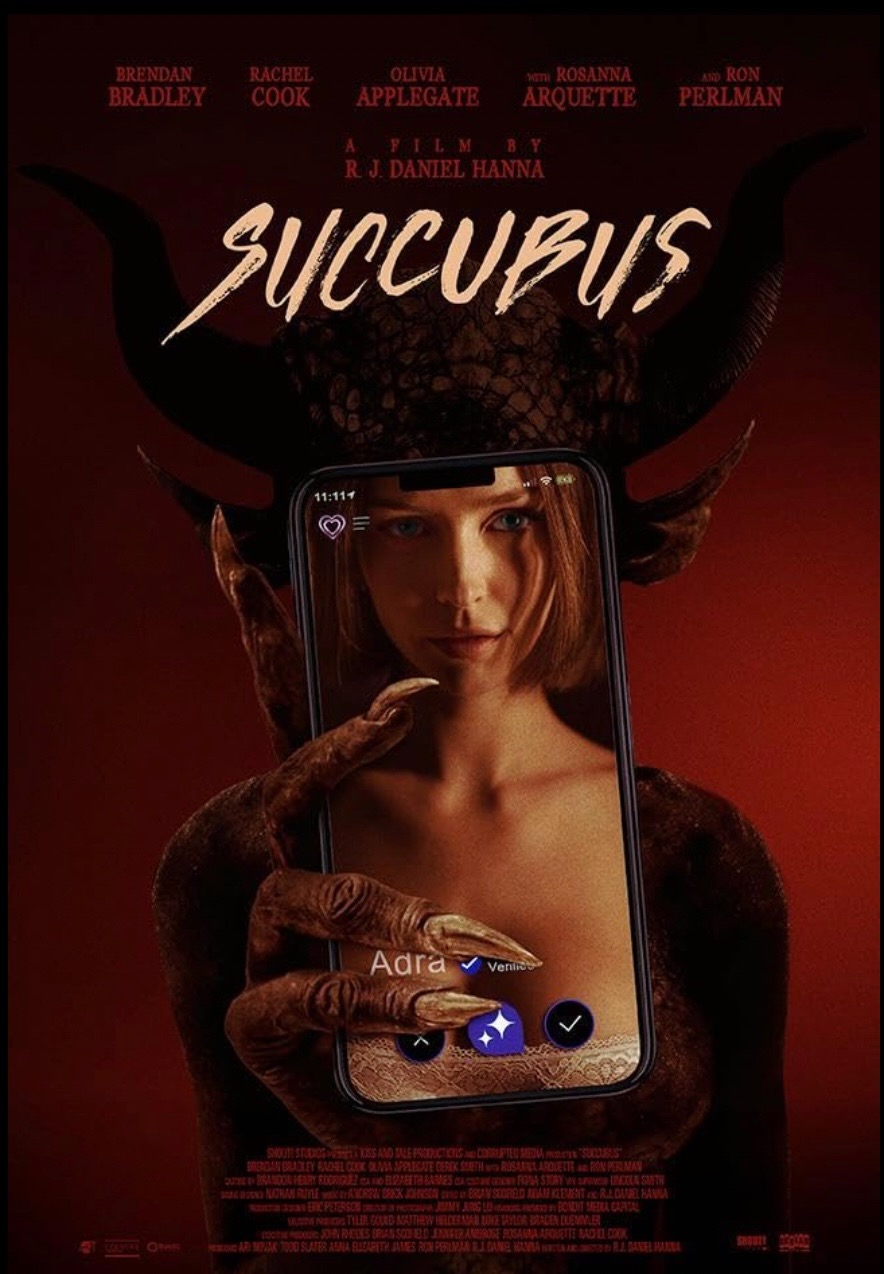
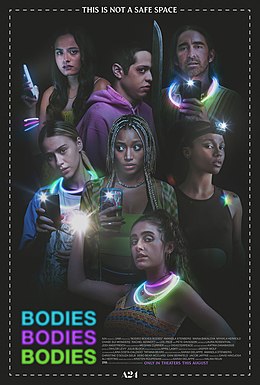
It’s difficult to know where to start with Bodies Bodies Bodies.  It was on my watchlist because it was distributed by A24.  I’ve come to trust them for smart horror, and then I saw that the movie was soon leaving one of the streaming services to which I have access.  Nothing like “leaving soon” to make a decision for you.  An ensemble cast of twenty-somethings (or so they play) gather for a hurricane party at the mansion of one of the group.  They do a lot of drugs and drinking and then decide to play Bodies Bodies Bodies—one of those games where one player is the killer and everyone else has to figure out who the “murderer” is.  They’re about ready to start the next round, but the power goes out in the hurricane.  The accused “killer” in the first game is found, dying for real, outside.  The only car on the property has a dead battery and the friends turn on each other, unsure who the murderer might be. (No bodies are actually cubed.)

All of this is interlaced with internet culture and the panic that ensues when the wifi goes out.  Now, this is categorized as a horror comedy, but the comedy is pretty subdued until the remaining four begin to accuse each other, using trendy jargon to describe relationships and psychological conditions.  The film opens with a couple of girlfriends, Sophie and Bee, who are the last to arrive for the party.  As the morning dawns the two of them are the only survivors, but they have become distrustful of each other because of things said during the hurricane night.  There is a twist ending but the house is full of bodies, bodies, bodies.

Written and directed by women, this horror film again demonstrates how intelligent the genre can be.  As for me personally, I found it pretty good.  I wouldn’t say it’s great.  That’s because of some of my own triggers—one of the trendy words they throw around.  Mainly, in my case, because of the drug scene that makes up the reality of the friends (I’ve never been part of that) and that the game resembles too much my all-time-most-feared childhood game, hide-and-seek.  The friends, convinced that one of them is a murderer, creep around the mansion in the dark, fearful of being found.  This leaves open the potential for jump startles, of course, and I’m not a great fan of surprises.  That having been written, this is a smart movie and the ending does make you think.  And perhaps wonder how well we really know anyone after all.


Second One

Twice in a week.  I heard (actually read) a term I’d never encountered before.  It’s one of those rare beasts—an “academic meme.”  It means nothing to most normal citizens, but it has already achieved currency in academia and on various web platforms.  What is it?  “Reviewer 2.”  Or “Reader 2.”  If that means nothing to you, you’re normal.  If you wonder, however, what this is about, read on.  (Since my posts average two readers, it seems, this is an appropriate topic.)  When universities and/or editors do their jobs, they rely on peer review.  The idea is simple enough—two recognized experts (sometimes three or more) are asked to read a dissertation, an article, or a proposed book.  They then provide their opinion.  “Reader 2” (or “Reviewer 2”) has become shorthand for the one that torpedos a project.

Getting academics to agree on anything is like the proverbial herding of cats.  Academics tend to be free thinkers and strongly individualized.  (Perhaps neurodivergent.)  I know from my nearly fifteen years of experience that the most common results when you have two reviewers is two different opinions.  Often polar opposite ones at that.  One suggestion for the origin of “Reader 2” is that some editors, or dissertation committees, wanting to spare an author’s feelings, put the positive review first, followed by dreaded “Reader 2.”  Others suggest that it’s just a meme and that over time (internet speed) the meme came to mean “Reviewer 2” was harsh and mean spirited.  The thing is, once a meme is out there it’s difficult to stop.  Now, apparently, a generation has made “Reader 2,” well, a thing.

This has been floating around for a while, apparently.  I only heard it recently and it occurred to me that I’m missing out in the new academia mystique that the internet has created.  My most popular YouTube video is one I did on “dark academia.”  I wasn’t aware this is a hot topic among the internet generation.  There is a good dose of the unknown regarding what goes on within those ivory towers where the majority of people never go.  My own experience of academia was gothic, as I explain in that video.  I have a follow-up ready to record, but outside academe finding time with a 9-2-5 and a lawn that needs mowing and weeds that just won’t stop growing, well, that’s my excuse.  Whether it’s valid or not will depend upon your assessment, my two readers.


Dangerous Dreams

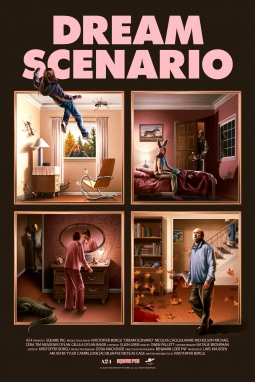
A friend wondered what I might make of Dream Scenario.  As much as I like movies I can’t keep up, what with a 9-2-5 job and writing my own books.  I’m really glad, however, that I learned about it.  It’s one of those movies with a difficult to define genre.  IMDb tags it as “comedy,” “drama,” and “fantasy.”  Rotten Tomatoes goes this route: “Comedy/ Drama/ Mystery & Thriller/ Horror.”  Is there anything this movie is not?  There are definitely some horror cues here, but it doesn’t feel especially like horror.  Except when it does.  Ari Aster, one of the producers, is associated with “art horror” films—think Hereditary.  Think Midsommar.  And it’s an A24 movie, but I’ve read that they’re moving a bit away from horror (the only kind of movie for which I know them).  So what is Dream Scenario?

In brief, it is the best I’ve seen from Nicholas Cage.  I’ve liked some of his films, but this one is incredible.  Certainly the story helps.  Paul Matthews (Cage) is an unremarkable biology professor who suddenly begins appearing in people’s dreams.  Nobody can figure out why, but when the story gets on social media he becomes famous.  Everyone loves him.  Then something happens.  The dreams become nightmares and everyone turns on him.  That summary doesn’t do justice to the film, but it’s essentially what goes on.  The telling of the tale, however, is masterful.  The nightmares, which are briefly shown, are what make this any kind of horror.  There’s no lingering over the fear.  It’s just part of Paul’s new life.

The closest I’ve come to encountering this idea is the novels by Hank Green: An Absolutely Remarkable Thing and A Beautifully Foolish Endeavor.  Of course, Green knows what fame is like—something few accomplish.  The movie explores how fickle it can be and how swiftly and viciously it can turn on those who find it.  In that regard Dream Scenario is also an exploration of life in the internet era.  It’s a time when the kids have to be asked to put down their phones for family time over a meal.  When the result of constant connection is “trauma.”  Unlike fame in the last millennium, “going viral” is just a matter of waiting until someone comes along with something that the net likes better.  And the commentary about how to merch shared dreams takes this in quite a different direction from Inception.  Dreams are strange, and remain poorly understood.  This is a movie that will make you ponder how much they are like the internet, and the results can sometimes be a nightmare.


Not Content

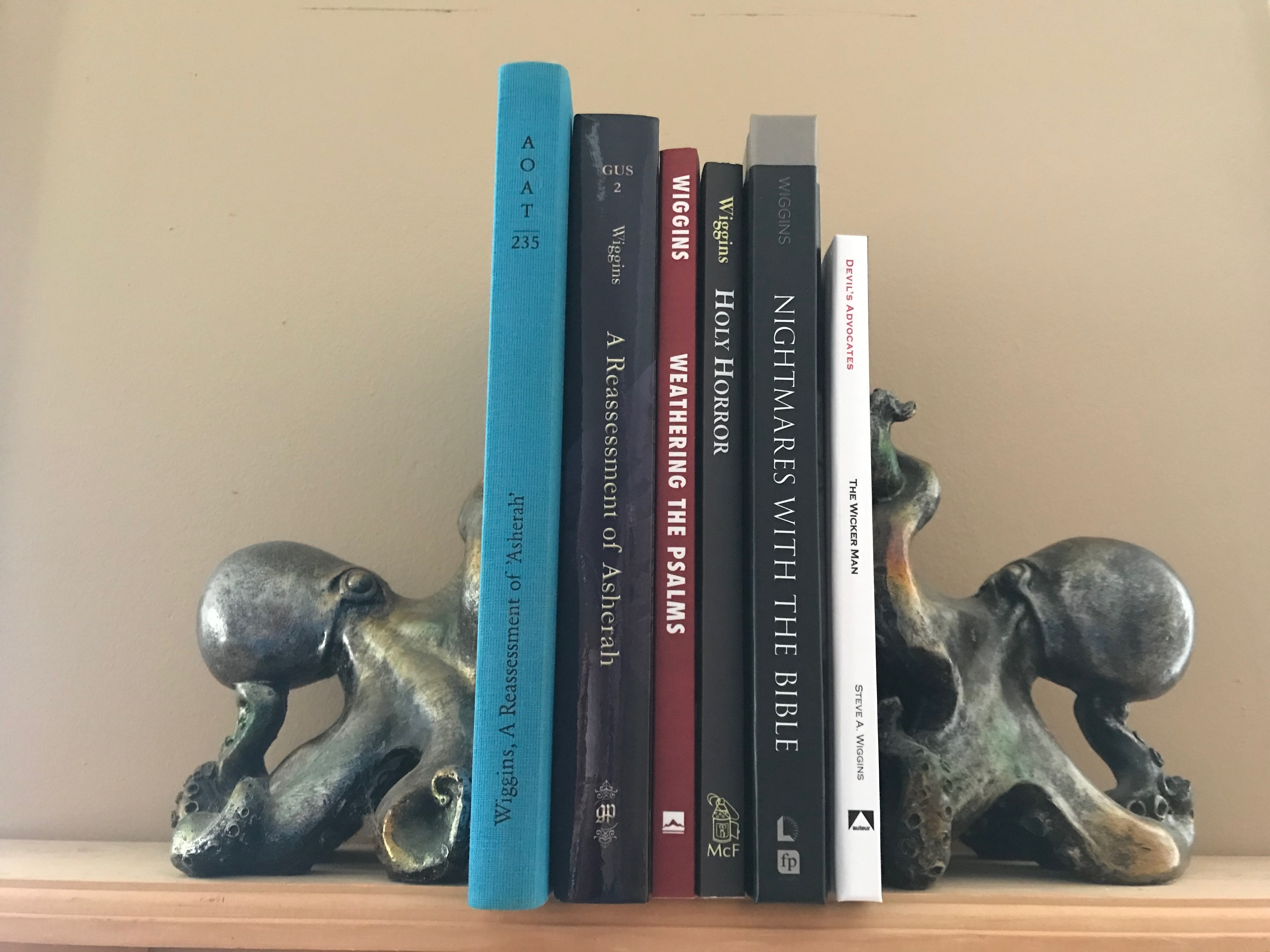
I write books.  When I want to “create content” I do it on this blog.  (And a few other internet sites.)  These aren’t the same thing.  I find it distressing that publishers are trying to drive us to ebooks where content can easily be changed, as opposed to print books.  The shelves of this room are lined with books and the technology doesn’t exist to come in and change “data” without my knowing it.  Facts are secure in print, right Ilimilku?  I’m not looking forward to a Star Wars future where there’s no paper.  I was born in the last century and, perhaps, I’ll die there too.   You see, when you write a book you have a project in mind that has an endpoint.   It may change and shift as you write, but you know what a book is and that’s what you produce.  It gets shelved and you move on to other things.  (At least I do.)

Content is something different and the creative process behind it also differs.  If I find something wrong after the fact, I go into my past posts and change it.  I’m not afraid of admitting I’m wrong.  The point of this blog is to share ideas with the world, not to write a book.  (Although, I confess that I would not say “no” if someone in publishing wanted a selection of worthwhile posts for a book… just saying.)  It amazes me how publishers have pretty much gone after the money and have forgotten what the creative process is like.  Of course, they’re having to figure out how this whole internet with free content plays into it too.  But still, my book writing uses a different fold in my gray matter than my blog writing does.  All of it feels pretty different from writing fiction too.

These things together adds up to a writing life.  I have a ton of “not for publication” writing.  This is something different again.  I suspect it will never be read by anybody, moldering away on some old hard drive after some AI-induced apocalypse.  I write it for of the same reason, I suspect, that people used to spray-paint “Kilroy was here” on things.  The book of Job, it seems to me, was the preservation of words that someone simply had to write.  We know the framing story is folklore.  But those who have words to carve with iron on lead, or engrave on a stone to last forever.  It’s more, I hope, than just “creating content.”


Too Much TMI

Okay, okay.  I admit I get overwhelmed.  There’s just too much stuff to read.  I currently have 25 tabs open on my browser, afraid that I’ll forget about something that seemed so urgent when I opened the URL in the first place.  (Two decades ago that sentence would’ve been nonsense.)  I limit my time on social media.  This can be a death-kiss for a writer, but for sanity’s sake (and work’s), I look at Facebook for literally about five minutes a day.  (If you want to reach me leave a comment on my blog.)  In those five minutes (or less) I often come away with two or three articles that I want to read but don’t have time just now.  I open a tab and hope I’ll get to it before I lose interest.  There’s a lot of information.  Too much.  Too much TMI.

I’m a slow reader.  I sometimes wonder if I have borderline dyslexia—it once happened on a test and led me to phone a professor at night to explain—but dear reader, it slows me down.  And a writer, no matter how obscure, needs time.  I told a friend the other day that I don’t do things I enjoy, such as painting and drawing, because writing takes up so much time.  (And work does too—it gets the lion’s share.)  But those articles!  They look so important!  Some have health implications and, if you lose your health you have even less time.  The internet gives us TMI constantly.  And this field is riddled with rabbit holes.  Just ask the white rabbit about time.

Image credit: John Tenniel, public domain, via Wikimedia Commons

What are the curious to do?  I actually get an insane amount of satisfaction from closing a browser tab.  It’s a sense of accomplishment—I’ve done something that brings closure!  If I do it enough times I’ll get down to the URLs I always keep open lest I forget my place.  Some of these tabs have been open since the Obama administration.  If you’re critical of such as I you might suggest “why don’t you just read an article instead of writing about not having the time to read?”  The interlocutor here is clearly not a writer.  Or at least has different writing habits than me.  There are some non-negotiables in this world of TMI.  I suppose I’m adding to the problem.  At least if anything thinks what I present here is information.  For that I defer to Klima, who, happily, still has some time.