Ironic Icons

The Annals of Improbable Research every year offer up the Ignobel Prize for research that is bound to raise a condescending smile from the perspicacious. Ever practical Americans are given a bemused nod by the European for taking on the stranger side of science. This year’s Ignobel went to a group studying why banana peels are slippery, but a BBC Science and Environment report also mentioned a study of the phenomenon of pareidolia. For many years I have found the tendency to see faces where they don’t exist—signal amid the noise—to be closely tied with religious evolution. (The book that started me down this path was Stewart Guthrie’s Faces in the Clouds.) Indeed, the BBC reports the group was investigating the brains of those who see Jesus and other specific figures on toast and other venues of visual “white noise.” Not surprisingly, they found that the figure seen often relates to the religion of the viewer. Buddha gets around as much as Jesus does.

Ironically, many religions, particularly in the monotheistic mold, tend to find images problematic. According to the Bible, the true believer would not make or seek images at all. The great iconoclasm clash in late antique Christianity was, at least in part, a dispute over the role of images. Anyone who keeps an eye on the religious news knows that images of Mohammad are a particularly touchy subject. The Ignobel awards may not be the best place to look for explanations, but the University of Toronto team found that the function of finding faces is pre-human and is hardwired into our brains. Seeing Jesus or Buddha before Jesus or Buddha were born? Creatures with faces evolved the knack to identify faces.

IMG_0040

But why religious faces? The report on the BBC doesn’t go into that level of detail, but it is the salient point. Finding faces makes sense. Why we find religious faces is far more interesting. Guthrie suggests this might be the origin of religion itself—first we see the faces and then we give them names. We see what we expect to see. And maybe the religious tend to expect an epiphany more readily than the non-religious. The non-religious less seldom report seeing such faces. Indeed, the word pareidolia is still generally eschewed since it admits of one of those things we find somewhat embarrassing about being human. And yet it happens to us all. The face staring back at you from your morning toast may not be Jesus, but chances are that face will be religious.


Pierogdolia

One of the memorable scenes from Men in Black is when the Arquillian takes Gentle Rosenburg to a restaurant for pierogi. One need not be an alien, or even Polish, to appreciate these dumplings, and a few weeks ago I found myself at a restaurant that offered pierogi on the menu, and I had to bring the leftovers home. When I was reheating them the next day an epiphany of sorts transpired. Now, when I prepare pierogi, I use the more healthy boiling method. The restaurant, however, fried them, leaving characteristic browning. As I flipped the reheating dumplings, a case of pareidolia occurred (prompting the title to this piece by both my wife and daughter, on separate occasions). A discussion of whose face this was ensued. Charles Darwin, Karl Marx, Abraham Lincoln, and Charles Dickens were all suggested, but those attuned to religious thinking know that when a face appears, it must be that of Jesus. Well, a man’s face with a beard, in any case. If it’s female, it must be Mary.

IMG_1454

Pareidolia was always a winner with students, in my teaching days. Our brains are so attuned to finding faces that we actually design them into houses and cars and appliances. We like to see a friendly face. Now in my brain I know this is just fried dough, but my eyes are telling me this is a face on my dinner plate. The tendency is so closely tied to religious sensibilities that we can safely rule out any number of candidates. Of course, if I were to see this same phenomenon in a different culture, my referent would likely be completely different. Still, we seldom see news stories of Buddhists, say, finding Siddhartha Gautama’s image in foodstuffs. (Although, in all honesty I once found a water stain on a saucepan that looked very much like I imagine Confucius appearing.) Is there a deep-set need in our religious culture to find assurance in unlikely places? Are we that insecure?

Apart from the perennial favorites of breads (toast, tortillas, and now pierogi), images of “Jesus” show up in garden shrubs, water stains under highways, clouds, and even stingrays, prompting, a few years back, a website entitled “Stuff that Looks Like Jesus.” Now, I seriously doubt that some kind of transubstantiation has taken place on my dinner plate, but the appearance of a face on my food is always cause for reflection. Food is so essential to animal survival that it is perhaps strange that such images don’t occur more often. It is perhaps ironic that we hear most about it from a leisure-based culture with a cult of food fetishes. I don’t know who showed up on my pierogi, but the evidence is now long gone so it will have to remain a matter of faith.


Uisge Beatha

Water is essential for life. Life as we know it, in any case. It is no surprise, then, that many religions incorporate water into their rituals. Last week I posted about the biblical stories of Jonah and Noah, both of which involve acts that were later interpreted by Christians as baptism. Muslims use ritual ablutions as part of their worship tradition. Water is life, after all.

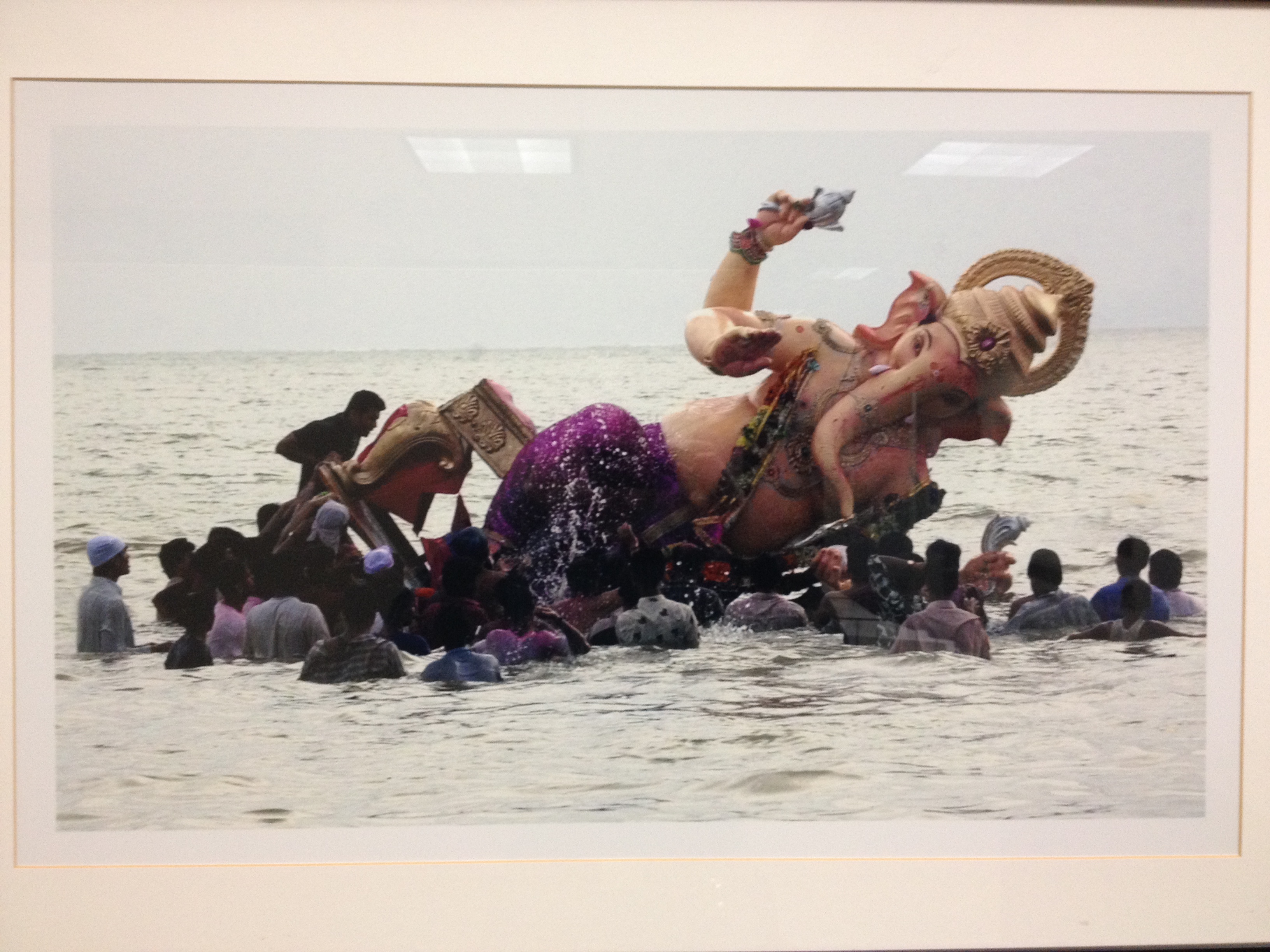
IMG_1392

While wandering the halls at work, I notice the various artwork on the walls. One large, framed image has frequently caught my attention: several men are shown carrying a statue of Genesha, the Hindu elephant-headed god, through the water. Coming at this from a Christian background, I wondered what was going on since it looks like baptism. Hinduism, I know, is not a unified religion, but rather a conglomeration of many folk traditions from ancient India—one of the two seats of ancient religiosity. The stories of ancient India are colorful and diverse, and a bit of research suggests that this particular photo is likely the festival Ganesha Chaturthi, commemorating the story of how Ganesha came to have an elephant’s head. Crafted from inert matter by his mother Parvati, Ganesha was posted to watch the door while his mother bathed. Parvati’s consort Shiva returned and not knowing who the boy was, the lad’s refusal to allow anyone to enter led to a war. Eventually the Ganesha was beheaded and to appease his consort, Shiva supplied him with the head of a dead elephant and the boy resurrected. The immersion of Ganesha statues, or Visarjan, takes place as part of the Ganesha Chaturthi, during August or September.

I admit I’m not an expert on Hinduism, so some of the details may be a little off here. What strikes me, however, is the similarity between this story and that of Jesus. Like Ganesha, Jesus was associated with a modest mother, slain, and resurrected. He, too, is associated with ritual baptism. Growing up, we were taught of the many unique aspects of Christianity. We had, we were led to believe, the only resurrecting deity in the world. Our God alone could bring back from the dead, and the way in was through immersion in water. While learning about Ugaritic religion I read of Baal’s death and resurrection. Although stories of baptism haven’t survived, he also battled the sea and came out victorious. Some ideas, it seems, are particularly fit for religious reflection. The details may be unique, but the archetypes are very similar. Religions may be many things, but in the end, unique is a word that must be applied with the greatest of care. In the meanwhile, the next time I read of walking on the water, I will recall that even Asherah was know as “she who treads upon the sea.”


Baptizing Virgil

Dante Alighieri was curious as to Heaven and Hell. Like most mortals, he wasn’t sure of his way around and so he needed a guide. Descending to the nether regions, he enlisted the services of Virgil. Virgil is best know for his epic poem The Aeneid, the early Latin account of the Trojan War. I’ve often wondered why Dante chose this particular writer as the “good pagan” who might lead him through the inferno without becoming ensconced within it. Then I found out about Virgil’s Fourth Eclogue. In addition to The Aeneid, Virgil wrote The Eclogues, or idylls of rustic life. In the fourth of these he included what some early Christians considered to be a pagan prophecy of the birth of a special child, although Virgil was never a Christian and indeed overlapped with Jesus by a decade or two. He is the author of the Roman national epic, as Aeneas was believed to have escaped Troy and gone on to found Rome. Virgil tells the tale. What would he be doing, predicting Rome’s spiritual conqueror?

Virgil; photo credit, A. Hunter Wright, Wikicommons

Virgil; photo credit, A. Hunter Wright, Wikicommons

When Rome became Christian, under the knowing gaze of Constantine, the fourth Eclogue of Virgil was reinterpreted as a prophecy of Jesus’ birth. You see, the special child born ushers in a golden age, and what could be more golden than imperial Rome? Virgil’s foresight suggested him to Dante as a reliable guide through the infernal regions where, despite his suspect religion, he never falters. This whole episode once again highlights just how influential Christianity was to become even in the secular world. Prophecy can be read back into any significant passage, biblical or not, and new religions are founded all the time on such a basis. Such is the power of the written word. It is not just Mormons who baptize those who don’t believe.

Rationally we know that Virgil did not predict the coming of Jesus some three decades in advance. Yet, even such a brilliant scholar as Dante Alighieri was swept along by the tide of belief that had convinced the eternal city of its heavenly pedigree. All roads lead to Rome, and all prophecies point to Bethlehem. Beatrice was, however, a real woman, who, Dante believed, was tasked with revealing Heaven to him. He fell in love with her when he was but nine, and when he married it was to another woman, pre-arranged by his family. Beatrice was married to different man and yet she would succeed where Virgil had failed. Ever after it would be known as the Divine Comedy indeed.


A Girl Named Cthulhu

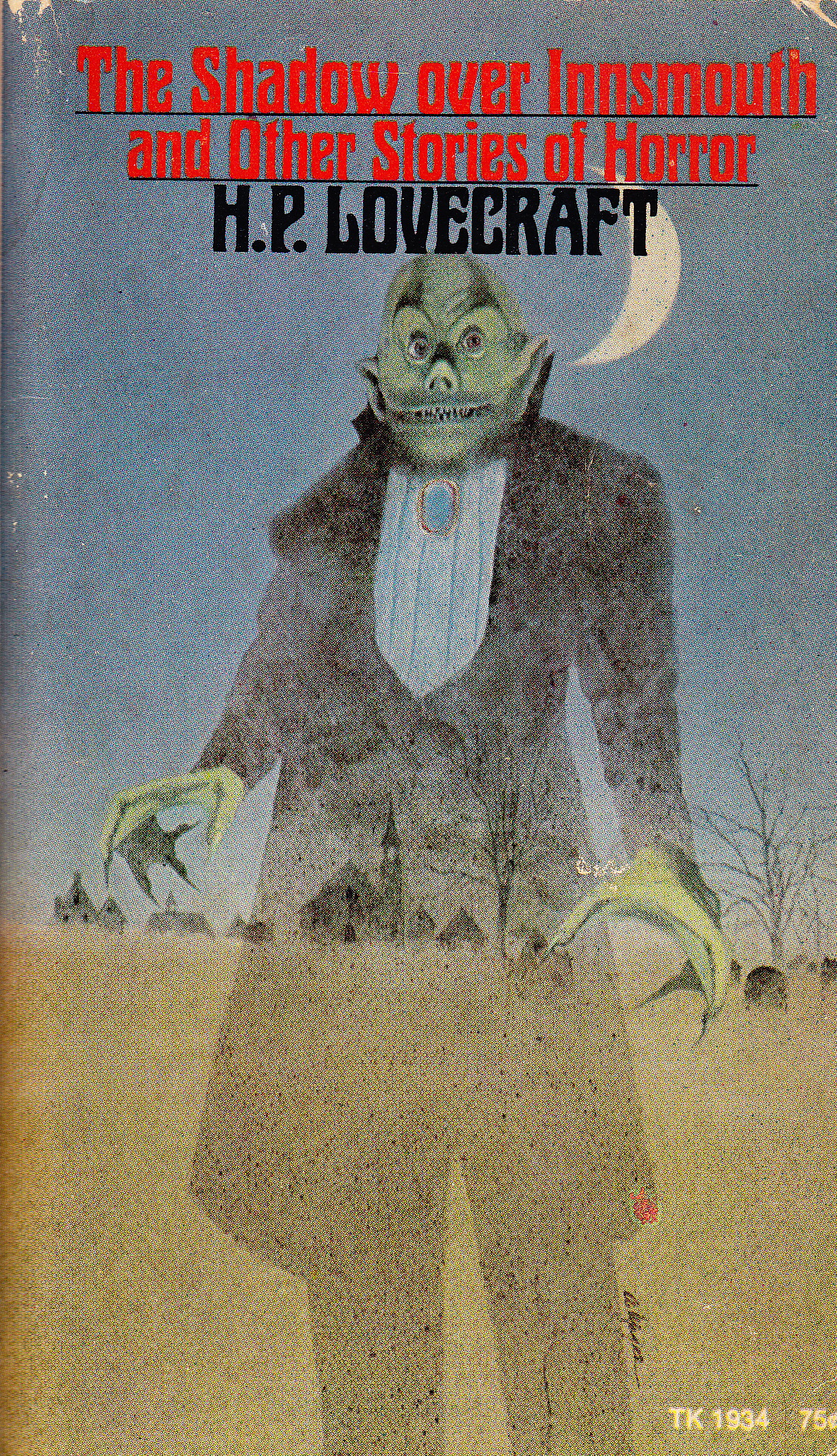
It was only a 25-word blurb in last week’s Time magazine. A Canadian couple decided to let the internet community name their daughter. As of the time of writing the third most popular suggestion was Cthulhu. WWLD? The internet has brought Lovecraft’s sleeping deity to life. Ironically this evil, belligerent, and fearsome god tends to have more fans than some of the more loving, cuddling varieties of deity around which western culture arose. Children are a parent’s ultimate investment (or should be) and the name we bestow will influence their view of life. I still recall the scandal of when I first showed my Mom a baseball card where the player was named Jesus (Spanish pronunciation, please!). I innocently asked if that was allowed since we’d been taught that although other biblical figures were fair game, the name of God was a retired number. There was only one Jesus, and this baseball card a monument to sinful arrogance.

Cthulhu

Of course, we lacked the biblical training to know that Jesus is only the Greek form of Joshua, a name of fair game to any young lad. Naming after a deity was otherwise verboten. Of course, that has all changed now. Names are up for grabs, and it is getting harder to find unique ones. H. P. Lovecraft, who died in relative obscurity, could find publication only in pulp fiction magazines—the lowbrow literature of his day. The divine fruit of his fertile imagination has now taken on the dimensions of true divinity. How many potential names are out there on the internet? Lovecraft alone gave us many gods. All the Dianas, Thors, Carmans and Dylans out there are in good company. Why not name a child after a god?

Names do effect a child’s view of life. Growing up in a biblically literate family, I often thought of the Stephen of the New Testament. The first Christian martyr, he died with a vision of heaven in his eyes, earning the meaning of his name, “crowned.” I aspired to live a selfless life, in as far as such a thing was possible in the twentieth century. It was my name—it was my destiny. There are no other “Steves” in my family, and when I was old enough to comprehend that many children bear family names, I asked my Mom whence mine had come. It turns out that I was named not after a family member or even a saint, but after a cartoon character. Touché, Cthulhu! Long may those of us with unorthodox namesakes stick together. The world is our myth.


The Subtle Elephant

“Beer,” the list reads, then “Sex, Tacos, Weed.” At the top of the list, “Jesus.” “Which one of these is best?” the magazine page virtually shouts. Not Playboy, but Wired. At times I have difficulty figuring out what is an advertisement and what is an article in Wired. It is the future, I suppose. Anything’s for sale as long as there’s lucre to be generated. The page is topped with “Wired Insider,” so I suppose it’s a whimsical pop culture section, but I’m not really sure. The page seems to be promoting an app called Proust. I’m still pondering this list: “Jesus, Beer, Sex, Tacos, Weed.” One of these things is not like the others…

Vices

While there may be nothing inherently wrong with beer, sex and tacos (the jury’s still out on weed), such indulgences are often labeled “vices.” Jesus, until recently, never really populated such lists. Even those who do not claim divinity for Jesus of Nazareth do tend to see his teachings as embodying virtue rather than vice. In the media, however, we often see Jesus turned into a kind of addiction, a vice, if you will. What I mean is that Jesus has become a kind of iconic symbol, emptied of tolerant teachings and benevolence toward all. He has become a “white man,” who does not put up with anyone who deviates from the McCarthy-era lifestyle. He is Ozzie (Nelson, not Osborne). We know so little of the historical Jesus that it is difficult to say anything definitively, but I might suggest that he may have felt more at home at a Black Sabbath concert than watching Leave it to Beaver. There is, after all, value in shock value.

Some scholars now confer about the Iconic Book (i.e., the Bible). The Iconic Book is where the Bible is used not for what it says, but what it represents. Swearing on a Bible means nothing to an atheist, and yet we persist. These hollow symbols become powerful indicators of social norms, while losing their radical content. Many might think the Bible utterly conventional, but there would be weeping and gnashing of teeth on Wall Street if people actually read it and took it seriously. Jesus, it seems, has also become iconic. I don’t mean that icons are painted (although they are), but that he has become a hollow symbol for some. In a world where gaining as much money as possible is called “Prosperity Gospel,” despite what the iconic man in the iconic book supposedly said, I guess it isn’t unusual to find the erstwhile savior among the vices of the world.

“Our dried voices, when
We whisper together
Are quiet and meaningless”

Yes, Mr. Eliot, this is the way the world ends.


Manuscript Madness

A friend recently pointed me to a story of a “new” manuscript, recently discovered, that portrays Jesus predicting the advent of Mohammad. The article on sott.net, suggests that the manuscript, wanting to be seen by the Pope, may be the Gospel of Barnabas. Of course, the Gospel of Barnabas is already known from a medieval Italian manuscript and a new, authentic discovery would be of great excitement to epigraphists and text critics, but few others. Barnabas is not a canonical gospel and is considered by the majority of scholars to have come from centuries after the fact. Quite apart from the sensational headline “1,500 year-old Bible found in Ankara, Turkey: Vatican in Shock!” (posted in September of last year, before Francis came along), the manuscript raises a number of questions concerning what one colleague calls “the iconic book.” To be sure, there are documents yet to be discovered. The Bible, however, will not be reconstituted and the door has long been sealed shut on written revelation. What remains is the perception of sacred books.

How many movies and novels are based on the premise that an ancient document has been discovered and suddenly everything about the world changes? It is a common enough theme. This idea is based on the magical concept of scripture—the hidden wisdom of the ancients somehow overrides all that we know of the world. It lies in some cave or monastery or synagogue, waiting to be discovered, unleashing divine power. No doubt the dramatic (and dramatized) discovery of the Dead Sea Scrolls plays into this mythos. Nobody knew they were there, but suddenly, new information! How many people on the street today, however, can say anything of what was contained in the Dead Sea Scrolls? They’ve been mulled over by furrowed-browed scholars for over half a century, but haven’t triggered any apocalypses, at least not yet.

There are hidden documents. Working for Gorgias Press put me in the place where I could learn about some texts kept under lock and key in remote monasteries in Syria. They are generally kept for their monetary value rather than their spiritual revelations. The manuscript on sott.net made me think of those manuscripts for the first time in years. In all likelihood, if a manuscript is being hidden it is lucre, not illumination, that is at stake. The Vatican library, researchers who’ve been there tell, requires immense patience and a willingness to be repeatedly turned away. There’s just something about those old texts. No surprise that the Bible and Qur’an lead to such fiercely protective sentiments in some believers. In the meanwhile, I wouldn’t advise selling all your possessions and anticipating the apocalypse. Unless, of course, you take some ancient documents literally.

An ancient manuscript (not the hidden one).

An ancient manuscript (not the hidden one).


White Christmas Revisited

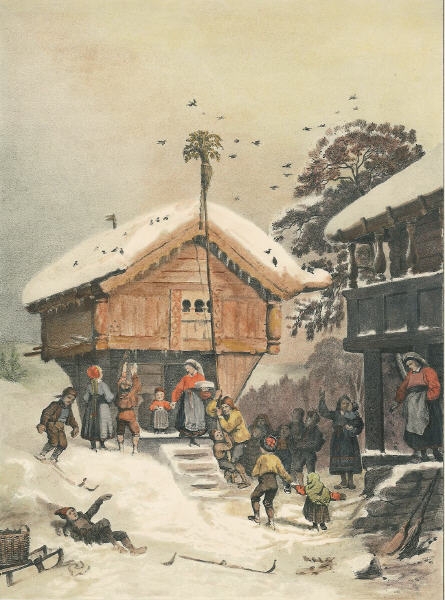
In the light of yesterday’s post, I’d like to tip my metaphorical hat to Brian Regal of Kean University for a piece he wrote in the New Jersey Star-Ledger. Entitled “The Real Meaning of Christmas,” Regal’s piece shows the striking disconnect that comes between the image of a “Christian” Christmas and the oft-ignored words of Jesus that make him such a great example to follow. We want the image and the affidavit without having to do the hard work of loving those we don’t like. This really seems to be the heart of what was once know as gospel—it’s okay to be who you are (for those of that bent, “who God made you.”) Too often “Christian” has come to mean someone who wears their hair far shorter than Jesus, who shuns those welcomed by Jesus, and who smile far more than Jesus. My Bible says “Jesus wept.” I don’t recall any verses reading, “Jesus put on his ‘I love you’ smile.” Ours is a society that wants it both ways—all for me, but isn’t that what Jesus really wanted? You know, he must’ve smiled a lot.

Regal rightly points out that the majority of Christmas traditions are admittedly pagan, and we are glad to baptize them as long as we don’t have to let the homeless into our churches or admit equal rights to those of all genders, races, and orientations. What seems to be the real desideratum is a “white” Christmas. A white, affluent Christmas. The very idea of the ownership of a holiday characterized by giving is a phenomenon worth serious study. Religion can certainly be used to justify such self-centeredness, but it is condemned by that very same faith. What are people worried about? Christmas has been a commercial holiday essentially from its origins in the modern period. It is one of the few holidays to which nearly everyone looks forward, at least for a break from work or school, if not for a windfall of new stuff.

Privilege as blessing is a perverse theology, as is shown repeatedly in the Bible. Israel’s long line of descent is chosen from the least, the youngest, the meek. Now we are constantly told that God rewards those who are blessed, and that the poor and underprivileged have only themselves to blame. At Christmas time it may be worse than many other seasons of the year. We want not only to keep good cheer, we want to keep a holiday only partially of our own making for ourselves, and then congratulate ourselves on just how good we are. It would seem that the spirit of Christmas might lie, as the pagans said, in giving. I am not a fan of commercialism, as my regular readers know. I can’t help but think that believing one deserves special rewards for righteousness in their own eyes will only have the opposite effect. Remember: he sees you when you’re sleeping, he knows when you’re awake…

Adolph_Tidemand_Norsk_juleskik


Won’t Someone Think of the Gods?

The annual holiday tradition of fighting over peace on earth has begun. It’s difficult to attribute blame since the “Keep Christ in Christmas” crowd do have a certain historical parsimony about them. Still, it was with tongue frozen in cheek that the Freedom From Religion Foundation put up a billboard in Pitman, New Jersey, with the message “Keep Saturn in Saturnalia.” Won’t someone think of the gods? In just the short span of my lifetime (well, half-a-century is really not that long) many assumptions about American religiosity have come to be questioned. There are those who seriously believe the Greco-Roman gods exist and they do have a right not to have their religion belittled. Those who find all religions laughable, I suppose, have the right to belittle. Some are devoted to Saturn. Others take seriously the Norse gods. Belief is like that—rationality is not a huge part of it.

Megyn Kelly, an anchor on Fox News, boldly declared this past week that Santa is, by dint of historical fact, white. I suspect she wasn’t thinking of Nicholas of Myra, but rather the jolly (white) man with glandular problems and the magical ability to visit every house in the world in a single night. The historical Saint Nicholas was born in Turkey. Kelly also made an unequivocal claim for Jesus’ whiteness, although he was clearly Semitic and historical records about him are extremely dicey. Conservatism, it seems, can only be pushed so far. I tend to think the problem is with making people into gods. Once a person becomes divine, in a monotheistic system—apart from all the theological casuistry than ensues—the nature of godhood is irrevocably associated with one race only. Of course Kelly, and many Fox News fans, have co-opted Christ from Judaism and suppose he was rather Nordic, as an article on CNN’s Belief Blog notes. Kind of like Thor, for what carpenter doesn’t know how to use a hammer?

To keep (white) Christ in (white) Christmas does betray a lack of familiarity with the Christmas story. Apart from angels appearing to some shepherds, the event was obscure—in the part of town across the tracks. Even the wisest men in the world had to stop and ask directions because they couldn’t find the place. The first Christmas, in as far as we can reconstruct it, was a silent affair with only the sounds of birth and the quiet desperation of a working class family far from home. No malls stayed open late that night.

The solstice is literally the darkest day of the year, the time when the slow return to light begins its weary trek over the next six months. We think of the cold, the dark, and hope for peace. No matter the holiday tradition, you’d think that peace would be one thing we could all agree upon. But gods are jealous beings, and, technically, they belong to no human race at all.

O holy night?

O holy night?


Help from Above

Frisbee, like Kleenex and Band-Aid, is a brand name that has become generic. Since at least the time of ancient Greece people have been fascinated with flying discs, and like many kids of my generation I grew up with a Frisbee or two around the house. We didn’t have much money, and in my younger days I remember playing “frisbee” with the lids to large margarine tubs—it’s more difficult to get these to do tricks, but they fly passably well with the right flick of the wrist. When I got to college I started to hear about a new game called “Frisbee golf.” It usually involved a group of friends and their flying discs picking out a target and seeing who could get their Frisbee there in the fewest tosses. Well, college was a couple decades ago (ahem), and who has time for Frisbee in the serious adult world of trying to stay employed? When some friends asked me to join in a game of disc golf over a recent weekend I knew a couple of things had happened. First, Frisbee had been either usurped or commodified to the point that it was either illegal or gouache to use their discs to try to hit “that tree over there,” like the redneck with his shotgun on a Friday night. Second, to play the game you needed to have the right equipment. Out on the course we came across a couple of guys with “golf bags” full of discs that they had to flip through like so many CDs before each toss. I felt woefully amateur. Like golfing in jeans.

IMG_1140Fortunately my friends had discs. Scientifically engineered discs, no less. Different “Frisbees” (not a technical “Frisbee” among them, not even a Wham-o) with different weights and characteristics made for specific tasks. I thought of the famous sculpture of the discus thrower and wondered what Plato would’ve made of all this. Since we were a large group with limited discs, we each chose one to be “our” disc so that we could follow it. It was either a rare show of masculine aggression or perhaps religious curiosity that drew me to the distance disc called Archangel. Bright orange, the Archangel was emblazoned with an actual heavenly being with his (a masculine angel, this) sword. He wore a vaguely Egyptianizing headdress that brought to mind the plagues of Egypt. The disc was heavy compared to a Frisbee, and had an edge like a, well, a sword. A dull sword of course, maybe wooden as opposed to steel. That disc could fly (although it didn’t improve my score much).

Angels have had a long fascination for us mere mortals. Originally a class of messenger gods in antiquity, monotheism forced them into a subservient role where swiftness was essential. For some, such as the Angel of Death (more likely the source of the imagery behind my Archangel), weaponry was essential. Unlike the Angel of Death my aim wasn’t very accurate. Or maybe that is just like the Angel of Death. No firstborn were slain by an hour’s diversion of tossing some Frisbees around, but my thoughts had been driven back to the biblical origins of my implement. I wondered why there was no archangel of peace. A few days later it was announced that Nelson Mandela had died. My thoughts went to Gandhi. To Siddhartha Gautama. Even to Jesus. Yes, there have been those who’ve insisted on the way of peace. And many differences might be settled by a friendly game of Frisbee golf, minus, of course, the copyright infringement.


Carrie the Cross

Carrie1976With all the buzz about the new Carrie movie just released, I decided to go back and watch the Brian De Palma version again. I’ve written here before about the religious symbolism of the movie, but I have to confess to never having read the novel. This time a particular symbol stood out, and I’m not sure whether it derives from De Palma or King. Crosses abound in the 1976 Carrie. This is a bit odd because of the indeterminate religion of Carrie’s mother. Clearly she has a belief in Jesus, but an odd Jesus it is. In Carrie’s prayer closet the statue—presumably of Jesus, since it is never clearly identified otherwise—is of a man whose abdomen in pierced with arrows. Those familiar with saints immediately recognize Saint Sebastian, but the arms are outstretched, as if this poor victim were both crucified and superfluously shot with arrows. The traditional cross, however, seems to be missing in that dark room. It reappears on prom night.

While Carrie is getting ready for the prom, her crazed mother peers out the window at passing cars, telling Carrie that Tommy isn’t coming. In one shot, as two cars pass in the street, there appears an inverted white cross on the road. I supposed at first that this was a painted parking space marker, but then, this is a residential street, and no such markers appear in other shots. Carrie’s mother had accused her of being a witch, and the upside-down cross is an oft-claimed symbol of Satanism (not the same, however, as Wicca). At the prom, Tommy insists that Carrie vote for them as the prom queen and king. When Carrie makes her x, the camera angle rotates slightly to reveal the sign as a Latin, as opposed to Saint Andrew’s cross. After Carrie kills everyone and goes home, her mother stabs her and, chasing her through the kitchen, makes the sign of the cross with her knife. Finally, Sue—in a dream?—wanders to Carrie’s burnt down house to lay flowers at the foot of a “for sale” sign that is a white cross, with the clashing words “Carrie White Burns in Hell” scrawled on it.

I may have missed more since the use of the symbol only dawned when the passing cars pointed me toward it. There is a strange kind of misuse of the cross here—not visible on the Sebastian-Jesus, and ultimately also Carrie’s mother figures, but inverted on the street, a sign of pride at the voting, made with a knife by the mother, and scrawled with an arrow pointing to Hell in the final scene. Carrie’s fiery end appears to confirm her mother’s interpretation of telekinesis as witchcraft. There is no forgiveness in this film. Well, I suppose I’ll have to go see the remake now. And maybe even read the book. I need to know if I’m just seeing things or if I’m still sleep-deprived from worrying about jobs and a surfeit of imagination as October’s chill settles in.


Alien Jesus

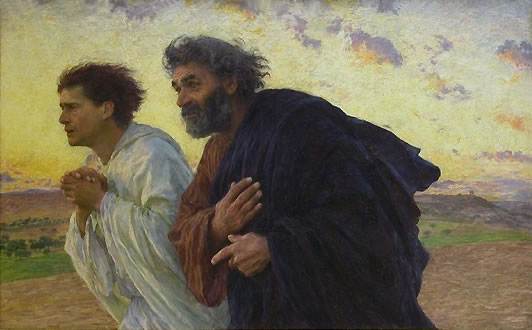
While trawling the internet over the weekend, I came upon an interesting article that ties together religion and paranormal belief. According to ADG, a unnamed woman (already the question marks erupt) in Galilee in 1967 was visited by aliens. Instead of photographing them, as most unnamed women would, she followed their instructions to point her camera at the lake (Sea of Galilee) and snap one for the album. When she turned back around the aliens were gone, and when she had the film developed there was a picture of Jesus and a disciple or two, walking along the sea in earnest conversation. Well, one doesn’t have to be a scholar of Tobit to spot the apocryphal, and this obviously bogus story received far more hits than any of my posts do. People are fascinated by the concept, even though most of the comments show some healthy skepticism.

To me the fascinating aspect is that religion and paranormal topics hold hands so easily. That is not to suggest they are the same thing, but rather that they are both perhaps directed toward a similar goal. We find ourselves in a cold world, often. There are cruelties, atrocities, and a disheartening lack of care for others. We want to believe that somebody out there has got our backs. Is it so different to believe that God dwells in the sky than to believe that aliens do as well? What is more important than the putative fact of such celestial dwellers is the belief in them. Our minds, no matter how we may protest otherwise, are perfectly well aware of their own limitations. We can’t know everything, and so we must believe.

Many of us find ourselves in an uninspiring cycle of work, sleep, and work. Sometimes we actually even do sleep, too. Cogs in a capitalistic money machine, we leave our weekends free (sometimes) to pursue a little meaning. As much as some may castigate religion, we should not forget that without it we would not have the weekend! For a little while we can break the meaningless cycle, the treadmill upon which we heavily thump our way through five days out of every seven. Is it any wonder that so many want to believe that, like Calgon, aliens might come to take us away from our drudgery? If that doesn’t work, there’s always religious services. All you have to do is point your camera and believe.

BurnandJeanPierre


Ban Ban Go Away

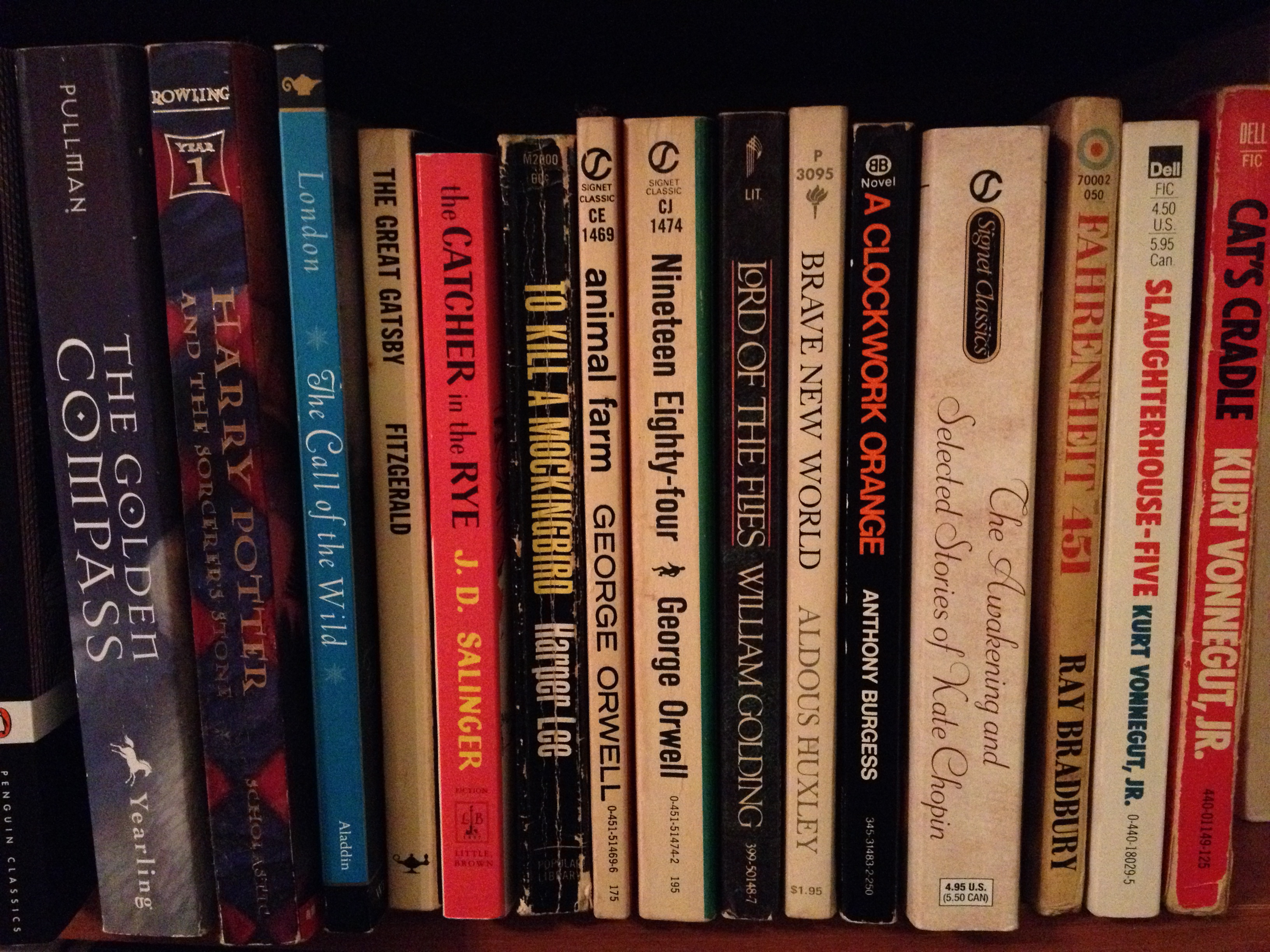
I always seem to discover banned book week in retrospect. With the insane amount of time put into getting to and from work, and actually working, my daily bus ride is my main vehicle (literally) for reading. For eating forbidden fruit. Historically speaking, the first literature was religious literature. Much of it, if anybody bothered to read it, would end up on banned book lists, I’m sure. The Bible is granted a special amnesty, given its reputation as a divinely penned parchment, but it too has its share of unseemly topics. Sex is there almost from the beginning. Violence too. We could go further, but sex and violence are usually sufficient to land a book on the list. And the choices are always so period specific. Catcher in the Rye seems downright tame in the new millennium (or, indeed, Kate Chopin’s The Awakening), and yet we still find new books to condemn. I wonder if such books aren’t forming a new kind of scripture.

There was a time when religion challenged social convention rather than championed it. Religions have been co-opted and domesticated by political interests. Can you imagine the man who overturned money-changers’ tables in the temple on the floor of the stock exchange? We have quantified everything, even—especially—human beings. That which can be quantified can be measured and that which can be measured can be sold. Religions, but only those upholding the status quo, grease those wheels nicely. If we had a chance to know religious founders personally, I suspect we would have found banned books in their libraries. Ideas can be dangerous things.

Despite my generally kind words on this blog, I do read books that I don’t like from time to time. I would never challenge the right of the author to express his or her ideas, nor the publishers (no matter how misguided I think them) for promoting them. I am not the one to quantify. Looking over the American Library Association’s list of banned and frequently challenged books, however, I realize that my fiction-reading hours would be slim indeed. We tend not to ban non-fiction, challenging though it may be. It is the imagination that offends. Such is the power of fiction. Last week was banned book week. Time to look over the list of latest condemned editions to find what to read this week. I am always looking for future scriptures.

The usual suspects...

The usual suspects…


Bible According to Batman

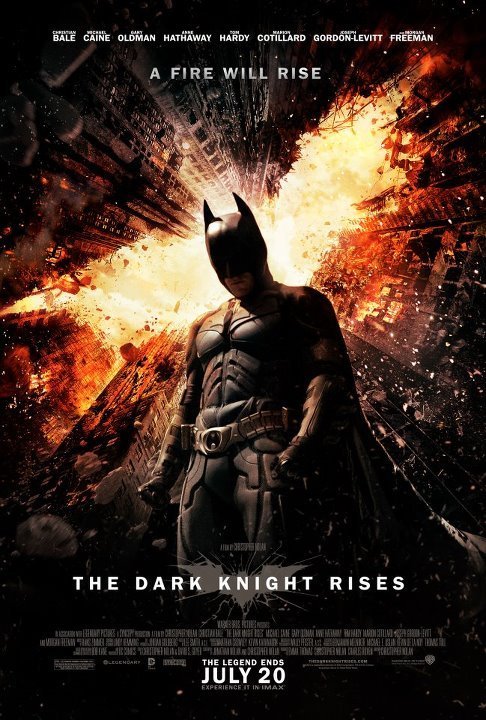
DarkKnightRises Biblical tropes are alive and well in popular culture. Many would choose the flight option rather than admit they enjoy a good Bible story. They may anyway, however, without realizing it. Although The Dark Knight Rises came out over a year ago, I only just had the chance to watch it. For a kid who grew up on the campy 1960’s television series, Christopher Nolan offers adult fare. Put the kiddie menu away and sit up straight at the table. I don’t read reviews, in general, before seeing movies because I don’t enjoy spoilers. I had no idea whether Batman would come out of this alive or not. I wasn’t really even sure who Bane was (even before The Dark Knight everyone knew who the Joker was, or thought they did). The Dark Knight Rises places the whole of Heilsgeschichte (sacred history) before the viewer with verbal cues. Unless you’re reading while watching, you’ll miss it though.

Bruce Wayne is clearly cast as the wounded healer in this final installment of the trilogy. Physically and psychologically crippled, he hobbles around in a combination of Jesus and Yoda figures, somehow supernatural yet fully human. Death and resurrection transpire twice for him in this film. When Bane breaks Batman’s back (an often fatal injury) even Catwoman thinks he might be dead. He is very much alive, however, in the prison only “Bane” escaped (resurrection one). Not only does he rise from the grave, he also ascends into heaven by escaping the well—anyone who’s read Jeremiah, or even Genesis, knows the origin of that motif. Risen, ascended, and glorified, Batman returns to beat the crap out of Bane. But the bomb is still on the loose and before Batman faces his nemesis he tells Commissioner Gordon to arrange “an exodus”—Joseph’s descendants must get out of Egypt. At the Red Sea (the Hudson River) the Pharaoh’s army blocks the exodus of the children of St. Swithun’s who, in response, bow their heads in prayer (am I the only one seeing this?)

Commissioner Gordon, found guilty of betraying the common man, receives the sentence of Exile (“death, by exile” to be precise). Again, those sensitive to Jeremiah know that exile is a kind of death, but death with a noble purpose. The Heilsgeschichte of Israel involves exodus and exile. The Christians added on death, resurrection, and ascension. Christopher Nolan put them together in one Dark Knight. But I mentioned two resurrections, no? Flying the bomb out of Gotham, Batman is definitively blown to smithereens—the blast radius was, after all, six miles. And yet, Alfred has a post-resurrection visitation, where no touching occurs (Touch me not; for I am not yet ascended to my Father) sees his savior. Was the Bat the Holy Spirit on autopilot? Is that Catwoman with him? Might I be so bold as to type Mary Magdalene? Well, I may be over a year late with my observations of The Dark Knight Rises, but as I think Christopher Nolan understands, the Bible has been lying around even longer. If the success of this movie is anything to go by, it will be around for a long time yet to come.


Hemlock and Crucifixion

Rhetoric is dying a slow, painful death. In this world where literalism reigns, the use of words to elicit an illicit truth deeper than the factual is no longer recognized. We see it both in the humorless antics of the New Atheists and in the ravings of the Fundamentalists. Writers have always known—serious writers at least—that truth is so much more than an objective ticking off of what really happened. The post-modernists may seem insufferable at times, but they have taught us that true objectivity is false, a mythic holdover from imperialistic thought processes that believed here, in this single mind, bias does not exist. We all have biases. Except me, of course. Rhetoric again.

I do not get many comments on this blog. Usually it takes someone to disagree with my ramblings to gussy up the energy to dispute what I write. I try not to distort facts, but facts are rare commodities these days. George Orwell is not really dead, I mused as I stood by his gravestone in Sutton Courtenay. Should someone deny that I was there how should I prove it in this day of Photoshop and pixelated truth? And that wasn’t even his real name.

When I regularly taught, students would ask me what I believed. What I believe, I would respond, is not important. I am teaching a subject, a field of study. When is the last time you asked your chemistry professor what she believed? Would it matter? Of course, thoughts, I’m told, are only chemical reactions that lead to electrical charges. Miniature storms inside our skulls. Literally. Rhetoric folds its hands across its metaphorical chest and lays quietly, awaiting the pall.

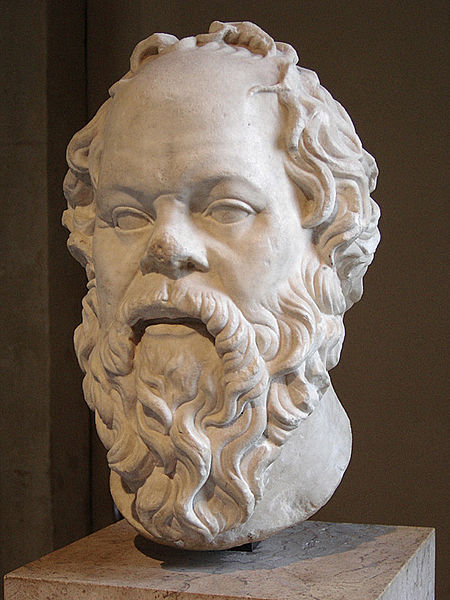
Socrates had his method. He ended up an enemy of the state. Jesus told parables. He also ended up an enemy of the state. Rhetoric, make no mistake, is a dangerous game to play. The hearer, or the reader, hears or reads what s/he wants to hear or read. And in a literal world, people would rather not have to read too deeply, for truth, it is believed, lies plainly upon the surface. There used to be a word for such a surface reading, but should I write it here I would be guilty of using rhetoric. And rhetoric awaits the delivery of the flowers but few are the black-garbed mourners. It is best not to disturb the dead.

Photo credit: Eric Gaba, Wikicommons

Photo credit: Eric Gaba, Wikicommons