Do I Know You?

How do you know someone without ever seeing them?  How do you know they are who they say they are?  I’ve been spending a lot of time on the phone, much of it trying to establish my identity with people who don’t know me.  This has happened so much that I’m beginning to wonder how many of the people I’m talking to are who they say they are.  I never was a very good dater.  Going out, you’re constantly assessing how much to reveal and how much to conceal.  And your date is doing the same.  We can never fully know another person.  I tend to be quite honest and most of the coeds in college said I was too intense.  I suppose that it’s a good thing my wife and I had only one date in our three-year relationship before deciding to get married.

Electronic life makes it very difficult to know other people for sure.  I don’t really trust the guardrails that have been put up.  Sometimes the entire web-world feels false.  But can we ever go back to the time before?  Printing out manuscripts and sending them by mail to a publisher, waiting weeks to hear that it was even received?  Planning trips with a map and dead reckoning?  Looking telephone numbers up in an unwieldy, cheaply printed book?  You could assess who it is you were talking to, not always accurately, of course, but if you saw the same person again you might well recognize them.  Anthropologists and sociologists tell us the ideal human community has about 150 members.  The problem is, when such communities come into contact with other communities, war is a likely outcome.  So we have to learn to trust those we can’t see.  That we’ll never see.  That will only be voices on a phone or words in an email or text.

I occasionally get people emailing me about my academic work.  Sometimes these turn out to be someone who’s hacked someone else’s account.  I wonder why they could possibly have any interest in emailing an obscure ex-academic unfluencer like me.  What’s their endgame?  Who are they?  There’s something to be said for the in-person gathering where you see the same faces week after week.  You get to know a bit about a person and what their motivations might be.  Ours is an uncertain cyber-world.  I have come to know genuine friends this way.  But I’ve also “met” plenty of people who’re not who they claim to be.  Knowing who they really are is merely a dream.


Decide

Decisions we make when we’re young influence our entire lives.  It’s not that you can’t change course—I’ve seen it happen and it can be a thing of true beauty—but the fact is our young lives become our old lives, if we survive.  I’m now in my sixties.  I reflect a lot about my youth and the fact that I grew up in an uneducated, blue-collar family.  I had no idea what college was, and had not a minister convinced me that I might have the right stuff, I would probably never have gone.  It was foolish in a way.  My family contributed nothing financially—they couldn’t afford to.  I started with optimistic scholarships that eventually became less sanguine and I had to borrow more and more.  Once I’d begun on that path, however, turning back looked to be nothing but disastrous.

The internet allows us glimpses, only glimpses, into the lives of those we knew in our younger years.  Many of my surviving high school friends (and that number decreases every year now) have followed paths to their current situations.  I didn’t know them well, perhaps, but they too seemed set to follow in the courses of their lives.  I really hope they’re happy.  I hate to see anyone sad.  Still, there’s a melancholy captured well by a rabbi, who it is I can’t remember, who once said “You can either be wise or be happy.”  There’s an almost kabbalistic truth nestled in that sentiment, it seems.  Your rudder is small and the ocean is very, very big.  As a penurious boy living in an economically depressed refinery town, I never dreamed I’d have the privilege of living in Edinburgh for three years, with a wonderful wife, no less.  And yet, and yet.

The course of my life is not over yet (I hope).  Every day I make hundreds of decisions but none of them seem as momentous as the ones I made before I had seen much beyond rural western Pennsylvania.  I know this is true of others as well, reacting to the pain and angst of the moment, they turn to whatever gives them comfort.  For me it was books.  And church.  The course of a life.  And in a way that will only make sense of those who knew me in high school (none, or very few of whom ever read this blog), when I do my daily exercises, they always include twenty-two push-ups.  A number that, mystically, corresponds to the number of letters in the Hebrew alphabet.  Way stations along a curriculum vita.


Peace

Mother’s Day should be a time for peace.  In these days when misogyny is in style, it’s an especially important holiday.  The one holiday to explicitly honor women, it’s always been an occasion for reflection for me.  We have 364 days of warring and hatred, and one dedicated to the givers of unconditional love.  I can imagine a different world.  One in which women don’t have to become alt-right to gain positions of authority.  Where compassion and humane treatment would be world priorities.  I can imagine.  Although fathers are necessary too, we have no shortage of men pushing forward their personal agendas.  None of them would be where they are without mothers.  And women are the ones who give us care.  I can imagine a world where Mother’s Day wouldn’t have to feel so politicized, almost polemical.

With all eyes on Pope Leo, I can’t help but think how many treat Mother’s Day like an indulgence.  You know you want to get back to your vices, so why not pay for them in advance?  Celebrate mothers today so we can get back to business as usual tomorrow.  I don’t believe that we’ve lost the ability for transformation.  We can make the world a better place.  Think what it would be like if, before undertaking some cruel action, a person stopped to imagine their mother watching them do it.  Would not the world start to improve?  It is a world where we seem to prefer guns to roses, but it’s also a world with an unwritten future.  Pay attention to your mother.  Maybe things will start to get better.

I believe in the transformative potential of holidays.  We have to take their lessons seriously.  I’m sure I’m not the only working stiff who lives life anticipating the next holiday when things might change for the better.  We have to remember, however, what the holidays teach us.  Not treat them as simply facile days of obligation.  Think of Mom and then get back to the grind.  It doesn’t need to be a grind.  We can learn to cooperate and get along, just like Mom told us to.  Instead of isolating such thoughts to a single day, we could repeat them like a mantra.  I don’t know about you, but looking at the headlines, I could do with a bit of peace and love.  And I still believe that things can, and likely will get better.  And I give the credit to our mothers.


Embracing October

I try not to dwell on family here on this blog, but mothers are special.  Today marks the one year anniversary of my mother’s passing.  October brings this to mind naturally.  Her mother, who lived an unhappy life, was born in October.  Although she (grandma) only lived to 75, my mother made it to 88.  That’s a good long life.  The pandemic, and actual mileage and financial constraints, kept me from visiting Mom as often as I would’ve liked.  We talked on the phone nearly every other day, and we had done so for years.  One topic that had come up in conversation the last three or so years of her life was that Mom had been seeing her mother.  Or feeling her presence.  This wasn’t a ghost scenario, at least according to Mom.  It was simply seeing her mother there.

Although my grandmother lived with us from the time her husband (my grandfather) had died, she and my mother didn’t really get along.  Family dynamics fascinate me, and since I was two when grandpa died, pretty much from my earliest memories grandma was living with us.  She didn’t approve of my father, and wasn’t shy about saying so.  It probably didn’t help the relationship with my mother much, especially when we had to move to a new place and nobody told Dad we were going.  He wasn’t invited along.  Grandma wasn’t in good health.  I still remember when the dining room in our small apartment was converted to her sick room as she was slowly dying and couldn’t manage the stairs anymore.  Until her final decline, grandma could be quite querulous, but Mom took care of her, because that’s what family does.  Grandma died shortly after Mom remarried.

I never said so to Mom, but I think she’d come to this conclusion herself, that seeing her mother was a sign of approaching death.  Mom often felt that her mother was wanting to reconcile with her.  I didn’t write these things down at the time, because life was, and is, too busy.  Thinking back on Mom, I wish I had.  She knew of my interest in the inexplicable aspects of life.  In fact, she sometimes got frustrated by my persistent questions about such things as a child.  I remember one day she snapped at me for following her around all day because we’d been talking about ghosts.  (That apartment was haunted, I’m almost certain.)  Mom wasn’t a particularly mystical woman.  Someone in the family must’ve been, because I inherited those genes.  She was, however, aware of mortality and all it entails.  I’m sure she knows her family is thinking of her today.


Love Life

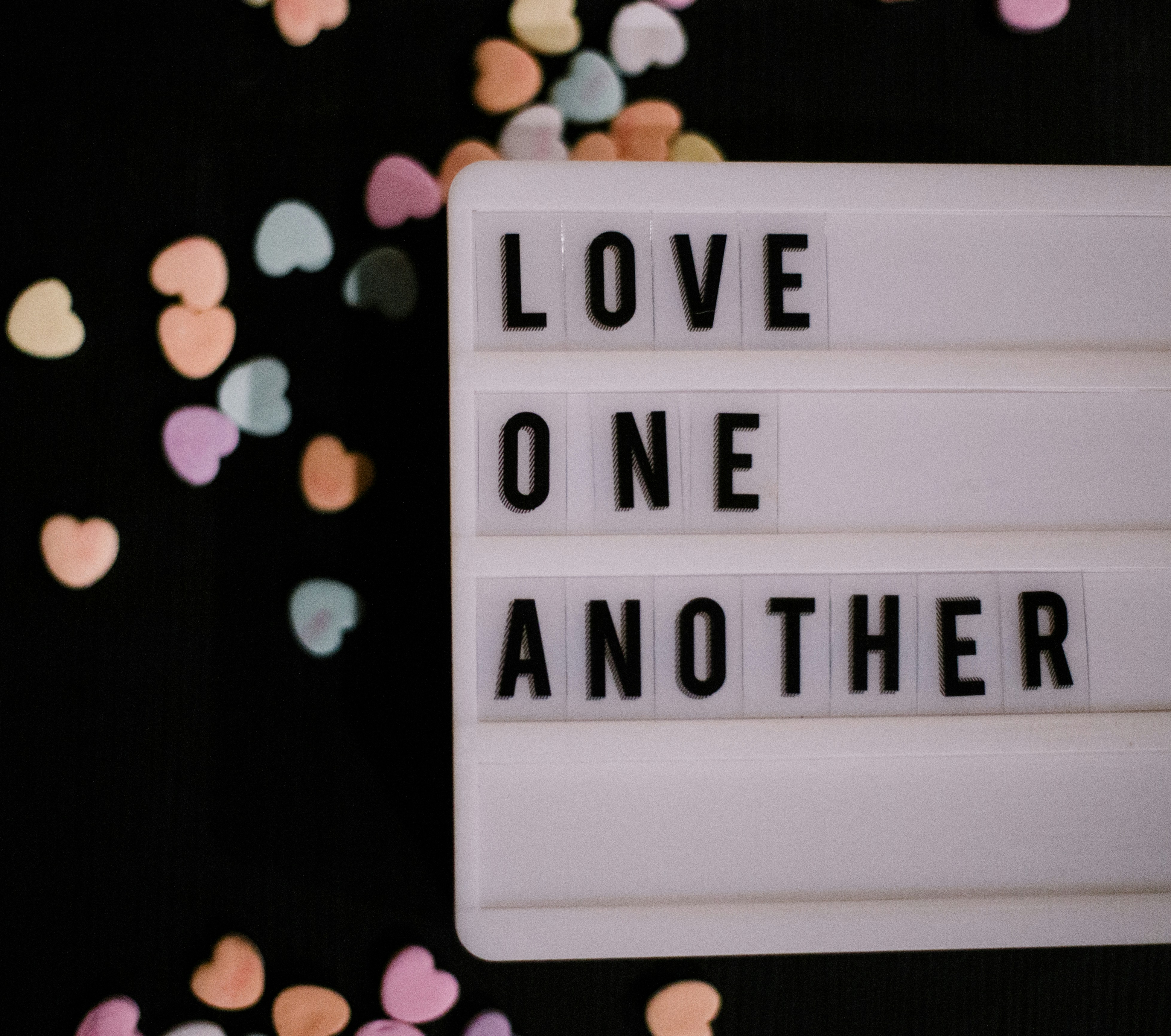
I suppose that it’s good to keep Valentine’s Day mostly private, but there was some wisdom to how it was practiced in school when I was growing up.  In primary school the rule was that everyone had to give everyone else a valentine card.  You couldn’t just give them to the people you liked.  Valentines Day was a day of equity, and, as children understand it, love.  Love for everyone, not just those of your nation or ethnicity.  Kids of any gender received cards from kids of any other gender.  The point was, love one another.  Looking at the way that hatred has become the new normal with right-wing politicians leading the way, Valentines Day has become a much-needed symbol.  We should be loving those who are different.  Instead we go to the polls and elect extremists who start wars and who brag, even before votes are cast, of the damage they intend to do in their next term.  Where’s the love?

I confess to being an idealist, but I do wonder why love is so difficult to achieve.  Are we so much the victims of tribalism that we can’t see there’s enough to go around?  We live in a world where, were it properly administered, we could see to it that most people, if not all, would have their basic needs met.  Where love could be our highest motivating factor.  Instead, we want the love of only those we love and everyone else can fend for themselves.  And whatever facsimile of love we can muster ends at an artificial line we call a national border.  Those on the other side are our enemies and we want to take what they have.  Is this a sane way to spend Valentines Day?

The irony of all this is that those who perpetuate this divide and conquer mentality were raised in religions founded by leaders who insisted on love.  Love your neighbors.  And, more radically, love your enemies.  What if Valentine’s Day were more than just a time for romantic dinners and little treats, and those things which are best kept private?  What if it were a day when we all tried to love that kid who’s always picking on you?  Or who looks different?  That kid that doesn’t seem to have any friends?  Childhood taught us that everyone’s shoebox got a card today.  We may have been too young to understand some aspects of love, but one thing we got right.  Everyone deserves ours.  Why not try love?


Mom

Mom

I just became an orphan.  I tend not to write about other people without their permission, but I have a few words to say about Doris Ruth Miller.  First of all, she was a saint.  I’m often accused of putting the needs of others before my own, and this is something I learned from Mom.  She set me on my lifelong course of reading the Bible, determining, in some inexplicable way, what I call a career.  Mom was born April 7, 1935 in New Jersey.  She was the youngest, and last surviving, of five siblings, and the only girl.  When I reached that age when children (as adults) get curious about their parents, I asked what town she was born in.  By that stage she couldn’t recall, but at one point she told me Cherry Hill, and at another, Asbury Park.  She never finished high school and never had any job training.  But she always believed.  She was faith personified.

She married to get away from a difficult relationship with her own mother.  My father, who died twenty years ago, was an alcoholic.  They had three sons together.  Mom, very aware of Dad’s condition, didn’t believe in divorce and stayed with him until she no longer felt safe doing so.  Not for herself, but for her sons.  Her life revolved around her children.  She eventually remarried and her final son was born.  This marriage involved a move to Rouseville, Pennsylvania—I’ve written about it before—my last childhood home.  Neither of her marriages were happy ones, but she was determined about two things: maintaining her faith, and caring for her children.  She believed unquestioningly and the only book I ever saw her read for herself was the Bible.

I only found out over the weekend that she was in rapid decline.  Circumstances (medical and financial) had kept us away for far longer than I would’ve liked or hoped.  I talked to her on the phone nearly every other day and told her with joy just about a month ago that we had finally got a car that would enable a visit.  We were planning on spending Thanksgiving with her.  The universe, which operates on its own timetable, had different plans.  Mom was a remarkable woman.  She was not afraid of death and she embodied these famous words from Paul of Tarsus: “O death, where is thy sting? O grave, where is thy victory?”  Mom lived eighty-eight difficult years.  She dedicated her life to others and lived the Gospel by example.  I miss her terribly, but I have no doubts about her being among the saints.  Thanks for life, Mom, and for showing how to love unconditionally.


Valentines and Bombs

So what was I thinking, posting about bombs on Valentine’s Day?  Regular readers know my fascination with holidays.  Valentine’s Day is another one of those that simply gets plowed under by the sharp shares of capitalism.  We work on Valentine’s Day, of course, after waking to news of yet another multiple shooting at a university.  Is it any wonder that we think about bombs on Valentine’s Day?  As Tina asks, what’s love got to do with it?  In 2016 we were taught that the politics of hate is how elections are won.  Surveys consistently show Americans favor stricter gun laws but congressmen love money more.  Maybe love does have something to do with it after all, Ms. Turner.

Love, it seems to me, was the best thing Christianity had going for it.  While the Gospels aren’t entirely consistent on this point, the figure we call John (not the Baptist) focuses on it.  Jesus spoke of, indeed, insisted on love.  “God is love” some radical went so far as to write.  But love gets in the way of selfish agendas.  We can wave Bibles around, and hold them up for photo ops, but they do no good that way.  Besides, love might, in some instances lead to sex.  And we know that Augustine won that argument centuries ago.  We don’t have a widely recognized holiday celebrating that dour saint, however.  Perhaps we should take a cue from the fact that nobody knows which Valentine yesterday really commemorates.  Isn’t love best when it can even be anonymous?

Photo by Jamie Street on Unsplash

I often ponder why it seems so difficult for people to love universally.  Yes, we do annoy each other.  Yes, we have conflicting agendas.  If, however, we pause for a moment and consider we’ll see that other people have feelings just like us.  They too want to be loved and appreciated, and held by those closest to them.  This is not a bad thing.  What’s so wrong with love, after all?  We pour money into the military industrial complex and try to regulate who can love whom.  And we say we’re living the religion touted by the New Testament.  I always try to keep Valentine’s Day special.  It can be tricky on a Tuesday when work will bear its inevitable load of problems to solve.  Still, if we all paused when we faced a people-related frustration on Valentine’s Day, and said to ourselves (saying it aloud would only cause problems) “I love you” to the person causing our frustration, I wouldn’t have been thinking of bombs on Valentine’s Day.


Love, Not Fear

How do we celebrate Valentine’s Day when our governments advocate hate?  You have to wonder when the autocrats last fell in love.  Building entire polities on hatred harshes the elevated feelings of letting love, well, love.  The only time Republicans seem to smile is when they’re taking advantage of someone else.  But it’s Valentine’s Day, so I’ll try to think charitable thoughts about even them.  

My reading recently has been taking me into the realm of sin.  Let me rephrase that—I’ve been reading a lot about sin recently.  One of the more striking aspects about badness is that it seems closely related to love, or at least lust.  I’ve often pondered why Christianity especially has tended to treat sex as bad.  While all religions take an interest in sexuality, not all of them declare it a negative aspect of life.  In fact, many see as it quite the opposite.  Since I like to trace things to their origins, I wonder why this might be.  Why did Christianity, whose putative founder declared the greatness of love, decide that although love is well and good that making it is problematic?

Paul of Tarsus, whom some credit with being the actual founder of Christianity, considered his celibate lifestyle to be superior.  While he didn’t mandate it of his followers, he highly recommended keeping their commitments to divine causes rather than to prurient human ones.  He believed a second coming was going to occur any day now, and that was nearly two millennia ago.  He was also, through no fault of his own, an inheritor of an incorrect understanding of gender and sexuality.  Even today there’s much about these that we don’t understand, but we do have more evidence-based ideas about what’s going on.  And not surprisingly, we tend to find that love is good and expressing it (appropriately) is also good.  Valentine, after all, was a saint.

Looking out my window, it’s still clearly winter.  There’s snow on the ground from the most recent storm and I’m aching from the upper-body workout that it required to get it off the walk.  But still, in the pre-dawn hours I start to hear—rarely but clearly—the birds begin to sing.  The amaryllis on the sill has sprung into full bloom.  The thing about love is that there’s enough to go around.  It’s a renewable resource.  If only our leaders showed a fraction of interest in it as they show in hate and fear. 


By Their Love

One of my high school teachers—I don’t have to say who; if you attended my high school you’ll already know and if you didn’t you won’t know him anyway—wrote in my yearbook, “I hope you get what you deserve.” I wasn’t very good in this teacher’s class, but he explained to me, “I sign everyone’s yearbook the same way. If you do well, I hope you get rewarded. If you don’t do well, I still hope you’ll get what you deserve.” This teacher had a reputation for being somewhat of a philosopher, and his words have struck me as particularly appropriate for this moment. We, in the cosmic scheme of things, get what we deserve. As a nation I guess we deserve a First Lady, in an example to young women everywhere, has appeared naked on the internet. Her husband married her after two previous women and has made his views on gender perfectly clear. My conservative friends went to the polls knowing that. I hope they get what they deserve.

The problem is the rest of us are stuck with him too. I’ve lived through bitter, spiteful campaigns before. The genteel art of campaigning is thoroughly deceased. 2016, however, is the first year that I saw pure hatred as a political platform. And it wasn’t on both sides. Trump made of virtue of hating one’s neighbor and claimed the election was rigged until he won—then it was, of course, impossible that it would’ve been rigged. Former First Lady Hillary Clinton, who kept her dignity throughout, never stooped to inciting hatred of fellow Americans. It likely cost her the election. To the people now saying this is just politics and stop complaining I say we have all been victimized and we all ought to feel very ashamed. This election wasn’t about money. Or financial positions. Or foreign policy. It was about hate.

DSCN4694

Hate can only be counteracted by love. I have seen many women responding to a man who considers them mere sexual object by reaching out in kindness to strangers. Women organizing to try to make this country a more positive place. Meanwhile, I hear men I know saying at last we have a strong leader who will bring them prosperity. If money is what you care for, you have my pity. This country is about freedom, equality, and fairness. All of that was jettisoned last Tuesday. Even those saying “get over it” are doing so with a smugness that is a thin veil over intolerance. I’ve never carried on with frustration so long after an election before. That’s because never before has an election—no matter which party triumphed—been won by a platform of evil intent. My grandmother, a Teutonic matron of occasional Valkyrie disposition, used to sum it up well when we boys were getting out of hand. “Schäme dich!” she used to scold. I know a country that could use her words right now.


The Problem with Love

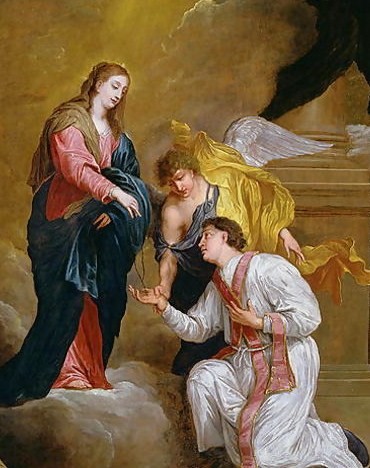
As far as we can tell, historically there is no Saint Valentine that is particularly connected to February 14. Even if there were, it is difficult to imagine a saint promoting what we know as love. Love is a slippery topic. The ancient Greeks (who did not marry for love) were so perplexed that they came up with three different words for it, and the nascent Christian community tended to prefer agape-type love. Love that expresses well-being for the community and has little to do with the physical attraction that people everywhere find so compelling. It is safe to say that Christianity has always been uncomfortable with the kind of love that Valentines Day celebrates. The holiday, because of its associations, has often been removed from the liturgical calendar a time or two. People are already prone to express their biological urges, so it is best not to give them an excuse, sanctioned by the church.

This is an odd situation, thinking love is wrong, or at best, tolerated. As far as we can tell, the earliest Christians had no particular concerns in this way. We can’t measure, of course, how people loved their spouses, but there was nothing inherent in the new religion to suggest physical attraction was bad. By the time Paul of Tarsus started writing his letters a couple of decades after Jesus’ life, at the earliest, some doubts had crept in. They seem to have been largely personal. We know little of Paul’s life, but we are aware that he saw the kind of love known as eros to be a problem. Concession had to be made to those who couldn’t control themselves, but otherwise, in good stoic fashion, love was to be ignored. By the time of Augustine of Hippo, some three centuries later, sex passed on original sin and love had become decidedly dark.

St-Valentine-Kneeling-In-Supplication

Attitudes change with time, of course. After two millennia a certain practicality sets in. We have moved through the troubadours and courtly love to psychology and deep human needs. Arranged marriages are, for the most part, considered like shackles from the past. And love, that feeling that we never completely outgrow, is believed to be a positive thing. Saint Valentine (and there were at least two of them) would likely have disagreed. While the Romans celebrated sexuality, they also believed in restraint most of the time. Valentines Day, however, still has something to teach us. Despite the commercialization of the holiday, in a world with a surplus of hatred, any kind of love is, as long as it’s mutual, is worth celebrating.


Simple Gifts

Thing Explainer, a whimsical gift for my daughter at Christmas, is perhaps the trendiest present found here this year. Randall Munroe, who makes a living as a web comic artist (who knew this was even possible?) wrote/illustrated the book to explain complicated things in simple words. Indeed, he limits himself, with some license, to the thousand most common words in English. Due to the almost viral success of the book, websites now exist so that even those of us with advanced degrees can explain things with common words. It reminds me of the Common English Bible in that it attempts to make something complicated easy to understand by using a level of writing accessible to the majority of readers. Thing Explainer is, naturally, for fun. There is, however, an underlying question.

Have we reached a point where reading itself has to be enhanced by making it simple? Some things are, by their very nature, complex. At a time when more and more kids are being encouraged to attend college, the traditional basis of higher education (the classics, classical languages, the humanities) has eroded so far that higher education is not what it once was. My daughter’s engineering program is highly technical and doesn’t naturally promote the things I recall as “college.” Maybe I need someone to explain it to me in simple words. What’s wrong with being literate? With finding challenging books worth the effort to get through? Some things are complex.

A young couple's anniversary in Wales.

A young couple’s anniversary in Wales.

I wonder how a society survives when complexity disappears. Today my wife and I celebrate our twenty-seventh anniversary. Marriage can be a complex thing, but it is something that can be explained in simple words. When we decided to marry the idea was lifelong commitment, not knowing the twists and turns that life would take. If the Internet existed in those days I didn’t know about it. (Certainly, being a web comic artist wasn’t a job that yet existed.) Doctorates still led to teaching careers. 9/11 hadn’t happened so that living in a modified police state wasn’t yet part of daily reality. There weren’t really words to explain it. It was one of those most basic human things. Turning to Thing Explainer I find that love is one of the thousand most-used words. It does perhaps show, after all, that complex things can be stated in a word we all understand.


Love the Sinner

Nashotah House, in the many years I taught there, was very saintocentric. Our daily lives revolved around Saints’ Days, many of whom I’d never heard. Not having grown up Episcopalian, I wasn’t accustomed to all the obscure people recognized as worthy of having their own day. I was, however, surprised to learn that the church did not venerate the two most well-known secular saints: Patrick and Valentine. Perhaps having its origins as an all-male institution, St. Valentine’s Day was considered a dangerous concept to commemorate? But no, he wasn’t even on the calendar of saints in the Book of Common Prayer. While the rest of the world was celebrating love, we were generally getting ready for Lent.

The truest holidays mark the observations of subtle shifts in nature. With our indoor, virtual lives, we’ve lost track of the fascinating rhythms of the natural world. The birds begin to pair off and mate, so the etiology goes, around this time of year. So to baptize that pagan erotic longing, St. Valentine was brought into the picture. So the story claims. Religions have always found love somewhat of a stumbling block. On the one hand, it is the highest ethical good—the greatest moral regard you can have for another person is love. (We try not to tell them that, because it might betray too much, however.) On the other hand, love can lead to physical intimacy and there things get a little dicey. Religions of all descriptions attempt to regulate sexuality. It may be a fearful thing, so perhaps we should put a saint’s face on it. Could act like cold water on the natural fires of biological creatures in February.

St-Valentine-Kneeling-In-Supplication

So instead, Valentine’s Day has become a secular holiday. Kids send one another cheap cards indicating their enforced regard for one another. Guys carry flowers awkwardly through the streets of Manhattan. The clerk at the chocolate shop, even several days in advance, sends you out the door by saying “Happy Valentine’s Day.” It’s the secret we all know. Ironically, the church has backed away from Valentine. Perhaps, if our religious institutions took seriously what it means to be human, and promoted love as the highest good rather than political conformity, we would truly have cause to celebrate. But don’t mind me—more likely as not, I’m just gazing out the window, watching for birds and the hope of spring.