Remembering Consciousness

I recently inadvertently read—it happens!—about anesthesia.  I’ve been relatively healthy for most of my adult life and have experienced anesthesia only for dental surgery and colonoscopies.  I’ve actually written about the experience here before: the experience of anesthesia is not like sleep.  You awake like you’ve just been born.  You weren’t, and then suddenly you are.  This always puzzled me because consciousness is something nobody fully understands and there is a wide opinion-spread on what happens to it when your body dies.  (I have opinions, backed by evidence, about this, but that’s for another time.)  What I read about anesthesia made a lot of sense of this conundrum, but it doesn’t answer the question of what consciousness is.  What I learned is this: anesthesiologists often include amnestics (chemicals that make you forget) in their cocktail.  That is, you may be awake, or partially so, during the procedure, but when you become conscious again you can’t remember it.
Now, that may bother some people, but for me it raises very interesting issues.  One is that I had no idea amnestics existed.  (It certainly sheds new light on those who claim alien abduction but who only remember under hypnosis.)  Who knew that even we have the ability to make people forget, chemically?  That, dear reader, is a very scary thought.  Tip your anesthesiologist well!  For me, I don’t mind so much if I can’t remember it, but it does help answer that question of why emerging from anesthesia is not the same as waking up.  Quite unrelated to this reading, I once watched a YouTube video of some prominent YouTubers (yes, that is a full-time job now) undergoing colonoscopies together.  They filmed each other talking during the procedure, often to hilarious results.  The point being, they were not fully asleep.  The blankness I experience after my own colonoscopies is born of being made to forget.

I think I have a pretty good memory.  Like most guys my age, I do forget things more easily—especially when work throws a thousand things at you simultaneously and you’re expected to catch and remember all of them.  Forgetting things really bothers me.  If you haven’t watched Christopher Nolan’s early film Memento, you should.  I think I remember including it in Holy Horror.  In any case, I don’t mind if anesthesiologists determine that it’s better to forget what might’ve happened when the last thing I remember is having been in an extremely compromised position in front of total strangers of both genders.  My accidental reading has solved one mystery for me, but it leaves open that persistent question of what consciousness really is.


Spirit Storm

Some time ago, we experienced quite a windstorm.  More than wind, there was a dump of rain, thunder, hail, and all that.  My wife and I were attending a Tibetan singing bowls sound-bath with some others in the cancer support community.  I’ve described this practice before, here.  In any case, the meditation is held in a large room with a tin roof—the kind of place you don’t want to be during a tornado.  We’d just got inside when the gust front hit and knocked out the power.  The instructor still went through the meditation, but the storm sounds blended with those of the singing bowls.  Afterwards my wife asked about Job.  Specifically, God speaking from the whirlwind.  I told her that was God on a bad day, but I understood what she was getting at—there’s a spirituality to the weather.  (I was going to suggest Elijah instead, but “but the Lord was not in the wind.”  Alas.

I thought of Weathering the Psalms.  My contribution to biblical studies, had I been allowed to remain in academia, would’ve been further explorations of weather terminology in the Bible.  But the Lord was not in the wind.  I wrote that book because I noticed the juxtaposition of severe weather with daily chapel at Nashotah House.  We were required to attend, no matter what the weather.  (Such is life on a fully residential campus.)  We were reciting the Psalms one day when a storm blew the power out.  It may have happened more than once, since we’re getting on past two decades hence my memory’s a touch imprecise on the point.  In any case, the spirituality of the power of the storm fascinated me.

It still does.  The next morning, out for my jog, I marveled at the number of branches down.  Thousands in the Lehigh Valley were without power.  This is probably why the ancients considered the storm god chief of the rest.  The violence of nature is something that suggests divinity.  Other primates have been observed screeching back at the sky during thunderstorms.  It’s deep in our DNA.  That doesn’t make it any less spiritual.  There’s a lot of weather in the Bible.  I only explored a tiny piece of it by trying to tackle the Psalms.  The Good Book, however, doesn’t say much about the spirituality of weather.  It’s there nevertheless.  Anything that can snap a tree a foot in diameter like a toothpick has a spiritual message for us.  I mused on the way home—we had to take a detour because of downed trees—that had the storm claimed us as victims, dying while meditating is probably not the worst way to go.  Now I wonder, what might God’s nice words from the whirlwind be?


Springing

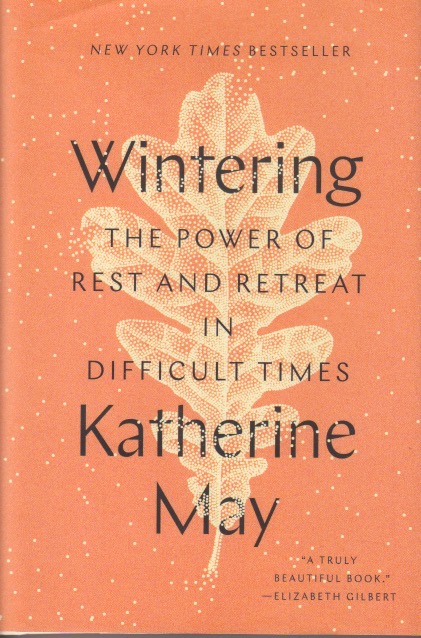
Life, for everyone, has difficult times.  Katherine May has a reassuring, but not always cheerful way about her.  She calls troubled times Wintering.  The subtitle of her book explains that it’s about The Power of Rest and Retreat in Difficult Times.  My wife and I read this one together.  It reminded me, in some ways, of Barbara Brown Taylor’s Learning to Walk in the Dark.  In a society vapidly preoccupied with an often shallow happiness, admitting, even pondering the things that are difficult is an act of courage.  May has a disarming way of writing, a humility and self-deprecation that are an antidote to the brazen self-assurance we too often see in the media.  She looks for lessons in her own experiences of pain and loss, and yes, surviving through winter. 

Winter is often a quiet time of reflection.  In our bright, loud, beeping, buzzing world we don’t take much time for such things.  Indeed, capitalism (which is generally not deep, although deeply engrained) doesn’t encourage it.  “The more you can work,” it whispers in your ear, even while sleeping, “the better you’ll feel.”  Winter slows things down.  Makes life a bit harder.  Think of all those days when you just don’t feel like going outside in the cold, snow, and sleet.  When the chill drives you next to the radiator, covered in lap blankets.  When it’s dark most of the time.  Such are good times to think.  As May shows, when you turn a difficult situation around and look at it from different angles, truths about yourself, about life, begin to emerge.  What is it we’re after that keeps us running all the time, dangerously overheating?  We need winter.

The anecdotes here are deeply personal.  This is particularly difficult for a writer because many of us face rejection frequently.  When you’ve poured yourself into a book, blithe casting aside by agents and publishers hurts.  I admire the bravery and the wisdom of writers like May.  She shows that wintering is possible, and that it is followed by spring.  Lives, she notes, are cyclical.  We can find quite a lot of meaning in that.  I often find myself fearing winter.  The heating bills.  The wearing of many layers of clothes for months at a time.  The dark and cloudy days.  Yet a good part of me welcomes the retreat.  I know that, in the cycle of the year with few days off from work, that if I can make it to Halloween, some rest—some wintering—awaits.  And that is a hopeful thought indeed.


Hearing Nature’s Voice

Silence is a rare treat.  I enjoy music and witty repartee just as much as the next guy, but silence is revelatory.  At home and in hotels I sleep to the sound of a white noise generator.  You can’t predict the sounds of neighbors, and my hours are askew from those of the rest of the world.  Here at the lake, things are different.  I awake early, hoping to catch the sun as it trips over the mountain tops across the way, lighting successive peaks before it reaches the near horizon.  It is utterly still.  Perhaps it’s the interference of humans in the habitat, but crepuscular animals seldom wander past.  The stillness is divine.  For some the lake means loud jet skis and buzzing motorboats.  I come here seeking silence.

Our daily lives lack peace.  Even when things are good there are always more things to be done.  We cram as much as possible into days impossibly short, giving at least eight out of every twenty-four to those who deign to pay us for our efforts.  Sleep is troubled and interrupted.  There are noises in the night.  You can’t hear your soul.  As the first rays seep into the valleys across the lake the birds begin to greet it.  Their conversation may interrupt the silence, but it doesn’t break it.  Silence is finding one’s place in nature.  Taking time to be still.  To listen.

Thirty years ago I first came to the lake.  My wife had been coming here for years already before that.  There have been many changes even in my short time here.  I can, however, hear eternity in the silence, for forever is a whisper, not a shout.  As I watch the morning mist arise, skate, and dance over the surface of the water as still as the very mountains that cradle it, I strain my ears to catch any sound.  The twirling wraiths are as silent as they are ephemeral.  They spin away the last minutes before the whine of an early morning fisherman’s boat begins its sleepy journey to the deep water in the middle of the lake, herald of other daylight noises to come.  I will await tomorrow’s unction of silence, and although the baptism may be secular it’s redemptive after all.  Nature knows far more about the human soul than any measurements might reveal.  You only have to listen to hear it.


Forest of the Subconscious

The mind is not the brain. This isn’t mystical mumbo-jumbo (although there’s nothing wrong with mystical mumbo-jumbo either). We’ve been bombarded with the message that we are meat machines for many years now. Those who have studied physics and plumbed its depths often tell us that if we had all the bits of information involved, we could figure out anything. Our minds are our brains and it is merely electro-chemical signals that form a kind of operating system for this biological computer. The idea that we have a separate mind, we are told, is an illusion. Interestingly, studies of the subconscious mind raise significant questions regarding this interpretation. The subconscious, it is generally acknowledged, was discovered by Sigmund Freud. Prior to Freud many people did things and didn’t know why. Now we know, despite debates about the details, that we have to consider the subconscious mind as well as the more familiar conscious one.

I’ve been on a Through the Wormhole kick lately. Since we don’t have television, I have to watch the episodes after they air, but at least I have the option of doing this when I have some time. I recently watched the subconscious episode. The truly amazing takeaway from this was that our minds often, daily, in fact, operate on a level that we know nothing about. There are ways of tapping into the subconscious mind—meditating, as I mentioned earlier this week, is one way. Others are more scientific. Stimulating areas of the brain with small amounts of electricity can enhance abilities that we never knew we had. In fact, we might even be able to enact a Matrix-like download of information. I think I may have swallowed the blue pill after all.

DSCN2021

Call it a gut-level reaction, but I have always had a strong resistance to the idea that we are mere automatons. Consciousness, which, increasingly we’re discovering, involves a dose of subconsciousness, doesn’t feel at all like a we’re programmed. Theologically, I always objected to the strange notion of predestination. It made no sense, theologically, or experientially. One very wise professor once told our class, “If you want to test this, tell your spouse that you’ve got her or him completely figured out. They will do something you don’t expect.” Our minds are perhaps the most miraculous parts of human beings. The concept that we are merely following the pre-determined laws of physics makes no sense unless we believe in a literal Hell that we’ve made of this world. Are we programmed to self-destruct? I believe not. Whether in my conscious mind or in the true mind that lies underneath it.


God on the Brain

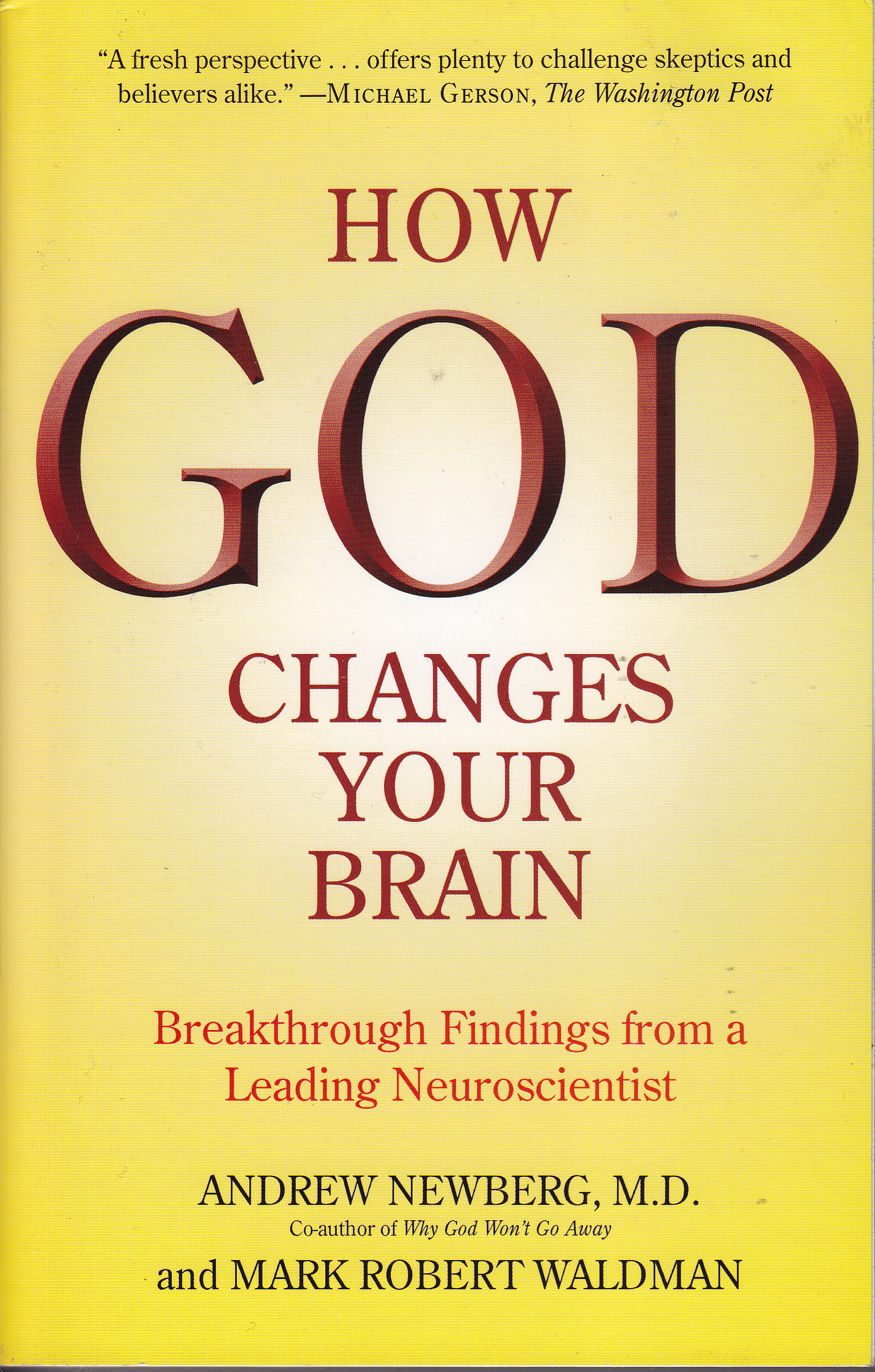
HowGodChangesBrainThose of us with scientifically oriented minds, but with affinity for the less quantifiable aspects of life, tend toward academic study of the humanities. It is not unusual for someone with a background in the hard sciences to dismiss such “softer” fields as less rigorous at best, or, at worst, a sheer waste of time. Many people in the humanities cower under this cloud of being considered somehow inferior for not being able to put numbers to everything. I suspect that’s why I find neuroscience so fascinating. While still teaching at Nashotah House, I would prompt students to think that whatever decisions they made about ancient texts, those decisions were mediated, in a very real way, by their brains. We don’t understand brains completely, but I’m amazed at what we have discovered so far. Years ago I read the book, Why God Won’t Go Away. It was an eye-opening study of what brain mapping reveals during states of religious inspiration, or at least, intense meditation or prayer. We can, to an extent, see inside someone’s head while they are communing with the other.

I recently became aware of the new book by Andrew Newberg (lead author on Why God Won’t Go Away) and Mark Robert Waldman, How God Changes Your Brain: Breakthrough Findings from a Leading Neuroscientist. I was a bit nervous at first, since I couldn’t recall how reductionistic Newberg was in his initial book on the subject. Neuroscientists sometimes perceive the world as being, in a sense, as all in our heads. I was pleased to see that Newberg and Waldman recognize that the “God question” is an open one. They address it right up front. I was drawn to the book because of one of their conclusions that had leaked into the footnote of something else I’d been reading: the brain changes as soon as it is introduced to the concept of God. Brain wiring is continually changing, but the takeaway here is that as soon as we introduce our children to the God concept, their brains will not unlearn it. It stays with us for life. Changing concepts about God is therefore quite difficult. Few even try.

This book, however, doesn’t see this as necessarily negative. In fact, the authors challenge the horsemen of atheism in that all studies seem to indicate that religion is actually good for you. Particularly meditation. In a world that is increasingly run on stress (just ask any business-person) this is an important reminder that prayer, or meditation, can actually heal some of the brain damage caused by life in a stressful environment. The nice thing about this is that the empirical evidence seems to be pretty strong. Our brains seem to be telling us to relax, step back, and not take all of this so seriously. Those are layman’s terms, of course, filtered through my brain. Even reading this book made me feel much more relaxed. It reminded me why, for much of my life, monastic living has seemed so very appealing. Instead, I live in the secular world with its many rewards and stresses. If I learned anything from this wonderful little book, I will be spending a bit more quiet time each day, and won’t be feeling guilty about it at all.


Growing Up

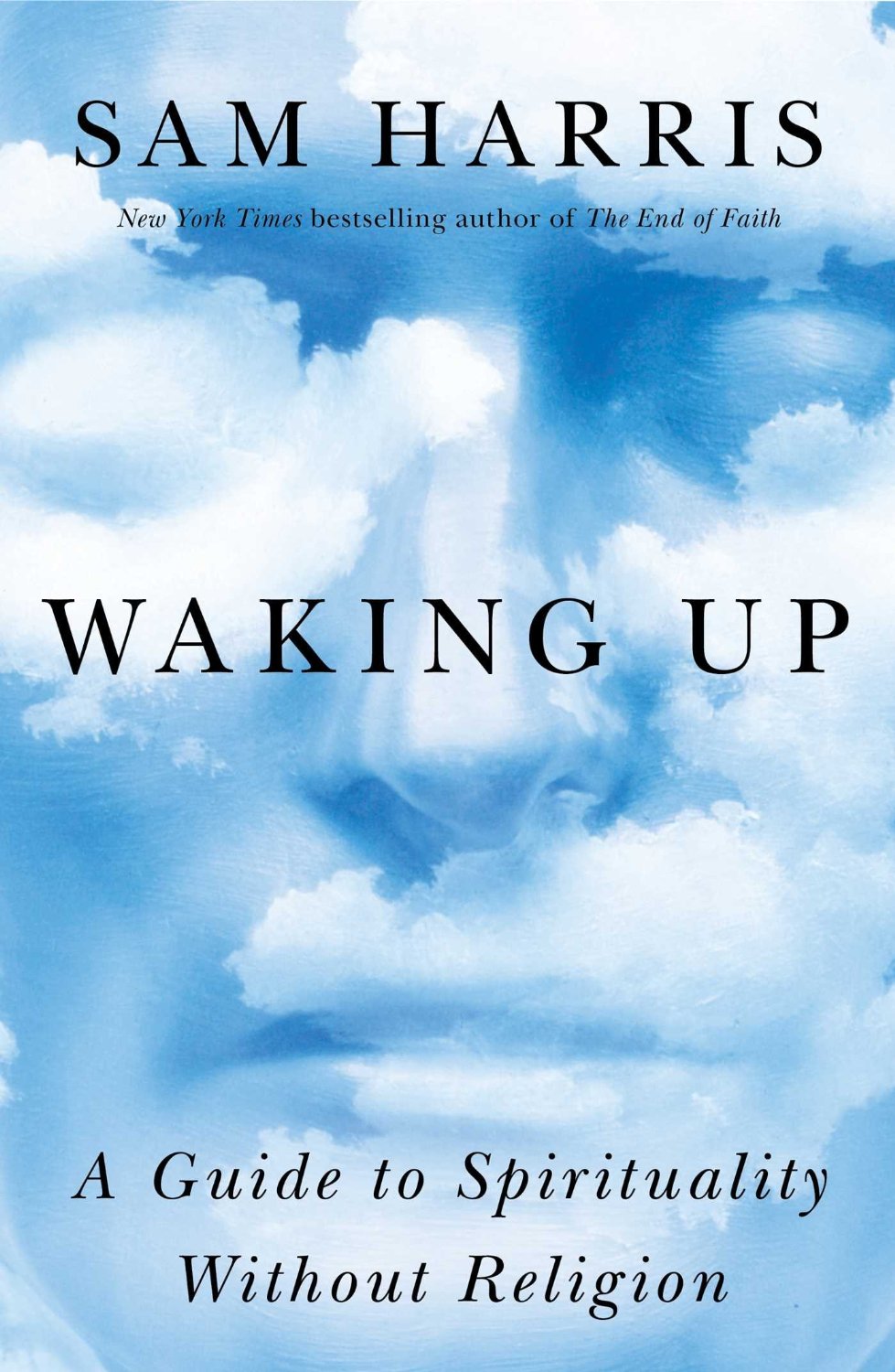
WakingUpI am in two minds about Sam Harris’s Waking Up. Literally. I haven’t read Harris since The End of Faith, and I have to admit that I found Waking Up to be a very engaging book. I can’t agree with everything Harris writes—that’s an occupational hazard of acquiring advanced degrees—but to have a scientist, an atheist no less, praise spirituality felt incredibly genuine. Spiritual experiences happen. I’ve had a few doozies over the years. I’ve also read a number of scientists who tell me they’re all an illusion. Harris admits that consciousness is a mystery. His use of “mind” instead of “brain” won me over from the beginning. I discovered that the atheist can also be a seeker. Dogmatism, of whatever stripe, is the enemy.

Harris has considerable experience meditating. This is no activity for posers or wimps. It is, despite minimal physical demands, hard work. Throughout the book we get the sense that Buddhism is among the least objectionable religions, when divested of its myths. I do wonder, however, if demythologized Christianity was ever given a fair chance. From my own experience, some of the selflessness advocated by Harris can be found in taking aspects of Christianity seriously. I understand, I think, Harris’s objections to religion. It can, and does, lead to horrors both obvious and subtle. Yet, every once in a perhaps great while, it does offer redemption. Meditation, for example, has its roots in religious practice. It is this that Harris calls spirituality. And it is good.

A Guide to Spirituality without Religion is an apt subtitle for this brutally honest and open book. Harris’s knowledge as a neuroscientist endows his ideas with great authority. He opines, and he is not alone, that meditation demonstrates that “I” is only an illusion. This loss of self will haunt me for some time. For decades I is all I seem to have. Still, I am pleased to find an open-minded scientist on this same path I tread. Raised to be both spiritual and religious set the trajectory of my otherwise logic-driven life. You can’t go back and change all that, but you can grow up. To read of Harris’s spiritual experiences in the geography of great spiritual masters as well as in the laboratory instill in this reader a profound hope. Whether or not this reader is merely an illusion. There may be morning after this long night, after all.