The Problem with Demons

One of the perks to life among a university community is the special programs that come to campus. As an adjunct instructor with a schedule so confusing that even Escher would get lost, however, I do not often have the opportunity to take advantage of such programs. More’s the pity since next week Montclair State University is hosting an event called “The Real Exorcist.” One of the very few authorized exorcists of the Catholic Church will be speaking on campus. The event overlaps with a previously scheduled class at Rutgers.
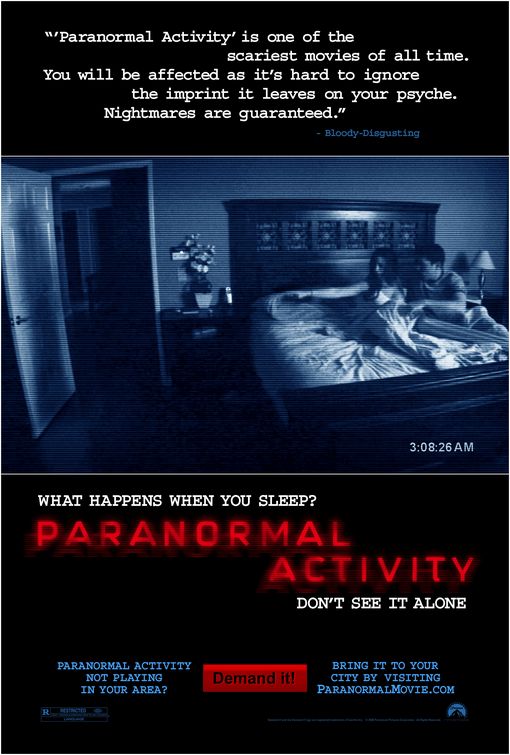
A little disappointed, last night I sat down to watch Paranormal Activity, the indie movie that made such a splash last year. Assuming it was a ghost story, I wasn’t too concerned about watching it alone on an October night. When I discovered it was a demon story, however, I wasn’t sure watching it alone was such a good idea. You see, in the hands of paranormal investigators the demon has undergone a transformation. Ancient Mesopotamians believed in a set of lesser gods who caused misfortune, although they don’t seem to have been pure evil and they didn’t call them demons. By the time we reach nascent Christianity, demons are cohorts of the Devil and are utterly malign and capable of possessing a person making them do the bidding of their dark lord. That’s where they remained on the divinity scale until modern day investigators using scientific equipment found them. I confess to having watched Ghost Hunters a time or two. Here the demon has morphed into a non-human disembodied entity – the very antagonist of Paranormal Activity.

Being aware of the origin of concepts is often a comforting place to be. When I realize that no special revelation has suddenly validated the existence of a baleful creature set to do me serious harm, a relief encompasses me. The problem with demons is that they don’t evaporate so easily. “Invented” by the Mesopotamians to explain misfortune, by the change of the era they had evolved into (largely) an explanation for epilepsy and mental illness. Now today they are back as haunting entities that have no human sympathy since they were never human. Paranormal investigators take them very seriously, despite their checkered theological pedigree. I guess I side with Shakespeare on this one: “there are more things in heaven and earth, Horatio…” After all, it is October and the nights are growing noticeably long.
Bleached Angels

A friend recently asked why, in the canons of western art, angels suddenly made the shift from colorful to predominately white. What was behind this loss of color? The history of angel imagery is complex and a great deal of the complication derives from a generally iconoclastic sensibility in late Israelite religion. Images were frowned upon, so we do not get “Hebrew angels” recorded for us. The current-day perception of angels seems to go back to Mesopotamian Apkallu figures and Egyptian deities. In both ancient cultures various deities and demi-gods were portrayed as winged humans. The Egyptian figures, at least, were colorful. In the world of the Hebrew Bible angels are nowhere cited as having wings and they were likely imagined as being pretty much the same as humans in form. Many biblical characters mistake angels for people.

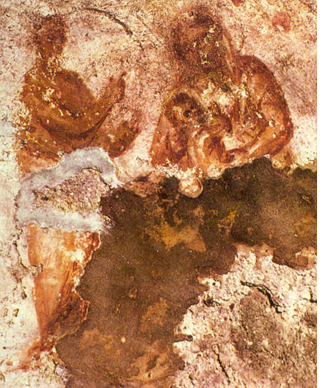
In Greek portrayals, Nike, goddess of victory, is a winged character. Eros, the god of love, also bears wings (and unlike Nike, he is generally bare all over.) In some vase paintings the Harpies are winged women. Since Greek pottery painting was generally monochromatic, we don’t have much color to go on. The earliest Christian angel portrayal comes from the Priscilla Catacomb in Rome. This angel is monochrome and wingless. The more familiar, and lavishly colored angels are Byzantine creations. Since my opinions on art history are not to be trusted, it is advisable not to make too much of this, but Byzantine art made flamboyant use of saturated hues to bring glory to God. This is part of the tradition behind Orthodox icon writing, and angels were simply following suit.

In the Middle Ages in Europe, angels were widely used to represent good and evil. It would stand to reason (if not to art-historical standards) that “good angels” would show their goodness by donning white apparel while “evil angels” would take on darker garb. This also fits with the growing tendency to represent Satan as dark red or black in color during this time period. As angels symbolized goodness, they became bleached of their former, Byzantine color. Symbolic value outweighed aesthetic sensibilities. Today angels retain their ancient legacy of Mesopotamia, Egypt, and Greece. Wings fit the view of angels as messengers, although ancient ideas of their colors depended more on the artistic conventions of the culture than any attempt to be true-to-life.

The earliest Christian angel (left)


Sinful Moonsters

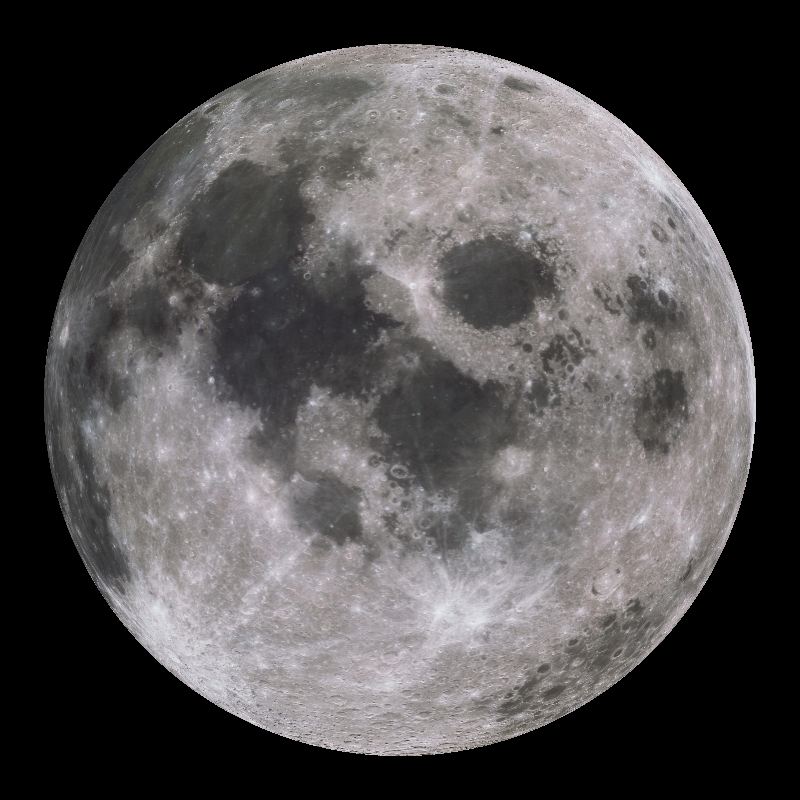
Wednesday night a student asked me about the moon god Sin. The name “Sin” has nothing etymologically in common with the usual English word for wrongdoing; they are simply homonyms. Nevertheless, when students first encounter this odd juxtaposition they often think that there must be something to it. This particular student pointed out that many activities classified as sinful take place at night, under the moon. Could they be connected? Linguistically, no; but it did get me thinking about the idea of the moon’s baleful influence on various creatures of the night.

Serious academic works seldom take vampires, werewolves and witches, some of the moon’s most infamously unholy acolytes, to be worthy of valuable research time. Meanwhile Stephanie Meyer and company are laughing all the way to the blood bank. Popular culture gives credence to the children of the night that the academic world ignores. I tried to do a little research on the moon and its mythology only to find that most moon books deal either with serious attempts at astronomy or serious attempts at astrology, neither of which I was seeking. I wanted to know when the moon had slipped from being the gentle god/goddess of the night into its role as the overseer of evil.

Evidence was scant, but it seems that in the Middle Ages, maybe influenced by late Roman ideas, scholars began to recognize the moon’s potential as a dismal influence. The moon has long been popular in folklore as a source of lunacy and luck. Lovers crave the moonlight, but so do teenage vampires and raging werewolves. This is, apparently, a concept of no great ancient pedigree. In any case, the moon here has nothing to do with sin.


Giving Lilith Her Due

Lilith Fair has announced its 2010 tour dates and excited fans are already purchasing tickets. Lilith Fair is a collection of women artists who share a stage to showcase the female contribution to contemporary music and donate a considerable share to charity. The event name, of course, is taken from the mythological character of Lilith. Popularized as a rare example of “Hebrew myth,” Lilith is a character who likely derives from ancient Mesopotamia, although her origins are obscure. Best known as “Adam’s first wife,” her somewhat sexy story in Judaic tradition evolved into Lilith being the original woman. Unlike Eve she was created simultaneously with Adam. Things were fine until she wanted to be on top during intercourse – males were not made to be dominated, according to patriarchal old Adam, and Lilith ships out to shack up with Satan. She is demonized (literally and figuratively) and becomes the “night hag” that snatches babies and claims the first right of intercourse with every male (an etiology for nocturnal emissions). She becomes the mother of demons.

This story shows all the traits of a late development, but the idea of a strong female figure in Eden is an appealing one. Lilith has come to represent the empowered female, and the modern trend towards accepting her as an icon of feminine independence is apt. Long ago I was intrigued by the female side of the story. Perhaps because I was raised primarily in a single-parent family for my formative years, I have always wondered about the disparity in our “advanced” culture that still considers the male as the “default” model with the female as kind of an adjunct after-thought. This fascination led me to the study of goddesses in the first place, culminating in a doctorate on Asherah. In the Bible men have Adam, Noah, Moses, David, and countless other role-models – even God himself according to standard interpretation. Why not admit the goddess?

It is telling that when Lilith becomes too powerful she is presented as evil. Anthropological explanations have little to offer by way of adequate explanations for such a development. Not to blame biology (or to lay claim to an excuse), but Frans de Waal’s Inner Ape demonstrates that males are hopelessly paranoid about showing weakness. Female primates tend to express their power by group cohesiveness while males try to blunder their way to the top with brute individualism. Adam had nothing to fear from Lilith. To those who perform in Lilith Fair, I only have to say, “Rock on!”


God’s Wife

Podcast 13 follows up on the previous two posts concerning Asherah. Here a little more background is provided on the discussion/debate concerning the goddess. I trace the origins of Asherah, best attested at Ugarit, and explain why this should be our primary source of information about the character of the goddess. I consider the 40 biblical passages briefly before moving on to the Mesopotamian, Hittite, and Epigraphic South Arabian material. Clearly the most important evidence for the debate on whether Yahweh was wed or not is the set of inscriptions from Kuntillet Ajrud and Khirbet el-Qom. I examine these bits of evidence as well, explaining why I doubt that they intend to portray a divine couple. The podcasts closes with what I believe to be the way forward — a clear understanding of Asherah based on Ugarit and read without a scholarly agenda (yes, they do exist!).