Why Islam

Radical ideas emerge in the most unlikely of places. In the world of religion the rule is generally to criticize first and then attempt to understand later. This is the burden of revealed religions where the only evidence to test is subjective experience. Lessing offered us the parable of the three rings: God gave humanity three religions (Judaism, Christianity, and Islam) without indicating which one was the correct one. Even before Lessing attempted to provide some kind of resolution to this intractable dilemma, proponents of each of the monotheistic traditions had already made up their minds. The divine buck stops here. Our society places little emphasis on learning about religion. Religion is something we do, not something we have to read about. Given the tremendous motivational force of religious belief, this situation would seem to be a set-up for disaster. Read the headlines and judge for yourself.

I was pleased, therefore, to come across the website WhyIslam.org. Written by Muslims to answer questions by non-Muslims, this non-judgmental, informative website seeks to educate. Despite its rapid growth in the western world, many people are poorly informed about Islam, what it stands for, and how it relates to Judaism and Christianity (especially). The media tends to focus on extreme cases of religious believers; unfortunately they are often the most newsworthy, capturing the limelight in the name of their faith. Whether or not religion was the motivation for an act of terrorism (certainly not limited to Muslim believers), once such an act is perpetrated the religious beliefs of the guilty parties are also suspect. Instead of trying to understand a different religion, the knee-jerk reaction is to fear it. WhyIslam.org is an attempt to counterbalance that fear. Education is the St. George to the dragon of fear. Instead, however, our governments often try to cut back on education and the trench only grows deeper.

If we are to survive the world of competing religions, open conversation is necessary. I’ve been ensconced in institutions where discussion was viewed as compromise and vehement hatred against the foe was considered the only legitimate response. This passed for education. Many seminaries are too busy indoctrinating students in the minutiae of their own tradition to open them to learning about other religions. What are they so afraid of? If a religion is really real, it should never quail in the face of competition. What is the danger in learning about fellow believers? Religions make many assumptions about their own priority—natural enough with regard to core beliefs. If they all encouraged learning about each other, perhaps religious violence would transform into religious education. Islam has much to teach the rest of the world, if the rest of the world would visit sites like WhyIslam.org and be willing to listen.


Faith on Trial

Great white throne of judgment?

I just had a brush with the law. I was recently called up for jury duty for what looked like a very interesting case, but I was dismissed before it got started. When I left the courthouse, I felt as if I was being watched. I was trembling. The reason, I suppose, began with a simple ticket. As a teen I was reluctant to drive. Those who’ve had the annoyance of riding with me know that I rigidly adhere to speed limits and traffic laws. At a momentary lapse some years ago, I was cited for speeding in a rural setting and my sense of justice was shaken. I may have been going too fast, but it is not a habit nor a common occurrence. This happened within a year of being dismissed from a long-term job because the politics of the institution at which I’d faithfully worked for over a dozen years had changed. My faith in the system had been badly shaken. The ticket, issued on a road with very little traffic and for an offense that endangered nobody, only exacerbated the sense of something awry on a cosmic level.

This story has a point. Being raised in a religion with a punishing God who spent most of his time seeking out secret sins and infractions had molded me into what I supposed was a model citizen. I read the Bible daily, attended church every week, avoided all the common sins that others seemed to enjoy with no repercussions. Nevertheless, the God I knew was angry. That anger was directed toward me. Like Michael Pedersen Kierkegaard, I was surprised when things seemed to work out so that I had a secure job in the midst of a recession. Although my thought had evolved considerably, the angry God was still stalking me; I have no doubt that he will be until my dying day. What we teach our children about religion will stay with them for a lifetime. When that job ended, sending me in a career spiral that has now lasted five years, I could feel those punitive eyes staring me down. Now if I see a police car in my rearview mirror, my pulse rate quickens and I break out in a sweat. Like God, they are seeking any little infraction to exploit.

Ironically, the jury assembly room in our county seat is in an old church. As I sat, waiting for my number to be called, I looked at the stained glass windows of Jesus, angels and saints. My first thought was how such a sight might be experienced by someone from a different faith background: what does our public space say about justice? Would a Hindu or Muslim find this welcoming, contemplating the seriousness of the juror’s role? It is a beautiful and comfortable waiting area nevertheless. As I found myself in the rarefied atmosphere of a courtroom with a judge, attorney, and many other jurors, I again felt the eyes of judgment upon me. I’d just exited a building formerly inhabited by an angry God–losing a building surely can’t put someone in a good mood, can it? Had I not been dismissed, I would have watched the drama of justice unfold. And it would have been myself that was sitting at the table of the defendant in a world where no one can ever live up to the standards set by a wrathful God.


Livin’ On a Prayer

Am I the only one who finds it disturbing that Neo-Con politicians are naïve enough to believe that prayer will solve all our problems? Where was God during the Bush years, for crying out loud? And yet headline after headline speculates about Texas Governor Rick Perry’s prayer-fest scheduled for Saturday. What is more disturbing than the lack of imagination on the part of would-be candidates is the sheep-like following on the part of a large segment of the electorate. If God is going to step in and take charge, he had a great chance back on May 21 and refused to pick up the option. If God was behind politics, why did George W. Bush fail to find Osama Bin Laden? If God is running things, why are so many unemployed? Ah, but the religious pundits have a pat answer: America is a sinful nation. What it takes is religion, Texas-style.

In the many years I spent at Nashotah House, the majority of our students hailed from Texas. They represented the conservative hard-line and doctrinal strappadoes that caused much suffering but still somehow didn’t placate an angry God. That, of course, says more about Nashotah House than it does about Texas. Perhaps it is the logical evolution of a country that began with prominent ministers gleefully describing sinners in the hands of an angry God. Nearly three centuries later and we are being told God is still angry. Thou shalt not hold a grudge, eh? The problem seems less about sinful folks just trying to get by (a la Bon Jovi) than about politicians using their religion to get elected. Centuries down the road it will be the topic of some new series of History’s Mysteries that an affluent, educated, and generally forward-looking nation cluttered its governing bodies with politicians who believed the answer to complex problems is to bow their heads and tell God how to fix it. Are we really half-way there, or have we spread our arms to embrace Jonathan Edwards once again?

In MSNBC’s article on Rick Perry’s prayer day, it is noted that the book of Joel is cited as an inspiration for the event. For such a brief book, Joel has been at the forefront of a ton of damage wrought by prooftexters. Joel wrote three brief chapters about a locust infestation for which the suggested response was prayer. One wonders if Rick Perry simply prays when the termites begin to gnaw on his expensive home, or does he call Ortho instead? Joel was truly old school. The locusts in his day meant literal mass-starvation. No chemical romance to solve the problem there. Unfortunately we don’t know how that one turned out—Joel doesn’t say. I’m just glad that Governor Perry hadn’t been reading Psalm 137 when inspiration struck, and can I get an amen from the pro-lifers on that?

Ricky used to work on the docks?

P.S. Matthew 6.5.


Ouch!

Now in a dentist office near you!

Sitting in the dentist’s office may not be the best place to be reading about pain. Nevertheless, as I was anticipating my fillings (worn enamel at this stage, not cavities) I picked up the June edition of Discover magazine and noticed a story on the brain. Since pain and brain rhyme, I took it as a kind of omen. I actually subscribed to Discover for many years as a teenager, but with the vicissitudes of the job market as an adult, and the perpetual lack of storage space in apartments, I have let my magazine subscriptions lapse. The article, which I did not have time to finish, suggested that neurologists are on the cusp of being able to pin down whence chronic pain is experienced in the brain. If a chemical inhibitor can be found for this specific region it will be like turning off a light switch. There will be no more pain (rather like John’s vision of the New Jerusalem).

As I was called back to the dentist’s chair to the accompaniment of the whine of a dental drill, I reflected on the loss of pain. Being the sensitive sort, and probably more empathetic to others than may be healthy, I never wish pain on anyone. Life is difficult as it is, and even those who wish me harm do not deserve suffering. Nevertheless, I wonder if we could thrive in a world without pain. This is all the more relevant with the growing whispers among the AI community that brains can be simulated by computers. If they are programmed not to experience pain (as seems only sensible) then what becomes of humanity when pain is abolished? Some of us identify with the pains of mental agony even if the physical does not directly impinge on our lives. It is what makes us human. When I see another person in pain, my immediate reaction is to want to help. Being a religionist, however, my options are often limited in this regard.

After a very painful termination a few years ago, I had to give in to anti-depressants for a while. The very idea depressed me. My life, including its full array of mental anguish, defined who I was. Take that away, and what was left? Funny thing was, those in the church who initiated this particular pain showed no empathy whatsoever in the face of it. I weaned myself of the medication after a few years and occasionally the pain returns—particularly acutely when yet another religious employer let me go—but it is part, a very deep part, of the human experience. Could we thrive in a world without adversity? We are often at our best when we are helping each other. That to me seems to be what true religion is all about.


A Tribute

Judith Mills Gray, 2009

The death of a friend always covers life with a hazy gauze of disbelief for some time. In my fitful career I’ve taught several hundred students, and of those several hundred a handful have become friends. When the painful debacle of Nashotah House took place and I was reduced to a weeping mound of incoherent impulses, those who were friends tried to console me. Some had fortunately moved on by that point. Judith Mills Gray was one of those who had become a friend although she had made it to safety before me. Readers of this blog will likely not recognize her name—she never earned lots of money, the measure we use assess a person’s importance these days—but she was an artist, a deeply spiritual woman, and one of the kindest people I have ever known. In a day when the seminary actively discriminated against women, she managed to hang onto a place among the boys and did so with good humor. After my short stint as Registrar, she came along to lift that burden from my shoulders. When she left the seminary, my tiny family sat in her tiny house and wished her the joy that Nashotah could never offer.

Just two years ago we went to visit her in her native West Virginia. She was proof to me at that point that recovery from institutional abuse is possible, but I could see there were still scars. Many of those who suffered through years at the seminary left very bitter—I count myself among them—but Judith rose above it all. She was not perfect—none of us are—but she was a person determined to leave this world a better place than she found it. That is a tall order when the church, the putative bastion of good, turns all its guns on you. As Judith and I shared what would become our final reminiscences together, I sensed that ultimately she had come out the winner.

We are all born into a life with far more questions than answers. Jesus seemed to have had the idea that it was good to console those in difficulty, heal wounds, and try to make your fellow sojourners happy. Judith followed that path without the benefit of having the answers. Along the way we shared many laughs and quite a few tears. We both had experienced the face that the church carefully hides from the wider public, the face that finds Jesus a little too idealistic and hate and revenge a simpler and more effective option. Judith never returned hate for hate. She continued trying to find a path where, although not ordained, she could still minister to others. For those few of us fortunate enough to know her, she was an example of how to make gold out of lead. In my case, I know that there will be lead in my life for quite some time now that she is gone. I also know that lead can, and sometimes does, turn to gold.


I Can Haz Edukashun?

Myths are alive and well. One of the most pervasive myths, along with the one that says clergy only work on Sundays, is the concept that educators take the summer off. Undoubtedly some do, but the summer is traditionally the time for professors to conduct research without having to break up their concentration with several classes a day. Those were the halcyon days. This morning’s newspaper slapped me like a fistful of razors as I read the story of Rutgers University’s president’s resignation. I knew about the resignation, but being fumblingly employed part-time by his mighty university, and having to take annual ethics training for the pittance I’m allowed, I blanched as I read these two sentences: “McCormick earns $550,000 a year as president and is eligible for a $100,000 yearly bonus, though he hasn’t taken the money in recent years due to the university’s budget troubles. Ralph Izzo, chairman of the board of governors, said he thought McCormick would be worth his [continued] $334,000 professor’s salary.” A few pages later the headline tells how Chris Christie, New Jersey’s cut and bleed governor, took a state helicopter ride to get to his son’s baseball game. Also, he wants to prevent state employees from making a viable living.

In this twilight zone of an educational nightmare, a guy with professional ethics training just wants to close his eyes and make it all go away. For what are we educating our young if not for greed? What professor is worth more than 100,000 dollars to any university? In the old days, back with ethics had intestinal fortitude, the term for such folks was “sell outs.” Is there really any drive for excellence at such pay scales? It is no wonder we are raising the “entitlement generation.” Actions used to speak louder than words. State-mandated ethics training has now corrected that little oversight. Higher education used to be about ideas; today it’s “show me the money.”

The truly sad part of all this is that we keep pretending. We preach the myth to a public easily pacified and crucify those who beg to differ. Back in my Nashotah House days a trustee once hushed me so that the board might listen to a student with “fire in his belly.” My belly’s a blackened cinder by now. Is anybody listening? Mythology, particularly in the Greek world, revolves around the concept of hubris. It is a concept with which modern university folk are clearly unfamiliar. It goes something like this: like most people I think I am better than others. In order to prove it, I’ll increase my blandishments until there is no longer any doubt. Is that Olympus straight ahead? I might as well take that as well!

I’d love to stay and lecture some more, but I’m apparently entitled to more state ethics training.


Malleus Practice

Misfortune takes a quiet seat in the back of the bus for many people, but it is always there riding behind you. My recent trip to Salem is now over, but it has left me with that haunted feeling that sometimes tragedy just won’t let go. Reading up on the history of witches and the belief therein, it is pretty clear that the whole idea began as a form of theodicy. Misfortune happens. When a one-to-one correspondence attends it, people don’t worry too much. (John has a stomachache. We know that John slapped Bob, and Bob punched John in the stomach so there’s no supernatural agent at work here.) When the adversity comes out of nowhere, to all appearances, we naturally look for a cause. As long ago as ancient Sumer, and probably before, the answer was sometimes the baleful influence of enemies with supernatural powers. The witch was born.

This idea has remarkable longevity. Even as the eighteenth century dawned, just a few short years after the tragedy at Salem, Puritans and politicians embarrassingly looked at their feet and admitted this mockery of justice had been an unfortunate error. Yet they still believed witches existed. The concept is alive even today in parts of the world minimally influenced by schooling in science and logic. (I taught at a seminary where various witch hunts still took place; books were even burned.) Who doesn’t know the feeling that a totally natural disaster was in some way targeting them? Whether tornadoes, tsunamis, or rain on your Memorial Day picnic, the normal human response is one of a minor (or major) persecution complex.

To solve the riddle of witches, horseshoes and witch bottles are not necessary, but education is. Witchcraft was not considered Satanic until the late Middle Ages when apocalyptic fever raged through Europe with the Black Death. Not understanding microbes, the populace supposed a great war presaging the end of times was escalating between God and Satan. The minions of the Dark Lord were spawned by witches and demons. (Add Tim LaHaye and you’ve pretty much got Left Behind.) To solve the problems of the righteous, sacrifice a few innocent victims. If we call them witches—actually any undesirable name will do, eh, Senator McCarthy?—we will feel justified in doing so. The real solution, namely, working together to overcome natural and human-made afflictions, is really just too hard.


Aftermath of Easter

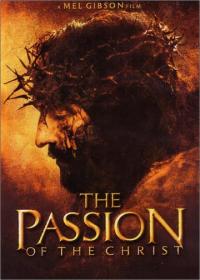
Holidays, it seems, are increasingly overloading themselves with baggage. Not only are many of them thinly veiled celebrations of materialism, but many are now being tied to “issues.” As I survey the aftermath of Easter as I saw it this year, it becomes plain that even the message of self-sacrifice and hope springing eternal can be co-opted. The Fellowship of Catholic University Students at Montclair State University hosted a screening of Mel Gibson’s The Passion of the Christ last week. An outcry of biblical proportions flooded university discussion groups over what was deemed cultural insensitivity. Gibson’s version of the gospel failed to impress me when I saw it, stressing as it did Gibson’s sadomasochistic torture scenes in an effort to raise a few welts over “Christ-killers.” Back at Nashotah House I was regularly on the preaching rota. (I’m not now nor have I ever been ordained in any denomination. I have, however had preaching experience going back to my high school years.) My final sermon asked whether we should accept theological truths from a loose cannon of an actor. These physical accidents may have had more than a little in common.

Conversely, my first sermon at the seminary – the very year I was hired, and several years since my last pulpit performance – featured Abraham Lincoln. Nashotah House was a bastion for disgruntled southerners at the time; they were often the only ones conservative enough to fit the seminary’s profile. My admiration of Lincoln was expressed in an innocent expostulation on the merits of freedom. Afterwards I was drawn aside and admonished, being informed, “not everyone here believes Lincoln was a hero.” Lincoln was assassinated on Good Friday, a point that has not escaped those who note that the Civil War began 150 years ago this month. Those at Nashotah who disliked my words felt that I was disparaging the south. With roots in South Carolina, I indeed was not. Slavery is wrong in any ethical system that will stand up to scrutiny. Those who believe in equality, however, often pay the ultimate price.

Holidays do not always bring out the best in us. We need the respite, and we have the Jewish community to thank for coming up with the Sabbath that has led to our weekend lifestyle. Each weekend rival churches fill up with those who believe others to be wrong. Religion seems to have failed in its quest to unite. A colleague at Montclair cited the quotation of uncertain attribution: “having a war about religion is like having a fight over who’s got the best imaginary friend” – this was in the context of the screening of Mel’s Passion. The fact is, when it comes to religion nobody knows the correct answer. The humble response one would like to imagine is the mutual encouragement to continue to strive for the truth. More likely than not, the response is someone will select their weapon of choice and try to prove their point of view the old fashioned way.


Pilgrims’ Regress

In March alone I had to build expanders for three of our bookshelves. I claim the problem began when, as a faculty member at Nashotah House, I had use of a house with a built-in, floor-to-ceiling library. My wife claims the problem began long before that. We own a lot of books. The only silver lining to Borders’ recent bankruptcy was that we hovered like buzzards at one of the closing stores and walked out with books we might not have otherwise bought, but whose prices demanded their owners find a new home. Orphaned books are a sad sight. So I purchased my first Christian satire book in many a year. I just finished reading Becky Garrison’s Jesus Died for This? A Satirist’s Search for the Risen Christ. Having spent many years among the Episcopalians, Garrison’s point of view set me at ease: had this been an evangelical attempt at humor I would have orphaned the book myself. Nevertheless, as I read through this travelogue/memoir, I rarely found myself laughing.

Nothing robs one’s sense of humor quite like being in higher education for a couple of decades. I still find plenty to laugh about, but I realize the reprieve is only temporary before more serious issues once again cloud the skies. Garrison’s attempt to find genuine “Christ-like” behavior among Christians was, predictably, peppered with the failures to find it. As she repeatedly notes, the odd marriage of religion and politics in the United States has tainted both institutions (and both had already tainted themselves without the other’s help many times previously). It doesn’t take a satirist to see that many religious figures have made a joke of their belief systems by touting them as the only way to heaven.

What became increasingly clear to me as I read this personal and revealing book was that Christianity has splintered into countless subcultures that attempt to reclaim the original Christian experience. The problem is that time doesn’t stand still. Religions are, by definition, conservative. Progress, by definition, is not. Ever since the first hominid hefted a wedge-shaped rock and used it as the first Paleolithic weapon, our course was set. We would continue to try to improve our lot. Institutionalized religions began appearing a mere six-to-seven thousand years ago, very late in the game, and they’ve been driving with feet firmly on the brakes ever since. Once we figure out what the gods want we need to – wait, don’t change that! We’ve just figured it out! So we find ourselves in a highly technological twenty-first century with pre-medieval religions trying to tell us how to survive the Black Death. Each time religions change, some get left behind. When we finally implode, some future archaeologist may find an apartment crammed full of books and she’ll declare that my wife was right: the problem began long ago.


Blue Monkey God

A friend of mine pointed me to the following YouTube video:

Having spent many years in Wisconsin, I have to admit that this isn’t the weirdest thing I’ve witnessed. Not even the weirdest thing in the name of religion. Nevertheless, the fact that grown adults are running around the Wisconsin woods dressed as Na’vi and throwing toilet paper onto innocent trees shows just how diverse religions can be. My ears perked up at about the 3:50 mark on the video where Tsu’tey says “I didn’t believe in God before Avatar” – a statement that catapults James Cameron into the role of father of God, I guess. What will it take to make some people believe?

I have said for years that movies are the new mythology. At the risk of showing my age, and blowing my coolness factor, I recall the episode of Northern Exposure (“Rosebud”) where Leonard Quinhagak, a Native American shaman, tries to discover the healing myths of the Caucasians. The inhabitants of Cicely simply don’t know any myths. Meanwhile, in a separate plot, Ed Chigliak attempts to make a movie. The juxtaposition illustrates quite nicely how movies are indeed modern myths. The sense of transport many viewers reported upon seeing Avatar (critics, be quiet) also illustrates this phenomenon. Movies take us outside ourselves in a way most religions would kill (some literally do) to achieve.

Donning a blue body suit and freezing your tail off in Wisconsin may not be everyone’s favored form of religious expression. It is healthier than much of the religion I saw expressed at Nashotah House. In fact, when Tsu’tey and Eytukan are shooting arrows at the manikin of a woman I thought I had slipped back into my accustomed pew for a spell. The myth of Avatar is that peace, love, and tolerance may indeed coexist without the greed of the sky people who only want the money. There is a truth deeply buried here. If a few more cassocks could be shed along with a few more human tears perhaps we could embrace the contents of Pandora’s box unafraid.


Zounds

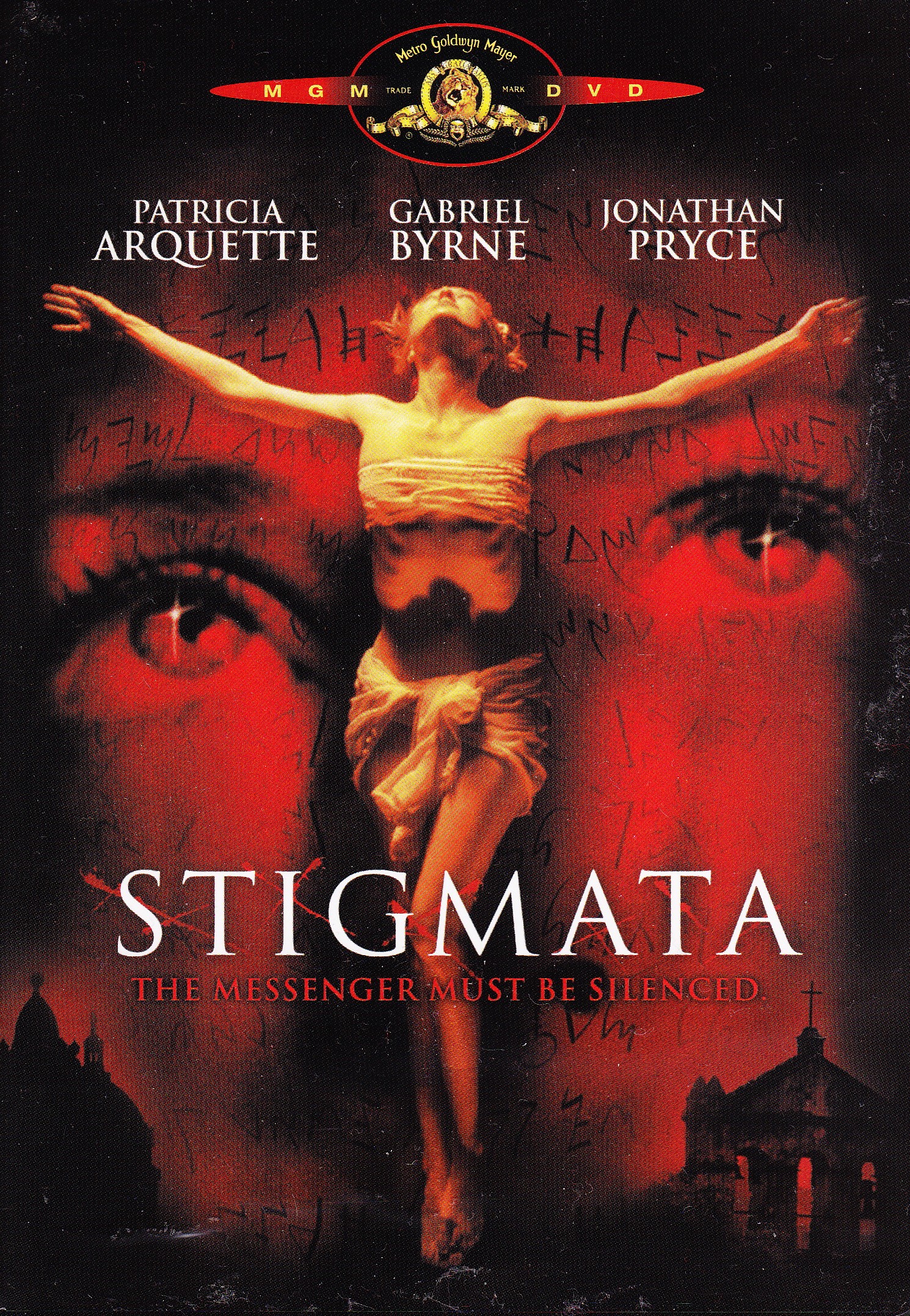
Back in my first exposure to state university life in Wisconsin, I frequently received eager guidance from students on religion in the media. After having taught in a seminary where interest in the world beyond ecclesiastical walls was rare, this exposure to wider interpretation was welcome. One of the movies suggested to me by helpful undergraduates was the then fairly contemporary Stigmata. My interest in horror films was burgeoning again after my nightmarish experience at Nashotah House, so I watched the movie with renewed appreciation for the abuses presented on the part of the established church. I rewatched Stigmata this past weekend and a number of features stood out as apposite for this blog.

As always in movies, liberties are taken with reality. Stigmata presents the Gospel of Thomas as a serious threat to Catholicism. Of course, even the Gospel of Judas made a public splash back in my Oshkosh days, but the great Titanic of the church remained steadily afloat. The contents of the Bible are secure and non-negotiable for the vast majority of Christianity. There is no more room within its black leather binding for further revelations. The movie also presents a woman – an atheist, no less – as being the vehicle for a truth she can’t understand. In the masculine citadel of the Catholic Church she must be silenced, in an overly dramatic way, of course. The message seems to be that religion is unwilling to learn from secular women, even if they bear the truth.

The critics were not kind to the movie, but I found it a strangely religious film. The premise behind it advocates the reality of Christianity, only the Jesus of history is occluded behind a great mask of human tradition. Enamored of power, the church decides what will be revealed to the masses since control is more important than truth. A woman cannot correct the false belief of men, since a masculine god has given manly instructions to a male institution. Underneath it all, however, is a virgin Mary weeping real human blood as half of humanity is simply disregarded by the half that retains its abusive strength. Perhaps the commentary was a little too close to home, even for the (mostly male) critics.


Fruits of the Dearth

Religions developed out of universal concerns. While I can’t hope to compete with the masterful insight of Pascal Boyer, I do have a gut feeling that as soon as humans evolved the ability of foresight we began to worry. Where is that next meal coming from? Will we survive another day? Is there any way to hedge our bets? In ancient times mortality’s unblinking stare would have been much closer to our faces. Even as recently as the Middle Ages death was much more on the mind, much more frequently seen.

One way to ensure survival is to propitiate those gods who control the productivity of the soil. Long before Demeter lost Persephone ancient people mourned the death of gods who ensured fertile soil, hoping against hope that they might come back each spring. I recall the seriousness with which Rogation Days were taken in the Midwest. At Nashotah House the earth itself was blessed. I recall a priest from Central Illinois who gleefully recounted that the University of Illinois crop experiments were always a little skewed because each year he blessed them on Rogation Days, giving Ceres a boost. CPR for mother earth; give us our daily bread.

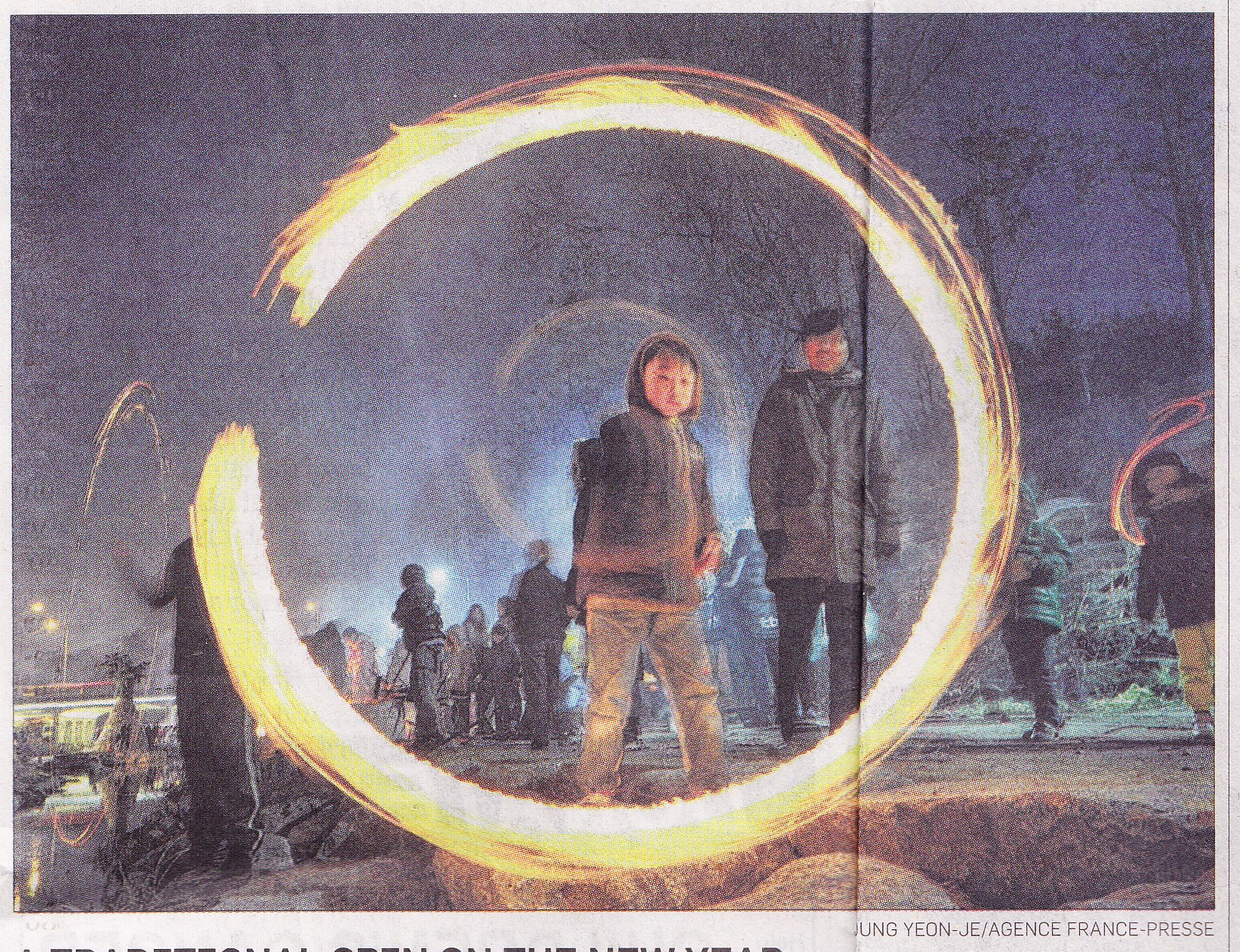
The picture of a South Korean boy spinning a can filled with glowing embers over a field on the first full moon of the Korean New Year reaffirms that concerns are the same everywhere. In our sterilized, indoor, urbanized lives where food is grown, harvested, processed and packaged by others for simple consumption of the vast majority, we have lost one of the most poignant aspects of religion. People pray for survival against the devious plans of terrorists, or the insidious diseases that threaten those who make a living simply moving electrons from place to place. Meanwhile somewhere in a country teetering on the brink of nuclear winter, a young boy swings a bucket full of hope.


Anvil Chorus

Last night I watched Les Choristes, the 2004 film that received two Academy Award nominations. The story, set in a school for troubled boys in France, felt eerily familiar. Not only did it resurrect the ghosts of Dead Poets Society, it felt like a page – or a substantial chapter – from my own life. The movie was recommended to my wife by one of my colleagues at Nashotah House, an institution that the film strangely resembles. The more I pondered the implications of a small school run by an authoritarian headmaster full of students with malevolent tendencies, the more I realized how much my Nashotah House experience has set the tone for much of my life. While I was at Nashotah, P. D. James’ murder-mystery novel, Death in Holy Orders came out. Immediately students and faculty began to speculate that James must have known of or have visited the seminary. Similarly, the Harry Potter novels led many to compare Nashotah to a decidedly less magical Hogwarts. Some of the students even honored me as the putative master of Ravenclaw.

My personal experience with religious institutions has led me to conclude that they indulge themselves in doling out the abuse that only religious sanction permits. I had attended the Presbyterian-affiliated Grove City College where chapel attendance was mandatory. My experience at Boston University School of Theology convinced me that seminaries were not a good fit for most people, particularly those like myself. I left declaring I would teach anywhere but a seminary. There is no balm in Gilead.

Forever after, any small, religious school with dark secrets would be my Nashotah House. But the problem is much wider than that. Religions seek to control. Some manage to do so benevolently, but too often the human element eclipses the divine. It is a temptation, when in positions of religious leadership, to insist that one’s personal outlook is correct. We all believe that our views are right. Those who receive the holy unction of an institution have the means to make it so. It is not Nashotah House, but human nature. When religious leaders confuse divinity and authority, that is when trouble inevitably begins.


2012 Reconsidered

Maybe I was a little too hasty on the 2012 thing. Back in first grade Mrs. Shaw told us, “one bad one ruins it for everyone.” Nevertheless, I was somewhat content with my educational experience: not too many privileges were revoked over the years. But then things changed. When my wife and I expatriated to Scotland back in ’89, we flew on what had formerly been known as Pan Am flight 103, the route of the airliner that had been blown up over Lockerbie just three months before our international move. Being resident aliens, we had to register with the police in Edinburgh, so at 26 I acquired my first police record. Other than a disputed traffic violation ticket, after returning to the States, I’ve kept a clean record since.

Now I try to volunteer at the local schools. I had been newly elected as PTO president in Wisconsin just before I will dismissed from a position I’d held for some 12 years with nothing but excellent teaching reviews. Paranoia may have begun then. Here in New Jersey, to volunteer to help high school clubs (such as Robotics), you must be fingerprinted. As I made my way to a bio-tech company set up in a back room like a shady fly-by-night business venture, I reflected on how strange this world has become. I was duly fingerprinted and released. Then as I attempted to get back to the highway there was a roadblock with a sign reading “Check Point.” A black-garbed police officer was stopping cars and sending select drivers off to a detention point at the side of the road. I wondered if somehow I’d mistakenly awoken in Kosovo. Was this “the land of the free and the home of the brave”?

Not that I ever felt terribly secure at the best of times, I wonder what has happened to the country I was born in. Freedom now requires groping at airports, random check-points on local roads, and regular “silver alerts” on the highway. It feels like it’s a crime to be born American now. As a kid who was always taught to do what’s right, and who’s tried to live that exacting standard his whole life, the world has come to confound me. Fired for excellent work, fingerprinted for volunteering, felt-up for wanting to fly – the world may well have already ended before 2012 has a chance to get here. Now, what’s that guy doing on the telephone pole outside my window?

Is this now the game of Life?


The Bible Tells Me So

As part of my regular Hebrew Bible class, students prepare classroom presentations for the end of the semester. This gives them a break from constant lecturing and also serves the function of initiating discussion. I assign social issues for them to discuss vis-à-vis the Bible; they can discuss these with each other in group-sessions throughout the semester. Since no one knows “the answer” when it comes to the Bible, I figure we can all learn from each other. I’ve been using this exercise for four years now, and at a school the size of Rutgers, you’d expect a wide variety of perspectives. This occurs, to be sure, as does more predictable stances. After fourteen weeks of instruction, most of them can only find the Bible a trove of prooftexts.

Learning to integrate biblical study into a rational worldview is difficult in our cultural climate. From nearly every medium from which religion wafts – Internet, television, newspaper, personal sermonizing – it comes out literal. The Bible/Quran says… (fill in the blank). What occurred to me during the student presentations is that scriptures of all descriptions become dangerous when their context is lost. Politicians, often among the arguably least educated members of society, argue about what the Bible says. Problem is, the Bible was written from a pre-Enlightenment viewpoint, a perspective that is out of reach to all but the most utterly naïve. Even to understand worldviews from the pre-Enlightenment you need to spend years of serious historical study.

So here’s our dilemma: we live in a society enamored of a book it doesn’t understand. Bible verses are used like Band-aids, pasted over every perceived rupture of continuity, but never quite reaching to the ends of the wound. Even after a semester of bald instruction – in the case of Nashotah House three semesters – students generally revert to what they know. To learn what the Bible instructs, take a pair of mental scissors, snip around the pericope, and tape the verse over the issue. There is, however, always a backside to the page. And most students never learn even to turn the page over to see if both sides agree. They could be ready for a life of politics.