Correct Auto

I’ve tried turning it off, but it sometimes doesn’t work.  Every time there’s a system update (about every other hour, now) the new system reloads autocorrect.  True, my weary fingers are glad for the help when they just can’t spell hypocoristic, but it does seem that autocorrect, although the results are often funny, has no sense of humor.  As a writer I often use ironic misspellings.  I sometimes have my irony interpreted as ignorance, but if writers aren’t misunderstood they’re not doing their jobs, I suppose.  The thing that gets to me is that those who program autocorrect—although sometimes they’re right—can’t let us express ourselves as we wish.  The other day I wrote something with  a deliberate misspelling.  When I hit the “post” button I realized I’d been autocorrected to a nonsense word in the context.  I thought I’d turned autocorrect off.

Now don’t get me wrong—I’m not the world’s greatest speller.  Sometimes I use words with the slightly wrong connotation.  My choices, however, are generally deliberate.  Unless my device has selected them, that  is.  I suspect that autocorrect is appreciated by those who type on tiny screens.  The affluent, I notice, wear iWatches.  I wonder if they carry tiny people in their pockets whose thumbs can fly across such minuscule surfaces.  “No,” someone told me, “it has voice recognition technology.”  I was reminded of some embarrassing mispronunciations I’ve made.  In seminary the homiletics professor had an individual session with me.  “Given your educational background,” he told me, “you don’t mispronounce many words.”  Oh, but I do.  I just save them for the most embarrassing situations.

My inner critic’s a pretty active guy for his age.  He doesn’t need autocorrect to make me realize how little I know.  That’s the thing about technocrats, though.  They like to correct us based on the most common combinations of these letters.  Sometimes I glance back at something I wrote and find a word I don’t even know replacing something that was, in fact, correctly typed in the first place.  I write in a program called Scrivener.  My Mac’s too old to run Word, and Pages isn’t bad, but it doesn’t allow for the complex architecture of my thoughts (and I’m no architect; I can’t even spell it).  In other words, I have to turn autocorrect off not only on my device, but also in the individual applications I run.  But then there are days when verisimilitude just won’t flow the way it should without it.


Positive ID

It’s a little bit worrying.  Not just the GOP’s indifference in the face of two mass shootings on the same weekend, but also the fact that the internet knows who I am.  I am the reluctant owner of a smartphone.  I do like that I have the internet in my pocket, but I’m a touch paranoid that I can be traced to anywhere unless I lose my phone.  Even then the government can probably email me and tell me where it is.  Don’t get me wrong—I’m not important enough for the government to pay attention to me, but what is really worrisome is that the web knows me.  Here’s how I came to learn that.  On my home computer I had done a rather obscure Google search.  (If you read this blog that won’t surprise you, and no, it wasn’t anything naughty!)  When I signed into my work computer—different username, different email address, different IP address—and had to do a work related search, Google auto-suggested the search I did on a different computer over the weekend.

I’m savvy enough to know that Google metrics are all about marketing.  The internet wants customer information to predict what they might sell to us.  Advertisers pay for that.  Assuming that I want to buy underwear and summer dresses online (why?), they tailor their ads to sites I visit.  As a sometime fiction writer I go to some sites from which I’m not interested in purchasing anything.  (As an aside, old fashioned book research didn’t leave such a “paper trail.”)  I’ve gotten used to the idea of my laptop knowing me—it sits on my lap everyday, after all—but the work computer?  Does it have to know what I’ve been doing over the weekend?

Artificial intelligence is one thing, but hopping from one login to another feels like being caught in the shower by a stranger.  Like everyone else, I appreciate the convenience of devices.  When I get up in the morning my laptop’s more sure of who I am than my own sleep-addled brain is.  That doesn’t mean my devices really know the essence of who I am.  And it certainly doesn’t mean that my work computer has any right to know what I was doing on another device over the weekend.  Those who believe machine consciousness is now underway assume that this is a step forward, I suppose.  From the perspective of one who’s being stalked by electronic surveillance, however, the view is quite different.  Please leave my personal life at the door, as I do when I go to work.


Identity Crisis

Living in Boston can be a heady trip for a budding academic.  Even if you’re across the river from Harvard and MIT, it’s a city known for its education scene.  Like many who studied there, I never wanted to leave.  A fringe benefit of being a student of religion was that a short trip would take you to Peabody.  Why?  Peabody was home to CBD—Christian Book Distributors.  In their showroom they had rock-bottom prices for something theology students crave—books.  That was many years ago now, and over time CBD grew to be the largest distributor of Christian paraphernalia in the country.  In my mind they’ll always be associated with happy little trips that ended in armloads of reading.  What more could you want?

A story by Emily McFarlan Miller explains why the revered CBD is changing its name.  Cannabidiol, a legal derivative of cannabis, is popularly known as cbd.  Lots of things share initials, of course, but these are the days of the web, and an internet search for cbd now pushes the distributor (at least the book distributor) off the first page.  One thing we all know in this online universe is that you’ve got to be on the first page.  CBD’s decision might seem extreme—changing the name of the business to get back on the front page.  Despite the amusing aspects to this story, it emphasizes something of an ongoing jeremiad with me: the web has redefined reality.  Think about it this way: when a digital image is over-enlarged it pixellates.  That’s because it’s composed of minuscule squares of a single color.   When brought together in a pattern, they form images we recognize.  It their basis, however, they are squares.

The earth, however, is an orb.  The natural state of falling liquids—the principle behind the shot tower—is a sphere.  Now, spheres together in a closed space leave gaps—just look at a jar of marbles and you’ll see what I mean.  That’s the order of the natural world.  Reality, if you will.  Tech, on the other hand, is pixels.  They fill the space better, and if done well can create the illusion of a curved line.  They can never, however, fit into a round hole of the same surface area.  The world has gone after the convenience of the internet in a small box.  It has changed the recording industry, the movie industry, and the publishing industry.  And just try to find your way to CBD on it.  You might have to change your search parameters.


The Joy of Techs

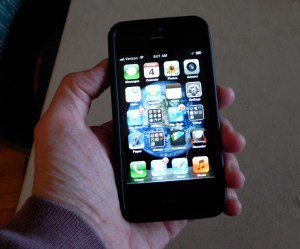
Those of us with Luddite tendencies prefer to hide them.  Tech is the ultimate good, right?  You’ve got a smart phone in your pocket or purse and it contains the entire internet and what more could anyone possibly want?  Besides an upgrade, that is.  I recently misplaced part of the charger for my old iPhone 4S.  Yes, a phone that old can still work, no matter what they tell you!  I went to the store to replace said part only to find that you had to purchase an upgraded replacement that costs twice as much as the old part did.  Why?  It had a new type of USB port, in addition to a “traditional” USB.  Pardon my ignorance, but I thought the U stood for “Universal.”  Now even vocabulary has to change to meet the demands of tech?  Whoever the tech god is, s/he is extremely mercurial.

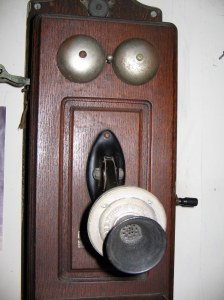
So I was in a meeting the other day.  A guy older than me was talking about the future of tech.  It occurred to me that guys my age (who didn’t get to take early retirement) are trying to act like those half our age, as if we really understand technology.  Growing up with something is the only way, it seems, to adapt to it in any kind of naturalized way.  There are kids today, if the internet’s to be believed, who don’t understand that you had to lift the receiver on an old-style telephone before dialing.  And if that dial is rotary, well, let’s just say the pizza’s not going to be delivered anytime soon.  Those who grew up with the internet and smart phones have a native understanding that people my age lack.  I still write ideas down on paper.  I prefer DVDs and CDs to streaming.  And I believe books should be made of paper.

Changes in the tech world vindicate me.  I heard that iTunes is going to be retired.  This is after I’ve spent plenty of money downloading songs that I could’ve bought on DVD and have in “hard copy.”  Indeed, friends are telling me to back up my MP3 files on some kind of storage device before iTunes goes the way of UltraViolet.  And we’re supposed to trust tech.  I’ve lost ebooks by switching devices.  Some of my tunes have been licensed away because I downloaded them on an older computer.  What’s one to do?  Buy them again.  In a new format.  On a platform that will eventually be retired so you’ll need to repeat the purchase a third time.  Or you can buy it once in paper or plastic and have it for good.  Now there’s a radical idea.  If only I had something to write it down on.


Prejudice, Technically

I must admit that I received my first “smart phone” with more than a little trepidation.  It was going on a decade ago and I didn’t know my app from a hole in the ground.  What was this thing that was a telephone and yet so much more?  I carry it around with me, nevertheless, and I use it for the very occasional text, for a camera, and when it was younger, as a geocaching device.  My sense of distrust came from being a user of personal computers for many years.  There would be constant upgrades and renewals and each would cost you something.  You don’t buy just a smart phone, you buy a liability.  This Luddite screed arises from my attempts to get my boarding pass for my flight yesterday, with a special shout out to United Airlines.

Things change.  I’m cool with that.  Still, “checking in” for a flight has always meant your ticket was secure.  When I went to check in yesterday, for the first time ever United Airlines allowed it only through your smart phone and only via its app.  The app is free but my phone is of such an age that the app won’t work with it.  I received the confirming text stating I wasn’t checked in.  Wasn’t that exactly the same as the status at which I’d started?  Why then did I spend half an hour of my Saturday trying to select a seat and telling it I am a vegetarian?  (Vegans, it seems, are from another planet.)  At least I didn’t have to specify a non-smoking row.  I realized as I hung up that I was being shamed for not updating my phone.

You see, capitalism thrives on forcing the purchase of new things.  If you wear clothes that are out of style (guilty as charged!) then you aren’t playing by the rules.  If your phone is too big or too small (yes, size does matter), or if it flips open instead of being accidentally awakened when slipped out of your pocked, you’re a Luddite.  If you can’t afford an update (which no longer fits in the pocket of a guy my size) you deserve to be shamed.  You can’t check in.  You have to stand in line and proclaim to all, “I didn’t upgrade.”  I still use an iPhone 4S.  It does what I need it to do.  United Airlines doesn’t think so, however.  Most of the apps have ceased to work.  Now it is once again simply a phone, pretty much back where I’d started.


Not for Men

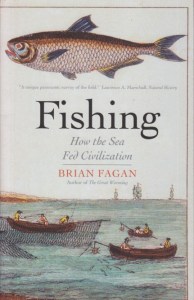
Does anyone else think that feeding fishmeal to herbivores so that they, in turn can be eaten, is weird?  Brian Fagan in his Fishing: How the Sea Fed Civilization describes the long history of eating seafood.  In evolutionary terms it makes sense, but so does veganism.  One thing that becomes clear from this study, however, is that human civilization simply could not have developed the way that it did without fishing.  Food for those performing massive public works came from the abundance of the ocean.  Theology played its part too.  Roman Catholicism established a habit that still exists of eating fish on Friday.  In Catholic areas of this country Friday fish fries, and the occasional fish boil, are cultural icons.  As Fagan points out, part of the reasoning behind this was the belief that God gave humans fish to exploit.

We find, interestingly enough, that religious thinking often stands behind tragic results.  Although I’m a vegan, I find it distressing that the oceans—so vast in extent—have been depleted by human activity.  The main problem, which we’re slow to learn, is that technology has made fishing too efficient.  This isn’t some kid with a rod and reel on the bank of a muddy river, but rather the industrial-scale trawling that begins by locating fish schools with sonar.  Not only that, but the land habitat to which we bring the fish is also being depleted.  I’m probably not the only one who gets the feeling that Fagan’s writing about more than just fish.  Where there is abundance, we take it as an invitation to exploit.  Tech makes it so easy!

In the early history of humankind, seafood was a necessity.  As Fagan shows, it was sometimes reserved for hard times.  Now we feed fishmeal to domesticated animals not because it’s what they naturally eat, but because—you guessed it—it’s cheap.  I’m still not allowed to give blood because of the Mad Cow Disease scare that rocked Britain when I lived there.  In part it was caused by feeding herbivores feed that consisted of meal made from other herbivores.  I no longer eat fish.  With the world population what it is, and global warming stressing agriculture, it seems we need to be thinking about what’s for dinner.  Quite apart from the fact that fish are, despite proclamations of ecclesiastical bodies, animals just like any others, we’ve managed to scour the ocean so thoroughly that recovery may be impossible in some locations.  The reason often given is that God gave us the oceans to use.  And that kind of thinking always leads to disaster. 


See Above

As we slide beneath the hegemony of technology, I’m impressed by the redefinition of vocabulary it demands.  Because new printing technologies assume, for example, that the XML (one of the many mark-up languages) is primary, directional references in texts are inadequate.  An example might help.  If you’re a human being reading a book, and the author has discussed something a few pages ago, s/he might write “see above.”  Now, it’s not literally above in the sense of being higher up on the same page (but it may be considered literally if the book is closed.   And lying face up).  The pages you already read are above those where you left the bookmark.  I remember the first time I encountered this language; having been raised a literalist (and a naive realist) my eye hovered over the header and I wondered about the accuracy of “see above” or “see below.”  The terminology soon became second nature, however, and I knew it wasn’t a literal reference.

In the days of XML (“eXtensible Markup Language,” therefore literally EML), the sense of play is now gone from writing.  I’ve heard editors explain to authors that, in an ebook there is no above or below because there are no pages.  A time-honored metaphor has been sacrificed on the altar of a tech that sees the world in black-and-white.  You can’t point vaguely in the direction from which you’ve just come and say “it’s back there somewhere.”  I sense, given all of this, that most copyeditors haven’t written a non-fiction book (for this is mostly an academic affectation).  As a human being writing, you get into the flow and you don’t think, “Ah, I mentioned that in paragraph 2749; I’d better say it’s there.”  And the reason you need to know the paragraph number is so the ebook can have a hyperlink.  The argument itself suffers for XML precision.

As someone who writes both fiction and non, I am bound to look at this from the viewpoint of a human author.  I’ve been known to paint and make sketches on occasion.  All of these forms of expression have flow in common.  At least when they’re good they do.   If you want to stop a project cold, just say “Hey, I’m writing!” and watch yourself drop like a cartoon character who’s run off a cliff and just realized it.  I’m sorry, I can’t point you to exact where that’s happened.  It’s in many vague recollections of many cartoons I watched as a child.  If the technomasters aren’t watching I’ll just say, “see above.” 


On Target

Time, especially weekend time, is a non-renewable resource.  Since I barely have enough time as it is, I do my best not to squander it.  Yesterday we had to visit our local Target—we don’t buy at WalMart because there’s an ethics even to shopping these days.  When we got inside it was obvious that a lot of people had the same idea.  I’d never seen Target so crowded, and I’ve been in one on a Christmas Eve.  We had only a small basket of purchases, so before long we headed for the checkout and saw an enormous line.  Not being afraid of tech, we went toward the self-checkout and found that line long as well.  Long and not moving.

Soon it became clear that all the registers were down.  Store employees were handing out free bottled water and snacks, like airports used to do with cancelled flights.  We were in for a good long wait.  When we finally reached the register, which had started to come back online, the manager was helping those trying self-checkout.  Since the system was still not really functioning, you could check out one item at a time—after several tries, each time requiring the manager to enter his pass-code—and pay for it and restart the process for the next item.  We asked about the outage.  He said it was global, all Target stores were down.  “You’ll have a story to tell,” he said.  My mind was actually going toward technology and its limitations.  How much we rely on it.  Without tech this blog would not be.  A lot of famous people would be unknown.  How would we find our way from point A to point B?  Or look up a phone number?

The internet is beguiling in its ubiquity.  We use it almost constantly and it’s always there for us.  So we’ve come to believe.  In addition to spreading the tissue of lies that is the Trump administration’s agenda of using post-truth as a means of power, it must be supported by a whole host of experts—those 45 routinely dismisses as irrelevant.  Clouds were gathering outside, and I had a lawn yet to mow before the day was out.  Indeed, my wife and I had intended this to be a quick trip because weekends and sunshine are a rare mix.  As we bagged our six items and thanked the manager, we could see the line still snaking the length of the store.  Had we more time we might’ve come back another day.  Instead, we had briefly fallen victim to something that an old-time punch register might’ve solved.  And a time when the pace of life itself was just a bit slower.


Q

If you haven’t spent much of your precious time attending to theories of how the gospels were written, you might not be familiar with the dilemma I’m about to describe.  A brief primer: Matthew, Mark, Luke, and John were not eyewitnesses of the events described in their gospels.  In fact, each of these books is anonymous—the titles were only added on later.  Despite their New Testament order, Mark was written first and Matthew and Luke borrowed from it rather extensively.  Mark is the shortest gospel and Matthew and Luke also share material that’s not in Mark.  Since John was written much later (and doesn’t have these common stories), scholars proposed many years ago that Matthew and Luke used a source—in German Quelle—that no longer exists.  This is called “the two-source hypothesis.”  As scholars are inordinately fond of abbreviations, Quelle is known as simply Q.  Other than in explanations like this you’ll never see it referred to by its full name.

So here’s the dilemma: many websites don’t allow for a single-letter search.  If you’re wanting to learn about Q, and you know no scholar worth their s (by which I mean salt, of course) who will spell it out, how do you search for it?  The same might be said for J, E, D, and P, who, along with R, put together the Pentateuch, but at least there you can search for phrases involving more than one letter.  You see, scholars existed before the internet and its search parameters.  Books and articles used to be written on paper, and the former had indexes, so looking up your sources—single letter or not—was fairly easily.  With electronic searching, it has become more difficult.  That’s not to say that single-letter searches can’t be coded—they can—but apart from biblical scholars and their alphabet soup of sources, apparently most people don’t want single-letter options.

This is the trouble with specializing in ancient things.  The internet was originally designed for academic and military purposes—serious stuff.  But then, like everything else in the world it became commodified.  Like a once pristine countryside it has billboards plastered everywhere after one’s Gelt.  (Scholars also like to throw in random foreign words to show how smart they are.)  And when it comes to searches, why enable atomistic, single-letter searching when it won’t end up in the sale of something?  In any case, my search did not end successfully.  I eventually gave up.  And in the light of the ever-shining internet, I’ve opted for the one-source hypothesis.

It must be in here somewhere…


Vapid

The smoke encircled his head like a thief.  And not in a saintly way.  I was going to have to rethink this.  You see, the culture of the early morning commute is one where you stand in line with strangers before dawn.  Having grown up a victim of second-hand smoke at home, I can’t stand it now.  Should I go wait in the line (which was growing) where the last guy was smoking, or sit in my car?  Work anxiety always wins out in such situations, so off I trudged.  I discovered, however, that the man in front of me wasn’t smoking after all.  He was vaping.  What was this chemical stew hanging in the air that had just come from his mouth?

I worry about second-hand vape.  How desperate must a person be to smoke a device?  You see, my trust in technology goes only so far.  People are slowly beginning to understand that electronics don’t solve every problem.  Vinyl records are starting to come back, even at Barnes and Noble.  Independent bookstores are returning, despite the rise of Kindle.  I’m still waiting for it, but film cameras may once again appear.  There’s something about the Ding an sich.  The tech of the stereo was invented for the analogue record.  Yes, the MP3 is faster and cheaper, and you can buy just the song you want with the click of a virtual button, but we still have our favorite LPs around.  This isn’t misplaced nostalgia, like those who long for the 1950s.  No, this is simply the recognition that faster isn’t always better.  Some things were meant to linger.

Vaping is, however, an example of how a bad habit becomes a vice with no point.  Initially meant to come to the succor of smokers who couldn’t do it indoors, vaping was also quickly relegated to the outside.  Many people, it seems, don’t want to breathe someone else’s smoke.  Do you develop artificial cancer from artificial nicotine?  Another commuter comes up to the guy in front of me.  Like a couple of kids on a 1970s schoolyard, they exchange vape flavors.  The first guy doubles up with a coughing fit.  Spits off the curb.  The second guy says, somewhat anticlimactically, that this one’s strong stuff.  I have to wonder what future generations, if there’ll be any, will think of our love affair with devices.  The bus pulls in.  I’m the only one on the whole thing who clicks on the over seat light.  I have a physical book to read.


Aging Tech

When I get an idea my first impulse is to grab an envelope and pencil and start scribbling.  I run around with an older crowd.  Many of my generation don’t appreciate how much a single “share” can do for a blog post, or what a simple link to a page can do.  I have college friends who have no email addresses and who are invisible on the web.  I guess this is a young person’s playing field.  I suppose one of my reasons for writing about horror is that it keeps me in the younger demographic.  I don’t know too many people my age who are fans of “the genre.”  Sci fi is a little more acceptable, I suppose.  Still, I’ve been thinking quite a bit about why I find horror so fascinating.  There’s actually something redemptive about it, at least in my reading of the material.  It’s also a coping mechanism.

One reason that people tell stories (and read stories), according to psychologists, is to learn how to handle situations they might encounter.  This is on a subconscious level most of the time, otherwise speculative fiction simply wouldn’t apply.  I can’t recall having been in a crisis situation and stopping to think what a Stephen King character would have done in such circumstances, but I suppose that might be in the back of my mind somewhere, along with information about all the things I’ve mislaid over the years.  The older you get, in a technologically rapacious society, the more things there seem to be worthy of horror stories.  I haven’t even figured out the last round of devices before the new generation’s introduced.  No wonder so much of horror has to do with being attacked by monsters that look innocent.  Clinically engineered in a clean room.

Image credit: Pattymooney, via Wikimedia Commons

Some of the horror comes from the inherent instability of a constantly upgrading tech.  My laptop’s a few years old.  While a little younger than that, the device that sits on my laptop is also not fresh from the factory.  The last time I tried to back up the contents, the external hard drive (new from the factory) refused to do what I commanded.  While I did eventually figure it out, I wasted a good deal of my scarce free time working out how a device I couldn’t control was in fact controlling me.  Younger folks grew up with this kind of problem solving drilled into them from kindergarten on.  Now I find myself in a world of devices I can’t comprehend and which don’t even react the same way they did last time I bought the exact same one.  I ask my fellow quinquagenarians what to do and I watch as they grab an envelope and pencil.


The Reboot

It lied to me.  My computer.  Don’t get me wrong; I know all about trying to save face.  I also know my laptop pretty well by now.  It was running slow, taking lots of time to think over fairly simple requests.  A lull in my frantic mental activity led to the opportunity for me to initiate a reboot.  When it winked open its electronic eye my screen told me it had restarted to install an update.  Untrue.  I had told it to restart.  I gave the shutdown order to help with the obvious sluggishness that suggested to this Luddite brain of mine that my silicon friend was working on an update.  There’s no arguing with it, however.  In its mechanical mind, it decide to do the restart itself.  I was merely a bystander.

Technology and I argue often.  Like JC says, though, authority always wins.  I should know my place by now.  I’ve read enough about neuroscience (with thanks to those who write for a general audience) to know that this is incredibly human behavior.  We are creatures of story, and if our brains can’t figure out why we’ve done something they will make up an answer.  We have trouble believing that we just don’t know.  I suppose that will always be a difference between artificial intelligence and the real thing.  Our way of thinking is often pseudo-rational.  We evolved to get by but machines have been designed intelligently.  That often makes me wonder about the “intelligent design” crowd—they admit evolution, but with God driving it.  Why’d our brains, in such circumstances, evolve the capacity for story instead of for fact?

As my regular readers know, I enjoy fiction.  Fiction is the epitome of the story-crafting art.  Some analysts suggest our entire mental process involves construing the story of ourselves.  Those who articulate it well are rewarded with the sobriquet of “author.”  The rest of us, however, aren’t exactly amateurs either.  Our brains are making up reasons for what we do, even when we do irrational things (perhaps like reading this blog sometimes).  Stories give our lives a sense of continuity, of history.  What originally developed as a way of remembering important facts—good food sources, places to avoid because predators lurk there—became histories.  Stories.  And when the facts don’t align, we interpolate.  It seems that my laptop was doing the same thing.  Perhaps it’s time to reboot.


Goliath and Company

First UltraViolet.  Then Google +.  Well, actually neither of these was first—tech initiatives cease to exist all the time.  Giants aren’t immune to extinction, it seems.  I’ve got to be careful with my confessions toward Luddite sympathies since, as it turns out, tech is king.  Emperor, in fact.  But since tech only works as long as society holds together, I still want paper knowledge in my library.  I don’t own a Kindle and despite what visitors say, I don’t want to “save room” by getting rid of books.  I like books.  I wink at them from across the room.  Sidle up to them when in private.  Get to know them intimately.  Books are a way of life.  If the grid breaks down, I’ll have books to read and candles to do it by.  For a while there I even made my own candles, although most of those were used up in the aftermath of Hurricane Sandy.

Just sayin’

You see, my hairs bristle when I hear tech experts complain that “authors should be taught to write in XML.”  Said techies have apparently never written a book.  Ideas, you see, flow.  When you’re in the zone, there’s no stopping to mark-up your text.  In fact, the best, purest kind comes in scribbles on paper with misspelled words and all.  You can hold it in your hands and remember the Muse who had you at the time.  For me the hours of inspiration are before dawn.  I mostly use a computer now, but I can still find myself typing too slow to keep up with manic inspiration, desperate to record my ideas before paid work starts.  Work is the Medea of creativity—both mother and slayer.  Once I login I check out.  I need to wait for another day to dawn.

We’ve invested heavily in technology.  The internet is largely responsible for the globalization against which the world has recently rebelled.  No matter how many times people like me say we love books somebody will say, “Have you considered a Kindle?”  Why?  I bought a house as a place to keep my books.  These little bricks are bits of my mind.  Pieces of my soul!  What we read makes us who we are.  The last person who said the remark about authors learning XML literally sighed with disgust as he said it.  How could, you could feel him thinking, anyone be so backward as to think this is a problem?  I recall Hurricane Sandy.  Sitting in an apartment lit by candles we’d made ourselves, we read old-fashioned books and were eerily content.


Free Cookie

So, it started out as a freebee.  The way I looked at it, I paid enough for my computer to justify some free software.  We had Quicken on our desktop for years before we started to use it.  Then came the notice that it would no longer work on our system (which upgrades apparently every nano-second).  If we didn’t want to lose our financial data we would, the note cheerily said, have to upgrade.  You have to buy what once was in the land of the free.  We consulted about it—I still have an objection to paying for something made strictly of electrons; when I pull the blanket off the bed this time of year I get a healthy jolt of electrons without having to pay for them.  We caved.  Then the notice came again.  Upgrade time!  Only you can’t buy Quicken, you can rent it.  The one-time fee for buying software is now an annual fee.  Isn’t everyone happier now?

I don’t mean to pick on Quicken, although that is the most insidious offender since you can’t very easily transfer all that data back to paper.  Services withdrawn.  Welcome to the internet of thieves.  Bakeries worldwide know that a free cookie leads to sales often enough that it’s worth the small loss in profits.  But electrons are free all the time.  Shuffle your feet across the carpet in you stocking feet and test it.  Amazon for a while sent the Washington Post headlines daily, for free.  Now, Amazon ought to know me by name since I’m a book addict.  Then, just at the midterm elections, they announced this freebee was over.  I don’t know what in the world has been happening since.  I do hope someone will tell me when our currency converts to rubles.

Who wants a cookie?

Humans are susceptible to the myth of permanence.  Although change is constant and time never ceases to flow, we tend to think things will stay where we put them.  Technological change, however, has become so swift that we now pay for the privilege.  Unlike that cookie which lasts a moment and the choice of buying more is up to you, the internet has swept up our lives and you can no longer opt out.  We pay our bills online because letter carriers drop things.  We communicate online because who has the time to pick up and dial an actual landline phone?  The fact that the signal cuts out now and again isn’t a problem, even when we lose valuable information.  It’s only electrons, after all.


Creatio Nihilo

Just when I think I’ve reconciled myself with technology, this goes and happens.  These precise words, in this order, have been written before.  In fact, all words in the English language have already been laid out in every conceivable order.  Technology can be friend or foe, it seems.  The website Library of Babel—with its biblical name—has undertaken the task of writing every conceivable combination of letters (using our standard English alphabet) and putting them into a vast, if only electronic, library.  This was not done by a human being like me, with intent or even any interest in the meaning of the words, but rather as one of those things people do simply because they can.  This entire paragraph can be copied and pasted into their search box and found.

The Library of Babel has made plagiarists of us all, even as it plagiarized everything written before it was programed.  After I learned about this library the wind avoided my sails for a while.  You see, what’t the point in writing what’s already been written?  Then it occurred to me.  Context.  The fact is, had I not scriven these very words, and put them on this blog, they would never have come to the attention of the kinds of people who read what I write.  The words have been spelled out before, but they’ve never been written before.   Those of us who write know the difference.  We spend hours and hours reading and thinking of ways to combine words.  We’re not out to kill the creativity of our species, we simply want to participate.

There should be limits to human knowledge, otherwise we’d have nothing for which to strive.  The internet may make it seem that all knowledge has been found—it is so vast and so terribly diverse—and yet there are people who never use a computer.  Their wisdom counts too.  It may seem that everything is here, but there is material that still has to be looked up in physical books.  There are crates and crates of clay tablets from antiquity that have never been transcribed and translated.  When that finally happens, the words they contain may be found, in a strangely prophetic way, in the Library of Babel.  But they won’t have any meaning there until it is given by the context.  And what can a library preserve if it isn’t the context that a (human) writer has given the words?