October Puzzles

The holiday season should begin at Halloween.  In my mind, if I can make it to Halloween, I can make it through the rest of the year.  Besides, the holidays are the only time I allow myself to work on jigsaw puzzles.  Puzzles slow cognitive aging, according to an article or two on the National Institute of Health, but I’d do them anyway.  I’ve loved jigsaw puzzles since I was a kid.  Part of our holiday tradition is that “Santa” leaves a nice one under the tree.  This year I sent a note to the North Pole requesting a Halloween-themed puzzle.  It arrived for my birthday instead.  One October weekend while recovering from either a flu or Covid vaccine (I get them at the same time) I decided to put it together.  I wasn’t concentrating well enough to read or write.
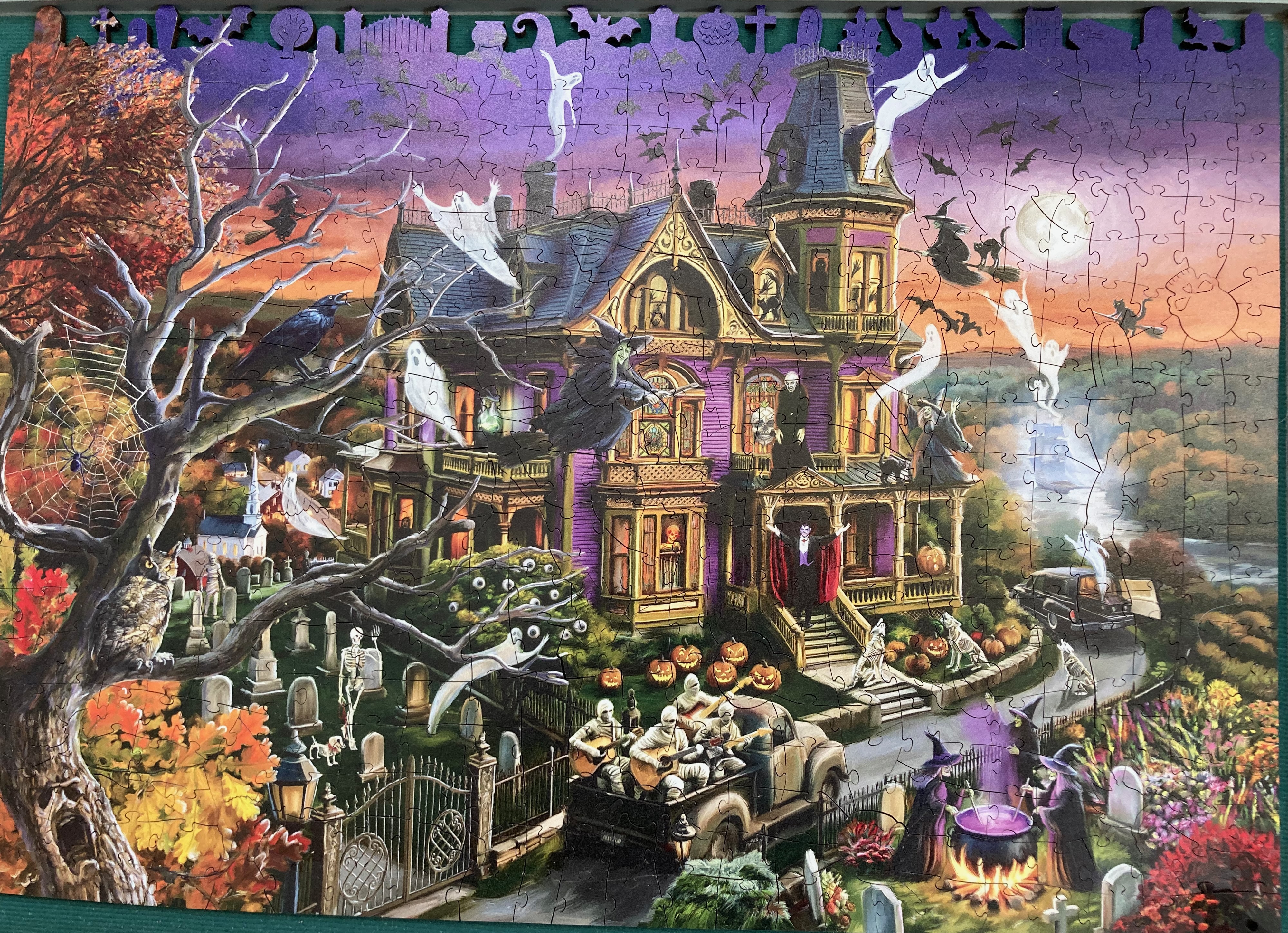
We have a couple other Halloween-themed puzzles.  Last year, to celebrate the publication of Sleepy Hollow as American Myth, I put together the one we have of John Quidor’s painting of the Headless Horseman chasing Ichabod Crane.  We also have a puzzle with horror movie posters on it.  Maybe it’s time to start a new Halloween tradition.  With things so expensive these days, tricking out the house for treaters is costly.  I went into a Spirit Halloween earlier in October and saw costumes priced at $100 (almost enough to buy some of my books!).  I know Halloween is a major spending holiday now, but that puts things out of reach.  Besides, we now have three Halloween-themed puzzles, so I can rotate them and use what we already have.  And maybe help this creaky old brain from declining too swiftly.

Puzzles satisfy a need for completion.  Who doesn’t like the satisfaction of getting something done?  And they leave you with something fun to look at for a few days.  Of course, over Christmas I tend to work on them with family, and lots of interesting conversation can take place around the puzzle table.  And my mind turns to the wonders of the holidays starting around August, but I wait until later in the season to reward myself with things like puzzles.  (Scary movies are fair game year-round, of course.)  Puzzles are kind of a parable for life.  They represent taking chaos and making order out of it.  There’s the drama and fear that pieces could be missing.  The struggle to visualize what might fit into such a space when all the remaining pieces look so ordinary.  If the holiday season began earlier, puzzle-building season could be expanded to the benefit of our brains.
October Challenge

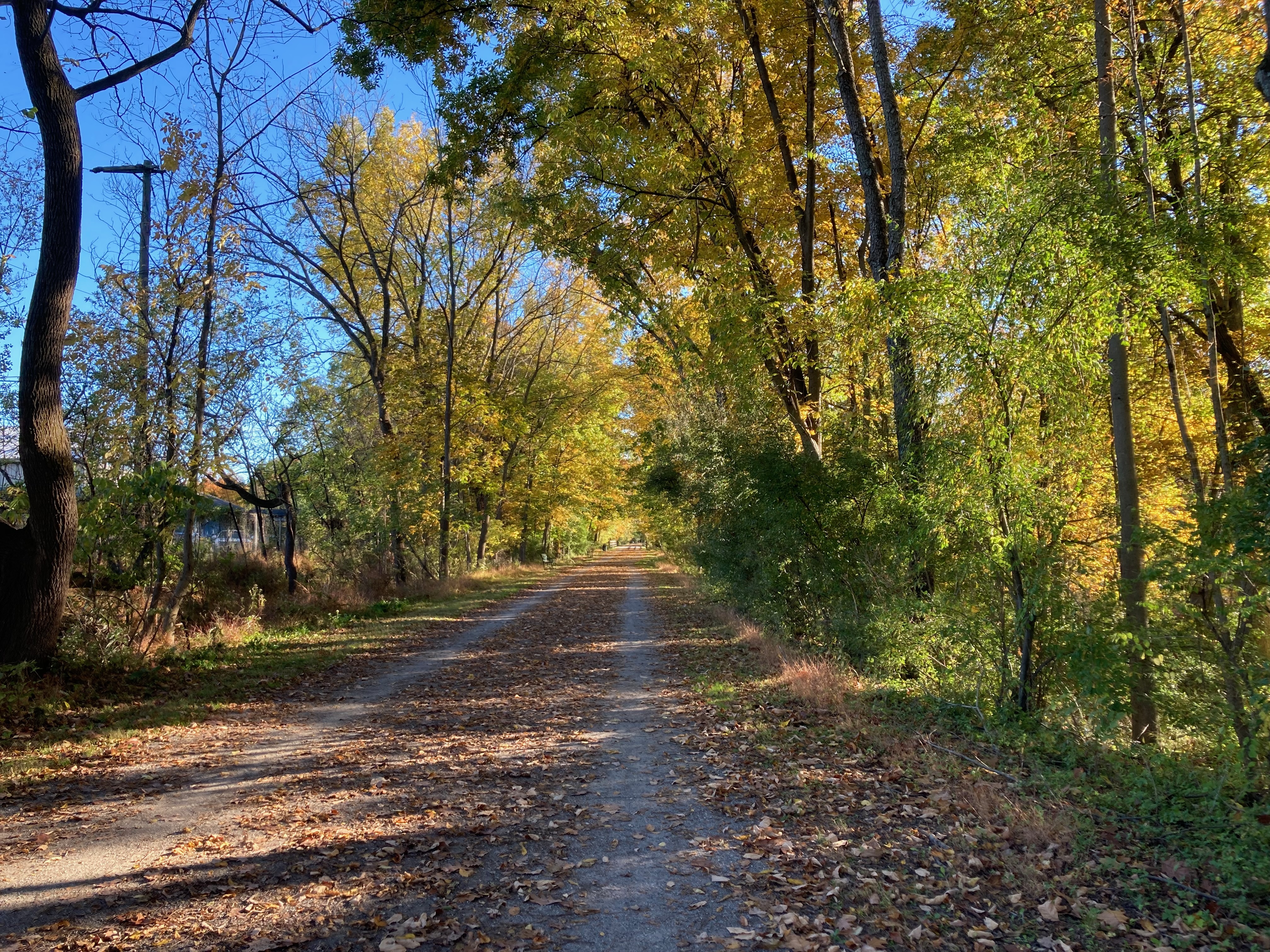
There’s a popular October challenge—watch a horror movie every night of the month.  I’m neither a young person nor retired, so this is not something I’ve ever been able to do.  It’s been quite a nice October around here, but adulting requires so much time.  Even for those of us who enjoy horror films.  I have tried to catch up on them, and I went on a Tim Burton kick for a while, but his movies often fall closer to weird on the meter than they do towards horror.  Still, they often have visual appeal and a kind of gothic sensibility.  I do enjoy a good gothic tale.  When I read about gothic fiction I often wonder why it has such a draw for me.  My childhood was in the context of a broken family and I found solace in monsters.  That hasn’t changed.

I’m sure that my wife often wonders what she got herself into.  When we first decided we belonged together (and clearly we do), I’d entered an enthusiastic academic stage.  Pop culture was considered shallow at the time, and although we occasionally watched a scary movie together, it wasn’t an obvious part of my personality.  It was when I became a dark academic, having lost my long-term teaching job and finding myself functionally unemployed, that horror came back to me.  My wife and I had been married for almost twenty years by that point, and even then horror wasn’t a major focus for me.  Our daughter loves Halloween, as do I, but trying to find work, moving to New Jersey, then having to commute into Manhattan all took their toll on my Octobers.

Writing Holy Horror was probably the defining moment in my current October mindset.  At the time religious studies in horror were in their infancy.  I could count the books on one hand.  Since I’m between worlds—I still rely on light academia for a paycheck, but I live in dark academia—I take whatever encouragement that I can get.  It’s not easy to come by when your books are priced for an “academic readership.”  I still get people asking when Nightmares with the Bible will be coming out in paperback.  Now that publishers have latched onto the teat of ebooks, that’s not likely ever to happen.  I still watch horror movies when I can.  My October challenge, however, is to appreciate as much of the season as I can with a 9-2-5 and some very expensive books on my hands.


Sky of Hope

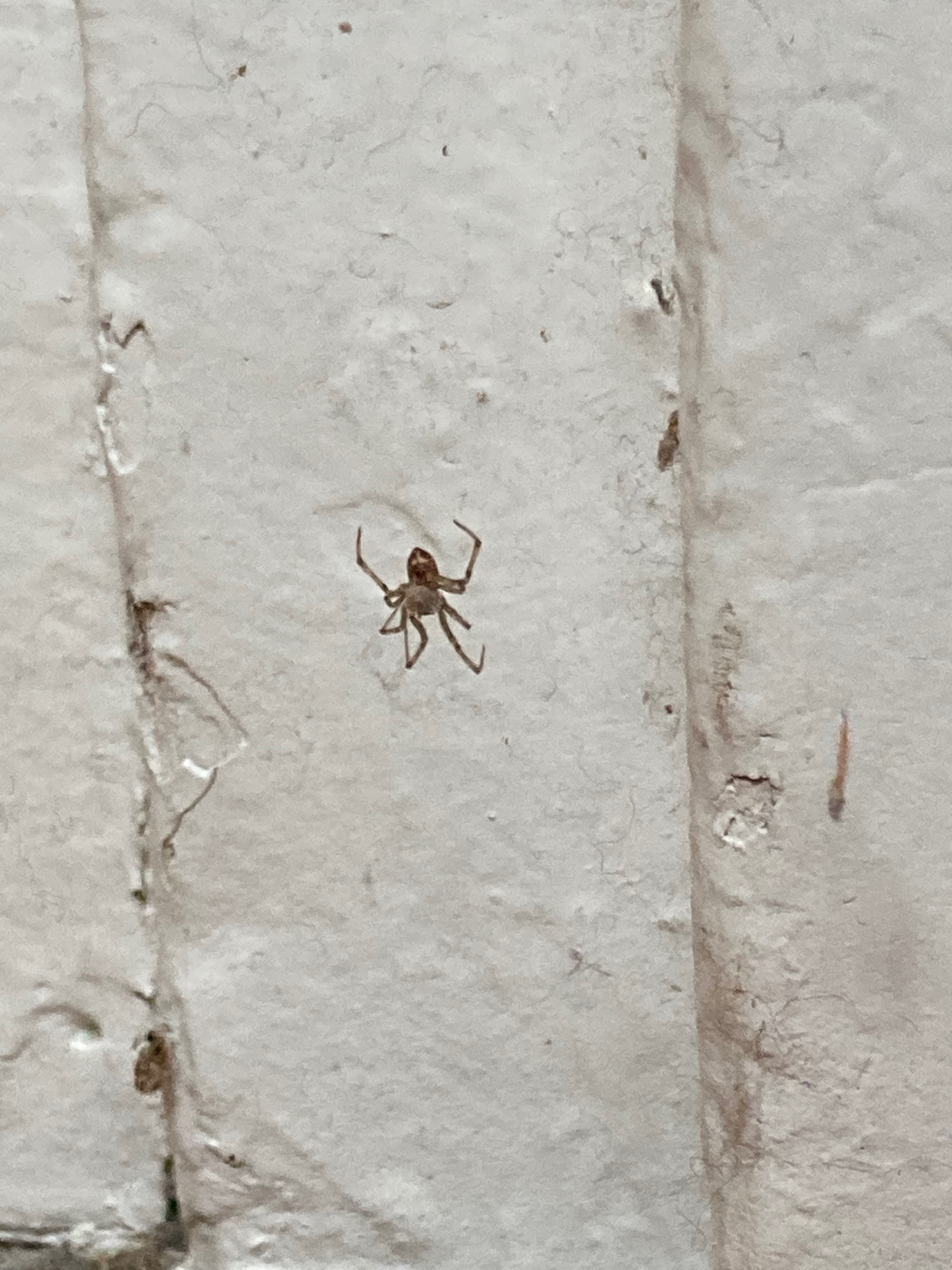
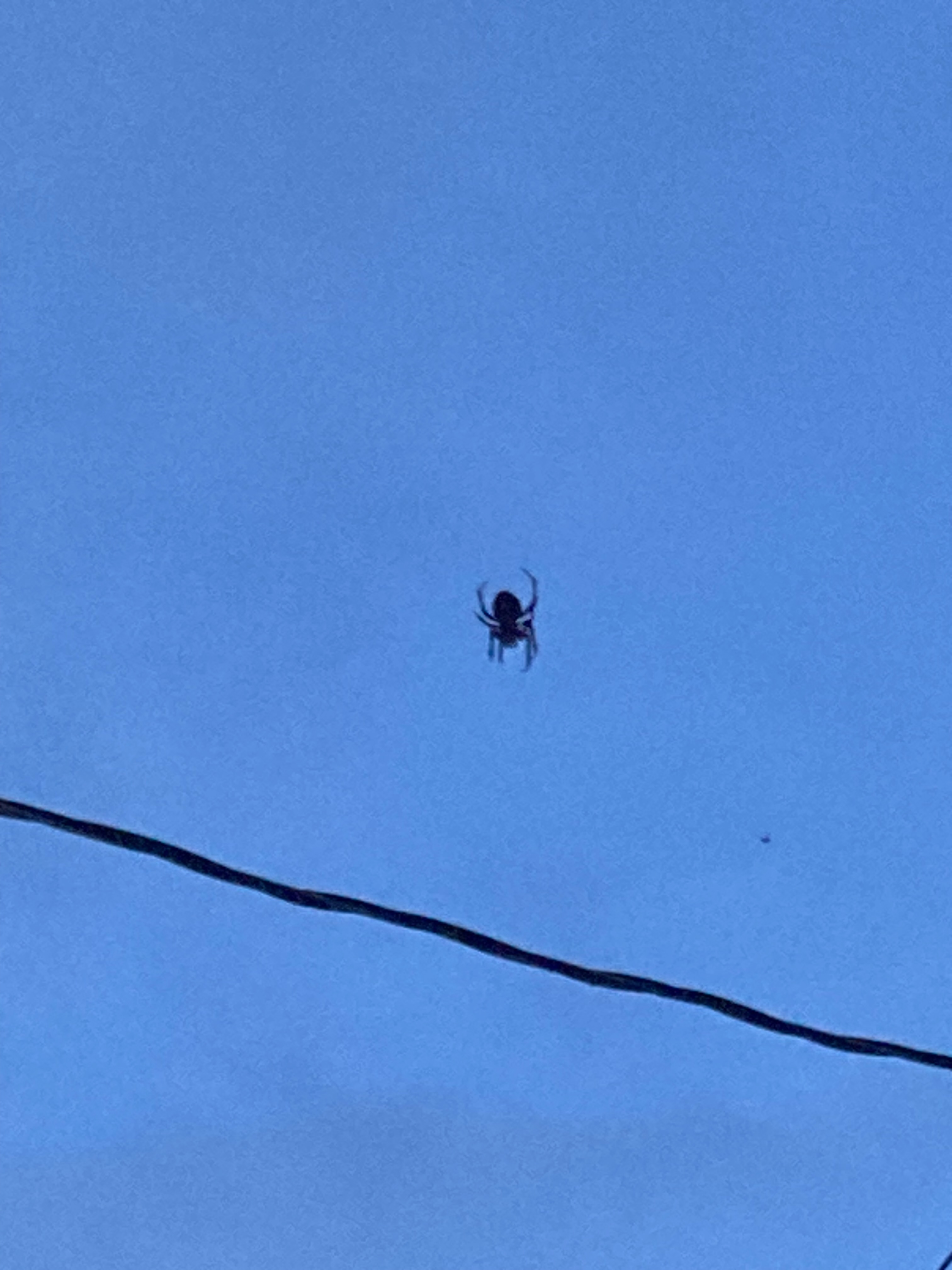
When I stepped out for my jog yesterday, I was given a little hope.  It was a clear morning and I glanced up to see if the spider (how seasonal!) I saw hanging from our porch roof Monday was still there.  Instead of the spider I spied the moon.  And just above it, looking as if it was falling into the bowl of its crescent, was Jupiter.  It was beautiful, but I know better than to try to photograph nighttime objects in the sky with a phone.  (I’ll show you the spider instead; after all, it’s October.)  What gave me hope, though, was when I stepped off the porch, I saw a neighbor about half a block away, outside with their children, all looking at the sky.  I presumed they were looking at the moon and Jupiter, because it was really a stunning sight.  This gives me hope because someone was showing their children the wonders of the sky.

I go jogging as soon as it’s light enough to do so.  I’m generally back home before the sun rises.  And I pay attention to other people I encounter in the twilight.  I’d never seen this family outside before.  I can only start my jog around 6:30 these days; in the summer it’s closer to 4:30.  Looking at the sky is cause for hope.  We need to teach our children to do so as well.  It’s been cloudy around here the past few days.  I had a later start on Monday, the day of the spider, because clouds kept it darker than the naked sky.  A clear firmament is a thing of wonder.  I don’t look at the sky nearly enough any more.  I stare at a screen for most of the waking day.  

Last October a colleague invited me to talk about Weathering the Psalms to her students at Princeton Seminary.  The class was held outside so we could see the sky.  That memory is one I treasure.  While writing that book I explored, not nearly enough, the idea that the sky has always been associated with the divine.  It holds more than we can imagine, despite all the “empty” space.  I took an astronomy course in high school.  When I took one in college the math stymied me.  But still, when it’s clear, I can be caught staring at the sky.  I don’t know who the neighbors were—we only know the names of the family next door—but I do know that we both have some kind of appreciation for the beauty of the heavens.  And that’s cause for hope.


On October

October has come quickly this year.  September was quite transitional.  Mostly pleasant, but we shivered through the recent sunless days of the nor-easter around here.  Between work and full weekends, I wish the approach of my favorite month could feel more regal.  I know die-hard horror fans watch movies in that genre every night of this month.  My schedule won’t allow it, and I’ve been so busy that I’ve fallen behind on movie watching.  Most of the time the movies I discuss on this blog are ones I’ve seen the previous month or two.  It seems I have lots of other things to write about.  And I’ve been trying to step up my reading this year.  Goodreads tells me I’ve finished sixty books so far in 2026.  And so October snuck up on me.

For scholars of religion, and those of us who pretend to be such, October starts in earnest the planning for the American Academy of Religion and Society of Biblical Literature annual meeting.  It will be in Denver this year.  Last time it was there I shivered the whole time.  A colleague recently asked me to contribute to a volume on Ugarit.  I had to decline, being so out of date.  I could’ve said, “My mind is preoccupied with October.”  Horror movies and Halloween.  The changing of the leaves.  Jacket weather and reading gothic novels.  Pumpkins and apples. October is the month when many in this climate feel that they come alive, just in time for the darkness and cold of winter to settle in.

For many years I’ve been pondering the spirituality of the dark.  I don’t mean “dark powers” or Satanism or anything like that.  I mean the restorative, contemplative nature of being in the dark half of the year.  Since the equinox it’s been more dark than light.  We spend half of each year in this way.  Instead of cursing the dark, it seems to make sense to try to find its spiritual benefits.  In the Middle Ages monks used to awake in the night to say their prayers.  Even today spiritual writers occasionally venture into the realm of asking what we might learn to appreciate in the dark.  October’s a good time to think about such things.  Others have also begun to explore the spirituality of horror films.  This began to occur to me, in rudimentary ways, when I was a student in seminary.  So suddenly October is here.  Hopefully it will have some time tucked away for reflection.  Between watching horror movies, of course.


House Spiders

I give them names, the spiders who choose to live in our house.  That’s how I named Henry, shown in the photo.  I grew up with an almost debilitating arachnophobia, and as with most of my fears, worked hard to overcome it.  So when a spider moves in, I let them stay.  Unless they’re too big.  Here’s where it becomes interesting.  Like quantum mechanics, there seems to be an arbitrary point when something is “too big” for the rules to apply.  What is that tipping point?  The other day I bumbled into the kitchen early to get some water, having given up coffee years ago.  There was a spider that I could see from across the room.  It was very large.  It’s a sign of how much I’ve overcome my phobia that I was able to walk around the counter and to the sink to fill up.  I kept a wary eye across the room, however, in case Octavian made any funny moves.

The spider held very still, as arachnids often do when they know they’ve been spotted.  I sometimes wonder if they know how scary they are to other creatures.  I searched around for a jar large enough to catch and release, without pinching any legs, and crept over.  Turns out Octavian was faster than I am first thing in the morning.  And, honestly, I was still recovering from a vaccine that had knocked me out the day before.  At least I can blame that.  I wonder if that’s one of the reasons fear of spiders is so widespread—they’re fast.  Or is it something inherently menacing about those eight legs?  I’ve never experienced any kind of octopus phobia, so I can’t think that it’s merely the number.  The jointed legs?  That seem disproportionate to the body size?  Whatever it is, days later I’m still cautious in the kitchen.

I have a great appreciation for spiders.  I don’t like to be startled by them, but otherwise, if they keep their distance, I’m fine with them.  I do wonder what they think, living in a world of giants.  Some insects, in the same size range as arachnids, seem ignorant of the human threat.  It’s not unusual for an ant to find its way inside and walk right up your foot and leg, oblivious to the danger.  They seem to have no fear.  Spiders, however, do.  They’re very good at running and hiding.  I like to think they know our house is generally a safe space, until the vacuum cleaner comes out.  When I’m behind it, I always try to give Henry and his friends a chance to get out of the way.


October’s Poetry

October is a beautiful, melancholy time of year.  Edgar Allan Poe died on October 7.  Two years ago today, my mother died.  This was brought home to me forcefully yesterday.  A colleague had invited me to address her class at Princeton Theological Seminary about Weathering the Psalms.  I had vacation days that have to be used up or lost, so I took the day off.  My wife and I drove to Princeton, a town we know well.  When we lived in Somerville, about 15 miles north of there, we’d visit Princeton not infrequently.  I wasn’t really familiar with the seminary grounds, however.  My colleague informed me that her class, on the Princeton Farminary (where a program in ecology and theology is housed) would be meeting in a barn so I should dress appropriately for the weather.  A cold front had come through, so I went for the tweed and turtleneck combo.

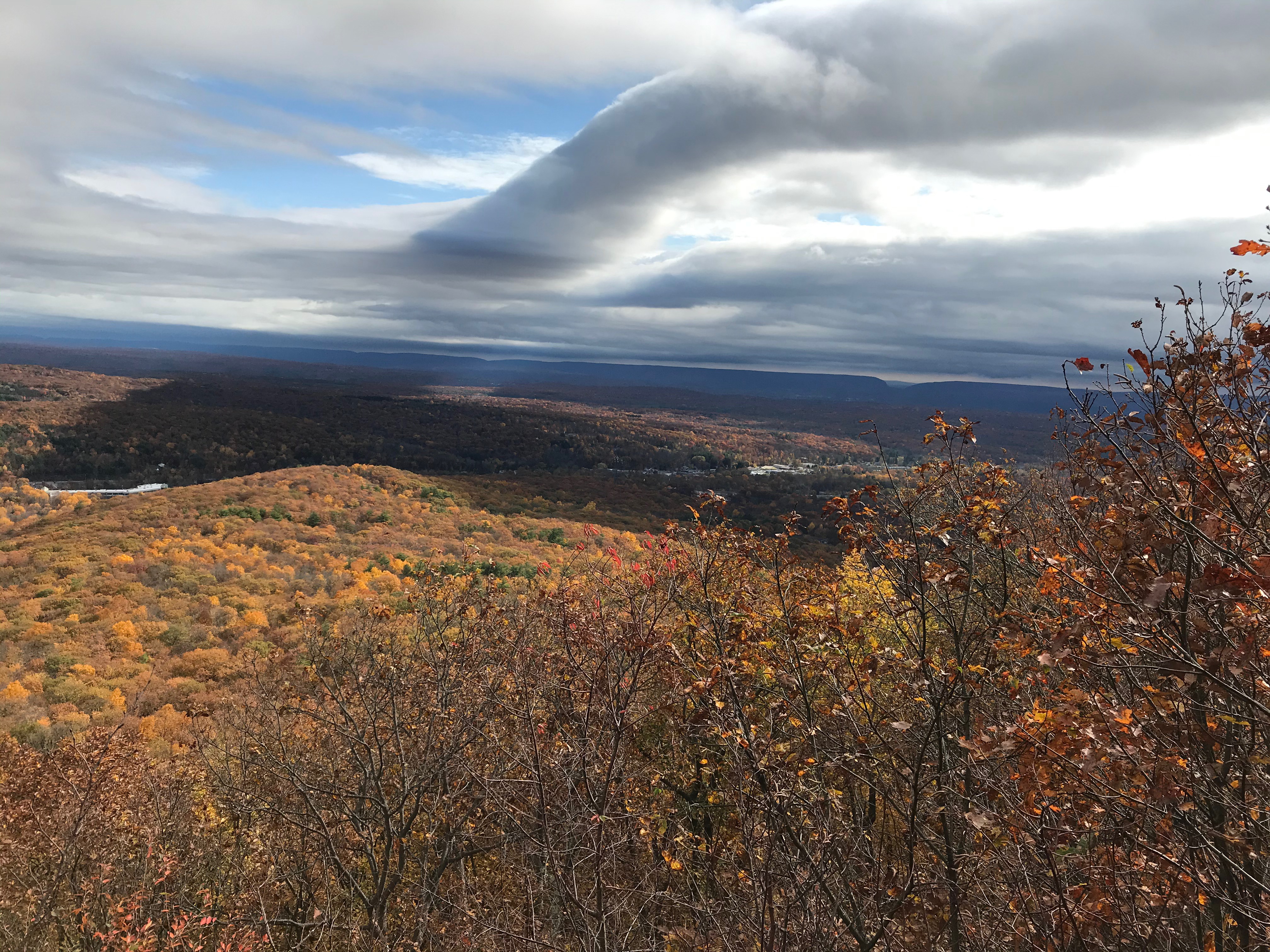
So we set off on a beautiful drive along the Delaware.  The leaves aren’t at peak yet, but there was plenty of fall color as we navigated our way toward Frenchtown, where there is a bridge across the river.  The GPS also told us this was the way to go.  On River Road, still in Pennsylvania, a flagman refused to let us on the bridge, although the signs did not say it was closed.  He impassively waved us on.  The GPS insisted we “return to the route.”  We soon found out why.  The next crossing is seven miles further down, along winding roads with a 25 mph speed limit.  The drive was beautiful, but suddenly I was going to be late for my appointment.  The new route added 45 minutes to the estimated travel time.  After uttering some choice words about unplanned bridge closures on a road where there are only a very few ways to emulate Washington’s crossing, we eventually arrived.

The weather beautiful, if a little chilly, the class decided to meet outdoors.  I hadn’t forgotten how much I love teaching.  It was brought back to me with force.  With the trees reminding us that winter is not far off, and the students eagerly asking questions, I felt at home for the first time in many years.  It was a temporary shelter, I knew, but it was a kind of personal homecoming.  Carefully avoiding the Frenchtown bridge, we drove north, crossing to River Road at Milford.  If the GPS had known that to go forward you sometimes need to go backward, it would’ve sent us to Milford that morning.  We arrived home tired but glowing from a day out of the ordinary.  As I put my tweed away that evening I found a pencil from the the funeral home where I last saw my mother in the pocket.  It had been the last time I’d worn this jacket, two years before.  October is a beautiful, melancholy time of year. 


This Is Halloween

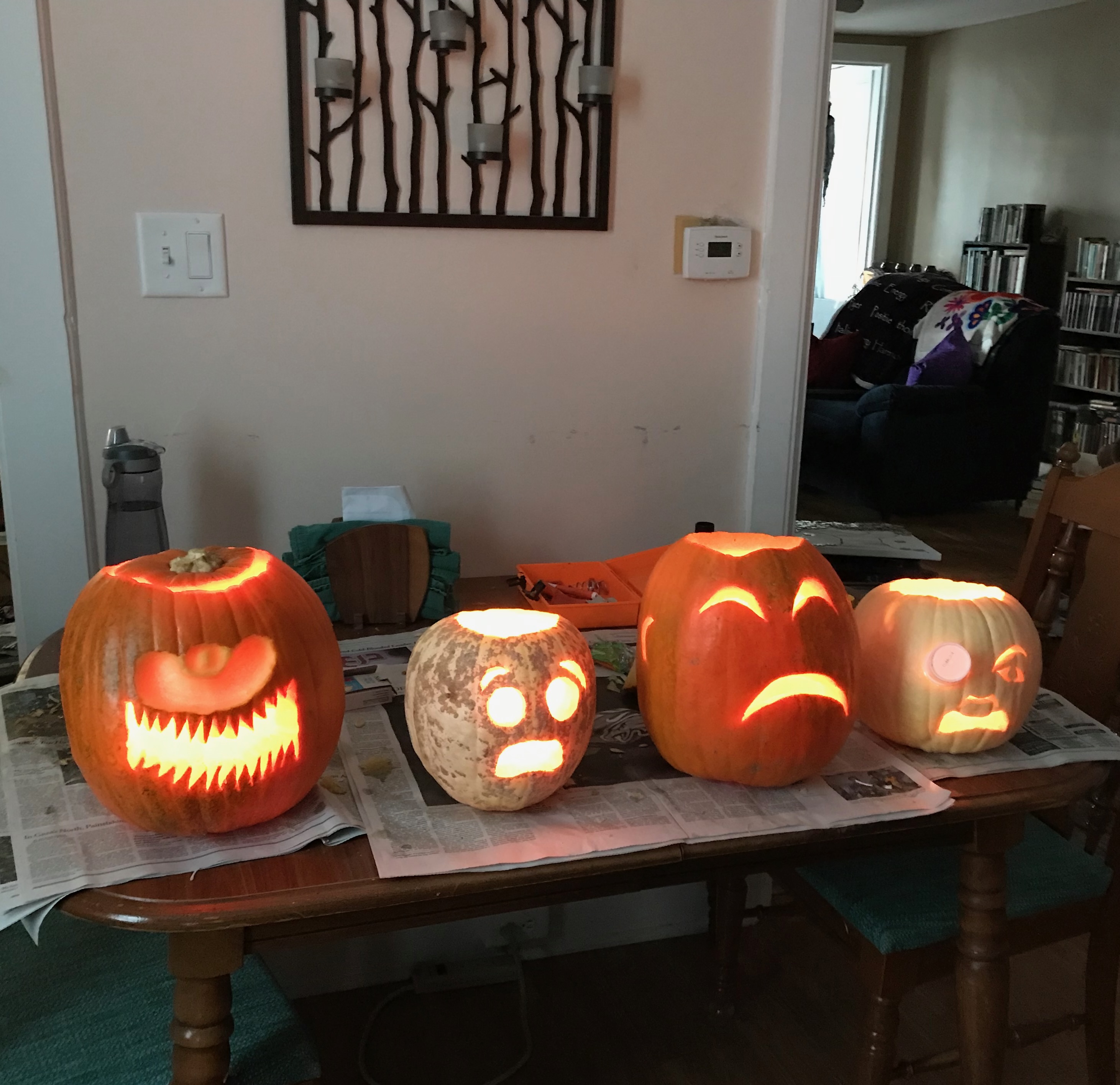
He was probably trying to impress his wife with his wit.  I was in a department store—a rarity for me.  I was wearing a mask, because, well, Covid.  As this guy, older than me, walked by he said “Halloween’s over.  Take off your mask.”  It bothers me how politicized healthcare has become, but what bothered me more was that it was only October 20.  It wouldn’t even be Halloween for another 11 days.  What had happened to make someone think Halloween was over so early?  Yes, stores had switched over to Christmas stuff by then.  In fact, I wandered into another store where Christmas carols were playing.  Capitalism seems to have wrenched the calendar out of order.  We’re tired of All Hallows Eve before it starts.  In fact, just the day before we’d gone out to a pumpkin patch to get our goods and the carved pumpkins are now showing their age.

If that little exchange in the store had been in a movie, it would’ve been a cue for me to transform into some big, scary monster.  Of course, Halloween is what it is today because of relentless marketing.  And a handful of nostalgia from people my age with fond childhood memories of the day.  For some of us, however, it is a meaningful holiday in its own right.  It makes us feel good, even after we’ve grown out of our taste for candy.  It is significant.  Christmas is a bit different, I suppose, in that there is nothing bigger following, not until next Halloween.  Besides, Christmas is supposed to go for twelve days.  The fact that Halloween is a work day makes it all the more remarkable.  We have to work all of this out while still punching the clock.

I had really hoped to be able to get to Sleepy Hollow this Halloween.  Sleepy Hollow as American Myth tries to make the case of how that story and Halloween came of age together.  It is the iconic Halloween story, what with ghosts and pumpkins and all.  And the month of October is spent with scary movies for many people.  This month I’ve posted about horror movies every other day, pretty much, trying to connect with my audience.  If that is my audience.  I tend to think of Halloween as a community.  Those of us who, for whatever reason, think of this as our favorite time of year.  A time when perhaps we don’t feel so stigmatized for liking what we do.  A time that we’re not hoping will shortly end so we can get onto the next thing.  It may have been meant as a joke, but I wasn’t laughing.  Happy Halloween!


Embracing October

I try not to dwell on family here on this blog, but mothers are special.  Today marks the one year anniversary of my mother’s passing.  October brings this to mind naturally.  Her mother, who lived an unhappy life, was born in October.  Although she (grandma) only lived to 75, my mother made it to 88.  That’s a good long life.  The pandemic, and actual mileage and financial constraints, kept me from visiting Mom as often as I would’ve liked.  We talked on the phone nearly every other day, and we had done so for years.  One topic that had come up in conversation the last three or so years of her life was that Mom had been seeing her mother.  Or feeling her presence.  This wasn’t a ghost scenario, at least according to Mom.  It was simply seeing her mother there.

Although my grandmother lived with us from the time her husband (my grandfather) had died, she and my mother didn’t really get along.  Family dynamics fascinate me, and since I was two when grandpa died, pretty much from my earliest memories grandma was living with us.  She didn’t approve of my father, and wasn’t shy about saying so.  It probably didn’t help the relationship with my mother much, especially when we had to move to a new place and nobody told Dad we were going.  He wasn’t invited along.  Grandma wasn’t in good health.  I still remember when the dining room in our small apartment was converted to her sick room as she was slowly dying and couldn’t manage the stairs anymore.  Until her final decline, grandma could be quite querulous, but Mom took care of her, because that’s what family does.  Grandma died shortly after Mom remarried.

I never said so to Mom, but I think she’d come to this conclusion herself, that seeing her mother was a sign of approaching death.  Mom often felt that her mother was wanting to reconcile with her.  I didn’t write these things down at the time, because life was, and is, too busy.  Thinking back on Mom, I wish I had.  She knew of my interest in the inexplicable aspects of life.  In fact, she sometimes got frustrated by my persistent questions about such things as a child.  I remember one day she snapped at me for following her around all day because we’d been talking about ghosts.  (That apartment was haunted, I’m almost certain.)  Mom wasn’t a particularly mystical woman.  Someone in the family must’ve been, because I inherited those genes.  She was, however, aware of mortality and all it entails.  I’m sure she knows her family is thinking of her today.


A Century of Horror

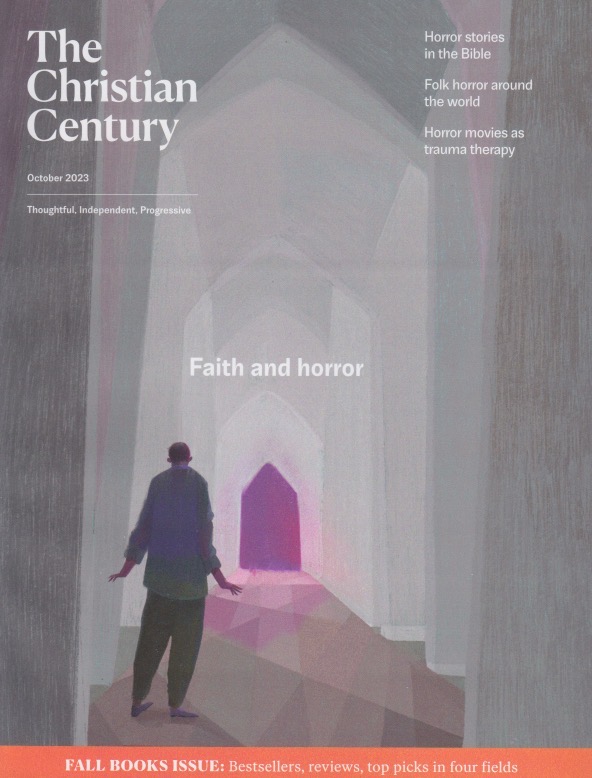
I’m not a magazine reader.  When I go to a waiting room (which is quite a bit lately), I tend to take a book.  The October issue of The Christian Century, however, caught my eye.  As a more mainstream/progressive Christian periodical, CC used to circulate in the office of one of my employers since it features books, the way progressives generally will.  This October, however, it featured five articles on “faith and horror.”  I had to take a look.  I know three of the five authors, one of them without realizing he was a horror fan.  An article by Brandon R. Grafius, “The monsters we fear,” discusses the commonalities between fear and religion, ground that he treats in Lurking under the Surface.  “The wisdom of folk horror” was written by Philip Jenkins—I didn’t know his horror interest—and it engages, briefly, The Wicker Man.  He’s making the point that folk horror is often about somebody else’s religion.

It was “Horror movie mom” by Jessica Mesman that really hit me.  Mesman was traumatized in her youth, and like many of us who were, has turned to horror for therapy.  This is a moving piece and is worth the cover price of the magazine.  Gil Stafford’s “A theology of ghosts” also gave me pause.  Stafford is an Episcopal priest who considers ghosts to be more than just woo.  In this very personal piece he thinks about what that means.  The last feature, “God’s first worst enemy,” is by Esther J. Hamori, one of the colleagues who talks monsters with me.  The piece is adapted from her recent book, God’s Monsters.  Taken together these pieces are quite a mouthful to chew on.  While numbers in mainstream Christianity are declining, Christian Century is still a pretty widespread indication of normalcy.

When I wrote Holy Horror I only knew about the work of Timothy Beal and Douglas Cowan as religion professors writing on monsters and horror.  That book admitted me to a club I didn’t know existed—the religion and monster crowd.  Since I’m not welcome in the academy, I’m particularly drawn to pieces like Mesman’s since she’s writing from the heart (as is Stafford here).  I’m just glad to see this topic getting some mainstream coverage.  I know I’m a guppy in this coy pond, but I do hope they’ll consider, over at the Century, turning this into the theme for their October issues in coming years.  If they do, they can count on at least one extra counter sale.


Starting October

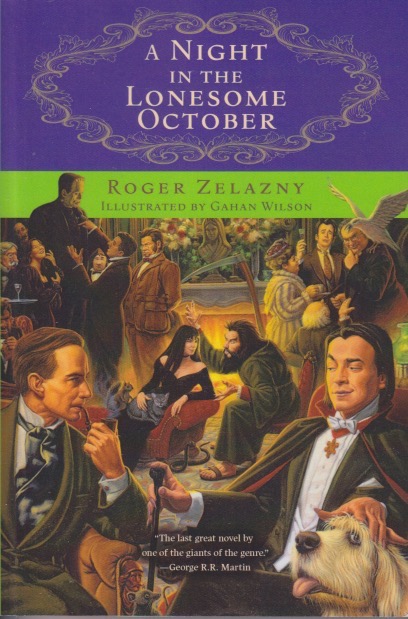
October’s a difficult month to quantify.  When it rolls around I get in the mood for certain books and movies, but I like to see and read new things.  I check lists to see what others recommend for what I hope is a similar mood.  A book that kept coming up was Roger Zelazny’s A Night in the Lonesome October.  Published thirty years ago, it’s not exactly new, but it was new to me.  It’s a humorous story, told by Snuff, a dog.  But not just any dog—he’s a player in a game that takes place when the full moon lines up with Halloween.  There’ll be spoilers hereafter.  The game involves two sides deciding the fate of the world, and each has the usual monsters lined up.  Dracula, the wolf man, Frankenstein’s monster and others are involved.  One side tries to awaken Lovecraft’s Old Gods and destroy the world while the other side tries to stop them.

Each chapter is a day in October and what the game is is only slowly revealed.  The antagonist for all of this is really the parson.  It turns out that he’s a minister for the Old Gods’ true believers.  Various monsters or players are killed and Sherlock Holmes is hanging about, trying to solve the mystery.  The story’s really a mash-up of several characters from yesteryear.  It’s not scary, nor is it particularly moody.  It’s a good example, however, of how religion and horror, even if it’s comedy horror, work together.  The Old Gods are an existential threat and require clergy to perform the correct rituals.  Roger Zelazny was fond of using characters from existing mythologies in telling sci-fi-ish stories, and this fits that writing mode.

This is an enjoyable story, but my October mood isn’t only a monster one.  Set in England, A Night in the Lonesome October doesn’t really have the leaves, pumpkins, and ghosts of my melancholy season.  Also, the humorous aspect is fine, but acts as a distraction from what I generally seek.  This is a magical time in northern climes.  Of course, I read a good deal of this while traveling to and from South Carolina, so getting the right mood was tricky when it’s beach weather and the flowers are still in bloom.  October means different things to different people, I know.  I’m still looking for the novel that manages to encapsulate my experience of it.  There’s something difficult to quantify about it, and that’s perhaps what I need to define.  


Hallowed Tradition

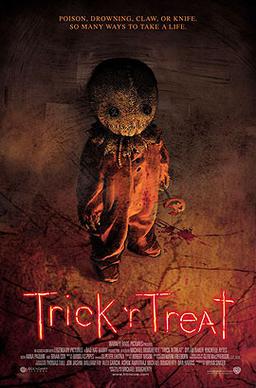
The more I learn about the movie industry the more complex I realize it is.  Take Trick ‘r Treat, for example.  It was released to some film festivals—and backed by a major studio—in 2007.  I wondered why I’d never really heard of it, and the reason seems to be that it never had a theatrical release.  Until this month.  It is now playing in theaters.  The thing is, it’s already available on streaming services because it gained a cult following when it was initially released fifteen years ago.  I came to know about it by wandering into one of those Halloween pop-up stores recently.  There were plenty of Sam costumes so I did a little research and discovered a Halloween movie I’d never seen.

I have to say, the first time watching it was confusing.  I didn’t realize it was four or five separate, but interlaced stories.  I kept waiting for a central plot to emerge, but it didn’t.  At the same time, I wasn’t aware that it was a comedy horror either.  I have no problem with comedy horror, of course.  I just like to know that before I get into it.  Once I’d figured these things out, I could see the draw.  It is fun and seasonal.  Clearly it’s holiday horror.  In fact several websites list it as being essential October viewing.  It’s certainly different from many Halloween movies in refusing to be taken seriously.  It’s like adults having fun instead of kids enjoying the holiday.

Perhaps the most self-aware Halloween film, it constantly reinforces that you need to obey Samhain etiquette.  Those who are killed (and there are many) die for having violated the rules of the holiday.  I appreciate the fact that it insists that we do these things for a reason.  Wearing costumes, handing out candy, carving and lighting jack-o-lanterns, these all serve a purpose.  The movie suggests we need to do these things to stay safe from Sam.  Sam, of course, can’t be killed which means that a sequel may be in the works.  Trick ‘r Treat gets full marks for staying focused on the holiday.  Holiday horror has been a fascination of mine for some time and this movie has it in spades.  Even if it’s a little confusing at times, it’s a fun way to celebrate the season.  And this year you have your choice of seeing it in the theater or streaming it on your most convenient device.


Stinging Days

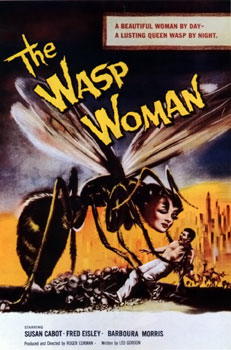
It doesn’t take much to encourage wasps.  Even after a few unseasonably cold weeks in autumn, one warm day will bring them back, poking along the siding looking for a nesting place.  My most recent stinging incident occurred in October.  It’s fitting, then, I suppose, that to try to keep awake late one October weekend afternoon that I watched The Wasp Woman.  These creature features were what I grew up with, and this was a Roger Corman brief film from 1959.  In fact, it was so brief that eleven minutes had to be added to make it a stand-alone television release.  It was originally part of a theatrical double feature.  Finding out about added time explained why Dr. Zinthrop’s accent changed from the first eleven minutes to the rest of the film.

Women have the same right as men to be made into monsters, of course, but there’s a poignancy to this storyline.  Janice Starlin is the owner of a cosmetics company but profits have been declining since she’s showing signs of aging.  Her customers want a younger looking woman providing their beauty products.  As is to be expected for a movie from the fifties, it’s a pretty sexist storyline.  Still, through the plodding plot the viewer can’t help but to feel for Ms. Starlin.  So when Zinthrop shows up with an extract made from wasp royal jelly (a secretion that actually comes from honey bees) that reverses aging who can blame her for trying it?  Of course it turns her into a giant wasp woman.

These kinds of mad scientist movies with their inevitable results perhaps injected a sense of caution into those of us who grew up watching them.  They weren’t great works of art, but that doesn’t mean they didn’t have something to say.  What I heard, watching this one, was that women exploited for beauty products suffer from natural aging processes.  And any formula that reverses aging come with its own set of problems.  The only other scary part of the film was when employees have to get to the upper floors to prevent Starlin from killing people, they have to wait for the elevator.  Their sense of frustration, although funny, is nevertheless a reality of working in a high-rise.  These movies from the late fifties seem to me to be a cry for help.  The sexist, button-down, white shirt world isn’t all it’s advertised as being.  Mad scientists are needed to help us cope.  Or at least stay awake on a sleepy October weekend afternoon.


Is It That Time Already?

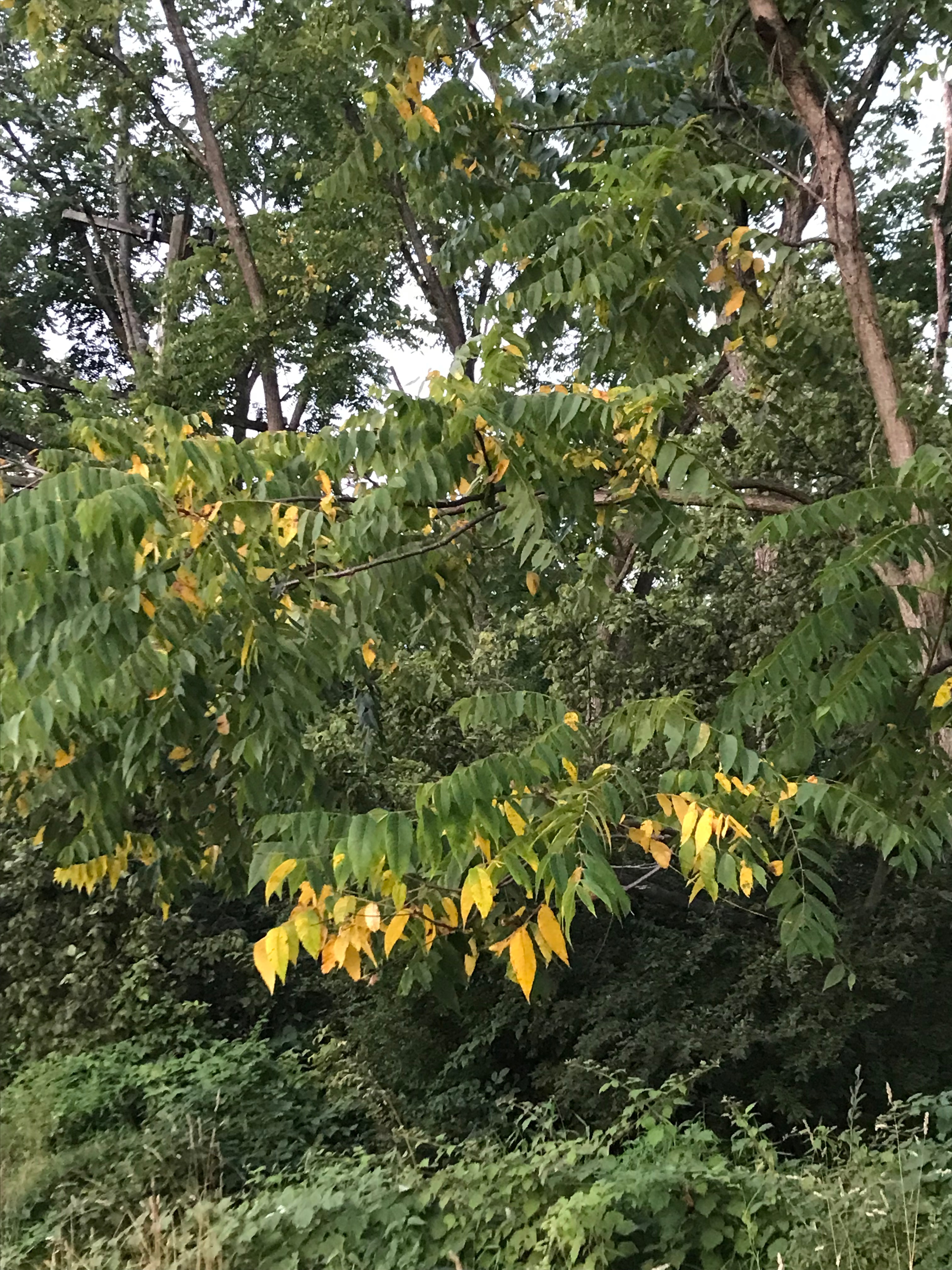
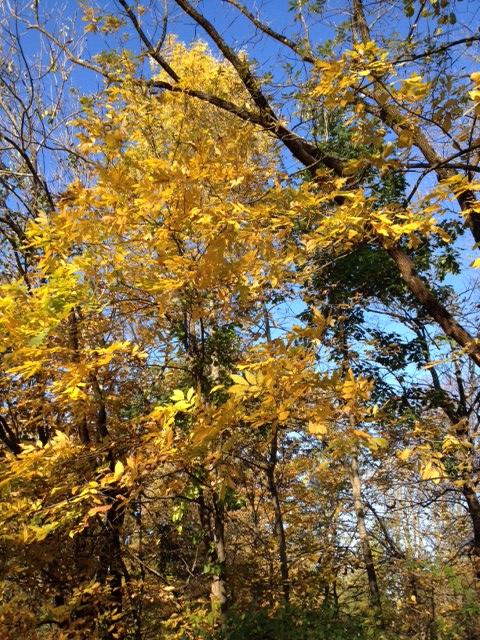
Maybe it’s just me, but August seems to be the new October.  If any of you are experiencing the heat wave that’s (oddly enough) like global warming, my apologies.  Around here—and local is what we all are—nights are cool enough to require blankets after our very hot July.  In fact, I need long sleeves and long pants in the mornings, it’s so chilly.  By mid-afternoon I’m starting to roast, but the grass is brown and that October feeling is in the air.  Or maybe it’s just that I’m awake at odd hours and the perspective from this time of day is somehow prescient.  Who knows?  As I try to sneak a jog in before work I see the walnuts have already gone yellow.  And I wonder.

We idealize the weather of our youth.  That sense of oughtness sets in early.  This is the way the weather should go.  We’ve been pouring greenhouse gasses into the atmosphere, however, for all of my life and before.  The warning signs have been around for decades but somehow liars with false hair convince us that any progress ought to be reversed.  I wonder if he’s been outside lately.  The planet is constantly changing based on the larger picture.  It has been doing this for eons, well before our species evolved.  Thinking it was created for us distorts our thinking.  The real question is whether we’ll be able to adapt.  I can’t say the prognosis is rosy, given how we’re constantly trying to kill those who live just across that mountain range, or that wide river.  We can’t seem to coexist.

I like October.  Still, I can’t help but think of all the things we didn’t get done this summer because it was too hot to be working outside.  Or we couldn’t get contractors to return our calls.  Seasons change as the atmosphere tries to adjust to all the chemicals we cough out.  October and its monsters seem to arrive earlier each year.  I’ve been feeling it for weeks already.  Seasons are really negotiations.  Around here, in this temperate zone, we spend most of the year with the furnace on, taking the edge off cold mornings and trying to keep this drafty house habitable for about six months of the year.  Everything’s constantly in flux and we simply try to adjust.  Not even the sun will last forever.  But for now I see the signs of harvest season beginning, and I feel the change in the air.  And I can sense October just around the corner. So goes August.


A Day with Books

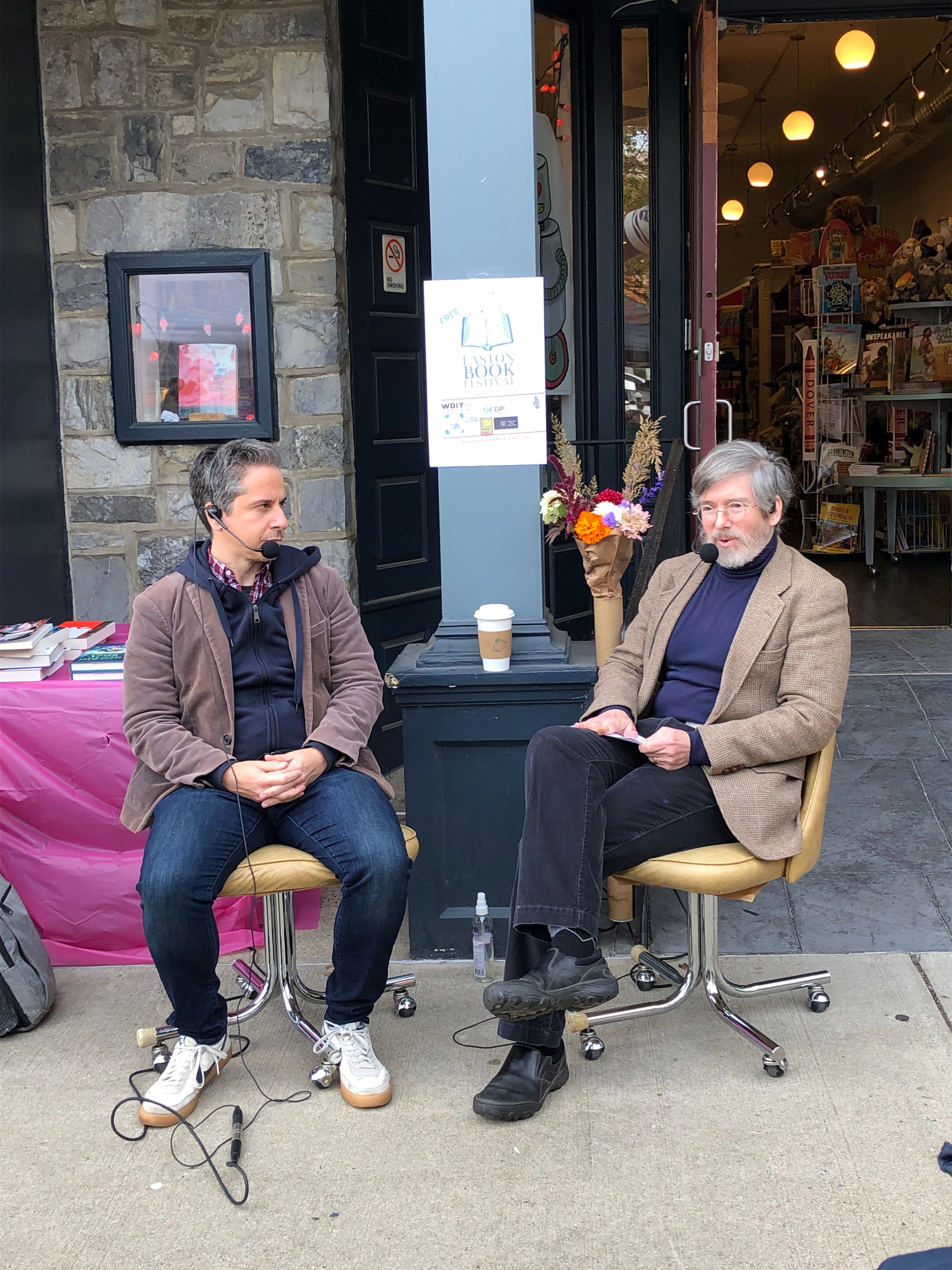
A day with books.  Is there any better kind of day?  Before I lapse into poetry I want to put in one more plug for the Easton Book Festival.  Today is the last day for this year, but keep an eye out for next October.  And you can still catch the videos from this year’s session on the Festival website.  Writers can be skittish creatures, you see.  We spend time alone and try to get our thoughts into words.  We don’t always have regular gatherings.  That’s what makes book festivals, well, festive.  I didn’t want to appear in person to plug Nightmares with the Bible—it’s too expensive.  As a friend said, “What’d you do to make it that expensive?”  I was glad, however, to be in person to interview my friend and colleague Robert Repino.  The interview will be posted on the Festival website.

An unexpected pleasure is finding acquaintances that you didn’t know were writers.  As I said, some of us spend most of our time alone.  And even for someone who spends so much time with words it’s difficult to describe the species of euphoria that talking about books evokes.  It makes me wonder why we don’t do it more often.  Since the pandemic is still with us—the pandemic that interrupted the natural progression of the Book Festival, which began in October 2019—in person events were held outdoors.  It was a bit on the cool side yesterday, with some sprinkles of rain, but few sensations match spending a day outdoors in October.  If you’re not in this area, please support your local book festival.  If you don’t have one, maybe talk with your independent bookstore owner.  It can happen.

As I’ve mentioned before, many of us who write make very little money at it.  When people ask why we do it, pointing to events like the Book Festival supply the reason.  Call it fellowship, or communion, or just a gathering of the hive mind, but finding the other book lovers in your community is a worthy way to spend a Saturday.  Book and Puppet has the distinction of hosting the event, with support from Lafayette College and a few local sponsors.  It’s also the only bookstore in which I’ve seen my actual books on the shelf.  I know it’s a sacrifice to order stock that moves slowly.  Halloween, however, is nearly here and that’s the crowd for whom I tend to write.  Why not spend a day with books?  It’s the best kind of day.


It’s Thorpe, Jim

On a rainy fall day we found ourselves in Jim Thorpe, Pennsylvania.  We’d been through the touristy town before, but had never had any luck finding parking so getting out to explore was problematic.  Named after perhaps the greatest all-round athlete America has ever produced, the town bore the American Indian name of Mauch Chunk prior to the communal name change.  Once the greatest eastern vacation attraction after Niagara Falls, it’s now a town that caters to a regular stream of tourists and supports the small, boutique shops that thrive in such an environment.  Whenever I’m in a new place, I look for books.  Perhaps an illness, it is one I have no wish to cure.  Sellers Books is small but I didn’t walk out empty-handed.

A few yards later a sign at Emporium of Curious Goods caught my eye.  A store of mystical, magical whimsy, it had a posted note saying the owner had been friends with Ed and Lorraine Warren.  I hadn’t anticipated such a thing—we were here with friends and really just expecting to enjoy the quaint ambiance.  Being October, nearly every house and shop on Broad Street was decorated for Halloween, creating that frisson that only this time of year offers.  I stepped inside the shop and looked around.  I asked the owner how he’d met the Warrens.  He said that many years ago they’d lectured at East Stroudsburg University.  Introducing himself, he’d invited them over to his place and soon they became long-time friends.  They agreed to do a talk there in Jim Thorpe.

The brief conversation made me aware that as much as reading reveals, it never conveys the full story.  The store advertised having all the Warrens’ books.  I have all of them myself, but I had never seen all of them together in a single store before.  I wished I had something magical or mystical to buy to support the owner so willing to share information, but I had little time to look around with friends waiting outside, probably wondering what I was doing in such a place to begin with.  The Warrens are both deceased but their legacy lives on through the Conjuring movies.  More than that, in the lives they’ve influenced.  Yes, they may have been using their fame as a way of making living, but many celebrities do that.  It doesn’t mean they were any less sincere in attempting to help people with their ghosts and demons.  A rainy day in October reveals so much.