The Idea of Scripture

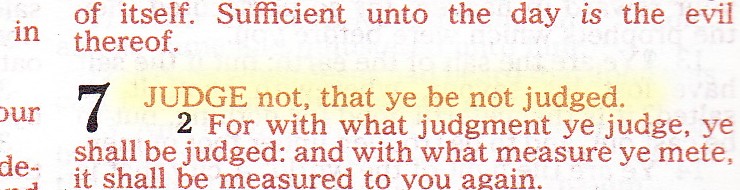
Although the academic field of biblical studies is slowly dying—this is something I wrote about a long while back on this blog—the Bible and its kin nevertheless continue to shape and control society.  I was recently reading that Islam takes quite a different view of the Qur’an than Christianity does of the Bible.  It’s also clear that Judaism has yet another way of looking at Scripture.  What underlies these Abrahamic faiths is, however, the idea of sacred texts.  They don’t have to be understood, let alone read, in order to alter perceptions of reality.  The idea that God wrote a book, combined with the idea that God doesn’t show Godself or intervene in the world for good in any obvious way, has transferred a kind of godhood onto sacred scripture.

People desire the second coming because of a deep-seated need for God to part the clouds and demonstrate that their way of looking at things is the correct way.  It may be influenced by Scripture or politics or a favorite news channel, but the result is the same—they want divine intervention and since it’s not forthcoming, their sacred texts become the rallying point around which they gather.  Like many people I’m puzzled how a man like Trump, known for his proud womanizing and lack of care for anyone other than himself, came to be seen as a messiah.  Perhaps the key is that moment he gassed American citizens for a photo op holding up a Bible he never reads.  How this comes to be interpreted as a kind of divine moment only makes sense when we realize it’s the idea of Scripture that becomes the reality of many.

I’ve read through the Bible many times.  I have to confess that trying to get through the Qur’an is a struggle for me, but I suspect quite a lot of that is cultural.  I’ve read a few other sacred texts over the years, and have found some wisdom in all of them.  It’s when they become divinities in their own rights that society begins to pay the price.  If a non-interventionist God remains invisible, that identity will be transferred to the divine surrogate—Scripture.  People will coalesce around the idol they can see rather than the invisible one they can’t, right Elijah?  These sacred books have survived partially because they contain old wisdom, and old wisdom is often better than new knowledge.  But they also survive because they have become, in some sense, gods.

Factor Fiction

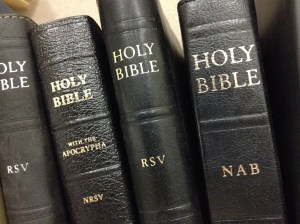
An article on CBS that my wife sent me tells how Costco mistakenly labelled a shipment of Bibles as fiction, setting off a tweet-storm. Some offended, some applauding, a 140-character barrage ensued as Costco apologized. What was the fuss about? As a person who has experience with both fact and fiction, it has become clear to me over the years that these categories are not nearly as sharply defined as they might appear. We make labels to help us categorize a confusing reality. Our brains, nevertheless, easily accept fiction as fact, at least for purposes of getting along in the world. The earth is spinning, right now, at over 1,000 miles per hour. We don’t perceive it, and in fact, it took not a few deaths and apologetic clerics before it was admitted that evidence we don’t feel proved the case. Each day we choose to believe the fiction that we are holding still and the sun goes overhead. Is anybody tweeting about that?

One of the angry bird calls pointed out that Costco (which apparently now has an imprimatur) doesn’t label their Qurans as fiction. How many Christians have read the Rig Veda and not wondered whether its proper label fell on that side of the pricing gun? The matter of fact or fiction is one of opinion. Even those books bearing the label of non-fiction are interpretations of evidence. When it comes down to ultimate truth, where it lies is always a matter of faith. Who buys a Bible at Costco anyway?

IMG_2634

When I was a child and Amazon did not exist, buying a Bible was itself a kind of sacred act. You wouldn’t think of going to Wal-Mart to do such a thing. You went to the Christian bookstore (or, I suppose, if you grew up in a city, a secular bookstore might do). You talked to clerks who knew the differences between versions. The place smelled of leather and velvet. It was a place dedicated to the truth. Costco is a big box store. Buying in bulk implies something. Ironically, those who angrily tweet about the Bible’s label don’t seem to realize that Bible selling is big business. You won’t find much in the way of small publishers’ literature in such a store. Next to your giant cartons of cereal and immense packages of diapers, why not tuck in a Bible as well? When you get home you can tweet about how much money you saved buying eternal salvation in bulk.


In Saecula Saeculorum

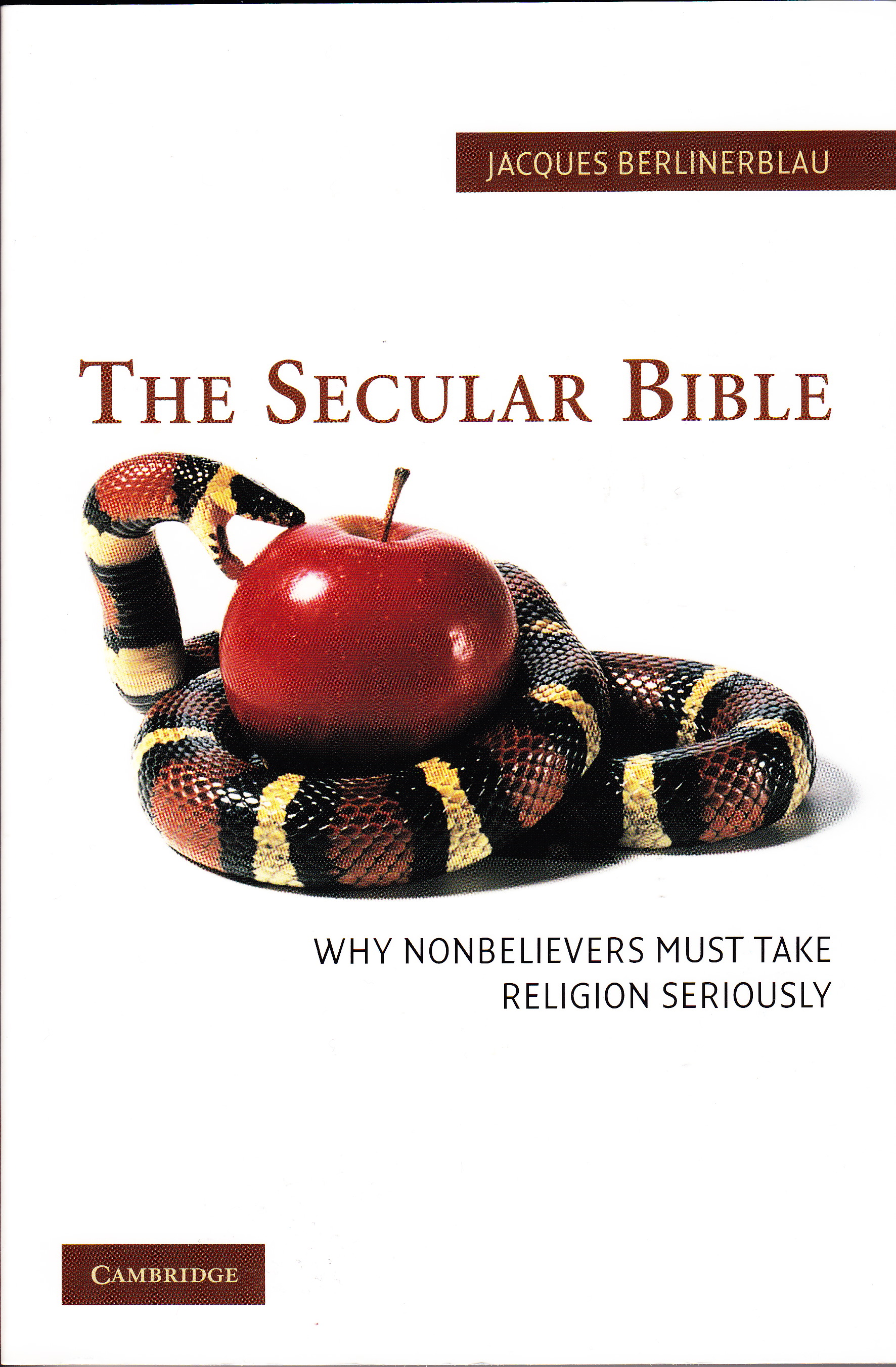
SecularBible“The Hebrew Bible is a misreading waiting to happen.” Jacques Berlinerblau’s The Secular Bible is a book containing much wisdom. My only real concern is that by having published it with a university press Berlinerblau may have inadvertently ensured that it would be read only by biblical scholars. Although yours truly was once such a credentialed scholar, I read The Secular Bible with its intriguing subtitle, Why Nonbelievers Must Take Religion Seriously, looming in my mind like a great raptor. This is an important book. With so very much of our lives heavily influenced by the Bible, eloquently argued by Berlinerblau, we have secularists who don’t know the Bible fighting the impossible battle to subvert it. The rationalizing, leveling influence, for the past two centuries, has come from the much castigated and discarded biblical scholar. Can I get an “Amen”?

Berlinerblau demonstrates unequivocally that we need Bible scholars and Qur’an scholars who know how to speak to their own traditions. Instead we have secularists who belittle and then wonder why the religious strike out. The pattern has repeated itself so many times that it defies reason that intelligent people would delude themselves that religion is a passing fancy. The Secular Bible argues what I’ve said time and again: if we want to avoid the dangers religion can bring, we must spend the resources to understand it. Instead we close departments and force those who know the field credibly well into unemployment. And we wonder why there’s a reaction.

“Self-critical religious intellectuals have never been much appreciated.” Instead we put the extremists on television so we can laugh at them or gape at their ability to do the unthinkable in the name of religion. Ironically, there are thousands of trained experts in the field, many of them languishing in un- or under-employment while towers crumble and mobs burst into violence. I do wonder what future generations will think of us. We have the resources handy, indeed, many of them willing to serve for a fraction of the cost of a business professor or basketball coach, but we choose to ignore them. As Berlinerblau states emphatically, we in the western world have the Bible so deeply ingrained that we can no longer even exegete all the ways in which it plays out in our society. If such influences were at work in a human body, we’d pay a doctor well to understand. Instead, we let the most foundational text in our society be used for duplicitous purposes while the simple reading of a book like The Secular Bible could save us all an eon of grief.


Symbolic Confusion

While on a drive through New England, we were discussing Islam with our daughter. Now I’m no expert on Islam, but I have covered it in a few classes. It has had a presence in America for a couple of centuries at least, probably first arriving with slaves from Africa. As we drove into Springfield, Massachusetts, I saw four slender towers rising into the sky off the highway and said, “Look, it’s a mosque,” supposing the towers to be minarets. When we drew closer, it was clear that these were really just the decorated finials of a quite secular bridge. Embarrassed at my mistake, my family was kind enough to console me with the suggestion that the four towers from that angle did look like the accoutrements of a mosque. (Earlier in the day I had seen my first Sikh temple in Connecticut, so the mistake might be at least slightly justified.) My wife mentioned how misidentified symbolism could be confusing. This spurred me to consider how symbolism frequently becomes a stand-in for reality.

I’ve been reading about witches lately. Like many legendary fears, witches can be interpreted in many ways. They have their origins in the belief that nature may be manipulated by will over a distance and had been feared for the effectiveness of their powerful spells. After the tragic witch-hunts of the Middle Ages ran their horrible course, witches came to be seen as the result of overactive imaginations and rampant superstition. The modern Pagan movement has revitalized the witch in a somewhat safer environment, and has applied various symbols to it. Thor’s hammer, the ankh, and the pentacle are considered the symbols of modern witches by various covens and practitioners. While passing by a department store on East 43rd Street, I noticed apparel decorated with pentacles—the symbolism adopted by some witches.

This reminded me of a fracas that erupted some years back when a fashion designer incorporated the ornate letters of the Arabic script into the design of a sleek dress that left less to the imagination than a traditional burka. The designer expressed surprise when Muslims objected to words from the Quran being used to decorate immodestly covered women’s bodies. In both these scenarios symbolism has demonstrated its power for being what philosophers call the Ding an sich, the thing itself. Symbols are often that way, bridging as they do the worlds of religious thought and secular existence. I wonder how much we as a society would gain from letting bridges be symbols that participate in the reality they represent.


Hidden in Plain Sight

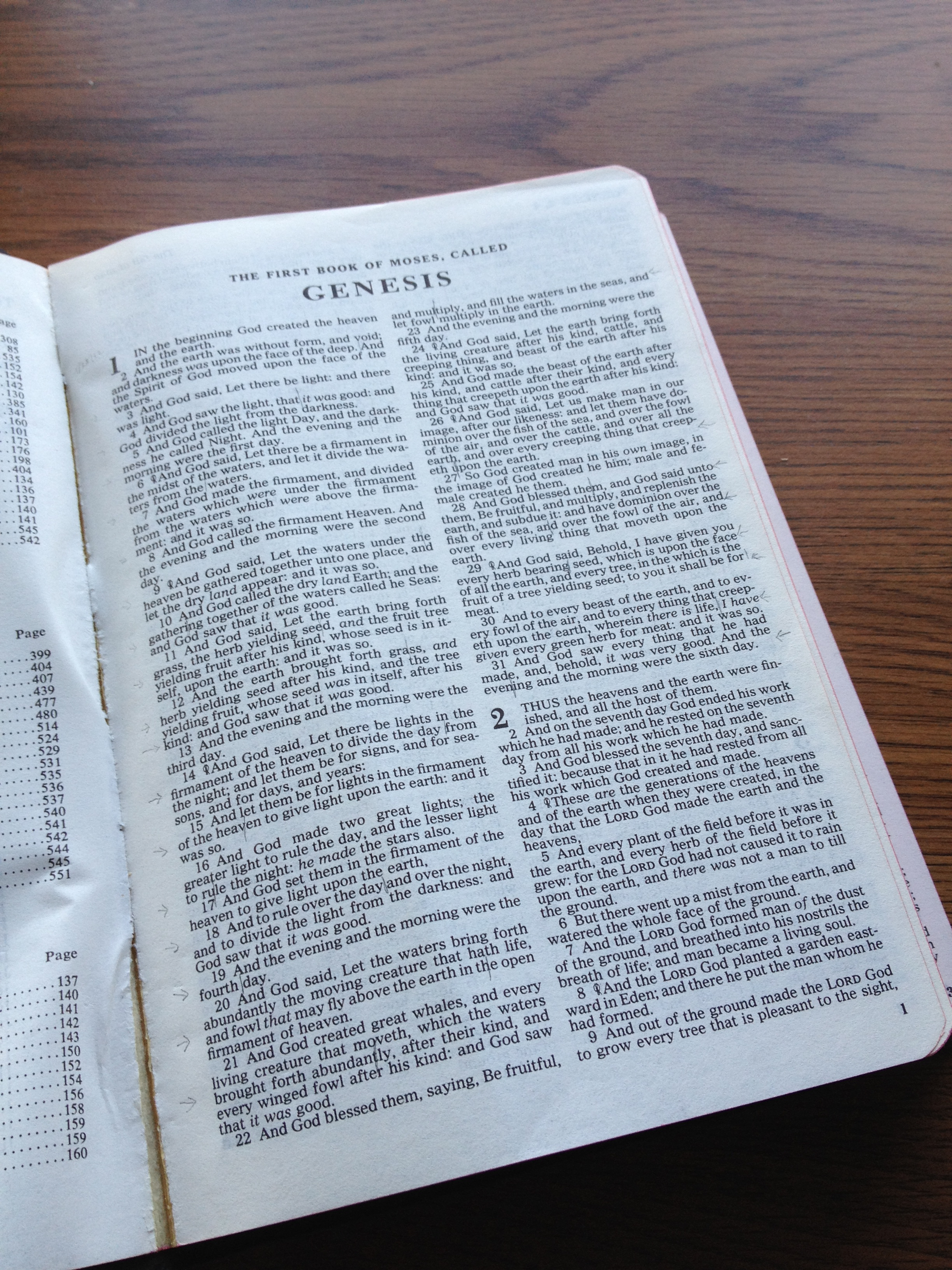
I have been tweeting the Bible for nearly a month now, and tomorrow—the thirtieth tweet—will see the end of Genesis 1 and the first words of Genesis 2. One of the occupational hazards of having been a biblical scholar for many years is the constant rereading of the same text over and over. I couldn’t even guess how many times I’ve read Genesis 1, in numerous languages, trying to find a key to unlock what is going on there. It is definitely not science—for that it would have had to have been written after science had been invented. Religion and science share that feature: they are human endeavors to understand the matrix in which we find ourselves. Anyone who is truly honest will admit to not being able to trust her- or himself all the time. We have all been betrayed by our convictions now and again. In this day of arrogant religious leaders and arrogant scientists we have little hope of coming to an armistice. Those who claim a special position for the Bible really couldn’t handle the truth in any case.

My twitter verse for today reads, “I have given every green herb for meat: and it was so. And God saw every thing that he had made, and, behold, it was very good. And the even”. Sense units in any text are where we, the readers, draw the limits. Taking this bit as a cue (indeed, the whole of Genesis 1 supports this), God intends humans to be vegetarians. The predatory gleam in the eyes of our religious politicians and televangelists belie their convictions given in public forums. The first rule God instates, after informing our primordial couple to have lots and lots of sex, is not to harm other creatures. At least the sex part seems to have gotten through, although many branches of Christianity repudiate it. The harm part we have received with ambivalence.

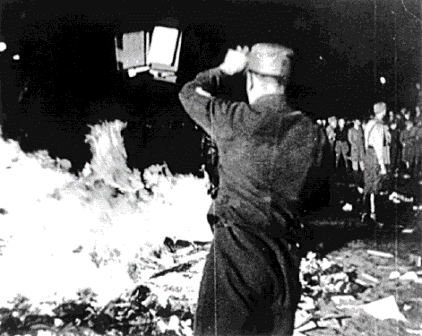
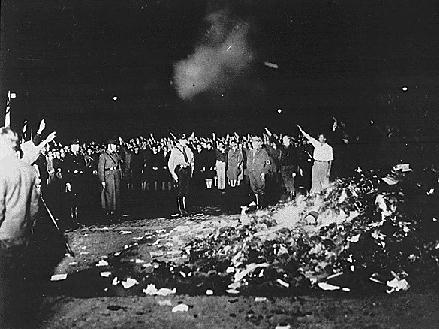
In a related development, an op-ed piece in yesterday’s newspaper gives instructions for properly disposing a worn-out Quran. While Christianity has no uniform opinion about where an old Bible goes to die, I find in this question a snapshot of the contradictions inherent in holy writ. We treat certain texts as sacred, and yet, is not the human expression in written form itself some kind of sacred act? Book-burning, no matter the book, strikes deeply at a visceral level those who’ve ever tried to reduce their ideas to what might be replicated on a page. It is our highest human achievement. All texts are sacred. Some may be misguided, and others are blatantly wrong—perhaps even evil—but they are the essence of a human endeavor. Perhaps this is the key I have been seeking all along.

Let there be light


Happy Birthday King James

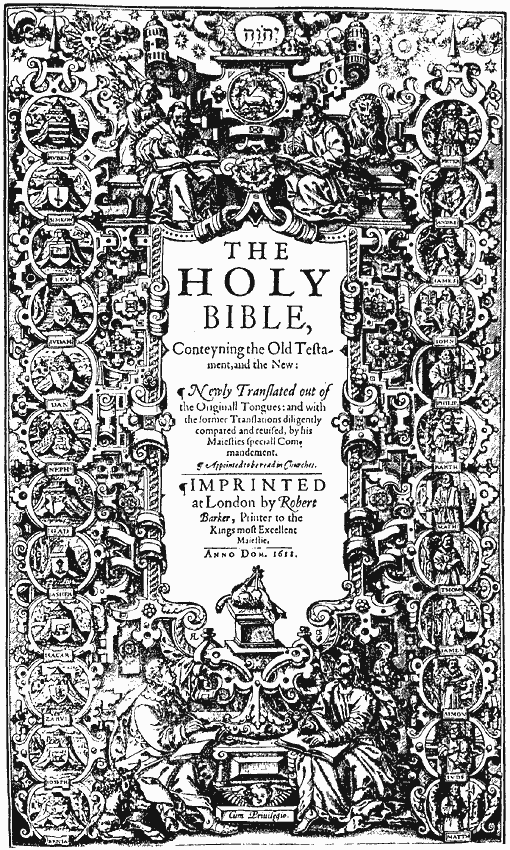
Four centuries ago a literary landmark was published. Today marks the birthday of the King James Version of the Bible, arguably the most influential book ever published in the English language. Those active in scholarly circles at bibliocentric institutions are popping the cork on their sparkling grape juice today, since for many the King James Bible represents the real liberation of God’s message. In some sense, the KJV also represents the origins of Protestant movement. Liberating the Bible from the clutches of scholarly Latin, Greek, and Hebrew, the King James Bible made the book accessible to the English-speaking world. As direct access to the Bible grew, the pontifical power of Rome (with apologies to besainted John Paul II) came increasingly under question. Inquiring minds wanted to know what God himself said. Of course, the Bible soon enough would evolve into a lash in the able hands of power-hungry theocrats.

Today the New International Version outsells the venerated King James. Some very conservative groups still hold to the King James Version as an “inspired translation” that no others can touch. The New International Version was hailed by evangelicals as a more up-to-date, safe translation of the Bible when it first appeared. The fact remains, however, that translations can never fully replicate the original. This is a major problem of bibliolatry. Languages are systems of thought and direct translation never fully captures the “meaning” of the original. Few who adore the Bible have the time to truly learn Hebrew and Greek, so guardianship of the truth must be passed to a reliable translation. The King James, in turn, also became the basis for some shaky theological ideas that are challenged by more accurate translations.

As the Internet rings with stories of the death of Osama bin Laden, the dangers of absolute religious adherence to any book of faith should become clear. Bibles, Qurans, Talmuds – these may be guideposts along the way, but they are often mistaken for the end of the journey. Written texts are subject to interpretation and even the KJV is read different ways by different believers. Instead of worshipping books, we would be better advised to read them. And if from that reading we learn to think then the time of the original composers of sacred writ will not have been wasted. That would be cause for celebration indeed.


Fire and Blood

Religious intolerance again claims lives, and yet the self-righteous never flinch from their smug smiles. What insane pressure drives extremists like Terry Jones to desecrate the symbol of another religion? What did burning a Quran accomplish other than a feeling of personal satisfaction at a religious one-upmanship? Did he even stop to think that his own religion was once persecuted and that this nation that allows him the freedom to spit in the face of other faiths also welcomes his imaginary enemies? Now innocent people are dead in Afghanistan because of his intolerance. It may be that Terry Jones’ personal act of impropriety may soon blow over, but the damage has already been done. These dead will have died in vain.

Putting match to paper proves no superiority of intellect, spirituality, or especially, righteousness. The problem Terry Jones’ brand of Christianity faces is that Mohammed was born before the metaphorical return of Jones’ Christ. It is clear from the (unburned) Christian scriptures that early believers were convinced Jesus’ return was imminent, within their own lifetimes. For those who did not successfully transition to the meaning of the metaphor, it has been a weary two-millennium wait. The emergence of new religions in the meanwhile has become a threat to the superiority of their own. Apocalypticism claims many victims. Now people are dying because Terry Jones can’t cool his heels to see how this one comes out.

Religions that prove their point by trying to brutalize other religions have already shown their true character. Muslims do not burn the Christian scriptures because they accept the validity of Jesus’ teachings as well as those of Mohammed. Has Terry Jones damaged Islam by burning a book? No. Has he damaged the already languishing opinion on western supersessionism? Certainly he has. It is now incumbent on the rest of us to declare that we excoriate the acts of Terry Jones and his contemptuous version of Christianity. Islam need not try to give Christians a bad image; we are quite capable of helping ourselves.

Terry Jones' ideological companions


Thy King Dumb Come

Is it legal to be Muslim? It is against the law to be religious? What about an extremist? The Peter King Trials, under the auspices of the almighty House Homeland Security Committee, are attempting to put radical Islamists on trial. My question is: when was the last time they cleaned their own backyard? Religions make extreme claims. As long ago as Yahweh thundering from Mount Sinai, adherents to monotheistic religions have claimed that their interpretation of God demands many unsavory actions – genocide, infanticide, war-time rape – all permissible in the Holy Bible. When terrorists draw their inspiration from the Quran, however, it crosses that invisible line in the sand. During the deepest chill of the Cold War nobody thought to bring Russian Orthodox Christians to trial. After all, they are cut from the same monotheistic cloth.

The damage done by Christian extremists is less visible, or at least more forgivable, in American eyes. Innocent mistakes, people doing what they thought that God demanded. It could happen to anybody. As long as they are Christian. As we daily watch the infectious creeping of Fundamentalism and its subtle (or overt) violence against those who are different, in a great move of theatrical diversion, King and his minions try to focus blame on “pagans.” Right belief, the afterbirth of monotheism, has taken on a life of its own. It can brook no rivals. If it is Christian right belief it can support the sale of fellow human beings, the dehumanization of prisoners of war, the starvation of the young. They are, after all, not Christian. Not like us.

In the words of the King, “Too many of the leaders of the Muslim community… are not cooperative and are not willing to speak out and condemn this radicalization that’s going on.” Physician, heal thyself. Radicalization in the name of Christianity is acceptable, even laudable. It is just part of the frontier, pioneering spirit of this great nation. Other religions, however, need not apply for freedom. After all, what do they think this is – a democracy?

Just following the king of kings


I Can’t Ear You

I bought a box of Q-tips in the store the other day. I noticed that the package shows humans using the cotton swabs in a variety of ways: around the eyes, nose, eyebrows, even on a computer keyboard. Everywhere but an ear. The suggestive shape of the Q-tip, as well as the received wisdom of everything from the South African name “ear buds” to Mad magazine, indicates that they were invented for ears. We all share that somewhat unsavory habit of forming earwax, and doctors warn that using cotton swabs may impact the matter and lead to complications of hearing. Q-tips (originally “Baby Gays” – check out the Q-tips website) are no longer for ears. In the back of my mind I supposed that it was because of lawyers. All it takes is one litigious sophomore and companies run to their attorneys to show that the faulty application wasn’t their suggestion.

Laws run our lives. One of the most famous, but by no means the first, law-givers was Moses. I’m pretty sure Moses didn’t say anything about what to stick in your ears, but he did lay down the laws that Neo-Cons still argue should govern our lives just like the Quran governs the laws of Iran. The laws of the Torah, however, were only meant for the Israelites. Nevertheless, laws have become means of growing wealthy. If we can prove on a technicality that my dumb mistake was somebody else’s fault, why not have that person (or better yet, company) sued to within a millimeter of their lives claiming “damages”? The law has become a means to protect the special interests of those in power. As someone who has tried scrupulously to keep the law my entire life, I sometimes find that old Moses seems to have turned against me.

Laws are meant to protect the rights of people. When did laws shift to becoming instruments of entrapment and means of income? Just before leaving Wisconsin I was driving my family home from a movie. We were talking and laughing when I came to a speed-trap area of my local town where the speed limit drops from 45 to 25 m.p.h. within a matter of inches. Religiously I always complied. Today, in the spirit of the moment, I neglected my usual caution and was pulled over. A policeman young enough to be my son lectured me on unsafe driving (I began driving when he was still wearing diapers, and I had never been given a ticket before because I am not a speeder) before issuing me a citation. My wife couldn’t believe it – she knows that I never speed. One of my last memories of Wisconsin is being unfairly targeted by a law devised to bring money to the local police force. It has nothing to do with safety, since there were no houses or buildings for several hundred yards yet after the slow-down zone. Has the law come to free us or oppress us? Lawyers watch our backs, and law-makers watch their wallets. I want to ask Moses, but I’m afraid I won’t hear him. I seem to have a cotton swab stuck in my ear.

Lead us not into temptation...


Mere Typography

Juxtapositions are important. The way that words are laid out on a page can say as much as the words themselves, as any poet knows. In the light of the ongoing media frenzy over Rev. Terry Jones’ misguided attempt to set everything right with the world – through fire – and a natural attempt to keep related stories together, the New Jersey Star-Ledger ran two stories on page three yesterday that display the deep ambivalence many Americans feel about Islamic culture. At the top of the page the headline reads, “In Florida pastor’s eyes, burning of Quran is an act of war against evil.” At the bottom of the same page runs an article headlined, “Iran: Stoning sentence for adultery under review.” Two or more faces of Islamophobia on the same page.

As remarks made on my previous post on the subject attest, many westerners simply do not understand Islam. This is perhaps to be blamed on the all-too-prevalent attitude that “history is boring.” Have people been asleep for the past thirteen centuries? Islam is much closer in time to the origin of Christianity than it is to us. With concerns of supersessionism and the covert desire to capitalize on one’s religion, Christianity has been content to ignore Islam as long as those in charge have been able to maintain capitalist quo. When forced to face the fact that two major monotheistic religions have designs on the same world, some members of each camp are only too ready to declare those in the other “evil.” An attempt to understand other religions would go a long way toward ending the carnage.

Perhaps the phobia should more properly be labeled religious xenophobia. We dislike those different from us. Rare is the person who, when confronted with a contrarian, will attempt to understand rather than destroy. Students may readily qualify for higher education degrees without ever having to face the question of how to handle different religious outlooks. We would rather pretend that they are not there. The ambivalence shown towards the issues of Islam in the Star-Ledger could just as easily be turned on Christianity, or even Judaism, Hinduism, Buddhism, or Sikhism. Religions are conflicted because people are conflicted. Instead of recriminating, we should all take a long, serious pause in front of a mirror before we start accusing other religions of being evil.

Who said what now?


Disconnect

Religion has a bad name among many intellectuals. Hailing from the misty period of superstition in a “demon haunted world,” religion seems to be a quaint hold-over from less enlightened times. Academics, for whom respectability is everything, generally keep a decorous distance from religion as the intellectually suspect field indulged in by the weak-minded. Then something enormous happens; terrorists, fueled by religious fervor, decide to kill many innocent victims. Or a religious guru leads followers into the jungle where they all commit ritual suicide. Or a group of zealots purchase heavy armaments and stockpile them in a Texas hideout to await the Second Coming. The next autumn the university want ads are filled with openings for specialists in this or that religion. Until the next budget crunch comes along.

An unfortunate aspect of this situation is that many deans and administrators make the equation of the study of religion with the promotion of a religion. Why populate a university faculty with superstitious religious sorts when a good secular economist will bring in more practical, if less transcendent, rewards? How often do administrators survey their religious studies faculty to ensure that level-headed, academic treatment of the subject matter is offered? How can we expect to move ahead if those empowered to assure an educated student clientele continually apply the brakes in religious studies departments?

I am no economist. This much is evident by my pay scale. Nevertheless, each year when I return to the multiple campuses that are my temporary homes, I notice the details. New furniture in classrooms and libraries, freshly painted and redecorated facilities. Often, entirely new buildings that were not there the semester before. There was a day when such things were known as window-dressing. I attended Edinburgh University for my doctorate. There were campus buildings that dated from the late middle ages. Classrooms often had mismatched furniture and blackboards rather than fancy projectors and smart-ports. And the educational experience was authentic. The religion faculty was thriving and universally well regarded. I’m no economist, but with fundamentalists already holding a match to the fuse about to light up a Quran, I have a feeling already of what I’ll be seeing in the want ads of next year’s university hiring season.


Quran 451?

One of the saddest books I remember is Ray Bradbury’s Fahrenheit 451. Any society that burns books has whip-lashed far beyond Fascism into the enemyhood of humanity. Much of ancient culture has been lost through the natural or premeditated destruction of misunderstood “inflammatory” writings and we are much the poorer for it today.

According to an Associated Press story, the ironically named Rev. Terry Jones of the even more ironically named Dove World Outreach Center in Gainesville, Florida, is agitating for a “burn the Quran” day on September 11. Other than momentary, self-righteous catharsis, nothing is to be gained by burning books. The contradictory impulses here lie thick and deep: a Christian clergyman feels insulted by an extremist attack that killed indiscriminately (Muslims and well as Christians, Jews, and Atheists died in the September 11 attacks), bearing the symbol of peace he wishes to declare his personal war, and the follower of the willing victim of Nazareth wears a gun.

Burning books does not solve any problems. Surely Rev. Jones knows that plenty of copies of the Quran abound throughout the world. His action is calculated as a poignant symbol. Is such a symbol anything more than a base expression of outright hatred? When, apart from medieval Christendom, has Christianity insisted that violence is the way forward? All you need is hate? For although the burning of books may not physically harm anyone, the violence in this hatefully symbolic act is the very antithesis of tolerance and understanding that the religious world so desperately needs. Islam has given much to world culture, and we reap the benefits of Muslim scholars and thinkers each day, without any conscious consideration. Rev. Jones needs to read more than just Fahrenheit 451. He must learn truly to read and, like Montag, weep.

Jones' theological comrades