Wars and Holy Wars

An article by James P. Byrd, promoting his new book Sacred Scripture, Sacred War: The Bible and the American Revolution recently appeared in the Washington Post. Byrd asks a very relevant question in our era: “Was the American Revolution actually a holy war?” He suggests that perhaps it should be interpreted so. The reason is straightforward enough—our nation, our culture in the United States, is so deeply steeped in scripture that even our Deist founders knew their Bibles better than many preachers today do. Byrd suggests, in his article, that people who believed in the separation of church and state could still have a deep sense of divine mission, and a belief that their war for freedom was a divine cause. Early state leaders were not anti-religious, nor über-religious. It is a balance that we would benefit from regaining.
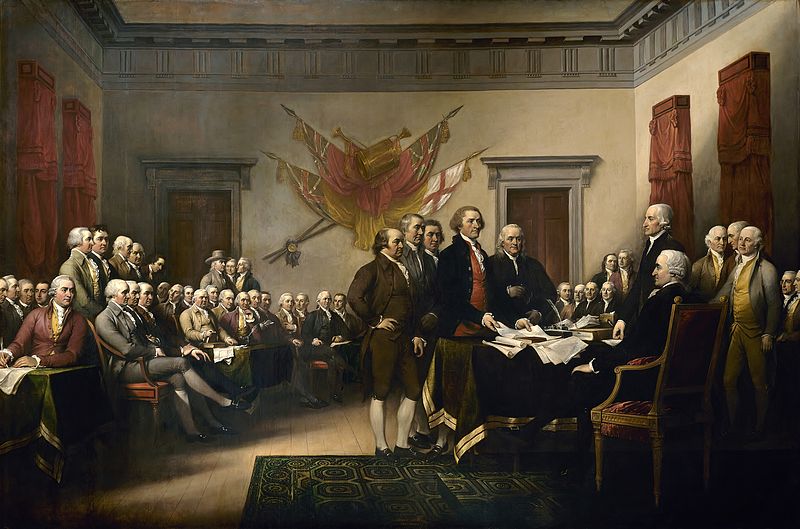
Declaration_independence

I guess I’ve seen enough political shenanigans to realize that such posturing as the Tea Party and the Religious Right or Moral Majority present are deeply cynical. The use religion as a platform to achieve political ends while conveniently slashing and burning huge swaths of biblical reasoning leaves many questions in its wake. Were such motives sincere, I would expect a lot more turning of the other cheek, and walking the second mile uncoerced. I suspect there would be fewer hungry people and even fewer living in positions of extreme wealth and power. In short, without the agenda of political religion, I suspect we would be a more Christian nation.

War is difficult to justify from a strong ethical stance, as most ethicists know. Our founders decided to go to war against what they believed was unfair oppression by a more powerful nation. This takes on the cast of a holy war because people were being oppressed. The pre-emptive strikes were throwing crates of tea into Boston Harbor, and yet the more advanced nation refused to lessen the pressure. In the Bible, Pharaoh declared the Israelites should make bricks without straw, and we all know where that got him. Or we would know, were we as literate as our forebears were. Freedom was considered a sacred trust. We live in a time when trust is at a premium. You can’t fly or surf the internet without being watched in intimate detail. There is no talk of holy wars, it seems, since the sacred has no place in a society that does not promote the concept of liberty with all the risks and benefits it entails.


Liberty and Justice for

Looks like America will be divorcing the self-proclaimed “Defense” of Marriage Act. It’s a small step, but a small step in the right direction. Religious dogma has too long held sway over politics in this land of religious freedom. It must seem astonishing to rational people the world over how a country founded for the very purposes of religious liberty has homed in on a very narrow sect of one religious tradition and used that as the basis for discriminatory laws. After all, even the Bible says very little about marriage—something about taking your main squeeze into the tent with you and voila, you’re married. The Bible never asks what they’re doing in the privacy of their own tabernacle. Now we have a political system that legislates what can legitimately turn you on. Finally we see some light beginning to dawn in the judiciary system.

I don’t take marriage lightly; those of us who are married seldom do. I also don’t take my status as being the only possible way of finding love in a world that sorely needs more of it. Every day I witness acts of uncaring and sometimes outright cruelty, often in the name of the progress of business. And until yesterday I had to live with the knowledge that it was perfectly legal to discriminate against committed couples just because their gender’s don’t fit a preconceived mold. The land of the free? Maybe, just a little bit yes, now.

Our legal system, which pours out its love on corporate culture, protecting business owners more readily than employees, shielding the wealthy whose lifestyles are beyond scrutiny, ends up telling citizens whom they may love and whom they may not. And we complain against countries with arranged marriages. Freedom for some is not freedom for all. Until we as a nation recommit ourselves to life, liberty, and the pursuit of happiness, we’ll have to take the small steps towards freedom when they come. Yesterday, for at least a little while, I was glad to see that the system can work for the good of all, when it puts its mind to it. America, you can be proud. Say it loud!

800px-Joseph_Anton_Koch_006


Divine Election

Jesus, it seems, has given up appearing on tortillas and hedgerows to start endorsing political candidates. Of course, this is not really new news. Rick Santorum, Herman Cain, Rick Perry, and now Anna Pierre, candidate for mayor of North Miami, all claimed their campaigns were endorsed by the Almighty. Seems that God isn’t that great at picking winners. Anna Pierre, according to a story on NBC, came in last in the polls. Is it any surprise? Jesus always did have a soft spot for the underdog.

pierrejesus

American culture is an odd mix of secular and religious. We seem to want it both ways. Citizens like to believe that they are autonomous in their daily lives, free to choose their non-religious professions and pass-times, and on Sunday God takes over for an hour or two. Charged up on religious conviction, we want society to become more sacred, less trashy. But we still want to watch Fox at night. This disconnect has long fascinated me. No matter how many times God loses the election, a new crop of candidates will spring up with divine endorsements. The electorate, at least a significant part of it, will mindlessly follow along. Perhaps we prefer to believe in a deity whose hand is too short to save. Perhaps omnipotence is best left to boasts rather than belief.

The divine approval of a candidate has become so hackneyed that it has become almost the starting point for political contests. Where do you go after you’ve invoked the highest trump in the deck? Whose word means more than the Lord’s? In the heat of the campaign when policies and platforms just don’t sway the masses, who else can you trust? Often those who play such tactics consider those of us on the liberal side of the spectrum to be cynical. Theirs is religion in the service of the higher good, apparently. We wouldn’t want to be thought of as cynical, now, would we? Otherwise we might note that although Jesus may save, it seems that he certainly can’t vote.


Austin City Limits

Maybe it’s just because Texas feels like the brass buckle of the Bible Belt, but I had moral qualms about landing in George Bush International Airport this afternoon. Texas has so many worthy heroes, but in the land of Rick Perry, recent Republican politics is king. Not queen. But king. It felt like a work of supererogation to drive to Austin after a three-and-a-half hour flight to Houston, but Texas reminded me of Illinois with palm trees. And cacti. Well, okay, and longhorns. One could get culture-lash flying here from New York. Before I embarked I had visions of my rental car being a huge Cadillac with real steer horns for a hood ornament. I just couldn’t picture myself in a ten-gallon hat.

I sometimes wonder how religion could’ve come to divide a nation such as the United States. Founded on the principles of religious liberty, lately one party has been claiming the right to legislate morality for all, deeply polarizing a populace that should be able to accept differing viewpoints. Still, there are issues on which human rights insist there can be no compromise: women have equal rights with men, and have the right to self-determination just like men. It truly amazes me that such common sense can even become a divisive issue. If we could agree on even that, we’d have to declare it progress over the objections of the Religious Right. My thoughts wander that way when I tarry in the south. It’s really a pity. The people are friendly here and the landscape has its own beauty. Are we really that different?

I’m not altogether convinced that this isn’t just a case of prejudice masking as religious sensibility. Religions can be all too gullible when they feel their honors might have been impugned. While I regularly express my opinion here, I do respect nearly every form of sincerely held religious belief. None of us has all the answers, and it seems the height of hypocrisy to insist that anyone is right all the time. Nevertheless, my sojourn beneath the Bible Belt has me wondering about the origins of various religious squabbles. Or maybe it was the just the long drive along the “presidential corridor” after touching down at an facility that most websites still refer to as simply, Houston International Airport. Travel broadens the mind—it is, in fact, an excellent form of education. Maybe if we got out more we would all get along better.

From here we all look the same.

From here we all look the same.


Call it the Blues

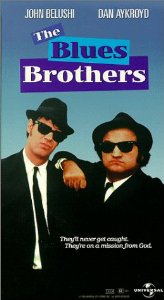
BluesBrothers

Coming back to The Blues Brothers after a couple of decades proved to be a kind of personal enlightenment. Of course I remembered “We’re on a mission from God,” as a catch-phrase, but in the intervening years I’d forgotten what that mission was. The movie is, as it were, backstory for the Saturday Night Live sketch in that show’s halcyon days. Watching the movie as an adult I was astonished at how positively religion is portrayed. Jake and Elwood’s mission is to save their childhood Catholic orphanage. Although there are a few laughs at the expense of religion, the movie as a whole is a redemption story with a surprising lack of irony. Released from prison where he was doing time for trying to do the right thing, Jake has an authentic religious experience and from that point on, the mission is unquestioned. In a self-sacrificial move that lands the whole band in prison, the Blues Brothers pay the taxes owed and save the orphanage. They are doing time for saving poor children.

I reflected on how, since 1980, it has become difficult to find mainstream movies that are so positive toward religious values. Not coincidentally, the 1980s saw the tragic Reagan years when religion and politics blended to the permanent detriment of religion being taken seriously. Since that time the cynicism has grown considerably. We are constantly reminded of it as conservative pundits force “Christianity” into a more and more reactionary mode, condemning all that reason has finally released from the dark ages. This is religion which thrives in the darkness of ignorance and fear. And it has coopted the very definition of religion itself. It is hard to imagine a “mission from God” being taken half as seriously today as it was when Jake and Elwood, although personally irreverent, nevertheless take the ethical call so seriously.

Today the “mission from God” is to protect one’s personal investments. Shut out those who require special consideration or those whose lifestyle differs from that which is putatively biblical. Anyone who dares step out of line is, in this enlightened era, condemned to the outer darkness. The Blues Brothers always wore dark glasses. While initially a branding gimmick, even this has symbolic value in the public view of religion. After all, Roman Catholic Sister Mary Stigmata gives them a sound thrashing for their profane language. But they find the truth in a black, evangelical service. There is a tolerance here—the neo-Nazis end up buried in their own grave—that has since vanished. The dark glasses hide something vital. The only time they are removed in the movie is to deceive. I wonder, I just wonder if with the glasses removed Jake saw a future for which the only prudent response was to hide once again.


Substance of Faith

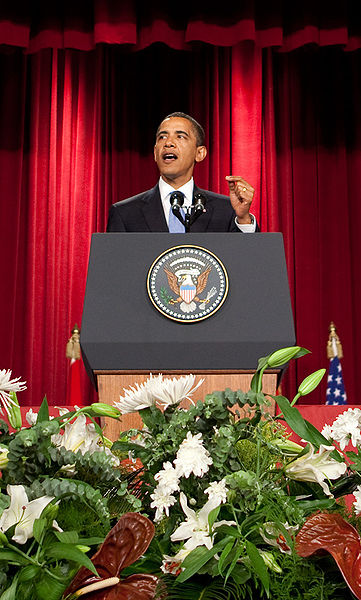
Every once in a very great while, faith is rewarded. I’m not talking about the faith that is bound up in black leather, inaccessible to realists who struggle daily to keep going. No, this particular faith is human based, based on my fellow citizens who saw it necessary to do the right thing. Although I have to rise before 4 a.m. to get to work, I tossed all night wondering what was happening at the polls. Obama’s reelection meant more to me than I guess I even realized. You see, I look at elections symbolically. Not as overtly black and white as Dark Vader and Luke Skywalker (neither candidate is pure good or evil), but I see that candidates stand for something. I don’t care what religion a president claims, but I do watch closely for what they value. Money, to my way of thinking, is not the way to build a society. Once in a while the rich need to be reminded that no, money can’t buy you everything.

Politics went off the rails when conservative religious issues were mingled with unfettered entrepreneurial aspirations during my formative years. God, I hope those days are over! People often vote with their emotions and studies have repeatedly shown that even conservative religionists like George W. Bush did not deliver a more productive, biblically literate nation after eight years of fumbling in the dark. The legacy was a national debt that should have been an embarrassment and a deeply polarized society. I was glad for the GOP nomination of Mitt Romney—it was a chance to test if the privilege of wealth had a chance of winning without the evangelical interests who see Mormonism as a “cult.” My faith in the American people paid off.

No, Obama’s first term was not a picnic, but every time I peeked, it sure looked like hard work was being done. Prolonged vacations to the ranch seemed to be a thing of the past. Difficult thinking was given a place in the nation’s capital again. If we want the one percenters to get the message, we must shout loudly. They live far, far above the rest of us in sound-insulated penthouses and never have to wait in line four hours just to buy gasoline. There is work to be done, and it has to start at the street level, if not below. This is faith. Quoting the Bible while bombing your enemies and protecting the wealthy elite is disingenuous in anybody’s ethical playbook. Thank you America for showing that giving in is not the only option. Tonight I will be able to sleep.


Vote!

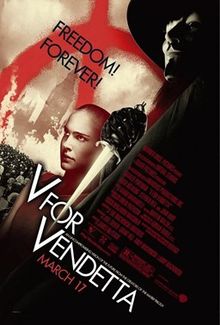
“Remember, remember the fifth of November.” Election day is upon us and my mind goes to V for Vendetta. The movie is about oppressive regimes and, more importantly, people finding a voice. It is a strongly emotional film for me not because of the violence, but because of the symbolism. Yes, V is out for vengeance, but we are all V, having been co-opted into a system that doesn’t seem to have our best interests at heart. At least we can vote. The scene at the very end, where V’s future, alternate universe gunpowder plot succeeds, always leaves me with damp eyes. By virtue of watching many movies, I am not prone to shed tears at what I know to be fiction. But some fiction possesses a verisimilitude that fact lacks. V for Vendetta is one such fictional vision.

I grew up a Fundamentalist Republican before such a combination was de rigueur. I also grew up believing in liberty, an idea that often resonates with those who don’t have much in the way of material goods. At least we have our freedom. By the time I attended a Christian college, I learned the error of my ways. I asked around to find out why America always seemed to get involved with conflicts under GOP administrations. I learned that, in some cases anyway, belief that Armageddon was around the corner motivated such wars. Even some presidents believed, as their religion taught, that the end of the world was nigh and it was their duty to hasten the process. Be careful what you vote for.

As I stood in long lines waiting for a bus out of New York City yesterday, I listened as other passengers wanted to talk. Hurricane Sandy left many people in poor circumstances, feeling the pain that is only alleviated by sharing. They told of devastated neighborhoods where people who hardly knew one another came together, naturally, to help each other. I listened to descriptions of those with power opening their houses and sharing their food with people they didn’t know. It wasn’t because the government forced them to—they did it because it was the right thing to do. When I watch V for Vendetta I don’t cry because I approve of violence; I have been a pacifist since childhood. I cry because the vision of justice prevailing is so beautiful that no other response seems appropriate. With that vision in mind, I am heading out to vote.


Endorsement

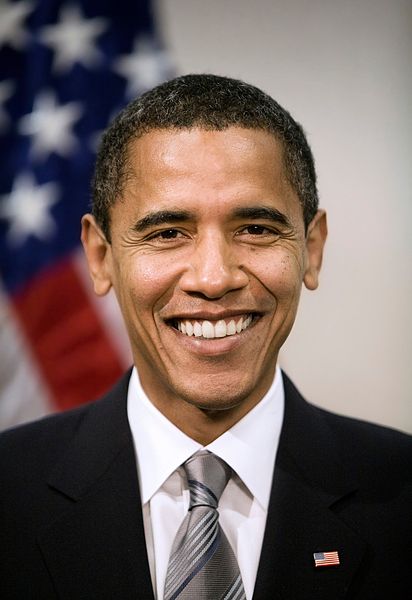
Since a blog is a variety of media, and since media endorse their candidates, Sects and Violence in the Ancient World endorses Barack Obama for President of the United States. I endorse Obama for the working class, for those who think clearly, and for those whom society doesn’t give a chance.

Working class credentials are at a premium these days among politicians who want to appear to be just like the most of us. Often it is, in the words of Bruce Springsteen, “a rich man in a poor man’s shirt.” Some of us, many of us, maybe most of us, have grown up in the working class. We are fed a theologically conservative line by our clergy and sometimes they make efforts to wrap it loosely around political conservatism as well. I don’t buy it. I grew up working class and that mentality has never changed. This is something Obama understands. He may not be perfect, but in this working world, none of us are. Empathy is still currency.

Bemusement would be my reaction to the factual gaffs made by not only Mitt Romney but also most presidential candidates from the GOP over the last two decades, were they not so serious. They show a loss of touch not only with the average person, but with reality itself. In their world of corporate-level wealth and extreme privilege they don’t even have to obey the laws of climate change as long as their obsequious sycophants are willing to change the facts for them. I am amazed at how easily the wool is pulled over the eyes of the American public. Does anybody really listen to what these guys are saying? Does anybody bother to try to add it all up? No, not even a slide rule will help.

The economy was not fixed over night. Too many years of too much greed have dug us deep, deep in a rut. From their armored cars speeding along in the midst of motorcades maybe the politicians don’t see the homeless I walk past every day on my way to work in the richest city in the nation. Maybe they don’t see the utter lack of hope, the death of possibility in the eyes of those who, through no fault of their own, society deems useless. I’ve been unemployed, even though I played by the rules. I learned there are no rules, save one. Those with wealth will do whatever it takes to keep it.

I think Barack Obama understands all these points. As for the honorable opposition, I think his diamond-lens glasses may have grown too thick to read clearly what the tablets say. And those tablets, I’m told, are made of gold.


Oil City Millionaires

Oil City Junior High School. Ninth grade. As a kid who grew up politically naive, Mr. Baker’s words felt like the Gospel. “People will never elect a president against their own economic interests,” he once said. Then came the Reagan years with “trickle down” bs, and, let’s be honest, the working class has been hurting ever since. Reading the political headlines, I’m frankly distressed that politicians no longer have any clear idea what working class life is like. Online I see working-class friends following, zombie-like, the richest man to ever run for President, daily proving Mr. Baker wrong. I’m not naive enough to think that most career politicians of either party know what it’s like to struggle for a living, but I have seen time and time again the Democratic Party trying to stretch out safety nets for those who receive no trickle down hand-outs. I do know what it is to struggle, and I do know that getting an education does not equate to getting a job. I also know that no Republican since Eisenhower has tried to be fair to the working class.

I grew up just outside Oil City, Pennsylvania. It was a town founded by potential millionaires because petroleum had been discovered in the region. Many get-rich-quick schemers settled these pleasant hills and valleys, but the oil pools were as shallow as a politician’s sympathy, and some of the towns in the region became ghost towns. The Oil City I knew was working class families, trying to get by; many grasping religion when politics never ceased to disappoint. We were children of Damocles. Somehow the message has morphed from when I was a child paying attention in school. The issue is now, “I’m not well off, but I sure as heck don’t want the government helping those worse off than me!” Trickle down indeed. To me it seems obvious why the wealthy skew “pro-life”—their schemes cannot succeed without a constant stream of desperate workers. Keep those kids coming!

Because as a child I read all the time, I knew there was a life outside Oil City. Paying my own way through college with crippling debts, I managed to get out and earn an advanced degree overseas, just to be fired by a Republican who thought my advocacy for fair treatment had no place in a seminary. Yes, I’ve felt the barbed lash of unemployment. I spent years wondering what might become of my small family as trickle-downs began defying gravity and wormed their way back up to the wealthy. I’ve never owned a house; none has ever trickled down to my income level. Those Oil City millionaires never gave me any handouts. But Oil City did give me an education. I learned to see through those who say they are protecting me and my future. The only thing they are protecting is securely tucked into their back pockets. I’ve seen their ads castigating Jimmy Carter, a president who is actually out there building houses for the poor. I’ve heard them blaming Obama for not filling in a trench that took Bush the Less eight years to dig. I say let’s just let trickle-down fill that hole. I’m sure the Oil City millionaires will be glad to kick in a greenback or two; after all no one ever votes against their own economic self-interest.

Trickle down.


Under the Rainbow

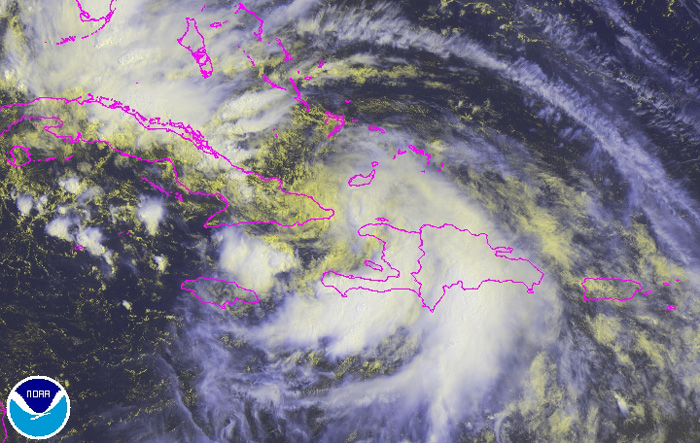
Great irony attends the bearing down of Hurricane Isaac on Florida, disrupting the start of the Republican National Convention. Ironic not because of the damage or destruction that normally accompanies hurricanes, but because of the silence concerning divine intent. When natural disasters—does anyone remember Katrina?—have struck against “sinful” collections of people in the past, the religious right has always been swift to designate them examples of God’s wrath. Now that God’s Own Party is being inconvenienced by a hurricane this time, well, it’s just nature. I wonder what it is that so easily distinguishes divine punishment hurricanes from benign, natural ones? In a perfect world we would perhaps have a God that saw no need to create hurricanes at all. In the world we inhabit, however, we face disasters of all sorts and have the added burden of deciding which God has sent and which s/he has not.

One of the main strands of this skein of tangled thinking is the blithe unawareness that politicians often use religion insincerely. People, just like our other primate cousins, learn to respect the alpha male and acquiesce when we might get hurt. Politicians, at least for centuries, have known that few people will chase down the logic of their muddled theological declarations. We all know and experience gut-level, emotional responses to issues that matter to us. We all desire to claim the sanction of higher power—who wants to come out and admit that their opponent has some aspects of the truth and that this is purely a human matter to be decided by reason? Reason tells us that certain behaviors are not tolerated by group leaders—just ask a chimpanzee—and those in power have trouble facing up to the facts.

In one of the saddest legacies of championing nationalism is the unshakeable belief, for any nation or leader that has not embraced an atheistic approach, that God is on their side. Both Allies and Axis powers claimed divine support in both wars to end all wars. During Vietnam Bob Dylan wrote “With God on Our Side.” Politicians still hum along but they have forgotten the words. No, it does not please me that once again a hurricane threatens life and property. I’ve been told that every cloud has a silver lining, however, and I wonder if that applies even to hurricanes. If Isaac, like his biblical namesake, can change perceptions of what God requires, maybe we can see politicians without their masks and ask what it is they really want. That, I believe, would be more stunning than any divine punishment delivered via giant bags of wind.


The Skinny on Kansas

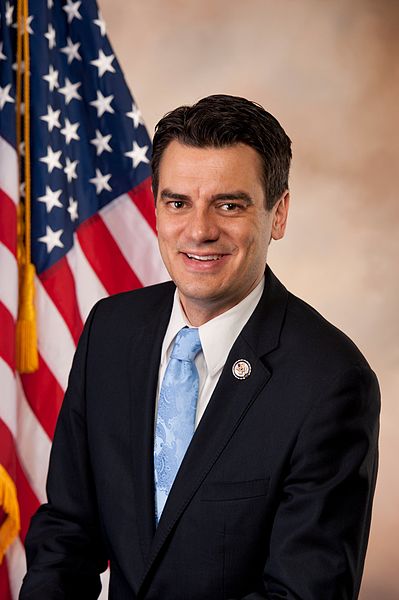
Perhaps it was just a slow news day, but Monday the Associated Press ran a story about a year-old skinny-dipping episode involving Kevin Yoder, US Representative from Kansas, and, by extension, Jesus.  Given that I’ve just posted on the skinny-dipping priest in A Room with a View, this seemed an apt place to consider what is being shown to the public. First of all, Yoder did not go au naturel in the swimming hole behind his house. The incident took place last August in the Sea of Galilee, the very body of water Jesus putatively walked upon.  Here’s the rub: with or without a boat, because of the association of Jesus of Nazareth with the Sea of Galilee, many people consider it a holy site. Even an Israeli police spokesman seemed a little put off by the mental image that, even if a year old, is a bit disturbing.  (The thought of any politician undressed is a bit jarring to the puritan imagination of the United States, and, one imagines, in many cases it is a reasonable phobia.) Yoder was reportedly in Israel for a trip funded by the American Israel Education Foundation. They were traveling to discuss international relationships, apparently.

As much fun as it is to catch a big player with his (less often her) pants down, I do wonder at the fuss. During my time in Israel—granted, many years ago and fully clothed except when in the shower—I noticed that American standards were not completely in force. A stroll down the beach in Natanya would easily prove my point. We like to hold our public officials to a higher standard that the average citizen, and given what they take from the system, rightfully so. Nevertheless, I wonder what harm is really done by a bit of juvenile fun. Obviously I wasn’t there, and I don’t have the context with which to judge such behavior accurately.  The Israeli police representative stated that public nudity is forbidden at the Sea of Galilee, so I suppose the legality of the act was an issue. American sexual mores, in addition to having been tempered by Victorian attitudes, are largely based on religious prejudices. The Bible is not shy on nudity, however, and people in the early Christian centuries participated in that world.  According to the Gospels, Saint Peter went fishing naked on that very same lake.  Progress obviously involves putting a cover on it.

Ironically, in trying to explain himself, Yoder said that the jump in the lake was spontaneous, a moment of joie de vivre, “just to have the experience.” He conceded that the Sea of Galilee is a special place.  And, he avers, drunk diving was not involved in the incident. No matter your level of tolerance, the emerging picture is an odd one. A group of government officials, one of them naked, standing around the Sea of Galilee at night.  A 30-something from Kansas jumps in for 10 seconds and it seems as if a storm arose over the feted Sea of Galilee just like New Testament times. One wonders how well our government represents the puritanical interests of their constituency.  Kansas, as we all know, is immune from evolution and provides a home for Fred Phelps and company. And it’s also a land-locked state. If you want to run around naked, and you’re a public official, it looks like you—like Dorothy—have to get out of Kansas.  Even then you might find yourself rocking the boat. Let’s just hope that if Peter’s inside he has the sense to pull on at least the girdle of righteousness before company comes.


Jefferson’s Legacy

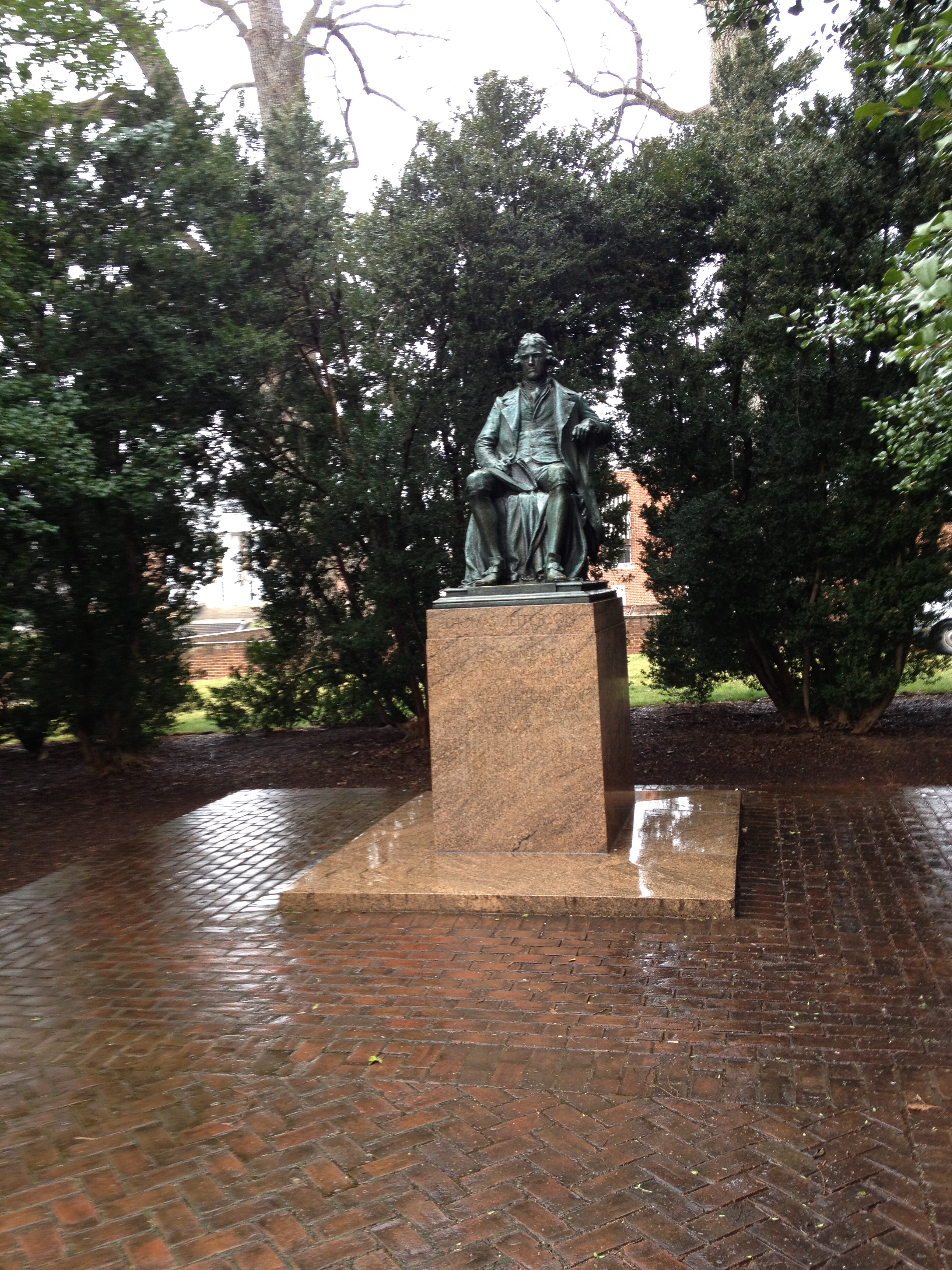
With the gears grinding in the political machine and candidates for the GOP nomination each trying to show they are more righteous than the others, the name of Thomas Jefferson gets used quite a bit. Jefferson’s famous Bible, literally cut-and-pasted together by one of our better presidents, removed miracles from the picture, and Jefferson’s writings leave open the question of whether Deist or Atheist is a more accurate description. I’m in Charlottesville, Virginia right now, home of that paean to Jefferson, the University of Virginia. For a state university, UVA has perhaps the largest religion department in the country. I noted with some irony, that the religion department is housed just above the political science department in Gibson Hall. While waiting for my first appointment, I sat in an alcove where two students began talking about politics. (This was in the religion department.) My chagrin grew as my grin faded with their lament about how poor the Republican candidates are, “but we have to get Obama out of the White House.” In order to do so, they’d elect a man whom they believe unqualified for the office.

Winston Churchill is often quoted as saying a person who doesn’t start out as a liberal has no heart, but who remains a liberal as an adult has no brain—or some such nonsense. The fact is, compassion never should go out of style. It seems to me that somebody changed the terms and what they mean. “Conservative” used to equate to a fiscal position that, while it favored the wealthy, still had sympathy—or even empathy—for those less well-off built in. Now it has come to define “selfish disregard of those different than me.” We see it all the time, not just in political speeches, but in acts passed in the name of Christianity. Jefferson’s Bible is being trampled underfoot. And we are told repeatedly that America was founded as a Christian nation. Of the students discussing politics here, the more conservative of the two was the woman.

Does she not realize that without the liberalizing tendencies of the suffragettes her own future would be limited? That does not excuse in any way the patriarchy that made suffrage necessary in the first place, but it does speak to how quickly we are taught to forget. Even in the land of Jefferson, there are those who would protect privilege and call it divinity. “It does me no injury for my neighbor to say there are twenty gods, or no god. It neither picks my pocket nor breaks my leg.” The words of Thomas Jefferson. In our great universities those who actually do learn are sometimes taught that empathy is weakness and fiscal gain is god. Unless it’s an election year. With great wealth going into the carnival we call the nomination process, we might legitimately ask what’s to become of us if those with no empathy are elected. After all, what are we, apes?

One of the few presidents worth casting in bronze


The Newt Roars

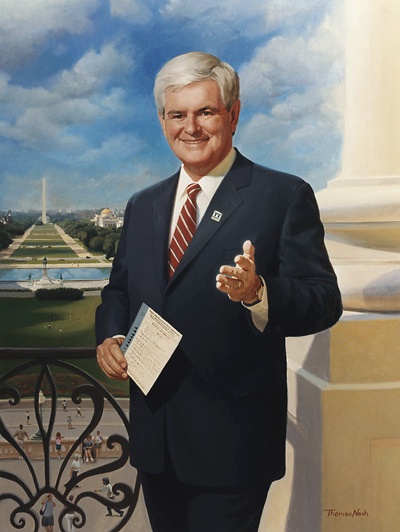
Today marks the final day of my Iowa odyssey. The state that is about as heart-of-the-nation as you can get is chaffing under the weight of political lard as the caucuses near. According to the Huffington Post, Newt Gingrich is roaring mad about the negative ads that are choking the airwaves. You’d think with a life in politics he’d be used to it by now. Religion, of course, is playing an undue role in this season’s GOP contest—everyone knows Mitt Romney is a Mormon and publishers are scrambling to get out books on that religion as fast as their authors can write. Rick Perry, to the chagrin of many, bears a Methodist affiliation and the religious sensibility of Genghis Khan. Of course, Newt appears relatively calm as a Catholic, at least for the time being. Jack Kennedy, however, he is not.

The Republican Party began a flirtation with religious conservatives as early as the Nixon years. Pundits realized that, like the Alaskan oil reserves, religious fundamentalists were an untapped resource to grease the rails to election day. Overjoyed to have a voice in high profile public office, the conservative Christian crowd began to wilt from the perceived failure of Jimmy Carter and began to glom onto the media image projected by Ronald Reagan. We all suffered through the Bush years, hearing more about God from the president than we heard about the soaring national debt or the coming crash that would implode upon the working class that elected him to office (so they say). Now, facing the choice of candidates wealthy enough to run for office, many are finding the choices on the shelves of the spiritual marketplace a little understocked.

Back in the days when America was young, the founders laid down rules declaring that no religious tests would be imposed on those running for public office. Their fears proved prescient and uncannily accurate. Today perhaps the biggest test any candidate has to pass is his or her religious affiliation. Can we imagine a Mike Huckabee, Sarah Palin, or Michele Bachmann without their Bibles tucked under arm? Religion has no corner on the market for sanity. Many, in fact, would argue that the indications sometimes point in the other direction. The corner America has painted itself into is not so much shaded with red, white, and blue, as it is with the muddy brown of religious slurry that has become the new politics. Newt, newly minted from his Southern Baptist heritage, is mad about mudslinging. I think Americans should be enraged about religion slinging instead.