Portrait of God as a Young Man

Famed swing state Ohio is back in the news with Jesus in the front lines. It was an unlikely setting to notice such a thing. I was sitting in a conference room at work, awaiting the start of a meeting. A laptop was set up with a projector, and the homepage cast upon the screen was msn.com. There, on the wall at work was Jesus’ name.

The story has to do with a public school in Jackson City. A student group had donated a portrait of Jesus to the school in 1947, but in a multicultural world the constitution sometimes has to take on the Prince of Peace.

CompositeJesus

While the legal issues are thorny, I have an even more probing question to ask. What makes a portrait a religious object? There is a fair bit of dispute about the historical Jesus—who he really was, where he was from. Despite the sangfroid of the New Atheists, there is little reason to doubt that there was a historical person Jesus. If that is the case, what makes his picture any different than that of Woodrow Wilson or Ronald Reagan? Or Churchill, with his religious-sounding name? One could argue that we don’t know what Jesus looked like—and this is true—but neither could we really identify many historical figures before the advent of photography.

The making of a picture into a religious object comes down to intent. Intent on the part of those who hung it, and on the part of those who view it. The 1940s were a different era. The Second World War was just ended, America was proudly Christian after fighting for the cause of truth, justice, and, well, the American way. Could the school group have donated Jesus in that era as the portrait of a great man? Without supernatural implications? I suspect we all know the answer to that.

Fast forward a few decades. The world has changed drastically. We are multicultural. The internet entertains us with such stories as this. If not for the internet, and a casually chosen homepage, I would never have even heard of Jackson City, Ohio. Is it possible that we could look at a picture of Jesus in our day without religious adoration? Quite possibly. But the furor raised by the religious right every time a perceived slight stirs up the dust would seem to make such an association impossible. Any prominently displayed picture of Jesus in a government location, no matter how local, is perceived as a religious act. It seems that we’ve lost our ability to appreciate the wider realm of possibilities. And that is sad. Who was Jesus, really? Historians and theologians come to no consensus on the issue. One thing is for certain, he’s sure to set people against one another wherever he appears.



Assaulting Pepper

“I’m a Pepper, he’s a Pepper, she’s a Pepper, we’re a Pepper,” so goes a jingle that is still in my head decades after I last heard it. Early in my marriage I learned that Dr. Pepper was my wife’s favorite, and we sometimes purchased it by the case when we felt daring. I seldom drink soft drinks anymore, having converted to a more juice-oriented penchant with the increase of years and poundage. I always found it to be a pleasant flavor, however, and it was a frequent choice in those halcyon days when I could eat or drink without much regard for potential tonnage. My wife resurrected my interest in the cola with a link to Time’s NewsFeed announcing that some Creationists are boycotting the soda because of an ad that looks like evolution. The ad campaign shows the evolutionary progress chart we’ve all seen with the tipping back of a Dr. Pepper making the ape human. Creationists aren’t known for their sense of humor, but boycotting a drink because of implied heresy implies a fascinating study.

Boycotting companies that offend moral sensibilities is not an unreasonable response to ethical dilemmas. I haven’t shopped for some products for years because I don’t like what the company does. My choice, I’m sure, has little impact but it makes me feel better about myself. Sometimes the choice is religiously motivated—if I don’t want to support a particular group I won’t buy a product they offer. Secular companies, however, seldom offend theological sensitivities. I, for one, would seldom know the guilty party: the founder of the company? The current CEO? Someone in upper management? An advertising director? Do all employees have to agree with my religious outlook? Ahh, but then there is the political angle.

This is a presidential election year and the first one since 1980 without a Republican candidate who is a darling of the Religious Right. Not to suggest that Reagan or Bush the First were really as religiously orthodox as they were presented, but the perception of their friendliness to conservative Christian causes went unquestioned. With a “liberal” in the White House and the only viable alternative a mysterious Mormon, frustration must be building. On top of it all, Dr. Pepper is showing a funny image that might be interpreted as suggesting a simian forebear to those who drink the stuff! I think I understand the anxiety, and it might help if they just had a drink to calm down. After all, “wouldn’t you like to be a Pepper too?”

Dare to evolve


Under the Rainbow

Great irony attends the bearing down of Hurricane Isaac on Florida, disrupting the start of the Republican National Convention. Ironic not because of the damage or destruction that normally accompanies hurricanes, but because of the silence concerning divine intent. When natural disasters—does anyone remember Katrina?—have struck against “sinful” collections of people in the past, the religious right has always been swift to designate them examples of God’s wrath. Now that God’s Own Party is being inconvenienced by a hurricane this time, well, it’s just nature. I wonder what it is that so easily distinguishes divine punishment hurricanes from benign, natural ones? In a perfect world we would perhaps have a God that saw no need to create hurricanes at all. In the world we inhabit, however, we face disasters of all sorts and have the added burden of deciding which God has sent and which s/he has not.

One of the main strands of this skein of tangled thinking is the blithe unawareness that politicians often use religion insincerely. People, just like our other primate cousins, learn to respect the alpha male and acquiesce when we might get hurt. Politicians, at least for centuries, have known that few people will chase down the logic of their muddled theological declarations. We all know and experience gut-level, emotional responses to issues that matter to us. We all desire to claim the sanction of higher power—who wants to come out and admit that their opponent has some aspects of the truth and that this is purely a human matter to be decided by reason? Reason tells us that certain behaviors are not tolerated by group leaders—just ask a chimpanzee—and those in power have trouble facing up to the facts.

In one of the saddest legacies of championing nationalism is the unshakeable belief, for any nation or leader that has not embraced an atheistic approach, that God is on their side. Both Allies and Axis powers claimed divine support in both wars to end all wars. During Vietnam Bob Dylan wrote “With God on Our Side.” Politicians still hum along but they have forgotten the words. No, it does not please me that once again a hurricane threatens life and property. I’ve been told that every cloud has a silver lining, however, and I wonder if that applies even to hurricanes. If Isaac, like his biblical namesake, can change perceptions of what God requires, maybe we can see politicians without their masks and ask what it is they really want. That, I believe, would be more stunning than any divine punishment delivered via giant bags of wind.


I Pledge Allegiance

It would only be with the most tentative and hesitant of reservations that a person might call her or himself an intellectual. The denotation carries with it such possibilities and potentialities of arrogance that even being seen reading Richard Hofstadter’s Pulitzer Prize-winning Anti-Intellectualism in American Life in public could be cause for considerable timidity. The end result, however, is so rewarding that it is worth the risk. Seldom have I read a single book that explained so much of what continues to define our society. As an historian, Hofstadter was acutely aware of American self-perception—so much so that it seems foolhardy to distrust him. Although the book was published in 1962, it seems as though the five decades of my life haven’t had time to transpire—things are shockingly similar to the myth of the 1950s that still drives the Religious Right. Hofstadter could be lurking in the corner with his pen even now. I turned to this book because I had grown weary of having felt set upon by a society I have only ever wanted to improve. In tracing the roots of anti-intellectualism Hofstadter clearly demonstrates that the distrust is felt on both sides of the divide. Having not had the dubious benefits of an affluent rearing, I simply followed where my limited talents led. What future is there for a poor boy who likes to read and write? My earliest and most honest aspirations were to become a janitor. At least in that job you can see the filth being scrubbed away.

Expecting an objective historical account of intellectual history, I was surprised to discover that the first section of the book dealt with the privileged place of evangelicalism in early America. I’m not so obtuse as to have overlooked the obvious mockery that the intellect receives so freely from the coffers of Christendom; one need only glimpse the headlines or listen to street-corner evangelists for a fraction of a minute to learn that. I had supposed that my limited experience had made me naïve in assuming religion stonewalls free inquiry. The problem, it seems, is endemic. Those who would suggest that brains are actually meant to be taken out of the box and played with incur the wrath of the almighty.

Hofstadter resisted keeping the gaze too long upon the faithful, for there are clearly other forces at work. The rugged, self-made individualism of a nation that consisted of frontier until comparatively recent times also plays into this suspicion against the self-proclaimed sages. We have all had the displeasure of knowing the self-impressed, and their sticky indulgence in immodesty clings to many who simply can’t turn off the motor in their heads. Instead of walking away from the book feeling justified, I instead felt reflective. My own perceptions have led me down the path of trusting the guidance of the soul (whatever it may be), but the perceptions of others raised in different circumstances lead to materialistic assumptions, or the hunger for power. Deep down inside, though, I know that I shifted perceptions by the slow, steady influence of education. There is no unlearning that. And education has brought us this far. And a little intemperance in appreciating intellectual life may be the most venial of sins.


Hope for the Flowers

Resurrection can become a tired trope, but it is the stuff of both religion and science. Last week it was reported that Russian scientists revivified a plant frozen on the tundra 30,000 years ago. Quite apart from proving that Siberia was already in place 24,000 years before God got around to creating the planet, this amazing feat teaches us lessons about life and its resilience, and also of the possibilities beyond the great pale. The scientists regrew the plant without the benefit of using seeds, making this a kind of virgin birth of the florid kind. Using plant versions of stem cells (the kind of science forbidden in the USA: “won’t somebody think of the seedlings!”), the dead plant was rejuvenated and is alive and healthy in a world vastly different than the mammoth-infested, frosty plains of northern Russia where it first saw daylight. Still, that environment was less hostile to science than the Religious Right. This resurrection shows that we don’t need miracles to bring inert matter back from the dead. No doubt there are covert Creationists trying to sneak into Russia with travel-sized bottles of Roundup in their carry-on bags.

Science has brought us to incredible places by its continued, self-critical process. Religion, preferring no critique, has given us characters like Rush Limbaugh, Glenn Beck, and Rick Santorum. And a really big book. Looking at the religious scene today it is difficult to believe that religions began as exercises in optimism—the world could be better if only we’d progress. Regress now characterizes the religion in the public eye—men (occasionally women) claiming that things were better when we were tilting with mammoths than they are now with people advocating equality for people of other genders, races, and sexual orientations. Science represents our progress, and the vocal theocrats claim we should be going backward. Back to when men were measured by the size of their spears.

Back when I was a teenager I discovered the book Hope for the Flowers, by Trina Paulus. Not really a graphic novel, and not really a children’s book, it tells the story of two caterpillars with the courage to reject the constant, heartless climbing so often required by the world. In the end, of course, they become butterflies. The story has a religious subtext, naturally, but it was for a religion that believed butterflies should be valued rather than smashed between the pages of a heavy Bible. Butterflies bring the pollen that allows flowers to thrive. We live in a world where butterflies have become soft and defenseless while religion is aggressive and offensive. Science has shown us the way to bring flowers back from the grave, but old-time religion is waiting in the shadows with its rusty scythe.


Loaded Symbolism

Perhaps it’s all the politics in the news, or perhaps it’s the very long nights of January, but death comes to mind during the winter. One of the enduring preoccupations of religion is the issue of death. Christianities teach of wonderful rewards or horrendous punishments after the sloughing off of this mortal coil. Many eastern religions suggest the even scarier idea of reincarnation—we are doomed to repeat this sideshow over and over until we get it right. Since the universe has billions of years to go, that’s plenty of time for errors. When we finally depart, however, we leave our loved ones with the dilemma of how to handle our remains. Burial goes back to the Paleolithic Era—simple, effective, little fuss. Nature reclaims what we have borrowed for a century or less. This is the preferred Christian end, for, believing in the resurrection of the body, a body must remain. In some form. Other religions, noting the cleansing power of fire, prefer cremation. Those original Zoroastrians still prefer exposure of the dead to carnivores. It is, however, generally our religion that dictates our final disposal.

Enter the entrepreneur. The corpse becomes a commodity. You’ve got a problem and you’ll pay well for a satisfying solution. Some years back I saw ads for a company with the scientific, yet romantic concept that, as carbon, our corpses could be pressurized into diamonds. It is a costly procedure, but you could wear your beloved around your neck or on your finger as a chunk of the hardest substance on earth. A few weeks ago I found a more affordable solution on the website of Holy Smoke. Once you have made the decision to go with cremation, what do you want to do with that urn of ashes? Holy Smoke offers a solution: you can have your loved one’s remains loaded into ammunition shells. Taking care to handle the ash with profound respect, Holy Smoke will place the remains into either rifle or shotgun shells (one pound of human ash fills about 250 shotgun shells). You can then be shot toward eternity by loving relatives at their convenience. Gunpowder-propelled toward Heaven itself. Holy Smoke is located in Alabama.

Welcome to eternity

The problem of human remains is perhaps the most religious one of all. Our faiths give us the hermeneutic we need to face that great portal. As we consider the number of useless deaths brought on by Bush’s personal war in the Middle East, a kind of macabre closure can be seen through the smoke. After all, the NRA endorses the Republican Party. So does the Religious Right (unless, of course, they nominate a Mormon). Perhaps if we loaded our guns with our dead instead of live ammunition, the symbolism might finally hit its target. Holy Smoke could be offering a valuable service here to be shared between religious enemies. Instead of the kiss of peace, well, use your imagination. Perhaps it’s the very long nights of January, or perhaps it’s all the politics in the news.


R-e-s-p-e-c-t A-l-l

Every great once in a while a politician makes a statement consonant with the principles of the nation. Over the weekend Robert Menendez, one of New Jersey’s U.S. senators, make a public announcement of his support for the Respect for Marriage Act. Admitting that 15 years ago he voted for the Defense of Marriage Act, which would not recognize homosexual unions, Menendez has searched his conscience (a rare commodity among elected officials) and has come to realize this “Defense” Act for what it is: legislated immorality. It is immoral for a government to deny rights to committed couples based on the gender of either party. Gender is a social construct that may or may not align with sex—even the concept of two completely distinct sexes is now seriously questioned by biologists. The old measuring rod of ability to procreate together just does not match reality: infertile couples are granted the same rights as other married couples, so why not same “gender” couples? As Americans we often like to vote without thinking too deeply about the topic.

The value of procreation is obvious. Birds do it. Bees do it. Even educated fleas do it. (Cole Porter knew what he was writing about.) When did we become so fixated on this one aspect of sexuality that we let it become the sole purpose of sexual behavior? Many religions recognize sexuality for what it is, a form of human interaction. The end result may be a new child, but it is not so as the result of the vast majority of couplings. Christianity (in some quarters) early on took a dim view of sex, and soon began to relegate it to procreational necessity only. Even then you were supposed to try hard not to enjoy it. The Catholic Church even relegates the biblical siblings of Jesus to the role of step-siblings; children of Joseph from a prior marriage, despite what the Bible says. Such distortion of nature could only come at the interference of religion. And as long as we’re busy regulating sex, let’s add a few statements about the only appropriate outlets for that committed relationship. Never mind who gets hurt. It’s all gonna burn.

I, for one, salute Senator Menendez for his willingness to open his mind. Too often the “government for the people” is excised from Lincoln’s Gettysburg address. When did we the people pass to the government the right to decide whom we might love? The agenda set by the Religious Right is religious wrong, and too many tax-paying citizens are the heirs of its paranoia. It is time the government began serving the entire electorate rather than just the Southern Baptists and their friends. Nobody is attempting to regulate their sex lives, as Ted Haggard, Jimmy Swaggart, and Newt Gingrich will gladly attest. Keeping the zipper firmly up is not the strong suit of televangelists or politicians. If we’re going to have double standards here, let’s at least open the game to same-sex marriages. Those who feel threatened by the fair treatment of others need to gaze long in the mirror and ask why.


Conversation with Solomon

“The rights and interests of the laboring man will be protected and cared for, not by labor agitators, but by the Christian men to whom God in his infinite wisdom has given control of the property interests of the country,” wrote George Baer of the Philadelphia and Reading Coal and Iron Company. In 1902. Along with Melville I’ve been thinking about old Ecclesiastes and his gloomy prognostications. The writer of this neglected book of the Bible claimed that nothing was new under the sun; what is has been before. I read the quote above in David DeKok’s Fire Underground (on which more later). I thought of Occupy Wall Street and the supposed great wisdom of the “Christian men” that God “himself” has appointed to towers of wealth for our benefit. As long as we keep our mouths shut and our hind-quarters out of Zuccotti Park. The data, Old Solomon, I must admit, are depressing. The staggering wealth of the top one percent is beyond unconscionable. Solomon? Are you still listening? After all, as one of the Lord’s chosen, Solomon was also a king. In his day, according to the book of Kings, silver was as common as the dust in the streets. Is that rain, or just drool from the towers of power?

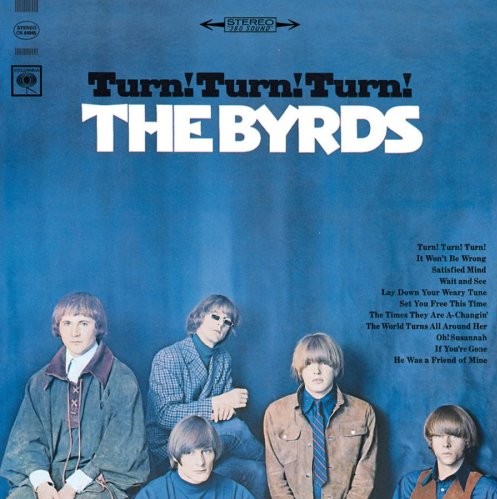
Old Ecclesiastes said the more that things change, the more they stay the same. He also inspired the Byrds’ “Turn, Turn, Turn.” As a society we have become reluctant to turn. Where did all that wealth go, Solomon? Did it not go to the temple and the palace? Seems there was a Religious Right even back then. As soon as Solomon died the common folk revolted. The chosen people split into two kingdoms that were never again reunited. Turn, turn, turn. The Christian men to whom God has given control have abandoned their posts. They’ve taken the cash and shared with their friends. Yes, America has kings. When the disparity is so great no other name applies.

“Cast your bread upon the waters,” Old Ecclesiastes says, “and it will come back to you in time of want.” I doubt that Solomon was ever unemployed. After working for “the Christian men” for over a decade, I was cast out on the waters, never to return. My stint of unemployment wavered in and out for six years. And I am one of the lucky ones. In that time I don’t recall feeling any wealth trickling down. I sure spent a lot getting the requisite degrees for a job that never materialized. So I sit down to read Ecclesiastes. Those who are addicted to wealth and power simply never took the words of the old sage to heart. We can excuse them, I suppose, since most clergy ignore him as well. When in need of some honesty, it is nice to know there’s a book in the Bible that is unafraid to utter the truth.


Elephants and Earthquakes

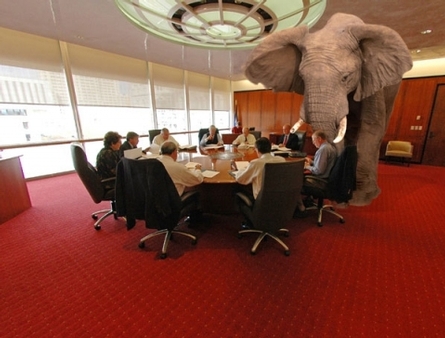
Two things happened yesterday that underscore the danger zone in which we currently live. The more dramatic event, an earthquake in central Virginia felt by many of us along the East Coast, had the social media tweeting for some time. The second event took the form of an editorial in the New Jersey Star-Ledger concerning GOP hopeful Jon Huntsman. Huntsman is quoted as saying, “The minute the Republican Party becomes the anti-science party, we have a huge problem.” An even larger problem is that the clock has moved well beyond the future tense. The editorial cites GOP candidates who routinely dismiss the science of global warming, evolution and other certainties as mere “data-fixing.” Perry and Bachmann have both decided they “don’t believe” in global warming. The elephant in the room, however, goes without mention.

The elephant in the room is religion, and it is a killer elephant, one that has a history of stomping those who attempt to control it. Politicians attack religion—whether or not it is bad juju makes no difference—at their eternal peril. In this “nation under God” (really under God) even a finger pointed towards conservative Christianity becomes a dagger plunged into a candidate’s chest. The Religious Right has been doing its homework for decades: no voice of reason can speak loudly enough to be heard over the songs of praise of the self-righteous. Reason, as scientists have discerned, cannot impact religious fervor. Belief can withstand a full-frontal attack from logic, reason—all that is sacred to rationality—and emerge without a scratch or dent. It is time that those in the middle and left took religious studies seriously.

Then I felt the earth move under my feet. As our house swayed and I checked on my daughter, I couldn’t believe I was feeling my third earthquake. I checked the web to see what in the world was going on. Interestingly, no witch doctors or Fundamentalist soothsayers were being consulted, but the scientists were. The news stories emerging minutes after the ground shook from Pittsburgh to Concord to Chapel Hill rang with the refrain, “scientists say.” Where was Rick Perry and his dowsing rods? Where was Michele Bachmann and her chicken bones? No, the religious war on science was switched off for a moment and those who felt afraid listened to those who actually knew what they were talking about. It was the elephant moving around the room, I say. It will only be a matter of time, however, before it is claimed that the people of Mineral, Virginia did something evil to prod an angry god into action.

Nobody felt anything, right?


Friend of Jonah

Last year a gray whale was spotted off the coast of Herzliya in Israel. As in the days of Jonah. Actually, we need to turn the clock back a little further. According to Arthur Max of the Associated Press, the gray whale was hunted to extinction in the Atlantic already in the eighteenth century. This whale, therefore, had to travel north of Canada from the Pacific Ocean through channels that are normally frozen. Global warming has opened these passageways and plankton last seen in the north Atlantic 800,000 years ago have begun to reappear. If Jonah was smart, he’d have stayed in that whale and would’ve just kept going.

Big business stands to lose the most from cleaning up the environment. It cuts into the bottom line. Happily, if brainlessly, joining the laissez-faire coven are many of the “Religious Right” who see destruction of the environment as part of God’s plan. So much for “and behold, it was very good.” When free market economists first met the conservative evangelicals it seemed that they had little in common beyond similar haircuts and a desire to turn time back to the 1950s. Since then they’ve joined to become a very powerful force in American politics, preventing any headway to improving the globe for others, even if it isn’t a personal concern of theirs. So much for “do unto others as you would have them do unto you.”

Each year in my Prophets class I have students that are far more concerned that a literal Jonah was swallowed by a literal whale rather than hearing the message Jonah proclaimed: repent or face destruction. If we turn the thermostat up a few degrees more each year maybe Jesus will finally jump on that white stallion and split the Mount of Olives. You can’t quite see the Mediterranean from there, but if you could you might spot a lonely gray whale. You don’t need to look for the little man inside. That whale is the sign of Jonah.

Wave to Jonah for me!


Freedom or Religion

Reform seems to be in the air. Its effectiveness varies from location to location, but what remains constant is the impact on religion. Or religions’ impacts on those dissatisfied with its application. As Syria begins to follow Egypt and Libya, a sense that the authoritarianism imposed by religious ideals is somehow flawed is sublimated in the news, yet clearly present. Regimes, be they Islamic, Christian, Hindu, or any other belief system, count on unquestioned authority to maintain control. Even the Catholic Church has been toying with reform – quietly, slowly – for any admission of change calls into question the authoritarian roots of power. Once that basis begins to crack, freedom has a chance to emerge.

In American society where freedom has perhaps blossomed most fully, there should be no surprise that a religious backlash is underway. In many ways liberty and religion stand at odds with each other. Religions make universal claims, drawing authority from none other than the One who started it all. Freedom begins at the ground and works its way up. Humans are natural followers, flock animals. Remember, Jesus said he was like a shepherd. When the shepherds apply the crook a little too liberally, even the sheep begin to plot. In many nations of the Middle East, the faithful have been kept in poverty and subservience. The Berlin Wall, however, was in the minds of the intimidated.

The United States has even backed the cause of the oppressed overseas, attempting to break up dictatorships that began before I was old enough to remember. And yet in our own backyard the Religious Right continues to make America like a western version of Syria or Libya. A nation of people under the rule of legislated morality that certain distorted versions of the Christian gospel advocate. Prevent equal rights to women and minorities by keeping the seat of power within the WASP community, although you may have to bring in some Catholics and Mormons to assist with the cause. The eyes of the world are on the Middle East, for any whiff of freedom, however faint, is cause for hope.


Holy Matrimony

BBC Two is currently airing a series entitled The Bible’s Buried Secrets, unfortunately not yet viewable in the United States. The episode “Did God Have a Wife?” is presented by my colleague Francesca Stavrakopoulou, who did, no doubt, an admirable job. So once again Asherah finds herself in the news. The issue of monotheism is intricately tied up with how gods related to one another in the ancient conceptual world of Israel and its neighbors. Since the gods were modeled on humans, their behaviors could be embarrassingly human as well. Myths of actual divine marriages are rare, and extra-consortial affairs seem to have been pretty common. This aspect survives in the classical Greek world where Zeus’ many trysts are among his most notable deeds.

In a society like ancient Israel where marriage was a regular expectation of all young people who survived to marriageable age, an obvious mystery attends a single god. If Yahweh is male – and the Hebrew Bible seems not to dispute this point – would he not require a spouse as well? The well known Kuntillet Ajrud and Khirbet el-Qom inscriptions appear to suggest that Yahweh had a wife, and if he had the Religious Right should only rejoice since that would seal their definition of marriage forever in this literalist nation. And yet, the Bible remains decidedly mute on this point. In the end, it is interpreted that male is superior to female, again, pleasing certain religio-political factions.

Marriage in a human institution. It is a practice concerning which the Bible is strangely taciturn. In ancient times marriages (unless among the gods) were secular, not sacred ceremonies. Among a human population in danger of dying out through attrition, marriage ensured prolific reproduction. According to Christianity, even God had a kid. In a world that has changed in ways that biblical writers could never have imagined, marriage as a source for an increasing population is more problematic than it is essential. It seems that the jealously guarded definition of marriage is really just another green-eyed monster lurking in the Neo-Con closet. Maybe once Yahweh’s marriage certificate surfaces the issue of what marriage is really about will be discussed rationally.


Frippery or Faith?

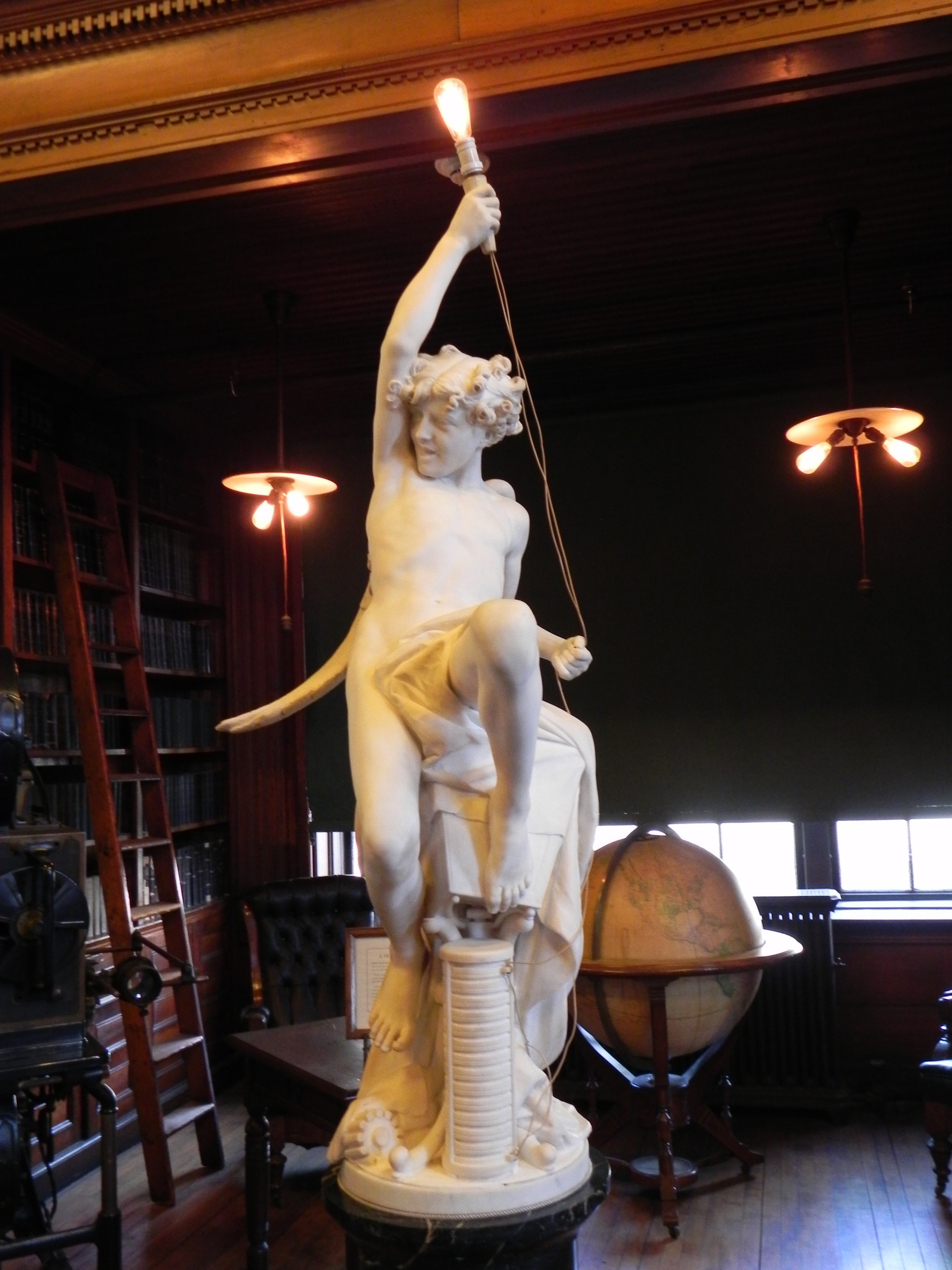
A lesson quickly learned in New Jersey is that the state has housed its fair share of geniuses and that inspiration takes many different forms. From Albert Einstein to Thomas Edison, these thinkers have changed the complexion of not only the state and country, but also of the entire world. While on a visit to Edison’s final factory and laboratory in West Orange yesterday, his devotion to thinking could not be overlooked. With little formal education, Thomas Edison taught himself what was necessary to become one of the most prolific inventors in the history of the world. The key to what he believed to be purpose of human existence is, sadly, under fire from politicians who’d rather keep the populace in the dark while they (the politicians) make the important decisions. “The man who doesn’t make up his mind to cultivate the habit of thinking misses the greatest pleasure in life.” So Edison said. Bully governors would rather turn out the lights.

As politics and conservative Christianity become even more intimate – if that is even possible – those who do not share their views are considered dangerous outsiders. As a religion specialist, it is difficult to gauge how sincerely such politicians take their religion. As their lifestyles clearly indicate, what they practice is as far from what they preach as the east is far from the west. Manipulating sincere, if misguided, believers into marks that will propel them into seats of power, they talk the talk. “Faith, as well intentioned as it may be, must be built on facts, not fiction – faith in fiction is a damnable false hope.” So said Edison.

If we measure the religion of the Religious Right in terms of action, it clear that their principles have far less to do with what Jesus said and did than with securing personal gain. Women are placed in subordinate positions; the poor, minorities, those who work to keep the economy afloat while the wealthy suck in more than they could possibly use, these people become targets rather than neighbors. Roman emperors knew the society was dissatisfied and provided bread and circuses. The Religious Right is perfectly capable of learning the more insidious lessons of history. If they had been around in Edison’s lifetime, no doubt they would have tried to turn off the lights so that we’d all remain in the dark. In such a situation it might be wise to leave the final words to Edison: “Religion is all bunk.”

Let there be light!


Jane Who?

“Conventionality is not morality. Self-righteousness is not religion. To attack the first is not to assail the last.” So states Charlotte Brontë in the preface to the second edition of Jane Eyre. I am inclined to believe that the lines were widely ignored by clergy and politicians, for public leaders in nineteenth century Britain were not likely to take the advice of a young lady who only had one real credit to her name. Politicians and clergy of twenty-first century America can hardly be expected to have read Jane Eyre, for how would this woman know the harsh realities of how to assert one’s own will on the masses? In the stewing tea pot of the Religious Right, conventionality is morality. Self-righteousness is religion. George Santayana might well have saved his cramped fingers from writing, “Those who cannot remember the past are condemned to repeat it.”

As politicians oil their moving parts in preparation for next year’s great race, they know that many constituents will gladly accept conventionality as morality without asking about the origins of such practices. Schoolyard bullies who seek their own aspirations praise the great darkness that has settled over New Jersey where education is simply a commodity with which to bargain. Jane Eyre? Who’s she? If she’s a constituent, I’d better spin this slashing of education funds to her liking. Without an educated public, it is much easier to bolster one’s personal authority.

For years educators have been watching in dismay as other developed nations soar past American expertise in science, math, and even geography. Our response: let’s cut education funding. Conventionality is morality. Education teaches children to think for themselves. Is it not better to show them that self-righteousness is religion? We can put other religions on trial (thank you, Mr. King), while conveniently forgetting our founders were largely religious dissenters. To know that, however, you have to read a little history. We are far too busy plotting how to shortchange our future in order to feather further already overly plush nests.


Gila’s Got the Whole World

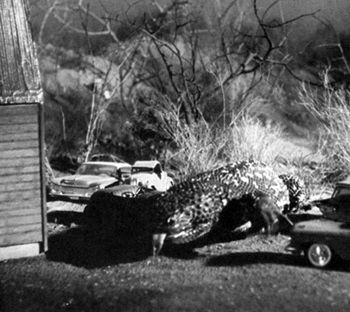
Singing pretty-boys and colossal lizards – it must be time for The Giant Gila Monster. A horror film that portrays all the innocence of the 1950s before the Beat Generation led us down the path to reality, the film has earned cult status in recent years. More accurately titled, “A Regular-Sized Gila Monster Filmed in Close-Up,” the sub-mediocrity of the movie has probably done more for preserving it in popular culture than any other aspect. The film stars the relatively unknown Don Sullivan as a great teen role model who writes and performs his own songs. The number that receives the most Internet attention, and the one that makes this movie of interest to this blog is “The Mushroom Song.” Chase Winstead (Sullivan’s character) has a young sister who is just learning to walk with leg braces. To cheer her, he picks up a ukulele and sings: “And the Lord he said I created for you/A world of joy from out of the blue/And all that is left to complete the joy–/Just the laugh of a girl and boy/And there was a garden, a beautiful garden/Held in the arms of a world without joy/Then there was laughter, wonderful laughter/For he created, a girl and a boy/And the Lord said, laugh, children, laugh/The Lord said, laugh, children, laugh” with the final line repeated numerous times.

Laugh, children, laugh

Perhaps intended to underscore the societal norms of a time when “the Lord” made frequent appearances as an unseen supporting actor in many movies, this song is oddly out of place. The disability of Missy Winstead is obviously a device to raise tension: how will a disabled girl run from a giant lizard? The song, however, provides the resolution – the Lord will take care of all good people. Their response should be to laugh. The reference to Adam and Eve, fitting for teen fantasies of all generations, also belies the evolution of this monster. The gila grows to its great size because of chemicals in the water that wash to the delta somewhere in Texas. This creature did not evolve. The Lord will take care of it. The Lord and nitroglycerin.

Respectful teenagers with predictable haircuts and a society that believes a missing teenage couple could be doing nothing but eloping fits the world of the Religious Right exceptionally well. Even though they may not be perfect, these kids know right from wrong for they live in a black-and-white world with no ambiguity or ambivalence. Children of subsequent generations have grown up with shades of gray or psychedelic colors. The older generation is frightened by new developments, claiming that the world they know is about to end. In fact, an evolution is occurring. Those who try to hold society to the norms of the 1950s would do well to move ahead a decade and at least listen to Bob Dylan. No matter how far we progress, however, it seems that Texas will always delight in producing Lord-loving, bloated threats to rational civilization.