Bible According to Batman

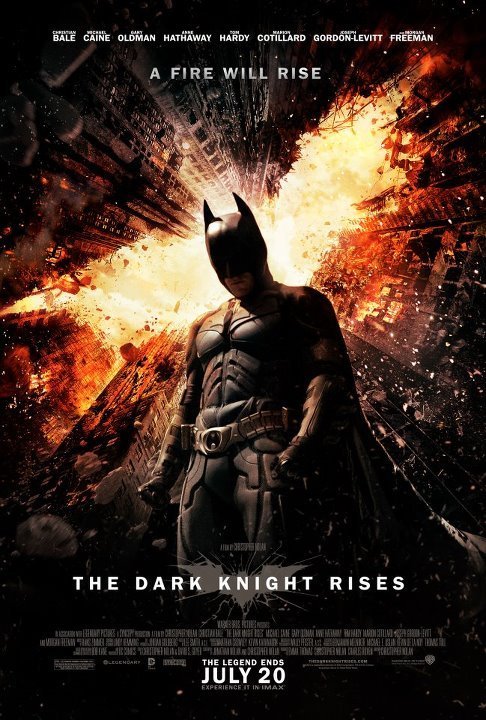
DarkKnightRises Biblical tropes are alive and well in popular culture. Many would choose the flight option rather than admit they enjoy a good Bible story. They may anyway, however, without realizing it. Although The Dark Knight Rises came out over a year ago, I only just had the chance to watch it. For a kid who grew up on the campy 1960’s television series, Christopher Nolan offers adult fare. Put the kiddie menu away and sit up straight at the table. I don’t read reviews, in general, before seeing movies because I don’t enjoy spoilers. I had no idea whether Batman would come out of this alive or not. I wasn’t really even sure who Bane was (even before The Dark Knight everyone knew who the Joker was, or thought they did). The Dark Knight Rises places the whole of Heilsgeschichte (sacred history) before the viewer with verbal cues. Unless you’re reading while watching, you’ll miss it though.

Bruce Wayne is clearly cast as the wounded healer in this final installment of the trilogy. Physically and psychologically crippled, he hobbles around in a combination of Jesus and Yoda figures, somehow supernatural yet fully human. Death and resurrection transpire twice for him in this film. When Bane breaks Batman’s back (an often fatal injury) even Catwoman thinks he might be dead. He is very much alive, however, in the prison only “Bane” escaped (resurrection one). Not only does he rise from the grave, he also ascends into heaven by escaping the well—anyone who’s read Jeremiah, or even Genesis, knows the origin of that motif. Risen, ascended, and glorified, Batman returns to beat the crap out of Bane. But the bomb is still on the loose and before Batman faces his nemesis he tells Commissioner Gordon to arrange “an exodus”—Joseph’s descendants must get out of Egypt. At the Red Sea (the Hudson River) the Pharaoh’s army blocks the exodus of the children of St. Swithun’s who, in response, bow their heads in prayer (am I the only one seeing this?)

Commissioner Gordon, found guilty of betraying the common man, receives the sentence of Exile (“death, by exile” to be precise). Again, those sensitive to Jeremiah know that exile is a kind of death, but death with a noble purpose. The Heilsgeschichte of Israel involves exodus and exile. The Christians added on death, resurrection, and ascension. Christopher Nolan put them together in one Dark Knight. But I mentioned two resurrections, no? Flying the bomb out of Gotham, Batman is definitively blown to smithereens—the blast radius was, after all, six miles. And yet, Alfred has a post-resurrection visitation, where no touching occurs (Touch me not; for I am not yet ascended to my Father) sees his savior. Was the Bat the Holy Spirit on autopilot? Is that Catwoman with him? Might I be so bold as to type Mary Magdalene? Well, I may be over a year late with my observations of The Dark Knight Rises, but as I think Christopher Nolan understands, the Bible has been lying around even longer. If the success of this movie is anything to go by, it will be around for a long time yet to come.


Resurrinception

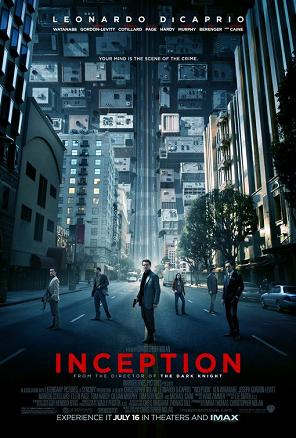
Inception_ver3Like most profound movies, Inception keeps me coming back repeatedly. I’ve already written a post on how the Theseus and minotaur myth lurk deep within the labyrinths of this film, but upon my most recent viewing a new angle caught my attention. In the first level down into Fischer’s dream, when Saito is unexpectedly shot, Eames asks Cobb, “What happens when we die?” It could be the question of a child faced with a dead pet for the first time. Of course, Eames refers to death in a dream under sedation, and limbo is the closest thing to spiritual death that a person can experience. The timing of that question, however, triggered in my head the number of resurrections that take place in the movie. I have frequently noted here that resurrection is a standard part of the tool kit for western movies, particularly American ones. We expect resurrection. So, finally, three layers down, a dream within a dream within a dream (even Poe would be proud), Saito dies. He is lost in limbo.

Limbo is a fuzzy theological construct thought up by the church for those who don’t deserve Heaven, or Hell, or even Purgatory. Some, it seems, end up in limbo. In Inception limbo is unconstructed sub-conscious, an area even Freud would fear to tread. Saito dies and goes to limbo. Fischer, meanwhile, also ends up in limbo because Mal shoots him dead in the third-level dream. Mal is already in limbo because she killed herself in real life—or was it a dream? Cobb, of course, must die to return to limbo to retrieve Saito so that he won’t be arrested when the plane lands. In limbo, three of the four escape, riding the kick back up to consciousness. Only after baptism in the first level dream, when the van plunges into the river, do the lost souls emerge. What happens after we die? Resurrection.

I’m not suggesting that Christopher Nolan planted a Christian idea in the viewers’ subconscious mind. Resurrection is part and parcel of our culture. Perhaps, however, this helps to explain the durability of some religious concepts. We long for resurrection on such a deep—maybe subconscious—level that we want to see it on the big screen. Even ghosts, we’re told, haunt because of unfinished business. It is Saito, the Japanese business mogul, however, who undergoes the most resurrections. He dies in the van underwater, in the fortified mountain hospital, and in limbo (perhaps in the elevator as well, but this is uncertain). His is a regular reincarnation of resurrections. Inception, I’m sure, will keep me coming back for more. One of the questions that none of us escapes while alive, is that uttered at the level of the dream.


It’s All Gonna

When I first got married, I was distressed to learn that my wife was an organ donor. Still fresh from seminary, I had yet to outgrown the theological willies concerning earthly remains. Then she told me that she would prefer cremation to burial. My existential angst spiked. Scripture indicates a bodily resurrection, so what about those who are cremated? Obviously I hadn’t thought through the implications seriously. Even for those who are biblical literalists, all kinds of things have happened to Judeo-Christian bodies over the millennia. People have been eaten by wild beasts, fallen off boats, and been cremated without the benefit of being dead first. If the movies I’d watched growing up were to be believed, some might have even fallen into huge vats of acid like they have sitting around laboratories all over the mad scientist world. This week’s Time magazine has demonstrated, however, that my early angst was not a singular one.

In a story about the rise in popularity of cremation Josh Sanburn (with an ironically appropriate surname) addresses the religious objections head on. The reason America has been slow to adopt cremation has been largely religious. Apparently the factor that has turned up the heat on this motivation is financial. Let’s face it: money talks. Cremation costs much less than standard burial, and as much as I like a moody, whimsical cemetery, it just makes better sense. If you can get over the religious objections.

Resurrection has a powerful draw. Movies just wouldn’t be the same without it, whether it is a horror villain whose body disappears to come back in a sequel, or ET rising from his tomb to tell us all to be good. We want to keep it going forever. Life, that is. Funnily enough, resurrection is a miracle. A God who can raise the dead can surely reconstitute the parts, no matter how scattered or charred. Anyone who’s actually looked at a decayed body knows that bringing that thing to life would take a miracle, especially if other newly resurrected bodies want to hang out in the same room with it. As my critical faculties began to grow, I lost my fear of cremation. Maybe even having your ashes mixed with those of your spouse would be a very fitting symbol. Chances are, you won’t have much to say about it in any case. When I went back to the DMV to renew my license, after my wife talked some sense into me, I came out with an orange organ donor sticker affixed to the back. Perhaps life will go on, after all.

DSCN3300


A Weird Resurrection

Driving through an unfamiliar city doesn’t allow for much time to appreciate what you’re seeing. Back in February when I was visiting Austin, Texas for the first time, it was 65 degrees outside. Given the irascible temperatures in New Jersey this year, that felt like summer. Of course, the locals were bundled up since it was, for Texans, unseasonably cool. The weather has been off this year. Of course, we know who to blame. Cthulhu. As I was trying to find the University of Texas with an impatient GPS as my co-pilot, I spied someone walking down the street wearing a Cthulhu ski mask. I can’t express how badly I wanted to pull aside and snap a photo, but pulling aside in a strange city can lead to unwanted adventures. Especially when your co-pilot is an opinionated GPS. I’ve been to north Philly and the south side of Chicago. I didn’t want to take any chances that Austin might hide such districts.

Cthulhu mask

H. P. Lovecraft, like most original thinkers before the computer age, was ignored in his lifetime. I wonder what he would have felt if he had divined that the internet would one day bring him world-wide fame. His writings, of course, had been appreciated before the computer was invented, but the web has nearly as much Cthulhu as it does LOL Cats. Even those who’ve never spent a dark night curled up with the Necronomicon recognize Cthulhu’s octopoid visage when they see it. Davy Jones of the Pirates of the Caribbean fame borrowed his unforgettable face from the Old Gods discovered by Lovecraft. Cthulhu has become a cultural icon of the chaotic, the cosmic, and the somewhat comic.

In a strange way Cthulhu stands for resurrection. In Lovecraft’s mythological world Cthulhu lies under the sea, dead but dreaming. A dying and rising god of utter terror. Lovecraft, an atheist, built his fiction nevertheless around a series of gods. Today his stories are noted for their moody portrayal of improbable worlds, and his storytelling has had an incredible influence on many of those who attempt to generate worlds that are fantastic but somehow still believable. Cthulhu’s resurrection, however, is not to be desired. Even if these he represents life anew, it is a life humans could not bear. In a deeper sense yet it is Lovecraft himself who has experienced a kind of resurrection. A writer forgotten in his lifetime, but rediscovered when it was too late for him to realize just what he’d created, the true master of Cthulhu, I like to believe, lies dead but dreaming, and he has already revealed that he will rise and the masses will tremble.


A Scream or Two

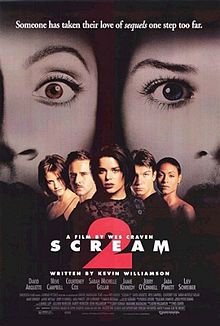
Scream2A few weeks back, for my weekend fix, I watched Scream. I hadn’t seen the movie when it came out in 1996, but having seen so many references to Ghost Face I felt I was missing out on something. I was disappointed, however, at the relative lack of religious imagery or dialogue in the film. Such motifs are so common in horror films that I’ve come to depend on them. In fact, there was nothing supernatural in the movie at all. This weekend I decided to follow it up with the sequel that many claim is better than the original, Scream 2. It is the same self-aware exposé of horror gimmicks and tropes, providing several clever frights along the way. But this time there was more religion. Not that it was overt or central, but it was clearly there. My thesis was bolstered a little bit since the storyline felt the need to come back and pick up what was mostly lacking from the first film.

Sidney draws first blood in the sequel by comparing a sorority to a religion. Not much, but a start. We find out that Sid has taken up drama in college, where she has been cast in the role of Cassandra, the prophet of Troy cursed with never being believed, although always being right. In the truly disturbing scene from the play we’re shown, Zeus himself comes down and points a godly finger at the frightened girl. The real religious imagery, however, comes toward the end of the movie when Derek is tied up, cruciform style, by his frat brothers for giving away his letters. He plays the role of the sacrificial lamb as Sid comes face-to-face with the Ghost Face duo, and when his dead body is lifted up on the stage prop, the camera angle reveals either an angel or an ascending deity, arms spread out as if on a cross. Life has been laid down for life, a distinctly religious theme.

What would horror be without resurrection? The villain always comes back from the dead, having easy access to that which is denied the regular mortal. This factor alone suggests that most horror films are transmuted religious fulfillment wishes. We live in a time when religion seems to have lost its transcendent power, and yet we long for resurrection. Horror movies tell us it is available, but at a very steep price. Perhaps it is an unintentional motif, but it is a pattern that occurs so often that it feels integral to the very conception of the scary movie. That which we long for the most is the most terrifying. Horror films aren’t for everyone, but their popularity shows, on some level, that our society hasn’t given up on religion just yet. Scream 2, the resurrection of a wry, witty, and somewhat gory original, brings fear and religion together once more. Religion, like the horror villain, never really goes away.


Wrongful Resurrection

Re-Animator

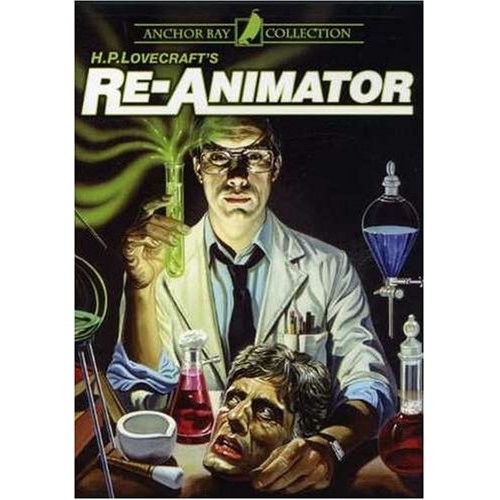
H. P. Lovecraft was a tortured man. An atheist, he saw the inevitable dilemma of human life. We want to live forever, but even the short time we have is full of suffering. Almost Buddhist in his sensibilities, Lovecraft also knew the hubris of trying to reach too far. I was reminded of that when I recently watched Stuart Gordon’s Re-Animator. Like most of Lovecraft’s stories, the translation to film is difficult. The angst and haunting lie far too deeply embedded in the original stories to show, even with the finest acting, with any degree of verisimilitude. And the tales have to be padded out to get to that magic 85-minute mark. Nevertheless, there is something of their master still in them.

Re-Animator is based on Lovecraft’s short story, “Herbert West—Reanimator.” West discovers the secret to bringing the dead back to life. In the movie version, the result is unremitting chaos. The dead are somewhat zombie-like until Dr. Carl Hill, very freshly dead, retains his consciousness and begins his insidious plan to create a cohort of more proper zombies to do his will. Like Gordon’s other interpretation of Lovecraft, the eerily moody Dagon, there is a little too much blood-lust for my liking, but a point is being made, so I watch on. The point is very much at the heart of Lovecraft’s personal dilemma. We want to live forever, despite the pain and disappointments of the life we know. Life is optimistically resilient that way.

Lovecraft died a painful, natural death at the age of 46. His writings never demanded much attention during his life—thus seems to be the fate of many of the truly original. In the 76 years since his death he’s gained an enviable following. He might almost be said to have achieved a kind of immortality. A safe immortality. As he knew in life, resurrection is a double-edged sword. We may be reluctant to give up the only life that we (most of us, anyway) have consciously known, but have we really considered the implications of going beyond the line that nature has drawn for every living thing ever animated? Our technology keeps us alive in bodies that only continue their inexorable march toward the grave.

Am I sounding a bit bleak? Blame it on the rain. Immortality, in any belief system, only comes at a great cost. H. P. Lovecraft knew that and took the risk in spite of it.


No Play-Thing

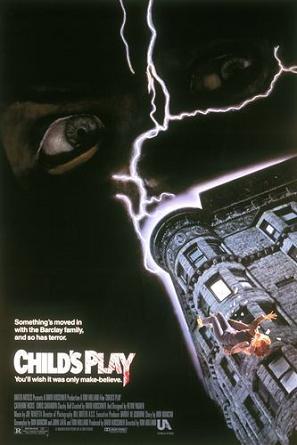
Childs_PlayPossession. It’s one of the scariest concepts in the religious arsenal. The idea that a person could be taken over by a different entity and surrender his or her selfhood to a malevolent saboteur is frightening indeed. Horror films have been deft at exploiting this. As a college student I was slow to watch the latest horror flicks. Some I’m only now beginning to find. Over the weekend I watched Child’s Play for the first time. Like most people who have some sense of popular culture I knew that Chucky was an evil doll, but I never really knew the backstory. Despite the utterly untenable hypothesis of the movie, it still manages to be scary in our CGI world, despite the bogus lightning. The frightening part comes from what is an admittedly creepy doll in the first place becoming possessed by a religious serial killer. Charles Lee Ray, named after three infamous assassins, displays facility with a religion that some identify as voodou, although that association comes primarily from the voodoo doll that Chucky uses to dispatch his mentor.

At least Child’s Play makes the effort to explain what forces exist that might bring plastic and stuffing to life. In true horror fashion, it is not the Christian god, but forces that are somehow more powerful, more malevolent. It would hardly behoove the maker of all the universe to inhabit a Cabbage Patch knockoff. The Lakeshore Strangler has been in training to cheat death and remain alive forever. He takes lessons from a mystical character whose religion is referred to only obliquely, yet whose efficacy is obvious in the malevolent toy. Willful suspension of belief is necessary to make this resurrection story plausible, but that disbelief must include belief in religious powers. The horns of this self-same dilemma hoist all religious believers in a scientific world.

Chucky is participating in one of the oldest of all religious traditions—death avoidance. Some of the earliest evidence that we have showing that hominids were developing religious sensibilities is the burial of the dead. There is really no reason to bury if we are only carrion like every other meat-based product. Whether it is out of fear or reverence, we turn to religion to assure us that there’s something more. It may not be scientific, but that’s largely the point. For many even today, a concluding scientific postscript leaves a body cold. Time for a leap of faith. Horror films are often decried as lowbrow and unsophisticated. Chucky, however, like many mythic monsters, is rapping his inhuman fingers on the door of religion. Specifically resurrection. Although in this case, it might be best to keep that door firmly closed.


Priests, Queens, Goddesses and Fruit

“And when the woman saw that the tree was good for food, and that it was pleasant to the eyes, and a tree to be desired to make one wise, she took of the fruit thereof, and did eat, and gave also unto her husband with her; and he did eat.” So Genesis 3.6 summarizes the most expensive meal in the history of eating out. For centuries the literally minded have wondered what the exact species of fruit might have been. The apple was long favored because its Latin name sounded suspiciously like the word for evil. In the Bible the fruit with the most theological freight, however, was the pomegranate. The high priest’s robes were designed with dangling pomegranates alternating with silver bells along the hem. Some have speculated—and it can only be speculation—that the tree of life, rather than the tree of the knowledge of good and evil (the latter better abbreviated Totkogae) was a pomegranate. For the Greeks, however, the self-same fruit led to Persephone’s entrapment in the Underworld for half the year.

Although the Bible doesn’t specify this, the apparent reason for the pomegranate’s privileged religious meaning seems to have been its numerous edible seed casings, or arils. Over time it acquired the association with fertility—not surprising with its numerous seeds. Indeed, my first experience of pomegranate was in seminary, which, like its name implies, is a place of great fertility. It is one of the more labor-intensive fruits, however, having a tough skin and plenty of inedible membrane. Even with Christianity’s inimical disdain for all things reproductive, the pomegranate survived in Christian art and symbolism, becoming a symbol of—what else?—resurrection.

Today, POM Wonderful has claimed the life-giving qualities of the pomegranate as its signature for good health and long life. This California company even has a history lesson on its website, tracing the pomegranate back to the Early Bronze Age. Interestingly, the initial picture used to illustrate this early period is a goddess, Kubaba, who was perhaps an historical remembrance of the queen by that name. The Sumerian King List gives Kubaba, the only queen on this list, a reign of a century. Well-chosen for advocating the fruit! In a relief of her eponymous goddess from Carchemish, Kubaba is shown with a pomegranate in her right hand. POM Wonderful’s website does not show, nor even mention the pomegranate on the relief. Perhaps like the pomegranate itself, this is worthy of digging in a bit deeper. Any food website that draws attention to ancient Near Eastern goddesses is doing its job exceptionally well. Who would suppose that one fruit could unite an ancient queen, an obscure goddess, and an Israelite high priest shuffling around the temple? And of course, our mother, Eve.

IMG_0540


Secret Life of Apples

Considering that the story of Eden fits the pattern of many an ancient myth, modern writers still occasionally argue about what the fruit on the tree of life might have been. The favorite with medieval theologians seems to have been the apple because of the similarity of its name in Latin and the presumed badness of the act. Apples, however, are nutritious and make up a large part of autumn’s outdoor appeal. While at a local orchard over the weekend, apple picking, my daughter pointed out a tree with what might be termed biblical properties. A tree full of ripe apples yet to all appearances the tree was dead or dying. Perhaps that is nature’s way with apples, but it also seemed like such a resurrection symbol that I just couldn’t let it go. Would the apples carry on the line of the dead parent tree? Was there life after death?

I’m not sure why I’ve associated apples with new life. Shortly after my father died, I planted an apple seed in a plant potter in our Wisconsin home. To my surprise, the seed germinated and began to grow. We did not own our house, but we lived on a wooded campus and two large shade trees had been blown over in the past few months, so when the young tree was large enough, I planted it outside. The lawns on campus were rather aggressively mown with students who sometimes had anger issues, so I put up a little fence around the young tree to keep it safe from accidental mulching. By the time I was asked to leave Nashotah House, the tree was taller than me (not such a feat, but the fact that it survived so well was pleasing). No apples had yet appeared, but the tree is a symbol of new life. No one on campus knew its meaning, and I doubt very much that anyone thought much about it one way or the other after I left.

I often wonder if that little tree is still alive, and, if so, whether or not anyone enjoys its apples. Every year when the trees begin their long journey into a winter’s sleep, the apple trees send forth the own message of resurrection. Some will associate the fruit with sin while others will find pleasant autumnal memories. And a very few, I should suppose, will always think of trees as a symbol of someone they wish they might have known a little better. Far from being a sign of sin, the apple can be a sign of forgiveness and self-giving. Whether it is a myth or not, the northern hemisphere has begun its inexorable turn away from the sun. I look at a tree that is dead and full of life at the same time, and to me it seems to be a very different kind of fall than some suggest the Bible intends.


Magic Bibles

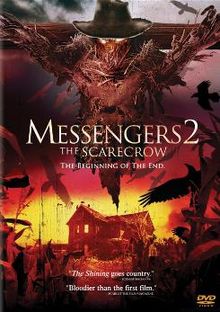
With autumn not far down the road, my mind turns to scary things. Actually, it is that way quite a bit of the time. Nevertheless, movies about farms are often the setting for the creepy—the sense of isolation, the sharp implements farmers use, the rustling of the drying crops in the wind. A couple years back I watched The Messengers. As a horror film it had a number of good scares, but the menace always seemed somewhat restrained. Nothing profound happens, and it is a film fairly easily forgotten. It was a rainy Saturday afternoon and The Messengers 2: the Scarecrow suggested itself to me. I began watching in an ambivalent mood, but when the first scene began with the protagonist (whose name I’ve forgotten) dropping his Bible on the porch chair as he loosens his tie to work on a derelict water pump, I was curious. When his wife arrives home and asks why he left church before it was over, my interest grew. This direct-to-video prequel turned out to be a cut-budget horror flick based squarely on a religious parable.

In a faustian moment of abandon, and at the advice of a jocular neighbor named Jude (Iscariot, anyone?), our hero erects a scarecrow to try to improve his lot (literally). To give credit where it is due, the scarecrow is distinctly disturbing. The scene of John (okay, I looked it up) nailing the scarecrow to the cross is clearly a crucifixion scene, and the blood that will later appear at the foot of the cross bears this out. Before he realizes that the scarecrow is evil, John hears ghostly children singing in his cornfield. The song is “Jesus Loves Me.” There is a strong fertility goddess theme running through the film and when Jude reveals that his wife has a magic book that explains all the benefits of the scarecrow, John decides to cut it down. The scarecrow, predictably, resurrects.

Meanwhile, John’s Christian family thinks he has gone insane. Or worse, backslidden. As he tries to explain to his wife what has happened, John shows her the magic book and she insists “It’s just your old Bible,” and it is. Heathenish occult instruction transubstantiates into Christian scripture. It is tough to tell one sacred writing from another. For cut-rate horror fodder, this is wonderful commentary on religious sensibilities. Although straight-to-video movies are not high art, and will never receive academy award nominations, they do reflect popular religious beliefs. Scholars are now in search of such beliefs in ancient societies since “official religion” almost never reflects what actual hoi polloi think. Lived religion seldom conforms to the intricacies envisioned by religious founders, and yet it is out there on the Internet for all to see. Maybe the messengers in this film are not the crows after all. The point of the parable? Stay true to your Christian upbringing or else the scarecrow will get you.


Life After Mirth

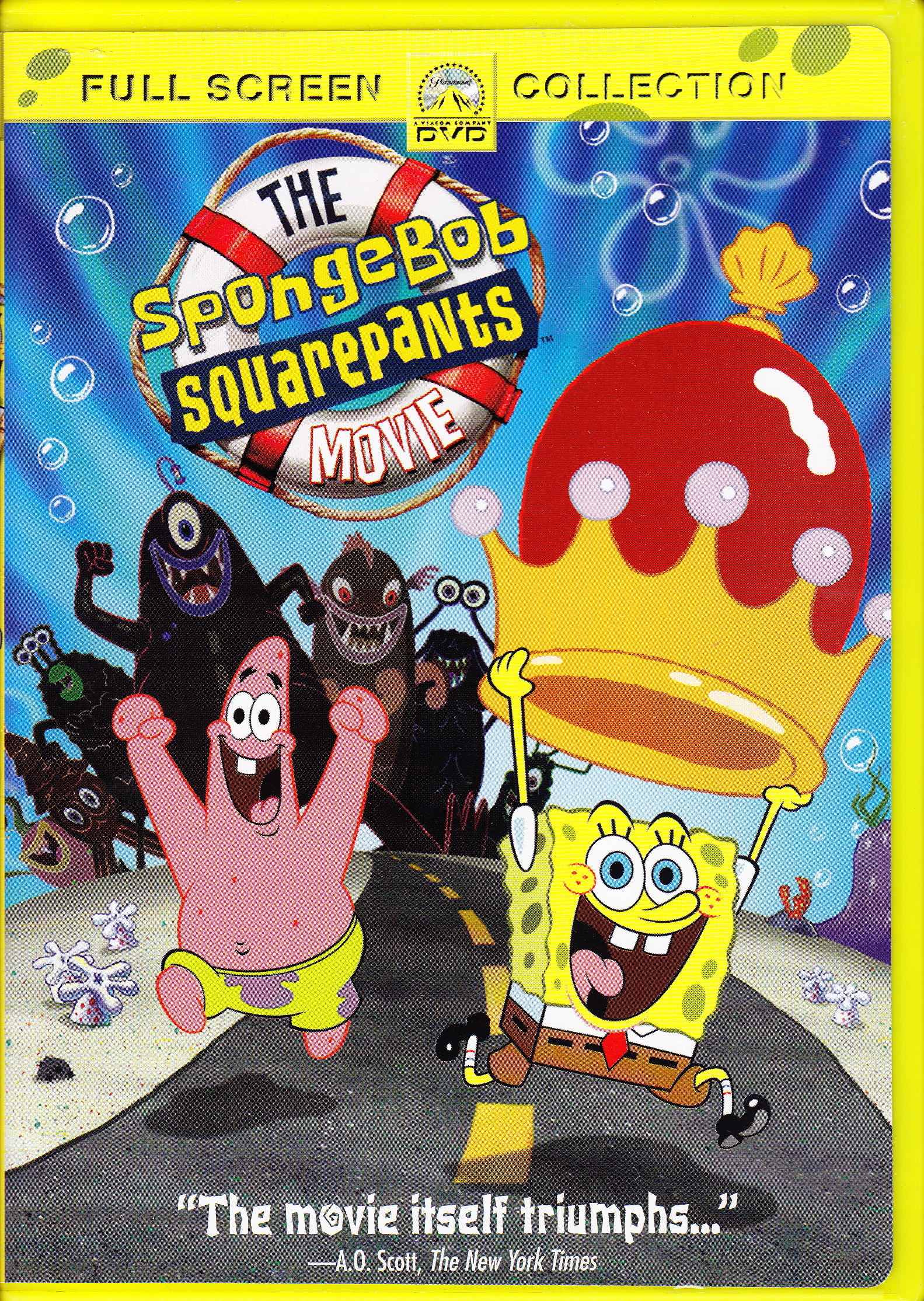
Who lives in a pineapple under the sea? In this era of fast-paced technological change, I’m probably displaying my terrible penchant for the passé when I confess to having watched Spongebob Squarepants with my daughter. I even went to the theater, back in Wisconsin, to watch the much hyped Spongebob Squarepants Movie. We eagerly awaited its release on DVD. Well, maybe not eagerly. In any case, after repeatedly watching it for several months, it was shelved and forgotten. Until recently. Playing archaeologist in our apartment, I sometimes unearth artifacts that have been hidden since our hurried and harried move from Wisconsin to New Jersey. We have never really fully unpacked since leaving Nashotah House, and opening a dusty box in a corner can feel like Christmas sometimes. Or, maybe you just discover the Spongebob Squarepants Movie.

It was a rare three-day weekend. School was about to start, and the commute to work would begin to take longer now that the leisured class had to admit to summer’s end. A little silliness seemed just the prescription I needed to face the work week. A little softness before hard reality.

I have noticed for several years now that American movies (and this may be true of movies from elsewhere, but I can’t say for sure) frequently make use of the death and resurrection theme. I suspect that a country that identifies itself so closely with Christian ideals finds this reiteration reassuring. Sure, the scenario is cathartic on a very basic level, and yet, it lies at the very heart of a central Christian belief—death is not the final word. So as Spongebob and Patrick are laid out on the drying table in Shell City and the water vapor rises from them like their departing souls, the viewer is left with a desiccated porifera and echinoderm and a profound sense of loss.

Of course, resurrection is right around the corner. The fire alarm goes off, showering down life-giving water from above, and our stars pop back to life. Resurrection in nature is limited, by appearances, to plants. With the annual cycles of death and rebirth, an individual plant may attain that for which animals only hope. This is a most robust religious symbol and movie viewers would be bereft without it. Even if the next time you see a sponge is when using it to clean the toilet, remember that resurrection crops up in the unlikeliest of places.


Thinking Zombies

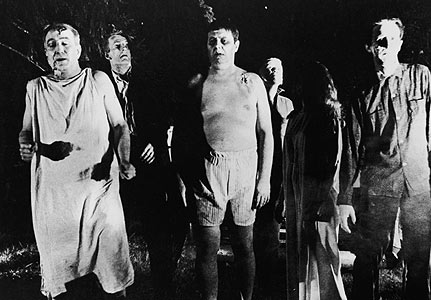
Religion seldom makes as big an impression as when it concerns itself with the undead. Popular culture has gone after zombies to such a degree that they have engaged academic discourse well beyond the field of African-Caribbean religions. In fact, religious specialists tend to shy away from the topic in a kind of first-date embarrassment. Perhaps it’s because zombies in popular culture are so much cooler than their Vodou forebears. Within the past several months, however, zombies have shown up in Time, on the Center for Disease Control website, and now in the Chronicle of Higher Education. An article this week explores the academic implications of a paper by neuroscientists Bradley Voytek and Timothy Verstynen on the zombie brain. The two took on the project as a lark at the behest of the Zombie Research Society. Science fiction writer and head of ZRS, Matt Mogk gave an interesting take on zombies. He’s quoted in the Chronicle as saying, “Zombies are rooted in science, not superstition and myth.”

At the risk of sounding extremely uncool (one that I take rather frequently, I fear), I would point out that exactly the opposite is the case. Zombies are rooted in superstition and myth, i.e., religion. The entire idea that a person can be made to rise from the dead—originally to be made a slave—comes from that heady blend of Christianity and African religion that developed as part of slave culture. Slavers were notorious in not wanting slaves to accept Christianity because that might make slaves think that they were equal with their owners. By suppressing Christianity among slaves, the African religions in which many were raised came to blend with the Christianity that they’d garnered. One of the bi-products was the zombie. The zombie partakes of the Christian concept of resurrection, but in a twisted way. Once the new vision of the zombie presented by George Romero took off, yes, they did move into the realm of science fiction, often the forerunner of science.

A very serious issue underlies the zombie myth—the very religious concern about death. While not all religions comfort with an afterlife, they all in some way deal with ultimate issues. The end of life is about as ultimate, from our limited experience, as they come. Science loudly and repeatedly insists that death is the final frontier. We don’t cross back this way again, according to the available evidence. Scientists do not study ghosts or souls, and are very cagey about near-death experiences. The zombie, who is now threatening the careers of young scientists, is a most religious monster. Everything about the zombie points to its origin as a religious trope. Voytek and Verstynen wanted to interest people in science by taking a comic look at zombie brains. The problem is that zombie brains are brains on religion, not science.


Your Brain on Plastic

“Cogito ergo sum,” Descartes famously, and apparently erroneously, wrote. As technology races wildly ahead, those of us of biological origin are left feeling somewhat insignificant. An article in Monday’s Chronicle of Higher Education on “The Strange Neuroscience of Immortality” touches on many of the issues that are the very pulse of religion. Revolving around the theory of Dr. Ken Hayworth that a preserved brain, sealed in plastic instants before death, may in the future be thoroughly mapped and resurrected, Evan R. Goldstein explores the idea of immortality. Hayworth’s belief is that a thoroughly mapped brain, reconstructed artificially, would be the ego of cogito. The self. Despite all our advances in science, we don’t know what it is.

As Goldstein makes clear in his article, this transfer of consciousness and possibility of immortality is not mainstream science. In fact, most scientists rapidly distance themselves from it. Many cite the unscientific nature of the very enterprise, but I wonder if it might not have a more religious basis. Immortality is the ultimate of religious ideals. Christians generally recognize it as resurrection, and other monotheistic traditions offer a heaven after death (sometimes, to some people). Is that not all at stake here? If we manage to assure some kind of human immortality, have we not just robbed ourselves of heaven? Quite apart from the technological hurdles and uncertainties about what the self/mind/soul is, is not immortality what separates gods from humans?

The problem with gods is that they don’t get to go home at the end of the day. Would Heaven be so great if you just left another tough day in the universe full of sadness, violence, and pain? Hayworth suggests that a reconstructed brain placed in a mechanical body (robotic, probably) would have the potential of lasting forever. It will, however, be expensive. That means that only the very wealthy will be able to afford the procedure, if it ever works. Imagine that world: a planet full of immortal, wealthy entrepreneurs who can spend eons without sleep, trying to acquire yet more for themselves while knocking the competition on its metal rump. It really doesn’t sound like Heaven to me. But then, what would I know? To me cogito sounds like a snack food.


Friday the Sixth

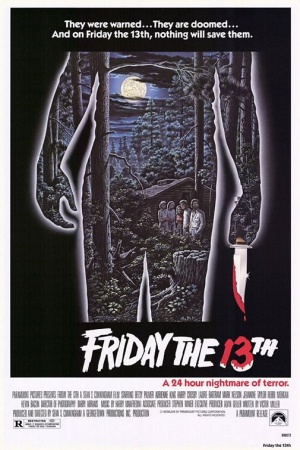
I tend to run behind on the movie front.  In some cases, decades behind.  I have never been a fan of slashers, although I did take a date to A Nightmare on Elm Street in the staid, dry town of Grove City while in college.  We broke up shortly after.  Still, I have a soft spot for “the classics,” and Friday the 13th has spun enough sequels to qualify.  “Jason” is a household name for the heartless serial killer, and the movie is set in New Jersey.  And it was hot outside and lazing on the couch trying not to stick to myself seemed about as much of a challenge as I could handle. Besides, a week from today is Friday the thirteenth. Now that I’ve finished with the excuses, here is a declarative sentence: I finally got around to watching Friday the 13th.  After many other films I’ve seen, I have to say that it didn’t really qualify as scary.  You know in advance that the counselors, by rote, must by killed in what are supposed to be shocking ways.  Shadowy corners and rainy woods and aluminum canoes are to be avoided, if the movie and its successors have taught us anything.  Nevertheless, the religion and scary film equation still applies.  And a strange kind of throwback to an unexpected classic (the literal kind).

The religious element comes in the form of the stock crazy local named Ralph.  Ralph warns the kids that they will die and says he’s been sent by God to warn them.  Of course they don’t listen.  If they had, there would have been no movie. As a child I was always offended by the caricature of the religious crazy, but I have come to see that this stock character is itself a symbol of fear.  Although ubiquitously laughed off, the person passionately driven by religion is indeed a potential danger to society.  In the days of my innocence we had little hard data upon which to hang such fears.  In the post-9/11 world it seems there are far too many sky-hooks for that purpose. Some of those sky-hooks are a little closer to the ground, but they inspire fear nonetheless. I’ve known all along that one of the reasons I watch scary movies is to give myself some advance warning of what might go wrong.  Not that it would help in any real way, but sometimes avoiding the shock by anticipating the worst seems like the only human thing to do.

What about the literal classic that I mentioned? Beowulf falls outside the Greco-Roman period, but is clearly a classic of English literature.  (Spoiler alert for anyone even more behind the times than me—) The only thing scarier than Grendel was, of course, Grendel’s mom.  So in Friday the 13th, the killing is done by Jason’s mom.  Like Grendel, Jason dwells underwater and surfaces to pull down his victim(s).  Like Grendel’s mother, Jason’s mother is decapitated by a sword (actually, a machete in the modern version), on the shore of the Crystal Lake.  After the mother’s death the child (Jason/Grendel) is resurrected.  Whether it was intentional or not, there is a lot going on here. The sacrificial mother is an inherently religious theme although many formal religions make it a male prerogative. The death of the mother brings the son back to life.  I wonder how Christianity might have differed if instead of three male deities, there had been a divine mother.  In such cases resurrection of the son comes only at a very steep price. Just like watching Friday the 13th on a hot summer night.


Alien Deities

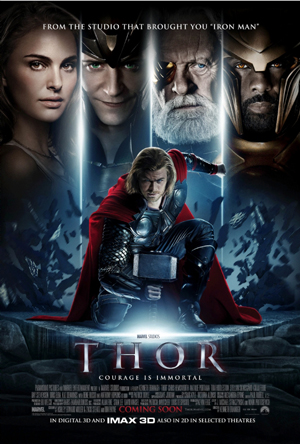
What with The Avengers making such a big pre-summer splash this year and all, I decided to refresh my memory and watch Thor again this weekend. In many ways it is a very impressive movie—very loud in the theater last year, and necessarily quieter in our apartment over the weekend. Often when I see a movie on the big screen I can’t keep track of all that is said or implied, especially when there’s so much action going on. Of course, Thor is an unusual hero in the Marvel Universe, being a god. Being supernatural is not limited to deities in that universe, but the other mutants are the results of science: the Hulk and his gamma rays, Captain America’s experimental treatment, and Iron Man’s good, old-fashioned engineering. They are modified humans. Thor comes from a different place. Upon rewatching the movie, the line about the Norse gods as beings from another dimension worshipped as gods came through loud and clear. Jane Foster comes to believe in the ancient alien hypothesis.

As a solution to the lack of omnipotence on the part of the gods, casting Thor and Loki into the role of aliens serves comic-book universes very well. In reality there are well-meaning and serious people who believe that any entity recognized as a god by human religions might have been a space traveler mistaken for divine. This is an idea I first encountered in Erich von Däniken’s Chariots of the Gods? (Hey, I couldn’t help it—I grew up in the seventies!) The world has enough high strangeness without von Däniken’s hypotheses, but in the case of Thor we have a fictional realm that explains how heroes gain their strength. The same could be postulated, I suppose, for Superman, but then, he never commanded a formal cult in antiquity.

Beyond the theological conundrum, Thor also participates in the nearly universal theme of resurrection. Realizing that his arrogance has led to the troubles of the human race, Thor faces the Destroyer (a creature with origins in the Hebrew Bible and Israelite mythology) and willingly lays down his life. This is generally the prerequisite for resurrection in any effective mythology. Of course, Thor returns and, like any good savior, rescues the world. Setting the story in New Mexico only assists in reasserting the mysterious events at Roswell where, like in the movie, something strange fell from the sky. In this subtext the feds rush in and commandeer the data, for people are not capable of making the correct decision. Yet, they leave the god behind. Marvel Studios has been rightly praised for its mastery of the genre. For those willing to look deeply, even Thor has its social commentary.