Hiding What?

Who are we?  Do we really show ourselves to others, or do we wear masks?  That question applies to horror films as well as to everyday life.  Alexandra Heller-Nicholas addresses this directly in the former context in Masks in Horror Cinema: Eyes without Faces.  As I write about horror films, peer reviewers suggest these more technical studies as means of adding depth to my analysis.  Most of them are revised dissertations and retain the academic language that makes such documents difficult to read in places.  Still, they contain a lot of insight.  I learned a lot from Heller-Nicholas and I was particularly impressed that she took the “shamanic imagination” as her approach to the films she analyzes.  The ritual aspect makes good use of religion and horror connections.  It’s nice to see this catching on.

Masks are more than disguises.  Yes, there’s something theatrical to them and there’s a great deal of ritual to theater.  Ritual and religion aren’t identical, but they are clearly related.  Often masks are discussed as simply a way of hiding a killer’s face.  There’s quite a lot more to it.  This is where the academic analysis comes in.  We can’t explore it in detail in the brief context of this post, but there’s a whole book out there to read on it.  Heller-Nicholas doesn’t feel constrained to major movie releases.  I did that in Holy Horror because I supposed more people would be interested in reading about movies they’d actually seen (most of them anyway).  There are a lot more examples out there.  I’m learning about more all the time.

There are many different masks in horror.  This book looks at several, some metaphorical, but most literal, and what they convey.  Or conceal.  The fact is we mask ourselves for many reasons.  It’s kind of like when we dream—our subconscious seems to know more about who we are than our waking minds do, and we really don’t share our dreams with others.  The mask in horror isn’t worn just by killers.  When it is, however, it often has a shamanic effect, or, as Heller-Nicholas points out, a trickster aspect.  This is very much like how anthropologists approach shamans in traditional societies.  Religious specialists are often tricksters and they provide an important element in cultures that are otherwise beset by rules.  Rationality is important, but so is letting go of it once in a while.  Shamans get away with things the average person can’t.  And it is just one of many masks we wear all the time.

Wicker Redux

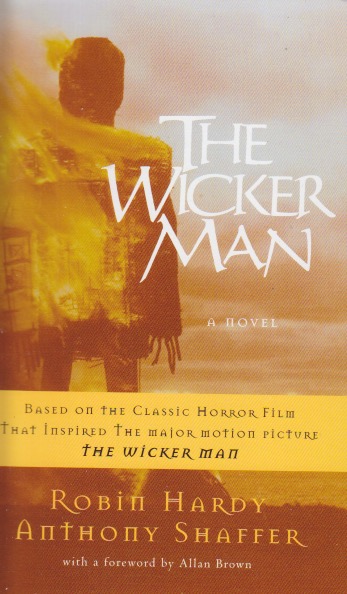
The Wicker Man (1973) is a cult classic.  If it had had proper distribution and promotion it might’ve become a more mainstream hit when it was released.  Instead it was a slow burn.  Once it reached cult status controversy grew.  The movie doesn’t acknowledge, but was clearly influenced by, the novel Ritual by David Pinner.  I reviewed the novel earlier, and it isn’t particularly great.  The movie changes so much that it maybe was “inspired by” rather than “based on” the novel.  Several years later the director, Robin Hardy, decided to novelize the film.  His The Wicker Man also credits Anthony Shaffer because a good deal of the dialogue is lifted straight from the screenplay Shaffer wrote.  But the novelization also changes things.  That means there really is no novel that gives the full story of the film.

The creative process is never-ending.  Anyone who’s had a story published knows the tinkering that goes on, even after it appears in print.  The last word’s never truly that.  It takes restraint to leave something alone.  So Hardy wrote one of the more important characters out of his novel and wrote in another who seems to have very little connection to the story itself.  I’m still not sure what the point of adding him might have been.  Incidents that seem to be bracing for a sequel are present, and indeed Hardy wrote a spiritual successor that became a less impressive movie some years later.  Sometimes you do get it right the first time around.

Not that the movie is perfect—none are—but it has held up considerably well, growing in stature over the years.  A novelist, however, tends to have a deft touch that seems to be lacking here.  There’s a great deal of telling instead of showing.  Hardy’s Howie almost becomes a Mary Sue.  Tying his love of birds into the plot of the novel would’ve been one such deft touch.  Instead we have here a serviceable novel with much that’s familiar and even some that is strange and provocative.  It does restore some of the famously edited footage from the first cut of the film.  It tries to make Howie’s religious conviction clearer.  Changing parts of a story comes with the territory of those who spin yarns.  Hardy never really rose again to the heights he achieved in directing The Wicker Man.  It’s no wonder, then, that he felt compelled to return to it in literary form.


Ritual Time

Timeless, it is.  The internet I mean.  The ultimate 24/7.  No matter the time, day or night, it’s always here.  And that’s good because time’s about to change again.  Daylight Saving Time ends, for most of us, tonight.  Then a few short months later, it begins again, disrupting sleep, productivity, and good moods.  As this story on NPR shows, it really no longer serves any purpose and there’s a great will to change it.  But then politicians get involved.  So nothing really happens about it and we yawn and stretch and wish we were asleep as we dutifully move the hands forward or back, hoping we remember the correct direction.  So it goes with tradition.  Religions are filled with actions whose meanings were lost long ago.  We do them because we’re told to.

This particular futility always makes me ponder critical thinking.  Autocrats and others who enjoy authority don’t really encourage it.  Who wants the masses thinking “why am I doing this pointless thing?  Why can’t I do something that makes sense?”  I suspect that’s behind a lot of the decline in mainstream Christianity.  People are busy, frantic, and worried about getting everything done.  Why take an entire Sunday morning (and it takes all morning) of the precious two free days afforded on the weekend, and spend it doing something the same old way?  Religions, we as students learn, are inherently conservative.  Problem is the world outside is changing, and more and more rapidly.  Two day weekends seem hardly long enough and something’s gotta give.

Time is something we are powerless to control.  Change, as long observed in east Asian religions, is the way of things.  Changing clocks then, only to change them back later, is an effort to control that which controls us.  Many of us, I suspect, approach this pointless ritual with a literal sense of weariness.  There are other things we’d rather be doing.  And many more that we’re compelled to do.  Is this some kind of spiritual lesson or simply an exercise in futility?  How do you tell the difference?  Ritual, in the best of circumstances, is comforting.  It reassures us that things are progressing according to some kind of universal plan.  Changing clocks creates a glitch in those plans.  Darkness is about to get more aggressive for the next few months.  Politicians bungle around in the darkness too, powerless to alter that which we do, for once, have the ability to change for the better.


Electronic Ritual

Religion and horror go naturally together.  Perhaps that’s something I instinctively knew as a child, or perhaps it’s something only mature eyes see.  It’s clearly true, however.  While reading about The Wicker Man lately I felt compelled to read David Pinner’s 1967 novel Ritual, upon which the movie is loosely based.  In many cases it is better to read the book before seeing the film.  In other cases the movie ends up being the superior project.  I had to keep on reminding myself as I read the novel that it couldn’t be measured against a superior vision of what it could have been.  Having written seven novels myself (all unpublished) I hope that I have a sense of the process.  Unless you’re into the commercial side of things you don’t write for the movie potential—you have a story to share and this is your way of telling it.

The novel isn’t bad.  It’s written in a punchy style that I don’t really enjoy, but the story drew me in.  It almost wasn’t to be.  Like many novels of this era, print copies are difficult to find.  Those available on used book websites, or even on Amazon, probably because of rights agreements, sell for over $200.  That’s a bit much, considering that over two dollars per page is excessive for a novel.  I finally had to cave and get a Kindle version.  I don’t have a Kindle, but I have the software on my computer.  Reading it again reminded me of how superior a print book is to an electronic one.  Reading ebooks tends to be faster but like eating snack food, doesn’t really satisfy you.  

At one point the navigation function stopped.  Confused, I couldn’t go any further in the story and wondered if I’d reached a sudden but unexpected end.  With a physical book I could’ve paged ahead to find out.  In this case, with the controls frozen with that obdurate computer attitude, I had to find another way to make the illusion of reading continue.  I eventually got it going again after clicking here and there, but reminded myself again that ebooks should only be the last resort.  As for the story itself, it was okay.  I read it as a parable about intolerant religion.  I’m not sure it was intended that way, but it certainly seems like a reasonable interpretation.  It ends differently than the movie does, so I won’t put any spoilers here in case you decide to spring $200 to get a used copy.


Speedy Delivery (SD)

Ritual, no matter what scientists say, is deeply woven into the fabric of human psyches.  It may be either the warp or the weft, but it’s downright basic.  I was reminded of this on my hurried and slow trip to San Diego yesterday.  I always wear the same shirt when I fly to this conference.  This isn’t superstition, but rather it’s a case of sticking with something that works.  I don’t often wear turtlenecks, and one reason is that they seldom fit well.  More years ago than I care to admit (I’m wearing the shirt in the photo below, which was taken at Nashotah House nearly two decades in the past) I found a navy blue turtleneck from Land’s End (this is not a sponsored post, although it probably should be) that works perfectly.  Even today it fits snugly around the neck after hours of wear.  Maybe ten years back I bought a black turtleneck from the same company and after pulling it over my head, it gaps something awful.  I tend only to wear it around the house.  The original still does the job.

I was ready to drive myself to the airport yesterday and I grabbed a quick lunch at home.  Part of said lunch involved opening a ketchup bottle probably nearly as old as the shirt I was wearing.  (I’m sure you can see where this is going.)  I ended up looking like a murderer, which is not something you want to try to explain to a TSA agent.  I quick threw said ritual shirt into the washer and the drier buzzed at the same time as my phone did for when I had to leave for my two-hour-ahead check-in.  This remarkable shirt was dry and ready to serve.  Maybe you can see now why I’m so ritualistic about clothes.  I also opt-out of those Star Trek scanners at the airport.  This means I get lots of governmental pat-downs.  It feels more authentic when you have actual hands running down your body—at least it’s honest.

The TSA agent commented that you don’t see many turtlenecks these days.  I explained that it’s good for flying because I’m always cold on planes.  As this stranger’s hands were rubbing down my chest, I was wondering how many times this shirt has been felt up by the US government.  It has no pockets to pick, and besides, at airport screenings everything is stowed in my carry-on, including wallet.  At midnight San Diego time, I checked into my hotel.  East coast time said I’d been awake 24 hours because who can really sleep on a plane?  Once my patted-down body reaches 3 a.m., Eastern Time, it wakes up.  In these circumstances it’s good to know I can rely on that shirt in my drawer.  That’s what rituals are all about.


Idol Thoughts

The Enlightenment led, in some respects, to a condescending view of the past.  Historians know, for example, that the basics of science and engineering predate the Middle Ages.  Just consider the pyramids.  The people of antiquity were anything but naive.  We tend to think in Whiggish ways, despite our awareness of past achievement.  Perhaps it’s because we misunderstand past religious thought.  After all, the Enlightenment is generally understood as freeing the human race from “superstition” and leading to empiricism.  Empirical thinking had been there all along, of course, only it hadn’t been the sole way of making sense of the world.  Consider, for example, the “idol.”  In the biblical world food was left for statues of the gods, but it seems to me that people were smart enough to figure out that images didn’t actually eat it.

Elaborate rituals, of course, attended the making of gods.  These symbolic actions were said to make this object more than just a piece of wood, stone, or metal.  Assuming it required food, however, strains credulity.  The symbolic nature of the offering, however, was accepted.  The same is likely true of the offering of food to the deceased.  Even in ancient Israel the time-honored practice of leaving sustenance for the dead was carried out.  Was this symbolic rather than naive?  I tend to think so.  Reason told the ancients that the dead ceased to move, and therefore to eat and drink.  It was nevertheless a sign of respect to leave food, which, in a world of frequent malnutrition, could have been put to better use.  It was a symbolic sacrifice.

Surely they didn’t understand the fine interactions of nature that require microscopes and telescopes to see, but their knowledge relied on the divine world to address what remained mysterious.  We still, for example, have difficulty predicting weather.  We understand that the atmosphere is subject to fluid dynamics and countless minuscule factors that contribute to it.  We’re also aware that global warming is a reality.  Like the ancients we can choose to ignore, or pretend that the obvious doesn’t exist.  Like them, we do so for a reason.  Our political leaders are unwilling to stand in the way of the wealthy.  Reelection and all its perquisites—including personal enrichment—are simply too enticing.  Empirical evidence is worth ignoring for such emoluments.  When we feel tempted to assert our superiority over those of past ages, we might pause to consider that we still offer food to idols.  And get just as much in return.


Time Saving

As we suffer through another pointless Daylight Saving Time, I’m thinking of rituals that have lost their meaning.  Life is full of them.  We do things because we’ve always done them this way and even when they become harmful because of the way lifestyles change (auto accidents, for example, increase after shorting people of an hour’s sleep) we can’t seem to let go.  DST alone should’ve been enough to convince those who claimed religion would simply go away when science kicked in that they are wrong.  This is one reason that I’ve always found the origins of ideas fascinating.  Why did people believe this?  Why did they do this?  What started this whole process?  (Just to be clear, I’m not asking this about DST; I’ve written about that before.)

We can’t know the ultimate origins of religion.  I’ve suggested in the past that what we would term religious behavior has clear origins in the behavior of animals.  A somewhat fully developed consciousness provides incentive to rationalize such behavior.  The earliest organized religion of which we know involved state functionaries (priests) supporting, probably for sincerely believed reasons, the “secular” government.  Kings and priests needed each other and people quickly conformed.  Even when those on the inside came to realize that they were merely pretending, they kept on doing so.  It was too late (or if DST, too early) to change anything, so the mascarade continued.  Tracing the history of religious ideas reveals perhaps more than we want to know.  And human beings are natural actors.

Once, while in a restaurant, I sat near the kitchen.  The smiling servers, as they neared that portal lost their smiles and harried looks came to their faces as they told frantic cooks what the couple at table eight wanted.  Yet they continued to pretend they were happy when at table-side.  Or think of work with its “public facing” information that is inevitably different from what is known by those on the inside of the company.  Actors.  We’re all actors.  Perhaps it’s the price to pay for living in a civilization.  If we stopped to think about why we’re doing something as inane as pretending five o’clock is now six o’clock, or even that all people are the same and should be at work between nine and five, society could not stand the scrutiny.  Anarchy would erupt in the streets.  We should be thankful that people don’t think about these things too deeply.  Or, then again, maybe I didn’t get enough sleep last night.


Rising of the Sun

“When the trumpet of the Lord shall sound,” the old hymn goes, “and time shall be no more…” Before Trump’s election I always supposed this might have something to do with the useless ritual of setting our clocks ahead. Apart from the fact that we’re all a bit cranky because, well, we lost an hour of sleep last night, this day is a fine illustration of how rituals form. Daylight Saving Time was a wartime initiative to help keep things going during the darker months of the year. Since things seem pretty dark all the time now I’m not sure that changing the clocks will do any good, but it does call to mind many religious rituals that started out for practical purposes and accreted symbolic meaning over time. One of my favorites is the use of candles.

Photo credit: 4028mdk09, Wikimedia Commons

In the days before electricity, sanctuaries (which were sometimes devoid of windows) required a source of light. The menorah in Jerusalem is perhaps the most famous example, but by no means the only one, of a necessary piece of furniture that grew religious significance. Oil lamps were widely used before candles were invented and they work on the same principle. It didn’t require any special illumination to realize that light is symbolic for creatures that rely heavily upon sight. If you see something, say something. And before you know it candles themselves acquire religious meaning. Just last month some Christians celebrated Candlemas where the title of the day appears to suggest the candles themselves are somehow sacred. Ritual begets ritual. We are meaning-making beings.

Now that we’ve somewhat ironically set the clocks ahead under Trump it might be a good time to reassess. “Rage,” Dylan Thomas wrote in a more modern hymn, “rage against the dying of the light.” Even though Thomas’ light itself extinguished prematurely his message lives on. We’ve lost a month’s worth of morning light. When I step outside this morning it will be darker than it was this time yesterday. But humans habitually look ahead. If I allow myself that luxury as the roll’s being called up yonder, I can perhaps make my way home in the light now that time’s changed. Nature took the light and is now giving it back. Maybe this isn’t the final trump after all. In my more optimistic moments I do believe that candles can be magical in their own right. That’s the power of ritual.


Ritual Rent

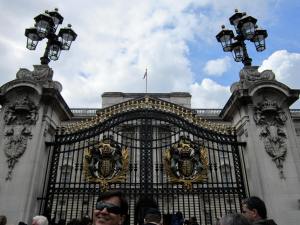
Rituals frequently outlive their purposes. Some skeptics may claim that rituals—particularly of the religious sort—really don’t mean anything at all, but in fact they do. Rituals have logical origins, or at least that seemed logical at the time. Atlas Obscura ran a piece by Sarah Laskow on “London Is Still Paying Rent to the Queen on a Property Leased in 1211.” Such a story invites commentary on many levels. One is that the items payed in rent—6 horseshoes, an axe, a knife, and 61 nails—don’t seem to be commodities her royal highness actually needs, or could even make use of. Still, it’s easy to see how this ritual rent has a logical origin. Axes, knives, nails, and shoes for six-legged horses were all quite practical in the Middle Ages, one assumes. They won’t help you get onto the internet any faster, though, so one wonders how they might be of use now.

Another question a story like this raises is that of government itself. Rulers both in monarchies and democracies have a habit of skimming off the top. It’s been some time since we’ve had a president who purchased his own loaf of bread or could even guess how much it costs the rest of us to do so. In Britain the question may be even more salient—the royal family is among the richest in the world and yet they still take an axe, a knife, horseshoes, and nails for a property that, as the article states, nobody even knows where is? I guess it’s the price we pay for feeling safe under the watchful eye of those who already have too much. The property itself may be a legal fiction, but the payment is real enough.

Wonder what the rent on this place is?

Wonder what the rent on this place is?

There are those who declare rituals empty, and therefore meaningless. To me that seems a hasty judgment. Our rituals reflect what we’ve historically believed. Those beliefs may have changed over the years, while the rituals continued in their own way. But they are reminders. Reminders of something once held to be significant enough to take time and resources in order to ensure the smooth running of—in the case of religious rituals—the universe itself. On the smaller scale, however, our secular rituals contribute to a system that always has favored the rich. It likely always will. You see, rituals are not easily broken. And even if all they can extract are items of little practical use, those who already have will be glad to accept even more. This is the reality behind rituals and rites.


Food for Thought

You probably know the ritual. On a given day of the week (often the weekend—your “time off” for good behavior) you troop to the grocery store. You toss the items you’ll need for the week into a cart and trundle home to fit them into the interstices of a crowded kitchen or pantry. Then you start to notice that funky smell when you open the fridge. Or you eat a snack chip and find it gives no resistance to your teeth. Something’s gone off and needs to be tossed again, but this time into the landfill (or hopefully, compost). We’re all so busy that we don’t really have time to ponder this much. After all, the work’s the thing, and we only have a few hours at home anyway, and we can go shopping again soon. Now here’s where it starts to get ironic: we subscribe to Consumer Reports. I’m about the least consuming person you’ll be likely to meet (or not meet), unless, of course, the topic is books. I don’t buy stuff unless I have to. My jobs have been financially disappointing since earning a doctorate and I’ve got tuition bills of my own to pay. Every penny counts. But I digress.

Consumer Reports, in its September issue, discusses the problem of food wastage. Since I’m a simple man statistics impress me. 52 percent, for example, of the produce Americans purchase is thrown away. Math class was some time in the past, but even I can see that’s over half. This is something we’ve paid for and we simply jettison because it’s gone bad before we use it. This particular figure hit me because I like to have fresh produce with my boringly consistent lunch. When they’re in season I buy snow peas. Problem is, our grocery store only sells snow peas in massive packages, hermetically sealed. I can’t get through them before they go bad, and I can’t buy just what I need. For my convenience, I’m told, these tasty greens are prepackaged and pre-priced (at the cost of a small automobile) so I don’t have to dip my grubby hand in the basket and weigh out just what I need. And it’s not just peas. I can’t remember how to make a salad any more because, well, they come in bags, right? The natural habitat of greens.

Free-range peppers

Free-range peppers

The problem goes further than that. Here’s where the stats get scary. According to the article 28 percent of the agricultural land of the world generates food that isn’t consumed. Over a quarter, if memory serves, is ultimately wasted space. A full quarter of our freshwater usage is for stuff we throw away. In the land of overabundance we’ve learned to squander our resources and think nothing of it. It’s just food, after all. It’s not like there are starving people in the world. Perhaps the greatest ethical crimes are those that are so ordinary as to become forgettable, like that trip to the grocery store. Let someone else do the packaging. Anything I don’t eat I can always throw away. We can grow more. It’s a ritual, after all.


Paradise Lost

Reentry is never easy. I’ve just been on a vacation in the woods of the northwest and yesterday marked, via eight hours of air travel and airport waiting, my trip home. Tomorrow work begins again and I hope for the ability to adjust quickly into some kind of routine. Humans are creatures of ritual. We may call it religious or secular, but we draw comfort from knowing what to expect. Vacation disrupts with its mandate to relax and be among loved ones, and with its low level of demands. It can be time to think clearly instead of being harried and harassed and hurried all the time. Today I have to remember how this is done. How east coast time works. What the bus schedule is and how to enslave myself to it once more. I think of how being in a cabin in the woods felt like a restoration of my soul. In fact, it can feel quite a bit like a religious experience.

Silence, for one thing. In a world of constantly competing noises it’s easily forgotten what a commodity quiet can be. The silence of the woods is restorative. Although it was occasionally abused in my days at Nashotah House, quiet was often enforced as spiritual discipline. Nature, in a way that’s hard to appreciate so near to New York City, can be supremely tranquil during the night. Darkness as deep as the silence reminds us what night was meant to be. No priest needs to direct meditations since the soul is already attuned to the divine in such situations. Awaking to the chatter of a red squirrel rather than the rumble of a bus can remind one of what is truly important. When we value our vacation over our vocation there is a message hidden in plain sight.

Today I glance ahead to an unbroken string of work days and the premature end of summer. The hot days can be uncomfortable and that rush of everyone toward the water can lead to endless crowds and congestion. Still, I empathize with those seeking a break from the routine. We are all souls seeking respite from days programmed by others so that the Trumps of the world can reap the rewards of other’s labors. Bleary-eyed from the time change of three zones’ difference, I’ll go to work tomorrow with twigs in my hair, sand in my shoes, and a kind of private paradise in my head. I’ll soon be cured of that as the secular routine takes hold once again.

IMG_2891


Eve’s Apple

Rituals rely on unchanging circumstances. When we attended a grocery store that was not our usual one my ritual was challenged. First I have to confess (as is appropriate for a ritual): I am no foodie. Having grown up in humble circumstances where eating out was an unknown, eating in meant the basic food of the unsophisticated. Although college and subsequent years opened my appreciation for new, and sometimes exotic foods (before my vegetarian days I ate ostrich when taken for dinner on a job interview. I didn’t get the job and shortly became a vegetarian—some things just aren’t worth it) I’m still a pretty boring grazer. I take the same thing for lunch each day at work. I eat the same thing for breakfast every day—inspired by the Seventh Day Adventist predilection for cereal—and I imagine my wife finds grocery planning with a guy like me to be its own trial. I see the grocery bill and scream. I eat to live, and not vice-versa.

Eve

So we were in a different grocery store. I take the same fruit for lunch every day, but here my apple of choice was more expensive. I looked for something in the price-range that I feel is affordable for fruit. My eye fell on a variety of apple I’d never seen. It was called Eve. Apples are one of those staples that I’ve always appreciated. We still sometimes go apple picking in the autumn, but it’s difficult to eat them all up before they go bad. In the orchards they list the different apple varieties available for picking on any given weekend, and I had never seen an Eve apple. For my boring lunch (since I eat breakfast about 3:30 most days, by noon anything tastes good for breaking the second fast) I wondered if Eve would do. Would this be too exciting for work? I pondered the dilemma.

Although our culture is increasingly biblically illiterate, here was a breed of apple based on Genesis 3. The Bible, of course, does not name the fruit of the tree of knowledge, and the apple was likely chosen much later because of the similarity of its name in Latin to the word for evil. The image has, however, become iconic. Eve reaching for the apple is so well known that advertisers use it with abandon and nobody fails to get the reference. This story is deeply embedded within our culture. The Bible on the grocery store shelf. Still, I’m wondering—should I try something new? Thinking of the work week ahead, I’m tempted.


Avoiding Ritual

IMG_0100

While on my current British kick—not really intentional, but sometimes life gives you limes—I thought I’d mention another piece sent to me by a friend. This one falls under BBC Earth, and it’s about “Why Ancient Brits threw out their most valuable possessions.” You can find the story by Amanda Ruggeri at the link. The basics are pretty simple: some people with a metal detector discovered what turned out to be a Bronze Age “hoard” in Lincolnshire. You have to understand that, in a way that makes me totally jealous, the United Kingdom has tonnes of ancient artefacts still undiscovered. While my wife and I lived there it wasn’t unusual to read about such finds in the newspaper. (Newspapers still existed then.) People had been smelting in the British Isles for a long time. The Phoenicians actually popped round the pub to get their tin—which can be one of the main ingredients for Bronze. What the article somewhat embarrassingly addresses is the nature of the hoard.

Hoards are where a large number of (usually metal) objects are discovered, after having been deliberately buried. These are not uncommon, what with Phoenicians, Romans, Angles, Saxons, Franks, Vikings, and others invading all the time. The issue that embarrasses is the “r word.” Ritual. While we don’t know the reason, the fact that people deliberately deep-sixed their valuables, routinely, suggests a ritual. As the article makes clear, professionals try to avoid the r word. Ironically, such deliberate burials, often with items purposefully broken, is also known from the ancient Levant, often predating the hoards of the prehistoric UK. Intentionally broken items—often of clay, and not infrequently depicting perhaps deities—were buried in biblical times. We don’t know why, but scholars suggest they could’ve been offerings. After all, breaking something potentially useful is an act of faith.

I’m not suggesting a direct connection here. I took a sound scholarly thrashing some years ago for suggesting a tale I heard on the streets of late twentieth-century Scotland had its origins in ancient Sumer (grad students are prone to such thinking). Still, it might not hurt anthropologists to cast a wider eye now and again. People had similar rit— well, let’s just say strange habits, in a land far away. Just cross the Channel and make a left. When it starts getting arid head south. The ancient world may have had more of an “internet” than we think. While that pathway may not always be marked by material remains, we now know ideas travel fast. Even something such as putting a daily post on a blog might become a ri—, strange habit.


Happy Disruption

IMG_1567

Last night’s full moon shone brightly, announcing the grounding of the date of Easter, obviously associated with Passover. Unless one has a natural sense of the progressions of the lunar calendar, Easter can always seem a matter of guesswork. It fall on the first Sunday after the first full moon after the vernal equinox. It is one the many transitional season holidays. All holidays are intended to be disruptions from the normal flow of time. Of course, business is the natural enemy of holidays, except for Christmas, and, increasingly, Halloween. The usual business calendar eschews disruption, and there are no days off associated with the Passover-Easter complex. A little thing like death and resurrection shouldn’t stand in the way of turning a solid profit. Still, the point of holidays is their disruption of normal time.

My own time faces disruption this week with a business trip to England. Funny how often these seem to be demanded about this time of year. My usual blog posting patterns will surely be disrupted as time zones zip up across the Atlantic. Disruption will become endemic. Disruption without the celebration. Ritual experts tell us that Passover, the basis for Easter, was a development from an even earlier pre-biblical rite. People have always found a way of marking the more obvious transition of seasons, the planned disruption of daily life.

Routine becomes comfortable, no matter how inherently uncomfortable it may be. I awake before 4 a.m. each day with many others whose lives are dictated by bus schedules and economic necessity. No matter how many years I’ve been doing this my body objects to the early hour that draws me from the comfort of sleep. It is a disruption. Now my disruption is about to be disrupted and I’m wondering what is holy about any of this. Time, which always comes in limited quantities, seems best spent with those we wish to celebrate. Our own private holidays. But business and resurrection don’t sit comfortably together. True religion and money are, it seems, inherently at odds. As I pack my bag and turn to the east, I look at my calendar and wonder when the next true holiday will arrive.


Rites and Wrongs

One thing about Amazon Prime is that you can watch a movie multiple times with no real fiscal consequences. Alone on a Saturday, I started my ritual of looking for a movie to match my mood. I’ve posted before on Cabin in the Woods, a kind of Lovecraftian parody of the five-people-in-an-isolated-cabin motif, but the movie is so deeply based on religious motifs that I noticed many things I’d missed the first time around. When the college kids descend to the basement to choose, unwittingly, their fate, they happen upon a diary written by Patience Buckner—one of the zombie family that will eventually emerge to murder three of the five. So far so good. The backstory to the Buckner family is sketchy (Drew Goddard and Joss Whedon are said to have written the script in three days, not much time to develop backstory), but they are religious zealots who believe in pain as a spiritual purgative. In other words, they hurt each other in an attempt to be religious. This idea is not without historical foundation, and although it plays only a small role in the movie, it is part of the larger plot as well.

The entire control center that is intended to keep the old gods satisfied, is a highly technical ritual center where the horror movie tropes take place to appease the ancient ones. As Sitterson and Hadley explain, the suffering of the kids as they face the ritual sacrifice is an essential element in pleasing the gods. It is, nevertheless, a ritual. As each victim is killed, a lever is pulled channelling blood down across icons of the roles played by the scapegoats. Marty, the stoner who ultimately figures out what is going on, makes the point that for a ritual all you need are robes and sticks. Of course, ritual is one of the main constituents of religion, and ritual has to meet the specs provided by the gods.

Cthulhu takes Manhattan

Cthulhu takes Manhattan

Modern day fascination with H. P. Lovecraft has led to a resurgence of interest in “the old gods.” Lovecraft, while personally an atheist, knew the powerful draw of the idea. Gods are controlled by ritual. Many religions trace the architecture of rituals to the deity placated by them, but this tacit domestication is a kind of archaic rule of law. Humans do this, gods will do that. The hastily written story of Cabin in the Woods abides by this pattern. As long as somewhere in the world a human sacrifice is made according to specifications, things will continue as they are. In other words, our random world is a throw of the dice by the gods. Unlike his contemporary, Albert Einstein, Lovecraft’s gods did apparently play dice. Cabin in the Woods is a modern farce of that ritual and is, in an unexpected way, a deeply religious movie.