The Edge

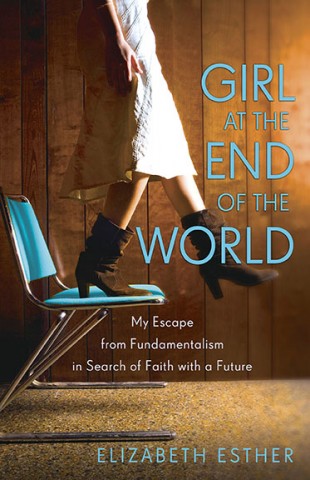
GirlattheEndoftheWorldElizabeth Esther’s Girl at the End of the World is finally out. I can’t remember the last time I read a book within two weeks of its release date. Of course, I have a soft spot for the religious memoirs of women, particularly when they manage to make their escape (I guess otherwise they wouldn’t be writing their experiences) from an unforgiving faith. Reading of the trials they have to go through to get there is far from enjoyable. But necessary. Often Bible-wielding males make the rules with a macho God behind them, and girls are abused in various ways so that the wrathful guy upstairs will be, well, a little less wrathful. I’ve read many of these accounts, and I worry deeply about the state of religion’s soul. Elizabeth Esther was raised in what she calls a cult, begun by her grandfather. This brand of fundamentalist Christianity taught the virtues of daily spankings of children, often beginning at about six months of age. The descriptions of how they used candy to tempt their children so that they could spank them to break their wills made me cringe. Evil wears many disguises, but none so effective as piety.

Religions are able to get away with quite a lot in a land of religious liberty. Elizabeth Esther proves that she’s made of some pretty stern stuff to have come through all of this, although she admits to still having panic attacks all these years later. She calls it Religious PTSD. She is right to do so. Although I grew up in a fundamentalism that scarred me for life, it wasn’t with the physical beatings that members of her grandfather’s religion doled out. When Elizabeth Esther describes the tendencies she has, the hyper-awareness of threat, I know that I am nevertheless still reacting the same way in my own life. After my fundie upbringing, I had the misfortune to be employed by a different kind of literalist religious institution. Faculty whispered about the new malady coming out of the Gulf when we started to develop nervous ticks and odd quirks after being kept under constant threat. When I contact many of my former colleagues I can still tell we were badly damaged there. Some religions, as Nietzsche long ago recognized, are life-denying to the point where a soul death would be more merciful. And yet we carry on.

Elizabeth Esther ends her book with a reluctant escape to Catholicism. She notes that even it doesn’t exist without its problems. We are, however, religiously evolved beings. It is in our constitution to seek the solace of communal worship, or at least a kind of spiritual solidarity. And there are those who will take advantage of people who simply seek their sense of self-worth from authority figures who claim to have it all worked out. Disproportionately those who are made to suffer are women. The Bible, although it cannot be blamed on the abuses heaped upon it in the name of the Judeo-Christian tradition, conveniently emerged from a patriarchal society. In the hands of some men it becomes an implement of torture. And many are left far poorer in life for having encountered this particular form of demon disguised as an angel.

Devil’s Advocate

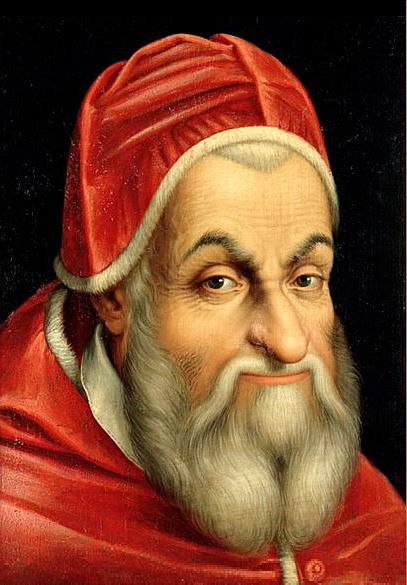
At fives and sixes, the Pope who gave us the devil's advocate.

At fives and sixes, the Pope who gave us the devil’s advocate.

When two people in completely isolated incidents tell me the origins of the term “Devil’s advocate” within a week, I figure it’s time to do a post about it. We’re all familiar with the term, and we know that it means taking the point of view of the “bad guy,” just for argument’s sake. In fact, the Devil’s advocate may not believe his (usually it is a he) own arguments, presents them to make sure the results are correct. The Devil’s advocate was an official office in Roman Catholicism beginning in the late 16th century. The actual title was Promoter of the Faith and the reason such an office was necessary was that so many people had been put forth as potential saints that the church experienced an embarrassment of riches. Canonization, the process of becoming a saint, has a number of hurdles to clear for the would-be paragon. Claims, often extraordinary, were made for miracles associated with the favored ones and the Devil’s advocate was intended to research and present contrary evidence. This made it more difficult to achieve sainthood, but in theory, at least, kept the number of candidates down to only the most deserving. There was no literal devil involved.

Those of us who grew up Protestant often had recourse to only faulty knowledge of Catholicism. We were sometimes taught that it was based on magic, what with the priest speaking in Latin and making mysterious motions with his hands. That meant, for some, that Catholics seemed particularly gullible and would believe things the rest of us wouldn’t. The Catholic Church, however, has often providing its own policing. Not as eager as Pentecostals to accept mundane miracles, when a pareidolia-inspired leakage of water or an anomalous burning of toast occurs, the Catholic Church is quick to debunk claims of miracles just because an underpass stain or a bit of bread looks like a famous religious figure. If you squint enough. The Devil’s advocate was a similar safeguard.

On the opposite side of the equation, I’ve often heard sermons among some evangelical groups claiming that we’re all saints. (Their membership, that is.) Who shouldn’t claim the name when they walk the walk? Many of these saints fail to inspire in the way of those of yore. Some of the beloved cultural heroes that keep coming back in various forms have saintly origins: Santa Claus and Saint Valentine are two that come to mind at this time of year. Some Protestants who may not have been perfect, however, should somehow qualify. Martin Luther King, Jr., another figure of the winter season, by his contributions to justice issues, might be one who would qualify. I’m sure there are many others. The fact is that making a principled stand against the wickedness that sometimes passes for the status quo is difficult and leaves one open to criticism and resentment. A Devil’s advocate might be just what society needs when looking to make saints out of mere mortals.


Lead Serve

For never having been a Catholic, my life has been strangely tied to the Roman Catholic Church. Like many in my diminishing profession, I was raised in a religious household—in my case non-denominational Protestantism with a strong Fundamentalist streak—and have wandered a bit from my starting point. When my family moved to a small town with just two churches—United Methodist and Roman Catholic—we had no choice which to join. I learned the Methodists were just disgruntled Anglicans, and logic dictated that I would eventually join the Episcopal Church and gain a deep appreciation of Catholicism. My first professional job was teaching at an “Anglo-Catholic” Episcopal Seminary. While there I was interviewed for positions at Roman Catholic schools, and not infrequently brought to campus: the University of St. Thomas in the Twin Cities, Assumption College in Worcester, Massachusetts, Sacred Heart School of Theology just down the road in Hales Corners, Wisconsin. Most of the time I was in the list of finalists when the position would go to a Roman Catholic, “no hard feelings, right?” Long ago the Episcopal Church, ironically, got out of the higher education market.

It is with this background that I keep an eye on the Roman Catholic Church. Many friends and colleagues are Catholic and we have far more in common than I have with my Fundamentalist forebears. I frequently find myself in wonder at Pope Francis. Many church leaders have made the news over the past several decades, but few of them for such good. In an article on NBC over the weekend, the Pope called for seminary reform, noting that always toeing the line will turn priests into “little monsters.” I taught at Nashotah House for fourteen years, and I know exactly what he means. I encountered students who could quote Paul about being freed from the law and in the next breath lay down ecclesiastical law with enough force to behead a heathen. The Episcopal Church, which is small but disproportionately powerful, should take the words of the pontiff to heart.

A cold day in...

A cold day in…

Pope Francis noted that seminaries need to keep up with the times. Indeed, the laity of most religious traditions have little trouble accommodating to culture while their faith remains mired in the Middle Ages. In a world robbed of essences and meanings, it is difficult to teach future clergy that the spirit of a faith can be honored in outwardly different ways. The idea that we can just hold on ’til Jesus gets back should’ve been questioned once Islam came to be a major force a few centuries after Christianity settled in. Since that time Christianity has fractured into thousands of sects united by little more than essences. Instead of settling in for the long haul as an empire, the Pope is suggesting that the church settle in as servants. That’s a radical idea. And it is one, if I read my Bible aright, that its founder would be pleased to find in force should he ever decide to return.


Pope of Deliverance

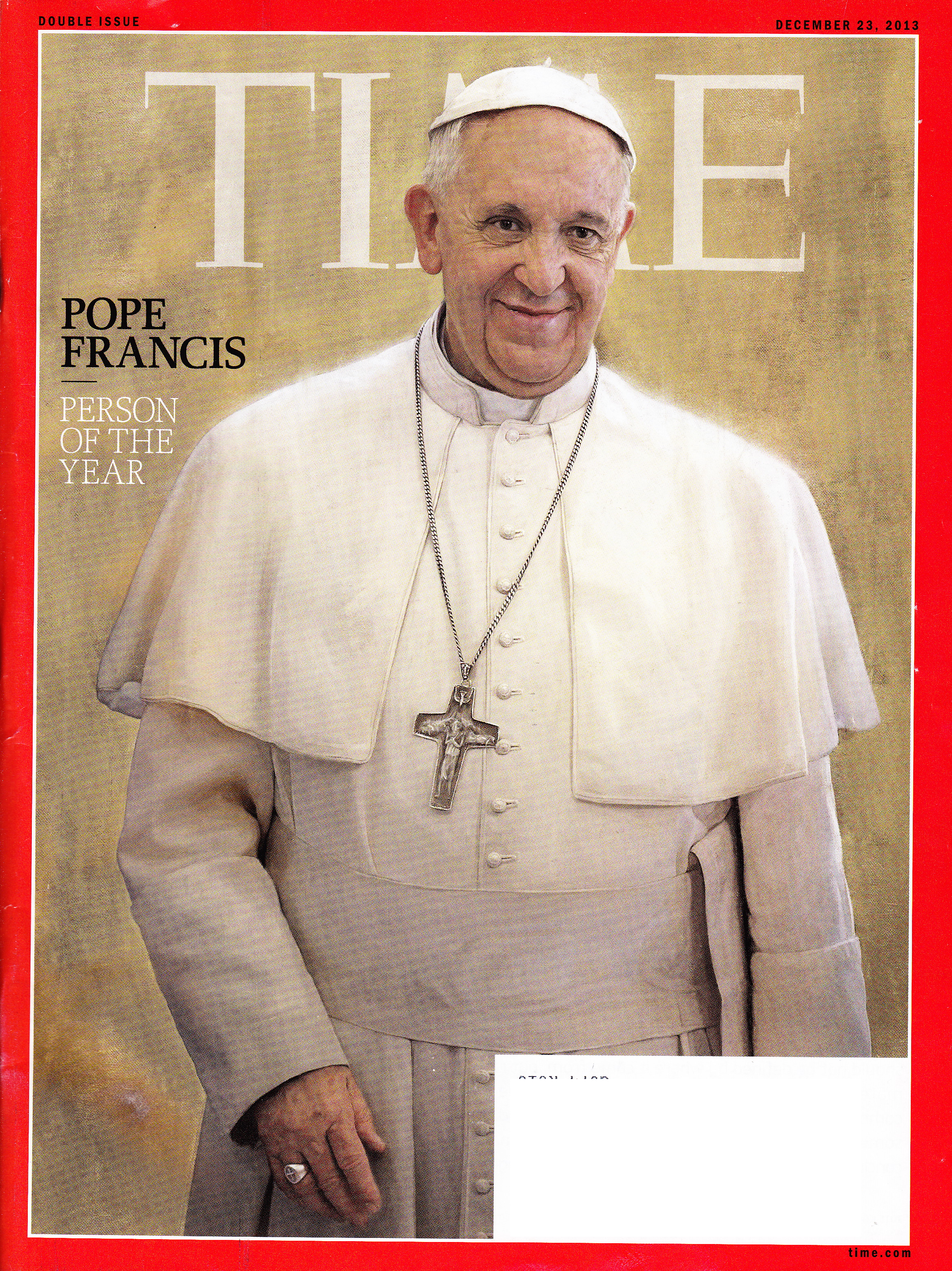
TimePopeIt’s the Time of year. The time of year Time chooses a person of the year. Not for the first time in recent memory, a religious figure has been chosen. Granted, Time declares the person of the year is the most newsworthy, not necessarily the best to emulate morally. Notorious scoundrels have made their way onto one of the nation’s top news magazine’s covers, while many more worthy will never be selected because they just don’t garner the notice. Despite this, Pope Francis is certainly the most deserving pontiff in living memory. Over this year he has demonstrated that the Catholic Church does have some historical memory of its original call and mission to the Christian faith.

Ossification is a natural tendency with institutions. We tend to think the earliest universities are still the best (in some cases that may be true), while in fact better educations are often found elsewhere. We want to believe that as it was in the beginning, is now, and do I really have to finish it? Times change, institutions evolve. Within half a millennium the Christian movement went from a bunch of persecuted, fearful peasants hiding in corners to the power brokers of a powerful empire. Problem is, once you’ve tasted empire, there’s no going back. Until now. How odd it is to see a person who could live a life of opulent self-service giving it up to be kind to his fellow humans. It is almost as if the Vicar of Christ has somehow become incarnate. A pope who is one of us. And the world stares in wonder.

I don’t mean to pick on the Catholics here. We see it in many religions. Someone humble and spiritual joins a religious movement for obvious reasons. They then grow through the ranks, acquiring a craving for power. What a temptation it must be to stand before an audience of thousands, knowing that by television hundreds of thousands more are watching you—hanging on your every word. Our underlings tell us we are great and it isn’t so hard to believe them. The man who steps down from his kingly throne to mingle with the laity, who doesn’t ride bulletproof cars to represent a man who willingly, so the story goes, gave himself up to die. What saddens me is that this is newsworthy. Not to detract from the spirit Francis has injected into a stony Vatican, but that we find it incredible is a comment on what has come to pass for religion in this time. Thanks, Time, for holding up this important mirror to our society.


Imagine Images

“Thou shalt not make unto thee any graven image, or any likeness of any thing that is in heaven above, or that is in the earth beneath, or that is in the water under the earth.” Thus spake the Lord one day long ago. So the Bible says. The problem is that humans are visually oriented. We teach our young to read by enticing them with books with pretty pictures—images that captivate. We make things that are pleasant to see, some of them are even graven. I used to ask my students what the difference was between a god and an idol. The answer is, of course, perception. “Idol” is a word that implies falsehood. The item represented is somehow divine, but is not actually divine. There are ways around the rules, of course.

IMG_1138

I spent many years in the United Methodist Church. Many people I knew claimed that the local Catholics were idol worshippers, and when I entered a Catholic church for the first time I was struck by the graven images that seemed to stand in blatant contradiction to the second commandment. How could this not be a direct violation of divine orders? After all, this wasn’t some minor infraction—it was one of the very commandments! Back in my Methodist context, I began to wonder, however. We had crosses, some of them in the round, right up there on the altar. True, there was no corpus on our crucifix, but that seemed to be a handy bit of casuistry. Human beings naturally convert images to idols. We all knew, Protestants though we were, that you should never take a sacred object out to the streets and treat it profanely. An image in a sacred venue could be an idol.

Over the years it seems that the strictures of the ten commandments might have been relaxed just a little. Collectively as a culture, the real has become more and more virtual. We buy our movies, music and books in electronic format. We play our games on computers. In such a context a physical image may seem somehow less real. Our idols have been digitized. It doesn’t seem like the Bible was looking that far ahead when attempting to create an exhaustive list of what might anger the divine. After all, electricity wouldn’t be discovered for millennia. Reality was dry, dusty, and deadly. The prohibition was against physical images. It is no longer an issue for many in the Judeo-Christian tradition that a statue or an icon might be a sign of piety rather than profanity. Things seem to have come full circle when I find a statue of John Wesley, nearly of bobble-head proportions, looking at me with eyes seeking prevenient grace. I guess the powers that be might just be willing to overlook even Methodists gone native.

IMG_1136


Monsters are Due on Main Street

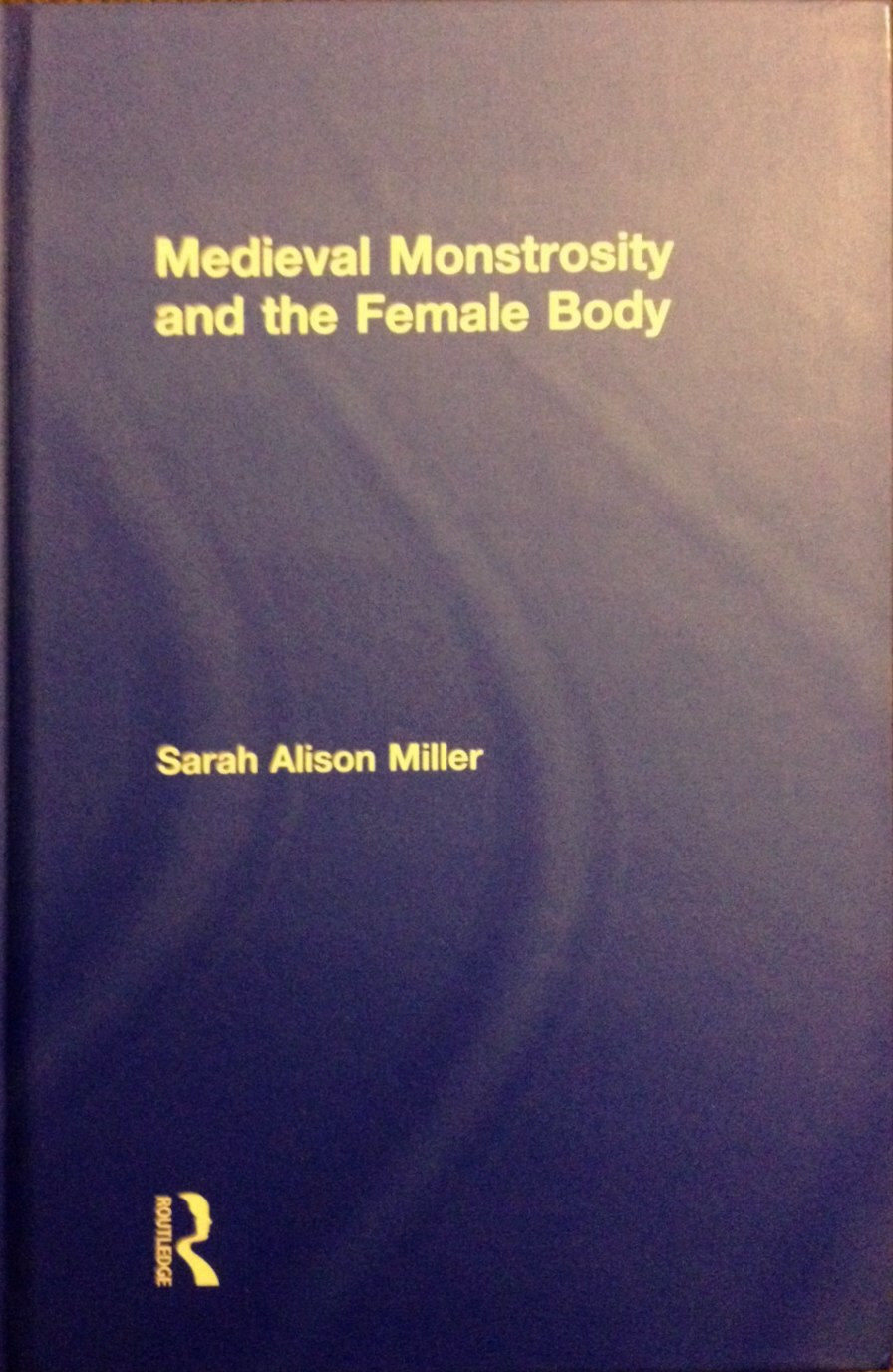
MedievalMonstrosityNow that the slow descent into darkness has begun, my mind naturally turns to monsters. In the early days of this blog I felt as though I had to justify writing about monsters when I was limiting myself (mostly) to religion, but it is now clear that many scholars have recognized the connection. Monsters cross over boundaries, and, given religions’ focus on proper borders, declaring monstrosity is often a sacred task. That comes through clearly in Sarah Alison Miller’s Medieval Monstrosity and the Female Body. Utilizing mainly three medieval texts, Miller draws out how they present various aspects of the female body as monstrous. Predictably, the source of their conviction is frequently the viewpoint of the church, the dominant institution of the Middle Ages. Biology was a touch more advanced than it had been in the biblical period, but despite the figures, many writers assumed the male to be the default model of humanity and the female somewhat suspect. Given the multiple pluralities of the natural world around them, this idea is passing strange.

This book is not for the squeamish. Miller plumbs the depths of bodily fluids and the beliefs surrounding them in a pre-scientific era. Male writers wondering at the changes the female body undergoes, however, may have been a necessary stage in the growth of knowledge. It is easy for us today to suppose that equality should have been always on their minds, but Scripture, a large source of authority for medieval mentality, had cast the sexes into an uneasy opposition. The only figure in the Bible who seems sensitive to the unfairness of it all is Jesus. And even his viewpoint couldn’t change the conservative conviction that somehow God was truly the über-male and that all the females of nature were somehow subordinate. Dare we say it? Monstrous.

Miller closes her brief consideration by delving into the writings of Julian of Norwich. Julian was a most remarkable mystic who wrote of God in strikingly feminine terms. Turning those boundary-violating bodies into the sacred, here was one medieval writer who saw the female as normative, salvific, even. Julian never commanded the kind of authority that a male cleric could, but as Miller shows, even men in this period were considering the feminine aspects of a wounded deity. Reformation, however, snapped a masculine, Protestant lid on any such speculation. Today, ironically, many Protestant traditions have, at first reluctantly, admitted female clergy. The religious body of the Middle Ages, the Roman Catholic church, still keeps women in a separate, somehow subordinate role. Monsters come in many forms and they break down boundaries. Some borders, however, may be meant to be breached.


No Singing Matter

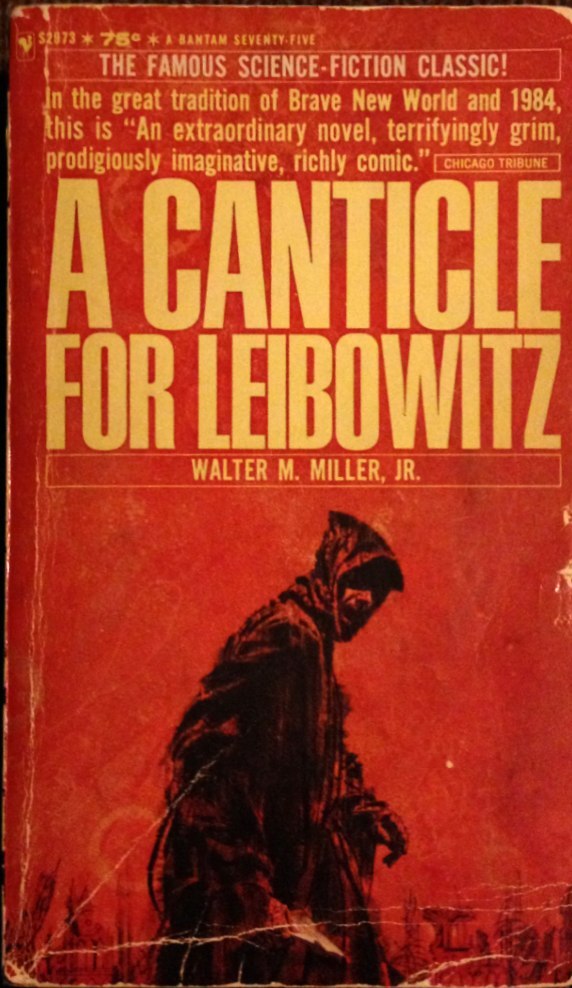
Canticle for LeibowitzA Canticle for Leibowitz, by Walter M. Miller, Jr., is one of those books that I read years ago, and when I picked it up again found that I remembered very little of it. I suppose this is one of the hazards of extensive reading—some important things get lost in the noise. I recall having read A Canticle for Leibowitz when I was a grad student at Boston University, and I remembered the detail of a grocery list being taken for holy writ in a post-apocalyptic world where, in a strange reincarnation, monks have once again become the guardians of knowledge. Little else remained. Perhaps part of the reason is that the book requires more experience with the church than I had in those days. One might suppose a seminarian would have about as much ecclesiastical experience as one might need. Not so. It did teach me, however, to read provocative books.

Like most dystopias, there is a deep bleakness to A Canticle for Leibowitz. In the light of recent developments in the papacy, the book is remarkably prescient. In the final pages of the final section, a radiation-sick woman and her young child, in constant pain, seek the government sponsored euthanasia camp. Abbot Zerchi, however, condemns this as a sin against God. Doctrine takes the place of compassion, and only moments later the final atomic strikes wipe the abbot and his monks off the earth forever. Yet there are monks on a spaceship, ensuring that any future planets will have the same uncompromising doctrine planted there as well. For a book published in 1959, it sounded incredibly contemporary. Miller’s anger still echoes throughout. The church builds societies that destroy themselves. A cycle of futility.

I wonder what the result would be if more people read such stories. It is, of course, easy enough to shut out any implications we don’t like and claim it is all a silly piece of fiction. The problem is that Miller is not too far off base. Our civilization does own much to its religious institutions. Those institutions sometimes have considerable trouble relinquishing control when society finds its grounding in science and technology. It is difficult to believe divine proclamations from above in the age of the space telescope. Yet, even so, we still elect to power politicians who look back millennia for the instructions on how to treat those of other genders or races. To do so, as Miller recognized, is to begin building bombs all over again. And even old Ecclesiastes declared that there is, in a Leibowitzian twist, nothing new under the sun.


Com-Passion

I suppose it is always premature to hope that ancient institutions are likely to improve. Like many other followers of developments in religion, I was pleasantly amazed to read reports of Pope Francis declaring that, in my vernacular, that the church should not be so stuck in the rut of doctrinal abstemiousness that it forget mercy and charity. How sad to see that hours later he was forced, Galileo-like, to recant somewhat. The forces at work are far more powerful than the vicar of Christ. In some minds religion is doctrine. I know whereof I speak. For several years of my professional life I worked for a doctrinaire institution where any hint of mercy was considered a kind of Protestant mewling before a God who would’ve made even Jonathan Edwards tremble. Although officially released “without cause,” I can’t help but think that my own pastoral sensitivities were at fault. I don’t believe that religions thriving on condemnation deserve the title.

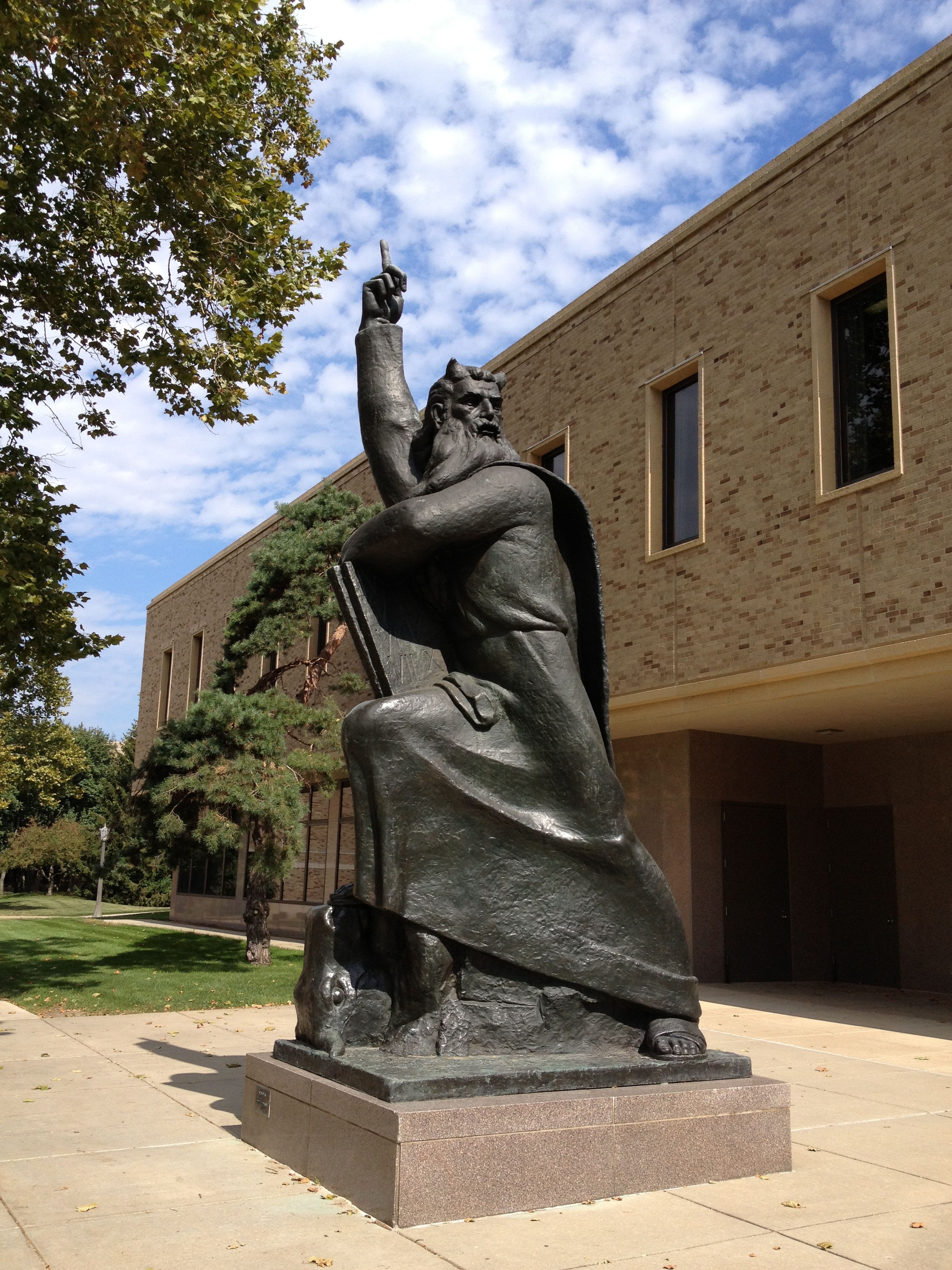
Ironically, I was at Notre Dame University when headlines about the Pope’s declaration that the church should not obsess about homosexuality and abortion appeared in the papers. It was with a kind of wonder that I heard an academic say, “the Pope is sounding more Lutheran all the time.” I’m not naive enough to suppose that the pontiff is suggesting a change in doctrine—there are rocks so heavy that the Almighty himself can’t lift them—but that the leader of the world’s largest church was suggesting mercy and compassion outweigh legality felt as if Amos or Micah had just walked into the Vatican. The next day the Pope had to come out and strongly condemn abortion. Politics, it seems, will always trump human understanding.

IMG_0996

We live in an era of iron-willed religions. The human element often vanishes beneath a frowning providence that wishes for clocks to be turned back decades, if not centuries. These religions have no place for improving the human lot in this sinful world—it is much easier to condemn than to contemplate compassion. Religion is hard, for people find forgiveness a difficult doctrine to accept. Jonathan Edwards dangled his spider over the eternal fires of hell, but ecclesiastics today suggest that swift shears taken to that silken web would solve all the problems. Time for change? Not in this century. Religions, too, evolve. But evolution doesn’t equal improvement. Many an agnostic has become so because of the reality of “nature red in tooth and claw.”


Our Lady of Culture

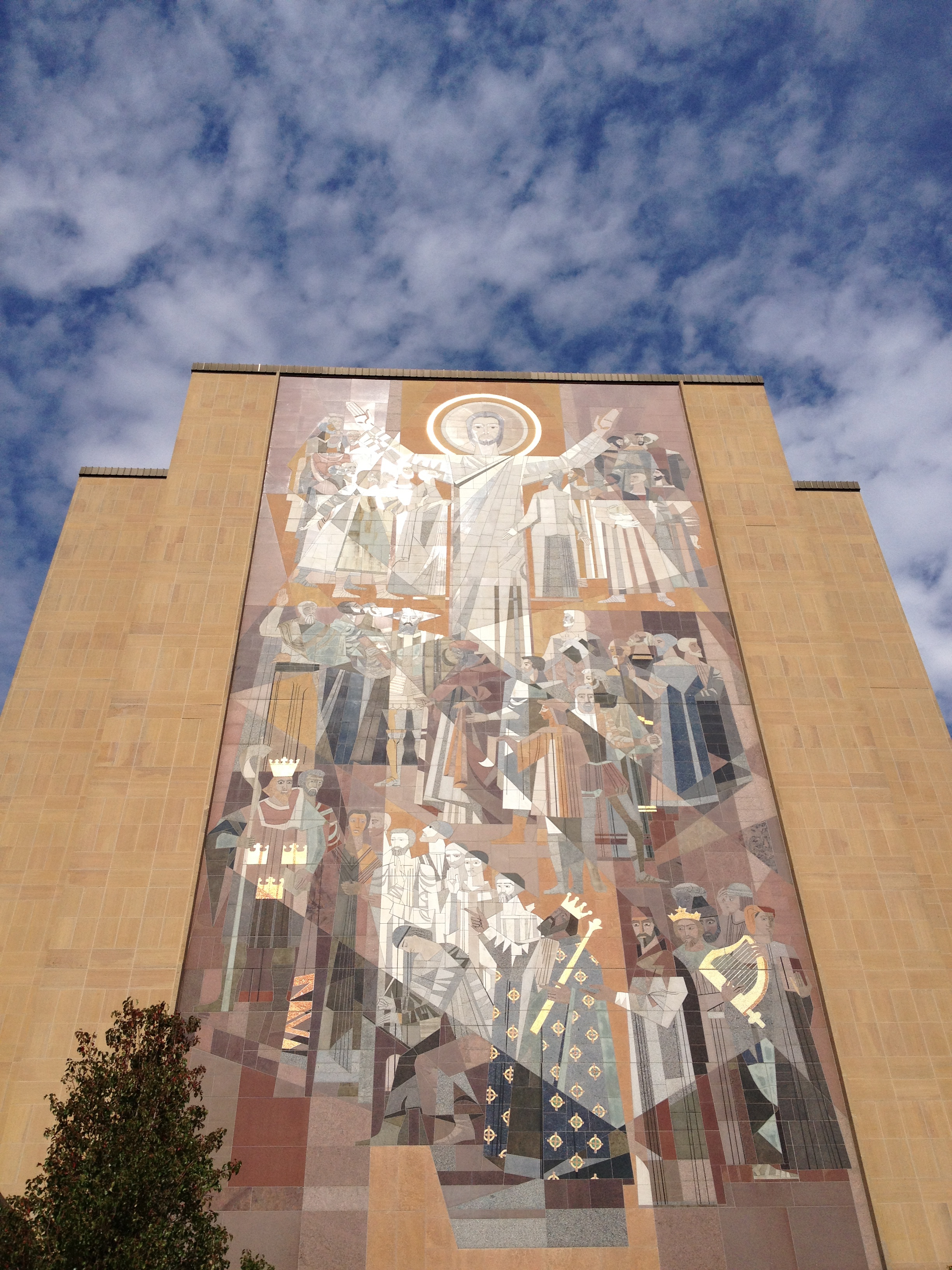
So I’m in the land where sport and religion become one.  Notre Dame is an intimidating university for a small Protestant like myself.  Like on a first date, I’m never sure what to do with my hands.  Standing below the famous “touchdown Jesus,” more properly, the “Word of Life,” I feel small indeed.  For a long while in US history, Catholicism was treated like some kind of cult.  Those of us reared Protestant were taught to fear “them” and their ritualistic ways.  I’m more afraid that someone might ask me about football stats.  Sports is a religion I’ve never studied.

IMG_0997

Culture is like a colossal Cuisinart.  Lots of stuff goes in, all of it more or less equal, and the blades begin to whirl.  Sports, religion, fast food, alcohol, a dash of education, and we’ve got an American classic.  The only time that sports come to my mind is when they start to take on the flavor of religion.  The level of the devotion of fans is the envy of many a church.  In fact, the word “fan” was borrowed from the lexicon of religious behaviors.  It is not difficult to sense the pride in football here, but then, sports are often a civilized way to assert one’s self-worth in a culture where self-worth feels under threat.  It is hard to recall a time when the Fighting Irish were not mainstream.

“High culture” has put itself on the endangered species list by becoming inaccessible in a culture that doesn’t value education (not to reflect on the academics I’ve seen at Notre Dame, which are pretty impressive).  I cringe, however, when I see polished politicians basking in their lack of introspection on issues that impact the entire human race.  They seem proud to declare themselves untainted by education.  They will support sports, however, and particularly football where violence is padded, but still encouraged.  It is culture for those who enjoy the lowest common denominator.  In the airport I noticed another “touchdown” character who, in some quarters in more recognized than the deity soaring over Notre Dame’s venerable stadium.  I was in the true presence of culture even before I boarded the plane.

IMG_0977


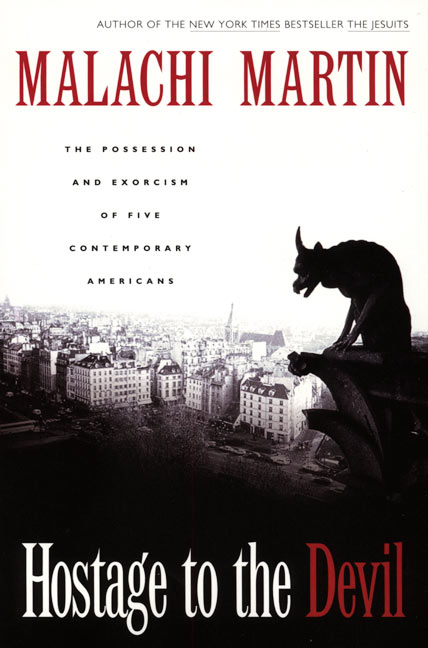
Holy Hostage

HostagetotheDevilA chance glimpse at a textbook shelf in a university bookstore made me aware of Malachi Martin’s Hostage to the Devil, although it is several years old. I was intrigued that a major, secular, state university would offer a course requiring a book about demonic possession. I’m not completely naive about college students, but this seemed just a tad extreme. Nothing is more dangerous than a book dangling in such a context, like the Necronomicon of Abdul Alhazred. The world of the demonic is freighted with arcane rules and a decided Catholic superiority. Even to the rational it can be insanely frightening. As I read Martin’s account, I frequently found myself puzzling over the unseen world he so meticulously describes—after all even the Bible has little to say about it. And Martin is a great lover of verbosity, detailing more than the reader needs to know about the five exorcisms he elaborates. If you want to know what a dying priest looks like, in great detail, you’ve come to the right place.

Perhaps the most jarring aspect of reading such a book is how such obviously intelligent people can come to such diametrically opposed worldviews while looking at the same evidence. Here was Malachi Martin, convinced that demons lurk about the world in great numbers. There is Richard Dawkins, convinced that we are nothing but particles and proteins walking around. Manhattan—the haunt of countless demons, or the febrile accident of firing synapses that means ultimately nothing? Although much of what Martin describes could probably be mental illness, one has the distinct impression Dawkins has never attended an exorcism. Both write with great authority and even greater conviction.

Hostage to the Devil is not an easy book to read. Martin’s style is smooth, like a novelist, but the length of his book keeps demons on your mind for a protracted period. Rationality can be worn down by attrition, and even the non-believer can be made to wonder. Would priests and their chosen attendants lie? Do the possessed really levitate, and contort, and cause objects to fly around the room in defiance of the physics so highly valued by atheists? For over 450 pages Martin will keep you wondering. You’ll also find out what an exorcist ate for his boyhood breakfast back in Ireland decades before facing the Prince of Darkness. Hostage to the Devil is a deeply disturbing book where the monsters we’ve all learned to shove deeply into the closet come springing back out. And the only effective help in the known world is the Catholic priest who happens to be an exorcist. And who can argue with that?


Sacred Herstory

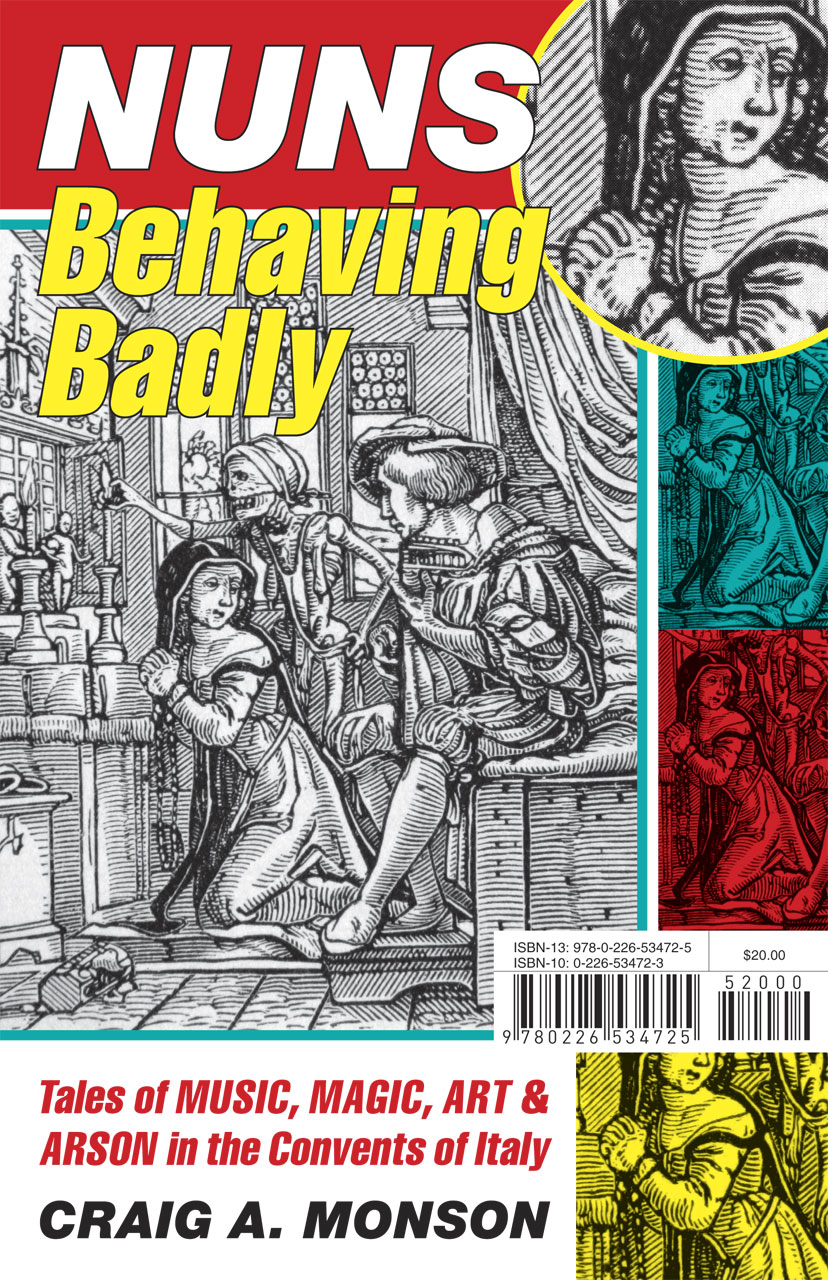
NunsBehavingBadlyHave you ever read a book thinking the author was a woman, but later learned that it was written by a man? Or vice-versa? This creates a disturbing kind of cognitive dissonance, and I suspect that it is hardwired to our communal instincts. We want to know whether it is a man or a woman who is talking to us. Expectations of gender are deeply embedded in all societies, and they become problematic when they ossify into rules. Gender roles, in earliest societies, were a matter of biological necessities. In a modern, urban context such roles are obsolete, and certainly damaging—especially to women. Craig A. Monson’s Nuns Behaving Badly: Tales of Music, Magic, Art and Arson in the Convents of Italy raised this issue to a conscious level once again. Christianity, always very sensitive to issues of sexuality, had developed in a social context of women as property. In the Middle Ages, where dowries were expected, families couldn’t afford to marry off all their daughters, and convents provided an easy, if not always spiritual, solution. Monson’s book, although not filled with salacious tales, illustrates the point well. In a society where wage-earning was limited to males, females had few options.

Monson narrates the stories of five different convents where a nun (or sometimes groups of nuns) refused to play by the rules established by the male hierarchy. The infractions, viewed from the twenty-first century, seem minor: playing with magic, singing, producing art work, wanting to go outside the cloister walls, visiting (gasp!) an opera! (There are a few more complex issues too, such as arson and the love that dare not Ave Maria its name.) In each case, the masculine authorities were called in to investigate, punish, and restore order. The end result is, although fascinating, somewhat melancholy. These willful women were often acting against boredom. Their lives had no impact beyond the convent wall, and, ironically, I learned, even their enclosures had prisons. A nun could be moved from her cell to the cell. And sometimes the only crime was wanting to hear a professional singer perform.

Nuns Behaving Badly is a clever title for a book. As I read the histories, however, I became increasingly convinced that those behaving poorly were not the nuns. A society fabricated on the premise that men are the divinely ordained masters of their universe is no stellar example of men behaving well. Even the occasional bishop, archbishop, or cardinal who sided with the accused had to bow to the will of the Holy Inquisition. The victims, although not physically tortured, were women who had thrown their entire futures into the service of the church, in one of the few roles allowed females in an era already pressing into the early modern age. The nuns were not behaving badly. They were simply being human. The truly bad behavior came in the form of a male hierarchy that brooked no dissent.


Down Will Come Baby

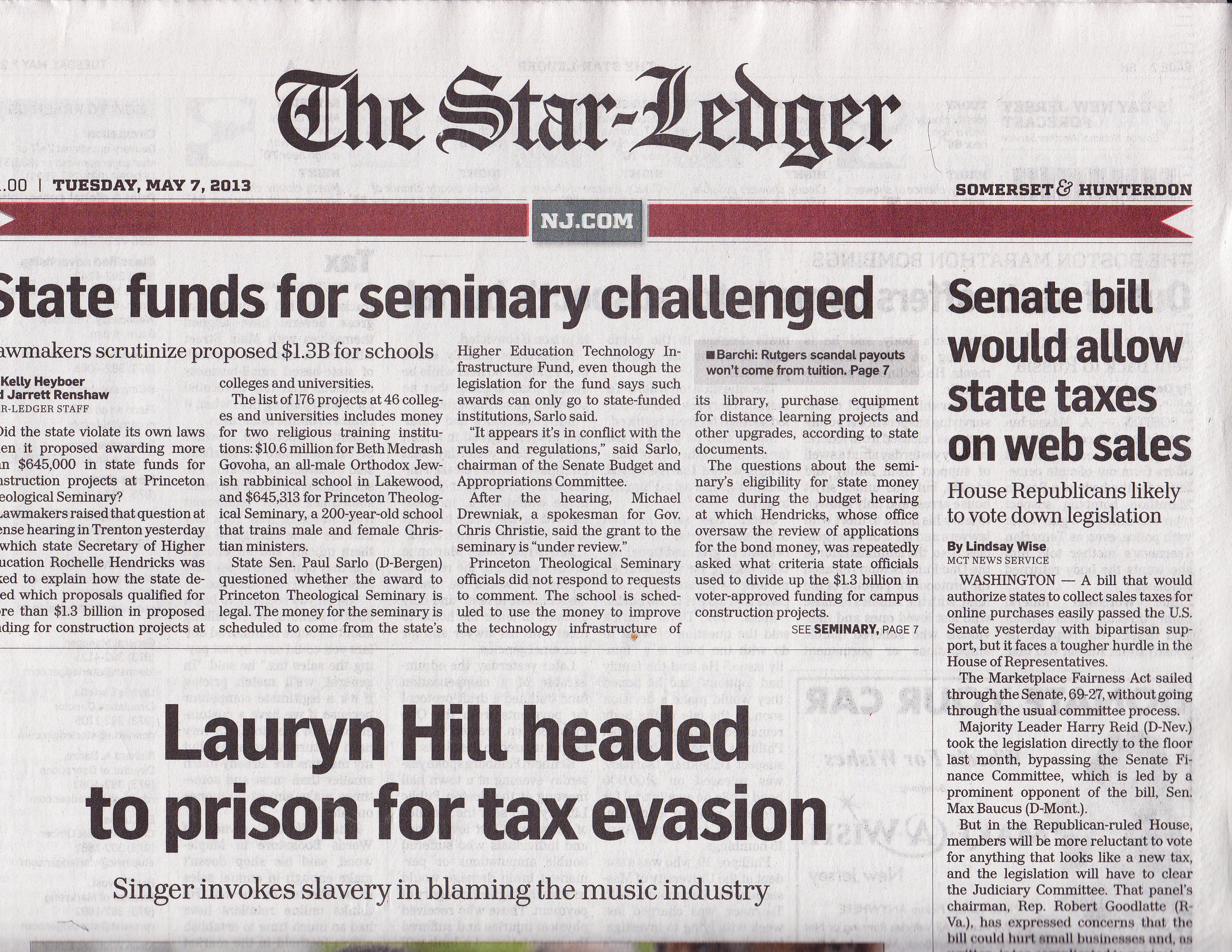
Princeton Theological Seminary is a school with a history. Unofficially allied with my alma mater, Edinburgh University, PTS is one of the powerhouses for supplying educated clergy to the Presbyterian tradition. And others as well, of course. And not a few PhDs into the ranks of the perpetually unemployed. Seminaries do offer all these services. Despite failing to be considered worthy of even an interview in what I count as five separate applications to the school, I still sympathize with its need to update its technology. I suspect that is what is behind its application for a half-million-plus-dollar New Jersey Higher Education Technology Infrastructure Fund grant. Education and technology surely go together as much as old-school loyalty and fairness, do they not? A front-page story in Tuesday’s New Jersey Star-Ledger proclaims the gnat that remains in the camel juice: state funds are being requested by a fully religious organization. The application for these state pork-bellies is also shared by Beth Medrash Govoha, a male-only Jewish seminary in Lakewood. Desperate times in higher education. What would Christie do?

PTS

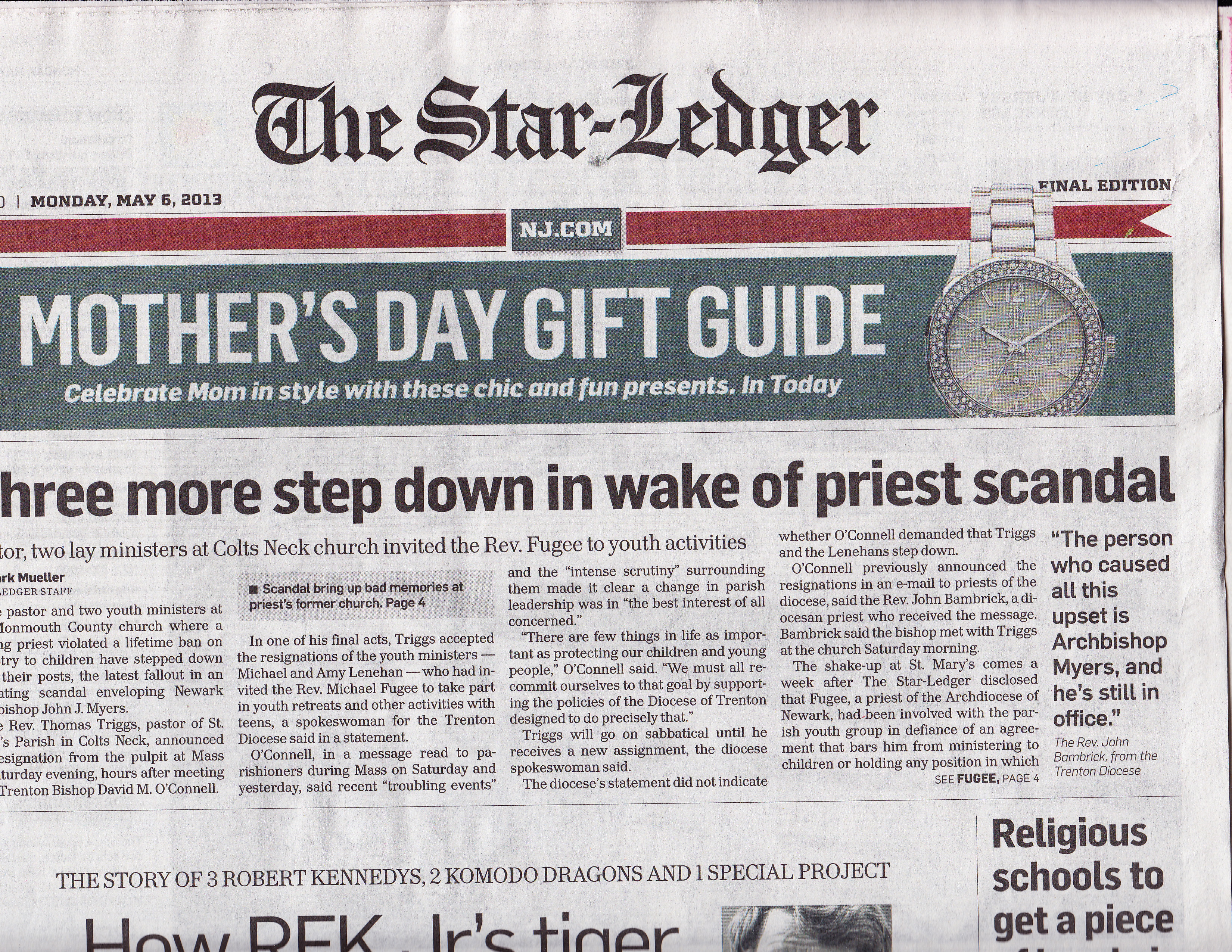
Turning the clock back twenty-four hours, another front page newspaper story places religion squarely in the public face. “Three more step down in wake of priest scandal” hit my bleary eyes on a Monday morning. This is the saga of Fr. Fugee, banned from interactions with children after a molestation case some time back. As seems to be par for this unholy course, such clergy are shifted around rather than defrocked—being seminary fodder myself I can honestly ask, what else would they do? Society has little enough use for those of us who worked our way through seminary for honest means and toward what seemed at the time noble ends. How much more so for those who mask deeply rooted neuroses under the sanctity of ordination?

Fugee_0001

Seeing religious news on the front page of the paper is nearly always cause to shudder. We will occasionally see a new Pope or maybe a genuine act of Christian (or any other religious) charity, but mostly we are served the seedy and sad and downright tawdry. Religion, although in the ascendent, is seeking hard to justify its existence. Or is it just the vaunted liberal media bias showing through? As primates we all like to watch the haughty topple. It’s even in the Bible—Isaiah got a thrill out of tall ships tipping over. Perhaps it is because religion presents itself as the unadulterated good that we like to see it stumble. I always felt a tad uncomfortable reading Goofus and Gallant while waiting for a doctor’s shot or the dentist’s chair. Yes, Goofus screwed up big time once in a while, but that confident little eagle-scout-in-waiting Gallant could do no wrong. I knew who I was supposed to emulate, but life’s just not that simple. Maybe that’s why religion makes the front page. Maybe Gallant is a myth after all.


Palming the Truth

For some today is Palm Sunday. For others it is not. And I’m not referring to those outside the Christian camp. For many Eastern Orthodox Christians, Lent is just beginning as others prepare to celebrate Easter. Such divisions in the priesthood of all believers. The message was brought home to me when a friend emailed me an article from Archon News headlined “For the first time since the Great Schism, Ecumenical Patriarch to attend Pope’s inaugural mass.” For those of you outside the thrill-a-millennium Catholic-Orthodox drama, it might help to know that about the middle of the eleventh century, Christianity experienced its first major schism. The issues were insignificant to all but those who had far too much time on their hands, but the list of grievances grew and festered for centuries until a clean-shaven Pope and heavily bearded Patriarch stopped inviting each other to one another’s parties. It seems that Pope Francis may be seeing the beginning of the end of that particular tiff.

Christianity is one of the most fragmented faiths in the world. Tens of thousands, yea, myriads of denominations exist. And if some of them got together and compared notes, I suspect they’d be shocked to learn that they are just the same as some of the others. Religious belief is deeply personal and highly individualistic. Belonging to a religious body is more a matter of commitment than it is a full agreement on every point—rather like a marriage, I suppose. The funny thing is people join religions that they like, suspecting that these copacetic beliefs will somehow save them from Hell. You can literally write your own ticket to Heaven, based on this system. No religion is right because all religions are right. And we wonder why people are eager to kill one another over matters of belief.

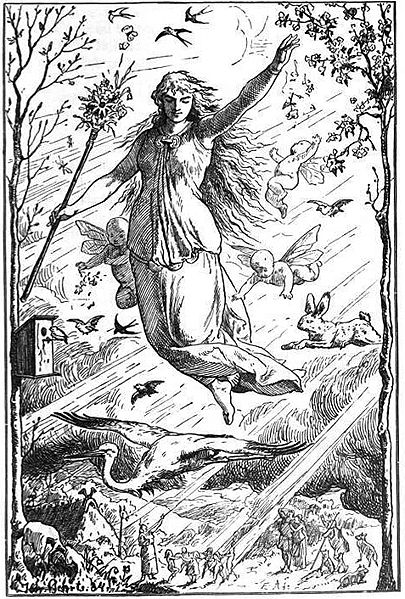
So, is it Palm Sunday or not? It depends entirely on your point of view. Roman Catholicism, followed by many Protestant groups, considers the first Sunday after the first full moon after the Vernal Equinox to be Easter. Never mind that all this equinox stuff smacks of its Pagan forebears—even Easter is named after the Germanic goddess Ostara. I can’t pretend to know how various Orthodox groups calculate their Easter, but the fact is that both dates can’t be right. Unless, of course, one of them is really a celebration of Ostara. Or maybe both are. And if it comes to a matter of debate, it will mean the birth of even more denominations.

Ostara laughs to see such sport

Ostara laughs to see such sport


Pope Springs Eternal

All channels lead to Rome. In a world where Christians lament their public influence, we can’t seem to get enough of the pageantry, the mystery, and the stylish drama of electing a pope. The secrecy is key. If cardinal debates were held in an open forum, by cardinals in business suits, the media would have trouble covering its yawns. In a conclave deep within the classical architecture of Rome, privileged men in expensive gowns meet and whisper in hushed tones until a puff of smoke rises though a sacred chimney and the world either hitches its collective breath or sighs in deep contentment. No wonder the election of a pope is such a big deal for Protestant and Catholic alike.

We would be mistaken, however, to limit such docu-drama to Rome. Religions, from the earliest institutionalization of their practices, used drama and showmanship to add to the draw of the sacred. Ancient Mesopotamians and Egyptians kept statues of deities hidden away in the deepest recesses of temples, and brought them out periodically to great public fanfare. The laity would watch in astonishment as an actual god was paraded among them—the popemobile had yet to be invented—and lapse back into ordinary time as the sacred statue was swallowed once again in the darkness of its great house. Even the aniconic Israelites maintained ceremony and mystery, for they had an invisible god who raised all kinds of questions in the naturally curious human mind.

The papacy is, after all, a recognized authority structure. Some nations recognize the Vatican as a sovereign state, a little bit of the City of God among the Rome of Humanity. For the time being at least, the Roman Catholics outnumber any other branch of Christianity. It is the most successful trader in the marketplace of religious commodities among Christian consumers. Its draw has always been tied closely to a sense of mystery and awe. There is a magic to the mass that the televangelist sermon splashed on the big screen somehow lacks. It is old and arcane. Few believe in its literal transubstantiation, and yet it stands as the outward and visible sign of a deeply occluded reality that takes place behind closed doors. Men in red, debating on the virtues of a new CEO for the vicar of Christ. No wonder all channels are tuned to Rome.

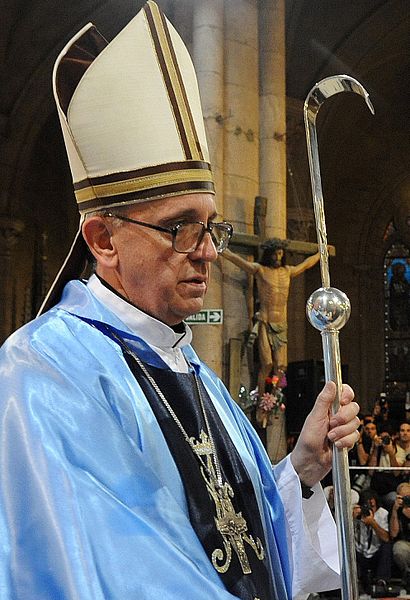
From presidencia.gov.ar, via Wikimedia Commons

From presidencia.gov.ar, via Wikimedia Commons


International Women’s Day

So it’s International Women’s Day, and I’m thinking about what various religions might do to celebrate it. How about equality? True equality. With rare exceptions religions have been spawned and gestated in masculine wombs. Increasing the asperity, monotheism had to, by definition, introduce a single-gendered god to match at least half of the human race’s expectations. No surprise he is a deity with a Y chromosome. For whatever reason, religions nearly always promote male experience as normative and female experience as supportive. If you disagree, well, talk to the man upstairs.

In those few precious moments when I’m allowed the luxury of a daydream, I wonder how differently the world would’ve developed without the mythology of the alpha male god. If god had been conceived as feminine in the beginning, would it have made a difference? Would the rules be more or less stringent? More humane?

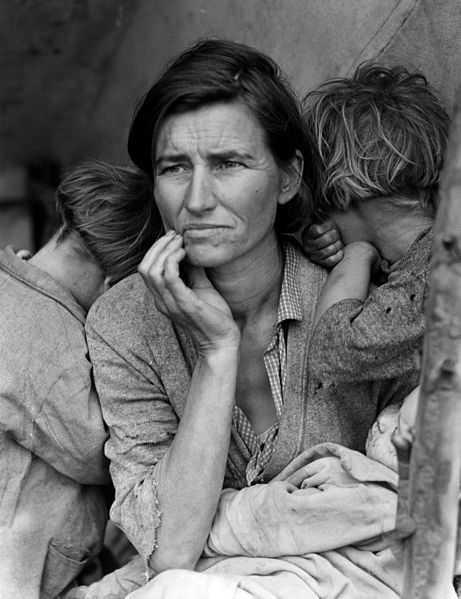
Lange-MigrantMother02

Polarities are a funny way to view the world. As evolved, gender-differentiated animals, we easily slip woman and man into that category of natural polarities. Over time, however, it has become clear that reality is more complex than X or O (or I and O, or X and Y—where the male is missing something the female secretly possesses). What if the overall category were simply “human?” As we’ve evolved, we’ve learned to keep many animalistic tendencies in check. Our vast and complex societies, unique only in degree, have demonstrated that it is possible. To judge half of the human race as less able to provide spiritual leadership is an exploitation well past due for extinction. With all eyes on the Vatican over the past couple of weeks, the largest Christian denomination in the world doesn’t seem ready to shift even a nanometer on this one. Mother Mary, pray for us.

In a world where conception was a mystery (which it still is, to a point), women were the sole life givers. Men had the role of sustainers, the help-meets who brought home the meats. Somewhere along the sociological lines the order somehow switched. Might it have been religion itself that led to the subordination of the god-like ability to give life that only women possessed? By attributing the origin of life to a being, generally male, outside the realm of normal reality, religion bestowed a foreign primacy upon the human race. We became the victims of our own longing for transcendence. So celebrate International Women’s Day. If it weren’t for a woman, a goddess in her own right, you wouldn’t be reading this right now.