
There’s a disappointing scent to books printed on demand. Upon first opening them, they release a waft of laser printer. The friendly smell of offset printing is banished. I need to qualify that, however. While teaching at Nashotah House I acquired a book via interlibrary loan that I remember not for its content, but for its unpleasant odor. I’m not sure if it was the paper used, but the book smelled unpleasing. Almost too offensive to read. I’m not referring to the kind of musty, basement bouquet that some used books, long stored, possess. No, that aroma isn’t offensive. It suggests both mystery and the human condition. How books smell is important. Upon recently opening a POD (print on demand) book, I was transported to office work rather than the musty study of a scholar.
There are companies that sell scented candles intended to suggest libraries. Libraries smell wonderful. The small Franklin Public Library in my hometown has a wonderful, evocative aroma. I remember it well from childhood. On a visit to my mother before she passed, my wife, daughter, and I took her to that library. We didn’t check anything out. I simply had to smell it again. Olfactory stimulus is very personal. Indeed, in polite company we tend not to comment on how a person smells unless it is particularly pleasant. “Nice perfume/aftershave, etc.” (You have to be very close to a person to comment on less pleasant odors.) Scent has always been an important sense to me. I like to sniff things. When I’m out jogging first thing in the morning, I snuff the air like a bloodhound, eager for the first whiffs of fall during the heat of summer. Like a dog I tend to think there are no bad smells, but there are some I don’t seek out. Smells will take you back to the past, as the ultimate time travel.
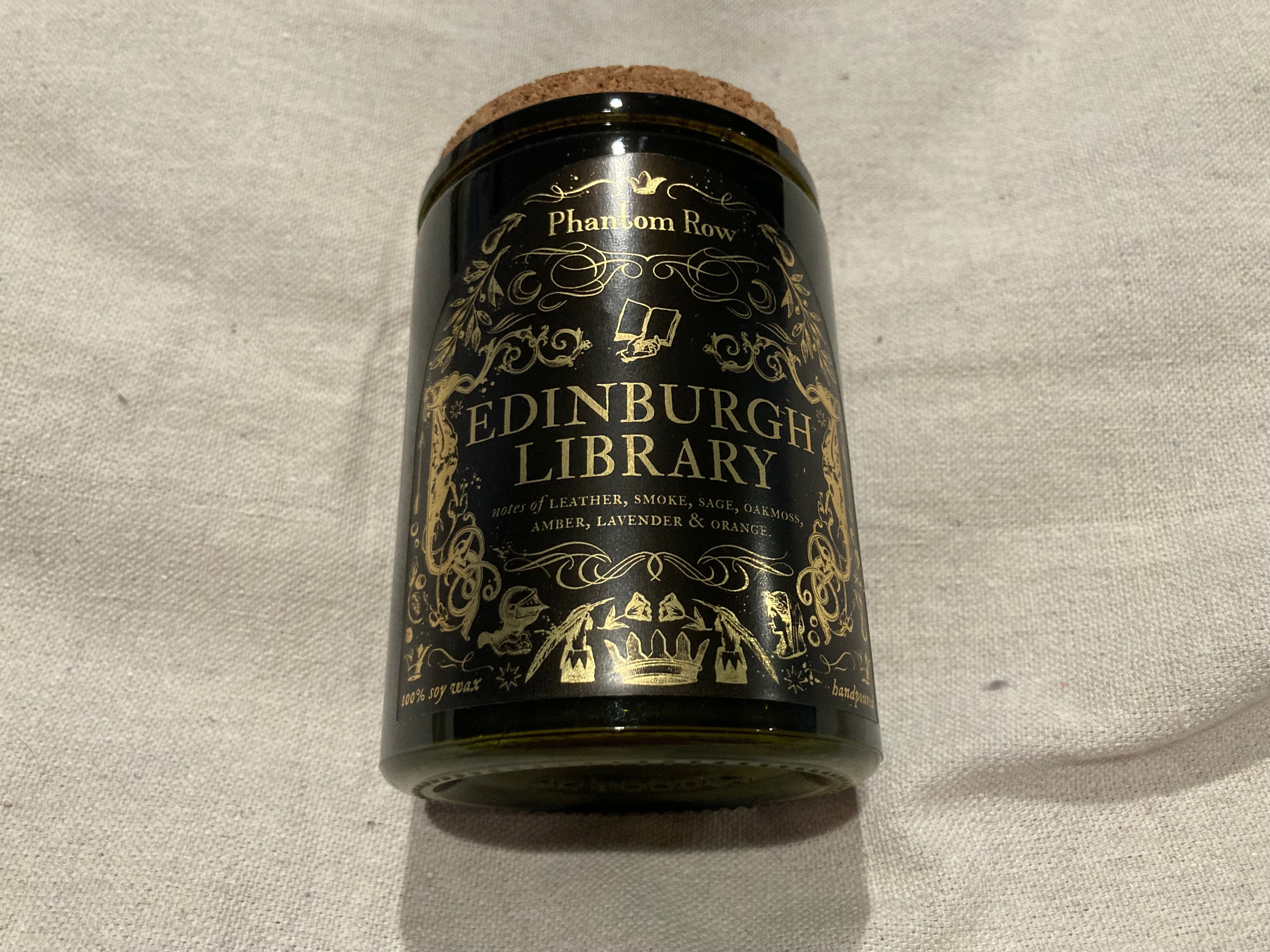
In my mother’s kitchen I used to sit by her spice drawer and pull out each little bottle and jar to sniff them. She never had anything as pungent as the asafoetida that my wife and I once bought for a recipe, but I recall those moments fondly. Mom would be cooking nearby, and it seemed to me that I was smelling far away places that I’d never go. I did make it to Scotland, however. Edinburgh often smelled of the McEwan’s brewery. At least the Old Town did on many a foggy morning. We live not far from a micro-brewery and when its bouquet escapes, it take me straight back to Auld Reekie. And, of course, Edinburgh was full of books and their distinctive smell. All of this makes me want to go plant my nose in a book.


