Heavy Machinery

Funny how some things just stick in your mind.  And then come back at odd times.  Killdozer was a television movie from 1974.  I must’ve watched it pretty close to when it first aired.  Why it came back to me half a century later I just don’t know.  I haven’t been around any heavy earth-moving equipment lately, nor have inanimate objects been threatening me.  When I found it on a free (albeit with commercials, but hey, the original had commercials, so it’s a full circle kind of phenomenon) streaming service, I figured why not?  I was really expecting something cheesy, like I would’ve liked at eleven or so.  It wasn’t really that bad.  There’s actual characterization and the acting is believable.  Only the special effects of the meteorite and the blue glow were obviously low budget.  But you might not be familiar with the D9, so let’s go.
An uninhabited island off the coast of Africa.  Six guys on a construction job—building an airstrip for a petroleum company.  The supply ship’s a few days away and when the Caterpillar D9 hits the meteorite, it becomes a murderous machine, like Stephen King’s Christine.  You can outrun a bulldozer, for a while, anyway.  But if it never runs out of fuel, and you’re trapped on an island, your chances aren’t good.  They’re even worse if the thing is sentient and knows what you’re planning to do.  Six men were sent to the island, and only two make it back.  You get the picture.

As a child I had no idea who Theodore Sturgeon was.  When I saw that this was based on one of his stories, I had to ponder a bit.  Sturgeon wrote several of the original Star Trek series episodes.  His most famous stand-alone story seems to be Killdozer.  In fact, it’s become a cult classic.  I don’t have many friends, so I’m not always aware of what’s in during any given decade.  I think kids at school were talking about Killdozer, but nobody has really uttered that word in my hearing since Gerald Ford was president.  So if you don’t mind commercials, and you have a sleepy spare hour, some of us would be interested to hear what you think about this movie.  The sense of isolation and people being killed by something they construct to be basically indestructible struck me as a lesson worth pondering.  And I’ll continue to try avoiding heavy earth-moving equipment, just in case.


No Words

I read something scary recently.  And no, it was not a horror story.  I work in publishing and we have to keep abreast of developments, so I’ve had a glimpse of the future.  Publishers are now starting to look toward the time when information will no longer be conveyed by the written word.  A picture’s worth a thousand of them, after all.  This new future will convey information by video, or whatever the replacement of video will be.  Perhaps some are looking forward to the Matrix direct downloading model.  Perhaps the computer will be able to simulate the pleasures of reading a book, of browsing in a bookstore, of writing with pen on paper.  Something about the process and discipline of reading has made us what we are.

Star Wars, as others have noted, is set in a world with no paper.  You won’t find a scrap blowing in the wind, even on Tatooine.  Nobody is shown reading.  Plenty of action, but no wizard behind his big book of spells, no princess writing down her inmost thoughts.  Make a recording and plug it into your R2-unit.  Perhaps this is heresy, but compare this to Star Trek.  The episode “Court Martial” has Cogley (Elisha Cook, before he applied to become Rosemary’s landlord) saying to Kirk, “Books, young man, books. Thousands of them. If time wasn’t so important, I’d show you something. My library. Thousands of books.”  We always thought even the future would have plenty of reading material.  Now we’re being told the technology is passé. 

The constant emphasis on “data-driven analysis”—mostly in an effort to get more money—seems to mistake the downloading of knowledge for the pleasure of reading.  They’re not the same.  I love movies, as any regular reader will know.  Perhaps ironically, I write books about them.  The thing is, I watch them largely to write about them.  Knowledge downloading is getting the cart before the horse.  I’ve read even nonfiction books wrapped in awe.  An author’s way with words, the phrasing, the craft, the artistry.  These are pleasures.  Sure, images can show an interpretation but there are those of us who will always want to read the book before we see the movie.  Can you get the actors’ faces out of your head if you do it the other way around?  There are those who celebrate this sterile future.  And there are those of us who won’t even go there if we don’t have a book in hand to read, just in case.

Image credit:Bender, Albert M., artist; Federal Art Project, sponsor. Public domain.


Shatner’s Space

We constantly underestimate the power of fiction.  It’s difficult to break into getting fiction published.  It wasn’t always that way.  When the pulps were still a thing often it took a thimble of talent and a handful of persistence.  Publishers were looking for content and those with typewriters were clacking away as fast as they could.  Ding!  Carriage return.  These days it’s harder.  This came to mind in thinking about William Shatner’s trip to space and his subsequent reaction.  As several news outlets said in anticipation of Shatner’s new book, the experience made him feel profoundly sad and not a little cold.  So much empty space and we still haven’t figured out how to travel fast enough to reach our nearest neighbors.  We don’t even know if we’ll like them when we meet them.

Others, in defense of space exploration, were quick to counter Shatner.  He’s not a real astronaut, after all, having spent nine decades earth-bound.  Or so they said.  But I think I understand, as a fellow land-lubber, where he’s coming from.  We’ve only really got one chance on this planet, being the only creatures evolved enough to type, to capture our thoughts—our essence—in words that can be preserved.  And wildlife statistics are showing an alarming decrease in other animals since the 1970s.  If we’re all that’s left and we can do no better than to elect fascists, well, stand me with Captain Kirk.  We look to the skies and see, well, empty space.  And besides, we need to get home because it’s supper time.

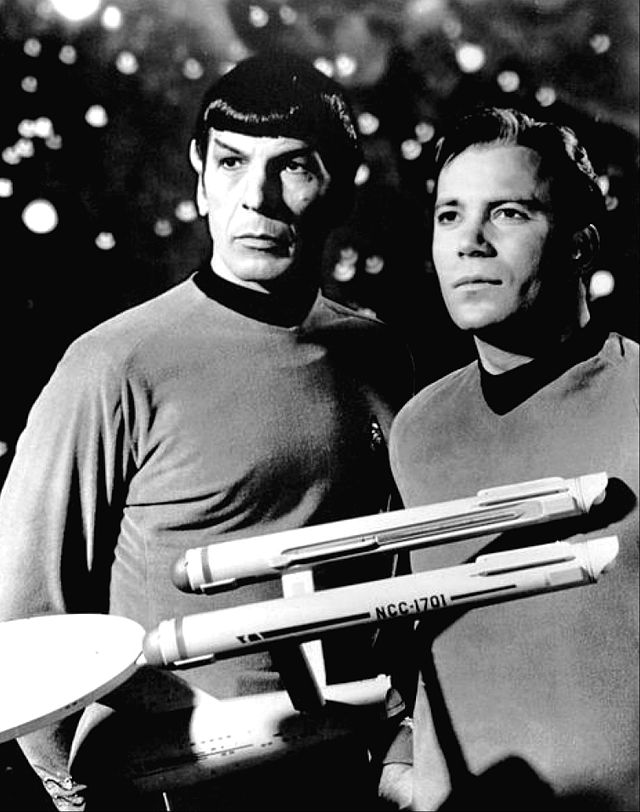
Image credit: NBC Television, public domain via Wikimedia Commons

The reason Shatner got a free ride to space was, of course, fiction.  Star Trek captured the imagination of my generation and those with actual science ability started to put that kind of future together.  Today we can talk to computers and they still mishear us, often with laughable results.  But if writers of fiction hadn’t been available the show would never have succeeded and what would a Canadian actor have had to do?  Maybe a crime drama or two?  And even those require writers.  It seems to me that we should be encouraging fiction writers with talent.  Believe me, I’ve read plenty who really haven’t got it (often in the self-published aisle) but I know firsthand how difficult it is to get fiction noticed.  It’s like, to borrow an image, being blasted off into a dark, cold, empty space and looking at the blue orb below and wanting to be home for supper.


Sci-Fi Culture

I’ve recently taken up rereading Ray Bradbury stories from my childhood.  Bradbury’s difficult to classify, but he’s often genrefied as science fiction, but many of his stories are horror and fantasy related, or just plain stories.  One aspect upon which future readers, I believe, may pick up—and this isn’t just a Bradbury thing—is how people were projected into the future with the culture of the past remaining intact.  Things like characters smoking in the most unlikely of places.  I picked up on that the first time I watched Alien.  In space, where no-one can hear you scream, air has got to be a precious commodity.  And yet there they are, smoking in space.  Same thing with Bradbury.  The culture of the 1940s and ‘50s when he was writing such stories simply couldn’t see beyond the time when culture was what everyone did.  It seems weird in 2019.  How much weirder it will look in 2050 (presuming we make it that far).

There’s almost a “gee-whiz” quality to such stories of the past.  People in the future, and in space, drink coffee and wear blue jeans.  They may have more technological homes, but their home lives reflect the forties and fifties as well.  The women are housewives and the husbands go to the office, or outer space, to work.  I suppose cultural verisimilitude was a different thing back then.  Did nobody really consider that patriarchy might be a problem?  Did everyone think clothing would never really change?  And not a hint that vegetarianism might catch on.  What makes the future the future in these stories is tech.

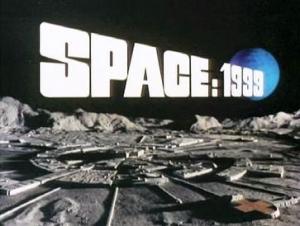
These days we’re loaded with tech.  In some ways we have more of it on our person at any given moment than all of Bradbury’s space-workers ever had.  In one of his stories a character was born in the impossibly far year of 1993.  I used to watch a show called Space 1999.  We haven’t colonized the moon yet (we may be working on it, but considering how long things like an obvious impeachment take, I wouldn’t hold my breath).  Speaking of holding breath, I’m pretty sure some of the characters were smoking on Moonbase Alpha.  Or my memory is cloudy.  (The earlier, and more lasting series Star Trek pretty much avoided several earth-bound habits, although Captain Kirk was pretty fearless when it came to the possibilities of space-spread STDs.)  I read Bradbury as a throwback to my childhood.  His stories have both an prescience and naivity that make them compelling period pieces.  From our current standpoint, one wonders if there will be any culture left at all in the future.  Perhaps we should enjoy what we have, while we still can.


Targeted by Technology

We get along in life, I believe, by routinely ignoring the rather constant dangers that surround us.  Oh, we’ve taken care of the larger faunal predators, but we’ve replaced them with ourselves.  Our success as a species leads us to places we might not be comfortable being.  I was recently exposed to the documentary National Bird.  It’s about drones.  Not the friendly ones from Amazon that we hear will soon be delivering books to our doorstep, but the military grade kind.  I first became aware of how pervasive the military use of drones is while reading Wired for War (on which I posted here some years back).  The difference between that academic knowledge and watching the documentary is the human element.  Drones are assassination machines with high explosives and they are subject to no regulation.

Many of us feel, occasionally, some level of discomfort with how much information “they” have on us.  We don’t even know who “they” are or what they want.  Using the internet, we give them our information.  Caving to our desire for instant communication, we carry around smart phones that know where we are constantly.  Martin Luther once said you couldn’t stop birds from flying over your head, but you can prevent them from making a nest in your hair.  It’s becoming harder to shoo them away.  The nest is well established.  Our houses are easily found on Google maps, and drones can keep constant watch, like weaponized guardian angels.  Only they’re not our guardians.  As National Bird makes clear, drones kill civilians.  Women and children.  The conversations of the operators reveal how much they’ve bought into the jingoism of the “war on terror.”  The film also deals with the human cost of those who operate drones.

Technology stands to make life better, for some.  Watching people who have very little, who live in what would be considered poverty in this part of the world, being bombed by people remotely, is disturbing.  The operators, trained as if they’re playing a game, kill and then have to deal with it.  The use of tech to try to sanitize brutality was dealt with decades ago on a particularly famous episode of Star Trek appropriately called “A Taste of Armageddon.”  Rather than try to resolve conflict we, like those of Eminiar 7, readily accept it if it’s kept at a distance.  Only drones aren’t science fiction.  We’ve been using them for over a decade now, and we prefer not to think about it.  This isn’t an option, unfortunately, for those who’ve been targeted by technology.  The predators are still out there after all.


Beam Me Where?

It’s kind of like the transporter dilemma on Star Trek. Where is the person/Vulcan/Klingon when their atoms are being disassociated in one location and reassembled in another? In the classic series, McCoy was never happy with the technology, and even today our doubts linger about what constitutes a person. The other day in a routine medical procedure, I underwent anesthesia. Lying there in the corridor, staring at the calmly themed over-head light colors (no, they actually were themed covers; the drip hadn’t started yet), I wondered where I was about to go. I’ve only had anesthesia once before that I can remember, and I recalled awaking suddenly from the most profound, dreamless sleep ever. It was very different from ordinary sleep. So where was my consciousness at the time?

We have no satisfactory answer to the question of what consciousness is, let alone where it is. Materialists would say, literally, it’s all in your head. Consciousness is a happy mixture of electro-chemical signals in a dull gray organ that’s busing churning out this illusion that Steve A. Wiggins is something more than, well, a mixture of electro-chemical signals. Those of us who’ve experienced enough to question such simple answers wonder a bit more deeply about it. What is consciousness? We’ve all had that feeling, I suppose, of awaking from a dream and being disoriented, even throughout the day at points, as to whether it was real or not. Or, alternatively, remembering something but not being sure if it “really happened” or might’ve been a dream. Ordinarily we recognize the difference between waking and dreaming consciousness, but sometimes the line is blurred.

My experience this time around was the same as last. One moment you’re talking to an anesthesiologist and the next you’re awaking from a completely blank state of mind, a little confused about where you are. You haven’t been in dreamland since there was nothing there. The exact mix of chemicals isn’t the same as when you fall asleep. For all intents and purposes, you are completely gone for that span of time. When I woke up I remembered the anesthesiologist and the watch he was wearing. His accent. His assuring me that the bubbles in the tube were okay. Between that moment and this, nothing. A complete blank. I went in hoping that I might explore alternate states of consciousness in those few disassociated moments, but that’s not how it happened. I think I’m ready to beam back aboard now, though. I trust my consciousness will follow my gray matter, even as I’m being beamed through the ether.


Found in Translation

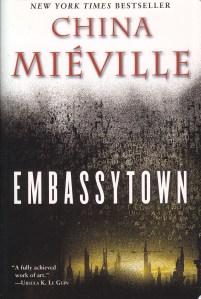
embassytownTraduttore, traditore—“translators are traitors”—is an Italian saying invested with a great deal of truth. Anyone who’s worked with the proliferation of languages in the world knows the truth of the adage. What is said in one language can’t be stated precisely in another language with all the depth and texture of the original. China Miéville’s Embassytown is a sprawling novel that addresses the question of how cultures evolved on widely separated world can ever understand one another. I can’t possibly go into a detailed summary of the story—it took me about 30 pages to begin to understand what was going on—but the book drew me in nevertheless and left me happy to have expanded my conceptual world.

The reason that I’m bringing this novel up in a forum where religion lurks in the background is that Miéville explicitly brings religion into his story. It may be impossible to explain precisely how he does this without the detailed summary that I’ve already begged off giving, but it is nevertheless noteworthy that in any sufficiently complex world religion emerges. We tend to think that religion is something that evolved from the slime and now that we’ve bathed in the light of pure reason it will eventually be washed into the gutter of discarded concepts. History demonstrates repeatedly that such is not the case. Religion is resilient and, dare I say it, inevitable. Human beings—perhaps also other conscious beings—know that there is something outside ourselves. That’s the foot in the door for higher beings or forces or worlds. In a word, religions.

Fiction writers frequently appeal to religions for verisimilitude. Are imaginary worlds believable without religions? It’s a long stretch. Star Wars has characters calling belief in the force a religion. Star Trek, in any number of episodes, dealt with gods. Anathem was based on the monastic ideal. Science fiction has trouble when it leaves religion completely out of the picture. A non-deistic universe is nearly incomprehensible to the human mind. Even great scientists and other rationalists occasionally lapse into thoughts about luck, fate, or fortune. Embassytown doesn’t focus on religion throughout, of course. It may be a minor subplot. But translating an alien world with a language that can’t be understood into a fiction of English is facilitated by putting a religion into the general mix. This is a smart and complex world, but when you read it you’ll find it believable because a religion naturally emerges. And that, I say, is realism.


Head of STEAM

The market producing doctorates in the humanities is showing no signs of slowing down. The fact is we’re all human, and many of us aren’t very technically inclined, unless we have to be. There are fewer and fewer jobs for these bright students who graduate with doctorates in the humanities, but the plight of the “privileged” is no concern to wider society. Let the eggheads figure it out. At the same time, wisdom in the job market is that careers in Science, Technology, Engineering, and Math (STEM subjects) are growing and showing the most promise for future careers. The pace of technological change is so rapid that yes, obsolescence for new devices is six months or less. My iPhone 4 is a dinosaur, although when I first held it some three years ago it was so advanced that I was afraid of it. A moment’s reflection will reveal that the most advanced technology is already in use in the military since staying ahead of the enemy is always the bottom line.

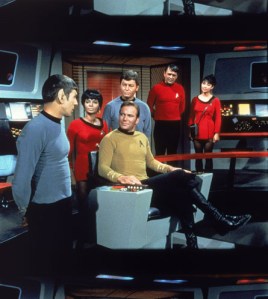
This situation has led to some concern, and not just among those of us in the humanities. Some in the world of STEM are saying that quality of life suffers. To indulge a stereotype, try to imagine geeks without Star Trek. We know that Star Trek was as much fantasy as science fiction. My iPhone makes a communicator look just plain silly. Star Trek is, however, creative indulgence. While many would hesitate to raise it to the status of “art” it is part of the Arts: fine arts, literature, film, music, and some television. The stories it tells are the stories of human beings (and one alien) struggling against often more advanced civilizations. In the end, humanity always wins. If we exit the stereotype, scientists are often musicians and writers as well. Some become novelists or consultants on box-office busters. We are more than meat machines.

Recently voices have been heard suggesting that STEM should be STEAM. The Arts have an integral role to play in the scientific and technological fields. Even some numbers are imaginary. The basis for developing imagination is the Arts. Although we could have made it to this point in our development without Star Trek, the fact is that many of us growing up with it, as well as the more silly, but also influential Lost in Space, and what we now know is a most assured cash cow, Star Wars, know that these shows helped shaped the present we inhabit. Arts give us visions. There continue to be those who castigate the Arts as “soft” and “weak” and tangential to the cold hard facts. But they are wrong. Humans can’t survive without a source of warmth and energy. And the first great engines of advancing civilization still have much to teach us, for those engines ran on steam.


Final Final Frontier?

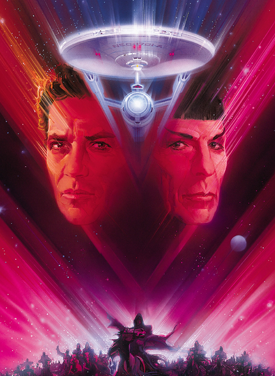
Over the past several months my wife and I have been making our way through the Stars. Not really Trekkies or Jediists, we both came of age during the early days of Star Trek and the dawning of the original Star Wars. Both franchises have continued to grow and have become cultural markers in their own rights. We have survived all the episodes of Star Wars I through III, and have made it, so far through Star Trek V: The Final Frontier. As we switched off the DVD player, we mused that we hadn’t seen this particular installment (with good reason) since we had originally watched it together shortly after it came out. It has its moments, but it just doesn’t measure up to what Kirk and Spock can usually muster. Watching it as a somewhat jaded critic of space movies, however, its religious elements simply couldn’t be ignored. After all, this is the episode where they find God, then shoot him in the face.

Opening with Sybok, the emotional Vulcan messiah, with a tacked-on identity as Spock’s brother, healing his first convert, the movie follows a typical kind of progression of a boy and his god. The town on Nimbus III (every Trinity watcher surely caught that reference) is named Paradise. Some wag painted the Miltonesque “Lost” after the town name on the gate through which Sybok rides like Jesus entering Jerusalem. Hijacking the Enterprise turns out to be remarkably easy, even with Spock, Bones, Uhura, Sulu, and Kirk in the shuttlecraft. And soon we’re off to the Great Barrier, which, as it turns out, is just a bunch of colored lights.

When God appears, he takes the shape of a typical Terran, white beard and everything. When Sybok questions him he briefly turns Vulcan, but we get the sense that God is whoever you want him to be. He is definitely masculine, and he has anger issues. His Eden is a barren rock, and he feels trapped and requires a starship to get about. We are forced to conclude that this is no deity after all and life is but a dream.

Despite its many disappointments, Star Trek V is a theologically aware movie. Its conclusion of science trumping the need for the divine leaves us with three old men around a campfire waiting to die. A trinity in its own right, but one where the only hymn to be mustered is “Row, Row, Row Your Boat.” And God lies dead at the center of the galaxy.

Star_Trek_V_The_Final_Frontier


Live Long and Prosper

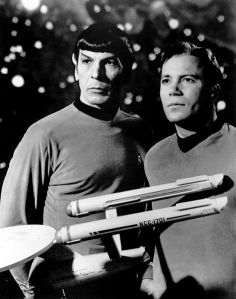
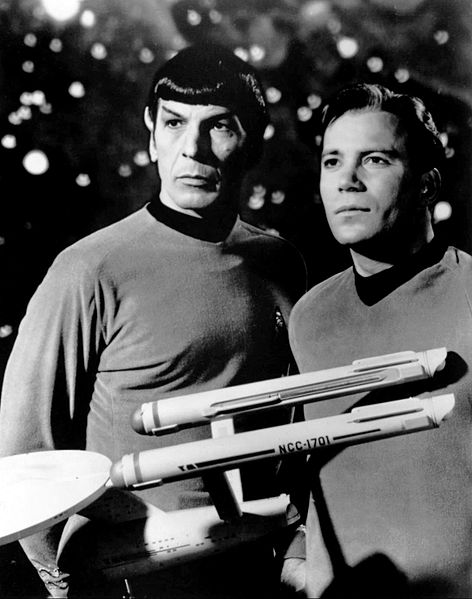
He lived long and prospered. Perhaps it’s a generational thing, but the icons of my youth have been dying. I have to confess to having sat far too many hours in front of the television as a young person, but fantasy of all sorts helped me cope with reality. Leonard Nimoy was a kind of father figure, in a way. Similar to Jonathan Frid, Russell Johnson, and Fred Rogers, all of whom stood in for an absentee parent and showed me different aspects of what it meant to be a man. Watching them die is like having someone tear pages from the book of my life—they made strong impressions, even though it was all make-believe. It’s difficult to say why Leonard Nimoy’s passing hit me so hard. I guess that the conceit of Spock living far longer than humans took hold at some level, and the rational, unflappable Vulcan seemed like a stable, if somewhat emotionally cold father to a child who was, in his own mind, conceived by the television itself.

I don’t really consider myself a nerd. I don’t have the tech to back me up. I’m more like a hermit who spends weekdays in Manhattan. Still, when anyone says Kirk or Picard, there is only one right answer. I watched Star Trek when it was new, still in original reruns. My mother decried it as “silly nonsense,” but along with other monster generation kids, I had my face pressed to the screen waiting to see what new and weird form of life might appear. It was the late sixties and all of this was fresh and untried. Star Trek became a vital part of my childhood. I think it might have been because this was a place with no limits. No limits beyond a shoestring budget, in any case. Space, as I was learning, was vast. There were endless possibilities out there.

Leonard_Nimoy_William_Shatner_Star_Trek_1968

As an adult, the possibilities seem somewhat severely effaced. I’ve tried to be rational and moral and conscientious, but I haven’t really held down a regular career. I don’t watch television any more, and instead read books and ask probing questions. Why does Spock resonate so much with me? Was it because he was apparently immune to emotion? Or maybe he was simply able to rise above it, since everyone knows he is half-human and even Vulcans have emotions, albeit deeply buried. Those of us who followed the original crew through the movies suffered through his death before. And his resurrection. This time, though, it’s not Spock who’s gone. Leonard Nimoy is one of those few people who, in their own lifetime, become a symbol. And symbols, if they are of any use, live long and prosper well after their creators pass on.


The Force Re-Awakens

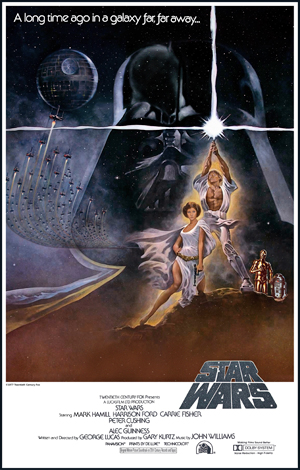
StarWarsMoviePoster1977In a galaxy long ago, in a galaxy far, far away… The year was 1977 and the Joseph Campbell-inspired Star Wars was like nothing we’d ever seen before. The film captured the essence of good versus evil in what, for the time, were realistic scenes in space. Many of us were in awe. Some worshipped. In fact, some six films later, an only quasi-ironic Star Wars religion does exist (Jediism) and its adherents must be buzzing after yesterday’s announcement that a new Star Wars movie will be released next year. What particularly caught my attention was the New York Times article on the event. Peppered with religious language, the trailer review (have we come to this?) by Dave Itzkoff plays on the fact that fans are nothing less than religious about the movies. I have to admit to falling a few movies behind. I’m a lapsed Jediist, I guess.

The new movie, The Force Awakens, will be directed by J. J. Abrams, and that seems to be a prophecy for a positive outcome. It also provides me with a goal; I need to see the episodes I, II, and III that I somehow missed early in the new millennium. Some see, to borrow Itzkoff’s language, the original trilogy as being canonical. The original novelizations—all of which I read as a teenager—were written by various guest writers with names like Glut and Kahn (the latter somewhat prescient for the upcoming Star Trek movies of the time), recording the sacred texts of the nascent religion. Rituals developed, light-sabers were purchased, and imagination became the vehicle for theology.

Behind it all, of course, is the force. This is a deity for a rationalist world. Even today we know that things don’t always turn out the way they should. Juries make the wrong decisions, computers still crash, even even two space shuttles—highly sophisticated though they were—failed and exploded during routine operations. Many find the white-bearded God untenable, but somewhere out there amid the comets and stars, there seems to be a moral force guiding us in the constant struggle of good versus evil. Heaven is still over our heads, although lost in the darkness of space. Less than 90 seconds of film footage have lit up the web with speculation, critique, and yes, reverence. We may have become the consummate secular society, but there is still always room for the force. Indeed, The Force Awakens may contain a not-so-subtle message for those who have ceased to believe that its personified form still exists.


The Open Sea

498px-Christopher_Columbus“In 1492,” they tell me, “Columbus sailed the ocean blue.” As a feat of science in the age of discovery, there is no doubt that this was an event worth celebrating. Over time, however, the luster has diminished somewhat. Although I can speak only for myself, I often feel that being a male caucasian is a decided liability. It certainly has been in my professional life. Although my ancestors were probably busy grubbing an existence from the soil as Columbus nobly stood on the forecastle, spyglass in hand and India in his heart, we are classed together. Attitudes toward divine destiny were much different then. The European powers that had made the world they discovered in their image could only see this as the will of the Almighty. That’s the liability of omnipotence. What happens is, by definition, God’s will. As technology led from success to success, Columbus set off to shrink his world. And get rich in the process. What’s so wrong with that?

The view among the displaced may be very different. People, if pagan, happened to be living in Canaan before Moses arrived, according to Holy Writ. They were, however, an annoying inconvenience to a God who had it all planned out. And since that torch had been passed to the Christian leaders of Europe, although contested by the Muslim leaders elsewhere, they had to follow their destiny to these sacred shores. Oh, I’m sorry! Were you sitting here? And those who march in the parades do it a bit more self-consciously while the majority of us continue to work in New Amsterdam as if nothing extraordinary had happened. As if a genocide hadn’t led to prosperity. As if, although God has disappeared, this wasn’t manifest destiny after all.

Humans can’t be blamed for being curious. It is part of our nature. I do wonder what will happen when we finally stop fighting one another and land ourselves on another inhabited planet. One where they haven’t achieved the technology that we have. Will we have learned anything from the St. Columbus Day massacre or will we still be guided by our confidence in lenses that can see billions of years into the past, see the havoc we’ve visited upon our own planet and still say, “it is good”? Even on the bridge of the Enterprise there is only one alien standing, and he is wearing earth clothes. Can we be disinterested observers when potential wealth lies below the feet of those we meet? We respect your culture, but hey, what’s that you’re standing on? Mind if we take it? You’re not using it. And once their voices have been silenced, we’ll seek other oceans blue to sail.


The Search for Khan

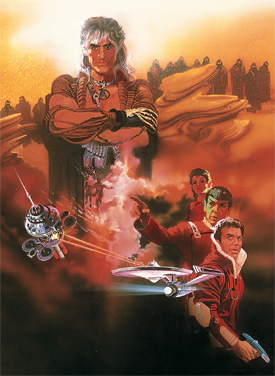
Star_Trek_II_The_Wrath_of_Khan

Continuing with the series, I watched Star Trek II: The Wrath of Khan last night. Since weekends are the only time I have for the media, I also threw in Star Trek III: The Search for Spock. Now, I haven’t seen either of these movies since their theatrical release longer ago than I care to admit, but many of the details, particularly from II, had stayed with me. Clearly The Wrath of Khan is superior in every way, but I hadn’t realized how literate it was until I saw it again. From Tale of Two Cities to Moby Dick to the Bible, the viewer in 1982 was given a sci-fi movie with classics sprinkled through it. I hadn’t read Ahab’s famous words on the dying lips of Khan when I first saw it, but I still realized that they were powerful words nevertheless. The premise of both movies, however, is biblical—the Genesis project, which even gets Spock quoting the Bible, is creatio ex nihilo, well, not exactly ex nihilo, as we do have a Big Bang to start the thing. Throughout the language of creating in six days is juxtaposed to morality, for in order to create, you must destroy.

We all know that Spock dies, citing a utilitarianism that would’ve made John Stuart Mill proud, but in what is really a biblical trope: self-sacrifice. And this leads to speculations of resurrection, always lurking in the background of the biblically minded. But theology (and the acting) turn bad in III. We’re all glad to see Spock alive again, but it turns out that Genesis destroys itself after just a short time, and that “Genesis is a failure.” Where do we turn back from the first page of the Bible? There is no preface here. There is, nevertheless, a temporary garden of Eden on the Genesis planet, and it is a federation-level secret. You just can’t keep anything from the Klingons, however. So the Bible implodes and Kirk’s son sacrifices himself so that Spock might live. Can I get a concordance here?

I’m not a trekkie, but I had noticed from the original series through the original cast movies, the assumption was for a biblically literate audience. That assumption can no longer be presumed, although, if pressed, many people could guess that Genesis is in the Bible. Meanwhile, the flood of Noah is also upon us. Exodus comes next. Movies featuring Leviticus are rare. Even as the cast ages visibly from the young, brash Kirk of the 1960’s to the bespectacled, patrician father with regrets in The Search for Spock, society itself has also aged. Some would say, matured. But we need directors telling us now that the flood story is found in Genesis. The Bible has been on self-defense mode for some time as religion has become equated with fanaticism. And yet, even as resurrection looms, we can’t help but to wonder if better things lie ahead.


Star Tracks

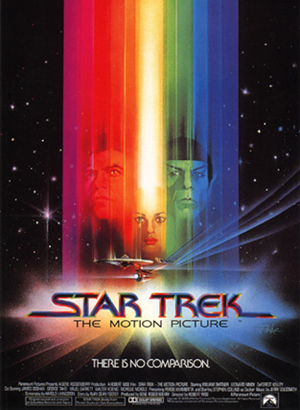
Star_Trek_The_Motion_Picture_posterLong ago in a galaxy far away—1979 in rural western Pennsylvania, to be precise—the local inhabitants were surprised to learn that James T. Kirk was now an admiral. Two years earlier Star Wars had thrilled us with special effects first mastered in 2001: A Space Odyssey but a more accessible plot. Robert Wise, who had not only given the world The Sound of Music, but also The Day the Earth Stood Still, took the helm for the new Star Trek: The Motion Picture. Star Trek geeks, of which crowd I do not count myself, hadn’t really taken their cliched role in the emerging high tech society, and CGI was still a few years off. Nevertheless, rumors in school had it that the movie featured a bald woman and had boldly gone where no man had gone before. The original crew was all there. So on a Friday night I dutifully made my way to the Drake Theater to watch and left saying, “is that all?” Star Wars was action-packed and fun, filled with archetypes and wise-cracking robots. Star Trek had Voyager 6, like E.T., trying to phone home. In a word, the movie was forgettable.

On a tour of the original Star Trek world, I finally sat down to watch The Motion Picture, with its grandly archaic-sounding name, last night. I shuddered to think I’d last seen it 35 years ago—that makes me as old as the crew was starting to look—but this time I was able to see things I hadn’t before. Spoiler alert! Voyager 6 is looking for God. The original Voyager 1 reached the end of our solar system a couple years back, but in 1979 there was no reason to suppose that we wouldn’t try again and again to reach out to parts unknown. We were rapidly become materialistic, and the universe could be a known quantity. Three centuries in the future, Voyager 6 is headed home, having been rebuilt into an unstoppable living machine. When the creator—humanity—doesn’t pick up the phone V’ger poises to wipe out the carbon-based infestation until it learns how to physically, biologically merge with a human being (cue the bald lady and otherwise superfluous Captain Decker). Lots of colorful lights and we can all go home.

Even now I can’t muster the courage to say the movie is profound, but it does touch on an issue that has only grown over time—we have voluntarily left our deities behind. In our rush to reduce the world to the least common denominator, we have pulled the plug on the cosmic phone. The Voyager program ran out of steam as the Cold War was heating up down here on earth and we were being told we were all just a bunch of atoms fooling around anyway. The machines, in the meantime, had come to believe. I probably won’t survive another 35 years to watch Star Trek: The Motion Picture again, but I do hope that in that time we may become more aware of our humanity. And I do hope that if someone divine does happen to call, that we’ll at least pick up the phone.


Which Way to Eden?

We don’t have television service, and I haven’t watched TV regularly for about two decades. Over the years, however, we’ve collected the DVDs of the shows we miss, or which we wish we’d seen so that we missed them, and use those in lean times. Feeling a bit lonesome over the weekend I downed a few Twilight Zones followed by a Star Trek chaser. On a three year mission to explore strange new worlds, my wife and I have been working our way through Star Trek, the original series. We’ve finally reached the final chapters of the final frontier. I’ve noticed as we’ve gone through the episodes just how biblically literate the series is. Even Spock quotes the Bible from time to time. Over the weekend, to keep my mind off present reality, we ended up watching “The Way to Eden.” As much as I enjoyed Star Trek as a kid, when it was still new, the overtly ’60’s-themed episodes bother me as an adult. I’m very much still a hippie at heart, but I don’t like lingo, and the alien cool cats in their weird shorts and funky hairdos chanting “Herbert! Herbert!” still really bother me. Somewhat predictably the aliens hijack the Enterprise to reach their fabled paradise.

Leonard_Nimoy_William_Shatner_Star_Trek_1968

Spoiler alert! For those of you who’ve been asleep since 1969, or have had no curiosity about the inspiration behind all those geniuses who’ve ushered in the technological revolution, I’m about to reveal some details. Eden is deadly. The landing party finds the short-pants wearing, funky guitar-strumming crooner dead under a fruit tree. “His name was Adam,” Spock laconically notes. The scene of Dr. Sevrin’s burned foot has stayed with me since childhood, and I still cringe when he leaps out of the shuttlecraft to take a bite of the poisoned fruit. It was only as an adult that I realized his name was reminiscent of Eve, indeed, a kind of blending of the words “sin” and “Eve.” In a kind of homoerotic death scene, the two male leaders end up under the tree together. Probably my overactive imagination.

Sometimes I ponder how much a biblically illiterate society misses. I frequently told my students that the Bible is foundational for our culture. Whether or not you’re aware of it, it is reinforced regularly in ways both ortho- and heterodox. Despite our very secular self-awareness, entire movies, such as The Book of Eli, can be based on the premise of biblical literacy. It is entirely possible to watch movies and television shows, and to read novels (graphic and literary) with enjoyment and not notice the allusions. The reasons they are there, however, is that despite the abuses of literalism, the Bible does have some profound things to say. It’s up there with Shakespeare and Chaucer. And even with Roddenberry and his host of staff writers. And I suspect that it still will be, in some form, in the twenty-third century.