Zoning In

Born Jewish, and Unitarian by choice, Rod Serling believed in the inherent worth and dignity of all human beings.  Like many people, even Serling believed that season four of The Twilight Zone, which went to an hour format from the usual half, didn’t really work.  Nevertheless, the fourth episode of that season,“He’s Alive,” really should be required watching of every person in the United States.  This episode was written by Serling and it focuses on a young American fascist who’s having trouble gaining a following.  A shadowy figure then reads to him from what sounds exactly like Trump’s playbook, and soon decent people are raging along with him about foreigners and those who are different.  When the shadowy figure is finally revealed, we’re not surprised to learn it is Hitler.

The young man obeys without question, and soon it looks like he could be elected.  He has one of his best friends killed as a martyr to the cause.  He murders an old Jewish man who has cared for him since his youth.  He declares himself made of steel, with no feelings.  And when he ends up dead (everyone knows how Hitler’s career culminated), the spirit of Hitler rises from his body as Serling warns that wherever hatred exists, Hitler still lives.  Now this episode aired in 1963 but it could’ve been 2016, or 2024.  Prescient people, like Rod Serling, knew that mob thinking could be easily exploited.  Even in the first segment after the introduction the instructions are laid out.  Play on people’s fear of those who are different.  No matter how good things may be, people will be unsatisfied.  Add any power-hungry individual and you’ve got the recipe for a fascist overtaking.

The episode made me wonder if we could ever become a just society.  Ironically, that which calls itself “Christianity” these days stands in the way.  In its day, The Twilight Zone was amazingly influential.  It had a great impact on what was to follow and it’s still regularly referred to, even by those who’ve never seen an episode.  If only we’d pay attention to its message.  I’ve been making my way through the entire series, slowly, over the years.  Now and again an episode will really hit home.  I have to admit that I was physically squirming during “He’s Alive.”  It’s not that it is the greatest episode of the series, but its message is extremely timely.  The requirement for a better world is simple, but seemingly impossible to reach.  Treat others as you wish to be treated.


Asteroid

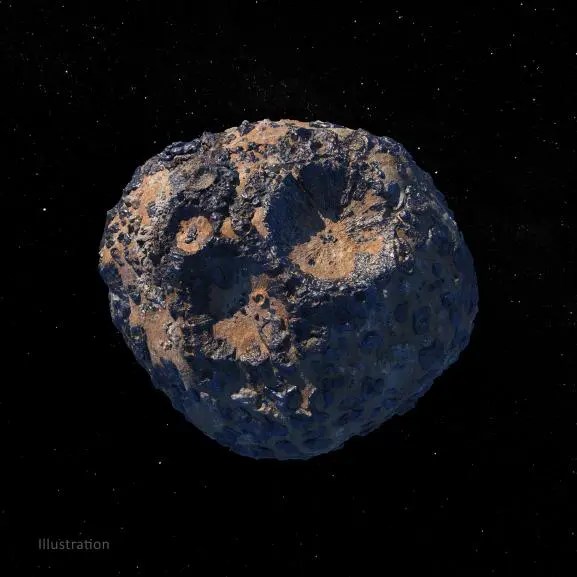
So, that asteroid.  Good thing Trump won’t be in office in 2032.  Well, it’s only a three percent chance it’ll hit us, but chances are things can’t get much worse anyway.  It might be a good idea to make some plans now—but wait, we currently deny science is real and spend our time renaming bodies of water.  Hmm, quite a pickle.  If science were real it would tell us that an asteroid is not the same as a meteor, although it can become one.  Back in high school astronomy class—yes, our Sputnik-era high school had its own planetarium—I learned that the difference between a meteoroid, a meteor, and a meteorite.  Want to go to school?  Here’s the quick version: a meteor is something in Earth’s atmosphere (thus, meteorology).  A meteoroid is a space rock, or even dust, in the solar system somewhere.  Once it enters our atmosphere it becomes a meteor.

Most meteors burn up as shooting stars and never hit the ground.  Yes, that atmosphere is a pretty good idea.  If a piece does make it to the ground, that piece is a meteorite.  Although your chances of being hit by a meteorite are minuscule, they can be impish.  Not far from here, a few years back, a meteor smashed through the backseat window of a car after a couple had just put their groceries inside.  The meteorite stopped inside a carton of ice cream.  The window had to be replaced, and I can just imagine the conversation with the insurance company.  Or take that meteorite heard on a recording for the first time.  In Charlottetown, Prince Edward Island, a doorbell camera caught a meteorite strike just outside someone’s house.  Both of these were tiny critters, though.

Our 2032 friend is quite a bit bigger.  Sometimes when large meteors heat up, they’ll explode in what is called a bolide.   In western Pennsylvania back in January of 1987 (if I recall correctly) my brother and I were working on a jigsaw puzzle during the holiday break when our house shook.  A loud bang had us worried—we lived in a refinery town, and explosions weren’t a welcome report.  We ran outside to find neighbors also outside looking around.  We later learned that a flaming fireball had gone overhead before exploding, a bolide.  The actual explosion took place quite a distance from us, but sound travels in our atmosphere.  So a possible near miss is scheduled eight years from now.  Let’s hope people show some sense at the polls before that happens. Or we could just rename it MAGA and hope that it hits somewhere else.

An asteroid. Image credit: NASA, public domain

Whence Evil?

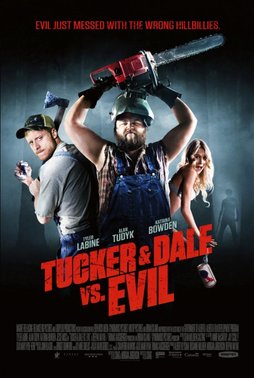
I’m at a stage where horror-comedy, or comedy-horror is becoming appealing.  This sub-genre is really perfect for those horror fans who like to laugh and still get something of substance.  Tucker and Dale Vs. Evil is a great example of the dangers of stereotyping.  Like Scream, it is very aware of horror tropes, but it makes fun of them in creative ways.  At points it’s laugh-out-loud funny, but it is pretty gory.  It begins with the usual folk gothic scenario of a group of college kids going camping deep in rustic country.  At the last gas station, they encounter Tucker and Dale, whom we’ve been primed to think of as potentially murderous hicks.  In reality, they’re a couple of hapless but nice guys on their way to fix up a cabin they bought as a vacation house.

The college kids end up camping nearby and interpret everything Tucker and Dale do through the lens of assuming hillbillies are inbred evildoers.  It’s kind of a reverse Deliverance.  So it sets up a love story between one of the coeds, Alison, and Dale, who rescues her from drowning.  Meanwhile Alison’s friends assume Tucker and Dale have kidnapped Alison and plan to attack to set her free.  Of course, mayhem ensues.  Dale, who is big and shy, and who suffers from an inferiority complex, keeps on making missteps in trying to convince the other kids that his intensions are good.  That’s the most brilliant part of the movie—it cautions against reading people in the light of our biases.  Often when I find myself in areas where we see lots of Trump signs, the locals, in non-political contexts, are very nice.  I feel sad that one man has decided hatred is the only way to power.  Making people distrust and hate each other so that he can win.

People, overall, are pretty descent.  There are some bad ones out there, for sure, but the number of times I’ve encountered helpful strangers—in both rural and urban settings—reinforces my underlying belief that if we don’t try to set people against one another their natural goodness will come through.  It’s hard to do when all the campaigning, and even the rhetoric from 2016 to 2020 was of distrust of others and personal superiority.  The real hero of Tucker and Dale Vs. Evil is Dale, the one with an inferiority complex.  Those who humbly assume that others are better than they are seldom try to hurt other people.  And yet, those who don’t know “salt of the earth” types, who may live in less-than-ideal circumstances, frequently approach them with fear.  It’s a horror-comedy in the making.


Wachet auf

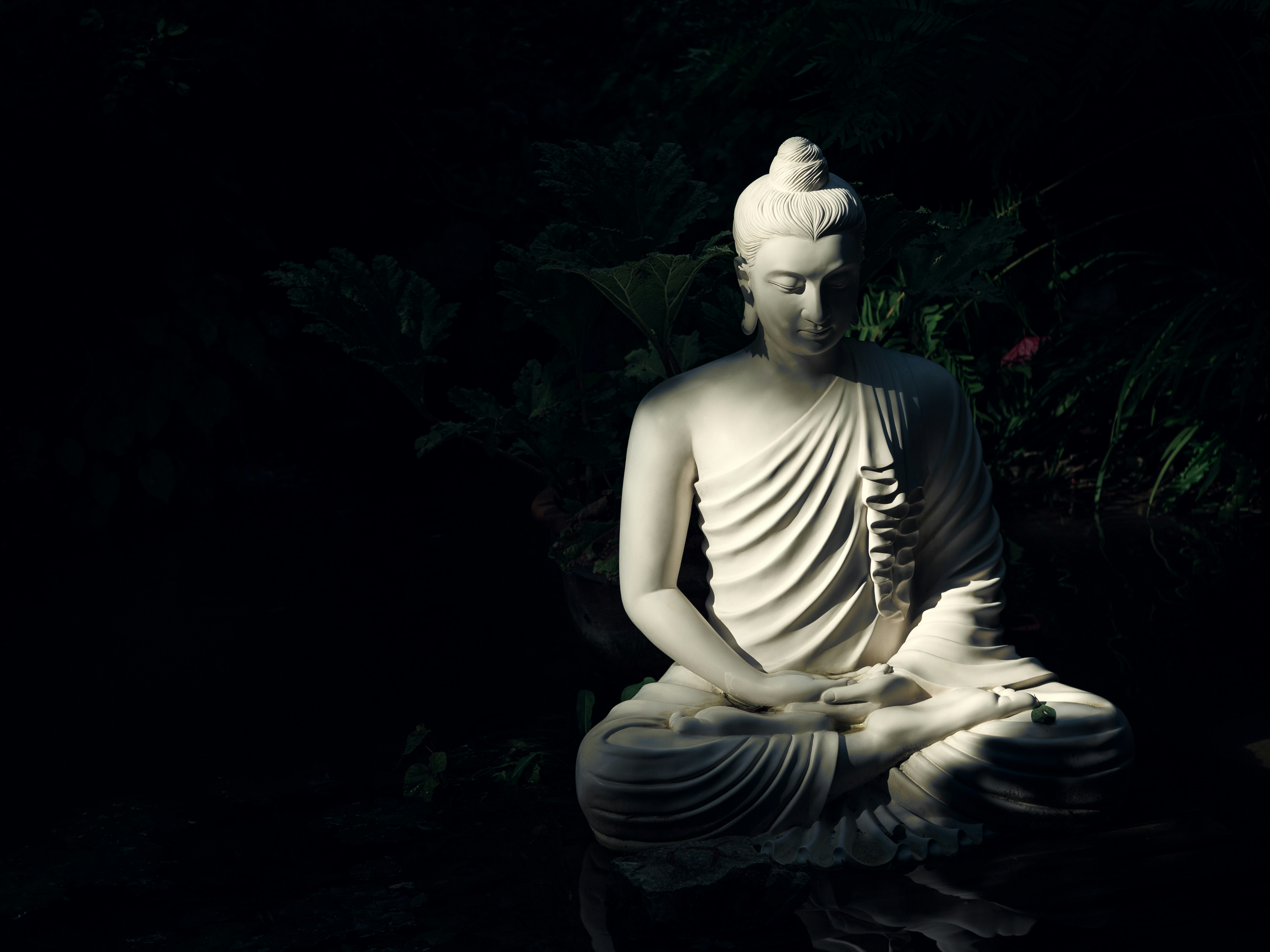
I have a proposition.  Some folks in town have a big “Anti-Woke” (aka, “asleep”) flag on their house, along with various Trump paraphernalia.  Since the Republican Party has largely become reactionary and would, admittedly, still prefer to be asleep, perhaps Democrats should adopt Buddha as a symbol.  I know this would be dangerous in a nation that prides itself as being the city set on a hill, but “buddha” means “awoken one.”  I’m not a Buddhist but I have no problem with it.  The Eightfold Path makes a lot of sense to me.  In any case, a good symbol is something to be cherished.  I think of Gordon Deitrich having a Qur’an in his house, even as a gay man, in V for Vendetta.  Symbols are important.  The anti-woke seem to have forgotten Matthew 24.42 “Watch therefore: for ye know not what hour your Lord doth come.”  The Bible generally advocates wakefulness.

Photo by Mattia Faloretti on Unsplash

Trump-branded Christianity is a strange beast.  Certainly the use of a Buddha symbol would become a cudgel.  Ironically so, for a faith that promotes nonviolence.  The “foreignness” or “not-Christianness” outweighs the positive outlook it entails.  Any religion that advocates violence should reassess its principles.  Buddhism isn’t perfect—no religion is.  The basic ideas of right view, right intention, right speech, right action, right livelihood, right effort, right mindfulness, and right concentration work well enough with Christianity, as Thomas Merton discovered.  For some, however, the Asian outlook (overlooking that Christianity began in Asia) is a deal-breaker.  Strange for a global religion.  Not so unusual for those who prefer to be asleep because Fox News sings them a lullaby.

One of the most stirring Christian hymns is “Wachet auf, ruft uns die Stimme,” based on a Bach cantata.  Perhaps better known as “Sleepers Awake,” the words take their origin from Matthew 25, the parable of the ten virgins.  If I recall correctly, the virgins ready to be woke are those who fare better in this tale.  They’re less concerned with condemning other religions and more interested in being able to wake and trim their lamps swiftly when the time comes.  As I told a friend the other day, I’m an unrepentant idealist.  I do believe that we have it within ourselves to treat all people as having inherent worth and dignity.  The real draw to having Buddha is a symbol would be the introspection.  Instead of telling other people how to live, the principles are applied at home.  Of course, a person has to want to wake up for any of this to work.


Middle Ground

It’s the real poison Trump baptized.  Polarization.  The idea that there is no middle ground.  It’s a shame since the middle ground has been what’s kept America stable over the years.  Now it seems to be eroding rapidly.  While my sympathies have always been on the left, I realize that radical change tends to dirempt societies.  As much as I deeply desire justice and fairness for all, I know it will take time.  In my way of thinking that “all” includes animals.  That’s why I’m vegan.  Now, I know being completely vegan is likely not possible since who knows what everything is made of, and who has the time to find out?  I do the best I can and I don’t eat animal products and I try not to wear them either.  I know there are those who don’t share my outlook and they’re entitled to their point of view.

For nostalgia’s sake, and to get out of the house, we attended a 4-H county fair.  An annual event when we lived in New Jersey, it’s now a rarer treat.  So I put on that scarce recording of Bruce Springsteen’s song “County Fair,” not on any of his studio albums, and headed for New Jersey.  This county fair is the kind with animals rather than rides, and we stopped in to see the sheep, goats, cows, and alpacas.  It was in the cattle tent that I saw the following poster, claiming “There’s no such thing as vegan.”  Well, I don’t go around saying there’s no such thing as omnivores (thus the polarization) but this poster convinced me that we need to try even harder to stop raising animals to exploit. I understand, I think, the intent of the poster—cattle aren’t just meat.  The thing is, I think of them as conscious beings.

I miss the middle ground.  People no longer want to compromise or negotiate.  Since Trump it’s become “my way or the highway.”  I think I prefer the highway.  That highway takes me far from industrial feedlots where it’s illegal to document the cruelty that these animals undergo daily.  It’s quite a different thing for Bessie to lay down with a fan blowing on her under a tent with a small farmer caring for her, but that won’t feed a nation.  Small farms aren’t the problem. I don’t insist everyone be vegan.  I would like it if we could sit down and talk about it, however.  Cattle raising is the industry that generates the greatest amount of greenhouse gases that are causing global warming.  If we keep dividing ourselves and refusing to change we’ll be having this polarizing argument under water before too many years have gone by.  My highway is middle of the road.  Even slow change can benefit many.  The goal is to get “many” to “all.”


The Idea of Scripture

Although the academic field of biblical studies is slowly dying—this is something I wrote about a long while back on this blog—the Bible and its kin nevertheless continue to shape and control society.  I was recently reading that Islam takes quite a different view of the Qur’an than Christianity does of the Bible.  It’s also clear that Judaism has yet another way of looking at Scripture.  What underlies these Abrahamic faiths is, however, the idea of sacred texts.  They don’t have to be understood, let alone read, in order to alter perceptions of reality.  The idea that God wrote a book, combined with the idea that God doesn’t show Godself or intervene in the world for good in any obvious way, has transferred a kind of godhood onto sacred scripture.

People desire the second coming because of a deep-seated need for God to part the clouds and demonstrate that their way of looking at things is the correct way.  It may be influenced by Scripture or politics or a favorite news channel, but the result is the same—they want divine intervention and since it’s not forthcoming, their sacred texts become the rallying point around which they gather.  Like many people I’m puzzled how a man like Trump, known for his proud womanizing and lack of care for anyone other than himself, came to be seen as a messiah.  Perhaps the key is that moment he gassed American citizens for a photo op holding up a Bible he never reads.  How this comes to be interpreted as a kind of divine moment only makes sense when we realize it’s the idea of Scripture that becomes the reality of many.

I’ve read through the Bible many times.  I have to confess that trying to get through the Qur’an is a struggle for me, but I suspect quite a lot of that is cultural.  I’ve read a few other sacred texts over the years, and have found some wisdom in all of them.  It’s when they become divinities in their own rights that society begins to pay the price.  If a non-interventionist God remains invisible, that identity will be transferred to the divine surrogate—Scripture.  People will coalesce around the idol they can see rather than the invisible one they can’t, right Elijah?  These sacred books have survived partially because they contain old wisdom, and old wisdom is often better than new knowledge.  But they also survive because they have become, in some sense, gods.


The Invasion

So I’m sitting here thinking it would be great if Liz Cheney were to run for president.  Then I think, have things really got so bad that Dick Cheney’s daughter would be an improvement for the Republican party?  At least she believes in democracy.  And something has to break this trumpstipation that seems to have plugged up the GOP.  You don’t want to stand behind a constipated elephant.  I look at the hero worship spawned by a man who’s been known for lying his entire life and wonder where our critical thinking failed.  People far smarter than me have been writing about how democracies die, and this seems to be the case, all because a guy ran six years ago to give his personal business a boost and has been showing us the extreme distortions money causes ever since.

It’s sad really.  Once in a while I think about how Eisenhower was a Republican.  He was a smart man and he clearly had the best interest of America at heart.  Nixon not so much.  Some politicians are motivated by ego rather than the good of others.  I stopped being Republican when Reagan got the nomination.  Maybe it was at Watergate, but I was really too young to grasp what was going on then.  Of course, that was before politics became a real life soap opera.  As the GOP became less G with each passing president, the party seems to have lost its fortitude.  Young people are progressive so we take measures to prevent them from voting.  When Blacks vote we find ways of tossing out their ballots.  Minority rule rules.

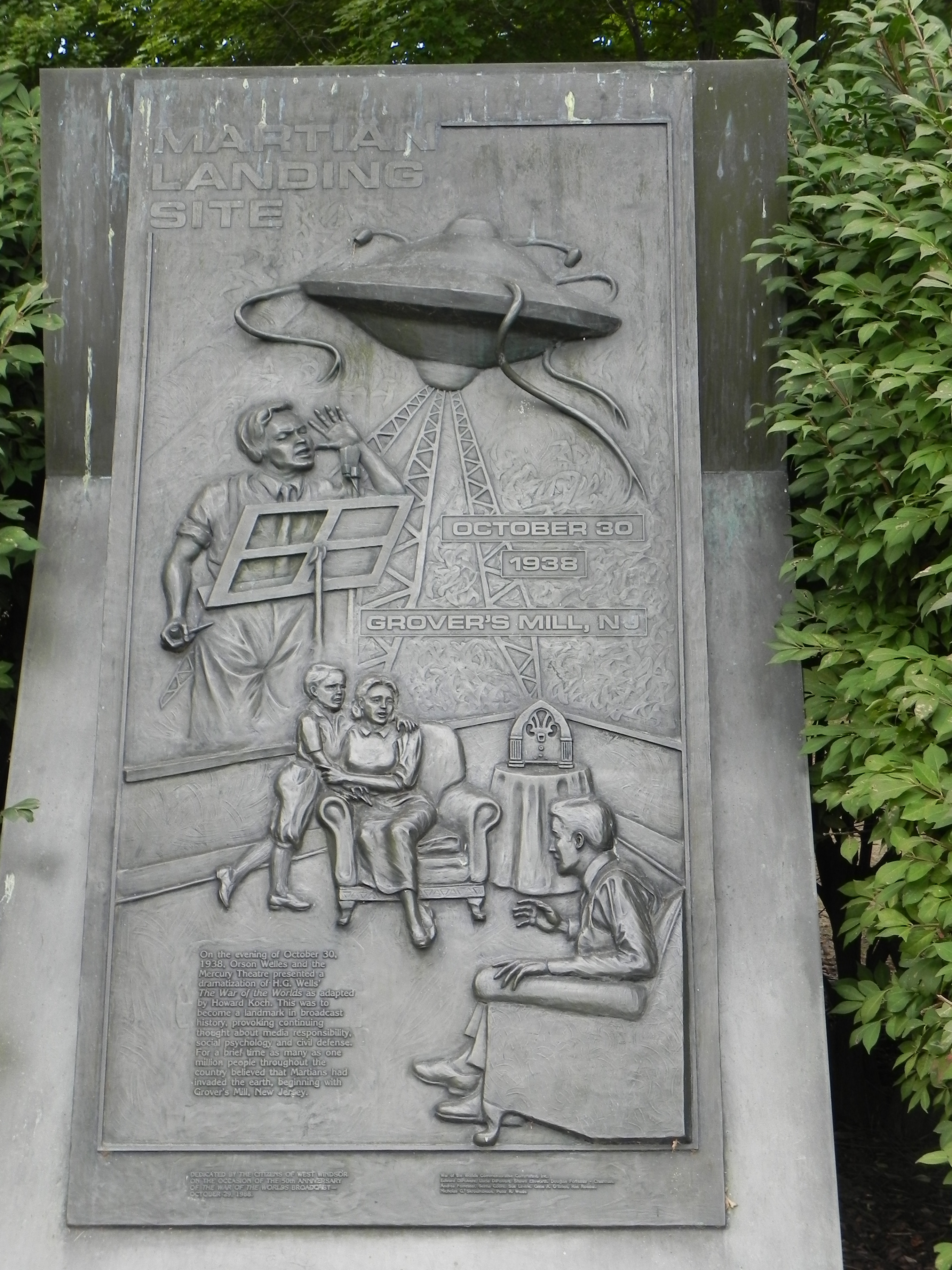
Cheney was ousted from her own party for stating the obvious.  Trump is a sore loser.  Not only that, he’s willing to take the entire country down with him rather than admit he was ever wrong.  Stealing government secrets is just another day in office in Margo-la-la land.  I sit here and scratch my head.  It used to be that no matter which party ran things they at least believed they were doing things for the sake of the country, not for the sake of the country club.  All that’s changed in our new plutocracy.  I’m no politician, but I am a guy who tries to make sense of the world.  I see a country of people who go so riled up when they thought Martians were invading not even a century ago.  An event so important that there’s a plaque in Downer’s Grove.  And when a real invasion takes place we now side with the Martians.


Whiggery

It’s difficult to keep track sometimes.  You see, I’m reading a book that makes frequent reference to the Whigs.  The thing about titles is they change meaning over time.  Whigs, in America, became Republicans.  This was back when the Republican Party was the liberal one.  Whigs in Britain, where the party started, believed in the power of the people rather than the absolute right of kings.  Today’s Republican, as events of the past few years have shown, is an authoritarian.  This swapping of party characters allows Republicans today to claim to be the “party of Lincoln,” although in today’s political landscape Lincoln would have been a Democrat.  So whatever happened to the Whigs?  Their basic ideology is still alive and, for the moment, embodied in the Democratic party.

“Whig” could also be used as a supporter of the American side against the “Loyalists” in the Revolution.  Loyalists tended to be what were called Tories back home.  A Tory supported the power of the monarchy.  In other words, they were conservatives.  All of this changing around of labels makes me wonder just how helpful they really are.  Individuals tend to dislike those who fall into the opposite camp—a factor politicians have been using to divide and conquer.  I try to imagine what that world might be like if honesty were more common among those in elected office.  Starting in 2016 we entered into a new era of the politics of hatred and we will be paying the price of that for many years to come.  We are all just people; why can’t we act like it?

When I registered to vote at 18, I registered as an independent.  I didn’t like the idea of being classed into a party.  There have been Democratic candidates I didn’t like—my party’s not my religion—but none of them has advocated hatred of others as their only platform.  Analysts have long written that a two-party system is faulty and likely to lead to abuse.  We’re living through it right now.  Fiscal conservatives have no choice when the officials in their party back Trump, despite having vocally expressed how badly he reigned and how dangerous he is.  A viable third option is needed, and it would also prevent electoral college shenanigans (as would ranked-choice voting).  Maybe this third-choice party could adopt the venerable title of Whigs.  After all, in its long history this party has played both sides of the political spectrum.  Or perhaps those favoring authoritarianism could use the name Tory.  At least there’s an honesty to it.

Wikimedia: after John Greenhill, oil on canvas, (circa 1672-1673). No matter his party, that’s a wig!

Capital Idea?

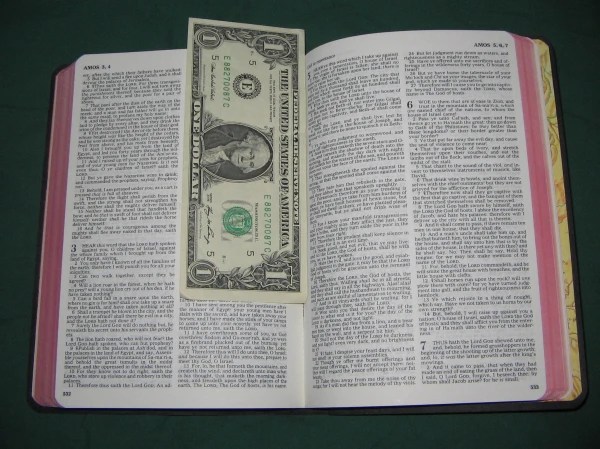
One of the most difficult parables in the New Testament is the one where Jesus praises the fraudster (in Luke 16).  In case you’re a little rusty it goes like this: a steward of the king learned he was losing his job.  Knowing his employment prospects were like those of a mid-career religion professor, he called in his masters’ debtors and slashed the amounts they owed so that they’d think kindly of him.  When the king finds out, instead of growing more angry, he praises the steward for his shrewdness.  The parable seems to not condemn deceit and his left both scholars and laity scratching their heads ever since.  I’ve never, in my long church going career, heard a sermon extolling fraud.  The good book can be tricky some times.

The parable came to mind because I’ve been the victim of the fraudulent use of one of my few credit cards.  I only have two.  One of the reasons for this is that it’s difficult to keep track of everything as it is.  Life is busy.  I have most of my bills set to autopay so that I don’t forget to do it when an email reminder comes.  I don’t remember the last time I used actual money.  Writing a check is a rarity.  How my credit card was hacked I don’t know.  I didn’t notice right away because the charges were always small and spaced out.  I caught on when I hadn’t been using the card in that lull after Christmas and the exact same amount was charged two months in a row.  I called the company and they confirmed that similar small charges had been going on since December.

Now I picture in my head a scene where the criminal is caught and in court they use the Bible in their defense.  I’m sure it wouldn’t happen that way, but it’s an interesting idea.  Who’s going to argue against the Bible?  Heck, most courts can’t get those who know Trump’s many crimes to get their cases ever heard!  What do we do when the Bible distorts the moral narrative?  The fraudster, after all, is breaking at least one of the ten commandments.  Of course, those are negotiable these days.  The right wing’s endorsement of violence to maintain power shows that.  So it seems a prudent time to consider the parable of the fraudster.  We might still have something to learn from the Good Book after all.


Christmas Classic

While it’s a story I know well, I’d never read the book.  I suppose I tend to think of Christmas when it’s already hard upon me, or perhaps I’m just making excuses.  After all these decades I’ve finally read Charles Dickens’ A Christmas Carol.  The story is so well known there’s no point in laying out the action here.  A filmic version of this has been part of our family tradition for many years now and sometimes it’s difficult not to think the cinematic version has somehow got it right while the book might’ve somehow missed something.  I’m generally disposed to read the book before watching the movie, but I believe I saw this as a young person and we had no Dickens in the house.  Besides, who could miss the endless parodies?

It’s a ghost story, yes, but it’s primarily about redemption.  It’s difficult for me to watch (or read) without getting a bit misty about the eyes.  Our world, especially during the Trump years, seemed a hard and heartless place.  Winter all the time while somehow being Hell also.  It will take many years—perhaps I won’t live to see it—before people unlearn the bad habits they saw being modeled each and every day of those four long, long years.  Every year as I watched the movie I thought, “I wonder if 45 has ever seen this?”  Always the answer came back in a resounding “Humbug.”  A miser who cares only for himself doesn’t change as easily as Scrooge.  So the world had to suffer, and so it will suffer yet a good long time.

The thing about redemption is that it can’t be privatized.  It’s on free offer to anyone who desires it.  While A Christmas Carol may not be Dickens’ best work, it nevertheless bears a message well worth the repetition.  Perhaps there aren’t ghosts enough in the world.  We need to learn to listen.  Were it not for the haunting Scrooge never would have changed.  The sad part is that there are people actually of his ilk.  I hold out hope for redemption to all of them.  I’ve known too many people who seem to care only for themselves.  I need to remind myself that they may not have the reinforcement of this tale every year.  The world could perhaps be better if that were the case.  Dickens clearly had fun as a writer.  Sometimes it seems to get in the way.  But if it makes one’s heart light in December, what can the harm be in that?


Remarkable and Beautiful

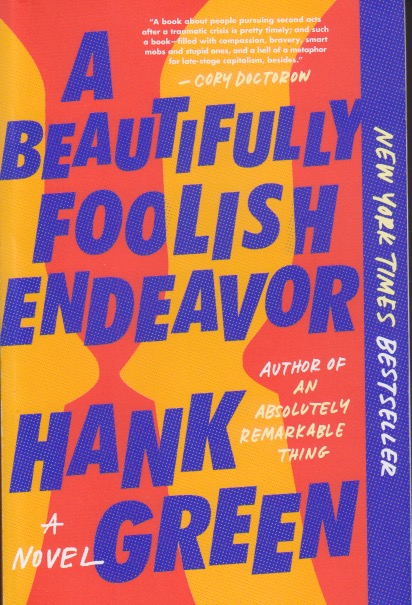
Last year I read and commented on Hank Green’s An Absolutely Remarkable Thing.  I knew there’d be a sequel, but it took some time for it to come out in paperback, and it took a day of flying to give me dedicated time to finishing it.  A Beautifully Foolish Endeavor picks up where the first novel left off, bringing April May back to life.  It’s a story about good and evil and how humans, as flawed as we are, are nevertheless worth saving.  This story takes a further sci-fi and dystopian turn than the first part, moving it more into the regular novel than the “new adult” that seems to better fit the initial book.  Really only six months have passed since the first story, but the still young protagonists have aged in the way experience doles out to people who think they understand the world better than they do.

The world of A Beautifully Foolish Endeavor is dystopian in the sense that corporations have too much power and can (and do) drive the direction of human development.  It’s clearly a novel written after a couple years of repressive Trump rule where autocrats will do anything to keep in the public eye, even destroy their own world.  It becomes Manichaean, or maybe even Zoroastrian in that the extraterrestrial entity Carl, who was the subject of the first novel, reveals that he has an evil “brother” that encourages the corporations in their efforts to rule the world.  The goal of this evil intelligence is to get humanity to destroy itself as a failed experiment.  There’s plenty of metaphor here since the way to get people to destroy themselves is through virtual reality.

As someone who finds quotidian reality difficult enough, I have no desire to see how well some technocrats can imitate what nature already does so well.  Stepping outside with a cold November wind blowing down my collar, threatening snow and driving me back indoors I know I’m in a world not custom built for our comfort.  I am one of billions of scurrying, resistant, persistent creatures doing my best to survive.  I’m sure that virtual reality is an amazing experience, but so is stepping out into that November wind.  Hank Green is gifted at writing compelling, conflicted characters.  From his own internet platform he’s become a significant influencer, gathering the interest of even the White House.  His two novels form a thoughtful set that, like the books of his brother John, make us stop and think what it is to be human.


Healing Time

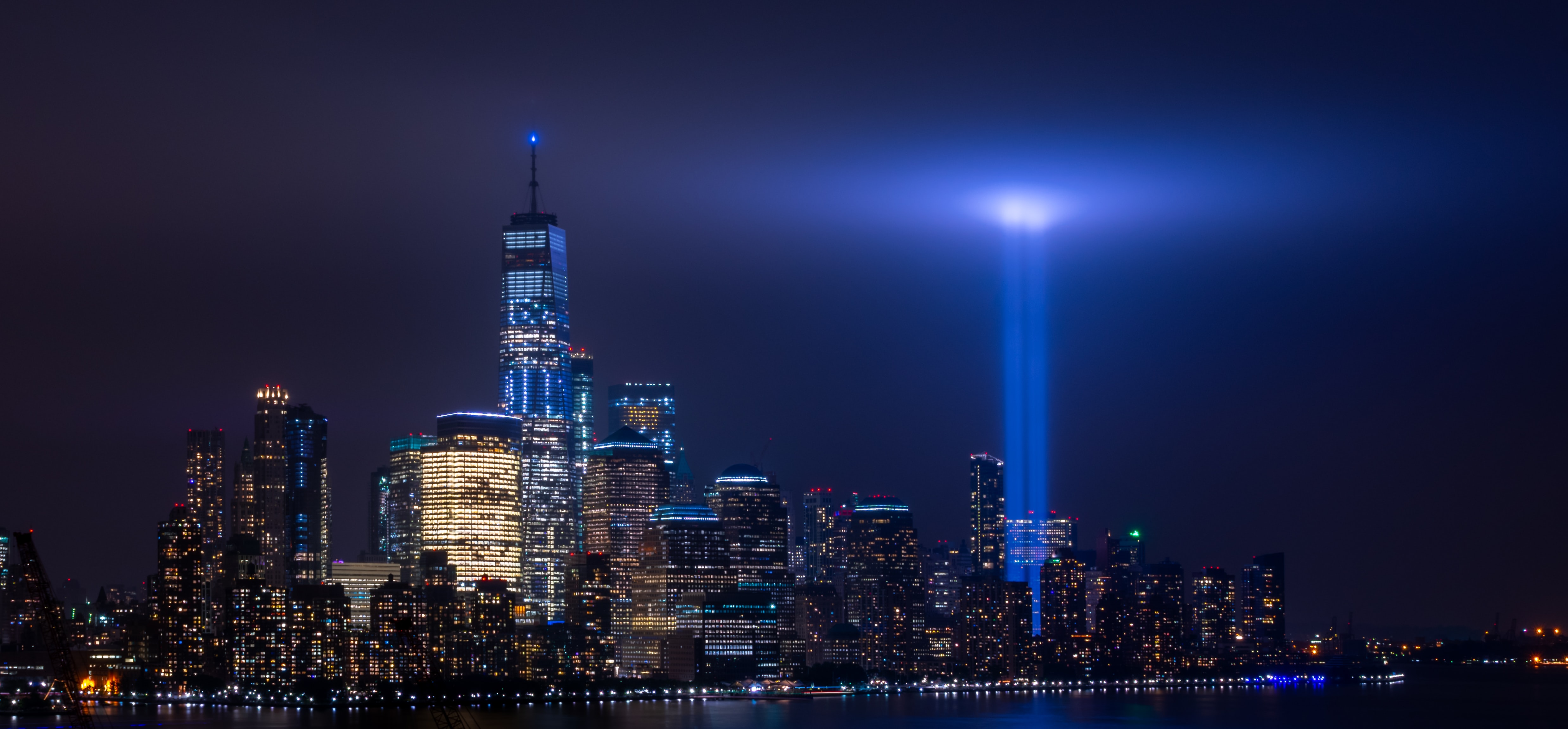
Twenty years ago today I walked into the refectory at Nashotah House after morning mass and wondered why the television was on.  Normally people had their own theological issues to hash out over breakfast, so this was unusual.   When I saw what was happening, I skipped breakfast and went home to my family.  I remember the feeling of shock and terror of those days.  America, I knew, wasn’t the innocent nation it projects itself as being.  We had provoked, but none of that mattered as the isolationism of over two centuries on a mostly friendly continent crumbled.  We were vulnerable.  Living in the woods of Wisconsin there was no immediate danger, but the sense of confusion—and certainly the feeling that a less-than-bright president wasn’t up to handle this—made us all feel weak, even with the most powerful military in the world.

Yesterday the New York Times headlines ran a consideration on whether we’ve emerged better in the ensuing two decades.  Looking at where we are—a deeply divided nation because a narcissistic president that the majority of voters voted against put (and still puts) his ego ahead of the good of the country—the answer seems obvious.  It will take years, if not decades, to heal the damage that one man did.  His putative party (really his only party is himself), seeing his popularity as their means to power, refuse to distance themselves.  We simply cannot move forward.  Not in the midst of a pandemic where Trump followers won’t get vaccinated causing new waves of the virus to surface and thrive.  I’d like to think that on September 11 we might reflect—yes, I know it’s hard work—on how we all need each other.

Photo by Jesse Mills on Unsplash

Little could I have guessed in 2001 that a mere ten years later I would find myself working in Manhattan.  Somewhere in my mind on every day of that long commute I wondered if something might again go wrong.  On the bus I was thrown together with people of every description—well paid and just getting by, women and men, gay and straight, from all around the world—and we knew our fates were linked together.  Differences had to be put aside.  Selfishness has no room on a crowded bus.  That was my introduction to life in New York City.  Those who hear only the poison rhetoric of 2016 through 2020 should try commuting with an open mind.  If we all took the bus, life after 9-11 might’ve turned out very differently.


Building Trust

Photo by Marek Piwnicki on Unsplash

Perhaps the most insidious aspect of the Trump presidency was the four years of eroding trust.  People, it seems to me, no longer trust each other.  I’ve noticed it most since the reign of a pathological liar.  It’s kind of like a nation of children of alcoholic parents—trust is a real struggle.  I regularly deal with academics.  Now, critical thinking tends to make a person skeptical, at least to a degree, but it seems to me people would trust a very old, highly regarded institution.  Lately I’ve noticed that trust eroding in various ways, and that puzzles me.  If we can’t trust those who’ve done the heavy lifting of keeping a solid reputation for centuries, well, who can you trust?  It’s a real dilemma.  Maybe it’s because we had four years of equating “my opinion at the moment” with “facts.”  The damage will take many years to repair.

The basic way that civilization works is with trust.  We tend not to pay our money for something unless we believe it’s worth what we’re spending.  Skepticism, in appropriate measure, is a good thing.  So is trust.  One way that I often see this is in the hiring of contract managers.  Yes, there is such a thing!  Many younger academics now hire companies to make sure the publishing contracts they sign aren’t cheating them.  When I was in academia you simply went by the reputation of a publisher.  Everyone knew who had a good reputation because of, well, their reputation.  What a publisher represented was well known and respected for what it was.  Perhaps I’m mistaking the desire for personal advantage for lack of trust.

Companies sometimes engage in trust-building exercises.  Getting beyond someone’s politics to the person beneath seems to be a dying art.  Deep divisions are difficult to achieve when people trust one another.  Consider the anti-vaxxers who are now feeding the delta-variation of Covid-19.  They’ve been taught not to trust the scientists and officials who offer a way to ending this pandemic.  For free.  They even don’t believe the post-presidential interview with Trump where he encouraged (far too late) his followers to get vaccinated.  Trust has to be built slowly.  Over centuries sometimes.  One man’s selfishness tore down the modicum of trust that had been slowly growing since the 1860s.  Now uninformed skeptics think critical race theory is some kind of plot.  Trust isn’t a bad thing.  It is the only way to move forward.  Trust me on this.


The Heart of Memorial Day

The Memorial Day will be a somber one for the many people who’ve lost someone due to Covid-19.  Even as those who know that science can help to bring a pandemic under control have been vaccinated,  it is too late for millions who didn’t make it.  Memorial Day weekend, for many of us in northern climes, has been unseasonably cold.  Around here it’s been rainy too.  The official kick-off to summer seems to be a memorial to the long winter of 2020 and ’21.  It’s also hopeful, because things are starting to get better.  Having an organized national response helps, even as the Fascist Party is gaining strength.  “Memorial” means looking back.  Remembering the past.  I’m saddened, shocked, and distraught that one political party has refused to look at how insidious fascism is, and how it always starts under the guise of righteousness.  Remember this.

We tend to think of Memorial Day as a play day.  Indeed, the number of boats being towed as I’ve been out driving attests to the plans of many.  We’re ready for life to return to normal, but even that involves memory.  Remembering what was normal.  We have never been a fascist nation.  That’s not a memory but a sick future dream.  Those who attempt insurrection and then block any investigation into it can’t have the good of the nation at heart.  It should be a play day.  It should be frolicking in the sun.  Instead I’m wondering how we’ll ever stop this apparently inevitable evil that has taken over a country formed as a democracy.  Has it stopped raining yet?

Although I wasn’t close to him, my father was a veteran.  He fought for the cause of liberty, at least as it was understood before Trump’s America.  He was, according to his family, never the same after seeing war.  Bureaucrats, fat from the monies they pocket from special interest groups and lobbies, seem to have forgotten.  They’ve forgotten the frighteningly large national cemetery at Arlington.  They’ve forgotten that we fought to stop the very thing they are now promoting in their own country.  I’m sorry, Mr. Lincoln, these dead may have died in vain after all.  I had hopes of warm days and leisurely outdoor activities as the end of May rolled along.  Either that, or at least being able to get out and take care of all the yard work that’s been piling up over the past several weeks.  I wonder, will it stop raining today?


Plants Will Lead

The world just keeps getting weirder.  Although I very much appreciate—“believe in,” if you will—science, sometimes the technology aspect of STEM leaves me scratching my primate cranium.  What’s got the fingers going this morning is spinach.  Not just any spinach.  According to a story on Euronews, “Scientists Have Taught Spinach to Send Emails.”  There are not a few Homo sapiens, it seems, who might learn something from our leafy greens.  The tech comes, not surprisingly, from MIT.   When spinach roots detect certain compounds left by landmines in the soil, it triggers sensors that send an email alert to a human being who’s probably eaten some of their (the spinach’s) very family members.  I’m not denying that this is very impressive, but it raises once again that troubling question of consciousness and our botanical cousins.

Some people live to eat.  I’m one of those who falls into the other category—those who eat to live.  In my life I’ve gone from being a picky omnivore to being a somewhat adventurous omnivore to vegetarian to vegan.  I’m not sure how much more restricted I can make my diet if I leave out plants.  I’ve watched those time-lapse videos of trees moving.  They move even more slowly than I do when my back’s acting up, but they really do move.  If they had legs and speeded up a bit we’d call it walking.  Studies into plant consciousness are finding new evidence that our brainless greens are remarkably intelligent.  Perhaps some could have made a better president than 45.  I wonder if spinach can tweet?

People can be endlessly inventive.  Our thirst for information is never quenched.  Universities are among those rare places where ideas can be pursued and it can be considered work.  While I don’t think everyone necessarily needs to go on to higher education, I can see the benefits it would have for a culture.  Indeed, would we have armed mobs trying to take over because of a fact-based election loss?  I wonder if the spinach would take place in “stopping the steal.”  Hopefully it would fact-check more than those who simply follow the leader.  Consciousness and education can work together for a powerful good.  I’m not sure why Popeye’s favorite was chosen for this experiment, but it does seem to show that we can all get along if we really want to.  Maybe then we could meet in the salad aisle rather than out in the field looking for explosives.