Price Drop

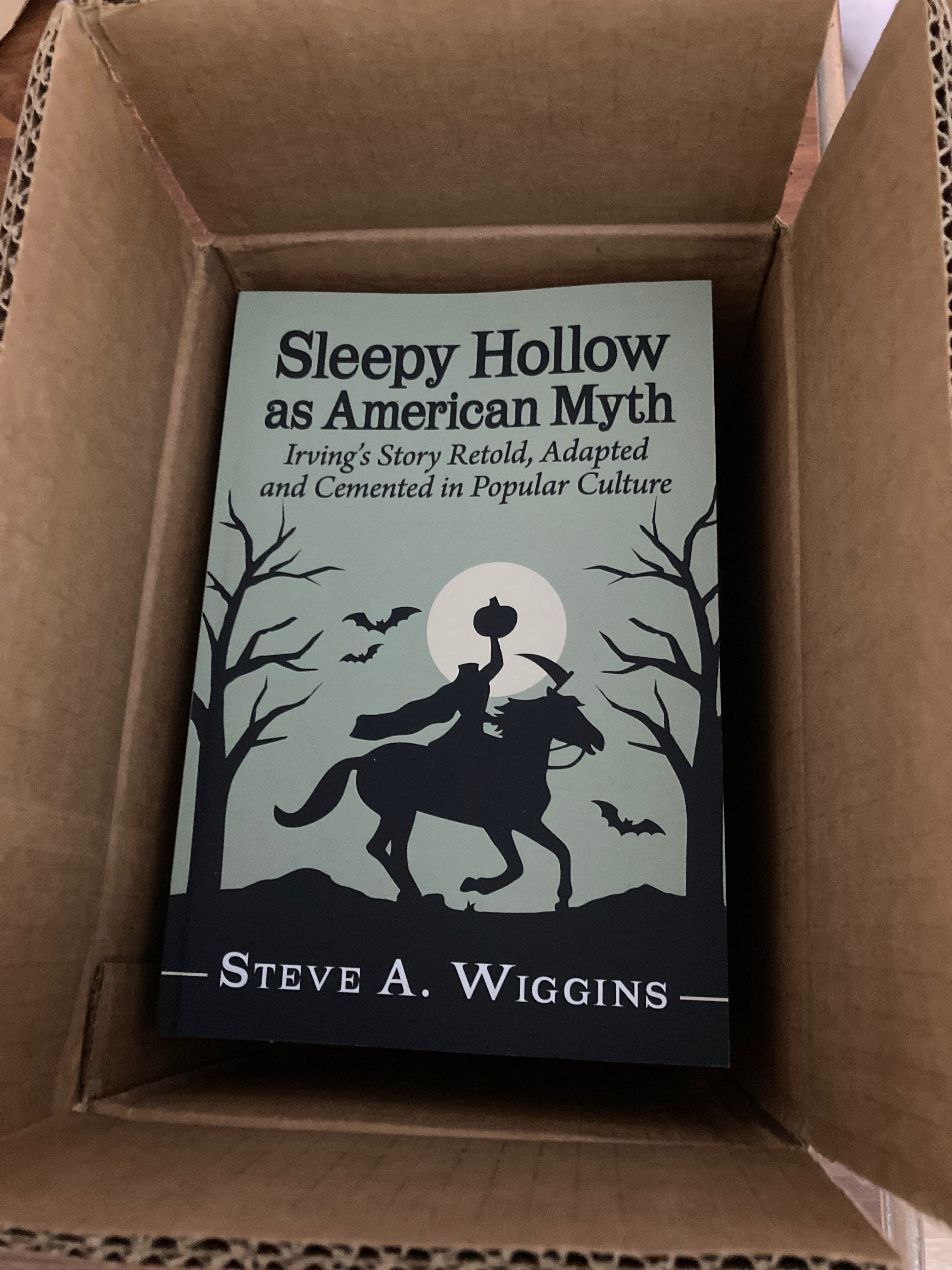
Here’s a public service announcement for your Friday.  If you’ve been wanting to read Holy Horror but found the price too high, McFarland has now lowered the cover price to under $30.  Here’s the link: Holy Horror.  Of my non-academic books, this has been my “best seller.”  Since I’m currently shopping around another book, and since agents aren’t interested (at least not any more), I wondered whether McFarland might look at it.  The editor who handled Holy Horror had left, and the new editor responded to my concern about pricing by telling me that they lower prices after a couple of years.  She noticed, however, that Holy Horror had been overlooked in the price lowering process, so voila!  It’s now affordable.

This model, while not the same as trade publishing’s efforts to get primarily front-list sales, seems to make sense.  Too many publishers raise prices year after year, so if you don’t buy immediately you’ll pay more.  McFarland tends toward a paperback first model.  The first couple of years are aimed at library sales—and they do well at those—then they lower for individual purchase.  All I had to do was ask.  Two years ago I asked Lexington/Fortress Academic if they’d do a paperback of Nightmares with the Bible.  That poor book never had a chance.  The editor said they were considering it.  Instead they did the trick that publishers seem to like: decoupling the ebook price from the hardcover.  So you can buy some expensive electrons instead of holding a real book.  So it goes.  I’ve written a museum piece.

It’s a little too soon to say about The Wicker Man.  My experience has been that university presses, particularly British ones, like to raise prices rather than chasing sales.  If you’re reading this blog you know that I’ll market my books.  I even printed bookmarks for Holy Horror at my own expense.  Maybe it’s time to start distributing them again.  What a difference ten dollars can make!  I’m a book booster.  (You might not have noticed.)  I’m glad that McFarland understands that individuals will buy books, even if they’ve been out for a while.  The standard wisdom among academic publishers is “three years and then you’re done.”  If you’re inclined to help prove that business model wrong, you can now get Holy Horror without having to take out a second mortgage.  That’s cause for hope—any writer has the dream that her or his book will keep on selling.  Sharing this information will, it seems, make it wider known. Please pass it on.


Writ Small

I have a loupe on my desk.  Two, in fact.  I bought them for examining rocks up close, but they have other usages.  The other day I wanted to post a comment on a friend’s blog.  Of course, WordPress still doesn’t recognize me after thirteen years, so I had to enter my password.  I write small.  I couldn’t make out my own scrawl, so out came the loupe.  Problem solved.  (But WordPress, please!  Don’t you remember me?)  Here’s a true story.  When I was in college I had very little money.  In fact, losing three dollars one day sent me into a week-long depression that I still remember.  I bought college-ruled notebook paper for writing reports (before typing them up).  And I wrote three lines per ruled line on the page.  I dearly wish I’d kept some of those symbols of my extreme frugality.  Growing up poor will do that to you.

Thing is, I never outgrew writing small.  My handwriting is minuscule and my eyes aren’t as young as they once were.  The loupes date from when I was teaching and I was free to pursue my love of rocks.  The glacial til of Wisconsin brought up interesting things and some locations in the state (I joined the Wisconsin Geological Society) had wonderful possibilities for collecting.  I’ve never told any movers, since what happened at Nashotah House, that, yes, those boxes do contain rocks.  I’ve always had plenty of interests outside what my career happened to be.  Even now what passes for a career is just a job.  Life offers too many other things to explore to limit myself to one.

Indeed, if we had a Universal Living Wage or something like that, my job would be “writer.”  At least in this phase of my life it would be.  Of course, if justice were anything but a joke I’d still be teaching.  And I’d probably still be hunting rocks.  My wife puts up with me bringing home unusual ones that I find.  The earth is full of gifts and it seems a shame to squander things.  Even paper.  Especially paper.  It takes a lot of resources to produce it.  I may not write three lines per line anymore—wide-ruled pages look absolutely criminal to my eye—but I still write small.  The things we learn when we’re young often come back to us as adults, reminding us of the freshness with which we first faced the world.  It seems our initial assessments may have been correct after all.


Excess Ideas

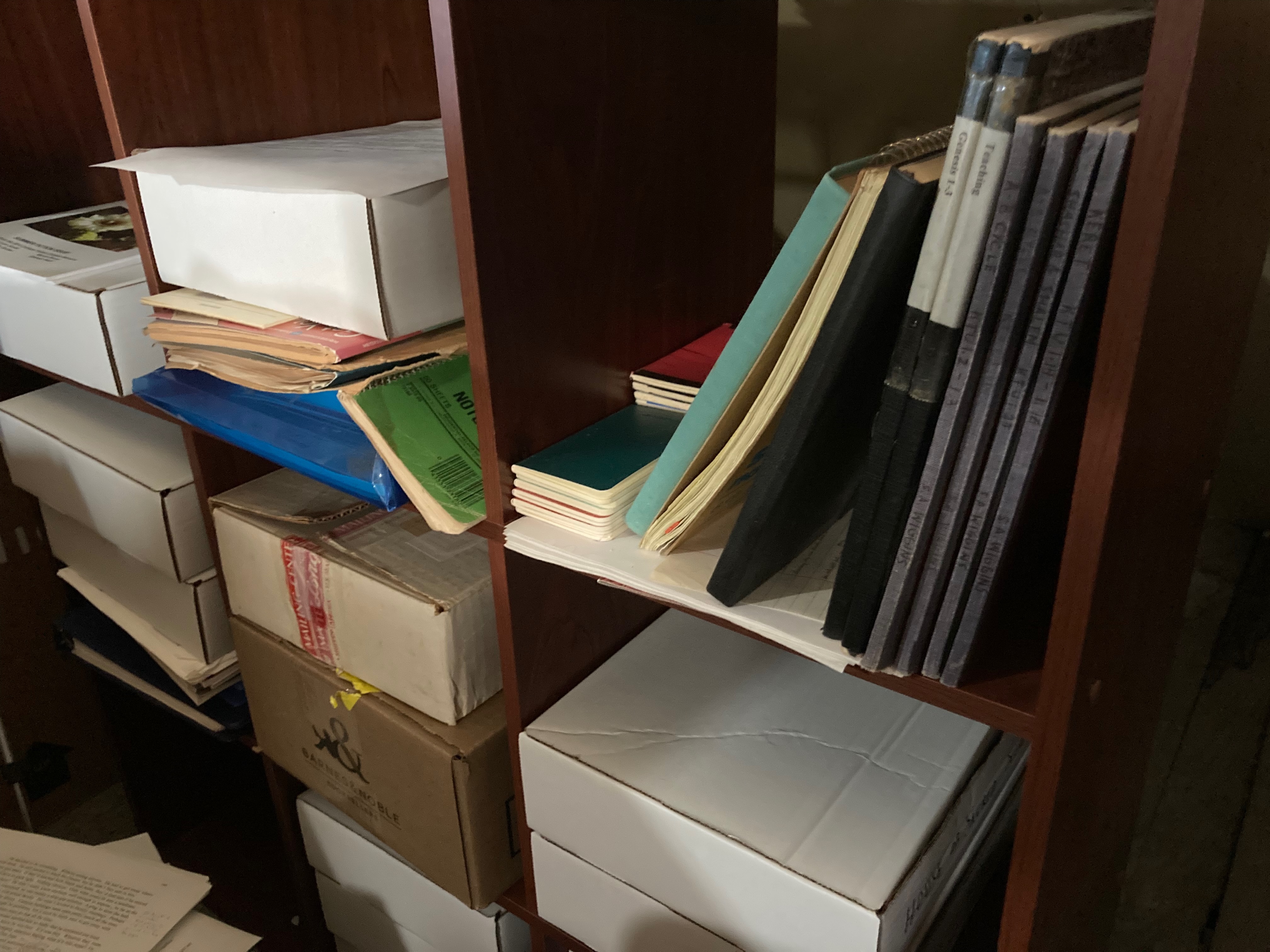
I sincerely hope that after I’m gone someone with more sense than me will look through my notebooks instead of just tossing them in the trash.  There are a ton of creative ideas there that I have no time to develop into stories.  I know that writers are frequently looking for new angles and ideas that haven’t been presented before.  I have them in spades.  Of course, unless someone is noticed at least by shortly after their passing, their stuff becomes detritus lost for all time.  I was thinking of family heirlooms recently.  I come from a poor family, not rich in stuff.  Indeed, most of what we still own is made of paper.  The rare family heirloom is something imbued with history.  One of my grandfather’s things (I have two of his books) that survived was a brief account of his life.  (Also paper.)

Members of his family—I’m still uncertain as to who—experimented with photography.  This was in the days of holding still while being shot, but there were some very interesting prints that made their way to me.  (Paper again.)  This was from the time that negatives were preserved on glass.  I imagine this led to storage issues over time.  And I also know that families have to move from time to time.  Things get lost during every move, from my experience.  In my grandfather’s very brief autobiography, he notes that these glass plates were kept under the floor of the barn and were forgotten at the time of a move.  I very much doubt that they’re still there.  Developers greedily come in with their backhoes and knock and dig and dump and pour.

I sometimes wonder what small, local history was lost on those glass plates.  Some families are erased from history—most of us are, in fact.  Generations on down the road there’s little evidence that we were even here.  For writers, a stab is being made at remembrance.  I tend to think of writing as being like a radio receiver for thoughts.  They may not originate with me.  Some of them are quite bizarre—trust me.  It makes me sad to think of them left rotting in some landfill.  My “Kilroy was here” is inscribed in notebooks.  If anybody’s interested, I’ll warn you in advance that my handwriting’s quite small.  And the ideas are uncensored.  There are so very many of them.  I don’t mind sharing, but I would appreciate the opportunity to try selling them myself, first.  If only I had the time to write them all out.  And I won’t be leaving them under the barn floor.


Conference Voice

“Conference voice” is a phenomenon that began with my career malfunction.  While teaching I attended the AAR/SBL annual meeting every year but one.  Even the year that Nashotah House fired me I attended, through the generosity of a seminary colleague who’d left for a parish and who used discretionary funds to help me afford it.  (Churches can actually help people from time to time.)  In any case,  I always met many colleagues at the meeting itself, and had many conversations.  Besides, I taught a full docket of courses every year.  Then the malfunction.  I was eventually hired by Gorgias Press but I had to do adjunct teaching to make ends meet.  I taught up to about ten courses per year at Rutgers, all in the evening.  Then I was hired by Routledge.  The commute to NYC precluded any adjunct work, so I settled into the quiet world of editing.

I also began attending AAR/SBL again.  I came home with “conference voice.”  After going for days, or even weeks, with no substantial conversation, I’d lost my lecturing vocal stamina.  At the conference I had five days of back-to-back meetings, often in a crowded and noisy exhibit hall.  I’m a soft-spoken individual (I can project when teaching) and my larynx was stressed by the concentrated five days of constant conversation.  My voice had dropped in pitch by the time I got home and it took a few days to get better.  I would lapse into cenobic silence for another year.  After the conference I’d return every year with aching vocal cords.  My family sympathized, but I really just don’t talk that much.  Especially at work.

Recently I met a friend for lunch.  I hadn’t seen him to chat for a few years so we spent over two-and-a-half hours talking.  Part of it in a restaurant where I needed to raise my voice.   I awoke the next morning with conference voice.  This bothered me because I’d been invited to do a podcast episode about a horror movie and I faced an existential crisis: what does my real voice sound like?  In my mind, my profession is teaching.  The voice I had at Nashotah House, University of Wisconsin Oshkosh, Rutgers University and Montclair State, was my real sound, such as it was.  Life has landed me in a situation where I seldom speak, and almost never to groups where I need to project.  Conference voice is a reminder of what I was meant to do and what I, of necessity, must do.


Wonderful Impossibility

I used to tell my students that a semester break without reading a book that challenged your assumptions was wasted.  I tried to lead by example, but jobs are such fragile things.  Since I have no semester breaks I try to read books that push the limits more frequently.  I’d heard about Carlos Eire’s They Flew before the author had settled on a publisher.  (I don’t know him personally, but would be glad to.)  In case the title doesn’t do enough heavy lifting, the subtitle A History of the Impossible might help.  Yes, we’re stepping into the world of the post-secular here.  It’s a wonderful place.  Although much of the book deals with early modern cases of levitation, the study ranges wider than that.  Written by a respected historian, this is a very important book.  For many reasons.

I am glad to see Yale University Press joining with Chicago and some noted others (Rowman and Littlefield, for instance) in challenging a paradigm that is no longer upheld by science.  I can hear the howling already, but if you read carefully, with an open mind (which is required by science) you’ll quite possibly learn something here.  Our minds do influence our reality.  We haven’t figured out how because secularism ends the discussion with scorn.  That was true of the study of UFOs as well, until the U. S. Navy said, “Nope.  They’re real.”  (It only took about seven decades, so don’t expect instant results.)  We cut off our possibilities when we mock things out of habit.  I remember the Turok comic where one character said to another (give me a break—this has been five decades and I can’t recall all the names) “Fools scoff at what they don’t understand.”  Truer words have never been penned.

The impossible happens when scientists aren’t there to witness it.  It sometimes happens when they are.  Doubt that?  Read about the Pauli Effect.  Or call it gremlins, the choice is yours.  It’s real in either case.  Academics are often among the last, with the exception of Trump supporters, to see what’s been staring them in the face all along.  I’ll say more about this book on Goodreads, but let me float a hope here.  I want to go back to that indefinite article in Eire’s subtitle.  This is A History of the Impossible.  May more follow.  Others, such as Jeff Kripal, have been doing similar work for many years now.  We can ignore it, or scoff at it.  But I think that character in Turok got it right, even if I can’t remember his name.


Too Much TMI

Okay, okay.  I admit I get overwhelmed.  There’s just too much stuff to read.  I currently have 25 tabs open on my browser, afraid that I’ll forget about something that seemed so urgent when I opened the URL in the first place.  (Two decades ago that sentence would’ve been nonsense.)  I limit my time on social media.  This can be a death-kiss for a writer, but for sanity’s sake (and work’s), I look at Facebook for literally about five minutes a day.  (If you want to reach me leave a comment on my blog.)  In those five minutes (or less) I often come away with two or three articles that I want to read but don’t have time just now.  I open a tab and hope I’ll get to it before I lose interest.  There’s a lot of information.  Too much.  Too much TMI.

I’m a slow reader.  I sometimes wonder if I have borderline dyslexia—it once happened on a test and led me to phone a professor at night to explain—but dear reader, it slows me down.  And a writer, no matter how obscure, needs time.  I told a friend the other day that I don’t do things I enjoy, such as painting and drawing, because writing takes up so much time.  (And work does too—it gets the lion’s share.)  But those articles!  They look so important!  Some have health implications and, if you lose your health you have even less time.  The internet gives us TMI constantly.  And this field is riddled with rabbit holes.  Just ask the white rabbit about time.

Image credit: John Tenniel, public domain, via Wikimedia Commons

What are the curious to do?  I actually get an insane amount of satisfaction from closing a browser tab.  It’s a sense of accomplishment—I’ve done something that brings closure!  If I do it enough times I’ll get down to the URLs I always keep open lest I forget my place.  Some of these tabs have been open since the Obama administration.  If you’re critical of such as I you might suggest “why don’t you just read an article instead of writing about not having the time to read?”  The interlocutor here is clearly not a writer.  Or at least has different writing habits than me.  There are some non-negotiables in this world of TMI.  I suppose I’m adding to the problem.  At least if anything thinks what I present here is information.  For that I defer to Klima, who, happily, still has some time.


Springing

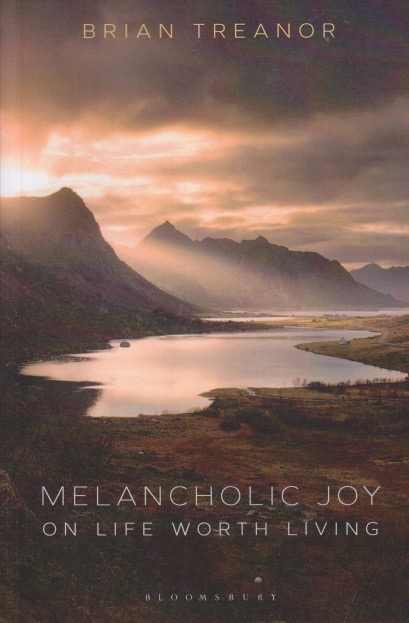
Life, for everyone, has difficult times.  Katherine May has a reassuring, but not always cheerful way about her.  She calls troubled times Wintering.  The subtitle of her book explains that it’s about The Power of Rest and Retreat in Difficult Times.  My wife and I read this one together.  It reminded me, in some ways, of Barbara Brown Taylor’s Learning to Walk in the Dark.  In a society vapidly preoccupied with an often shallow happiness, admitting, even pondering the things that are difficult is an act of courage.  May has a disarming way of writing, a humility and self-deprecation that are an antidote to the brazen self-assurance we too often see in the media.  She looks for lessons in her own experiences of pain and loss, and yes, surviving through winter. 

Winter is often a quiet time of reflection.  In our bright, loud, beeping, buzzing world we don’t take much time for such things.  Indeed, capitalism (which is generally not deep, although deeply engrained) doesn’t encourage it.  “The more you can work,” it whispers in your ear, even while sleeping, “the better you’ll feel.”  Winter slows things down.  Makes life a bit harder.  Think of all those days when you just don’t feel like going outside in the cold, snow, and sleet.  When the chill drives you next to the radiator, covered in lap blankets.  When it’s dark most of the time.  Such are good times to think.  As May shows, when you turn a difficult situation around and look at it from different angles, truths about yourself, about life, begin to emerge.  What is it we’re after that keeps us running all the time, dangerously overheating?  We need winter.

The anecdotes here are deeply personal.  This is particularly difficult for a writer because many of us face rejection frequently.  When you’ve poured yourself into a book, blithe casting aside by agents and publishers hurts.  I admire the bravery and the wisdom of writers like May.  She shows that wintering is possible, and that it is followed by spring.  Lives, she notes, are cyclical.  We can find quite a lot of meaning in that.  I often find myself fearing winter.  The heating bills.  The wearing of many layers of clothes for months at a time.  The dark and cloudy days.  Yet a good part of me welcomes the retreat.  I know that, in the cycle of the year with few days off from work, that if I can make it to Halloween, some rest—some wintering—awaits.  And that is a hopeful thought indeed.


Poe’s Novel

Certain authors, some great among them, excel at short stories.  I know from personal experience that trying to publish a book of such stories is a very hard sell.  For a writer like Edgar Allan Poe, who was trying to live on his words, it often led to periods of poverty.  Thinking of him as a short-story author, I had never read his only novel, The Narrative of Arthur Gordon Pym of Nantucket.  Hailed by fellow brief-tale writer Jorge Luis Borges as Poe’s best, I figured I’d better give it a try.  I’m glad I did.  I had, however, no idea what to expect.  Those who write on Poe seldom pay it much mind.  He was famous for his poems and stories, and this gothic, sea-faring novel was, according to the introduction, suggested to him by those who felt his making a living as a writer might improve if he used long form.

Concerning the edition: the novel is in the public domain.  Penguin Classics, however, often contain nice introductions.  Indeed, the intro by Richard Kopley in this edition is excellent.  A few of his observations stood out to me—this novel was, in some measure, about Poe’s family.  Both the protagonist and the author have five-syllable names with the same cadence, ending on a three-letter surname beginning with P.  Also, as both the introduction and notes make clear, Poe was deeply steeped in the Bible.  You seldom read about Poe and religion.  Writers from America’s first generation, however, were uniquely brewed in it.  I’d never considered that about Poe before.  There are many editions of Pym available, but I recommend this one because of its introduction.

The story ends without resolution, just so you know.  Pym, talked into an adventure by a somewhat devil-may-care friend, goes out on the ocean on a boat after a night of drinking.  And herein hangs the tale.  Well, actually, the friend convinces the young man with a taste for the sea to stow away on a whaler that his father captains.  A mutiny, however, leaves Pym “buried alive” onboard.  A shipwreck leads to near starvation and a boon companion survivor.  Picked up by an explorer headed south, they discover a surprisingly temperate Antarctic circle where a native tribe turns treacherous because of their fear of the color white.  It does seem that there’s a race narrative taking place here too.  I enjoyed the story although the chapters about longitude and latitude don’t quite rise to the level of Melville’s maritime writing.  It’s a tale worth the read, however, but find one with a good introduction and it will be smoother sailing.


Morte d’Author

I recently learned of Roland Barthes’ essay, “The Death of the Author.”  Originally written in French, Wikipedia warns it’s not to be confused with Le Morte d’Arthur.  Or is it?  Barthes’ idea is that to truly appreciate a piece of literature you must dissociate it from its author.  I’m of conflicted feelings about this.  To truly understand an author you should read everything they’ve written.  Perhaps that’s a task best left up to biographers and historians.  I have trouble, especially when an author’s name is well known, and perhaps the very reason I purchased a book, of leaving the author out of the equation.  On the other hand, sometimes I’ll read literature merely for the experience, and the author is often someone I know nothing about.  If the book moves me, however, the first thing I start to research is the author.

Said author may not give the ultimate meaning to the story, but I believe it’s a more subtle  interaction than “La mort de l’auteur” might suggest.  It’s not unusual to enter into parasocial  relationships with an author.  In fact, I suspect it’s quite common.  After reading a Neil Gaiman novel I sometimes think we’d recognize each other across a crowded room.  Compelling writing will do that to you.  And from a writer’s perspective, what you write does contain part of you.  Captured in literary form.  As much as—no, more than a photograph does.  An author does not determine the final meaning of what s/he writes, but they mean something by writing it in the first place.

When writing fiction I often find myself exploring themes that require other stories I’ve written to give them fuller texture.  Perhaps this is why finding publishers is so difficult.  I’ve had people tell me that they understand my nonfiction better after they get to know me.  There’s a natural progression here, in this age of endemic loneliness: a story, blog post, or book catches your attention.  You want to know more and what do you do?  Await the death of the author or reach out to the writer?  I’ve done both, and I generally find that reaching out to an author can be satisfying.  It depends, of course.  Some don’t like to be disturbed by those they don’t know, their parasocial paramours.  Of course, there is a way to get to know an author, even remotely.  Read what they write.  It won’t give you the whole story, of course, but the more of their work you read the better you’ll get to know them.  Thus I’m conflicted about “La mort de l’auteur.”

Image credit: Florence Harrison, public domain via Wikimedia Commons

Learning to Write

It’s a reciprocal relationship.  Ideally a symbiosis.  The publisher has a reach, and know-how, that an author lacks.  An author provides content the publisher needs.  Yet publishing is a business in a capitalistic world and has to (unless subsidized) turn a profit.  As an author who works in publishing I’m skewered on the horns of this dilemma.  It’s heartbreaking to see the lengths some authors go to only to find out their book is priced the same as a week’s worth of groceries.  Or three tanks full of gas.  Who buys a $100 book?  Libraries.  Well, some libraries.  Occasionally a publisher will run sales, if you order direct, but by then interest in your book (which may be timely) has passed on.  You become just another name on the shelf in the Library of Congress.

I’m looking for a publisher for my sixth book.  This has to be someone who understands that even $45 is beyond the reach of most intelligent readers.  “What the market will bear” feels like the death sentence to the years of your life you’ve put into writing the thing.  A friend once asked me, “Why do you do it?”  For authors the real question is “How can you not do it?”  The need for the validation through publication runs very deeply in some people.  More deeply than our national love for Taylor Swift.  It has to do with meaning.  Purpose.  A sense of what we’re put on earth to do.  

Image credit: Codex Manesse, public domain via Wikimedia Commons

The standard “wisdom,” and practice, is to publish in hardcover, priced for the library market, and if it sells well at $100, perhaps offer a paperback.  Hopefully priced lower than $45, but don’t hold your breath.  “What the market will bear,” should be your mantra.  It’s a wonder that civilized people ever got educated.  I grew up on cheap books from Goodwill, which is all I could afford.  College, on borrowed money, taught me the price of reading seriously.  It was a lesson I never forgot.  I’d begun my faltering steps to writing books while in high school.  I started writing short stories even earlier than that.  It has been a life of writing.  Even series books, I’ve come to see, are too easily exploited in this way.  My shortest book is priced at $40.  At least I know that I’ve written some collectors’ items.  Take heart, my fellow writers trying to emerge from academe.  There are other ways of being in the world.  And some of them may even be symbiotic.


Tracing Writers

Ratiocination.  Detection.  There’s something compelling about that clear, crystalline logic that leads to solid conclusions.  I was floored by Don Foster’s Author Unknown: Tales of a Literary Detective.  I found the book by following up a reference to “A Visit from St. Nicholas,” aka “’Twas the Night before Christmas.”  Like most Americans I credited the poem to Clement Clarke Moore, but he did not, in fact, write it.  If you trust anyone with literary detection, it should be Don Foster.  Although this cleverly written book is not an apologia for the author’s personal accomplishments, it nevertheless builds trust in his methods and his sense.  It begins as he discovers an unacknowledged text was written by Shakespeare.  The evidence is carefully laid out, and is convincing.  Then others began to ask him to “prove” who wrote other pieces.  It’s quite a ride.

While Foster takes great care not to claim the ideas as his own, he’s nevertheless drawn into the case of the Unabomber, and Monica Lewinsky, and Thomas Pynchon.  His methods of ratiocination demonstrate repeatedly what he explains in his excellent introduction—our writing is every bit as indicative as our DNA.  With an adequate writing sample size, a piece with an unknown or disputed author can, with a great degree of probability, be attributed to the correct author.  You don’t even need to know of the cases to find the outcomes fascinating.  And those who disagree, being human, are simply not convinced by his conclusions.  They’ve already made up their minds.  In this regard the case of Wanda Tinasky (I’d never heard of her) is utterly compelling.

The Santa Claus chapter, the final one in the book, is a real pay-off.  Henry Livingston Jr., of Poughkeepsie, wrote the famous poem that defined Santa Claus as we know him.  Considering Christmas’ importance in our capitalistic society, this attribution is an important one.  Clement Clarke Moore was a very wealthy professor of Bible at the newly formed General Seminary.  Foster demonstrates probable cause in his claiming, and keeping alive, the mythology that he wrote the famous poem.  The way that this chapter is laid out and presented is especially witty.  Those interested in getting at the truth behind who wrote what will find this a page-turner.  Although he wasn’t seeking out the attention that came (most of us, as academics, are surprised when anyone show any interest at all in what we write) Foster has given the world a real gift in this book.  It reminded me once again why research is the most intriguing thing on earth.  And learning can be like reading a good mystery.


Finding Books

This is a public service announcement to those who try to find books that aren’t issued by one of the big publishers.  I’m not shy about saying that my books all fall into that category.  One of the things I’ve noticed is that books feed out to different internet venues at an odd rate, before they’re published.  Some publishers use what they call New Book Announcements (NBAs) to get the metadata out to wholesalers, distributors, and other vendors.  Sometimes a book comes to public light in strange ways.  I’ve had my eye on a book that a friend pointed out.  I don’t know how they heard about it, but I went searching for it and found it on Barnes & Noble’s website, but not Amazon.  Well, that’s not quite true.  It is on Amazon, but not in North America.  Amazon China and Amazon Singapore have it, but you can’t find it here.  Yet.

I noticed a similar thing with The Wicker Man.  An anxious author, I kept searching for it online when I didn’t hear from the publisher.  It was first announced at German booksellers.  Eventually it got around to English-speaking sites, and eventually (it took a few months after publication), it became available in “all channels.”  Although, several websites still only list the hardback which retails for more than a dollar a page.  Now that’s inflation!  Even $40 for such a short paperback is a lot, but that’s why I’m looking for anything but an academic publisher for the next book.  But there’s a larger issue here.

Like old Joe, I sometimes can’t remember things.  I have an elaborate and Byzantine set of reminders that fit my neurological profile (mostly).  For books I want to remember to look up after they’re published (I can’t generally afford to buy them right away, so this takes advanced planning), I have an online list.  That online list is associated with a bookseller and I can’t easily add to my list until the book appears on said seller’s site.  I suppose I could write it down in my zibaldone, but will I recall that I wrote it there?  (Those little notebooks get filled up pretty quickly.)  It would just be easier if information on the internet could feed out instantaneously.  If, say, Amazon Singapore could let Amazon USA know that a book that is publishing in the United States can be listed—well, wouldn’t that make sense?  Systems are complicated.  So complex, in fact, that architects must be hired to keep them in order.  Or maybe books could be announced when they’re actually available? What? Lose the buzz?  In the meantime I’ll put a bookmark in this page and hope that I remember to look it up when the time comes.


Boo-Boo

After an unfortunate encounter with a paper-cutter in which one of my thumbs didn’t fare so well, I sought a bandage.  This led me on a reverie since the bandage I found was in a box that I’d brought home from my mother’s apartment.  Mom was a practical woman and I’m sure she would’ve approved, although the item was selected in a moment of grief that still hasn’t completely dissipated.  As my wife was binding my wound the thought recurred that my mother wouldn’t be needing these physical assuagements any longer.  Like all of us, if cut she bled.  She’s beyond that now.  A person’s affects linger and contain pieces of their memories.  This particular box was plastic and therefore reusable—which is precisely what Mom did.  She taught me how to bandage myself and I’ve used that knowledge many times over the decades.  It’s something I don’t need YouTube to figure out.  Time is a gift.

When writing about recent times, I recently learned new vocabulary regarding decades.  For example, the first two decades when I was culturally aware were the seventies and eighties.  Together they’re known as the xennial period, named, presumably, after “generation X.”  (I’m a very late boomer, as well as a late bloomer.)  I found that fascinating.  Then I was reading something that made reference to the “noughties.”  This delightful word is the British term for “aughts” or “aughties”—the years between ’00 and ’09 of any given century.  We hear plenty about the “twenties,” “thirties,” and so on, so I became curious about the correct term for the second decade of a century.  Either “tens” or “teens” is acceptable, but it seems that in formal writing this should be transcribed by numbers. I guess teen ages are always difficult.

Our divisions of time demonstrate our preoccupation with both mortality and round numbers.  More and more people are living the entire way through a century, from aughties through nineties.  For most of us, however, we can, if things go well, use our birth decade as a rough guide.  I’m not likely to make it through the fifties, but it isn’t impossible.  If I do I guess I’ll need to upgrade my WordPress account because my daily posts will have used up my allotted memory by then.  In the meantime, I do need to buy some new bandages for the time in between.  When I do I’ll put them in a simple plastic box, and I will remember the gift of time I shared with my mother.


Verb Choice

I can’t remember who started it.  Somehow, though, when I watch movies on Amazon Prime, the closed captioning kicks in.  I generally don’t mind this too much since some dialogue is whispered or indistinct.  I also presume some kind of AI does it and it makes mistakes.  That’s not my concern today, however.  Today it’s word choice.  Humans of a certain stripe are good at picking the correct verb for an action.  I’ve been noticing that the closed captions often select the wrong word and it distracts me from the movie.  (Plus, they include some diegetic sounds but not others, and I wonder why.)  For example, when a character snorts (we’re all human, we know what that is), AI often selects “scoffs.”  Sometimes snorting is scoffing, but often it’s not.  Maybe it’s good the robots don’t pick up on the subtle cues.

This isn’t just an AI problem—I first noticed it a long time ago.  When our daughter was young we used to get those Disney movie summary books with an accompanying cassette tape (I said it was a long time ago) that would read the story.  Besides ruining a few movies for me, I sometimes found the verb choices wrong.  For example, in Oliver (which I saw only once), the narrator at one point boldly proclaims that “Fagan strode into the room.”  Fagan did not stride.  A stride is not the same thing as a shuffle, or a slump.  Words have connotations.  They’re easily found in a dictionary.  Why do those who produce such things not check whether their word choice accurately describes the action?

So when I’m watching my weekend afternoon movies, I want the correct word to appear in the closed captioning.  Since the nouns generally occur in the dialogue itself, it’s the verbs that often appear off.  Another favorite AI term is “mock.”  Does a computer know when it’s being mocked?  Can it tell the scoff in my keystrokes?  Does it have any feelings so as to care?  AI may be here to stay, but human it is not.  I’ve always resented it a bit when some scientists have claimed our brains are nothing but computers.  We’re more visceral than that.  We evolved naturally (organically) and had to earn the leisure to sit and make words.  Then we made them fine.  So fine that we called them belles lettres.  They can be replicated by machine, but they can’t be felt by them.  And I have to admit that a well-placed snort can work wonders on a dreary day.


A Footnote

I was recently compelled to use footnotes.  I don’t mean the clever asides that capable writers sometimes utilize to spice up subjects by making points off topic.  No, I mean the kind with author, date, title, city, publisher, page number.  I deal with footnotes daily—it’s an occupational hazard.  As a recovering academic I’m trying to get away from using footnotes on everything from grocery lists to daily meeting reminders.  Cite your sources!  That’s the kind of rhetoric that’s pounded into the heads of bright young people, often preventing them from learning to think for themselves.  At this stage of my life a footnote is more often trying to find someone who agrees with what I’ve observed for myself.  Hmm, did anyone ever say that before?  If so, where?

My concern goes down to the level of cities.  Yes, cities.  Standard format requires you cite the city in which a book was published.  This ridiculous pre-internet artifact had a purpose originally, but I have worked for two international publishers and I can tell you two related, and perhaps contradictory points: employees can tell which office a book is from: New York or London.  And unless you work for said publisher there is almost no way for you to know.  So if a publisher has offices in a dozen cities, you need to write a dozen of them in your footnote.  Does this sound like a rational thing to do?  Don’t get me wrong—it’s important, very important to cite the publisher.  But it’s not like there are a ton of presses around with the exact same name.

There’s a move among some reference experts (refperts, if you like) to do away with the city in footnotes.  It’s a reasonable guess that Cambridge University Press is pretty widely recognized.  And that Cambridge is located in Cambridge.  Or course, there’s a Cambridge in Massachusetts, and I hear there’s a university there as well.  In any case, if you don’t know where a publisher’s located, there’s a remarkable invention called the internet where you can look it up!  Pedanticism comes naturally to academics, I suppose.  Had I not been one I would probably have had no reason to write such an anal post as this.  Still, there’s a larger point: when is one able simply to assert what one knows?  I frankly don’t remember the page on which I read most facts I point out in my writing.  Often I notice them myself and recognize them as facts when there’s good, solid evidence.  Of course, I really should footnote that.  If I can remember in which city the appropriately named Random House is located.

How do you footnote this?