Strangers

Okay, so I like to think that I’m a reasonably intelligent person.  I can drive a car.  I’ve read over two thousand books.  I have been blogging for nearly a decade and a half.  Why can’t I figure out this password thing?  My brother has a blog on WordPress too.  His posts are quite different than mine, but I always like to read them since we think a lot alike.  Anyway, I wanted to leave a comment on a recent post he wrote.  You’d think that’d be easy since this blog is also hosted on WordPress.  (I’m the one who suggested WordPress to him.)  When I went to post the comment I received a dialogue box basically asking “and who might you be?”  When I gave my web credentials it wanted a password, but it wasn’t clear which password it wanted.

An actual word press; image credit: DANIEL CHODOWIECKI 62 bisher unveröffentlichte Handzeichnungen zu dem Elementarwerk von Johann Bernhard Basedow. Mit einem Vorworte von Max von Boehn. Voigtländer-Tetzner, Frankfurt am Main 1922, public domain via Wikimedia Commons

Like most human beings alive today I have more passwords than atoms in a typical tardigrade.  With a brain over sixty, trying to recollect them all in an instant, well, let’s just say that ain’t happenin’.  As I laboriously lumber through all relevant passwords (I’m pretty sure they don’t want all the unique ones I use at work, in addition to my private accounts), it rejects each and every one.  You see, WordPress is funny.  My own account, now 14 years old—maybe that’s the problem—those teenage years!—doesn’t recognize me at times.  Indeed, on my own blog (and I have a paying account) it sometimes blinks its virtual eyes and says, “and who might you be?”  I try not to take this personally.  I mean, we’ve only known each other for years.  And all I want to do is put a supportive comment on my brother’s blog—we share the same surname, and even the same web host.  What could be so difficult about that?

I’m pretty much logged into my WordPress account constantly.  I post every day.  There’s over 5,300 mini-essays of about 400 words.  That’s over 2 million words.  Is this relationship really so one-sided?  I’m trying hard not to let my aporripsophobia get the best of me here.  Just tell me which password you want!  And, if I can use it to log into my own WordPress account, why won’t it work for the WordPress accounts of family and friends when I want to make a comment?  We’ve been together for so long, do you really not know me any better than this?  Hey, I think I need a private moment with WordPress—you can check out my brother’s blog while you wait…


In Praise of Libraries

It felt like a rare, and momentous moment in a young writer’s life.  While working at Routledge I happened to notice that the New York Public Library did not have a copy of A Reassessment of Asherah in their catalogue.  The first edition was published in Germany, so I wasn’t surprised that it was not there.  Gorgias Press, however, had published a second edition and few people were citing it.  I contacted the office on Fifth Avenue and offered to donate a copy.  A librarian contacted me and we set up a time.  I went between the stone lions (Patience and Fortitude by name), met my contact, and handed my work over without ceremony.  He seemed genuinely glad to have the book and I felt like I’d made a small contribution to a big city.

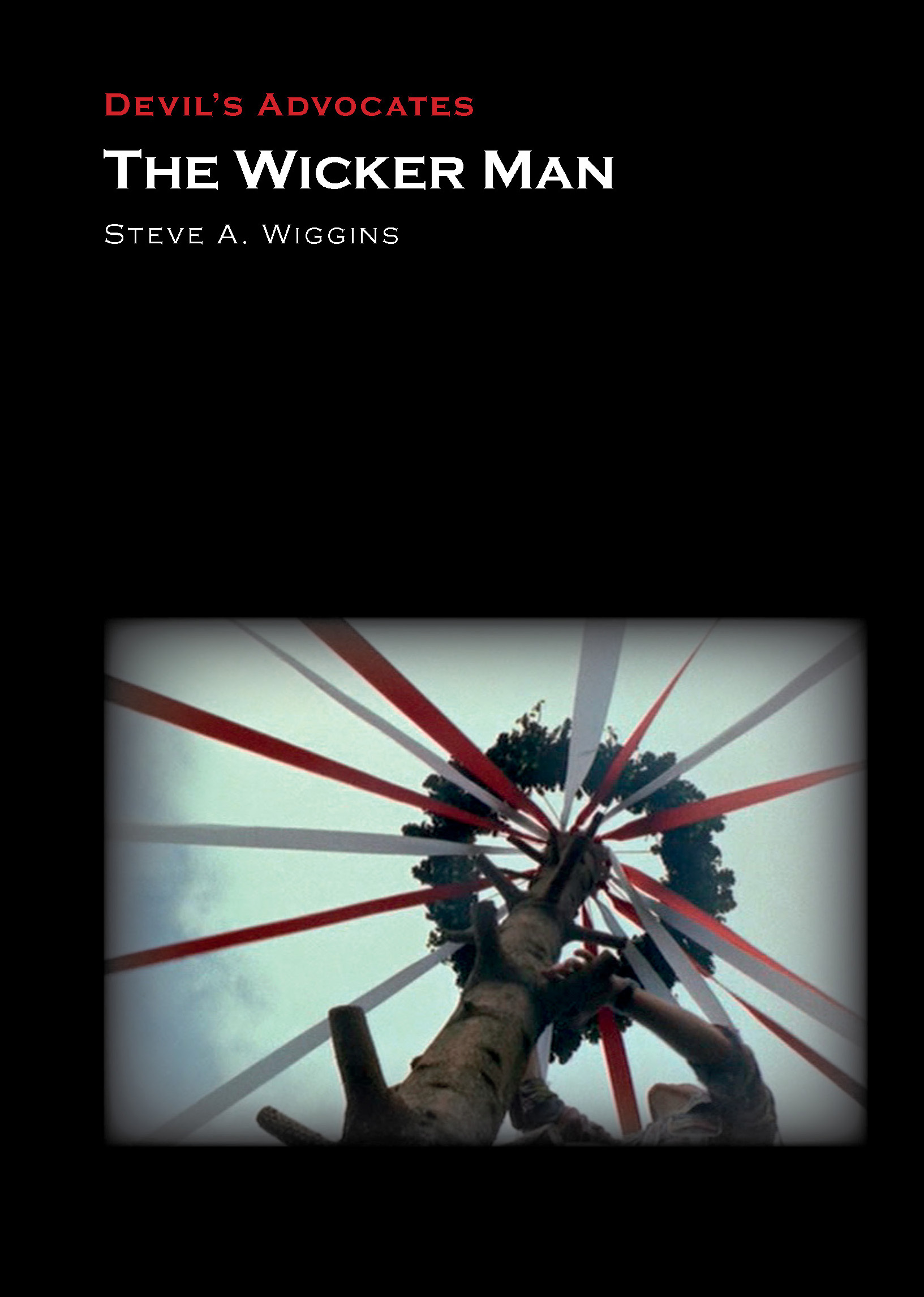
When I need a pick-me-up I look at WorldCat.  WorldCat is a conglomeration of library catalogues where you can find just about any book, including obscure ones, such as mine.  I recently hopped on to see how many libraries had Holy Horror.  (The answer is 90.)  While there I decided to check my others.  Nightmares with the Bible registered 68.  These numbers aren’t bad considering neither publisher markets the books and they’re priced too high.  The Wicker Man is still new and is only in 42.  What surprised me was when I looked back.  A Reassessment of Asherah is in 305 (total for both editions, one being in the New York Public Library).  What really surprised me was Weathering the Psalms, which 324 libraries claim.  Since it’s priced under $30, maybe there is something to the idea people will buy books if they can afford them.  As an editor I know that sales of monograph over 300 are considered successful.  Two of my books qualify.

Publishers don’t share sales information.  I can look up those at my current publisher, and I can check some on Nielsen’s BookScan (now called NDP BookScan), the service publishers use to get an idea of other publishers’ sales.  That’s the same Nielsen that does television ratings, by the way.  Searching my own titles there is too depressing, so I stick to library catalogues.  Libraries are feel-good places.  (I couldn’t help but notice that Princeton has all my books—thank you, Tigers!  The seminary has my first two, but the university has my books on horror films.)  I can just feel all the ideas in the air.  And I’m humbled to have contributed to them in a way, no matter how small.


Why Write Then?

People far smarter and more prominent than yours truly have pointed this out, generally in vain: academic writing is driving itself extinct.  And some of us will not mourn it, if it does.  You see, academics are taught to write with an erudition and pomposity that satisfies dissertation committees made up of people who had to do the same.  This academic hazing generally obscures otherwise interesting observations.  Now thoroughly indoctrinated, academics go on to write their next book, and their articles, in this same turgid prose that obfuscates mightily.  To what purpose?  So that those critics higher on the food chain won’t be tempted to take on this morsel, preferring instead some “popularizer” who actually knows the craft of writing?

Poor writing is poor writing.  Those of us who’ve graded undergraduate papers have spent many red pens (I used to use green, so as not to be so negative) correcting bad stuff.  Why then do we give in to writing even worse ourselves?  I’m not proud.  I’ll admit that I’ve read academic books I really didn’t understand.  And it wasn’t because I’m not properly trained.  It’s because the writing was so full of jargon and “scholar X said but scholar Y rebutted”s that I get lost in the jungle.  One of the things repeatedly said about my teaching, back in the day, was that it was effective because I could explain complicated things in ways people could understand.  Isn’t that the purpose of publication in general?  Too many scholars write only for other scholars.  Not that there’s anything wrong with that, but if they wrote clearly maybe some of the rest of us could get in on the conversation.

I’m sure I’m not the only one to get really excited about a book.  The topic doesn’t matter.  Shivering with anticipation you order it and await its arrival, staring out the window awaiting the postie or the Amazon van.  It arrives and you caress it a little before opening it.  Then you find it’s written in academese.  You struggle to get through it, uncertain that you’ve really learned anything at all.  Except how not to write.  Those in higher education lament that the system is crumbling.  One of the reasons, I contend, is that nobody can understand what they’re saying.  What’s wrong with writing for the average, educated person?  Do you need sixteen five-syllable words in one sentence?  Look, I bought your book because I already believed in you.  If you make me regret my spending you can be sure that I’ll be purchasing someone else’s books from now on.


Sequel Pondering

Of course I’m working on another book.  I can’t say what it is at the moment, but one of the projects I’ve long been contemplating is a kind of sequel to Holy Horror.  The problem is that if the first book didn’t sell very well (the premise is perhaps too academic), a sequel couldn’t be expected to do any better.  I’m still working on sloughing that academy skin.  But I keep watching what we insist on calling “horror” and the more I do, the more I find the Bible in it.  Others have taken up the gauntlet—mostly academics who have jobs that encourage such behavior—of connecting horror and religion.  The Bible’s role, while a subset of the larger field, has its own particular parameters.  In one of my notebooks I have a list of 23 movies to add to my analysis.  I know that there is a twenty-fourth, but it’s only streaming on an exclusive service and still costs a bit too much for something that doesn’t come with a plastic case.

In any case, Holy Horror just scratched the surface.  One of the factors I’ve mentioned before is that there is no database of the Bible’s appearances in film.  It would be an extensive list altogether, and a substantial number of horror films would be on it.  In general, it seems, people really aren’t too interested or intrigued by this fact.  I certainly am.  Our society is a curious mix of sweet and salty.  We want to think we’re too sophisticated for religion, but religion undergirds just about everything we do.  Otherwise it’s pretty difficult to explain how the Bible keeps showing up in horror.  Usually as a mysterious artifact.

I recently saw myself referred to as a biblical scholar.  There’s no doubt that I taught biblical studies for many years.  I even wrote a book interpreting one aspect of the Good Book.  My degree, and my interest, however, has always been historical.  I follow this history of ideas.  Although many people don’t understand my current horror fascination, it’s clear this is another jog down a trail of history.  How did we get to the point that a totemic (the scholarly phrase is “iconic”) Bible became a stand-in for God in movies?  I’m not sure I’ll ever be able to write Holy Sequel, although, if my profession ever permitted it, I’d certainly have the interest in doing so.  There’s a lot to be learned from such explorations.  That’s true even if the books containing the information only appear on a few dusty library shelves.


Worthy of Note

I admit it.  I use Wikipedia quite a lot.  When I was teaching I wasn’t one of those professors who said “Don’t use Wikipedia,” but I did say that if students used it they should look up the references and make sure they were legitimate.  Wikipedia is quite an achievement—a place to go to find out about many things, but not everything.  This leads me to an observation that I hope isn’t uncharitable: there are a lot of underwhelming pages on the website.  Anyone can edit it, of course, but I see quite a few pages of academics that have no more than a short paragraph of an (often) unremarkable bio, followed by fewer books than I’ve written.  And they have an encyclopedia entry.  It makes me wonder what it takes to be noteworthy.

I know quite a few Wikipedia page subjects.  Most of them are nice people.  Their greatest accomplishment is having landed a university post—maybe that’s enough to make someone noteworthy these days.  I haven’t managed to do it.  But many have.  And most of them don’t have their own pages.  I’m a realist about things like this.  My books don’t sell enough copies for anyone beyond you, dear reader, to recognize me.  This blog hasn’t had a million hits yet (it’s halfway there, in any case) and I can’t seem to retain followers on Twitter, or X, of whatever it is this week.  But then again, I don’t expect to be on Wikipedia.  Some people that I think should be aren’t.  Popularity shouldn’t be the measure of importance.  (That works both ways.)

It used to be that I’d run across Wiki pages with a header saying that a subject didn’t seem noteworthy enough.  Sometimes such warnings were even for publishers—those of us who write need to find outside information about publishers, no matter how small.  I don’t see those warnings much any more.  I suspect Wikipedia is so large (over six-and-a-half million pages) that constant policing would be necessary.  And how would it feel to have someone put a page together for you only to discover later that you’d been removed for just being too ordinary?  That’s gotta hurt!  Everyone, it seems to me, is notable.  All people should be paid attention to.  I suppose the rank and file of all of us would clutter Wikipedia endlessly, but I still do wonder how it is that surviving in academia is enough to make a person essential to know about, beyond their faculty webpage.


Playing Authors

My family looked at me funnily, but not for the first time.  With a holiday gift card I’d ordered a book on the card game Authors that I’d blogged about recently.  You see, there’s not a ton of information on it on the web, and it was a formative influence in my life and I wanted to know more.  I suppose it’s typical for someone raised as a fundamentalist not to immediately think of evolution, but Authors has evolved over the years.  And quite a lot.  For one thing, you can’t copyright an idea and other game-producing companies made their own versions of the original game.  And what I’d assumed had been the original (since it was the one I had as a child) was only one of many versions.  The book even documents the Bible Authors game I’d mentioned.  My real interests included that age-old question—did it ever include Edgar Allan Poe?

Today is Poe’s birthday.  It’s fair to say that he’s one of the most recognizable authors in the world now.  He also had a tough time being accepted.  This book, which I haven’t read through—it’s more of a reference book, in any case—points out that Poe was indeed included in more than one edition of the game.  He isn’t one of the strongly recurring authors (which include several of whom I’d never heard).  This is the fate of writers.  Reading about Dickens lately, I came to realize that even after several best-selling novels (at numbers that would make any modern publisher gloat), he was effectively living off debt until well into his forties.  And he died at 58.  He was famous, but until his final years not what you could consider wealthy.  

Another realization dawned.  Writing for a wider readership means getting away from academic publishers.  I had an agent interested in my current book project for a couple of months before he decided it wasn’t for him.  I’ve also come to see that several authors I respect, and whose books are priced below $20, have published with presses that aren’t part of the Big Five.  And they earn some profit from their efforts (unlike academic publishing).  In other words, becoming an author of either fiction or non, often involves book sense that I’ve been slow to gain.  At the Easton Book Festival a few years back I met several local writers who were putting additions onto their houses with the royalties they earned.  I’d published three books at that point and was turning my pockets inside out hoping for forgotten spare change.  Authors is a game.  Those who are included are those who figured out how it’s played.


Life Learning

One thing a recovering academic must learn is that the vast majority of people don’t really care what drives the academy.  They aren’t too worried about larger issues as systemic racism, or various groups’ feelings of unequal treatment.  In fact, most people are just looking to get by, keeping depression and hopelessness at bay.  There are few avenues to break out of the middle class, and even fewer to move up from the lower.  And going to school hasn’t been presented to most people as an opportunity, but as a chore that must be done until work can be secured and they can pursue surviving on their own.  This truth comes to me time and again when I’m reminded that deep thinking doesn’t sell books (not unless you’ve already established a reputation) and that if you try to bring the concerns of the academy to the public, they’ll look the other way.

The real trick, it seems to me, is educating people without them knowing they’re being taught.  People don’t like being talked down to.  Understandably.  When I listen to people without college educations, I learn a ton.  This is my matrix as well—it’s where I grew up.  Higher education changes the way you think, but it shouldn’t prevent you from communicating with those who are the vast majority of people in the world.  Anything can seem to be normal when it happens long enough, even living in ivory towers and discussing things almost nobody else cares about.  You see, I’m a realist.  And I still have a lot to learn.

When I write my books, my style is accessible but my topics are academic.  It has taken me years to realize this simple fact.  Anyone can read my books from Holy Horror on and understand them, but why would they want to?  The questions raised are those of the academy, and those in the academy know you by your specialization (ancient West Asian religions, historically declined, thank you).  A glance at how my Academia.edu page is viewed tells the story.  Nobody who visits there is interested in horror films or this blog.  They want the resource that can’t be renewed—my work on ancient history of religions.  I’ve moved to horror because I find lots of very intelligent people here.  Like those with whom I grew up, they are generally ignored by the academy.  They are also very accepting of outsiders.  You have to unlearn being an academic.  And it might just lead somewhere productive.


No Agency

I’ve worked in publishing since 2006.  That seems like a goodly time, but the industry is a complex one.  I started trying to publish again around 2010—losing my job at Nashotah House sent me into a tailspin in that regard, although I wrote a novel or two in the meantime.  My first post-dissertation book was published in 2014.  I soon learned that academic publishers each have their strengths and weaknesses.  Most have trouble with marketing—people just don’t know about your books.  (And can’t afford them if they do.)  If the publisher won’t advertise, well, the voice of one ex-academic isn’t very loud.  So I wrote on.  My sixth book has existed in draft form for a few months now.  I know that to get a publisher who knows how to market you often need an agent.  I also know that as an unknown writer it’s difficult to get an agent’s attention.  I finally found one, however.

Agents change books.  Mine asked me to rewrite yet again.  All of my books have been rewritten multiple times, so this was par for the course.  I had to leave out a lot of the stuff I liked.  Then the agent changed his mind.  Hey, I get it.  Agents live off the advances their authors get so if they don’t see enough zeroes they shy away.  That’s just how it works.  I’ve found what looks like a good publisher (not an academic press) but I couldn’t simply go back to the version I really liked—I’d made improvements for the agent—so I had to blend the two versions together.  The problem is, that’s difficult to do on a computer.  I know from working in publishing that side-by-side comparative screens in word processing programs are difficult to find.  Of course, if you just print both versions out all you need is a table and a red pen.

I wasn’t born into the computer era.  Flipping between two screens doesn’t come easily but printing out two three-hundred-page manuscripts is time and resource consuming.  So I’m flipping screens.  I hope to finish this book soon because the next one is already brewing and I really can’t wait to start getting the ideas out.  And I even have a publisher in mind—one that doesn’t require an agent.  I don’t think agents really get me.  Or maybe I’m just not a “commercial” enough thinker.  There are plenty of presses out there, however, and if you do your research you can find a home for this project that’s taken years of your life.  It’s just difficult to do the screen flipping.  But then, I’ve only been doing this for about a decade.  I’ll get the hang of it soon.


Intimate Thoughts

Although I haven’t had much time to devote to my fiction writing—I’m finishing yet another nonfiction title—I do have a Twitter account for my pseudonym.  I’ve always found it ironic that that Twitter account, which gets very little attention from me, has gained well over twice as many followers as the account in my real name.  On both accounts I follow back, but few notice the account where I post more often.  Strange.  Lately I’ve noticed that my pseudonym account has been getting attention from what seem to be cyber-prostitutes.  I’m not sure if that’s the proper name, but these users purport to be young women and they direct message you with solicitous intent (at least online).  Needless to say, I don’t respond.  It does make me wonder if that’s why Twitter is now known as X.

Social media has given new license to strangers, of course.  For a while there I accepted any invites I received on Facebook (publishers look at how many “followers” or “friends” you have on social media).  Many of these people I don’t know.  One, in particular, happens to be online quite early in the morning and has tried to video call me a few times on Facebook.  Those who do actually know me are aware that I spend less than five minutes a day on Facebook.  I post my post, check my notifications, and move on to other things.  In other words, anyone who knows me would never try to video call me through Facebook.  There are other ways to reach me.  I do have a blog, you know.  Social media has mediated a level of intimacy that I’m not ready to engage.

What am I doing here?

For all my daily shooting off at the fingers, I’m a pretty private person, really.  I’m shy—who knows? Maybe even on the spectrum—but also social.  Working in publishing I know that those who have the power to promote your book (and price it so mere mortals can afford it) want you to have internet exposure.  I guess that means some people will take it as an invitation to try to get sexy with you, or to call you at what is, in reality, the middle of the night.  I want people to get to know me first.  As much time as I spend writing, it’s a mere fraction of how I spend my days.  Intimacy should be reserved for friends.  At least I believe so.  Those who know me well know my pseudonym and its real-life counterpart.  For when I have time for that sort of thing.


Living Through Writing

I’ve perhaps lived too long to be a great writer.  Of course, most of my fiction remains unpublished, much of it read and rejected by editors younger than myself.  I can’t help but notice that Poe died at forty and Robert Louis Stevenson at forty-four.  Emily Brontë at thirty.  All of them today considered literary geniuses, they caught publishers’ attention back when they weren’t such juggernauts as they are today.  Even the humble online literary magazine gets too many submissions and the editors advertise their quirky tastes.  Not that I’m any Poe, Stevenson, or Brontë.  I wonder if their awareness of the greater likelihood of dying young might’ve fueled their work.  Perhaps at a subconscious level.  I know, for example, that the pressure created by having to start work early leads to some of my own best writing, knowing, as I do, that time is limited.

Shortness of time is a great motivator.  One thing authors require is time, however.  If you roll out of bed, scarf down breakfast, then logon to work (how the world has changed!), you may have time at the end of the day but I’m so exhausted by work that I simply can’t produce anything at night.  I have to do my writing before the worries and pressures of work kill the inspiration.  I mean that literally—I can feel it dying as the worries of those seeking tenure, and the issues with which they surround themselves, suck the very vitality of my mind.  Serve and protect.  And although I’m not exactly old, I’m not young either.  I’ve outlived many and, to my way of thinking, it’s because I’m here for a reason.  It seems to have to do with writing.

You see, writing is a main identifier.  I was asked to take a survey recently by a group that wanted to identify people’s main sources of self-identity.  They asked about things like gender, race, sexual-orientation.  The usual suspects.  The survey wasn’t crafted, however, by a writer.  If it had been they’d have known that that is a category unto itself.  Those of us who write know that we are writers, whether published or not.  Whether famous or not.  It’s more than a profession—it’s an identity.  Sometimes we have to keep it quiet since those who hire others want the categories that identify themselves by to be race or gender or social status.  The writer may not be motivated by money.  Many work well but may not identify fully with their “job.”  They may, in fact, be watching the time slipping away and wish they were writing instead.


Book Writing

Not everyone wants to write a book.  A great number of people, however, do possess that desire.  Or that desire possesses them—that’s often more accurate.  For some it’s because they have ideas that feel compelled to share.  For others it’s the sense of accomplishment of having successfully strung together thousands of words and seen them encased between covers.  For still others it’s economic—books can be sold, and if done well, can become a living.  There are surely other reasons as well.  Since I read a lot, I frequently wonder about other authors’ motivations.  Often, I suspect, it’s because they underestimate how difficult it is to navigate this path to success.  You have to come up with an idea that is unfamiliar to your target readership—free advice: no book appeals to everybody—that has a hook that will make them want to read it.

I’ve read books where this hasn’t been thought through well.  Love them or hate them, this is what major publishing houses do well.  They figure out what likely will have appeal.  They make mistakes, of course.  Everyone does.  Still, they have a solid track record that makes them the hope of writers who have the burning need to, well, write.  One of the cases where this becomes an issue is where an author tries to be funny.  There is a lively market for humorous books, but if you’re trying to convey serious information but you find yourself cracking jokes along the way, you’re going to confuse, rather quickly, your readers.  What are you trying to do?  Make me laugh or teach me something new?  What should I prepare for when I pick up your book?

Don’t get me wrong—I clearly haven’t figured all of this out myself.  I do think that the combination of a doctorate (which teaches advanced research skills), and editorial work (which teaches how publishing works), should be a winning combination.  Ideally, anyway.  What I find is that it does make me approach books critically.  I look at the publisher.  I ask myself, what is this book trying to do?  You see, to read a book is to enter a relationship.  The book has an author.  That person is sharing what she or he has thought about.  By publishing it, they’re inviting you into intimate spaces.  That’s why I tend to be gentle in my book reviews.  I know the hunger.  I too feel compelled to write.  And if I don’t get the mix right, I would hope that any readers might, if they reflect on it, see that this is merely an awkward effort to begin a conversation.


Missing Thoughts

Photo by Alberto Bobbera on Unsplash

Where do thoughts go?  Like many people who write, I carry a notebook with me to try to catch fleeting thoughts that make their way into my work.  That doesn’t mean you’ll catch everything, of course.  One of the most frustrating things is when you come to a key point in an essay or story and it vanishes before you can catch it.  Such things happen rather frequently.  More so than I would like, and, I’m sure if it happens to you it frustrates you as well.  Where do such important thoughts go?  This is a tricky question to answer because philosophers and scientists still don’t know what thinking, or what consciousness, is (are).  Whatever they are, they have some of my property.

Or do I have some of theirs?  Some have suggested that thinking is a much more collective activity than we suppose.  Our materialist view is that all my thoughts come from my brain and only get out if I share them.  Another way of thinking about it is that thoughts are out there and individuals receive them, like a radio or television.  Clearly our brains are involved in this, but mightn’t they be more like receivers instead of creators?  At least creators working ex nihilo.  One comforting thought, although it doesn’t help at the moment, is that that missing thought might still be out there, and like bread cast upon the waters, it will come back to you.  Sometimes it does.

Years ago I was working on a short story.  While out for a jog a perfect culmination for a scene came to me.  Naturally, by the time I reached home it was gone.  I was in anguish over it for many weeks.  Then, long after I’d stopped worrying about it, it came back within reach.  Something, I have no idea what, brought it back.  I hope this still works.  While rewriting a point in my latest book project, a stunning answer came to me, right in the middle of a paragraph.  By the time I’d hit “return” it had vanished.  The more thought I put into it, the more I felt like I was hitting a concrete wall.  As of this point, the key idea is still AWOL.  Since I don’t know where it possibly could have gone I can’t look for it.  Believe me, I’ve turned over every rock in this aging grey matter I regularly til and I just can’t find it.  Experience tells me it’s still out there somewhere.  And I do hope my receiver’s still functioning when it makes its way back around here.


Take the Tour

If you read my blog posts on Facebook, Twitter, or Goodreads (Hi, y’all!), you may not be aware of my actual website.  Now I have no kind of fame, no matter how modest, but the website does contain more than my blog posts.  I’ve been working on it lately to try to update the place a little.  There are separate pages for all my books, for example.  And links to the various interviews I’ve had, as well as links to my YouTube videos (thank you to my original 14 followers!).  If you know me personally you know that I’m not the self-promoting type.  I have a monster-sized inferiority complex (so it’s good that I don’t run for political office), and I’m a champion introvert.  I spend a lot of time by myself.  So why do I do all this web-based stuff?

Good question.  You see, I work in publishing and one of the things I hear constantly is marketing and publicity folks talking about an author’s platform (or lack thereof).  Believe it or not, my humble efforts here outstrip many authors—I do have a website and I tweet and book-face, no matter how infrequently.  In other words I do this to write. Call it being a modern writer.  The days are long gone when you wrote a manuscript and mailed it in and let the publisher do their thing.  To be a writer is to have to promote yourself, no matter how inferior or introverted you may feel or be.  If you’re a regular reader you know I miss the old way of doing things.

Photo by Rodion Kutsaiev on Unsplash

We learn lessons when we’re young.  Those lessons are difficult to unlearn.  I didn’t really know what it meant to be a writer—I grew up among laborers in a blue collar family—but I knew whatever my job might be it would involve writing.  As it turns out I’ve had more success (such as it is) in getting published as a nonfiction writer.  A great deal of that is due to learning how the system works—being in publishing helps—and figuring out how to place a book.  I wasn’t an English or even publishing major.  It didn’t seem to be rocket science back then, but it has become a more technological industry today.  Of course, time for doing this extra stuff is limited.  Indeed, if you work 925 you know that time to do anything outside of work is already rare enough.  If all of this looks like an amateur built it, it’s because that’s true.  The urge to write is, however, elemental.  Some of us are willing to work for words.


Dedication

Formulas are convenient, even if they don’t always work.  I’m thinking specifically of areas I know, such as writing.  And I compare this against the advice of those who do it for a living.  How do you know you’ve made it (and it has nothing to do with not being paid for it, although I suspect that’s in the back of everyone’s mind)?  One formula I’ve heard is the hundred-thousand-word rule.  Write a hundred-thousand words then throw them away.  After that you’re a writer.  I passed that particular benchmark decades ago, but it hasn’t really led to any income (so it comes to money again).  Then there’s Malcolm Gladwell’s more stringent hundred-thousand-hour rule.  To be an expert, you need to do the activity (say writing) for a hundred-thousand hours.  

Let’s try to break that down because big numbers can be scary.  Presuming it’s not your job—remember this point—those hours, if you can spend an hour a day on what you really love—translate to twenty-seven years.  You’ve got to add a decade or so for childhood, I suspect, when, in my case, you were simply doing stupid things and being amazed you’d survived them.  There’s a certain amount of maturity required.  So, let’s say you started writing when you were ten.  If you did it an hour a day without fail by the time you’re thirty-seven you should be an expert.  But are you?  What if circumstances dictate that you can’t dedicate a full hour a day?  One of the most influential teachers in my life said that it was a matter of constancy, not duration.  “Write every day,” was his advice, “even if it’s just for fifteen minutes.”  According to the Gladwell formula, that’d take over a century to become an expert.  But it’s more doable.

Life is busy.  Remember work?  It will end up eating up far more than forty hours every week.  And if you’ve decided you’d like to read once in a while—other writers suggest that the key to success in writing is reading—that too will cut into your time.  If you belong to any community organizations, because people like to see other people once in a while, or if you have a family, and if you like to eat and sleep, time soon gets fractured.  What all these formulas have in common is the idea of dedication.  If you want to be an expert, do what you love and do it as much as you can.  Yes, there will be obstacles.  And you might not be able to tell when you’ve arrived.  But at least you’ve enjoyed the time you spent getting there.


Blog Writing

From time to time someone will ask me about my personal writing process.  Those who know that I write at all, primarily, I suspect, think I do mostly blog posts.  I have, however, written five nonfiction books and have completed seven unpublished novels.  Thirty of my short stories, also fiction, have been published.  I also have a few novels and at least four nonfiction books currently underway.  Like other writers, I require quite a lot of alone time.  From at least seminary on, I have carved that out of the early morning hours.  I’ve gone through phases when I slept normal hours like a civilized human being, but when at Nashotah House, where morning chapel was a daily requirement, I began awaking early to write.  When I began commuting into New York City, that writing time got pushed back to 3 a.m., and that is mostly still true today.

It is said that Isaac Asimov had three typewriters in his study, each loaded with a different writing project.  That way he could work on the one he felt like writing when the mood struck.  Yes, we writers use our emotions extensively.  What I work on in the morning depends on which me gets out of bed that day.  Is it the long fiction me?  Is it the nonfiction me?  Is it the short story me?  Is it the academic article me?  Is it the blog post me?  Ah, the blog posts.  They take a lot of time.  And, like most writing, they are driven by my moods.  Sometimes I write about current events, often posted after the fact.  Why?  Because I have other posts that have been waiting to be presented.

There’s a bit of illusion involved in writing.  Apart from the fact that all of my blog posts are written in the early morning, it isn’t evident from the post itself when it was written.  (Unless I refer to something as having happened “yesterday” or “last week.”)  I don’t follow current events closely.  I can get depressed just fine on my own, thank you.  I don’t start out the day with the newspaper.  Writers often live in their own worlds.  Reality intrudes too much, most of the time.  I may never become a bestselling author.  I may never be able to court an agent—believe me, I’ve tried.  I may never have more than a few followers on this blog, but one thing I will do is continue writing.  It wouldn’t surprise me, and in fact I think it would be entirely within character, if I died with my fingers on the keyboard.