That Was Quick

It happened when I wasn’t looking.  If you’re a regular reader you’ll know that I’ve been in Boston since Friday for the AAR/SBL Annual Meeting.  This is a work event for me and I’m pretty much in meetings from 8:30 (or earlier) to 5:30 (or later) each day.  I always come home with “conference voice”—I can barely speak until Thanksgiving.  In any case, while I was distracted in Boston this blog slipped past a milestone.  At some point over the weekend I surpassed a million hits.  Given how rare large numbers are in my life, this is kind of a big deal for me.  I know websites that get attention and critical acclaim hit the million mark within months, or even weeks.  Still, at the ripe old age of sixteen, I’ll take it.  And I’m very grateful to any and all of you who’ve taken a moment to read my musings over the years.

During the conference I was talking to a friend who’s become a celebrity on TikTok.  I also spoke to another friend who’s become a more traditional media darling.  They both outshine me by orders of magnitude.  Attending events like this is always an humbling experience.  I’ve managed to hang around since 1991, with a few gaps, and although it’s always a grind to get ready and get myself out the door, I always walk away amazed at how much so many people have achieved.  Mine is not the only story of a first-generation college student finding a place in the professional world, even if it may not be exactly the place I’d hoped for.  I’m in good company.  I do suspect that most of my readers are not people from this venue.  If I’m wrong, please feel free to comment to let me know.

Mostly since being here I’ve been musing over Edgar Allan Poe and worrying about the traffic I’m sure to encounter once I get off the train and have to drive home during rush hour in New Jersey.  But I’ve also been listening to the stories of friends and colleagues.  They may think they’re pitching me their latest book, but what I’m hearing is their story.  That’s perhaps the most wonderful thing about conferences.  Being distracted enough not to notice when good news creeps upon you.  I know blogs are old fashioned and generally considered outdated.  That describes me as well.  But it warms my heart that so many viewers have stopped by.  My profound thanks to you all!


Old School

How often do hotels refurbish or do they all look the same?  I met someone in the lobby of a hotel in which I had stayed, okay, 26 years ago.  Nothing about it looked the slightest bit familiar .  Look, I grew up poor and only remember one hotel from before college (we never stayed in them)—the one I remember was a place we stayed on a family trip to Washington DC.  Ironically, I had a stuffed elephant toy with me on that trip.  With the career upgrade to professional and conference attendance, stays at hotels became more common, although they’re still somewhat infrequent.  Conference organizers entice with luxury hotels in major cities.  Some remain in memory.  Most don’t.

I know hotels pay a lot to decorate and brand, yet the places of the monied seem anodyne.  This hotel could be just about anywhere and will eventually blend into that haze of places somehow very alike that cost many hundreds of dollars to stay.  I might’ve stayed here before.  Maybe not.  This lobby doesn’t look familiar but the street outside does.  When I stayed here in 1999 [check] my wife and daughter were able to come.  Not being an editor, we’d been to the New England Aquarium that day and my daughter wanted a seahorse rubber ball as a souvenir.  On the way to this hotel she dropped it and it bounced into Tremont Street.  In a poor object lesson, I ran after it.  I wasn’t hit by a car, but my doing so traumatized my daughter enough that she still won’t talk about it as an adult.  That’s how I know we stayed here before.

When I visited Boston for work I 2012, I stayed in a hotel I remember but whose name I do not.  It’s never been a conference hotel or I’d choose it.  It was a bit run down, but it had character.  I don’t even know if it’s still there.  Cities change.  Some parts of Boston are unrecognizable since I lived here.  Even the hotel in which I’m staying (which is nice enough, except for the loud music that suddenly starts at 2 a.m.) used to be a school.  I suppose that’s appropriate for a hotel used as an educational conference venue.  Generations of young people were once educated where I’m trying to sleep as the room shakes with someone else’s rock beat.  I may remember this hotel as a place where sleep fled, or I may find it fading into that space where all conference hotels merge even as a poignant thought arises that nothing ever remains the same.


Revisiting

It’s funny returning to a city you once felt you knew well.  Cities are constantly evolving creatures and even though I got around Boston as a student and then as an employee of Ritz Camera, there were places I simply never found.  There was no internet in those days so we relied a lot on word of mouth.  If others weren’t talking about it, I’d never hear.  I first realized Boston had a Chinatown when attending my first AAR/SBL here.  That was in the day when you had to mail or fax hotel registrations in, if I recall, and I do remember staying up to midnight to try to get first choice after that.  Ironically, this year I again ended up in that neighborhood, south of the modestly-sized Chinatown.  I really didn’t mind, though, since the hotel isn’t too far from Edgar Allan Poe.

I first learned about “Poe Returning to Boston” from my daughter.  She saw it while visiting Boston with a friend.  I learned more about it by reading J. W. Ocker’s Poe-Land.  When I lived here, from 1985 through 1988, I knew of no public markers of Poe’s presence.  None of the more prominent ones were here then.  On a trip to Boston for Routledge I sought out the Poe birthplace plaque—the actual house had been torn down—and found it.  It’s still here as I saw last night.  But the place that was formerly marked only by a painted electrical box now has a statue.  Poe, preceded by his raven, walks across the area named for him with a suitcase in hand.  Behind him, pages from his manuscripts lie on the ground.

It’s long been known that Boston and Poe had an ambivalent relationship.  Poe was born here and lived here for a time, but never felt that the city accepted him.  He lived in New York City, Philadelphia, and Baltimore for some time, but mostly considered Richmond, Virginia home.  That’s where the Allans lived and where his mother is buried.  Poe himself famously and mysteriously died in Baltimore.  He had some measure of fame at the time but still lived in poverty.  The feeling seems to be that Poe would’ve liked to have liked Boston—it has been my favorite major US city ever since I first moved here four decades ago.  Now, of course, I only get back on occasion, mostly when AAR/SBL comes to town.  Although Poe wasn’t here the last time I was, I always find something new when I return.


Boston Bound

Honestly, I’ve reached a stage where travel seems quite a burden.  I’m a creature of habit and I haven’t had to interrupt that habit for three years now.  I missed the last two years of the AAR/SBL conference due to a variety of issues.  I’m pleased that this meeting is in Boston, a city of which I have fond memories.  Still, getting there from here isn’t as easy as you might think.  It’s simple enough to catch a direct train from New York or Philadelphia, but I don’t live in either.  To be there in time for my meetings later today I have to catch a fairly early train.  That’s not a problem; I’m an early riser.  To get to a station where a car might safely be left for four nights is a bit more difficult.  It involves an hour’s drive no matter where you end up going.  I’ve driven in Philly enough to know that I don’t like driving in Philly.

Although Allentown is the third largest city in the state, there is no train service from it to the Amtrak lines that lead up and down the coast.  So I’ll be driving a while.  Once on the train at least I won’t have to worry about traffic.  At least for a few days.  In Boston I wasn’t able to get into one of the close hotels.  In warmer months that wouldn’t be much of an issue, but November in Massachusetts can be chilly.  I remember that from living there.  There are shuttles from my hotel to the conference center, but I like walking Boston.  It brings back memories.  Beantown is one of those places that many people fall in love with and want to stay after they get there.  Although I lingered three years that didn’t seem enough.

Photo by todd kent on Unsplash

I was a young man when I moved to Boston.  Looking back, I knew so very little.  Almost as little as I know now.  For this conference, I’ve stayed in this same distant hotel in the past.  It’s in a part of town I’d never explored as a student.  It isn’t far, however, from Edgar Allan Poe Square.  I’m hoping the weather allows for some photographic opportunities around there.  The conference itself, in my more familiar Back Bay, is work.  Not much time to relax and see the sights.  Still, I know that once I get there I’ll again feel the old attraction.  It happens every time I go.  Even it means a drive and a train ride into late November.


Sleeping Below

I’m not sure how I missed What Sleeps Beneath.  I suppose it’s a matter of being time-starved in a world with so many websites.  That, and I’m only now starting to get integrated into the horror community.  A comment on this blog brought What Sleeps Beneath to my awareness.  A horror review site—they feature both books and movies—it’s based in that epicenter of weird (at least in my experience) of Pittsburgh.  I lived in the city for a couple of summers and grew up between it and Erie.  And, of course, Pittsburgh is George Romero territory, the birthplace of the modern zombie.  I often reflect on it.  Growing up in a small town north of there, I was fascinated by large cities.  When I was in high school, Pittsburgh was the 16th largest city in the country, now it’s down in the 200s somewhere.  That’s what happens when a big industry packs its bags.

In any case, I haven’t been able to keep up with all the horror websites.  Again, it’s a matter of time. One reason is reasonable precaution.  I believe in vaccines.  I hate being sick in any way, and I’m of an age that I’d probably have been long dead without the many sticks I’ve had in my life.  However, time is precious and I’ve lost two weekends this year just to vaccine recovery.  Keenly aware that I no longer have all the time in the world—this dawns on you with a kind of horror fierceness as you read obituaries of friends who seemed so much better adjusted than you—the loss of a weekend is a kind of major deficit.  It’s sort of a sloppy reboot.  You enter a weekend with anticipation of how much you can get accomplished without the 9-2-5, but instead you have a day or two as groggy as your computer is when you first turn it on.

I say all this because I’d been planning to explore What Sleeps Beneath then I lost this past weekend to recovery.  Pittsburgh, like most places, has an identity to it.  And like most places that identity evolves over time.  Tomorrow I head to Boston, a city I used to know, for the American Academy of Religion and Society of Biblical Literature conference.  I’ll also be visiting, I hope, the Poe Returning to Boston statue in Edgar Allan Poe Square.  What with Boston making a belated overture to Poe and Pittsburgh embracing its zombies, maybe horror is starting to become mainstream after all.  Now I just need to get the time to explore What Sleeps Beneath.


Visiting Poe

J. W. Ocker’s Poe-Land is a book I read too late.  That’s not to denigrate its status as the best book I’ve read this year—no, not at all.  It’s just that, unaware of Ocker’s book, I’d visited many of the Poe sites in America without the advantage of the full story.  Since my daughter also appreciates Poe, we’d gone to the Poe house in Philadelphia and the Free Library where Dickens’ stuff raven lives (sort of).  We’d gone to see Poe’s grave in Baltimore and his reputed dorm room at the University of Virginia while she was on college campus tours.  We attended the Poe exhibit at the Morgan Library in Manhattan.  We’d even gone to Fort Moultrie in South Carolina, stopping at the Poe Tavern on a family reunion trip to Charleston.  On my own, I’d sought out Poe’s birthplace on a business trip to Boston.  (The plaque was not there when I lived in the city.). Poe-Land is Ocker’s travel log of an intentional visit to all of these places.  (I should mention that we also went to Richmond to see the southern family but I arrived with a migraine and we had to put off the tourist stuff for another trip.  And I was distracted by Lovecraft on my two trips to Providence.)

To a Poe fan, and I can count myself as no other, this book is itself a treasure trove.  Ocker took a year to visit the Poe sites, north to south and even to England.  He writes about what he found and the people he met.  These people are likely my tribe, but I tend to work alone and know people primarily virtually.  I’ve tried to get museum people to let me behind locked doors, but I don’t have the clout.  (When I was a professor I had a bit more pull.)  I enjoyed every page of Poe-Land.  It was a book I didn’t want to rush through since it made me smile knowing that for reading time the next day I’d still have more to go.  And I learned a ton about Poe.

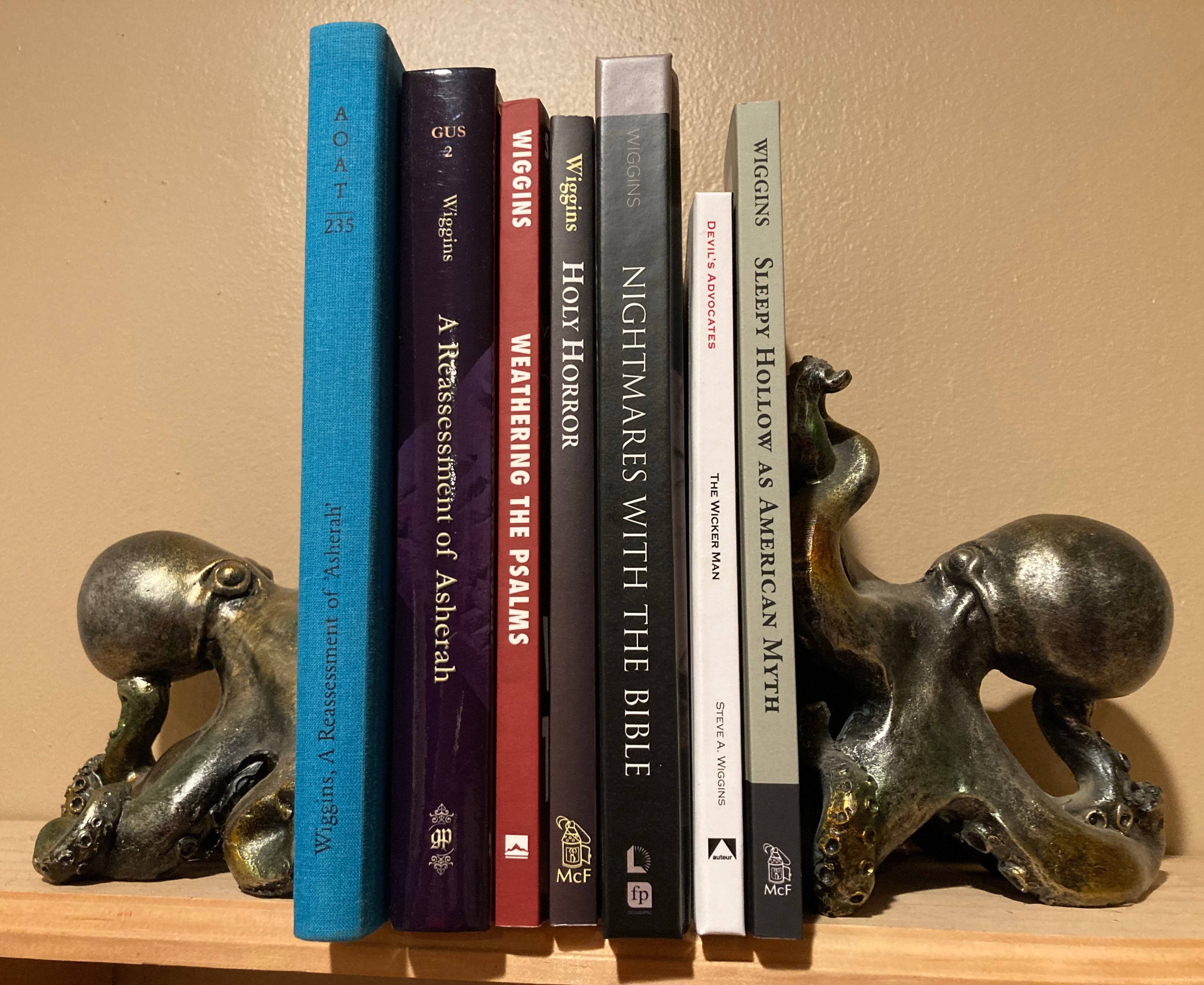
I’ve read several books about Poe, of course.  As an ignorant kid, I bought a used copy, in five volumes, of his collected works and biography.  I bought it at Goodwill and treasured it.  Until as an ignorant (and poor) college student, I resold it along with many of my childhood reading treasures.  I read biographies in the school library.  And I’ve read (and bought for good) some as an adult.  I even mention Poe in most of my books, including Sleepy Hollow as American Myth, because he’s part of my story too.  Poe-Land was easily my favorite book of 2025.  Now I want to read more about Poe.  But in the end I face a dilemma.  Do I read more about Poe, or do I go back for another of J. W. Ocker’s books?


What Bots Want

I often wonder what they want, bots.  You see, I’ve become convinced that nearly every DM (direct message) on social media comes from bots.  There’s a couple of reasons I think this: I have never been, and am still not, popular, and all these “people” ask the same series of questions before their accounts are unceremoniously shut down by the platform.  Bots want to sell me something, or scam me, I’m pretty sure, but I wonder why they want to “chat.”  They could look at this blog and find out much of what they’re curious about.  I could use the hits, after all.  Hit for chat, as it were.  

Some change in the metaverse has led to people discovering my academic work and some of them email me.  That’s fine, since it’s better than complete obscurity.  Within the last couple months two such people asked me unusual, if engaged questions.  I took the time to answer and received an email in reply, asking a follow up query.  It came at a busy time, so a couple days later I replied and received a bounced mail notice.  The other one bounced the first time I replied.  By chance (or design) one of these people had begun following me on Academia.edu (I’m more likely on Dark Academia these days), so I went to my account and clicked their profile button.  It took me to a completely different person.  So why did somebody email me, hack someone’s Academia account to follow me, and then disappear?  What do the bots want?

Of course, my life was weird before the bots came.  In college I received a mysterious envelope filled with Life cereal.  The back of said envelope read “Some Life for your life.”  I never found out who sent it.  Another time I received an envelope with $5 inside and a typewritten note saying “Buy an umbrella.”  If I’m poor now, I was even poorer in college and didn’t have an umbrella.  Someone noticed.  Then in seminary someone mailed me a mysterious letter about a place that doesn’t exist.  There was a point to the letter although I can’t recall what it was without it in front of me.  No return address.  I have my suspicions about who might’ve sent these, but I never had any confirmation.  The people are no longer in my life (one of them, if I’m correct, died by suicide a couple years after the note was sent).  It’s probably just my age, but I felt a little bit safer when these things came through the campus mail system.  Now bots fill my paltry web-presence with their gleaming DMs.  I wonder what they want.


Real ID

On the DVDs of the complete The Twilight Zone (or at least the edition I bought over a decade ago), the opening sequence of seasons 3 and 4 both have a voice-over from episode “Five Characters in Search of an Exit,”  calling out “Who are we?”  In context, the disparate characters in a shapeless prison are, in reality, toys that have gained consciousness (and this well before Toy Story).  Having gone through a traumatic scam, and trying to piece life back together, I spend a lot of time on the telephone trying to verify my identity.  This isn’t a simple matter for a guy like me who constantly asks myself the question, “Who am I?”  Descartes, going back to Aristotle, opined we enter life as a tabula rasa, a blank slate.  Those of you who look around the other pages of this website will see that I have as a six-word biography “Missed the first day of school.”  That must’ve been the day when they told us who we were.

Some people have a clear idea of who or what they are.  The surround themselves with tchotchkes of their favorite animal, or symbol, or even screen idol.  Or deity (deities).  Others of us, it seems, are constantly searching, never quite satisfied that we’ve discovered our essence.  I’ve mentioned before that during the CB craze of the eighties my handle was “Searcher.”  I have an innate curiosity and I crave depth of knowledge.  How do you symbolize that?  How is it even an identity?  I ask with Rod Serling’s characters, “Who are we?”  I’m not sure who might answer that.

When I first started this blog I had some hope that I might once again become an academic researching ancient Semitic mythology.  Working a 9-2-5 to acquire material for the company long ago meant that the full-time research needed to keep abreast of the field could not happen.  For several years this blog consisted of wry interpretations of various political- or travel- or reading-related observations about life.  As it became less focused on the world of the Bible I lost most of my original readers.  I thought there might be potential in writing about my fascination with scary stuff.  That caught my wife a bit off-guard since during the time we met, married, and began this journey together, that interest had been dormant.  It revived when I lost the job that I thought defined me.  I still write about horror but have recently felt the draw of dark academia.  Meanwhile the representative from the bank is on the phone asking me to verify my identity.  “It’s complicated,” I want to say.


Migration

Since the American Academy of Religion and Society of Biblical Literature annual meeting (AAR/SBL) is coming up soon, I got to thinking about my experience of the event.  I went to some memorable meetings and missed a few for various reasons.  I’m at the point where I don’t really crave attending anymore, but when I should go, I do.  My first experience was in 1991, in Kansas City.  I flew back from Edinburgh for that one.  It was the last time it met in Kansas City.  It was obvious, however, that this would become an annual pilgrimage for me if I ever landed in academia.  My first couple of years teaching were part-time with a full-time load of courses but Nashotah House had some faculty development funds to help pay my way.  My wife would go and we’d stay with friends whenever possible.  It became an academic addiction.

I skipped the year my daughter was born, but when AAR/SBL met in New Orleans we drove down from Wisconsin.  In 1998 I attended the infamous meeting at Disney in Orlando.  Then in 2000 we met in Opryland in Nashville.  This was an experimental phase, I’m guessing, but themed locations weren’t popular with serious scholars and soon we were back to major cities without theme-park vibes.  Having lost my toehold in academia, I missed the 2005 meeting in Philadelphia, but was back for the Washington meeting, representing Gorgias Press.  The three-year separation that started in 2008 I missed, except for the first lonely year in Boston.  I was back for San Francisco in 2011, working for Routledge.  Two years later I was in Baltimore, staying off site, with my current employer. I drove down for that one.

In 2018 I missed the Denver meeting because of a snowstorm panic in Newark, after sleeping the night on the airport floor.  Then the pandemic kept me away for a couple of years, but one of those was virtual anyway.  The last one I attended was 2022 in Denver.  This year I’m scheduled to be in Boston.  Even when my career has slipped off the academic rails, this meeting has been a rather constant touch-stone for November.  Now that I no longer give papers—the last one was on Sleepy Hollow in Atlanta, I believe, ten years ago—the spark has gone out of it for me.  I am glad to be heading back to Boston, however, on somebody else’s dime.  I’ve got some Poe sights to see in my off hours there.  And some 33 years of history to recollect.


Mighty Mouse

The only way I write my books is by living a regimented life.  It’s front loaded too.  Most of the work is done sometime between two and seven a.m., before starting work.  Disruptions to that time aren’t welcome, but then, many things in life aren’t.  Perhaps the most disruptive weekday event is when a mouse makes its way into the house.  We live in an old house and mice find their way into even more recent structures.  I can’t see killing them for doing what they’re evolved to do—we began using a humane trap when I found a mouse trapped by its paw back at Nashotah House.  I couldn’t stand seeing its distress, so we bought a cage trap that works pretty well.  Fortunately, we don’t get many rodentine visitors, but when we do, my crowded morning becomes even more busy.

I jog at first light and this time of year it’s straight to work after that.  I like to take our mice into the woods, far enough away that they’re not likely to find their way back.  Ideally that means driving, but since my wallet’s in the bedroom where my wife’s still asleep, during weekdays it generally means somewhere along the jogging path.  The trap is probably on the scale of a room at the Ritz for a mouse, and I don’t want to be scolded if I choose to release them in the wrong place.  I put the trap into a bag, for privacy.  Now, I normally jog to the trail but the trap rattles and I can’t imagine how horror movie this must be for a mouse.  Besides, running down the street with a bag in your hand in the dark isn’t at all suspicious.  Why not just paint a dollar sign on the outside of it and be done with it?

 I try to make sure the release spot is across a big road or a river.  There are places like that on the jogging trail.  But then, with the mouse safely released, I have to find an inconspicuous place to leave the trap in the bag so that early-morning garbage collectors don’t take it.  Jogging with a rattling trap is just a bit too strange for even me.  Although I’m an early jogger, I’m seldom the only one on the trail just as it’s light enough to see.  All of this adds up to considerable time carved out of my usual writing period.  And all because of a mouse.  The small can be significant.  Maybe I should write a book about it. 


Naming the Dead

It probably just goes with the territory, but I’ve noticed something.  A big part of my job is searching for people on the internet.  (Academics, of course.)  Mostly these are folks I don’t know, some of them with very common names.  This presents special challenges, of course.  Every once in a while, though, you search for a name and pretty much every entry you find is an obituary.  I’m not talking about someone prominent who has died, but rather several people with the same name who’ve passed away.  The other day, after four or five pages of Google I found nobody alive.  That particular name wasn’t an “old fashioned” name either.  It could be (perhaps is) still a very common name.  It does get me pondering whether some names are “safer” than others.  Is anyone by this name still alive?

We place a lot of stock in our names.  Being the way that others get our attention, and identify us, they do have importance.  And many names are common—parents aren’t always the creative sort.  And the internet is a source of frustration when trying to narrow down a common name and attach it to someone you don’t already know.  Growing up, kids want to be like everyone else—no standing out in the herd.  “Wiggins,” where I grew up, was an unusual name.  We got teased for it quite a lot.  When my mother remarried, my brothers and I went by our stepfather’s common last name for a few years.  In seminary I decided to revert to my birth name—Wiggins.  I was wanting to do two things: reclaim my heritage, and stand out a little.  Even so, a web-search for Steve Wiggins will bring up at least four or five individuals not me, including an obituary or two.

Before the web, when trying to find a scholar you had to use letters.  (Or maybe the phone, but cold calls weren’t really professional). You’d send them a letter.  In a way, the web is a great equalizer.  But it favors those with names that are somewhat less common.  Some people change their names—performers and some authors do this to make their persona more to their liking—but this is a fraught activity.  I know from switching back to my birth name that the process is complex and if you try it after you’ve started to publish things it adds whole new layers of complications.  So I spend quite a bit of time searching for people who aren’t easily found.  Not infrequently I seem to be naming the dead.


Routine Weirdness

I’m weird.  Nobody has to tell me that.  Like most people, I suspect, with my mental condition, I value routine.  Although the time I post on this blog varies, that’s usually due to one of two factors—the wobbling of the earth, and whether I get wrapped up in something that makes me forget.  The wobbling earth changes the time of sunrise rather dramatically, of course.  I jog at first light and my routine before that jog is pretty solid.  Then something comes along to interrupt it.  I have to begin planning the day before how to make it all fit.  So, routine bloodwork.  The lab where I have it done is within walking distance.  Of course, you have to go in fasting so everybody wants to get there first.  The lab opens at 6:30 a.m. and this time of year vampires are still safe out and about at that time.  

Edvard Munch, Vampire. Image credit: Google Art Project, public domain via Wikimedia Commons

But by 6:30 I’m usually dressed for my jog.  I’ve been writing and reading, typically for three hours.  I forgot to wash my jogging clothes this week and this was a Friday.  Hmm, better think about that.  Then there’s the whole question of my eating routine.  If I’m going to have something it has to be a couple hours before I jog—can’t do that with anything on my stomach.  Will I be too weak with nothing until afterwards?  After all I’ll be missing a vial or two of blood.  And there’s the matter of my shoes.  I only wear my jogging shoes on the local rail trail.  It’s pea gravel and it’s been raining lately which means they get a bit muddy.  All the rest of my shoes are in the bedroom where my wife’s (sensibly) still asleep.  Besides, I need to be on the trail right after giving blood, and changing shoes takes too long.

I’ll need to change my shirt when I get home.  The jogging tops are a bit too much to expect even a phlebotomist to put up with.  Besides, the under layers are tight-fitting since it’s only in the thirties today.  Why all this fuss about going to the lab before work?  That’s the magical word.  Work.  Also, lines have always been a problem for me.  Although I take a book I dislike waiting in line.  I need to get there before the doors open.  Be first in line.  There’s already a car in the parking lot, but standing beside the door in the cold has to earn you something, doesn’t it?  I’m back home just as the sun is rising.  Throw on my under layers and out before anyone else gets on the path.  I know I’m weird.


Author Pages

It takes me awhile, sometimes.  Maybe it’s a generational thing.  I’ve been blogging for sixteen years now (my blog is a teenager!) and it only just occurred to me that I should be putting links to authors’ pages when I post about their books.  I know links are what makes the web go round but I assumed that anyone whose book I’ve read is already better known than yours truly.  Why would they need my humble help?  Well, I’ve been trying to carve out the time to go back and edit my old posts about books, linking to authors’ pages—there are so many!  In any case, this has led to some observations about writers.  And at least this reader.  Most commercial authors have a website.  Not all, of course.  People my age who had earlier success with writing tend not to have a site since they already have a fan base (I’m guessing).  Most fiction writers in the cohort younger than me have pages, and I’m linking to those.

I’ve noticed, during this exercise, that my reading falls into two main categories: novels and academic books.  I suppose that’s no surprise, although I do read intelligent nonfiction from non-professors as well.  In the nonfiction category, it’s fairly rare to find academics with their own websites.  They probably get the validation they require from work, and being featured on the school webpages.  Or some will use Academia.edu to make a website.  As an editor I know that promoting yourself is important, even for academic authors.  Few do it.  Then I took a look around here and realized, as always, that I fall between categories.  No longer an academic, neither have I had any commercial success with my books.  I’ve fallen between two stools with this here website.  I do pay for it, of course.  Nothing’s free. 

Almost nobody links to my website.  This isn’t self-pity; WordPress informs you when someone links to your site and that hasn’t happened in years.  Links help with discoverability on the web, so my little website sits in a very tiny nook in a low-rent apartment in the part of town where you don’t want to be after dark.  And I thought to myself, maybe other authors feel the same.  Maybe they too need links.  So I’m adding them.  As I do so I hope that I’ll also learn a thing or two.  I’m trying to learn how to be a writer.  It just takes me some time before things dawn.  Maybe it’s just my generation.


Hallowed Halls

Every time I read a short story collection I tell myself I should do so more often.  Knowing that you’re only committing yourself for maybe thirty or forty minutes at a time is one way to incorporate more reading into a life that’s incredibly busy.  I read In These Hallowed Halls, edited by Marie O’Regan and Paul Kane, because, as its subtitle declares, it’s A Dark Academia Anthology.  As with nonfiction anthologies, it is a mixed bag.  The stories are all well written and all were enjoyable to read.  They also display some of the breadth of dark academia.  Most of the stories are literary (as a genre), others dip into science fiction and horror.  Dark academia doesn’t specify whether a book (or story) will be speculative or not.  As someone who writes short fiction, it seems that some of my tales might wag that way.

In any case, discussing a collection is tricky because there is such variety.  Some of the stories stayed with me beyond reading the next, which could be quite different.  Others I have to go back to remind myself what happened.  These days it can take several weeks to finish a book and a lot can happen in real life in that time span.  The stories that stay with me the most have obsessive narrators, or characters who are obsessed.  This kind of story, I know from experience, is difficult to get published.  Many of us who write, I suspect, do get obsessed.  An idea latches on and won’t let go.  Of course, most of us also have jobs that force the jaws open and drop us down in the world of the ordinary again.

Another thread that runs through many of these stories is how students struggle for money.  That’s true to life.  Thinking back to both college and seminary, there were times in both settings that I was working two part-time jobs as well as being a full-time student.  And living like, well, a student.  That experience, except for the truly privileged, is fairly common and our writers here recognize, and perhaps remember, that.  The other unavoidable theme when writing about young people in college is, shall we say, hooking up.  For many of us, college is that period in life when, thinking of our futures, and following our hormones, we start looking for love.  (I know, high schoolers do that too, but college has a way of focusing your energies.)  All of that swirling around the darkness that sometimes falls over our tender years makes this dark academia collection worth reading cover to cover.


House Spiders

I give them names, the spiders who choose to live in our house.  That’s how I named Henry, shown in the photo.  I grew up with an almost debilitating arachnophobia, and as with most of my fears, worked hard to overcome it.  So when a spider moves in, I let them stay.  Unless they’re too big.  Here’s where it becomes interesting.  Like quantum mechanics, there seems to be an arbitrary point when something is “too big” for the rules to apply.  What is that tipping point?  The other day I bumbled into the kitchen early to get some water, having given up coffee years ago.  There was a spider that I could see from across the room.  It was very large.  It’s a sign of how much I’ve overcome my phobia that I was able to walk around the counter and to the sink to fill up.  I kept a wary eye across the room, however, in case Octavian made any funny moves.

The spider held very still, as arachnids often do when they know they’ve been spotted.  I sometimes wonder if they know how scary they are to other creatures.  I searched around for a jar large enough to catch and release, without pinching any legs, and crept over.  Turns out Octavian was faster than I am first thing in the morning.  And, honestly, I was still recovering from a vaccine that had knocked me out the day before.  At least I can blame that.  I wonder if that’s one of the reasons fear of spiders is so widespread—they’re fast.  Or is it something inherently menacing about those eight legs?  I’ve never experienced any kind of octopus phobia, so I can’t think that it’s merely the number.  The jointed legs?  That seem disproportionate to the body size?  Whatever it is, days later I’m still cautious in the kitchen.

I have a great appreciation for spiders.  I don’t like to be startled by them, but otherwise, if they keep their distance, I’m fine with them.  I do wonder what they think, living in a world of giants.  Some insects, in the same size range as arachnids, seem ignorant of the human threat.  It’s not unusual for an ant to find its way inside and walk right up your foot and leg, oblivious to the danger.  They seem to have no fear.  Spiders, however, do.  They’re very good at running and hiding.  I like to think they know our house is generally a safe space, until the vacuum cleaner comes out.  When I’m behind it, I always try to give Henry and his friends a chance to get out of the way.