Medical Emergency

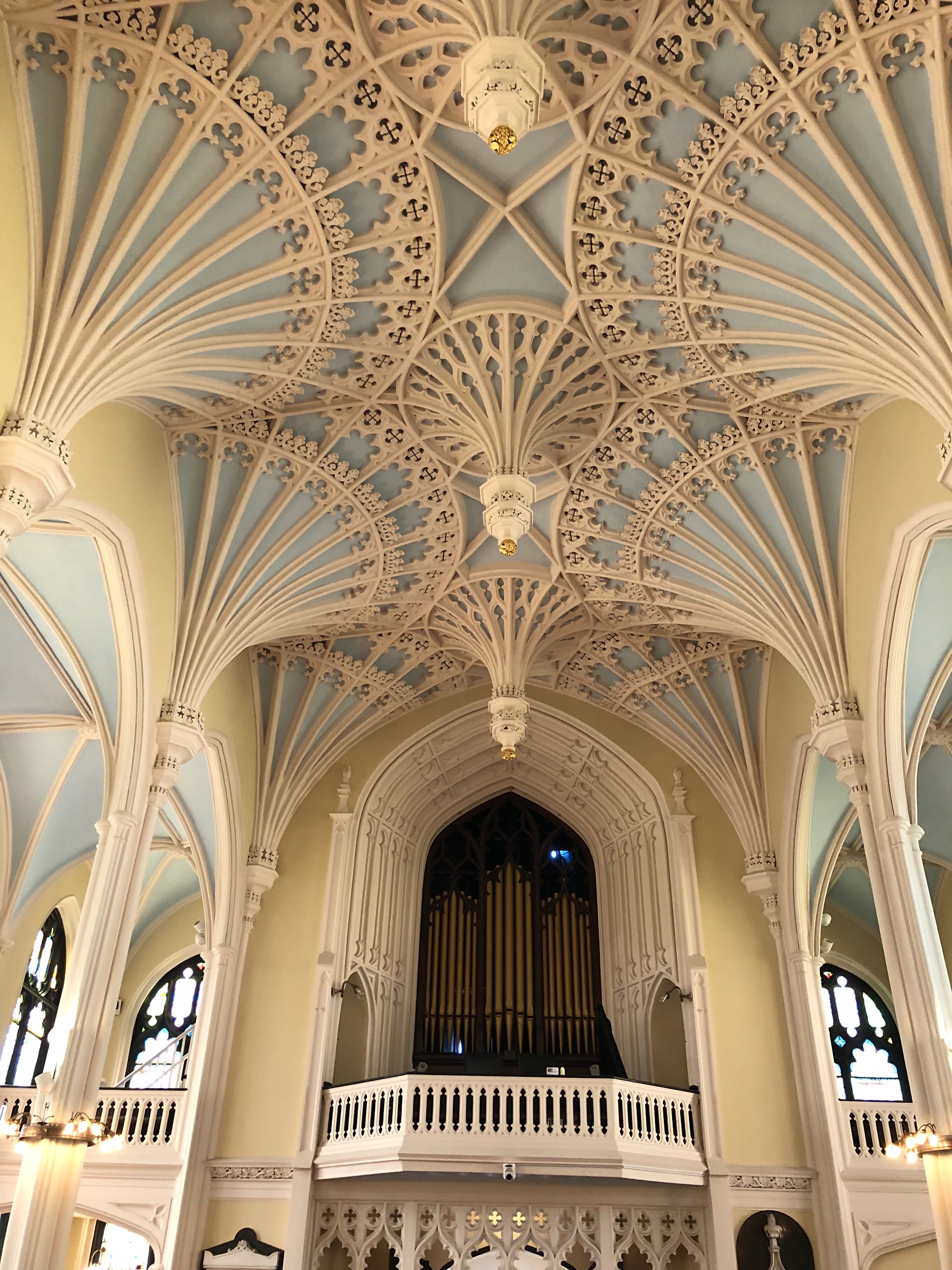
Fire drills.  We’ve all been through them.  When an alarm goes off legitimately, people don’t know what to do.  At least not at first.  I was accompanying my wife for a routine colonoscopy.  We were in the recovery room, and she was still coming out of anesthesia when I thought I smelled something chemical-like, almost the caustic kind of petroleum-product smell with none of the sweet undertones.  Now, I have no idea what they use in facilities like that, so I said nothing.  About fifteen minutes later the fire alarm went off.  My wife had already gotten dressed, thank goodness.  The staff was all walking around, apologizing to everyone for the noise.  After about five minutes, the surgeon came over and said, “We have to go outside.  Let me go over this briefly.”  He did and I helped my wife down the stairs and outside.  Firetrucks came.

This was something new in my experience.  Hospitals and clinics are buildings, with all the usual limitations of physical structures with complex machinery in them.  I’d never been in one when an alarm went off before.  There’s always a period of disbelief among staff as well as patients.  I wondered what they did with those in the midst of a colonoscopy.  They’re in a somewhat delicate condition to be rolled outside (and it was none too warm that day).  I can imagine how I might’ve panicked had my wife not yet been in recovery.  As it was, we thought we were clear to leave, so we just came home as others less fortunate stood outside awaiting the all clear.

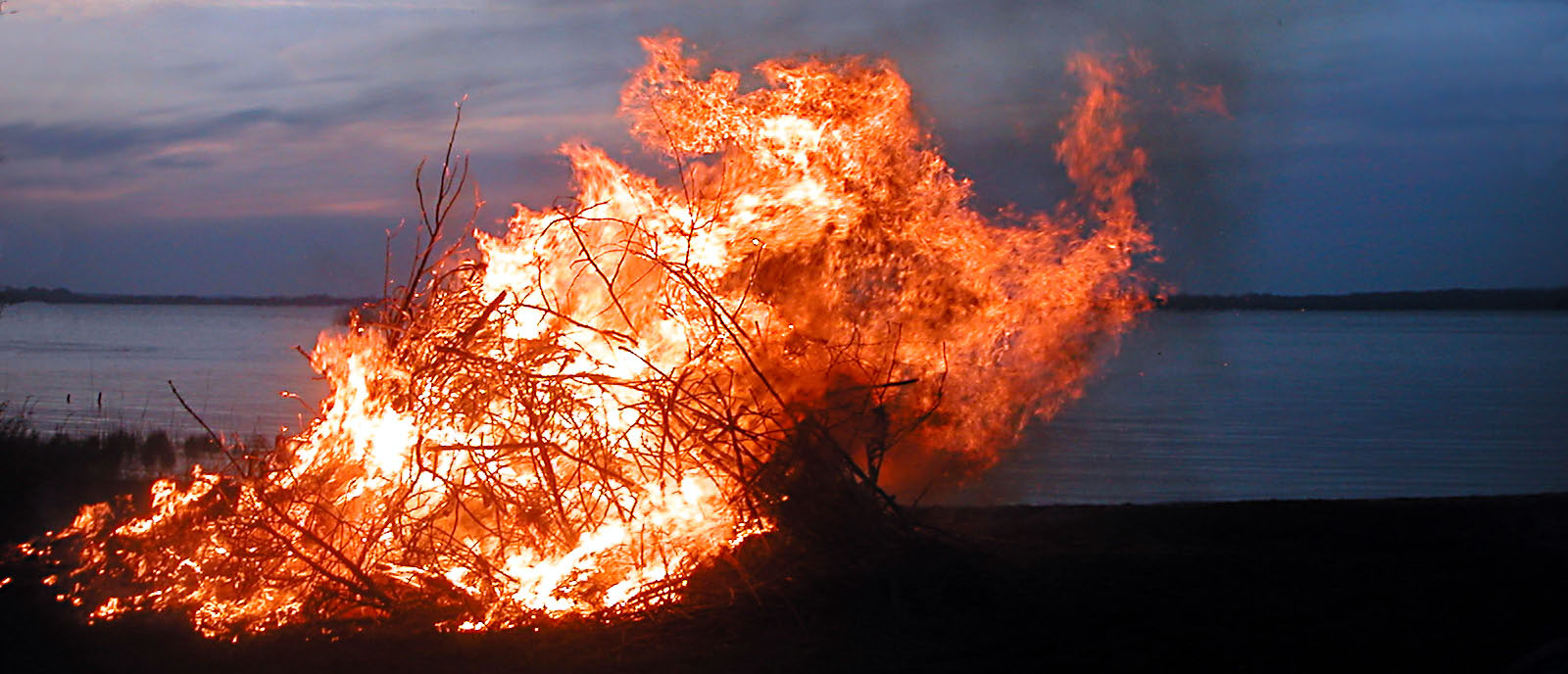
Image credit: Jason Lawrence,  Creative Commons Attribution 2.0 Generic license, via Wikimedia Commons

After a medical procedure we’re used to being able to ask questions.  Take your time.  Come out of anesthesia.  After we got home I could find nothing online about the incident.  It did seem to have “news story” written all over it.  Or “horror story.”  I’ve watched enough MASH to know that doctors sometimes work in less than ideal conditions.  And there must certainly be standard procedures for what to do when the unexpected happens.  Colonoscopies are one of those highly recommended procedures that compromise dignity like few others.  As such, being interrupted by a fire drill puts this particular procedure into a class of its own.  I never look forward to them (few do) but now it seems I have a new worry to add.  What was really missing was a sense of closure.  Too often these days transactions of all kinds are left open-ended.  As the firetrucks came we asked ourselves, is it okay to go?


Field Hockey

Friends recommended We Ride Upon Sticks by Quan Barry.  I’m glad they did.  A woman-empowering novel, it ties together so many important things: what it’s like to grow up as a girl, what it means to trust other people, and the importance of believing in yourself.  My experience of reading it as a man at times made me want to apologize for my sex.  So many guys have trouble reining it in and that leads many women to feeling uncomfortable, or even threatened.  The book’s also a great story of awakening to who you really are.  Set in Danvers, Massachusetts in the late 1980s, it’s the tale of the girl’s field hockey team and their “deal with the devil” to win the state championship after being a team having a reputation for losing.  The eleven players on the team are sketched so wonderfully that you get a good idea of that many distinct protagonists.

There is a tie-in with the Salem Witch Trials—much of which actually played out in Danvers.  Although the assumed implication is that the girls begin winning because they’ve made a pact with the darkness, the story doesn’t give it up that easily.  There’s a subtlety at play here and even if you’ve never been on a sports team, the sense of camaraderie is palpable.  The real magic comes in believing in yourself.  Barry is eloquent about such life and how it can change you during the difficult period of adolescence.  I’m always impressed with adult writers who can capture so well what coming-of-age feels like.  For many of us, I expect, there is a trauma associated with it.  Cultural expectations on young women are burdensome in so many ways.  At the same time this story is so well written that you hesitate to put it down.

While I never participated in high school or collegiate sports—I have no particular gifts in that regard—regular readers may find it difficult to believe that I played on the Nashotah House football team for a couple of years.  Lest you get the wrong idea, the seminary played one annual game of flag football against Seabury-Western Seminary in Chicago, styled as conservative vs. liberals.  I was younger, and in better physical shape than many of my students, so I made a team effort for a couple of years.  Still, the team spirit demonstrated in We Ride Upon Sticks is of an altogether different sort.  Fun and thoughtful at the same time.  It’s the kind of book I’m glad to have pointed out to me.


Note to Myself

A note to myself (perhaps the best title for this blog) in a forgotten book.  Well, not exactly forgotten, else the post unwritten would remain.  In a book I’d been gifted at twenty-one.  I was working that summer as an intern in a church in Pittsburgh where my duties included visiting parishioners.  One of them was an elderly scientist that everyone mentioned with awe because he’d written a book.  In the eighties, writing a book still meant something.  He gave me a copy.  I could tell, even at that tender age, that the publisher was a vanity press.  Part of the satisfaction of “traditional” publishing is knowing that you’ve convinced at least a handful of people that your writing is worth publishing.  Vanity presses take your money and produce your words with wanton abandon.  Still, I read the book.

This was during those heady college years when I annotated everything.  So many books later, annotation is rare for me now.  Other people will want these books when I’m gone.  Then, I critiqued as well.  You see, the scientist (with a master’s degree) had undertaken a theological topic, trying to explain God with science.  I’m sure he died long ago and now knows more than I.  Still I had to express myself.  That’s what those of us who write do.  Here’s an image of my summary.  It took me a while to figure out the symbols the younger me made up.  One looks like a capital K with the lower diagonal ending in an arrow.  What did that mean four decades ago?  Context gave me the answer: “off the wall.”  Why not write it out?  Perhaps I was afraid someone would find the note to myself.  This is the danger of writing things down.

Another symbol gave me pause.  A circle with a stretched capital H in it within a cube.  Ah, a capital theta, my usual shorthand for God.  In a box.  I flipped through the pages.  Yes, some of his suggestions definitely put God in a box.  Did I ever discuss this book with anyone?  It occurs to me that since my teaching career tanked, I’ve discussed very few of the books I’ve read with anyone, except readers of this blog.  We who write know there’s always the danger that someone else will read our thoughts.  In my experience, putting them in book form is about the best way to ensure that nobody will.  Still, for anybody who’s written a book, if you google them, their tome will be the first thing that shows up.  That’s true of the scientist who died, I’m pretty sure, before the new millennium.  When, as it turned out, that writing a book would become as common as starting a website with a catchy title.


Story Book

Book people, ironically, often don’t know much about how publishing works.  That’s not a condemnation; I was the same way before I took up a job in editing.  “I’ll write a book and let someone else handle the details,” was pretty much the thought process.  Now I find the whole enterprise fascinating.  The Untold Story of Books by Michael Castleman is an important book.  It is one of the most clear-eyed accounts of publishing that I’ve encountered in my long years at this practice.  There are many myths busted here.  Most—the vast majority of—writers make very little money from books.  Most never become famous.  Publishing is a low margin business.  We see the Stephen Kings and Dan Browns and say, “that could be me!”  Dreams are fine and good and sometimes come true, but writers write because that’s who we are.

As someone historically inclined, I was primarily interested in the storied days of early publishing.  This is what Castleman calls the first book business.  You didn’t expect to make much money from publishing in those days; you usually had to pay for the privilege.  Then publishing became a business.  I found this part of the story utterly fascinating.  Publishers and authors have often been at loggerheads.  Authors tend to come out on the short end of the stick (don’t quit your day job!) and Castleman doesn’t pull any punches here.  This is valuable information.  It also helped me understand why it seems that so few people in the publishing industry are authors.  I know a few besides myself, but not many.  There are reasons for that, and this book helps the curious to explore them.

Publishers began mergers for practical, if capitalistic, reasons.  Among presses that sell primarily fiction (or trade nonfiction) there are two main sources of income: bestsellers and backlist.  The backlist is the unsung bank of many publishers.  Bestsellers may be stocks, but the backlist is bonds.  Balancing these, publishers get by.  And of course, many are bought out by bigger companies.  As I mentioned here before, there are really only five big publishing houses in the English-language market.  They own most of all the publishers that may be household names.  Castleman also goes into the third book business, which covers publishing in the electronic era.  I love his sense of optimism.  Books are durable and people do enjoy reading.  Castleman has had more success with his writing than I’ll ever have, but reading him is like meeting a friend who understands what compels you to write.  Even if the devil is in the details.


Stone Children

I’m indebted to a friend for pointing out the folk horror nature of the 1977 UK children’s television series Children of the Stones, broadcast on ITV.  Folk horror is firmly tied to place and often involves ancient religions clashing with modern ones.  The term was coined to describe three horror movies of the late sixties and early seventies: Witchfinder General, The Blood on Satan’s Claw, and The Wicker Man.  Most discussions don’t go as far as to include children’s programming, but they should.  Children of the Stones consists of seven half-hour episodes which can be, thankfully, found freely on the internet.  Set in the fictional Milbury, but filmed in the actual Avebury, the story revolves around the famous stone circle located there.  Astrophysics Professor Adam Blake and his teenage son Matthew travel to Milbury for research but soon find themselves in a disturbing scenario.

Nearly all of the villagers are incapable of experiencing negative emotions.  What’s more, they can never leave the stone circle.  The stones possess a great energy and Matthew is psychometric—he can sense accurate knowledge of a place or time by touching an object associated with a person at that place and time.  His father, naturally, is skeptical, but when Matthew and his new friend Sandra realize their friend Kevin has changed—he is one of the Happy Ones and suddenly very good at higher mathematics—they piece together a cosmic mystery that involves the stone circle, an ancient religion, and astronomical events from long ago.  There are many horror elements along the way.  People are turned to stone.  Villagers are brainwashed.  Nobody can leave.  The soundtrack was deliberately disturbing as well.  The solution ends up involving time loops as well, so this is heady stuff.

Since the series clocks in at three-and-a-half hours, it really doesn’t fit movie length.  At least not comfortably.  And it contains fairly disturbing themes for children.  Then again, children tend to like scary things; parents are the ones to object to it.  Building on the mythology of the druids and the megalithic structures in and around Avebury, the series maintains a fascination for adults, even if the action is set at kid level.  I was able to get it watched in a week since the episodes allowed for natural breaks in the story.  If my friend hadn’t pointed it out to me, I’d probably never have discovered it on my own.  It’s a pity it isn’t discussed more by those who analyze folk horror.  It is, after all, fun for kids of all ages.


A Matter of Trust

I used to write everything by hand.  We bought a used typewriter when I was in high school, and when I was in seminary I graduated to one of those strange devices that would print, like a typewriter, but had an LCD on the keyboard so that you could back up several characters before it printed.  This let you proofread while on the go.  I write a lot.  It may be a form of sickness, but I have hundreds of story ideas and little time to develop them.  Now I write on a computer but I’ve begun to lose trust.  It’s not just the whole AI debacle.  No, it’s that even with frequent backups, computers just lose things.  After having my hard drive wiped following a scam last year, I began work on some documents that I had to back up to the Cloud when the USB C ports on my laptop went bad.

After the repair was done I could download my files and pick up where I left off.  In theory.  I was working away on a new story and thought that I might be able to connect it to an earlier story I’d started.  Looking at the file, I remembered that the tale was much further along when I’d left off.  Where was it?  I looked on the Cloud version and it was the same as the one on my hard drive.  Then a larger project came along.  I went to start it again and discovered many, many pages missing.  Again, the Cloud shrugged its nebulus shoulders saying “I dunno…”. I pulled out my back-up disc.  (This was in April.)  I tried going back to January.  Same thing.  December.  Ditto.  Finally, my last backup in November had the full files.  Why these files didn’t backup to the Cloud, when done by a professional at the Apple Store, I can’t fathom.

What was especially disturbing is that one of the files (which I duplicated and put back on my hard drive, where they belong) showed that I’d completely reorganized things in a much clearer way.  After the laptop came home from the hospital, I’d forgotten (I’m not young and I’d been using a borrowed device for a few days).  I’d probably just picked up a story and, with my usual tunnel vision, began writing.  Not unrelatedly, I’ve been going through a spate of printing out any stories far enough along to warrant such treatment.  From what I’ve seen of the housekeeping on the Cloud, I’m glad I’ve been doing so.  I miss writing by hand.


Old Passion

Something I find inherently fascinating revolves around used books.  I buy used books and I always examine the overlooked scraps of paper that get left between the pages.  Mostly it’s random ephemera, but it is the window into a stranger’s life.  They had this bit of paper lying around to mark their place.  Had I the time I’d piece together the puzzle.  Recently, while preparing to donate some books to the local AAUW book sale, I found a scrap of paper in one of my own books.  This was from the Milwaukee Journal-Sentinel, based on the date in my wife’s handwriting: 3-19-04.  It’s an Associated Press story from Statesboro, Georgia, involving a dust-up between a married couple after watching The Passion of the Christ.  That makes it interesting in its own right, but what’s especially striking is the couple battled, including a pair of scissors, over whether “God the Father in the Holy Trinity was human or symbolic.”  Things got out of hand.

For context, I was still teaching at Nashotah House at the time.  Theological debates, sometimes heated, took place there on a regular basis.  People get very fired up over what they believe.  This may set our species apart from other thinking animals, or perhaps it’s part of the price we pay for abstract thought.  You almost want to step between the warring spouses and say, “let us handle this, we’re professionals.”  Of course, the species of specialist that has studied theology is dying out.  Universities are cutting religious studies departments.  Churches are losing members.  Better hide the scissors.

“Passion” is the operative word here.  We get quite attached to our views.  So much so that no amount of logic or rational discourse can dislodge them.  We see this with the utter devotion to political leaders and on-screen personalities as well as to religious beliefs.  Some of us were curious enough to study where these ideas came from and how we know that they’re “true.”  This is not for the faint of heart.  Testing your core assumptions can lead you into some very unfamiliar, unmapped territories.  And since religion deals with ultimate concerns, the stakes couldn’t be higher.  Our couple felt silly after the police had been called and the bail paid.  Passion is very much what drives our species, and perhaps others as well.  We feel we need what we believe to be true, and we’re willing to fight for it.  Even if it means, as the chief sheriff’s deputy remarked, they seem to have missed the point of religion in the first place.


Made In

This blog, like drain clog remover, is something I do frequently and then move onto other things.  Once in a while you stop to think, “Hey, the water’s draining well today,” but most days you don’t.  It’s just one of those things.  Which is a long-winded way of saying I don’t pay much attention to stats on this blog.  I’ve accepted my place as a middling muddler, with a constantly shifting, but small number of followers.  But WordPress likes bloggers (paying customers such as yours truly) to feel good about their investment, so they send occasional notices when you reach milestones.  Recently I received such a notice telling me that I’d topped 150 countries for visitors (welcome all!).  Curious, I went to the stats page and soon found that my largest viewership is now China.  Hmm.  As in so many other areas China surpasses the United States.

I’m not sure what I’ve written that would be of much interest to Chinese readers.  I like to think they still have a kind of reverence for older individuals, but it’s probably some robotic, AI-ish thing, in reality.  When you write, you do so aware that your chances of a large readership are slim.  I’ve been told many times that nobody reads blogs anymore.  They prefer podcasts and videos.  But the form of post I attempt—the five-minute or less read—is intended, I suppose, for busy people like myself.  With things spinning all the time, when I finally do get a day off, such as today, I spend the first several waking minutes confused.  What do I do with so much time?  There’s been so much I’ve been neglecting because of work.  And other people probably have maybe five minutes to read a post.

I don’t know what things are like in China.  I’ve never been there, but I hear people—some academic specialists—reporting about it.  I fear authoritarian governments, but it seems we’ve got ourselves one of those too.  And I suspect most people in China, like most of us, are just trying to get by.  As with most things tech, however, there’s no peeking behind the curtain.  Besides, China’s all about big numbers.  I’m glad that they’ve chosen to share some of those with me.  I try not to focus too much on this blog itself in my posts (that’s too meta) but I think about the whole enterprise daily.  If you keep doing something long enough, someone might end up paying attention.  Why they do I haven’t a clue.  I pour it in and hope it works.

New York Scent

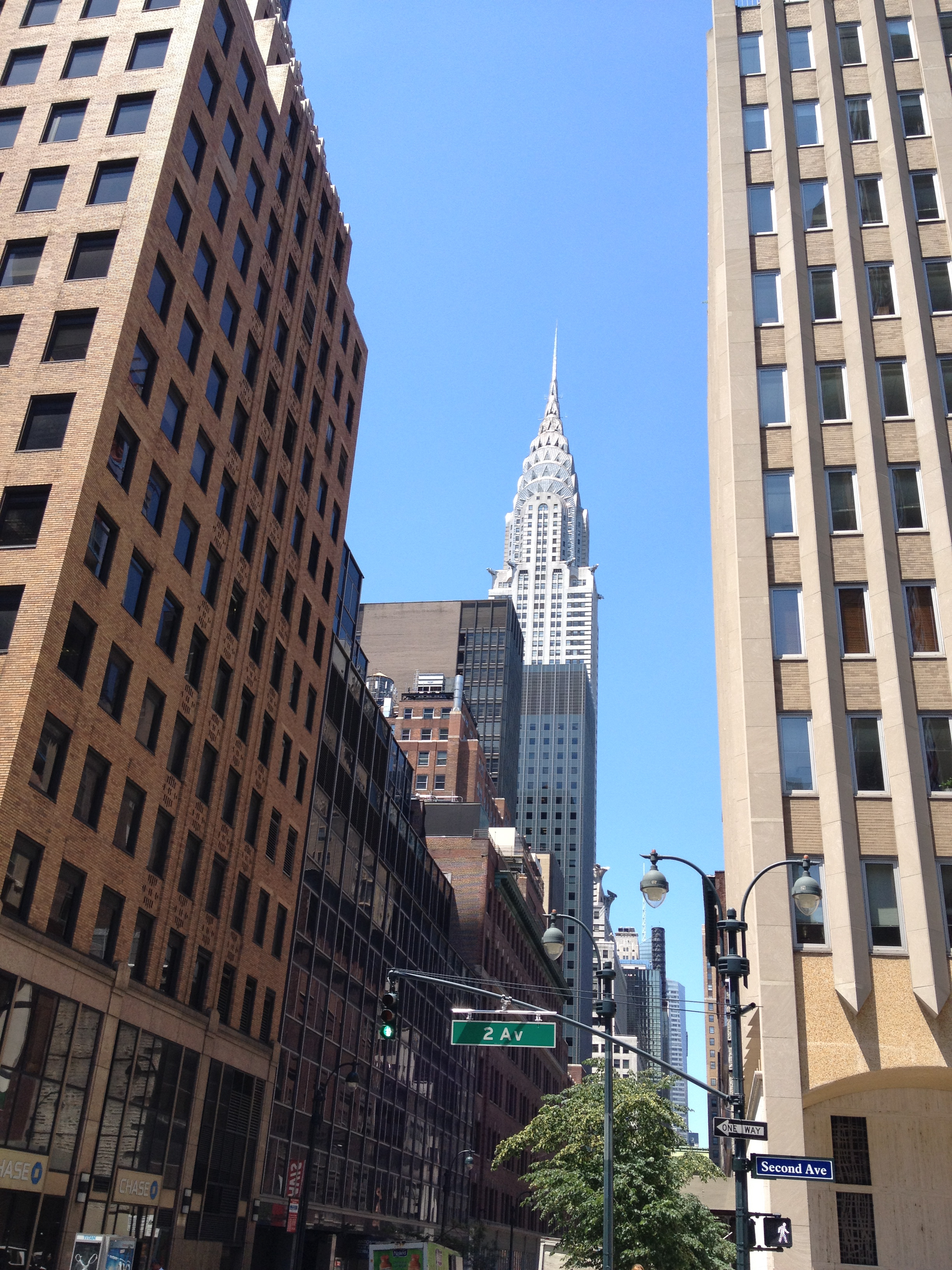
I recently had to go into New York City for work.  Now, I haven’t been to Manhattan for at least six years.  It’s like riding a bike, though.  For seven years I commuted there daily and I know my part of Midtown tolerably well.  There were a few things I noticed after my absence.  Despite the rumors that the pandemic had depopulated the City, it was plenty crowded on a Wednesday in May.  And I noticed how much had changed.  Manhattan is so large and complex that nobody can know it all.  Still, as I walked through parts of it I’d been through many times before I found no stores that I remembered.  I’m sure there are some that have remained unchanged, but New York is a city that is constantly reinventing itself.  Change may take place slowly, but six years accumulate small things.  Overall, however, the experience remains the same.

Like many visitors to the Big Apple, I sometimes think it might be fun to live there.  At least for a bit.  I’m not the biggest NYC fan, but once in a while it seems like it’s worth spending unrushed time in the City.  It’s iconic.  Being at work and seeing the Empire State Building, or the Chrysler Building, out the window has its distractions.  Walking down streets you’ve seen in many movies.  Encountering many thousands of people in the same day.  Heady stuff.  This time I took the train and I emerged into a Penn Station I didn’t recognize and in which I got lost.  It’d changed so much that I wasn’t sure I’d be able to find my way back when it was time to go home.  The workings of New Jersey Transit were comforting in their familiarity.

The commuting life is something I never craved and which I don’t miss.  I can dedicate more time to my job as a remote worker.  I’m sure the culture of Manhattan has changed a bit in the years since it was a daily practice for me.  It’s a place that inspires stories, regardless.  On the way home, now beyond the end of the line, I did feel a little sad that I couldn’t spend a bit more time there.  New York is funny that way.  I arrived home in time for a late supper and bed, but I noticed that my clothes smelled like the Manhattan I remembered as I undressed.  It was a scent I’d almost forgotten.  Although much has changed since last I’d been there, it was pleasing to know that some things always stay the same in the midst of constant change.


Paper Writer Back

We need to push back against the technocrats a bit more.  A story in Publishers Weekly recently affirmed what many of us know—people prefer books in print.  Ebooks have been shoved at us for years now and in academic publishing there’s been a trend away from print to electrons.  It was cheering to see in the same issue of PW that some British publishers are actually listening to readers and starting to release paperbacks first.  Imagine that.  People will read if they can afford to do so, and they do buy books.  And when I say books, I mean objects made of paper.  I don’t have a paper phobia.  I enjoy holding and reading books.  The only ebooks I’ve ever read were those I couldn’t access in print.  When I sit down to write a book, I have an image of a specific object in mind.

Technocrats are fond of telling us what we should prefer.  I wonder who died and made them king.  Or God.  If I recall correctly the latter preferred to write on stone.  That might create a few storage issues, but at least it was physical.  Consciousness, which we’re still a long, long way from adequately defining, can’t be captured in electronic form.  AI can pretend to be human, but it isn’t.  Nuance, subtlety, and embodiment are all missing.  We need to say that they need to stop telling us what to do.  Even as I was writing this post my laptop showed signed of requiring replacement.  To me, five years is a bit young to consider something old aged, but that’s what our tech masters tell us.  Thinking back over my laptop history, my previous computer lasted, let’s see, about five years.  It happens that this is a bad time for an expensive, unplanned purchase.  The tech lords have made the alternative unthinkable.

By my count, I’ve purchased six laptops over the course of my life, all primarily in the service of writing.  And they average out, it seems, on about five years.  This blog was started three laptops ago.  And the years seem to be going faster and faster.  I do most of my writing in a room filled with printed books.  I spend a lot of time in this room reading said books.  Tech has me caught between two worlds.  I’m trying to reconcile myself to spending a large amount of money after being scammed (by people using tech) last year.  If only I had a book to help me decide what to do.


Thorough

It was a warm summer’s day, sometime in the mid-eighties.  I was living in Boston and some friends asked if I’d like to go to Walden Pond, outside Concord.  I’d read Henry David Thoreau’s Walden, so yes, please.  I knew Thoreau was an early Massachusetts Transcendentalist, mystic, and nature lover.  That particular day we were the only ones at the site where his cabin in the woods once stood.  I suspect that, being there with friends, it wasn’t as contemplative a trip as it would’ve been had I made it alone.  Still, here we were, nearing a century-and-a-half after his death, remembering him.  My wife and I recently watched the PBS three-part documentary on Thoreau, and I learned a lot about him.  He was admirable in a way that few public figures are today.  What’s more, it’s clear that he’s widely appreciated as a visionary and believer in freedom.

Image credit: Benjamin D. Maxham, public domain (via Wikimedia Commons)

Writing in the nineteenth century, it seems, got you noticed much more than it does now.  Thoreau had profound things to say.  He had strong convictions about abolition and being shuffled into an existence of work, forced from being free.  He was able to live the way he did largely because he didn’t need many things.  He also had famous friends, Ralph Waldo Emerson, for one, who gave him a place to stay when he had none of his own.  The documentary makes the point that, despite being a hero to many, we’ve gone ahead and built the world Thoreau most feared.  Few, or at least a few of us, find that work doesn’t define us.  Writing, it seems, still helps with that.  Those of us born to write do so, and long days “in the office” must be endured to come to life when writing is again possible.

If you think deeply about it you start to realize that we’ve allowed ourselves to be hoodwinked by economics.  If you have a mortgage you know this to be true.  Or if you have a medical condition—you can’t afford not to have a job without insurance.  Thoreau, it seems, lived with the tuberculosis that ultimately killed him pretty much all of his life.  And he died too young, we feel, because he had so much to say.  So much to say that was worth listening to.  Such writers are rare today because, like everything else, writing has become a business and some readers even prefer things “written” by AI.  And yet I remember that warm summer’s day and think of a placid time still earlier when one might’ve met Henry David Thoreau in the woods.


An Education

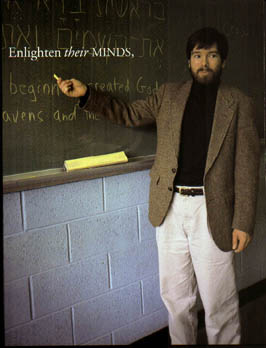
The point of education is to improve life for people.  Reading and studying and listening, we learn.  Travel is often an educational experience.  We gain knowledge, but it does no good if we hoard it.  That’s why some become teachers.  In a society that undervalues education, a self-fulfilling prophecy sets in.  Just look around you.  The usual path into becoming a teacher is education in education.  You can major in it.  You don’t have to be wise necessarily, since, like all things capitalistic, choice of career is economic.  You pick something for which you feel suited.  If you’re lucky, you get a job doing it.  For “higher education” it’s a bit different.  First of all, you need not study education at all.  You choose a field in which to become a specialist and, if you’re lucky, get a job teaching it.  And those jobs are dependent on, of course, the dismal science.

This is one of the main reasons I write.  When your intention is to be a lifelong learner, you know that if you don’t share what you’ve picked up over the years, it will simply be lost.  As a society, we really don’t encourage sages.  The motivation is to make money, to look out for yourself.  Education becomes a means for self-promotion rather than for sharing what you’ve learned.  In my case, I sometimes feel guilty for writing about horror.  Is it really helping anyone?  I have to believe that it might be.  A certain segment of the population finds horror therapeutic.  Psychologists are starting to explore how it’s actually good for your mentality.  I can only hope that if it means something to me, it will mean something to some others.  And I want to share it.

Religion, at least among the non-cynical, is meant to improve people’s lives.  There is a reason that I wanted to be a religion professor, as I was for a few short years.  My circumstances steered me toward horror as a form of self-care, and I think there’s something much deeper here that has to be mined.  Writing the books I do is more like speculating or prospecting rather than staking a claim and digging tunnels.  If they were causing more harm than good I wouldn’t publish them (or try to).  Life is an educational opportunity.  And if we learn from those who care for other people we might have a chance of improving the lot of many.  Look around you.  Is that where we are today?


Blog Reading

I’ve been at this blog for about seventeen years now.  During those years of daily posts, WordPress still has trouble recognizing me.  I try not to take this personally, but when people I know (and follow) post on WordPress I don’t always get notifications.  When I want to comment on said posts, I have to sign in.  Sometimes twice.  All of which is to say that a recent post on a friend’s blog made me thoughtful.  I met Jeff Hora through my wife, so I’ve known about him for going on forty years now.  We’ve become friends in our own right, mostly online.  I want to reflect on one of Jeff’s recent posts, “Solid Ambiguity.”  Before I do, however, a brief lament.  I used to read a number of blogs daily, including that of the recently mentioned Dan McClellan.  I had a whole set of blog buddies.  Then blogs began to decline in popularity and, more to the point, I took uber-capitalist jobs in New York City, robbing me of time.  Now I only read them when I get email notices.

Okay, so solid ambiguity.  The basic idea is that we like to grasp onto the things we can count on.  Things that don’t change.  That’s the “solid” part.  At the same time we need to be aware that change is endemic to life.  In fact, the post mentions Buddhism.  Like Shakers, Buddhists have been part (long past) of my religious training.  I specialized in “western religions,” but I’ve recently been reflecting quite a lot on the fact that in East Asian thought, especially, change is the only thing that’s permanent.  I know I’ve posted about this before, but that was probably years ago as well.  We know that things constantly change.  In the few brief minutes it would take you to read this post, you have changed.  So has the world around you.

We want solidity most of the time.  A house we can reliably come back to.  People we love to always be there.  Keep the possessions we worked so hard to earn.  None of this is permanent.  We know that at some level.  For many of us it’s deeply troubling.  I’m no expert in Buddhism, but I do know that one of its basic tenets is not being attached to things as they are.  Life is full of ambiguity.  We don’t tend to like it, really, as Jeff points out.  But we do need to learn to live with it.  One of the changes with which I have to cope is the loss of time for reading friends’ blogs.  It’s good to be reminded that it is a rewarding experience when I finally do it.  Now, if only I had more time…


Equal Women

It’s been so busy this year that Mother’s Day crept up on me.  We have a lot of spring birthdays in our extended family, and what with the weird weather this year and unexpected household expenses, it just kept slipping my mind.  I like to commemorate the day on this blog because I’ve considered myself a feminist for many years.  I’m very distraught that women still aren’t treated as equals to men.  This should’ve been a no-brainer over a century ago.  (Having an historian’s outlook, I realize that in the days when women tended to die young, in childbirth, it was difficult for many to rise to positions of social prominence.  Once we got to the stage that most women survived the experience, and then to the point that economics drove us to two-income families, the male-superiority charade should’ve been dropped.)  The fact is none of us would be here without our mothers.  Father’s day has never been a big deal for me, but Mother’s Day is important.

I did manage to remember to get my wife a card in advance, but this year the day itself kept slipping my mind.  Ironically, my wife and I had watched a biopic of Mother Ann Lee last night—I’ll post on that tomorrow—and it was only as I was preparing to write about it for today’s post that I thought, “Wait.  It’s Mother’s Day.”  (We do have plans for the day; I’m not a complete barbarian.)  My excuse is that we were set off yesterday by an early encounter with a brusque and condescending Verizon employee who would not help set up a new phone purchased elsewhere.  I hadn’t slept well the night before and it rained all day, none of which made for a productive Saturday.  The movie (tomorrow’s post) was longer than anticipated, keeping me up late.  Movies, strangely enough, are now starting to really influence my dreams.

My dream for today, however, is that women’s equality will become a reality rather than something we just keep talking about.  There can be little doubt that we’d be better off with a woman president than with the alternative.  A woman has traveled further from the earth than many billions of men have.  My doctor and dentist are both women.  They can do anything men in their professions can.  They are university presidents and CEOs.  Pilots, both civilian and military.  They are religious leaders.  And many of them do the job on top of being mothers.  I consider it a personal failing that it was only as I was about to post about Mother Ann Lee (tomorrow) that I finally realized today is a very important day.  Let’s make Mother’s Day count!


Million Air

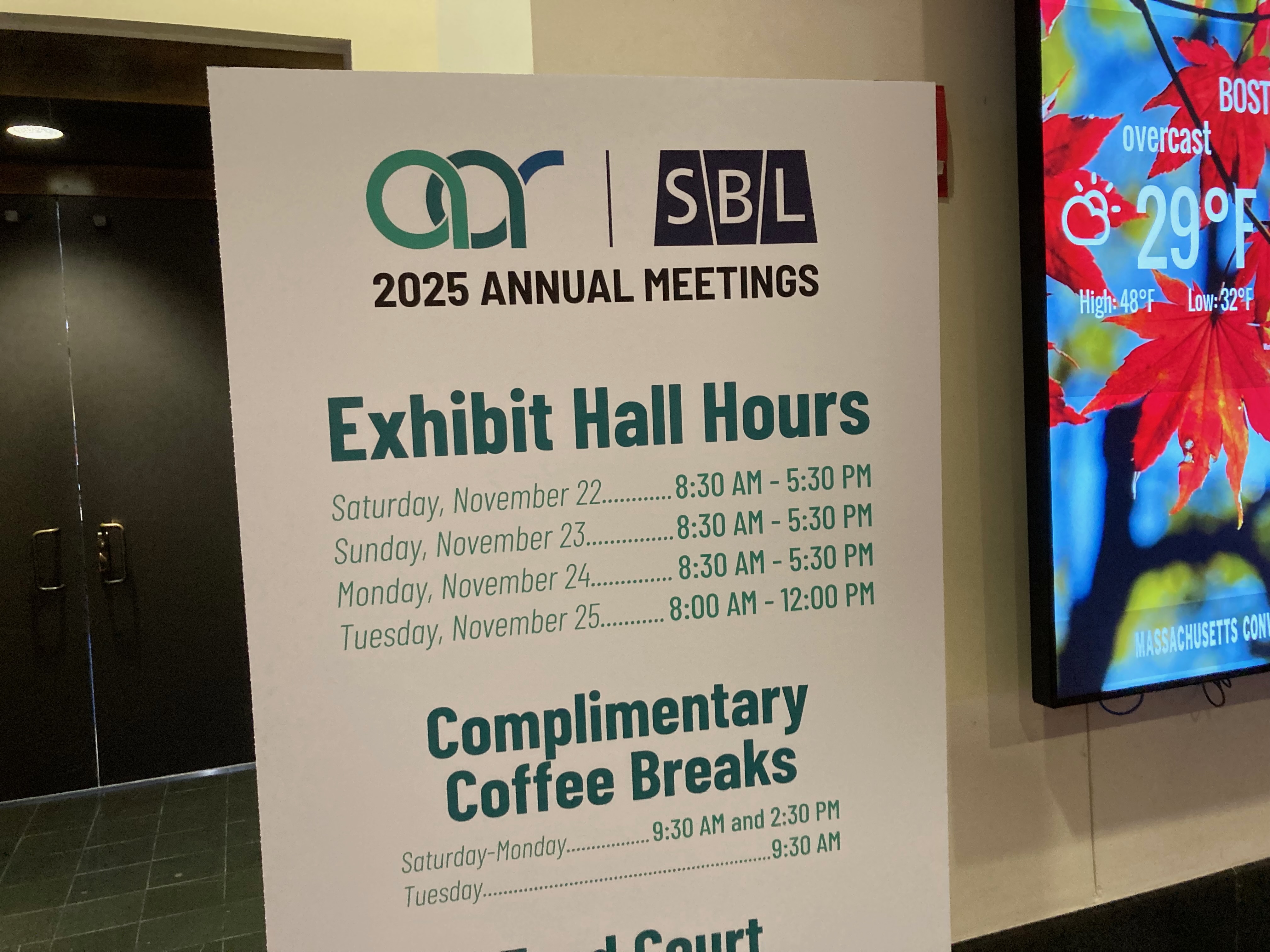
Life is strange.  While I was in Boston for the AAR/SBL Annual Meeting in November, something unusual happened.  For a few days back then this blog was getting a lot of traffic.  I mean, a lot.  For me.  In fact, I posted about when I finally shot past a million hits.  I couldn’t figure out why.  Well, things have settled back to their usual trickle and I figured it was just “one of those things.”  Pleased but not obsessed, I went back to my usual blend of observations about life, dark academia, and horror movies.  Then, and I can’t recollect exactly how I saw it, I noticed that my old blogging buddy Dan McClellan had, about that time given me a shoutout on his social media.  Then I remembered that I’d run into Dan at the conference and we’d had a brief chat.

The pieces began to fit together.  (Thanks, Dan!)  I’ve known a few fairly well-known people over the years.  Most of them are academics, and a few of them clergy.  Occasionally an author who has made a name for him or herself.  Some of them sometimes give me shoutouts but I’d never seen the numbers tick up like they had after this particular one.  I can’t figure out blog stats.  During the early years of this blog I had quite a bit of traffic.  I remember that in 2015 my views plummeted precipitously.  They’ve stayed at that low level ever since.  Until last year.  Now they’re headed back to normal, post 2015-levels.  I’ve tried some other platforms such as YouTube, but they take a lot more time and lead to limited hits.  Some influencers suggest I should try podcasting again.

I do have plans to bring the podcast back.  It takes several hours to make such an entry into internetdom.  I started podcasting when I began this blog (well, actually the blog was started by one of my nieces when a family member suggested I should podcast).  What happened?  I lost my job at Gorgias Press and I had to spend the next five years trying to find full-time employment in a stable environment.  By the time stability returned I figured podcasts were dead because everybody was watching videos.  I may have done a Mark Twain there.  Podcasts are still popular.  When I can get a chunk of time, and a nip of courage, I may rush back into the fray again.  At this point, I had my maybe fifteen days of fame in someone else’s shadow.  Life is strange.