
“What the Bible really says.” That’s a phrase you find in many places. In academic books and on the lips of “true believers.” Nevertheless, it’s a problematic formulation, no matter who uses it. Biblical scholars often like to “correct” public assumptions about the Bible, but since the association of most people with the Bible is emotional, chances of changing any opinions remain slim. There seem to be two troublesome words in the phrase: “Bible” and “really.” Let’s take them in turn. The Bible doesn’t exist. Well, it does, but it’s an intellectual formulation, not a book. This can be asserted with a great deal of certainty. Why? Because the boundaries of the Bible are porous and nobody, but nobody, has the authority to close them. Just a quick example: the books of the Apocrypha—Bible or not? Most Protestants fall on the “not” side of that question, although the King James Bible included some of the Apocrypha.
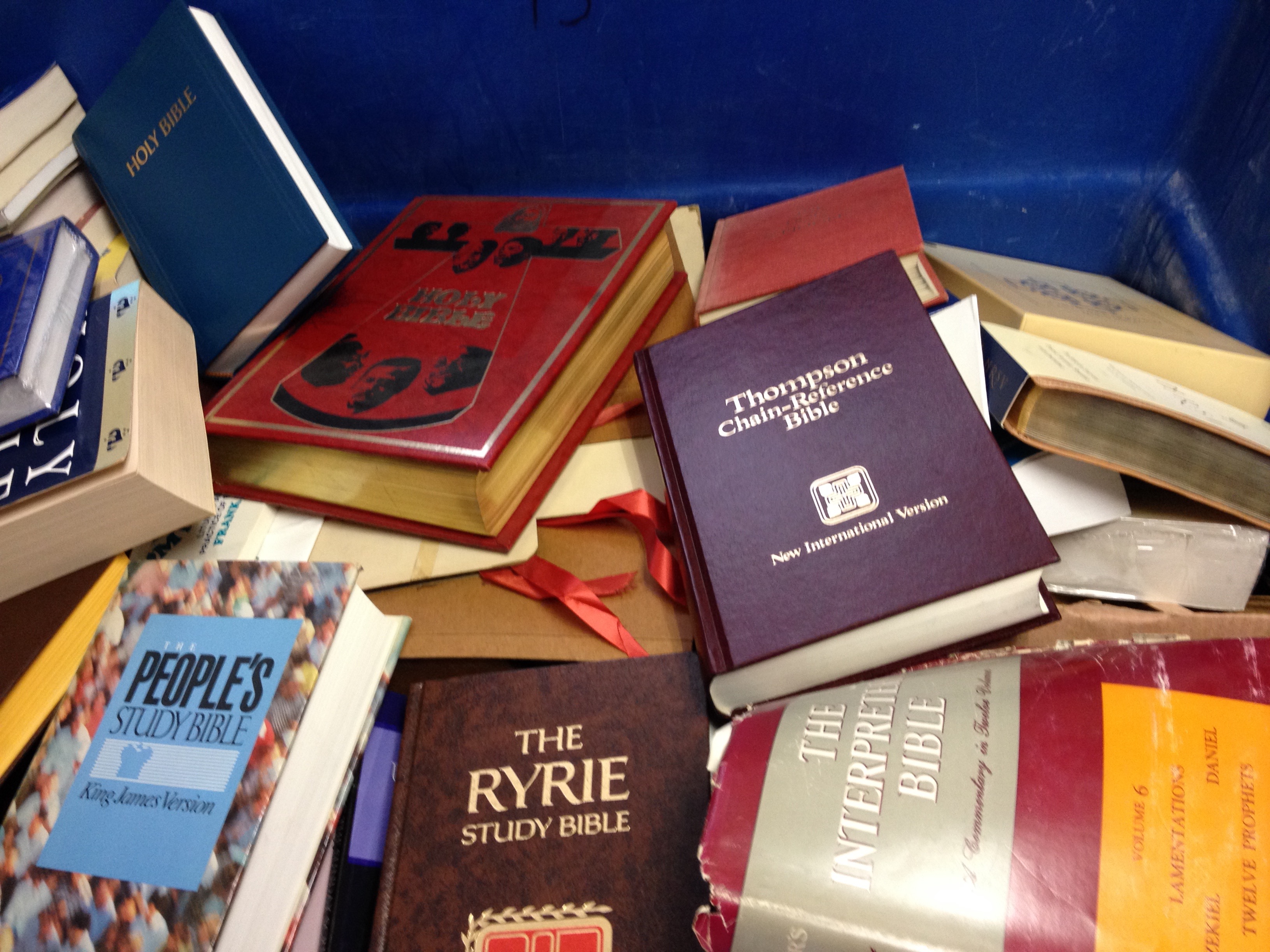
The question gets more vexed when we start asking about books like Jubilees and 1 Enoch. There are ancient Christian churches that include them. Since they are African, however, Europeans/North Americans have privileged the western canon, and have excluded them. They are, however, part of “the Bible” for millions of people. The book of Jude quotes Enoch as Scripture, just saying. Things get even dicier when you include scholarly opinion. Many biblical scholars believe The Gospel of Thomas has just as much credibility as (if not more than) the canonical four. Since biblical scholars can’t add or remove books, however, it’s a moot point, although they are the best informed.
“Really” is really problematic. Who has the authority to determine what the Bible “really” says? Doesn’t this actually mean, “the correct interpretation”? Who is qualified to make such a statement? A preacher? Did God tell them personally? Did they think to record it? Or should it be the experts—biblical scholars who spend their lives and careers learning everything possible about the Good Book? Again, no person, or body of people, has the right and authority to make that decision. What does the Bible really mean? I wouldn’t leave that up to any of the many, many clergy I know. It requires a bit more training than they have. And I’m still really bothered by the “really” part. It’s always going to be a matter of interpretation. Yes, I know hermeneutics always spoil a good time. Until, however, we can all agree on what “the Bible” is, nobody can say what it “really” says.


Pingback: The Roundup – 9.6.26 – The Amateur Exegete