Still Sleepy

Being outside in the cold for several hours makes it difficult to think clearly.  That’s my official excuse for watching Sleepaway Camp 2: Unhappy Campers.  I’d just come home from the Lehigh Valley Book Festival and was having trouble warming up.  I threw on the blankets and figured I’d watch a horror movie—I’d just been talking to people about horror films for a few hours, and I don’t want to be untrue to my calling.  When I opened my streaming app the first movie suggested was the sequel to the truly bad Sleepaway Camp.  My mind was too muddled to make a critical decision, so I clicked play.  Now, not all sequels are created equal.  This one has a different director, different actors, and a different direction.  And also, Bruce Springsteen’s younger sister Pamela is the lead.  Okay, so time to sleep away again.
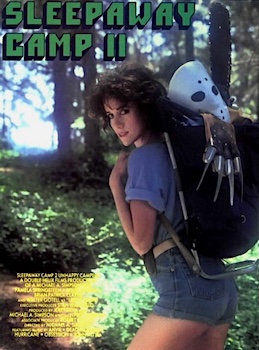
The plot is pretty straightforward.  Angela, the killer from the first movie, has been rehabilitated and has changed her name.  She’s a camp counselor again.  And she has a fervor for high moral standards.  She’s also insane.  By the way, this straight-to-video, low-budget release was shot as a comedy without really trying to be scary.  It is still very campy, but it is handled more ably than the first film.  Angela, who kills only bad kids, at least at first, is a kind of “angel of death,” according to lore that has grown about her since the first film.  Her methods for killing are both derivative and somewhat inventive.  Just the kind of film to watch when your brain is frozen from being outside in unseasonably cold weather all day.

It did make me wonder about a few things.  Those who make movies like this earn, presumably, at least some money off of them.  At this stage in my life, anyway, the opposite has been true of the books I write.  Maybe I’ve found my tribe—those who put their creative efforts out there without big corporate backing, hoping someone will understand what they’re trying to do.  Some of us do.  I can’t recall how I first learned about this franchise (maybe my head hasn’t thawed out enough yet to remember; we’re having yet another unseasonably cold Saturday) but it did step in as an easy choice when I needed one.  This isn’t a scary movie, but if you’ve ever been a camp counselor (I was for three of my college summers) it may bring some nostalgia with it.  And it’s no Friday the 13th part two.

Dreamers

Dreams are strange things.  I’m talking literal dreams—what your mind comes up with when sleeping.  Some dreams come out remarkably clumsily, like they were made DIY instead of by a professional.  Not to brag, but most of my dreams feel like they have professional production values.  They’re hard to tell from waking reality except that the rules in the dream world are quite different.  I’ve always struggled with nightmares, but they’re well made.  The other night I had what seemed to me amateurish dreams.  Even in my sleep I remember thinking that they were low-budget.  Normally I dream better than that.  And I woke up not really feeling ready for work.  They should give you “bad dream days” to take off.  Bad dreams can really put you out of sorts and can distort your thinking until the next sleep period comes around.

Recently I was talking dreams with one of my brothers.  When you’re a kid you naturally talk about dreams with your siblings.  At least we did.  I hadn’t realized this brother kept a dream journal.  I’ve had other people recommend doing that.  Like many people I have trouble remembering my dreams.  Often I do for a few moments after waking, but I don’t put on a light for fear of waking my wife and also I have to dash to the restroom and after that they’re gone.  But impressions of those amateur dreams stayed with me for a while.  The feeling of disappointment.  That I could’ve had something better to see me through the night.

Some of the more quality dreams survive long enough to get written into my fiction that doesn’t get published.  Some people experiment with lucid dreaming, where you invoke your waking consciousness to interfere with the untethered unconscious.  Other dreams are pure, elated fantasy.  And we still really don’t understand them.  When asleep those thoughts are just as real as the more mundane ones that get you through the working day.  And they can influence, sometimes powerfully, how well you navigate that 9-2-5 world.  Ideally you spend as much time sleeping as you do working.  They should perhaps balance each other out.  In my experience anyway, neither is really predictable.  If I had it all to do over again, I sometimes think I’d have been a psychologist (really, it was the medical part that put me off) where I could study dreams.  At least then I wouldn’t have to worry about having bargain basement dreams, would I?  It’s a strange thought.


A Day for Earth

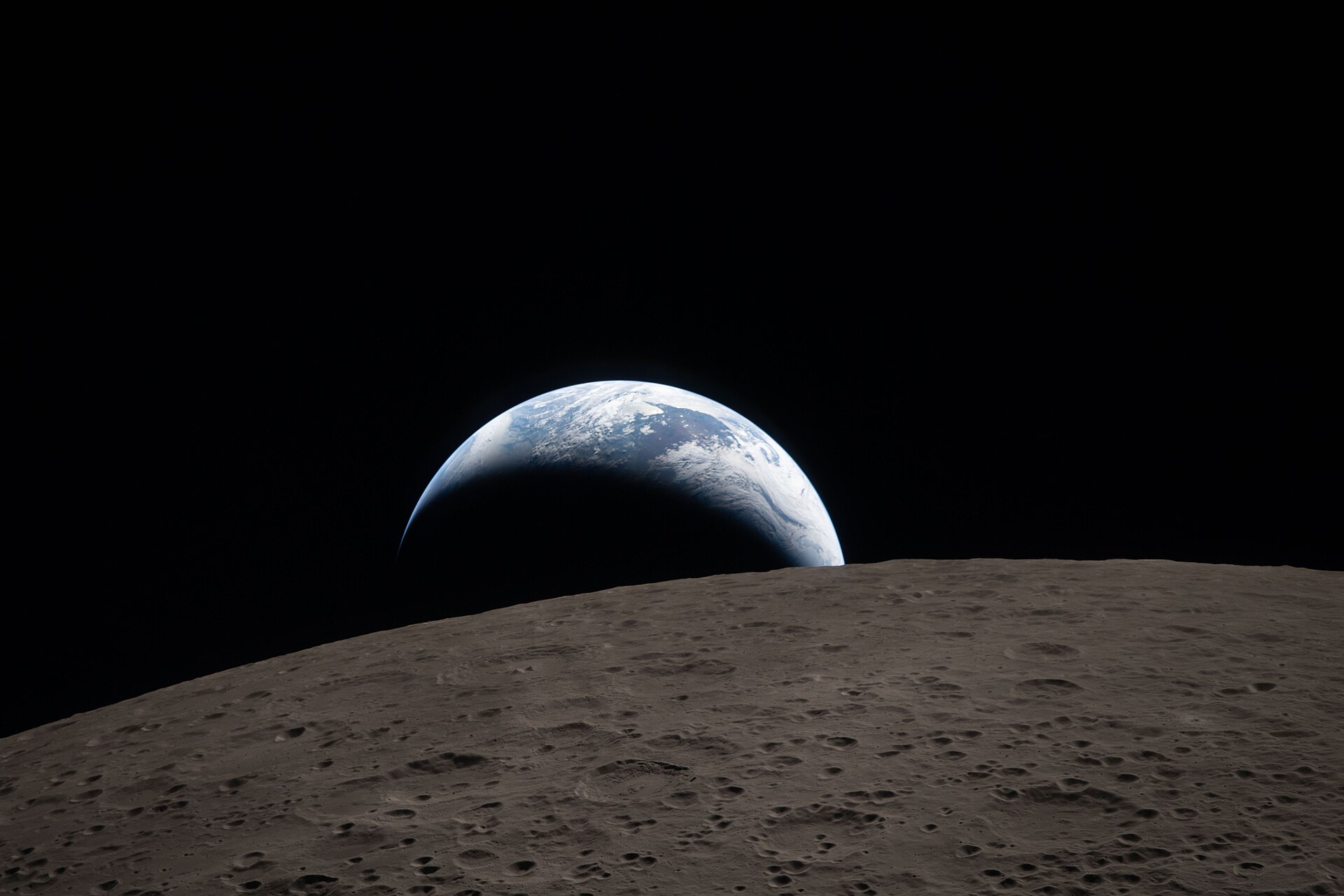
Sometimes things come just when they’re needed.  Although it was earlier this month, the Artemis II mission was a celebration of Earth Day.  It was also a much needed shot in the arm during difficult times for the environment.  Human arrogance is quite often checked by nature.  The series of very hot April days followed by extraordinarily cold April days reminded us around here that nature is firmly in charge.  Our comfort, or expectations, are secondary to the vast world around us.  And we love our world for it.  We are guests here and we couldn’t survive without it.  We may set up a base on the moon or Mars, but such places will still rely on our home.  It helps that those who’ve ventured further away than humans have ever gone sent back photos to remind us of how small we are on a fairly small planet.  Pictures of home.

Photo credit: NASA, public domain, FD06_high priority pao

From our daily perspective it’s difficult to believe that outer space surrounds us.  We’re so caught up with our own little problems, generally of our own making.  I write this after a day of shivering in a chilly house as electricians replaced the breaker box and the conduit, from service head to basement mounting.  It was a sunny day but temperatures hadn’t really recovered after a nighttime low in the twenties.  I reflected on how much we’ve come to rely on being able to shut nature out.  How difficult it would be to survive without shelter, and a little heat.  With the electricity off the furnace didn’t know to kick on, and windows had to be open to snake wires through.  For all the wonders of a household electrical system, the Earth itself is so complex we are still only beginning to understand how it works.  We love it.  We fear it.

Our dependence on things we’ve constructed makes me feel fragile sometimes.  When we first noticed our electrical issues I walked to a local shop run by an Earth-loving owner to see if their power was out too.  “Water and electricity,” she said, “are the two things we can’t do without at home.”  She was correct.  We rely on the grid.  Nature could take us with both hands behind its back.  As the replacement process stretched beyond the scheduled finish time, I had visions of a cold night without power.  No way to cook dinner, no way to keep food safe in the fridge.  I thought of astronauts a quarter-million miles from home, protected by a shell made here on Earth.  And looking back to lovingly snap a photo for Earth Day.


Just Handle It

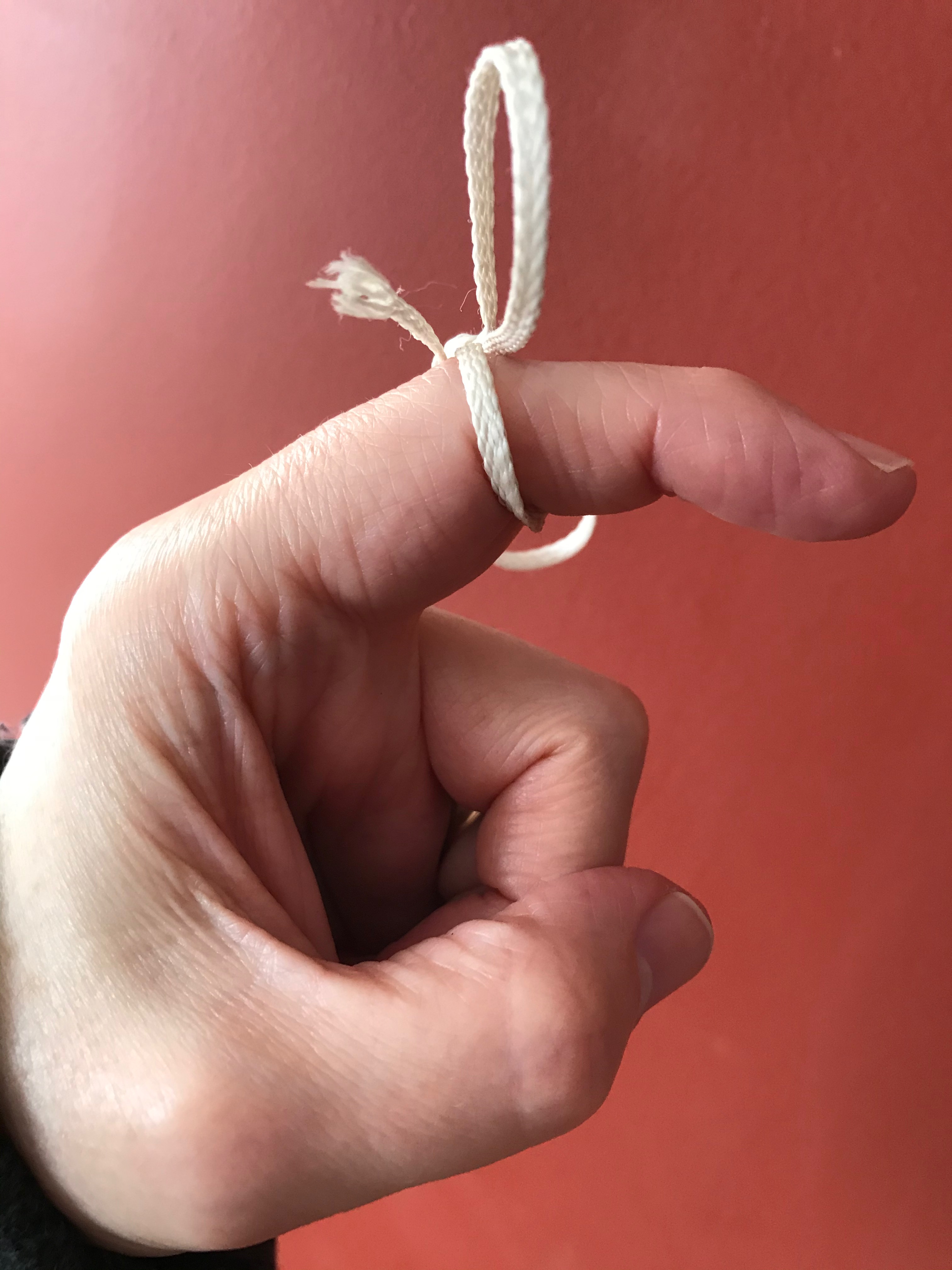
It happened again.  A few days ago I loaded my blog post and forgot to click “publish.”  The reason for this is probably silly.  Although I get out of bed between 2 and 4 a.m., I’m afraid that if I post that early other notices will get on top of anything I share and the post will be overlooked.  Well, more overlooked than my posts already are.  So I wait until 6 a.m. to click.  And some days, particularly on weekends, I’ll have the post loaded but I’ll get distracted and will forget.  I discover it the next morning, stare at it in confusion for a while and then think, “I forgot to post this.”  I have this conversation with one of my brothers, near my age, who insists he needs a handler.  You forget to do things.  Most of the time I’m pretty good at remembering—this blog is the center-point of my online existence, and I post every day.  If I don’t forget.

Weekends are very busy.  Almost as busy as work days with their shorted human hours.  And last week was particularly intense.  Two unexpected house repairs that required financing.  Two birthdays.  And grass that loved the high summer weather we had in April.  (Our neighbor is trying to sell his house and I want to try to attract a new neighbor who appreciates those who make an effort.)  As soon as I stepped outside, however, I was overwhelmed.  During the week of summer weather I’d lost the long-term battle I’ve been waging against ivy that claims both fence and garage.  And sapling trees that somehow thrive in the shaded north end of the garage that hardly ever see the sun.  And I’m trying to teach, manually, a vine how to grow up a pergola that receives too much love from carpenter bees.  Why can’t it learn from the ivy just over there?  You get the picture.  (Right now it is just 29 degrees outside.)

By the time I came back inside, I was exhausted and forgot that I hadn’t clicked “publish.”  These days it gets light around six, and on work days I get delayed by jogging.  Still, I know the click before I start work for the day.  Weekends are the danger zone.  I could use a handler.  Or maybe I should just accept the 24/7 reality of the internet and publish as soon as I load the post.  Does it make any difference?  I don’t know.  Please direct all questions to my handler.


Intensity

It was the biggest excuse for breaking up with me.  “You’re too intense.”  I lost track of the number of times college coeds told me that.  At the same time, the same adjective was whispered in awe when applied to professors in class.  You wanted intense professors, but not intense boyfriends.  Was “intense” bad or good?  I don’t deny being intense.  Some of us are just that way.  In personal relationships I’ve often managed to keep it under control.  It was one of the reasons, however, that I was such a good professor.  Students seem to have responded well, even if academia had no permanent home for me.  Thus, dark academia.  Which tends to be intense.  When I throw all my energy at something, it can become intense.  But it’s also true that I’m on the receiving end of it.  My mental mapping, especially in the fallow times, means that I must try to make sense of it all.

Some periods in life are intense.  I’m sure that’s true for everybody.  Or most people.  A concentration of events when time itself seems to have collapsed on top of you and you still have a 9-2-5 for five long days before you can start to deal with the residue.   So far, since the end of November many months ago, I’ve been in an intense zone.  So much is happening that I have trouble keeping up.  Unlike a dating relationship, I can’t beg off with intensity as an excuse.  A big part of it has been the calendar.  Thanksgiving fell late and January with its cold felt like it would last forever.  Both Trump and AI simmered in the background.  And, of course, 9-2-5.

Two major snowstorms were separated by only a few weeks.  As the second was tuning up, a death in the family.  The third in three years.  A novel was finished.  As was a nonfiction draft.  Two orders from Amazon went awry.  Who has time for returns?  Because of the storms, things became double-booked.  Preparations for the 2026 Lehigh Valley Book Festival.  With my expensive books.  I really didn’t think they’d select me as a participant, but was committed.  Or should be.  My wife’s 9-2-5 also hit an intense period.  We had to deal with two major household repairs simultaneously.  An unexpected auto repair.  I checked another website (No Kill Switch) to help define intensity.  What he has to say makes a lot of sense, but the question remains.  Is intensity good or bad?  It does seem to be the opposite of boredom, when you get time to deal with things, after work.  


Crafting Byron

For a man who lived to be only thirty-six, Lord Byron tends to be featured in very long biographies.  I’ve been curious about him, but maybe not to the tune of 500-plus pages.  I’d seen references to Elbert Hubbard’s Little Journeys to the Homes of English Authors: Lord Byron, and since it was only a handful of pages, and not very expensive, I got a copy.  As a biography it turned out to be exceedingly slim.  And written with a flowery prose.  In fact, you could read this easily in a day.  I did learn about about Lord Byron, but in this instance the author took precedence over the subject.  I knew nothing of Elbert Hubbard.  A free-thinker of the turn of the twentieth century, he was born in Illinois in 1856.  He was a successful traveling salesman but then started a commune called Roycroft outside Buffalo, New York.

The Roycrofters were crafters and artists living together and producing, in some cases influential, artworks.  The community operated from 1895 to 1938.  The buildings, which survive, are now National Historic Landmarks.  Elbert Hubbard was a philosopher and artist, as well as a socialist and anarchist.  It’s not surprising he took a liking to Lord Byron.  One of the crafting supplies at Roycroft was a printing press.  Hubbard published a series of Little Journeys, some sumptuously bound, others with paper covers, and, from experience, uncut pages.  Lord Byron was volume seven, published in 1900.  Roycroft continued for the remainder of Hubbard’s life, and a little beyond.  Hubbard and his second wife died in the sinking of the Lusitania during World War One.  His son kept the community going for another couple of decades.

American history is filled with colorful and creative individuals.  All I knew of Elbert Hubbard was that he wrote a reasonably short treatment of the life of Lord Byron.  Reading it I learned a bit about the other intensely curious and talented writer who’d died just over thirty years before before Hubbard was born.  Byron was then still alive in memory for many.  It turns out that both subject and author lived extraordinary lives.  And each, in their own way, influenced larger society.  And now, having read this small book, I’m inclined to plan a trip to East Aurora, outside Buffalo, to see the settlement of the Roycrofters.  That’s not a bad thing to come from a brief book, not expensive, to read about a poet.


Reclaiming the Past

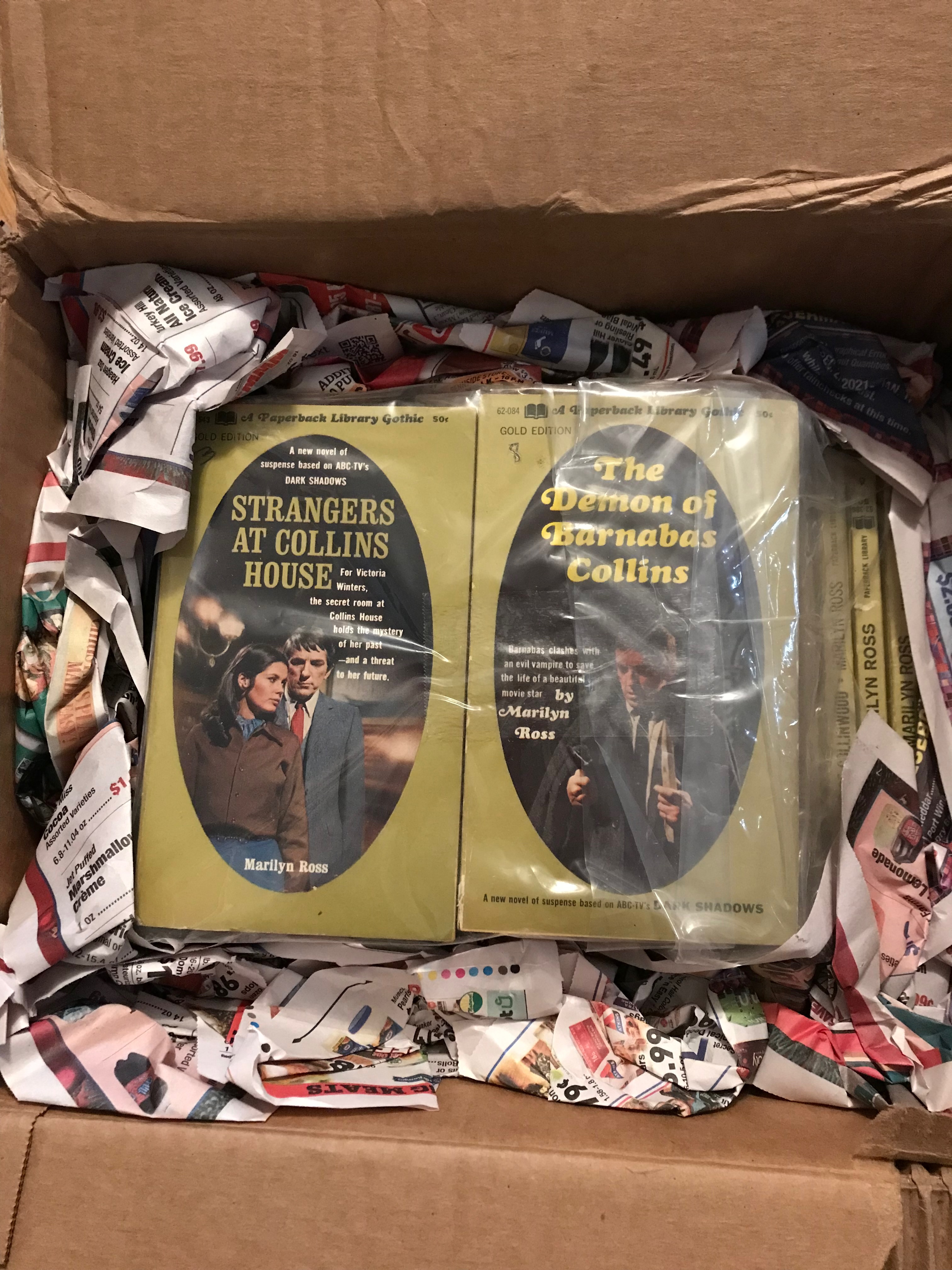
It started after Nashotah House.  That event shook me to my very core.  And I was approaching middle age.  I started taking an interest in my childhood.  I learned some uncomfortable truths that probably help explain the way that I am, but more tangibly, losing that job launched me back to both monster movies and the earnest need to collect books that I’d given up when I went to college to “grow up.”  Fortunately (perhaps) the internet had been invented and it was possible to locate used copies from the seventies.  I’ve written many times about the Dark Shadows books that I began collecting shortly after the incident in Delafield.  But there were others.  Many others.  Often it became a matter of identifying and finding the same edition that I’d had as a child.  (Modern reprints complicate this, but with enough patience the exact book editions can be found, and usually no more expensive than  contemporary bookstore prices.

The goal has never been to replace all of my childhood books, but those that evoked a palpable sense of wonder in my young psyche.  This was strange because I was very religious and these books sometimes challenged what my fundamentalist upbringing taught.  Some years back I had to find the exact edition of Erich van Däniken’s Chariots of the Gods? that I had.  The curiosity did not extend to several of his other books from the seventies.  I got rid of these because they caused me to question my faith.  Teenagers.  In any case, I also had a compulsion to replace a book of Twilight Zone adaptations.  The cover of that book still sends me back to Rouseville.  Then I had a hankering to reread Logan’s Run.  It’d been reprinted many times, and the one I had as a kid was itself a reprint.  I needed that exact one.

My wife has been very patient with me.  I’m seeking something here.  I’ve always been haunted by the truth and there is a nagging feeling that I had grasped, only by the very tips of my fingers, a little bit of it before college.  Facing higher education (the first in my family to do so), I felt I needed to “put away childish things.”  The library that sustained me through those difficult Rouseville years was scuttled.  There’s a saying about babies and bathwater.  I’m beginning to think there may be something to it.  There were some very dark incidents in my early childhood, before I learned to read.  I think of them often.  And yet, a sense of wonder remains.  Mostly in the escapism of  old, mass market paperbacks from the seventies.


Uncut

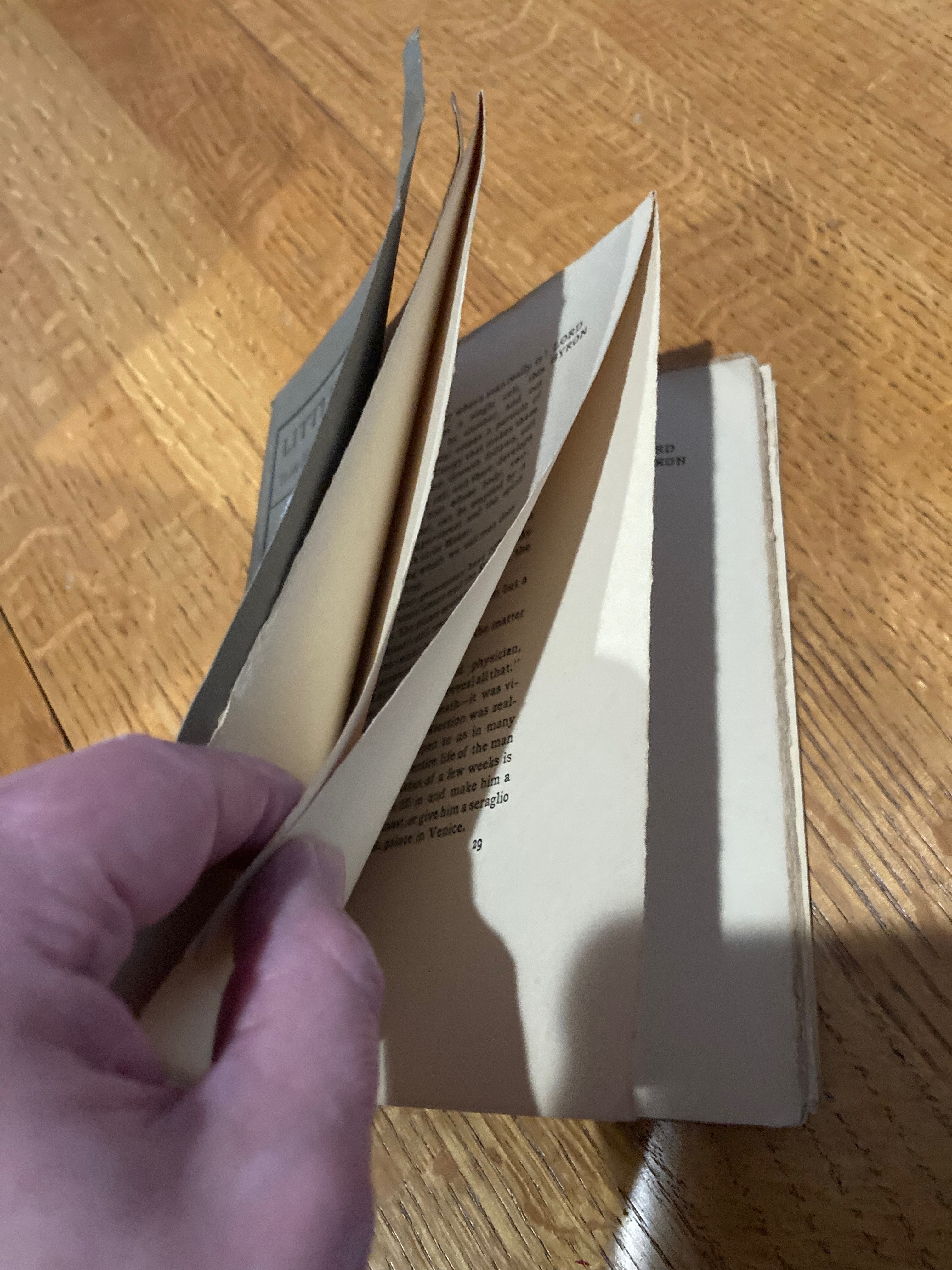
I remember well the first time I encountered a book with uncut pages.  It was in Edinburgh and the book was mine on inter-library loan.  This presented a dilemma: should I, a mere post-graduate student, cut the pages of a book older than me?  The librarian told me it was fine to do so.  I wasn’t sure how to go about it.  I’ve never trusted myself with scissors and this seemed like such a permanent act I was about to commit.  I settled on a butter knife, figuring a sharp knife might cut into the meat of the page.  It worked fairly well.  I later bought a book with uncut pages.  I didn’t do so well on it, but I need to read what was inside (and it wasn’t a cheap book).  

This is more common in Europe than it is in the United States.  I recently bought an out of print book for my research.  The pages were uncut.  Now we have the internet which can be useful from time to time.  The proper technique, it turns out, is to use an index card with a saw-like motion.  It works extremely well.  Fighting paper with paper.  And I love these old books.  The heavy paper.  The actual, clear imprint of where the type hit the page.  This was an object being crafted, not electrons cycling around a screen.  When it was done you were left with something that felt permanent.  Something that wouldn’t disappear when an online vendor went out of business.  These old books also give you an idea of how they were made.  Offset books (those made on a traditional printing press) are printed on paper that is then folded and bound together.  Most modern presses also trim the edges, but you can, on rare occasions, still see where metal met paper.

Substantial.  These books feel substantial.  Don’t get me wrong—I enjoy the trim, clean look of the modern book, but part of me misses the solidity of old fashioned books.  As much as I enjoy visiting new bookstores, I also like used bookstores.  There used to be several around here, but I think the pandemic killed them off.  You can browse their inventory online, but it’s not the same experience as that dusty, musty smell of books aging well.  Now that mass-market paperbacks are being discontinued, they have their own place of pride as being the books that brought reading to the masses.  Now people stare at screens and call it reading.  I, for one, will be keeping my index cards handy for the next book with uncut pages that comes my way.


Cool Book Festival

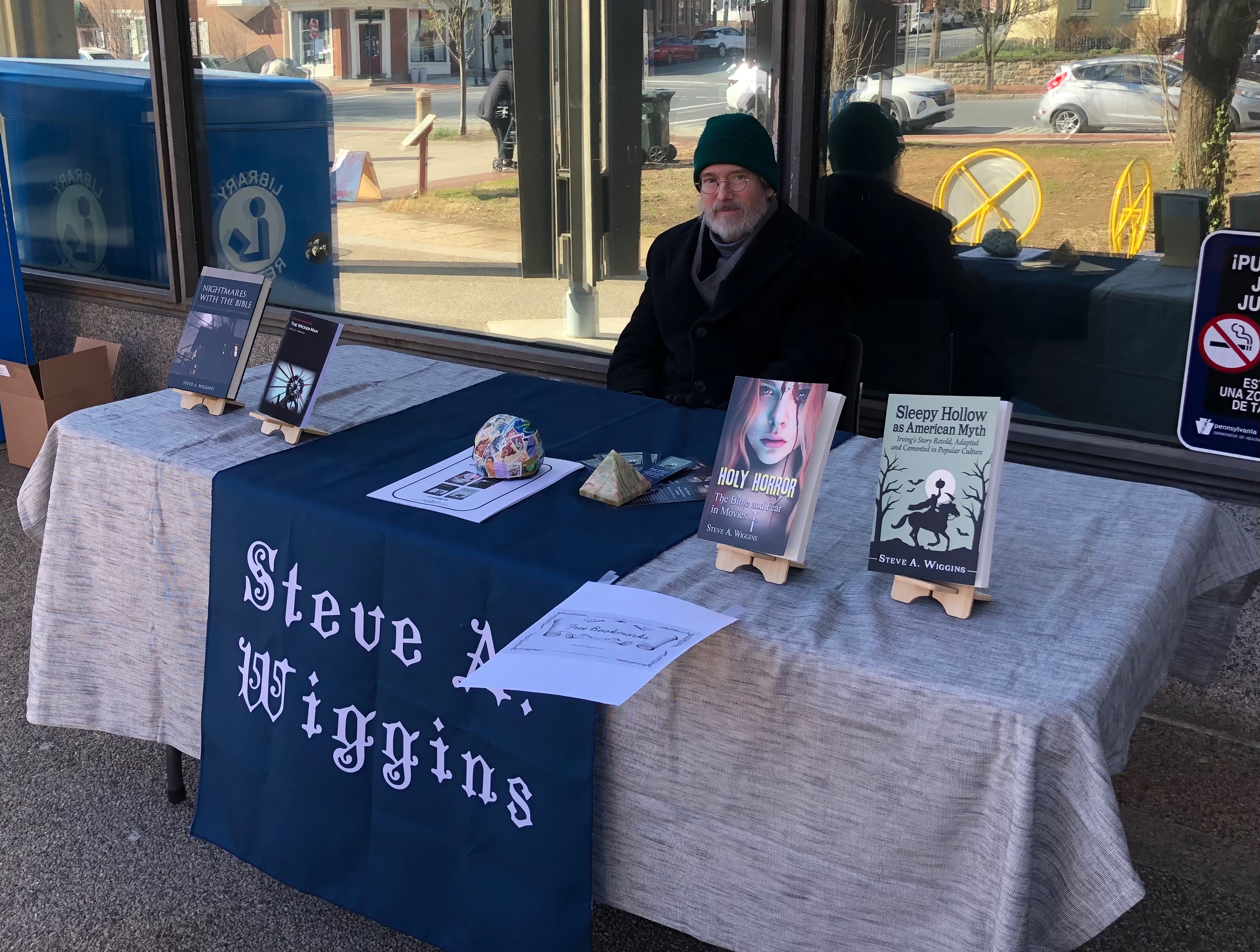
So yesterday I was at the Lehigh Valley Book Festival.  (It occurs to me know that I should perhaps post such notices in advance, but I know few people in the area where I live.)  I was there displaying my books.  I have participated in the Easton Book Festival for at least four years now, but I had only recently learned about this event held in Bethlehem.  The weather was clear, but cold for an outdoor event that involves a lot of sitting—it put me in mind of having to put on gym shorts and tee-shirts to go outside one November in college to have the coach lecture us about football, with no moving or actual playing involved.  It turned out to be an endurance test.  Not quite of the Shackleton magnitude, but I am sensitive to cold and it was struggling to reach 40, and this on the 28th of March.  At least there was a cool breeze.

Several lovely people stopped to talk and showed some interest in my work.  I’m grateful to all of them.  As an author you often wonder if you really are alone in your interests.  Since my table was next to a run of three tables of children’s books—when those authors decided on an unauthorized move of their tables into the sun (we were on the shaded side of the building), they did not invite me to join them—I was a bit self-conscious.  Parents hurried their kids past my modest display.  I took a quick swing through the other stands and I think mine was the only one for adults.  Many people glanced and frowned as they walked by, but several people got it.  I know there are local horror fans out there, but I have trouble finding them.

The Lehigh Valley Book Festival isn’t huge and several people just happened upon it, asking why we were there.  It was held at the main branch of the library and it is fairly centrally located in town.  Also, there was a cherry blossom festival taking place on the other side of the library.  I couldn’t be certain but it seemed that many more people were headed for that.  And honestly, I’ve lived in this area for going on eight years and I just learned about the festival last fall.  And I’m a book guy.  Not too connected locally, I’ll admit.  There was enough interest that I might consider it again next year (if selected again).  Especially if the temperatures are back towards the seasonal norm.


Red Thread

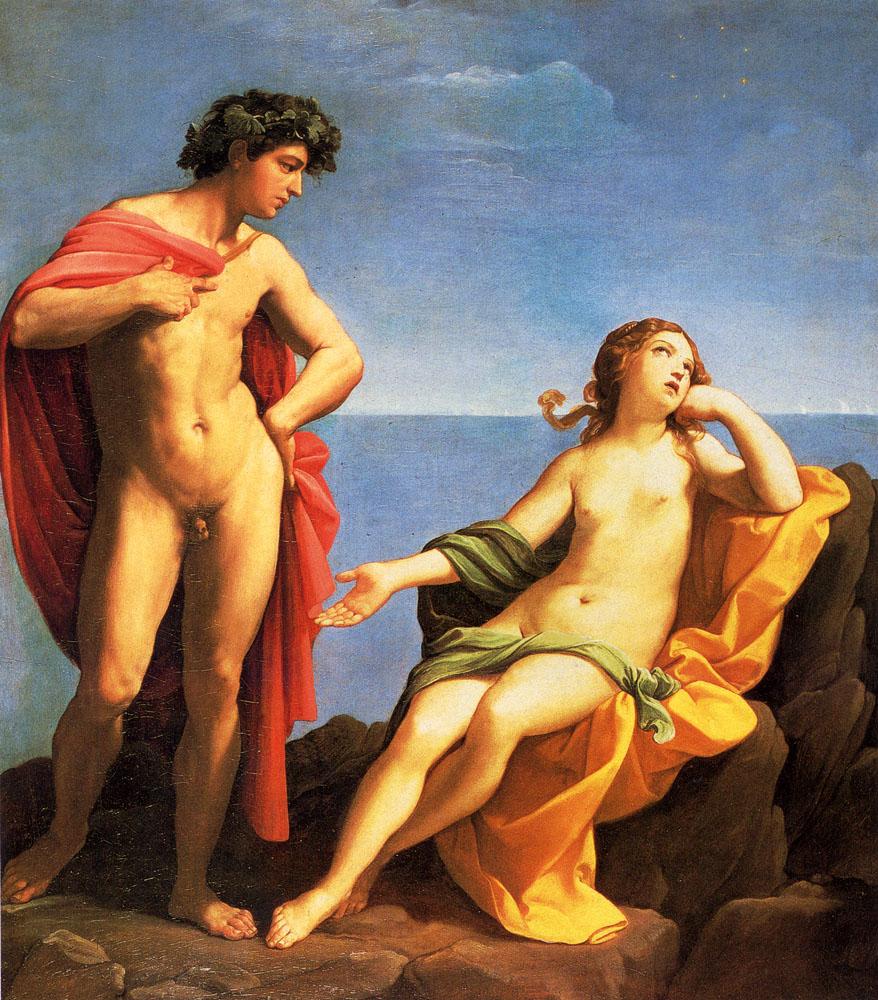
Theseus would never have survived the labyrinth without the help of Ariadne.  After escaping the minotaur, the two eloped and, according to some versions of the myth, Theseus abandoned Ariadne on the isle of Naxos.  This story has been told and retold countless times, and even served as a source of inspiration for the movie Inception.  Back when I was thrashing about dark academia, trying to make a living as an adjunct professor at Rutgers and Montclair State, I taught classical mythology at the latter.  These were in the days of PowerPoint lectures, and I knew a few things about doing them: slides shouldn’t be overly wordy, and they should have images.  People are visual learners.  During my three semesters at Montclair, I developed my PowerPoints peppered with images found online.  I recently remembered one of Ariadne on Naxos, and I really wanted to find it.

My Oshkosh slides were burned onto CDs, but now tech has moved beyond that and I have no readers for burned CDs.  My hopes of finding the name of the artist in the credits on the slide have not been fulfilled.  I turned to the all-wise internet.  Image search after image search brings up nothing close to that particular picture.  I thought it was a painting, but it might’ve been a pastel or colored pencil drawing (it was from a relatively contemporary artist).  I simply can’t find it.  I remember the subject, and the image, but neither its formal title nor its artist’s name.  The information exists, but on unreadable discs.  On those same discs rest the sermons I preached at Nashotah House.  I sometimes think of them and would like to look at them again, to refresh my memory.  I can’t, however, access them, although they are on discs in the closet just behind my back.

Not the image I was looking for (image: Bacchus and Ariadne. Guido Reni).

We let technology drive our lives.  It comes with costs.  I recently talked to a young person who was buying a nice journal and some writing implements to use in it.  They told me that although they’d grown up with computers, and the internet, they wanted the very human experience of writing by hand.  My default for taking notes is still by hand.  If only I had done that when adjunct teaching…. I remember well how frantic those days were.  I was teaching up to eleven classes in one year (a typical professor has three or four), driving between two campuses.  Eating in my car.  I didn’t really have much of a chance to note individual artworks in a notebook, figuring I’d be pining to remember them many years later.  I could use Ariadne to help me out of this labyrinth.  I know right where she is, but the isle of Naxos is inaccessible.


Bounce Back

I confess to being a graphomaniac.  I write a lot.  I’ve done this pretty much most of my life, and so I tend to have backlogs, both fiction and nonfiction.  This is necessary background for this bit of friendly publishing advice—avoid bounce-backs.  What I mean by this is if an editor tells you “no,” don’t come back a week or two later with another project.  It speaks of desperation when an author does that (and believe me, I know about desperation!).  Publishing is a slow industry (which is one reason that AI is so dangerous).  Authors who can quickly pull together a new proposal, let alone a manuscript, in only a couple of weeks may as well wave a red flag at an editor.  Give it some time.  Give it some thought.  There are plenty of publishers out there, and targeting one for repeat requests isn’t likely to achieve success.

Photo by Samuel-Elias Nadler on Unsplash

We all know the rebound relationship.  You’ve just been dumped and you need to find someone to fill that hole in your life.  The person selected too quickly is a rebound, or bounce-back.  In my experience, such relationships don’t end well, if they ever get started.  It’s a life lesson we sometimes don’t think to apply to that other passion many experience—the desire to be published.  Many of us have publishers that we want to be associated with.  Mine is W. W. Norton.  My very first publishing job interview was with Norton.  They flew me from Milwaukee to New York City for an interview.  I didn’t get the job, but it was like being let go by the girl (or guy) you just can’t have.  The bounce-back, in my life, was Gorgias Press.  And you can piece the rest of the story together from this blog.

In any case, if you’re inclined to learn from the voice of experience, don’t keep pushing after you’ve been told “no.”  Please understand that I know how this desire feels.  If you want to be published, you need to be professional about it.  And sometimes you need to take a strategic approach to reach a more lofty goal.  I started writing my first attempted novel at about sixteen.  It was never finished.  The first one I completed was in 1988.  I had to take a few years off to write a dissertation, then a second book (during which time I began a novel that I only recently finished).  Please note, that span of time was over twenty years.  Publishing is a slow business, and the bounce-back is a sure way to gain a reputation you don’t want to have.


Shopping News

It’s one of the perils of the online age.  You order something online and the company (which has more money than a mere individual) asks you to pay for their mistake when the send the wrong thing.  This has happened to me a few times.  Once I ordered a used book.  The vendor got the author right but sent the wrong title.  When I explained this they still wanted me to pay to ship their mistake back to them.  I explained the illogic of the situation to them: You said you would send me a certain book and you did not.  In order to refund me I have to pay for the shipping, which sets me back a few bucks without having the right book at all, which I will have to reorder.  They were not happy, claiming it was my responsibility to get the book back to them.  I asked them to pay for the shipping.  They refused.  Eventually they said “Just keep it.  But this time only!”  I do not order from them now.

More recently Amazon, which, for all its issues, is pretty good about getting the right item to you, sent me a defective book.  I noticed as soon as I unpacked it that the cover wasn’t printed correctly.  Words were cut off on the right-hand side, and the spine was printed on the front.  I would’ve accepted it as a fluke, but opening it up I saw that the interior was for a completely different book.  Likely the printer hadn’t properly cleared out the covers from the last printing job before starting the new project.  Amazon didn’t fuss about replacing it.  They did, however, require me to return the defective one.  They’ll pay for the shipping, but I have to pay for the gas and time to drive to one of their preferred vendors.  It’s the same problem on a smaller scale.  Amazon made the mistake (actually the printer did but nobody checked) and I had to pay something to make it right.  This seems off to me.

I worked in retail for a few years and one of the messages management always emphasized is “the customer is always right.”  Sometimes they weren’t, but most of the time we had to resolve any disagreements as if they were.  Online ordering takes the face-to-face out of it.  The person who receives something other than what they ordered, for which they’ve paid the agreed price, has been wronged.  It’s a mistake unlikely to happen in an actual bookstore.  There’s a price to be paid for the convenience of ordering online.  And that price is paid by the customer.


Just Average

It certainly feels like it.  That web searching has grown a lot more frustrating since AI has taken over.  For some of us, Al has no idea how our minds work or what we’re looking for.  Apart from hallucinating, it tries to average out the human experience.  Some people aren’t like everyone else.  I like to think that I’m reasonably intelligent and that I pick search words with some aforethought.  Yet the web searches I do bring up things (mostly products for sale) that have nothing to do with the information I’m hoping to land.  We’ve swapped quality for convenience, yet again.  The experience of being human is being effaced by those who are growing rich off the world’s love affair with “artificial intelligence.”  Emphasis on the artificial part.

The real issue is with finding information.  Some of us don’t trust the web much, and prefer to find our information in print, which is less easily manipulable.  More stable.  These days Google appeals to our natural vanity and, more importantly, likes to try to sell us stuff by personalizing search results.  It’s all about the money.  Some of us really just want information.  The alternative is to try to find what you’re looking for in a library, which is fine and good if you have the time and resources to do so.  And the issue there is finding what you need.  Since many university libraries have gone electronic, you need to be a card-carrying member to read information on a screen.  What have we become?  Vividly I remember searching through the underground stacks at Edinburgh University.  If something wasn’t in the card catalogue, ordering it on inter-library loan.  I never did land any grant funding to travel to read books that just don’t move.

I was trying to read a public domain text online the other day.  My eyes quickly grew weary and restless.  The internet encourages that, and although social media isn’t my personal demon, often the weather websites are.  And those little things that have crept into your brain while at work to look up later.  Which brings us back to searching.  AI works by averaging things out.  Some of us want the raw material, not what other people want.  After all, look who “average people” elected to fill the White House a couple years back.  I admit to being nostalgic, to missing the days when a book in the hand couldn’t just be dashed off by anyone with a computer and internet connection.  Averaging everything together, is by definition, making it all mediocre.


Earnestly

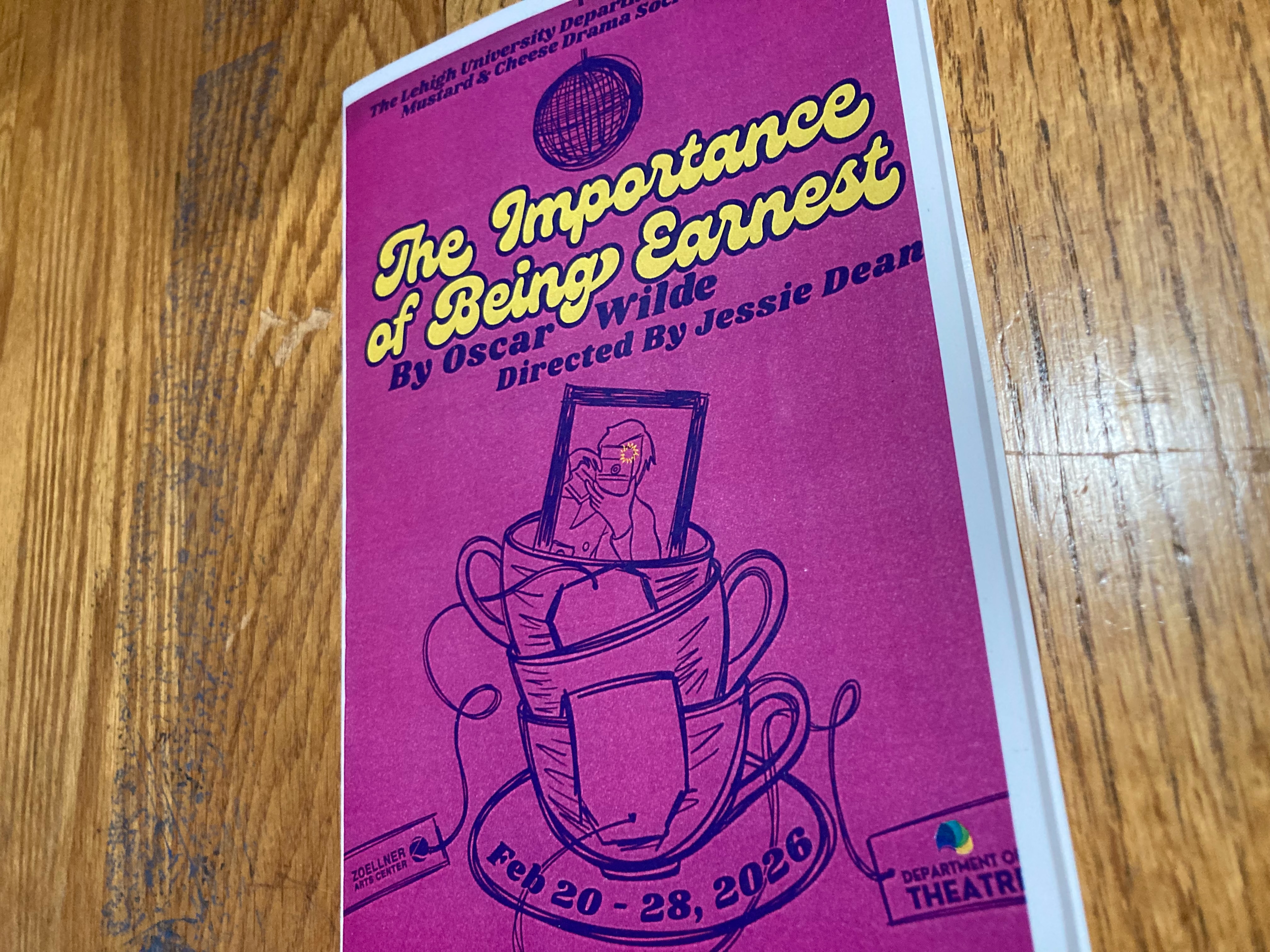
Christening.  The subject may sound old fashioned, but it was once, within Christendom, where a name was officially conferred.  These days a birth certificate, issued very shortly following a live birth, is the official record of name, but not so long ago religious authorities had the final word.  This came to mind upon seeing a local (Lehigh University) stage production of Oscar Wilde’s The Importance of Being Earnest.  I’ve read the play before, but hadn’t seen a stage production.  As is likely widely known, the play’s title plays on the name Earnest.  Two characters, Jack and Algernon, both claim to be named Earnest only to learn that the women they’ve proposed to both insist on marrying a man whose name is indeed Earnest.  In order to remedy this situation, both men ask the local vicar to be christened, changing their names.

Names are chosen for us and given to us.  Although it is possible to change one’s name (I’ve done so twice), many consider this almost insulting to the parents who provided the name.  Since baptism, or christening, was so widely practiced in medieval Europe, this experience was fairly universal in western culture.  The Reformation eventually changed that; some traditions declared that a person had to be old enough to consent to baptism and you couldn’t very well wait until seven or eight to be given a name.  I was baptized in a river at about six or seven, and by then had learned my given name quite well.  Names become our identity.  I still recall the lines about names from another play, Arthur Miller’s The Crucible. “Because it is my name! Because I cannot have another in my life! Because I lie and sign myself to lies! Because I am not worth the dust on the feet of them that hang! How may I live without my name? I have given you my soul; leave me my name!”  Thus spake John Proctor.

The Importance of Being Earnest is, of course, a satire.  Even the name of the priest, the Rev. Canon Chasuble, DD, is a joke.  A chasuble, in the ecclesiastical world, is the outer vestment worn by a priest who is the celebrant at a formal mass.  Clothes make the man, so the saying goes.  Those of us who write fiction often wrestle with names.  In my day job I quite often encounter what seem to be unbelievable names.  Names that, were I to put them into a novel, would earn the scorn of critics (assuming any) that it was made up.  So I enjoyed being earnest for an afternoon.


Logan Again

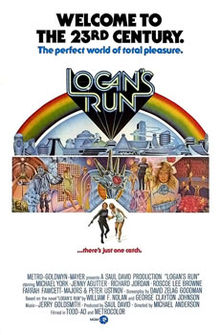
A couple of friends, both younger (ahem), liked my recent post on Logan’s Run.  As did someone my post on Goodreads.  I was pleased to see that.  I was alive, but not yet literate, when the book was originally published.  So, predictably, I sat down to watch the movie again.  My wife had to work that weekend and I had last seen it in 2011.  This time, the book fresh in my mind, I was able to notice just how much the movie diverges.  For practical reasons, the movie has people live to 30 instead of 21.  The issue was finding enough young actors (this was the seventies, after all) who could carry off the story.  Michael York was over thirty, but he could pass.  The book is a romp across the country, and it would be unbelievable in the film if Peter Ustinov were able to walk from Washington DC to Los Angeles.  

The movie has Logan dedicated to Jessica, but in the novel they have to grow to love each other.  In the film, Logan is sent on a secret mission to find Sanctuary, which, it turns out, doesn’t exist.  The novel has Ballard (transformed into “the old man” in cinematic form) disguised as Francis, Logan’s fellow Sandman, from pretty much the beginning.  On the screen, Francis remains a dedicated Sandman to the end.  Gone are the zoo animals in Washington, the hovercraft chases, and the little children who save Jessica’s life.  Granted, a lot in the novel would be very difficult to transfer to celluloid, and changes had to be made.  The whole episode of the religion of “Carrousel” isn’t in the book, but was added to give the movie coherence.  I did find it odd that they included the scene with Box, which really doesn’t fit the film.  

In any case, it warms my heart that some of my younger friends have fond memories of this movie.  It’s definitely a period piece.  Fitting for the seventies, there’s kind of an atheistic undertone to it.  Sanctuary only exists in people’s minds.  Nobody is “renewed” (born again).  But not all is doom and gloom.  The old man quotes from Old Possum’s Book of Practical Cats, by T. S. Eliot.  (That fact is the only way that I could get my daughter to watch the film.)  And it does have an optimistic ending.  Logan and Jessica decide they want to stay together—marriage was ancient history in their world.  And the young people, my greatest hope for the future, came to see the old man was fascinating.  Something that gives this particular writer a true sense of hope.