
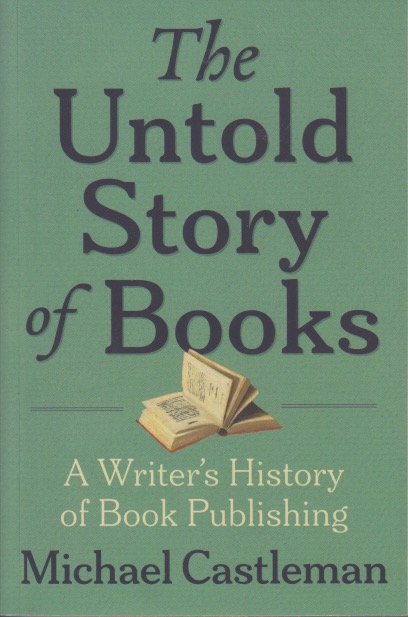
Book people, ironically, often don’t know much about how publishing works. That’s not a condemnation; I was the same way before I took up a job in editing. “I’ll write a book and let someone else handle the details,” was pretty much the thought process. Now I find the whole enterprise fascinating. The Untold Story of Books by Michael Castleman is an important book. It is one of the most clear-eyed accounts of publishing that I’ve encountered in my long years at this practice. There are many myths busted here. Most—the vast majority of—writers make very little money from books. Most never become famous. Publishing is a low margin business. We see the Stephen Kings and Dan Browns and say, “that could be me!” Dreams are fine and good and sometimes come true, but writers write because that’s who we are.
As someone historically inclined, I was primarily interested in the storied days of early publishing. This is what Castleman calls the first book business. You didn’t expect to make much money from publishing in those days; you usually had to pay for the privilege. Then publishing became a business. I found this part of the story utterly fascinating. Publishers and authors have often been at loggerheads. Authors tend to come out on the short end of the stick (don’t quit your day job!) and Castleman doesn’t pull any punches here. This is valuable information. It also helped me understand why it seems that so few people in the publishing industry are authors. I know a few besides myself, but not many. There are reasons for that, and this book helps the curious to explore them.
Publishers began mergers for practical, if capitalistic, reasons. Among presses that sell primarily fiction (or trade nonfiction) there are two main sources of income: bestsellers and backlist. The backlist is the unsung bank of many publishers. Bestsellers may be stocks, but the backlist is bonds. Balancing these, publishers get by. And of course, many are bought out by bigger companies. As I mentioned here before, there are really only five big publishing houses in the English-language market. They own most of all the publishers that may be household names. Castleman also goes into the third book business, which covers publishing in the electronic era. I love his sense of optimism. Books are durable and people do enjoy reading. Castleman has had more success with his writing than I’ll ever have, but reading him is like meeting a friend who understands what compels you to write. Even if the devil is in the details.


2 thoughts on “Story Book”