‘Tis the Season

A news story last week related how a traditional park area in Santa Monica, California had been “taken over” by atheists who wanted equal time with traditional Christmas displays. The park, which houses 21 display areas generally populated by nativity scenes of one sort or another, had so many requests for space this year that a lottery was instituted—a lottery that the atheist groups won. Claiming 18 of the spaces, the atheists groups have vastly reduced the visibility of traditional Bethlehem mythology. Does anybody else feel a culture war coming on?

The whole “Keep Christ in Christmas” campaign that has been fermenting over the past decade or so has made many Christians paranoid. Society has forgotten, they claim, whose birthday we’re celebrating. A plain view of the facts, however, calls this assertion into question. No one bothered to record the date of Jesus’ birth. The stories about it, in the Gospels of Matthew and Luke, were written after a lifetime of reflection by people who were not eyewitnesses to any of the events. Historians of the era mention no celestial anomalies and there are no records of crazy old Herod killing babies among his own people. (His domestic affairs, however, may be quite another story.) What is absolutely clear is that the stories have grown with the telling. Many a child can tell you the names of the three wise men. Luke doesn’t even place them at the first Christmas, does not name them, and does not say there were three. No records of Zoroastrian migrations to Israel verify this story either.

The true loss is the loss of story. We live in a society that abuses the words “just” and “only.” That’s just a myth. That’s only a story. Ancient people—from the time of Jesus—appreciated the truths a story conveys. Consider the parables of Jesus. They cite not sources neither do they seek verification. They are only stories. They are also cited as the basis of many church teachings. Even atheists can be taught to appreciate the value of stories. Who could object to a myth advocating peace, harmony, and goodwill? Even if it’s just a myth.

Santa Claus might come to Santa Monica’s rescue. Yes, diehard fans of historical veracity will say there was a saint called Nicholas. We all agree that he didn’t wear red velvet trimmed in white and that he didn’t possess magical, northern latitude cervid stock. Even before the days of forced air heat he didn’t slither down every chimney in the world in one night. Few would dispute, however, the value of giving gifts of good will. Just ask any member of the Salvation Army who appear at this season every year. Instead of arguing about whom to exclude, why don’t we invite everyone to our celebration? Jesus, angels, Santa, Jack Frost, Heat Miser, and Christopher Hitchens—what a party this could turn out to be!
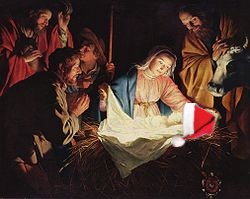
Is there no room in the manger?


Lost Knowledge

While an actual apocalypse for many turkeys ensued on Thursday, Fox News announced that a second reference to the Mayan apocalypse has been “admitted” by Mexican authorities. So I guess the world will end next year after all. And it figures, I just finally got a full-time job. For some reason, for all of our modern technology and scientific knowledge, many people still fear ancient “prophecies.” This remains true after countless failed apocalypses, two of them just this year proposed by Harold Camping in the name of the Almighty. People who trust the science of their cell phones—which, from any trip to the airport or bus station proves, humans are incapable of surviving without—nevertheless fear the “lost knowledge” of the ancients who believed myths were the most parsimonious means of comprehending a cold and uncaring universe. Yes, I’ll trust my entire life, finances, travel plans, social calendar, to a plastic box barely the size of a credit card. But if the Mayans said the world was going to end… these are the Mayans, after all! The Mayans!

Never mind that we know little about this antique people; we have had predicted ends to the universe from disaffected visionaries and disgruntled prophets ever since the Zoroastrians suggested this might not go on forever. And now that two predictions appear to coincide, it looks like its time to sell some stocks, cash in some IRAs and party like it’s 1999. When 2000 came in with its baleful symmetry, as some saw it, with events two millennia earlier, not many were dissuaded from the concept that never emerges. Doesn’t the book of 2 Peter state that the universe is reserved for a fiery destruction? Perhaps the Mayans had access to Holy Writ?

The fact is that most cultures concoct origin myths, stories of beginnings. The way the mind works, it is almost a necessary corollary to construct myths of the end as well. And somehow we trust that arcane knowledge on such matters is more accurate than the scientific scenario that, given the limited longevity of any single species, no humans are likely to be present when old Sol balloons out to be a red giant. Far more spectacular to suggest some ancient sage or savage saw it coming and grow anxious with the waiting. Strangely, many people seem ready to discard all the progress, the monuments, the essence of our humanity for the sake of ancient predictions. 2013 does not seem so far away. Many of us are planning to be here, even if they find an entire library of Mayan predictions. Perhaps the truest prophecy of all is that we, as humans, make our own future no matter what other humans have said in the past.


Material Whirled

With the moon and Jupiter waltzing slowly so high in the sky, radiating such brilliance early in the morning over this past week, it is understandable how ancient people came to see the gods as material objects. The course of progression seems to have been physical gods to spiritual gods: the earliest deities ate, drank, made love, fought. They were of the same substance as humans, or at least of the same psychological makeup. The Egyptians, Zoroastrians, and Greeks all toyed with ideas of beings of “spirit”—non-corporeal entities that did not participate in our material world, but were able to influence it. In the world but not of it. The tremendous gulf between great goddess and material girl was born. Today that concept is taken for granted, especially in western religions. We are locked into physicality while God is free to come and go.

Many religions respond to this by suggesting that we should look beyond the physical to the majesty hidden from biological eyes. And yet, physical creatures that we are, we are drawn back to material means to demonstrate our spirituality. One of the perks of working for a publisher is the constant exposure to new ideas. At Routledge I have been learning about the rising interest in material religion: the manifestation of religion through physical objects and rituals. This aspect of religious life easily devolves into a cheapening of faith into mass-produced, religious knickknacks and kitsch. Some mistake this for the real thing. While living in Wisconsin, my family used to visit the spectacular Holy Hill, the site of a Carmelite monastery atop a large glacial moraine. On a clear day you can see Milwaukee from the church tower. It is a large tourist draw.

No visit to such a shrine would be complete without the obligatory stop at the gift shop. Even the non-believer feels compelled to buy some incredibly tasteless artifact to keep them grounded in reality. Many of the items—giant glow-in-the-dark rosaries, maudlin mini-portraits of the blessed virgin Mary (BVM as the insiders call her, not to be confused with BVD) and the crucified Lord on all manner of crosses, line the walls and shelves. This commercialization is not limited to the Catholic tradition. Evangelical groups realize the importance of branding as well, passing out cheap merchandise (or better, selling it) with Bible verses emblazoned on it. These signs of faith sell themselves, but they blur the sacred distinction between human and divine. Does religion point to a reality behind the physical? This is its claim, but what is the harm in making a bit of cash on the side, just in case?


Demonic Beginnings

A friend recently asked me what seemed like an innocuous question: what is the origin of demons. I typed out an answer on the basis of my outdated reading on the subject only to realize that this is a very complex question indeed. While teaching my Ancient Near Eastern religions class over the past three years I regularly told students that there is no regular word for “demon” in Akkadian, the language of ancient Mesopotamia. Mesopotamian religion was the dominant system of belief in sheer size of area and antiquity in the Ancient Near East. There are characters recognized as demons: Pazuzu of The Exorcist fame among them. Their origin, however, is murky. In Mesopotamia demons are generally a mix of human and animal components supposed in some way to be responsible for misfortune. They are not evil, but they carry out the punishments decreed by the gods. In the first millennium BCE demons were understood to inhabit the Underworld, paving the way for Hell, once Zoroastrianism contributed the necessary duality for the region.

The Hebrew Bible contains no uncontested word for “demon” either. The words generally translated that way do not indicate evil spirits in the sense that the Christian Scriptures seem to depict them. In the Hebrew Bible they appear to be associated with the worship of “false gods” and the inhabitants of deserts and wastelands. In neither the Mesopotamian nor Israelite concepts do demons appear to “possess” people. By the time of Christianity, with its Zoroastrian-fueled dualism, we have an anti-God (the devil) and his anti-angelic minions (demons). One purpose here seems to have been to clear the monotheistic God of charges of originating evil. If there is only one God where does evil come from? Better to posit a devil than take that one where logic leads.

Back in the days when I was still in school, demons were regularly cast as the explanation for various mental illnesses and epilepsy. In a society that had trouble understanding the sudden onset of an epileptic fit or a sane individual growing insane, such misfortunes could appear supernatural. In a supernatural realm where evil is mediated by the devil, demons naturally volunteer for their old role as purveyors of divine punishment. Eventually the mythology of a revolt in the world of the gods emerged, probably based on the dualistic outlook of Zoroastrianism, and we soon have verses referring to the king of “Babylon” being reinterpreted as literal episodes on a spiritual plane. Once Jesus utilized this language to describe the suffering souls of his day, it became heresy to think of demons in any other way than as physically, or at least spiritually, real. In the modern day they are still with us as “spiritual entities that have never been human” according to Ghost Hunters. They do, however, resemble people in significant ways more than they resemble their mythic forebears. Where do they come from? The dark recesses of the human psyche. Their mythic origins, however, remain obscure.


Robopocalypse


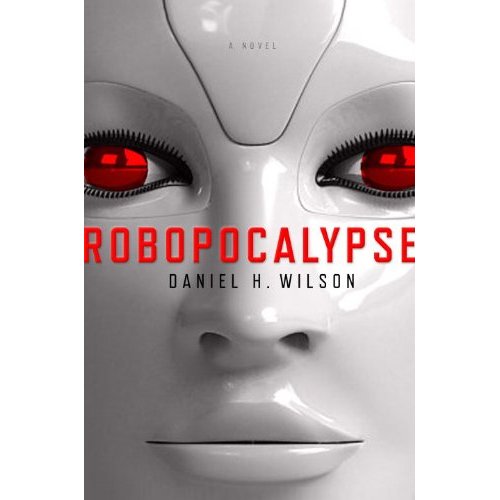
Yesterday the long anticipated novel Robopocalypse was released. Although I seldom indulge in hardcover fiction, I headed to my local Borders to purchase a copy. Sadly, it seems, my local is cutting back on first-day releases because I walked out of the store empty handed but with a robotic Armageddon in my head. Last summer I became acquainted with Daniel H. Wilson’s How to Survive a Robot Uprising, but word on the street is that this novel is serious. Steven Spielberg purchased the movie rights even before the book was released. And the concept owes its existence to religion.

If it were not for human religious sensibilities, would the concept of an apocalyptic end have ever arisen? Probing into the ancient psychology that lead Zoroastrians to suppose an ultimate conflict was just down the theological road, it is clear that even a strong moral sense alone does not dictate ultimate dissolution. By personifying evil in the form of Angra Mainyu, Zarathustra gave a (divine) human face to wickedness, and thus opened the possibility of battling against it. Evil as an abstract, non-personified force might simply be accepted as part of the universe we inherited. By providing it with will and intention, however, Zoroastrians allowed for a natural human response. Fight or flight is hardwired into our brains, but would we have dared fight a foe that is immaterial, amorphous, and completely abstract?

The nature of the enemy has transformed itself many times over the ages. Wilson, a scientist working with robotics during his education, has taken a religious theme and placed it in the context of a godless world of cybernetics. I must use caution here, since I haven’t yet acquired a copy of the book, but it remains clear that it is the humanization of non-human entities that gives force and pathos to a final conflict. Jesus charging his white horse into a foul-smelling cloud lacks the same impact. Thus mythologies are born. Mythologies that people live by and for which they frequently die. I do hope it all holds off until I can get a copy of Robopocalypse to read. Better yet, the end won’t come until after the movie is released.


Dog Gone Rapture

With the world about to end tomorrow, a friend pointed me to a story of a savvy entrepreneur. The idea is so obvious that I’m completely jealous I didn’t think of it myself. Among the Fundamentalist camp it is widely acknowledged that animals don’t have souls. They do, however, make wonderful companions nevertheless. When their good Christian owners are raptured to the skies, Rover is consigned to a cruel death by starvation if his soulless biological form is left inside. Poor soulless, sinless Rover! Reason (such as any theological thought can be called “reason”) and emotion clash. Bart Centre comes to the rescue. His company will break into the now abandoned private property that God had blessed you with, and rescue your pet. For a reasonable fee. As an atheist, Centre is pretty sure he won’t be going anywhere.

At notable—and even some rather forgettable—points in human history, people have guessed that it is all about to end. This is a strange belief when parsed apart from its original context. Ancient mythical thought tended to be holistic. We humans, with our own cycle of births and deaths, have trouble imagining anything that doesn’t follow the same pattern. All things must have beginnings and ends. Zoroastrianism began as a persecuted sect among the Old Persian religious realm. Persecuted sects tend to want an end to the suffering, and so it is no surprise that Zoroastrians gave us the end of the world. When Judaism was under the severe predation of Antiochus IV Epiphanes, it too looked for a radical change. Christianity under Nero and Domitian looked for a triumphant culmination of a universal purpose. And no end came. Instead, under Constantine Christianity gained a privileged position. With only periodic outbreaks, concern for the end of all things was pacified.

Today with the ease of lifestyle among most American Christians, it is surprising to see such antipathy toward the world. In the words of the Metatron, “Was Wisconsin really that bad?” Or maybe I have read it wrong. Perhaps this is the final culmination of the Prosperity Gospel: Christians have got it so good that the only way to better their lot is to end it all? Religions have always demonstrated their acquisitiveness either in terms of souls or currency. When you’re on top of that world, what direction is there to go but out? But you can’t take it with you, including your soulless friends. Perhaps that’s the real lesson in all of this: humans struggle to mix reason and emotion into one psyche, despite their diverse evolutionary paths to consciousness. We may readily accept the mythical but still wonder who will take Rover for his walk.

Cafe Press's take on the issue


Third Mile Island

Sitting in the shadow of the cooling towers of Three Mile Island along the banks of the Susquehanna River the night before a friend’s wedding is one of the college memories that remains vividly in my mind. The accident had occurred some six years earlier, but seeing those ominous blinking red lights, no doubt to warn low-flying aircraft of the massive towers, left me with an irrational sense of danger. It will be a sad day when we have nothing left to fear. The next year, the Chernobyl disaster took place. This tragedy has results that are still playing out among the millions exposed to the radiation. Perhaps these events explain why Alan Parson Project’s Ammonia Avenue remains among my favorite albums.

While having my oil changed yesterday, the waiting room television was fixated on the story of the Fukushima Daiichi meltdown, settling it comfortably between Three Mile Island and Chernobyl. With anxiety about the year 2012 running amok, many people are looking for signs. Perhaps the most unfortunate meme the Bible has introduced to the world is the Apocalypse. In origin apocalyptic concepts emerged from the Zoroastrian idea that a dualistic change in ages was coming. Believing this world to be under the baleful influence of Angra Mainyu, a day was eventually going to arrive where all this would be turned around and Ahura Mazda would set things right. Christianity borrowed the idea, shrouded it in secrecy, and began an unhealthy interest in the end of all things.

Fukushima Daiichi may feel like the end of the world, but it is not. In fact, all that we know of our planet shows its great resilience. The late Stephen Jay Gould, in his popular book Bully for Brontosaurus, opined that the earth is not as fragile as is often supposed. He notes in the prologue, “Our planet is not fragile at its own time scale, and we, pitiful latecomers in the last microsecond of our planetary year, are stewards of nothing in the long run.” Not that we should not attempt to protect our environment – we do that to preserve ourselves and other species – but if we should fail, earth will carry on. Our globe is expected to support life for another 500 million years. Instead of following false positives, we might be better off reminding ourselves that Gaia still has a few tricks up her metaphorical sleeves.

One way or another


Aye, Aye, Robot

As students gave their final presentations, the very last group discussed the End of the World. This is a topic upon which the Hebrew Bible is generally silent, despite the rants of many who misunderstand the Zoroastrian influence upon the apocalyptic book of Daniel. No, the Hebrew Bible’s apocalyptic material looks forward to a change of ages, a radical new beginning, but not an end of the world. Well, maybe the end of the world as R.E.M. knows it, but not the cessation of everything. In an interesting twist, this group moved from the Hebrew Bible to scientific scenarios of the end of it all. What became obvious is that undergrads these days are faced with multiple doomsday scenarios, most of which are of human origin.

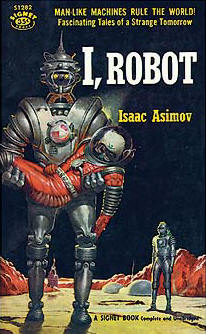
Last month I was inexplicably elected as the president of the adult chapter of my daughter’s high school robotics team. An unemployed religion professor hardly seems the logical choice for leading the way into a technological future. I even declined the nomination but was persuaded to give it a try. Robots have improved the quality of our lives to a degree that most people do not even recognize. So I listened in amazement as the students last night presented the doomsday scenario entitled “iRobot.” Clearly this is a Transformer-like blend of iMac/iPod/iPhone and Isaac Asimov’s sci-fi classic I, Robot. (Is it mere coincidence that his name can be written iAsimov?) Their description was terse and scary: nanobots and more boxy industrial models will commandeer the Internet and take over. We will be Matrix-like slaves. And I am the president of a robotic club booster association. I felt like Judas, with a MacBook.

Robots, we are told, lack empathy. Experience teaches me the same about Republicans. This weird hybrid of religio-politics is not unlike our hypothesized robotic nemeses. Religion has given us a rope to hang Judas that can double as whip against the backs of the underprivileged. Where are Asimov’s Laws of Robotics when you need them? “A robot may not injure a human being or, through inaction, allow a human being to come to harm.” Yes, the old ways are breaking down indeed. I think I’ll take my chances with the robots. At least when a robot is cutting off your life support systems it is not doing so in the name of Jesus.


O Hades

Over the past week I have been grading essay exams for my mythology course. Most of my classes are large enough that assigning written work isn’t really feasible; adjuncts tend to teach many more classes than their full-time colleagues and getting grades in on time is impossible with too much paperwork. I tend to use “objective” tests, although I am aware, pedagogically, they do not reveal what a student actually knows. When I read essays, however, I am always brought to new levels of awareness. I also get the distinct feeling that I’m becoming a curmudgeon, complaining that back in my day you had to write better even to get into college. Regardless, it is a learning experience.

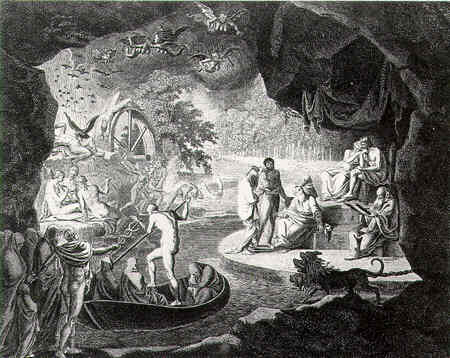
Last night I was reading an essay about Hades. This subject has particular interest for me since I recall attending revival services as a child where the guest evangelist shied away from using the word “Hell” in his sermons. He always called Satan’s realm “Hades,” rather like Paul, but when I studied mythology in school I learned that the places were quite different. Disney’s Hercules once again conflated the person of Hades with a Devil-like anti-god with fiery hair and the most Gothic chariot I’ve ever seen illustrated. This particular essay revealed an interesting religious training for the student; s/he wrote that unlike in Christianity, Hades was not God’s evil brother. The implication struck me – for her/his Christianity, the Devil is God’s diabolical brother. I don’t doubt for a minute that there are churches that teach such theologies, but the more I pondered the essay the more the idea expanded.

The dualism inherent in the view of God versus Satan clearly derives from Zoroastrianism. Judaism never recognized a “devil” character until meeting him in the Persian context of the Exilic and Post-exilic periods. I tarried long among the “orthodox” Episcopalians of Nashotah House where theological correctness was tantamount to being considered an actual human being. In such a school there was no time for those who thought dead Christians became angels or that you got to Heaven by being good. Yet the Devil was very real for these black-garbed acolytes of righteousness. The idea that he could be God’s brother, well, say a dozen Hail Marys and even more Our Fathers and we might let you back in the door. To me, nevertheless, it seems an almost biblical explanation for the origin of evil. Yes, Manichean in aspect, the idea does not fit nicely with a neat monotheism, but what is evil if not the antithetical DNA of God? Non-theology students have nothing to lose by expressing what they were taught in a secular mythology class, and for a brief moment in a student paper I had a glimpse of the true pluralism of Christianity.


Gnot What It Seems

Mythology has a funny way of dying. It just keeps resurrecting itself. It is the eternal return. One of the shocking truths about religions is that their cohesiveness is exaggerated for effect. The usual desired effect is power or influence over others, as in most human enterprises. Nowhere is this clearer than at the birth of religions. Since each human brain processes information in a unique way, the two people in a room with the religious founder will hear his/her teachings in their own way and neither will be identical with each other or the founder. This phenomenon has been long recognized by religionists. It is customary to speak of “Christianities” or “Judaisms” rather than suggest a fictional singularity.

Manuscript finds and serious study of early Christian texts make a strong case for two major brands of Christianity as early as the first century of the common era: “Orthodox” and “Gnostic.” The former likely arose in opposition to the latter. Gnosticism congealed out of a heady brew of Zoroastrian dualism, Judeo-Christian nascent apocalypticism, and good old “Canaanite” mythology. The teachings of Jesus could readily fit into a worldview that rejected materialism for a pure spiritual plane untainted by physical limitations and pollution. It is only a small step from here to the belief that the physical world is an illusion. Problem is, that would mean the physical resurrection was apparent only, and what does that mean for all future prospects of bliss? Better to bring down the hammer of Orthodoxy than to live with doubt.

Yet Gnosticism lives on. One of the few direct lines of descent can be found among the Mandaeans, an endangered monotheistic sect that has maintained a Gnostic dualism for centuries. Indeed, they trace their origins all the way to Adam. Gnosticism, whether recognized or not, has left its influence on concepts from The Matrix to Philip K. Dick’s novels to Rich Terrile’s theories of God. Certainly there is a draw to believing this world is an illusion and that reality lies elsewhere. Maybe in that real world there is no need for religion since everyone already knows the truth.

sursum codex


Two Roads Diverged

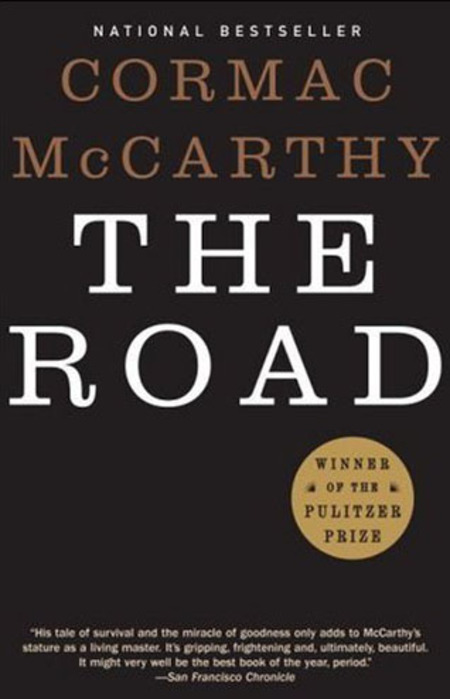
Back in my Gorgias Press days one of my co-laborers (BU) suggested that I might enjoy reading Cormac McCarthy’s The Road. Since then it has come out as a movie, and further apocalyptic events have occurred – the Deepwater Horizon disaster and the election of Chris Christie come to mind – so I finally got around to reading it. It is a harrowing book for any parent to read and I doubt I have the heart to see the movie. Already the book is spawning internet quotes and quips, but I was particularly interested in seeing how this post-apocalyptic novel handled God.

Since the Bible, via Zoroastrian influence, gave us the religious concept of the apocalypse, it is fitting to see how religion fares in its unhallowed progeny. Mostly God is absent. When the man and his son mention God, the language is spare and laced with betrayal. “There is no God and we are his prophets,” the old man declares after the man and his son leave the bunker. A few paragraphs later he states, “Where men cant live gods fare no better.” The value of the apocalyptic metaphor is that it forces us to face life as we find it: raw and uncompromising. In the fictional apocalypse it is permissible to utter aloud implications of life’s callous lessons.

My career has had its share of jagged edges. The lacerations I’ve personally received have been at the machinations of Christians eager for self-justification. Self-congratulatory individuals and collectives that suppose God has specially favored them. “There is no God and we are his prophets.” It is like reading Camus in slow motion. One of the lessons both Nashotah House and Gorgias Press taught me was that it can always get worse. Reading McCarthy’s sad yet true tale of the woe we bring upon ourselves, the lesson for those eager for the apocalypse is that they have only to open their eyes.


Probation in Hades

Yesterday I received an email in my Rutgers account with the title above. It was difficult to determine if the message was directed at me or was a piece of spam that had gracefully navigated around the powerful university filters. In either case, the sender had mapped out to an impressive degree the goings on in the afterlife. I am not qualified to comment on the correctness of the assertions, having never been to the Underworld myself, but I was hooked by the preference for the name Hades over Hell. This particularity took me back to revivalist sermons I heard as a youth when preachers, apparently fearing the swear-like quality to the word “Hell” – which the church gave us – deferred to the use of “Hades.”

As I have described in one of my podcasts, Hell is a Christian construct derived from Judaism’s confrontation with Zoroastrianism. The idea is distinctly Christian in its formulation: Hell is the afterlife for those who side with Satan and his angels and therefore are blocked from Heaven (also based on Zoroastrianism). Nobody wishes to go there, but those who choose the powers of darkness will be sentenced to an eternity of burning and torment for their choice. The idea is so odious that eventually its very name came to stand for a curse-word in many Christian contexts. In the pietism of the Evangelical tradition, the word itself is to be avoided. Thus I heard sermons warning of the somehow softer sounding Hades.

Hades is not Hell. I tell my mythology students that the classical Greek conception of the afterlife is not necessarily a punishment. It may be for some notorious sinners, but generally it is the fate of all the dead, like Sheol in the Bible. The choice of Hades as a stand-in for Hell is not in keeping with standard Christian teaching. Hell is Hell. Hades is somewhere else. Both lie underground, but they inhabit completely divergent conceptual worlds. I wish to thank my sender for this carefully crafted Underworldly roadmap, but in the interest of full disclosure, I must insist that a Hell be called a Hell. Hades is best left to Pluto and his retainers, so Satan needs a realm of his own.

Hades, slightly influenced by ideas of Hell


Sol Invictus

Perhaps for abject fear of paganism, western civilization has avoided holidays associated with the summer solstice. Being the lightest day of the year in a frequently dark northern hemisphere, it was naturally a time to celebrate the victory of light over darkness. While the winter solstice insinuated itself into the complex of Christmas holidays and Easter became intricately intertwined with the vernal equinox, the summer and autumn holidays were rejected.

This neglect of the powers of light coincides to some extent with the orthodox Christian rejection of Gnosticism. The Gnostics, able dualists like their Zoroastrian predecessors, celebrated the victory of light over darkness. Remnants of their theological outlook survived in the canonical Gospel of John and the always questionable Revelation. Ancient societies throughout the world recognized the summer solstice because, regardless of its name, the sun was acknowledged as a powerful deity. On this day the sun is at its height of strength, banishing darkness for longer than any other day of the year. It is a day not to waste.

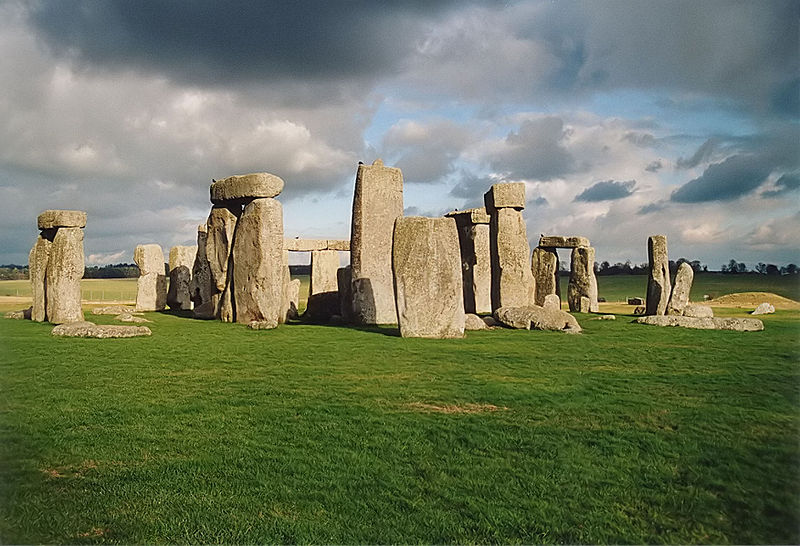
Christianity has preserved some minor holidays for the summer season, but with the advent of a leisure-based society where summer is a time to take it easy, if not cease work altogether, the solstice lost its grip. Perhaps because light is so abundant already in the longer days as winter wends its way into spring and summer and lingers pleasantly until the vernal equinox, summer itself is simply holiday enough. Those adhering to the ancient religions nevertheless gather at sites like Stonehenge and Maeshowe, or even Egypt’s famous pyramids to consider the unending influence that our special star holds for its most imaginative planet.

The stones of summer


Thus Spake Zarathustra

Preparing for another round of my annual course on Ancient Near Eastern Religions, I have been brushing up on Zoroastrianism. For this I generally first turn to Mary Boyce’s standard introduction, Zoroastrians: Their Religious Beliefs and Practices. The book was written in the 1980s and is showing its age a bit, but it remains a seminal introduction to a religion whose humble position among world belief systems belies its overwhelming impact. A strange fact about the religion is that many of its main tenets have been summarily dismissed by the more politically influential religions of antiquity while its secondary features have been dramatically embraced. The classic example is dualism.

Zoroastrianism was founded on a dualistic principle: Ahura Mazda was the entirely beneficent, good creator, while Angra Mainyu was the powerful principle of evil. This cosmic struggle tapped deeply into all aspects of life, leading to the beliefs in two afterlife realms (which evolve into Heaven and Hell), two very powerful entities (that become the God versus Satan paradigm), and two dispensations (present age as opposed to future age, the ultimate source of the apocalypse). Indeed, it would be difficult to recognize Christianity without Heaven and Hell, the Devil, or the final judgment. Boyce carefully traces the earliest evidence for Zoroastrianism back to its formative period and offers detailed explanations for each aspect. Beyond this, however, Zoroastrianism became a forgotten faith, an abandoned parent.

It is a fact that religions evolve. Many believers like to trust that they have the straight information directly from the founder’s mouth and that their brand is the authentic brand of faith. All religions, however, if they survive long enough, change to meet the needs of present-day adherents. Again, Zoroastrianism is instructive. Believing in the sacred nature of fire, during the industrial revolution the use of fire for profane work, such as running a steam engine, was considered inappropriate. How were Zoroastrians then to keep up with society without softening their stance on the secular use of fire? The struggle was real and has never been fully resolved. The same exercise could easily be applied to other religions as well. Until the Zoroastrian-inspired apocalypse arrives, religions will have to adjust to continual societal change and accept that quantity of belief does not affect quality.