Religion Embraces Science

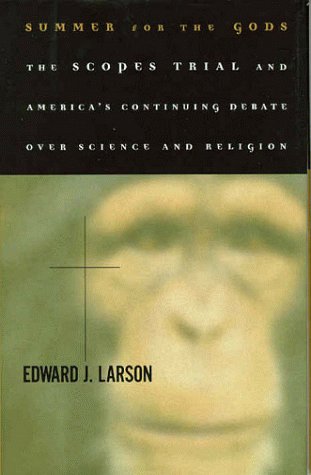
My colleague and one-time dean, Michael Zimmerman of Butler University, has brought his Clergy Letter Project to the Huffington Post. Well, he has written an online piece for the Huffington Post entitled “Redefining the Creation/Evolution Controversy.” His article is clear and to-the-point: the Creation/Evolution debate is not about religion versus science. That has been shown repeatedly for those who care to examine the history of this controversy. Evolution barely caused a ripple among clergy when it was first becoming popular among scientists. Ministers assumed it was just one of God’s mysteries and went about their clerical duties. The issue became a public relations boondoggle with the Scopes Trial of 1925. One of the best books written on that subject is Edward Larson’s Pulitzer Prize-winning Summer for the Gods.
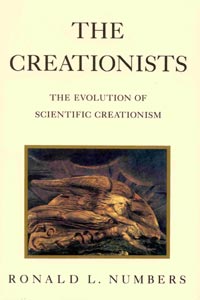
As I have stated in my podcast on this issue, Creationism is a splinter movement within Evangelical Christianity. Over the years it has drawn in members of a wide variety of Christian groups, including Roman Catholics and mainstream Protestant denominations. It has publicized its concerns so well that many people assume that this is the “Christian” viewpoint and that all other views are, by definition, non-Christian. This is the perspective that has driven a wedge between religion and science, creating a false front that has led to many confrontations between Evangelicals and scientists. My favorite history of the Creationist movement is Ronald Numbers’ The Creationists.
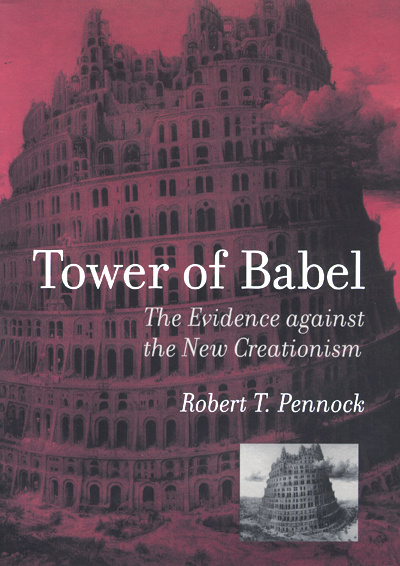
The true motivation of the movement is, without doubt, political. While many sophisticated people scoff at the apparently simplistic machinations of the Creationist movement, what they do not realize is that it is a highly organized and politically savvy alliance of special-interest groups. Robert Pennock’s Tower of Babel was an academic exposé of the inner workings of the Creationist movement. It is perhaps the most important book written on the subject. Published by an academic press, however, it has not found the wide public readership it deserves.
Do yourself a favor: read Dr. Zimmerman’s post. I believe he has framed the dilemma in the correct way: the struggle is one within a specific religion, Christianity, not one between religion and science. The more the public knows about this issue the better off we all will be in the long run.

3 thoughts on “Religion Embraces Science

  1. Pingback: Religion Embraces Science « Sects and Violence in the Ancient World | Drakz Free Online Service

  2. Henk van der Gaast

    Here paradeth my materialism once again!

    Scientists are used to religious folk grabbing and re-interpreting ideas with their own claims to the original science. Its been going on since well before we toddled out of Africa.

    In every case, the religious ideas change and dilute in a very short historical period.

    It’s pointless for me to ask a creationist what the idea of genetics was 150 years ago. They all seem to know the offence to “god” what Darwin postulated 150 years ago.

    Two things come out of this and one of them I am sure you have put into practice;

    1) in this first 2 (or three hour) session, write a paper on who your god is, what you think he can do, how you interact with god and what emotions does god feel to you and others. I ask this sort of thing to a lot of folk, the perceptions of god vary greatly.

    2) there is no reason to not let people with unscientific biases do science. Just make sure they get an education that allows them into scientific programs. Many religious folk I know are scientifically trained and employed. Education is a tool to train the singular minds. 6.5 billion singular minds have it that good prospects come from good education. The privilege of good education is enjoyed but by a very few reflectives (yes Steve, your HD average students).

    A hell of a lot of us come around to the fact that the mathematics and physics that we and our future will be defined by all our 1500cc of matter called our brain can define (or evolve to define).

    Creationism and its subsets, to me is a very insular way of looking at things through the eyes of a once Sumerian story. Sadly, the creationist never understand that a hell of a lot of science happened before the idea of heroes and gods could have evolved.

    My argument then; We made up gods because somebody had some free time on his hands and became an artist… and “by the spirit of the giving Auroch” I am damn lucky to have Samu, Kish and Yeti to make and bake the clay, Gil and Ur to have taught me to write and my parents to put me through my education at Eridu U.

    Like

    • Steve Wiggins

      I appreciate the exercise suggestions. In today’s post I seem to have come round to your outlook a little more! I agree that people have a hard time letting go of the mythology of Sumer and its descendants. I think we like the gods and heroes because we fear what life would be like on our own.

      Like

Leave a reply to Henk van der Gaast Cancel reply

This site uses Akismet to reduce spam. Learn how your comment data is processed.