
Since “religion” is a relatively modern concept, I always begin my Ancient Near Eastern Religions class with an exploration of what “religion” is. We all have a concept of “religion” (I’ve reached my quotation quota, so I’ll assume it is safe to write “religion” without them from now on). The idea, however, is an offshoot of the development of monotheism. Prior to the recognition of a single deity, in a world where no laws of physics existed, just about everything was the result of the conflicting interests of the gods. Why call it anything special beyond the facts of daily life? Keep the gods happy, live long and prosper.
With monotheism arrives the component of belief. If there are hundreds or thousands of gods, belief in the right one simply doesn’t enter the equation. Ancient gods aren’t overly concerned with humans. People were created to serve them, but salvation, fulfillment, apotheosis, and belief weren’t part of the picture. Look at the world around you: this is proof of the gods and their power. Religion in such a world is more a matter of what you do – placating the gods – than it is a matter of what you believe. It is difficult for modern people to project their minds back to a world without the explanatory value of science, a world where all could be explained by the gods. Such was the world of antiquity.
Once monotheism emerges with its views of belief in the correct god, and the corollary of that god’s personal concern for you, religion experiences a sea change. Yes, that god still may require placation, and yes, that god may still intervene regularly in the world, but this is the only god now. One of the surest ways to anger him (for he is male, like human rulers) is to disbelieve. A jealous deity, he detests belief in other gods, although they do not exist. At this juncture, we have found religion. When the world itself operates at the behest on one god, keeping that one god satisfied becomes a specialized part of life and religion is born. The world will never be the same again.
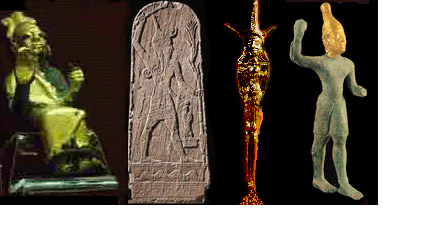
The usual suspects
 Steve A. Wiggins
One thought on “Birth of Religion”