
The earthquakes and tsunami that have devastated northern Japan have me thinking about natural disasters. Currently in New York City there is a display of artifacts from Pompeii, an exhibit I have not yet had a chance to visit. The parallelism of the two tragedies, however, has not escaped me. Pompeii’s destruction by Mount Vesuvius in 79 of the Common Era and its subsequent rediscovery and excavation are the stuff of legend. An unsuspecting city in the shadow of a sleepy volcano, at the pinnicle of its civilization, suddenly snuffed out. Forgotten for centuries, and eventually rediscovered. But rediscovery led to embarrassing revelations.
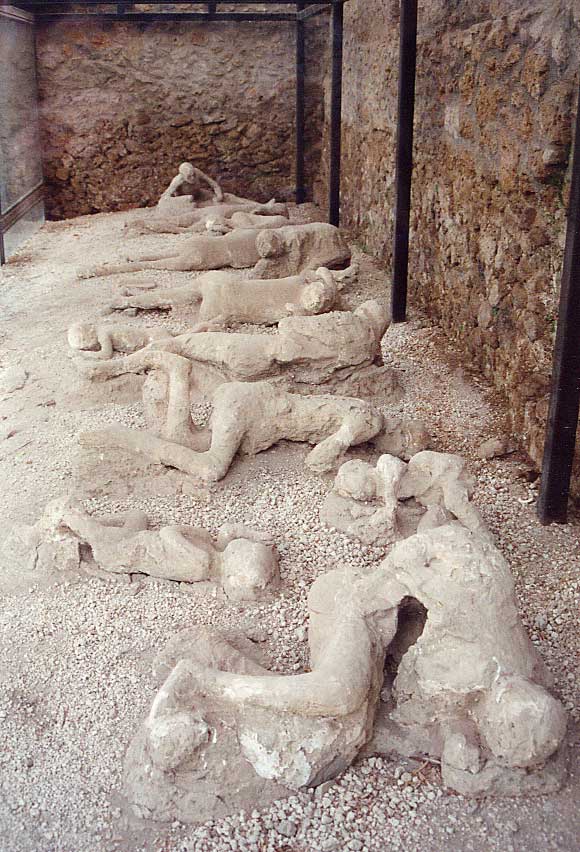
How will you be remembered?
Natural disasters have a way of stopping time. Not just in the sense of speeding up the rotation of the earth by another 1.6 microseconds either. Surveying the wreckage of what we believed was a stable status quo, priorities are suddenly shifted. Compassion, rescue, and survival outweigh the petty differences of just the night before. Disasters are snapshots of the human condition. As the hot ash settled on Pompeii, lovers clasped in their final moments, never imagining that some two millennia further on that more modern, civilized tourists would be embarrassed by so human a response. Disasters are harsh teachers, but we may learn in the face of an unfeeling nature that we are all humans after all.
 Steve A. Wiggins