Alien Ideas

One of the iconic moments in all of cinema, known well beyond the confines of sci-fi and horror fans, is the alien bursting out of Executive Officer Kane’s chest.  The movie, of course, is Alien.  The screenwriter, Dan O’Bannon, was also known for contributing to Star Wars, Total Recall, and Return of the Living Dead.  Alien is one of those horror films I was too afraid to watch when it came out in 1979.  I was sixteen at the time, and had been primed by commercials that still haunt me.  I would eventually, in seminary, see Aliens and prompted by curiosity, eventually went back to watch the original.  It has since become one of my favorites, and analysts of genre fiction and religion quite often point to the iconic role of Ridley as worthy of theological mention.  Her self-sacrifice in the third installment has been heralded as one of the many cinematic messianic moments.

Science fiction and horror are closely related genres.  They can be teased apart in Alien only with extreme finesse.  Consider the most famous scene again.  Kane, while on the derelict alien vessel on LV-426, has the unfortunate experience of an alien larva sealing itself to his face.  The crew of the Nostromo can’t get the creature off—whenever they provoke it, it wraps its tail more tightly around Kane’s throat or leaks acid.  Then it falls off and dies.  Everyone, not least Kane, is relieved.  He joins the rest of the crew for a meal, but then shows signs of distress.  Something is eating him from inside.  The alien rips out and the line from sci-fi to horror is irrevocably crossed.  That unforgettable scene immediately became a classic of the genre.

Dan O’Bannon, the screenwriter, suffered from Crohn’s Disease.  He attributed the alien-bursting scene to his own experience with the condition, which eventually took his life.  Someone in my family was recently diagnosed with Ulcerative Colitis, a disease similar to Crohn’s.  In response I did something I’d never done before; I started a fundraiser on Facebook.  The Crohn’s and Colitis Foundation is a non-profit organization funding research into these debilitating illnesses.  It offers support to those who suffer with the diseases, the incidence of which is on the rise.  I once told my family member about O’Bannon’s use of his own suffering as the inspiration for that cinematic moment.  It brought a rare smile in the midst of a flare, a smile with a little too much understanding for a young person.  If only Ripley were here to take control of a menace far too human.


Born Once More

Every once in a while a reader, either here or on other social media, asks me what my religious beliefs are.  The expected answer to such a question is the standard label of a denomination of some sort.  My response, however, is that knowing the group I belong to (and I do) should not effect the way my thoughts are viewed.  With the exception of some groups suspected of mind control, standard religions are generally trusted as being motivated by pure intentions.  Having both attended and taught in seminary settings, and knowing a great number of clergy, however, it becomes clear that denomination is less important than one might think.  In short, I answer this question in the public forum of neither classroom nor blog as I truly believe there’s nothing to be gained by readers/students knowing where I personally seek meaning, denominationally.

It’s no secret that it was once the Episcopal Church.  (I could not have taught at Nashotah House otherwise.)  It was made pretty clear after being at said seminary for many years that the Episcopalians had no official place for me.  Even when I worked a few blocks from the church’s headquarters in New York City I could find no one willing to listen or consider my credentials.  Its Church Publishing branch wouldn’t consider me in their book wing.  Were it not for some former students who still minister to me, it was clear they did not miss me.  So it was with some surprise that I found myself in Nativity Cathedral in Bethlehem on Saturday for their Celtic Mass.  The Cathedral itself is lovely with a négligée of wrought iron tracery for a reredos, appropriate for a city built by steel.  Eight angels with outspread wings stood atop it.  Like most sanctuaries, it was a place of refuge from the busy, noisy street outside.

The reading from Amos 7 stood out to me.  Lectionaries, by definition, take pericopes (selections) out of context.  Amos’ vision of the plumb line is actually part of a series of visions, but here stands alone with the episode of Amaziah trying to send Amos back to Judah.  The prophet responds by saying he’s not a prophet, but just a guy who’s received a message from God.  In ancient times there were prophets paid for their services.  They supported the government positions and governments made sure they were cared for.  The situation hasn’t much changed, at least among conservative religious groups under a Republican administration.  There were other parallels here, but saying too much on them might end up giving too much away.


Bible Misunderstood

Okay, so I wrote a post a couple days ago about evangelicals challenging Trump’s China tariffs because it will raise the price of Bibles.  Little did I know that Miriam Adelson wants a “Book of Trump” added to that very Bible.  Now, heroes are a personal business; to each their own.  Adding someone to the Bible, however, especially when that person has no idea of what Jesus said, is problematic.  Biblical and ecclesiastical scholars know that even if most Christians agreed books simply can’t be added to Scripture.  Many think the Gospel of Thomas should qualify—it may actually be closer to the words of Jesus than some of the canonical gospels and was putatively written by a disciple.  Thomas, however, will never make the cut.  Early bishops and elders in the church set pretty firm limits to the New Testament.  

Some religious traditions, such as Mormonism, have gotten around this impasse by writing entirely new sacred texts.  Loyal Trump followers might indeed fit the description of what used to be called a cult.  Thing is, George W., and George H. W., and even Ronald Reagan were more religious than the incumbent and nobody suggested adding them to the Good Book.  Our world has somehow flipped upside down in the last three years.  All I know is that in the photos of Trump with the most Jesus-like Pope in modern memory the Holy Father wasn’t smiling.  Then again, the Pontiff would likely not autograph Bibles if asked to do so.  Has anyone suggested a book of George Washington?  There’s such a thing as getting carried away.  

The Bible, apart from being the sole recognized authoritative text of the world’s largest organized religion, is an iconic text.  This means that the Bible is recognized as an important book—perhaps even a stand-in for God—without considering what it actually says.  This was a major point behind Holy Horror and it’s essential to understanding American political behavior.  Manipulating Scripture for political ends is generally the most cynical of approaches to the Good Book.  In America you can drive down highways and see the Bible advertised on billboards.  Large segments of an increasingly secular society are still motivated by it.  There was a time when it was believed that such cavalier suggestions as that of Ms. Adelson would constitute blasphemy, or would at least profane the founding book of Christianity.  In the minds of some Trump has clearly become a god.  So it was in Rome before the fall.


Good Ground

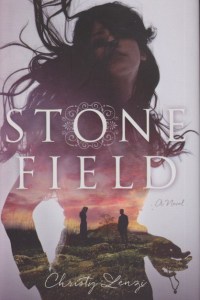
Young adult literature gives me hope.  The quality, speaking for a guy who grew up in a small town with limited choices, has improved astronomically over the past several years.  One of my favorite (adult) novels is Wuthering Heights, and so it’s no surprise that I found Christy Lenzi’s debut novel Stone Field quite engaging.  Set in a different time and place, and with a younger readership in mind, it retells the story of forbidden love based on xenophobia.  The message has never been more relevant.  Although it avoids explicit language, it does include adult situations and features a strong female protagonist in an age of explicit gender inequality.  During the chaos leading up to the Civil War, star-crossed lovers are set against one another because prejudice is a most effective poison.

While not a religious story, the iconic Bible plays a large role in it.  One of the main characters is a preacher, but even without him Catrina Dickinson’s family and friends are ready to quote the Good Book as unquestioningly as a Republican (with my apologies to fiscally conservative friends untainted by this aberration).  This is beyond a realistic portrayal of American life of the 1860s, it reflects the way that many people continue to think of Scripture.  Nevertheless, in one crucial episode of the story set in the church at Roubidoux, Missouri, the iconic role of the Bible becomes clear.  It is deftly woven throughout the story in a way that might serve as a lesson for modern writers seeking verisimilitude.  Many authors fear to address religion, but the Good Book is alive and well in these post-frontier days.

Often the desire to avoid religious motivations leads to stories that lack a key element of the social fabric.  In my own attempts at fiction religion is seldom absent.  It is the way average people live.  Lenzi presents Cat as being aware of but unwilling to be cowed by the Bible.  Indeed, as the story unfolds with several tragic events (remember, Wuthering Heights) she demonstrates that Catrina knows but doesn’t accept the strictures of Scripture.  The issue of theodicy hangs heavily in the atmosphere of the novel.  To me, this makes stories appear more life-like than tales that simply suppose religion doesn’t impact people.  When tragedy strikes, many people question what God, or their stand-in for the divine, is doing.  Anyone who’s asked “why me?” has directed that question into the world of theodicy, whether intentionally or not.  Reading this story while going through a family illness may have drawn this to the surface, but it underscores just how effective it may be for a realism that is otherwise lacking, whether in fact or young adult fiction.


A Decade

Please pardon my being sentimental, but today marks one decade of blogging on Sects and Violence in the Ancient World.  I realized, thinking this over, that I used to make some interesting, perhaps even quotable statements back then.  Why not, I thought, farm those older posts to celebrate what I was thinking when I was a tenth-of-a-century younger?  So for today’s post, I’m presenting some quotable quotes from July 2009, starting with one of the zingers from my very first post.  For convenience, I’ve even provided the links to the posts so you can see them in context, if your July has somehow not filled itself up already.

Sects and Violence in the Ancient World, by the way, was the name given when one of my nieces thrust a recorder in my face and asked me what I would call a blog, if I had one.  She subsequently set this site up for me.  One aspect of the title may not have been evident: it’s a quasi-anagram for my initials.  It has been, from the beginning, mostly metaphorical.  Without further ado, then, a few of my favorite lines from a decade long gone:

“He had a sidekick called Cypher (sold separately), and arch-enemies with such names as Primordious Drool and Wacky Protestor. I marveled at the missed opportunity here — they could have called them Text Critic and Doctor Mentary Hypothesis!” First post: Bible Guy, July 12, 2009. <https://steveawiggins.com/2009/07/12/bible-guy/>

“Technology has outstripped reality.” Asherah Begins, July 13, 2009 <https://steveawiggins.com/2009/07/13/asherah-begins/>

“Black and white are not in the palette of serious religious studies.”  God is Great (not)?, July 14, 2009 <https://steveawiggins.com/2009/07/14/god-is-great-not/>

“When he [Aqhat] refuses to release it to the goddess he is unfortunately pecked to death in a hitchcockian demise by a swarm of buzzards with attitudes.” Sects and Violence, July 15, 2009 <https://steveawiggins.com/2009/07/15/sects-and-violence/>

“Indeed, one may think of them [religion and monsters] as fellow ventricles in the anatomy of fear.” Vampires, Mummies and the Holy Ghost, July 16, 2009 <https://steveawiggins.com/2009/07/16/vampires-mummies-and-the-holy-ghost/>

“Better to consider it [weather] human than to face unfeeling nature.” Changing Faces of the Divine, July 18, 2009 <https://steveawiggins.com/2009/07/18/changing-faces-of-the-divine/>

“As the gods are drinking themselves senseless (how else can the latest Bush administration be explained?)…” Drunken Moonshine, July 20, 2009 <https://steveawiggins.com/2009/07/20/drunken-moonshine/>

“As usual, we kill off what we don’t comprehend.” Not Lion, July 22, 2009 <https://steveawiggins.com/2009/07/22/not-lion/>

“A bonobo was recently documented as uttering the word ‘yes’ to a keeper’s question, officially making her more articulate than some clergy I’ve known. Even today there are churches that still call their leaders Primates!” Religious Origins, July 23, 2009 <https://steveawiggins.com/2009/07/23/religious-origins/>

“I never used a computer regularly until I began my Ph.D., and then it was only a glorified typewriter, qwerty on steroids.” Who We Were, July 27, 2009 <https://steveawiggins.com/2009/07/27/who-we-were/>

“I grew up in a blue-collar household where paying ladies for favors was itself considered a sin.” Yes, Mammon, July 28, 2009 <https://steveawiggins.com/2009/07/28/yes-mammon/>

Where do you suppose we’ll be a decade from now?


Trumping the Bible

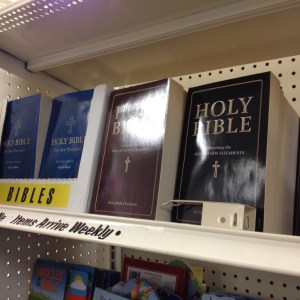
The media is chattering about one of the very many contradictions of evangelicals who support Trump.  Since I have a foot in the world of the Bible business, I read with interest how Trump’s tariffs on China will put Bible publishers in a bind.  You see, the Good Book is generally sent offshore since printing costs (and technologies) are too expensive to replicate in God’s new chosen nation itself.  This lack of divine foresight should be a bit disturbing.  The entire evangelical enterprise is based on their reading of Scripture, and the belief that the divine choice of America is behind such momentous events as 45’s election.  Maybe we should check our pipes for lead.  In any case, Bibles, which are printed cheaply in high volume overseas, are set to become too expensive to give away because of the great pretender’s tariffs.

A few media outlets have picked up this story, including one that noted Trump’s favorite Bible verse is “an eye for an eye, and a tooth for a tooth.”  The famous lex talionis statement was famously, well, trumped by Jesus who said that the ideal was to turn the other cheek.  In a rather Philistine way, evangelicals have sided with a man who says Jesus was wrong.  If you want to check up on me in your Bible you’d better get your wallet out.  Ironically from a Republican point of view, tariffs are themselves the breaking of the commandment of free trade.  Still the party that claims to believe that does nothing to prevent the sale of their souls, cash on the barrelhead.

Many evangelicals may find the idea of Bibles as a business distasteful.  It is, however, extremely profitable for those on the supply end of the deal.  Bibles are printed at a volume that would make most authors green, and due to its size the Good Book requires specialized paper most of the time.  This is so much the case that Bibles not printed on “Bible paper” just don’t feel like sacred writ.  Since costs of living in the United States are quite high, and since this kind of specialized printing would be too expensive in this situation, publishers outsource God’s word.  Some publishers have been pleading with the government to exclude books from Trump’s tariff so the Good News can continue to spread.  The fact is that only one deity, called Mammon in the Bible, runs this enterprise.  And to continue to buy Bibles at the evangelical rate will soon be requiring an act of sacrifice.  I guess the lex talionis still applies.


The Job of Theodicy

Most people, I suspect, don’t think about diseases until someone they know is afflicted.  It’s natural enough to try to avoid thinking of the negative, and I know that I’ve always felt overwhelmed when it came to worthy causes seeking donations.  I surprised myself, therefore, but putting up a Facebook fundraiser for the Crohn’s and Colitis Foundation.  Someone close to me was diagnosed with the disease, and seeing suffering first-hand has a way of changing your perspective.  You want to do whatever you can to help.  Instead of feeling completely at the mercy of chance, I put my fundraiser online and I’m hoping for the best.  A doctor I know informed me that foundations for diseases are among the most helpful websites for those with the condition.

In my mind, as in that of many others, disease is intricately tied in with theodicy—the problem of innocent suffering in the presence of a God supposed to be good.  Theodicy is frequently the first stop on the road to non-belief, as a careful reading of many of the “new atheists” reveals.  No theologian has devised a satisfying theodicy.  The question always comes down to the fact that a universe without debilitating diseases can be imagined by those of us with feeble human abilities, so why not by an almighty being with no limitations?  Human evil can be attributed to free will.  Natural evil, such as diseases not keyed to behaviors that lead to them, is a different matter.  Often we’re left to our own human devices against conditions we don’t fully understand.

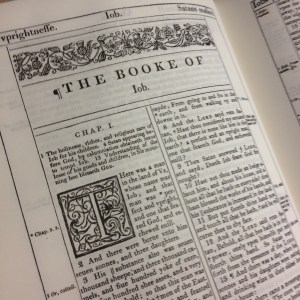
Facebook may not be the best place to post a fundraiser, however, it has a reach far greater than this simple blog, and the Crohn’s and Colitis Foundation page helps to get such fundraisers set up.  For all of its problems, Facebook does provide a way to bring people together for common causes.  Seeing someone we know suffering is never easy.  And there are so many worthy causes out there.  The situation naturally reminds me of the book of Job.  People who turn to it looking for an answer to why innocent people suffer (Job is presented as perfect in the prologue to the story) come away disappointed.  No reason is given and the question of theodicy is left unanswered beyond the claim that human understanding is limited.  God may ask how Job has the boldness to question divine action, but there’s no suggestion that he shouldn’t try to find relief with his broken potshard.  My Facebook fundraiser is my potshard, I guess, although the larger questions still remain.


Naming Rainbows

Living in the area around Allentown-Bethlehem-Easton (ABE, in airport parlance), one can’t help but be aware that Crayola is based in the E sector.  We visited the Crayola Experience while still residents of New Jersey and if there’s any place that smells like childhood this was it.  One of the truly interesting aspect of Crayola is that it defined specific shades of color.  Or at least Crayola’s version of it.  Many of us have pretty clear ideas about the basic six colors: red, orange, yellow, green, blue, and purple.  Sure, they added “indigo” to make it into a pronounceable name, and changed purple to “violet” to give us the standard seven, but this illustrates the point that I’m making—colors are somewhat relative.  Try to get anyone to describe, famously, puce (which I’ve learned is French for “fleas”).

A friend has recently been sharing stories from a book on the origins of color names (Secret Lives of Colors by Kassia St Clair), from which I learned about puce.  Although I haven’t read the book myself, it has become clear that colors indicate different things to different people.  All of this reminded me of a crisis I faced in my youth.  One of my teachers in middle school, in physics class, mentioned that not all people perceived the same color in the same way.  Or at least there’s no way to know whether they do or not.  Perhaps, he suggested, everyone has the same favorite color, but what they call it is different.  While the latter point seems unlikely, I took to heart that not everyone sees things the same way.  The same dilemma came back to me as my friend showed me various colors and said that her idea of what that color name designated was something quite different.

As in much of what I write, there are metaphors and analogies active here.  A paradox of religions is the great variety among them combined with the certainty that one’s own alone is “the truth.”  And all religious believers tend to be certain that theirs is true.  Like the color names we learn as children, we seldom grow up to question what we were told in our youth.  Some religions appeal to adult converts, but most people stay close to the orthodoxies of their youth.  Religions, like colors names, are a matter of consensus, for there are any number of shades and hues, and what we decide to name them is not revealed from on high.  They do, however, give the world considerable color.


Waiting for a Miracle

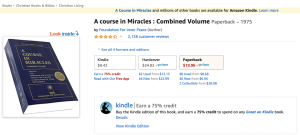
A friend recently sent me a New York Times story about Marianne Williamson’s spiritual background.  Before I say anything more about this I have a confession to make.  I didn’t know who Marianne Williamson was and, consequently, I’ve never read any of her books.  I also didn’t know about her presidential bid, although she seems much more grounded than whatever it is that sits in the Oval Office these days.  In any case, it’s the spiritual background part on which I’d like to focus.  Williamson is apparently a devotee of A Course in Miracles, a book written by Helen Schucman in the 1970s.  According to the NYT article, Schucman penned the book by the dictation of a divine voice.  This aspect seems worthy of further exploration, regardless of politics.

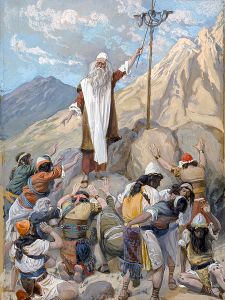
You see, sacred books have a long history of divine dictation.  The Bible makes such claims only obliquely, but clearly there were some who believed that Moses was the recipient of narration from on high.  Mohammed heard a voice saying “Write.”  Centuries later the Book of Mormon was written out at the dictation of Joseph Smith.  The point is that such texts are often believed to have had sacred origins.  I find Schucman’s reluctance to put herself down as the author of A Course in Miracles instructive.  She didn’t believe she wrote it.  Not to devalue any of these sacred texts mentioned, I would nevertheless note that authors often feel that their words come to them.  Maybe academic books don’t count, but when I’m writing fiction, it’s like somebody’s hands are on the wheel, but I’m not sure I’m the one driving (with apologies to Jeff Daniels).

A Course in Miracles has been translated into double-digits languages, something quite rare even among many bestsellers.  What this says to me is that people still crave answers from an authoritative text.  The written word has a power that electronic publication lacks.  Who wants to point to a screen and say, “this is divinely revealed truth”?  Hefting a heavy book, printed on actual paper, has a symbolic power that outweighs that of ebooks.  Probably it’s because the Bible paved the way.  We’re already primed for a sacred text, in physical form.  The longer I study holy books the clearer it becomes that they will unlikely ever cease to be written.  Helen Schucman didn’t have the last word.  As long as people write it’s doubtful anyone ever will.


Why July?

The weather in July can be exhausting.  I’ve always pretty much associated the Fourth of July with hot, sticky weather and this year’s holiday weekend has lived up to that.  Combine it with the incessant rain in the eastern half of the country and you’ve got a mix that won’t permit you to open your windows, but makes you simmer if you stay inside.  We often handle this by seeking out air conditioned facilities where you don’t have to spend a ton of money in order to find some relief.  It also happens that today is the anniversary of our moving into our new house when, as I recall, the current rainy cycle began.  Restless, stormy nights may be Gothic, but they don’t fit the staid, steady nine-to-five lifestyle very well.

Despite it all, I still value summer.  The sense of carefree days, as my friend over on Verbomania says, give estival days a shimmer like none other.  So much so that it’s difficult to keep track of what day it actually is.  For me this particular date will always remind me of buying a house for the first time and spending a literally sleepless hot night learning the hard lessons of homeownership.  Still, since I mentioned Independence Day, I continue to find myself relieved at the lack of land lordliness when it comes to the list of those who hold something over my head.  If only I could catch up on some sleep over a long weekend it might all seem more real.  July can be like that.

As I saw this weekend approaching from a distance, I made plans at how much I would accomplish.  I would get so much writing done that I’d be well ahead on my next project.  I might figure out what it was most important to say, and maybe finally find the meaning to life.  (Summer makes me feel optimistic, it seems.)  I would post new videos on my YouTube channel.  The weather, however, as the Psalms indicate, can change your plans.  Twilight lengthens to the point of making night and day difficult to distinguish.  Sleep doesn’t refresh the way it usually does and morning—my writing time—is hazy and lazy.  My next book sits untouched on my hard disc while I look over boxes that remain unpacked from a year ago.  Childhood summers set the pattern of dropping all and experiencing the mini-anarchy that lack of structure brings.  Despite all that I’d hoped to accomplish, I find myself welcoming this hot and humid anniversary.  That’s what July is like.


The Joy of Techs

Those of us with Luddite tendencies prefer to hide them.  Tech is the ultimate good, right?  You’ve got a smart phone in your pocket or purse and it contains the entire internet and what more could anyone possibly want?  Besides an upgrade, that is.  I recently misplaced part of the charger for my old iPhone 4S.  Yes, a phone that old can still work, no matter what they tell you!  I went to the store to replace said part only to find that you had to purchase an upgraded replacement that costs twice as much as the old part did.  Why?  It had a new type of USB port, in addition to a “traditional” USB.  Pardon my ignorance, but I thought the U stood for “Universal.”  Now even vocabulary has to change to meet the demands of tech?  Whoever the tech god is, s/he is extremely mercurial.

So I was in a meeting the other day.  A guy older than me was talking about the future of tech.  It occurred to me that guys my age (who didn’t get to take early retirement) are trying to act like those half our age, as if we really understand technology.  Growing up with something is the only way, it seems, to adapt to it in any kind of naturalized way.  There are kids today, if the internet’s to be believed, who don’t understand that you had to lift the receiver on an old-style telephone before dialing.  And if that dial is rotary, well, let’s just say the pizza’s not going to be delivered anytime soon.  Those who grew up with the internet and smart phones have a native understanding that people my age lack.  I still write ideas down on paper.  I prefer DVDs and CDs to streaming.  And I believe books should be made of paper.

Changes in the tech world vindicate me.  I heard that iTunes is going to be retired.  This is after I’ve spent plenty of money downloading songs that I could’ve bought on DVD and have in “hard copy.”  Indeed, friends are telling me to back up my MP3 files on some kind of storage device before iTunes goes the way of UltraViolet.  And we’re supposed to trust tech.  I’ve lost ebooks by switching devices.  Some of my tunes have been licensed away because I downloaded them on an older computer.  What’s one to do?  Buy them again.  In a new format.  On a platform that will eventually be retired so you’ll need to repeat the purchase a third time.  Or you can buy it once in paper or plastic and have it for good.  Now there’s a radical idea.  If only I had something to write it down on.


Ghostly Thoughts

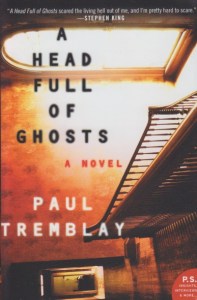
Ghosts tend to be on my mind in the autumn.  Paul Tremblay’s A Head Full of Ghosts, however, has been on my reading list for quite some time.  As a novel about possession, it has some scary moments, but it’s difficult to compete against The Exorcist in that regard.  Tremblay handles the topic with an ambiguity worthy of Shirley Jackson, however, and there are a few clear nods to her work here.  At the risk of giving out spoilers (you have been warned!) although it’s pretty clear by the end that much of the demonic was a cry for attention, the family member behind the tragedy is clearly left obscure.  We find out whodunit, but we’re left unsure as to the real reason behind it.

For fear of giving away too much (although my Goodreads assessment might be guilty of this), I’d like to consider something that I address in Nightmares with the Bible.  Demonic possession is largely coded as a feminine phenomenon.  The reasons for this are likely complex, but they are clearly related to the idea behind witch hunts and fear of women’s power in “a man’s world.”  Possession narratives, while they predated William Peter Blatty, became an essential part of the revived interest in demons brought on by The Exorcist.  Tremblay’s story is clearly aware of this, as he has his characters citing both fiction and non-fictional treatments of the topic.  Since researching the subject on my own, I’ve been wondering if anyone else has been able to handle it as deftly as Blatty did, and although Tremblay has two girls under threat, the question of whether it’s real or not tends to outweigh the pathos of believing Marjorie really has a demon.

In the end, it seems as if her father might be the real source of the family’s haunting.  An unemployed man looking for a way to support his family, he turns to religion.  This scenario is all-too-real to life.  And religion gives us not only a rationale for demons, but also a solution in the form of procedures and proper responses.  There are priests here—the males who alone can deliver the females—but whereas Blatty clearly made them the target of a demon that was pretty obviously real, Tremblay doesn’t play that card.  The priests come and go, and deliverance takes a form not expected for such a narrative.  A Head Full of Ghosts raises lots of questions and, like all good fiction, leaves us pondering at the end.  There’s still time to read it this coming fall.


Freedom’s Price Tag

Independence Day makes me feel conflicted.  Jingoism seems to be an international problem, and although patriotism is deemed next to saintliness, I have my doubts.  No nation is perfect *gasp!* and we would all do well to learn from others.  America is a nation in love with money and that affair has serious consequences.  One is our medical care system.  We’re one of the very few (if not only) “advanced” nations without universal medical coverage.  In fact, people routinely suffer because they lack insurance or their coverage doesn’t provide for what their physicians think is best.  This came home to me while staying with a family member who was hospitalized recently.  On the television the GOP was sponsoring ads against universal health care.  The irony was thick enough to be sickening.

Highly touted as the most affluent nation in the world, we refuse to take care of our own.  How am I supposed to get into the mood for Independence Day?  In Britain (as in most other places) they have universal health care.  I lived there for three years and knew that I could get treatment without emptying out the bank.  Here, in my native country, we have less care.  Someone might make a few dollars less, and that, we’re told, is unacceptable.  Anyone who’s experienced the illness of a family member knows the old one-two.  The treatment itself and the bills that come after.  Lately I’ve just been throwing up my hands and opening up my wallet.  It’s Independence Day.

Not that I’d expected much to change, but my first inkling of being a writer was winning a state-wide essay contest right here in Pennsylvania.  I wrote an essay on “Americanism” back in 1980.  It noted the false sense of righteousness that accompanied the notion.  I was an evangelical Christian then, but that didn’t mean I wasn’t cynical.  In my small town I’d seen John Cougar Mellencamp-level suffering.  I saw unemployment, drug use, and desperation.  I saw politicians saying everything was great and would be even better if we had more guns.  I saw trickle-down economics stemmed at the source.  I knew we were being lied to.  I did hope that things would get better, but now with the GOP fully behind 45 the true ugliness of jingoism has become clear.  It’s Independence Day and I feel sick.  I look across the ocean and see the nation from which we declared said independence suffering from a similar backlash.  But at least they can afford to go to the doctor.


Abroad at Home

Now that I’m back in the United States (but still traveling), I’ve been thinking about impermanence.  That is to say, when you plan an international trip you like things to be somewhat familiar.  At least I do.  For example, when arriving in customs and immigration anxiety can run pretty high.  Having once been stopped at the border of Canada, I have bad memories of how even friendly nations can treat one with suspicion.  Upon arriving at Heathrow, however, entering the United Kingdom was simply a matter of scanning my passport and smiling for the camera.  (It was much more difficult getting back into my native US, ironically, in both these cases.)  Believe me, I don’t mind the improvements, but I didn’t know to expect them.  The same was true of the change in currency.  I even learned that all those pound coins in a box at home, so solid compared to American money, we’re no longer good.  Money for nothing, or nothing for money?

Currency is highly symbolic.  Retiring a form of currency, of course, disadvantages those who live abroad.  And I’m not picking on the UK here.  When my wife and I visited what used to be Czechoslovakia (which is now no longer even a country), our Deutschmarks exchanged for fistfuls of colorful crowns.  This was shortly after the Velvet Revolution, and times of uncertainty tend to devalue the symbols we use to represent buying power.  Although we went from Prague to Vienna, we didn’t have to change all our Czech currency to Austrian.  We didn’t exchange it all, knowing that it was very likely that Czech money would change before we ever got back.  Indeed, the country we visited is no longer a political entity and we’ve not had the opportunity to return.  Who can see the future?

Impermanence is part of being human.  Apart from issues such as global warming, which is creating a more and more inhospitable climate for all species, these changes are based mostly on human culture.  The British currency system was only decimalized in 1971.  Some forms of currency were then no longer legal tender.  I used to collect coins, and constantly changing money is a boon for those who stay with it.  If you keep old coinage long enough, its symbolic value increases beyond what it’s face value ever was.  That’s probably not good investment advice, but for me it was a matter, at least in part, of believing in permanence.  If I take a wheat-back penny from 1909 and hand it to a clerk (where pennies are still accepted), it’s legal tender.  It would have, however, bought much more back when it was first minted.  The symbol itself, it seems, has changed.  And that applies even at home.


Dark Theology

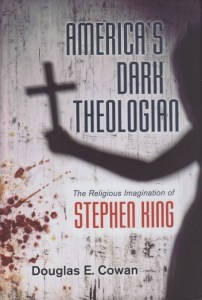
I’ve been struggling for several years, I expect it’s no secret, with how horror and religion relate to one another.  Many think the task itself pointless, as if pop culture can simply be brushed off like an annoying bug.  But flies keep coming back.  They won’t be ignored.  Almost a decade ago I discovered Douglas E. Cowan was also walking this spooky path past the cemetery.  I also know that as an academic he must demonstrate his chops in technical projects.  America’s Dark Theologian: The Religious Imagination of Stephen King was extremely welcomed by me.  Like many people I’ve read some Stephen King.  Like Cowan, I’ve noticed how often and how deeply religion is entangled in his story-worlds.  Before King is simply dismissed, we must reckon with the fact that movies based on his novels and stories have a long  pedigree and almost canonical status.

This is not the place to analyze America’s Dark Theologian in depth, but it is a place that would highly recommend the book.  Cowan takes several aspects of King’s works and shows how they tie explicitly to traditional religious thinking and longing.  I haven’t read nearly all the books Cowan cites here, nevertheless, the analysis he offers is compelling.  Scholars of disciplines outside religious studies have tended to dismiss it as being moribund.  Cowan shows that those who make a living in pop culture disagree.  King makes no bones about the fact that he sees the application not only of religion, but also theology, as one of the driving forces for his fiction.  We dismiss such observations at our peril.  Think of you favorite King novel and ponder; is there religion there?

Clearly religion’s not always the cause, but Cowan gives a careful consideration to much of King’s oeuvre, and there’s no denying he’s onto something.  As he points out, King is far more interested in the questions than in the answers.  Those who know religious studies—theology, if you must—know that the same is true there.  I’ve studied religion my entire intellectual life.  One of the reasons students evaluated my teaching so positively, at least I hope, is that because I encouraged the questions and did not privilege the answers.  In this field, answers are merely speculations.  We only really fall into serious danger when we cease asking questions.  Cowan does an excellent job of parsing out some various pieces that will make some kind of basis for a systematic theology of Stephen King’s thought-worlds.  We would be wise, I believe, to pay attention.