Stay

One of the string of low-budget, but well-made horror films of recent years, Good Boy is most memorable for the performance of Indy.  If you somehow missed the hype, Indy is a dog who can see ghosts while the humans around him (very few for most of the film) cannot.  Indy, by the way, has his own Wikipedia page as an actor—that’s how impressive his performance is.  No doubt, he is a photogenic dog.  Credit has to go to the photographers as well, for catching the Nova Scotia Duck Tolling Retriever displaying love, anger, sadness, concern, and, most impressively, fear.  The dog received a Best Performance in Horror award normally reserved for humans.  What makes this especially impressive is that, if you think about it, Indy wasn’t aware that he was acting.  He was being a dog and has no idea what human fiction is.  Impressive.
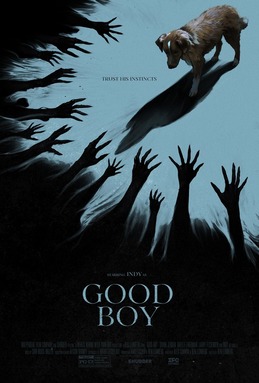
Spoilers follow.  The story itself is a little thin: Indy’s owner, Todd, has an incurable lung disease.  He decides to move to his grandfather’s house in the woods, alone with Indy.  His grandfather died in the house of a similar disease, living there alone with his dog.  Indy begins to sense the ghosts as they drive onto the property.  Todd, whose health is failing, doesn’t notice them and begins to start shoving Indy away, even chaining him outside in the rainy autumnal weather.  Indy, ever loyal, breaks free and returns after having close encounters with the ghost.  Todd is glad to see his pet but finds his own dead body in the bed before the ghost catches up with him.  Todd’s sister finally visits and finds her dead brother and the dog abandoned in the basement.  (Since I saw this on a streaming service that cuts off credits in its eagerness to get you to watch the next film, I missed the cheering scenes of Indy with his head out the window of the sister’s car.)

Throughout the movie the human actor’s faces are never shown clearly.  This keeps the focus squarely on Indy.  It’s astounding how the dog’s range of emotional expression is slotted into the story, which is probably one reason that it’s a little thin.  You can’t explain to the star, “Now you’re seeing a ghost that your owner can’t and react like this…”.  Like The Blair Witch Project and Paranormal Activity, this low budget film performed well at the box office and has become a cultural touch stone among the horror community.  At least among those of us who can’t resist cute pets.


Thorough

It was a warm summer’s day, sometime in the mid-eighties.  I was living in Boston and some friends asked if I’d like to go to Walden Pond, outside Concord.  I’d read Henry David Thoreau’s Walden, so yes, please.  I knew Thoreau was an early Massachusetts Transcendentalist, mystic, and nature lover.  That particular day we were the only ones at the site where his cabin in the woods once stood.  I suspect that, being there with friends, it wasn’t as contemplative a trip as it would’ve been had I made it alone.  Still, here we were, nearing a century-and-a-half after his death, remembering him.  My wife and I recently watched the PBS three-part documentary on Thoreau, and I learned a lot about him.  He was admirable in a way that few public figures are today.  What’s more, it’s clear that he’s widely appreciated as a visionary and believer in freedom.

Image credit: Benjamin D. Maxham, public domain (via Wikimedia Commons)

Writing in the nineteenth century, it seems, got you noticed much more than it does now.  Thoreau had profound things to say.  He had strong convictions about abolition and being shuffled into an existence of work, forced from being free.  He was able to live the way he did largely because he didn’t need many things.  He also had famous friends, Ralph Waldo Emerson, for one, who gave him a place to stay when he had none of his own.  The documentary makes the point that, despite being a hero to many, we’ve gone ahead and built the world Thoreau most feared.  Few, or at least a few of us, find that work doesn’t define us.  Writing, it seems, still helps with that.  Those of us born to write do so, and long days “in the office” must be endured to come to life when writing is again possible.

If you think deeply about it you start to realize that we’ve allowed ourselves to be hoodwinked by economics.  If you have a mortgage you know this to be true.  Or if you have a medical condition—you can’t afford not to have a job without insurance.  Thoreau, it seems, lived with the tuberculosis that ultimately killed him pretty much all of his life.  And he died too young, we feel, because he had so much to say.  So much to say that was worth listening to.  Such writers are rare today because, like everything else, writing has become a business and some readers even prefer things “written” by AI.  And yet I remember that warm summer’s day and think of a placid time still earlier when one might’ve met Henry David Thoreau in the woods.


An Education

The point of education is to improve life for people.  Reading and studying and listening, we learn.  Travel is often an educational experience.  We gain knowledge, but it does no good if we hoard it.  That’s why some become teachers.  In a society that undervalues education, a self-fulfilling prophecy sets in.  Just look around you.  The usual path into becoming a teacher is education in education.  You can major in it.  You don’t have to be wise necessarily, since, like all things capitalistic, choice of career is economic.  You pick something for which you feel suited.  If you’re lucky, you get a job doing it.  For “higher education” it’s a bit different.  First of all, you need not study education at all.  You choose a field in which to become a specialist and, if you’re lucky, get a job teaching it.  And those jobs are dependent on, of course, the dismal science.

This is one of the main reasons I write.  When your intention is to be a lifelong learner, you know that if you don’t share what you’ve picked up over the years, it will simply be lost.  As a society, we really don’t encourage sages.  The motivation is to make money, to look out for yourself.  Education becomes a means for self-promotion rather than for sharing what you’ve learned.  In my case, I sometimes feel guilty for writing about horror.  Is it really helping anyone?  I have to believe that it might be.  A certain segment of the population finds horror therapeutic.  Psychologists are starting to explore how it’s actually good for your mentality.  I can only hope that if it means something to me, it will mean something to some others.  And I want to share it.

Religion, at least among the non-cynical, is meant to improve people’s lives.  There is a reason that I wanted to be a religion professor, as I was for a few short years.  My circumstances steered me toward horror as a form of self-care, and I think there’s something much deeper here that has to be mined.  Writing the books I do is more like speculating or prospecting rather than staking a claim and digging tunnels.  If they were causing more harm than good I wouldn’t publish them (or try to).  Life is an educational opportunity.  And if we learn from those who care for other people we might have a chance of improving the lot of many.  Look around you.  Is that where we are today?


Walking Sleep

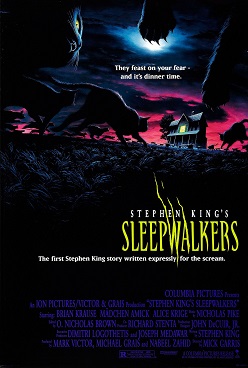
It has been suggested to me that I might try screenwriting.  I’ve always resisted this, even though some of my fiction may be movie-worthy (one editor told me it was, but then I have a huge stack of rejections from others).  In any case, I had high hopes for Sleepwalkers.  I’d never heard of it before, but I saw that it was Stephen King’s screenwriting debut.  Not all novelists can, or should be screenwriters.  I like King’s novels.  The only one that really didn’t wow me was The Tommyknockers, and even it was well written.  This movie struggles.  Part of the reason is, undoubtedly, that directors depart from the script sometimes.  And the budget doesn’t seem to pay off its estimated 15 million.  For one thing, it’s set in Indiana but the scenery is clearly, clearly California.  They didn’t even try to make this look like the Midwest.  And the acting isn’t great.  The little jokes fall flat.  Something’s wrong in Kansas.

The story seems promising enough.  Sleepwalkers are shapeshifting cat people.  They’re also psychic vampires, drawing their energy from virginal girls.  So far so good.  Then it gets weird.  They transfer energy to each other through incest.  And they can turn invisible.  And turn cars invisible, even at a distance.  They’re super strong and can survive gunshots.  You can kill one by poking its eyes out, however.  And cats are their natural enemies, setting them on fire if they scratch them.  Slow down—there’s too much going on!  And there’s a quasi-comedic tone that prevents this movie from ever really feeling like a Stephen King novel.

A couple of things: those of us who write horror often find humor in our stories.  Sometimes we just can’t avoid it.  And the other thing is writers are often typecast.  For example, we think of Edgar Allan Poe as a horror writer because his best known stories are the scary ones.  Poe wrote funny, however.  And what we’d call, for lack of a better word, literary fiction.  Writers write.  Other people categorize.  In the case of Sleepwalkers, however, it does seem that it was intended as (it was certainly advertised as) horror.  And it has horror moments.  It also has quite a bit of sympathy for the monsters, which isn’t a bad thing.  Predators have to feed—that’s the way of nature.  The sleepwalkers are, to all outward appearances, human.  And they have human emotions.  Stephen King’s first screenplay wasn’t his best work, but we all have to start somewhere.


Blog Reading

I’ve been at this blog for about seventeen years now.  During those years of daily posts, WordPress still has trouble recognizing me.  I try not to take this personally, but when people I know (and follow) post on WordPress I don’t always get notifications.  When I want to comment on said posts, I have to sign in.  Sometimes twice.  All of which is to say that a recent post on a friend’s blog made me thoughtful.  I met Jeff Hora through my wife, so I’ve known about him for going on forty years now.  We’ve become friends in our own right, mostly online.  I want to reflect on one of Jeff’s recent posts, “Solid Ambiguity.”  Before I do, however, a brief lament.  I used to read a number of blogs daily, including that of the recently mentioned Dan McClellan.  I had a whole set of blog buddies.  Then blogs began to decline in popularity and, more to the point, I took uber-capitalist jobs in New York City, robbing me of time.  Now I only read them when I get email notices.

Okay, so solid ambiguity.  The basic idea is that we like to grasp onto the things we can count on.  Things that don’t change.  That’s the “solid” part.  At the same time we need to be aware that change is endemic to life.  In fact, the post mentions Buddhism.  Like Shakers, Buddhists have been part (long past) of my religious training.  I specialized in “western religions,” but I’ve recently been reflecting quite a lot on the fact that in East Asian thought, especially, change is the only thing that’s permanent.  I know I’ve posted about this before, but that was probably years ago as well.  We know that things constantly change.  In the few brief minutes it would take you to read this post, you have changed.  So has the world around you.

We want solidity most of the time.  A house we can reliably come back to.  People we love to always be there.  Keep the possessions we worked so hard to earn.  None of this is permanent.  We know that at some level.  For many of us it’s deeply troubling.  I’m no expert in Buddhism, but I do know that one of its basic tenets is not being attached to things as they are.  Life is full of ambiguity.  We don’t tend to like it, really, as Jeff points out.  But we do need to learn to live with it.  One of the changes with which I have to cope is the loss of time for reading friends’ blogs.  It’s good to be reminded that it is a rewarding experience when I finally do it.  Now, if only I had more time…


Simple Gifts

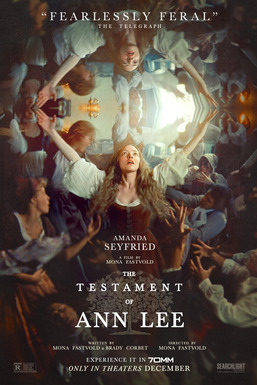
During my many years of studying religion I learned about the Shakers.  It was many years ago and my knowledge isn’t extensive.  I was caught off guard when my wife suggested we see The Testament of Ann Lee.  I hadn’t heard of it and knew nothing about it, but she had me at “Shakers.”  This is a most unusual and engaging movie.  I didn’t realize it was a musical until after it was over.  (It had been a long day and I did, a time or two, think, “hey, this is like a musical, the way characters break into song.”)  The thing is the songs are all diegetic; they fit into the plot and the Shakers were known for their music as well as for their furniture.  The movie follows, in broad outlines, the life of Mother Ann Lee, the founder of the sect.  It made me curious to learn more.  

The Shakers emerged during that period of intense religious foment in the eighteenth and nineteenth centuries.  They settled in upstate New York where numerous other sects came into the world, such as the Mormons and the Millerites.  The Shakers had their origins among the Quakers, but it is unclear if Ann Lee’s family were members of the latter denomination.  In the movie an encounter with George Whitefield awakens Lee’s spiritual curiosity.  Historically, Whitefield was one of the first trans-Atlantic superstars, drawing rock-concert-sized crowds to hear his outdoor preaching.  In my head much of this was muddled during the film—it had been a long and disappointing day and I was totally unprepared for it.  I’m glad to have watched it, however; it rekindled my interest in American sects.

I have on my shelf an unread history of the Shakers.  It has consequently been moved to my “to read” pile.  I read, a few years ago, a history of the Oneida community in Upstate, and also a biography of William Miller.  The Oneida community practiced open marriage and eventually became known as the producers of flatware—Oneida silverware is still easily found.  Shakers, on the other hand, believed in celibacy, meaning that they could only grow through conversion.  The many Shaker communities founded by Mother Ann Lee dwindled and now appear to be down to three members.  The movie, which is quite good, is unlikely to lead to a resurgence of celibacy and revival of the Shakers.  They did have an outsized influence, not only for their furniture (think Oneida) but also for their music.  Add to that now, a musical.


Equal Women

It’s been so busy this year that Mother’s Day crept up on me.  We have a lot of spring birthdays in our extended family, and what with the weird weather this year and unexpected household expenses, it just kept slipping my mind.  I like to commemorate the day on this blog because I’ve considered myself a feminist for many years.  I’m very distraught that women still aren’t treated as equals to men.  This should’ve been a no-brainer over a century ago.  (Having an historian’s outlook, I realize that in the days when women tended to die young, in childbirth, it was difficult for many to rise to positions of social prominence.  Once we got to the stage that most women survived the experience, and then to the point that economics drove us to two-income families, the male-superiority charade should’ve been dropped.)  The fact is none of us would be here without our mothers.  Father’s day has never been a big deal for me, but Mother’s Day is important.

I did manage to remember to get my wife a card in advance, but this year the day itself kept slipping my mind.  Ironically, my wife and I had watched a biopic of Mother Ann Lee last night—I’ll post on that tomorrow—and it was only as I was preparing to write about it for today’s post that I thought, “Wait.  It’s Mother’s Day.”  (We do have plans for the day; I’m not a complete barbarian.)  My excuse is that we were set off yesterday by an early encounter with a brusque and condescending Verizon employee who would not help set up a new phone purchased elsewhere.  I hadn’t slept well the night before and it rained all day, none of which made for a productive Saturday.  The movie (tomorrow’s post) was longer than anticipated, keeping me up late.  Movies, strangely enough, are now starting to really influence my dreams.

My dream for today, however, is that women’s equality will become a reality rather than something we just keep talking about.  There can be little doubt that we’d be better off with a woman president than with the alternative.  A woman has traveled further from the earth than many billions of men have.  My doctor and dentist are both women.  They can do anything men in their professions can.  They are university presidents and CEOs.  Pilots, both civilian and military.  They are religious leaders.  And many of them do the job on top of being mothers.  I consider it a personal failing that it was only as I was about to post about Mother Ann Lee (tomorrow) that I finally realized today is a very important day.  Let’s make Mother’s Day count!


Million Air

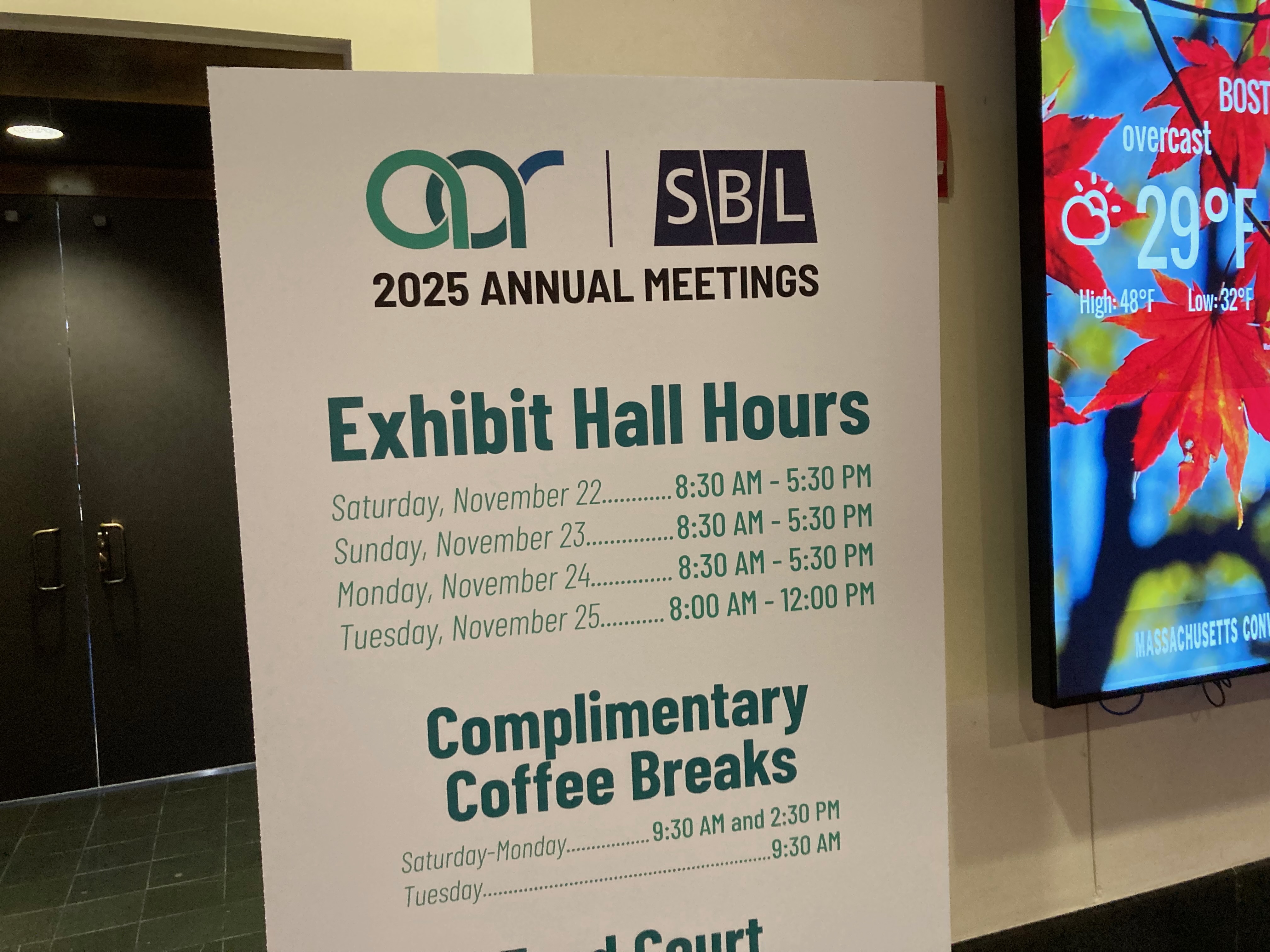
Life is strange.  While I was in Boston for the AAR/SBL Annual Meeting in November, something unusual happened.  For a few days back then this blog was getting a lot of traffic.  I mean, a lot.  For me.  In fact, I posted about when I finally shot past a million hits.  I couldn’t figure out why.  Well, things have settled back to their usual trickle and I figured it was just “one of those things.”  Pleased but not obsessed, I went back to my usual blend of observations about life, dark academia, and horror movies.  Then, and I can’t recollect exactly how I saw it, I noticed that my old blogging buddy Dan McClellan had, about that time given me a shoutout on his social media.  Then I remembered that I’d run into Dan at the conference and we’d had a brief chat.

The pieces began to fit together.  (Thanks, Dan!)  I’ve known a few fairly well-known people over the years.  Most of them are academics, and a few of them clergy.  Occasionally an author who has made a name for him or herself.  Some of them sometimes give me shoutouts but I’d never seen the numbers tick up like they had after this particular one.  I can’t figure out blog stats.  During the early years of this blog I had quite a bit of traffic.  I remember that in 2015 my views plummeted precipitously.  They’ve stayed at that low level ever since.  Until last year.  Now they’re headed back to normal, post 2015-levels.  I’ve tried some other platforms such as YouTube, but they take a lot more time and lead to limited hits.  Some influencers suggest I should try podcasting again.

I do have plans to bring the podcast back.  It takes several hours to make such an entry into internetdom.  I started podcasting when I began this blog (well, actually the blog was started by one of my nieces when a family member suggested I should podcast).  What happened?  I lost my job at Gorgias Press and I had to spend the next five years trying to find full-time employment in a stable environment.  By the time stability returned I figured podcasts were dead because everybody was watching videos.  I may have done a Mark Twain there.  Podcasts are still popular.  When I can get a chunk of time, and a nip of courage, I may rush back into the fray again.  At this point, I had my maybe fifteen days of fame in someone else’s shadow.  Life is strange.


Dr. 2 P 2

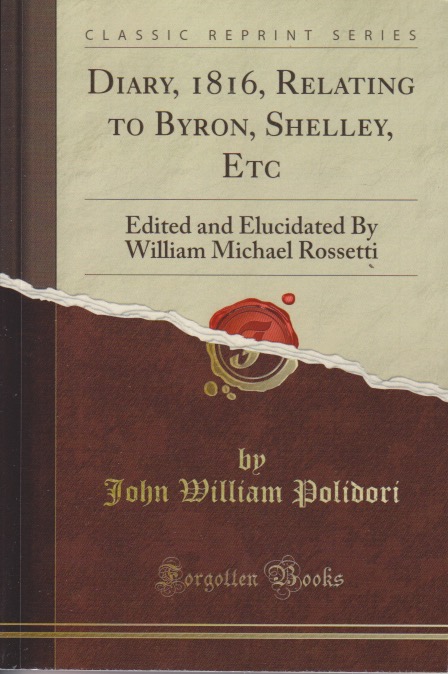
Before reading Lord Byron’s Doctor by Paul West, I started reading John William Polidori’s diary.   This is freely available online, but I need a book in my hands to truly read.  A little backstory: before his trip to Switzerland in 1816 with Lord Byron, the poet’s publisher paid Polidori to write this diary.  After Polidori died by suicide, his sister edited out what she thought reflected badly on the family, and destroyed the original.  The diary was published in 1911, edited by Polidori’s nephew William Michael Rossetti.  The edition I read was a reprint by Forgotten Books, containing the University of Toronto’s Library’s edition for scanning.  While not the most exciting reading, it is revealing.  Polidori appreciated the finer things in life (he qualified as a medical doctor), but he sometimes missed the point.  For example, being paid to write about Byron’s travels, his mentions of Bryon are relatively few.

You get the real sense that Polidori was jealous of the Lord with whom he traveled.  Then, when Percy Bysshe Shelley and his party arrived in the neighborhood, it becomes clear that Polidori was jealous of Byron’s attention to Shelley.  I sympathize with the author; both Byron and Shelley were already famous and infamous for their writing and lifestyles.  Both were from aristocratic families and had no profession other than writing and traveling.  For Polidori this was a working trip.  His mood seems to be reflected in that, just after the famous ghost story contest, entries begin to focus mostly outside the gathered writers until they stop altogether.  Much of the summer is left blank.  In September Byron sent Polidori packing, and the remainder of the diary is about his, often penurious, travels through his ancestral Italy.

Polidori is now known as the author of “The Vampyre,” which he wrote during the period covered in the diary.  He doesn’t talk about it much.  For me, Polidori is a sympathetic figure.  A lonely man, he was intimate with the most famous English poet of his day.  He often, however, in his own accounts, wasn’t in control of his emotions, particularly when he felt he’d been slighted.  Jealousy can be a very difficult monster with which to wrestle.  But reading this diary does lead to the uncanny sense that the most interesting parts were the things he didn’t discuss.  The diary has been used as the basis of more than one fictional treatment of the events of the summer of 1816.  And since some of the juicy bits are left out, free rein is given to the imagination.


Snowballs in Spring

Things snowball sometimes, even in the spring.  Weekends are among the most sacred of times when you work a 9-2-5.  They do double-duty as recovery time as well as prep time for the coming week to do it all over again.  I’m a proponent of the three-day weekend; life has grown so complicated that two days hardly cover it any more.  So in April I had a Saturday that snowballed.  I awoke vaguely thinking I might have to cut the grass.  It’d actually been dry a few days and the sun was out.  Then things started to get out of hand.  A letter arrived from the IRS.  Now, this is seldom welcome, but although it wasn’t scary it involved having to go back to our tax preparer’s office and, since tax day was just a couple days off, scheduling that was tricky.

Photo by benjamin lehman on Unsplash

Then the power went out.  Under a clear blue sky.  Being the middle of the day, we couldn’t tell if neighbors were affected or not.  After leaving a message with PPL, I walked to a local store about a block away and they had power.  The owner and I chatted a little, then I went home to await the PPL call or visit.  Since the power was out I was keeping a close eye on my phone’s battery level.  It was our only means of communication with the outside world.  Meanwhile, all of what we’d planned to do that Saturday had to be put on hold.  The house was quiet with no fridge hum or any other sound.  Suddenly I heard a kind of airplane buzz, but it seemed to be coming from inside.  I followed my ears to the kitchen where a big old bumblebee was trying to get outside.  I grabbed one of our ubiquitous peanut butter jars and waited for it to land.  The phone rang.  PPL said everything was fine on their end and we had to call an electrician.  It was now 4 p.m. on a Saturday, I was being buzzed by a bee, and I had to find an emergency electrician with my phone charge dropping.

I called a company I’d used before.  After explaining everything they decided they no longer serviced our area.  I called a second 24/7 electrician.  They could get someone out to us on Friday.  This was Saturday.  My wife took the jar from my hand and went after the bee.  The third company, which I will gladly use again, said they could get someone out by 9 p.m., at the latest.  By now the entire afternoon was gone.  My wife let the bee go outdoors and when we came back into the kitchen she said, “Isn’t that the fridge?”  It was humming.  Lights were out elsewhere so I made my fifth trip to the breaker box in the basement, using a flashlight, and tripped all the switches again.  Power was back on.  The electricians were good about canceling but suggested a follow up visit, just to check things out.  The grass didn’t get cut.  It was a snowball in April.


Ghoulish

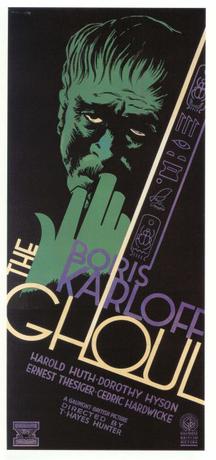
Frankenstein made Boris Karloff a wanted man.  In horror, that is.  In need of a fix without spending anything, I took Amazon Prime’s offer of The Ghoul.  (You had to pay for Sleepaway Camp III.)  A 1933 black-and-white horror film, it followed two years after Karloff’s signature role.  I hadn’t heard of The Ghoul before, and, it turns out, there’s nothing supernatural about it.  Still, it’s creepy and it has the right atmosphere.  And instead of the mummy Karloff played the year before, he’s now a dying Egyptologist.  Just before he dies, he purchases, with nearly his entire fortune, “the eternal light,” a jewel that will bring him into an Egyptian afterlife.  An Egyptian Sheikh, however, wants the jewel back because he believes in Egyptian religion, just as Karloff’s Professor Morlant does.  An unscrupulous servant steals the jewel once Morlant dies, although the professor warned him that if he tried anything, he (the professor) would rise from his grave and kill him.  The heirs find out that their uncle has died and his shifty lawyer, who wants the jewel for himself, races to the house before they can arrive.  Add in a vicar who believes paganism in Britain is disgraceful, and you have a full house on the night Morlant rises from the dead.

The servant, now believing that his master has indeed arisen, confesses to where he put the jewel, which leads to Morlant stalking the party in the house until he finds it.  The heirs dismiss the vicar, who keeps saying the clash of religions is important.  The Sheikh tries to find Morlant, aware that he has recaptured the jewel.  The heirs go to the tomb to sort out what is going on, and Morlant, cutting an ankh into his chest with a knife, offers the jewel to a statue of Anubis, who takes it.  It turns out “Anubis” is really the “vicar” who was really a thief who’d planned the heist some time before.  The police, whom the heirs called, arrive before the Sheikh, who took the jewel and locked the rest of them in the tomb, can get away.  A bit complicated, I know.

The movie makes heavy use of religion and dialogue about religion for an early horror film.  It ends sadly for Morlant, who dies believing he is entering the eternal light, but, as a scene of the doctor makes clear, Morlant was buried alive because of catalepsy; he never arose from the dead in the first place.  The Sheikh, subdued, England is Christian again, and all is well.  Except for Morlant, the duped professor who believed what he’d studied was true.  The ghoul (the term before zombie caught on) wasn’t real after all.

I’m glad to have happened upon this one.  If I ever get around to writing my book on how horror and religion interact, The Ghoul will surely be among the early films that must be discussed.


Rabbit Holes

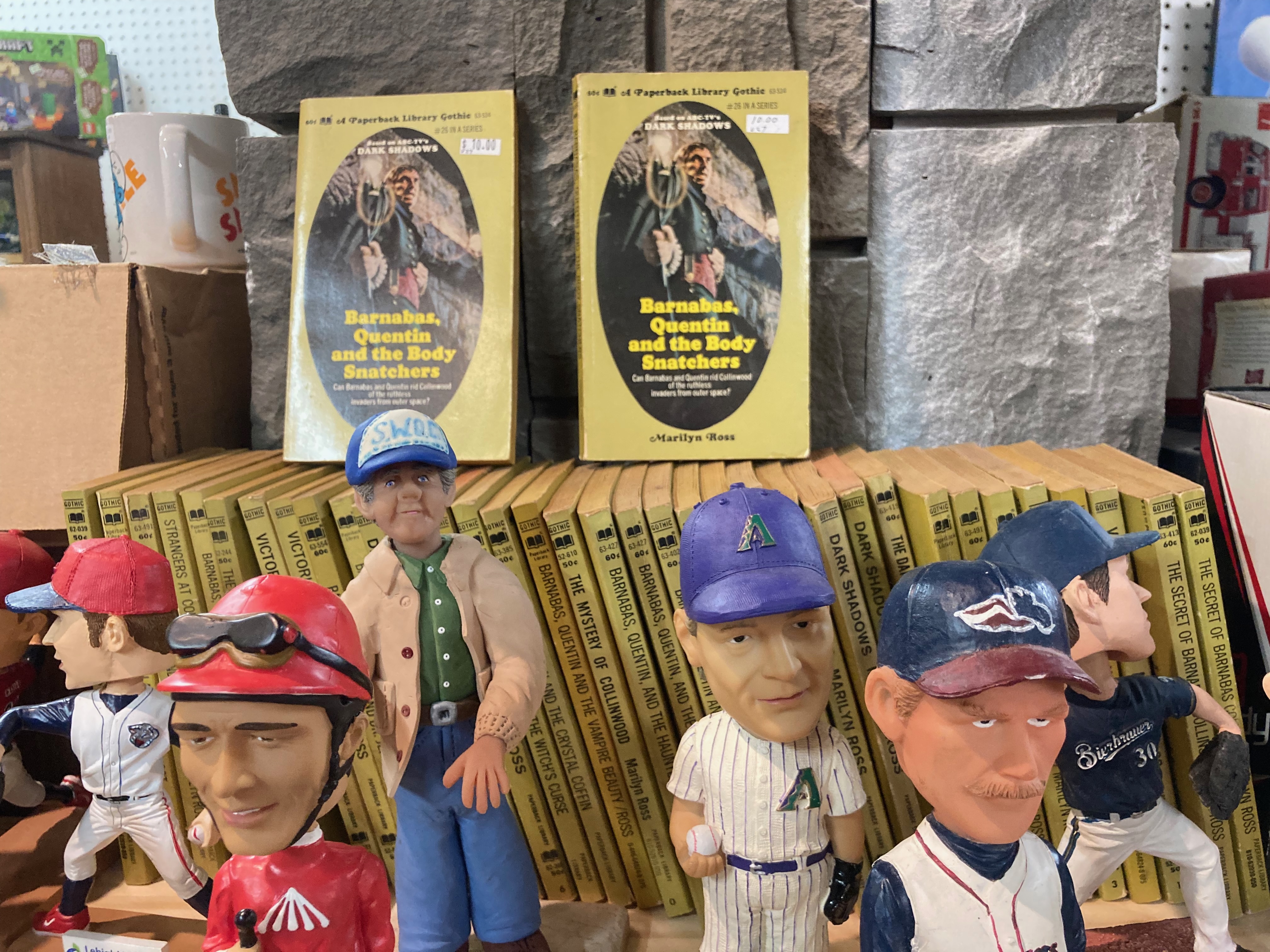
Rabbit holes are my favorite part of the internet.  They can be used for heavy-duty research, but in my case they’re mostly just fun.  I’ve written about Dark Shadows many, many times on this blog.  Although I did watch many episodes of the original run with my brothers, my memories of the story line tend to come from the concurrent series of pulp fiction books by Marilyn Ross.  These books, which I have only ever seen used, were distinguished by their olive green covers and an oval cutout on the front where an image from the television series, sometimes apparently selected at random, was shown.  There were a total of 32 of them and, as an adult I collected them all.  Some months ago I wrote about my delight at finding several of them, in very good condition, at an antique and curio shop not far from us.  Recently in that shop again, I looked over the titles and discovered one that wasn’t in the series but was in the larger series, Paperback Library Gothic.

I’d never really given much thought to it, but the book was in great shape and was riffing off the Dark Shadows series.  It was reasonably priced, so how could I not?  Excited as a schoolboy coming home in time to catch the series on TV, I looked up the series online and fell down a rabbit hole.  There was an entire series in the mass market paperback format that I adore, from the sixties and seventies.  Shy of writing a bestseller myself, I’d never be able to afford them all.  The series included some classic titles out of copyright by such authors as Ann Radcliffe, Jane Austin, Bram Stoker, and Wilkie Collins (no relationship to Barnabas).  To these they added contemporary gothic titles including several by W. E. D. Ross, writing under the pseudonym Marilyn.  These were pre-Dark Shadows books.  There were well over a hundred of them.

Paperback Library was an independent New York City publisher founded either in 1960 or 1961, capitalizing on the pulp fiction and mass market paperback models.  They were bought out by Warner in 1970.  Warner eventually became Grand Central Publishing—still in New York.  In the large conglomerations that brought us down to only five major publishing houses in English, Grand Central was acquired by Hachette, one of said big five.  Recently the main distributor of mass market paperbacks decided it would no longer handle that format, essentially dooming it.  And with it a piece of my childhood.  Thankfully there are still some rabbit holes to fall down.


Dr. P.

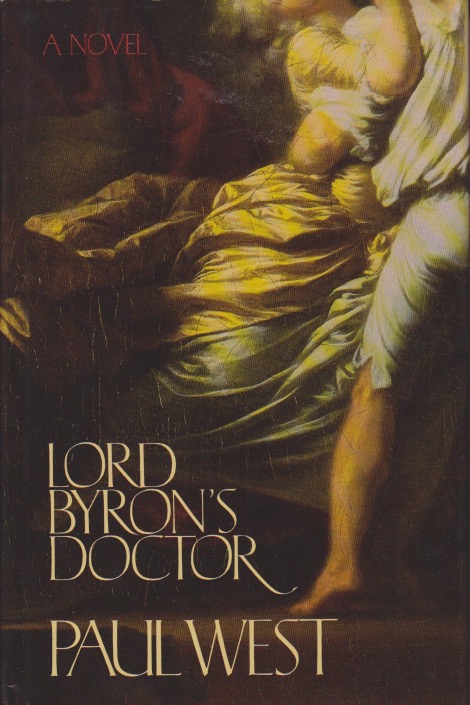
My recent fascination with the meeting of Lord Byron with Percy Shelley’s party in 1816 led me to read Paul West’s novel Lord Byron’s Doctor.  In case this meeting isn’t familiar to you, it involved five English travelers gathering for a few months outside Geneva.  Those present, beyond the two already named, were Mary Godwin, soon to be Mary Shelley, Claire Clairmont (her step-sister), and John William Polidori, who was, well, Lord Byron’s doctor.  Polidori, when not being completely overlooked, is a bit of an enigma.  He aspired to literary renown and produced a few works.  His most notable piece, “The Vampyre,” was initially attributed to Byron.  He wrote at least two plays and a novella, as well as some nonfiction.  He had been hired by Byron’s publisher to keep a diary of their travels, which, it turns out, leaves Byron out most of the time.

It’s clear from the historical sources that Polidori was quite jealous, both of Lord Byron and Percy Shelley.  They were both aristocratic and had achieved fame through their writing, but Polidori not so much.  He also seems to have been jealous that Shelley received Byron’s attention unstintingly.  Byron was a lord and Shelley the scion of an aristocratic family.  Polidori, while not exactly what we’d call “middle class” today, did not have nobility in his family and, perhaps worse  among the English in the period, he was half Italian.  Paul West takes the story of Polidori and tries to flesh it out.  I haven’t read any other of West’s works, but given this novel I’m unlikely to.  He does do a good job of probing the inner feelings of being left out and excluded from what one really wants to do with one’s life.  (Some of us know this firsthand.)  He overdraws, however, just about everything.

For anyone with an idea of what happened among the English party that summer, and the fact that Byron dismissed Polidori when the summer was over, the basic shape of this narrative will be familiar.  As an extended character study it seems to do passably well.  Some of us, however, find trying to think like someone else might have a bit of a fatuous fictional folly.  My mental image of Polidori, apart from the feeling left out part, is quite different.  In other words, attempting this kind of novel is sure to put some readers off from the start.  I gave it a good faith effort.  Some parts of it I enjoyed.  The whole, however, felt tedious and too long.  It may, however, give some readers a sense of who Polidori might have been.


Spring Halloween

Being a lifelong fan of Halloween, it’s only dawning on me now that Walpurgis is almost precisely half-a-year from its October sibling.  This occurred to me this year for a couple of reasons.  Someone from Sweden emailed me on April 30, noting that Walpurgis was still celebrated there.  (In an amazing, almost superhuman, show of restraint I did not mention Midsommar).  I tucked that away.  Then one of the very few Facebook groups I follow (Halloween Madness) had lots of posts over the next day or so noting that Halloween is only half-a-year away.  The penny finally dropped.  Walpurgis is Halloween in April.  Well, not exactly, but it could be.  The idea of the autumn being a spooky time of year may trace its roots back to “The Legend of Sleepy Hollow,” as I point out elsewhere.  Traditionally, the scary season was around the winter solstice, now known as Christmastime.

Walpurgis Night in Sweden; image credit: David Castor, public domain via Wikimedia Commons

Now, I enjoy Christmas a lot.  It is family time.  It is time off work.  It is hunkering down cozy time.  I read a lot and watch movies without having to interrupt everything to stare at the computer for eight or more hours every day.  I also take a bit of horror with my holiday.  There are Christmas ghost stories from before when Christmas became a capitalistic enterprise, giving the warm glow of childhood memories of gifts and such.  I try to keep that tradition alive, without spoiling things for my family.  But things can also be spooky in the spring.

My strange schedule of awaking around 3 a.m. to do my writing means that I always wake up in the dark.  I jog when it is just light enough to see.  Yes, it can be spooky in April.  And the weather, which is still far from certain—the Germans have a saying, “April does what it wants”—can be downright scary.  And there is an extant tradition of a scary spring holiday.  Walpurgis Night (Walpurga was actually a saint) was the commemoration not only of Walpurga, but the driving out of pestilence, various diseases, and witchcraft.  Its spooky potential was realized by Disney in its first Fantasia, but it hasn’t really taken off here in the States as the second Halloween.  It is celebrated in some European countries and it seems to me that it could make a useful addition to paid holidays where Christmas is fueled by the lucre we labor to give to others all year.  If I can remember, I will try to post more about Walpurgis Night in a more timely way next year.


Eh Aye Jesus

Have you ever wondered just how bizarre it can get?  At work I’ve been receiving push notifications for AI Jesus.  This is a software platform for exploring “the Bible,” “life questions,” and “guided reflection or therapy.”  No Jesus required.  Apparently tech has evolved to the point of addressing spiritual questions.  This is ironic since one thing AI simply doesn’t, and can’t, understand is religion.  Religion is not exactly a rational response to the world.  Often emotion is deeply, deeply involved.  Emotion is something AI knows nothing about.  I recently sat through a webinar promoting AI with the presenter listing problem after serious problem that AI poses.  The presenter optimistically saw no problem with continuing to use a flawed tool.  I would never advise crowdsourcing spiritual guidance.  Those of us who’ve spent lifetimes exploring it hesitate to put ourselves out there as experts.

The problem with AI is that we’re no longer being given a choice about it.  If you buy a new device, AI is there waiting for you.  If you do a web search, AI will offer the first answer, even if it’s often wrong.  Some of us with very human jobs are being told that we should be exploring how to use AI for efficiencies.  As if none of us were really doing a good job before.  I’m personally insulted.  What can AI know about how Jesus thought?  We have four gospels with sometimes contradictory sayings.  And it seems likely that the Gospel of Thomas has legitimate sayings as well.  Even so, that’s not enough data for an LLM (large language model, which is what generative AI tends to be).  They need massive amounts of information.

The human mind conjures its own image of Jesus.  Some think of a mild and meek shepherd of souls while others see a political firebrand with hopes of breaking the Roman hold on Judea.  Some think of Trump.  And everything in-between.   And how we think of Jesus informs the way that we interpret the sayings attributed to him.  I studied Bible in college for just this reason.  In seminary, aware of what textual criticism could do, I focused on the Hebrew Bible instead.  I grew up with the Doobie Brothers telling me that “Jesus is just alright with me.”  I’ve lived long enough to see a sitting president present himself as the parousia (look it up).  And now I’m being told that AI can subvert the carpenter from Galilee.  Just how strange can it get?

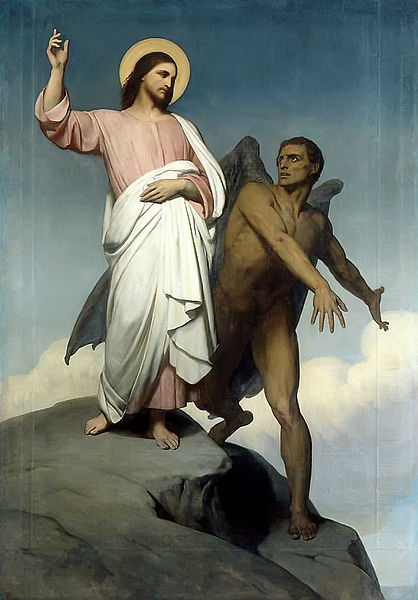
The tempter urges Jesus to use AI; image credit: Ary Scheffer, The Temptation of Christ (public domain via Wikimedia Commons)