Weeding Lessons

Weeding can be a spiritual exercise.  This summer has been particularly challenging for my communing with the earth because of heat spells, soupy, rainy days for a week at a time, and generally just being busy with other things.  Yesterday I went out to the front garden and received a shock.  A couple of caveats, in my defense: like many people we tend to use the back door instead of the front.  With our parking space behind the house, this is understandable.  Another excuse is that I’m too exhausted after work to do weeding.  At that time of day the unadulterated sun is having its way with the front garden, and, hey, three’s a crowd.  We planted our garden in the hopes of reducing the mowing by a little bit.  It did that, but we soon learned that the expensive plants you buy tend to be shy.

And “ground cover?”  There’s three year mantra: first it sleeps, then it creeps, then it leaps.  Ours slept a couple summers and seems to be in its second summer of creeping.  In the midst of all this: weeds.  Weeds may be the ultimate symbol of hope.  Life is extremely tenacious.  It doesn’t take “no” for an answer.  My amateur adventures in gardening have taught me that weeds grow next to those paving stones you put down.  Then they start growing over said stones.  If you let them go long enough (as I say, the weather has been awkward), they create their own soil over the stones.  Meanwhile, cars line up at the hardware store to buy bag after bag of soil.  Weeds can make their own.

I’m actually an admirer of weeds.  I enjoy the aroma of raw earth when they force me to my hands and knees in front of the house.  I do envy that their 9-2-5 is just being.  Growing.  Soaking up the sunshine, rain, and carbon dioxide.  If there’s a hint of soil, or something that can help them create their own soil, they’re not shy at all.  I don’t mind that they make me go outdoors on a pleasant weekend morning.  There’s peace in the air and I don’t mind the exercise.  I am surprised at just how many plants can grow in such a small amount of space.  I do wonder how our neighbors put up with us, but yesterday it was rejuvenating for my soul to be out there.  Everyone is sleeping in on a Saturday morning, and I’m learning some free life lessons from the amazing plants we call weeds.

Paperback Writer

Change can occur quickly, like an avalanche, or slowly, like the build up to an avalanche.  Lasting change is of the slow variety.  In my mind I’m still a professor wannabe, although that ship has long since sailed.  The changes of an advanced degree are indelible, so I continue to write books and I still read a lot.  Here’s where the slow change comes in.  My reading lately has shifted towards fiction.  Not completely, of course, but I’m finding that my nonfiction reading pile erodes more slowly than its fictional sibling.  I hope that I’m not losing the capacity to handle the real world, but the realm of fiction feels so much more welcoming.  And I’ve been doing a bit of fiction writing myself lately, and to school myself I read fiction.  I’m not sure if the change is permanent or not since the end hasn’t yet been written.

My work on this blog bibliography continues slowly.  It will record most of my reading for the past decade and a half.  But not all.  I read books not quite born yet, for work.  And I read things other than books.  It will be an incomplete record.  Finding the time to work on it, however, is difficult.  Mainly because of all the reading I want to do.  And, since it’s that time of year, yard work.  I’m thrilled that my first novel will become a reality.  That’s especially good news to me since my energy has been focused on getting my most recent novel into what I hope is publishable form.  At times I wonder how many novels I’ve read.  I started reading scads of novels intentionally by the time I was in seventh grade.  I’m sure I’ve forgotten many of the fiction books I consumed.

As a professor I’d put novel reading on the back burner as nonfiction heated the research and writing projects I undertook.  I recall, however, guiltily sneaking in a novel now and again.  How many I don’t know.  I wouldn’t even know how to begin to count.  I suppose that’s one reason I’m trying to pull this bibliography together.  It won’t cover a couple decades of a literary life, but, as a friend used to tell me, “a little cotton is better than no mattress at all.”  There were some memorable big books: Jaws, The Godfather, War and Peace—and many more modestly-sized offerings.  Even more short ones.  The change in me has been slow, but steady.  Reading will do that to a person.


Stuffed

Although a satire, The Stuff has a serious message.  This horror comedy from the eighties bears some similarities to The Substance, but in a more comic and environmentally conscious way.  The eponymous stuff is edible and discovered at a mining site in Georgia.  Its good taste soon challenges ice cream and millions become addicted to it.  The problem is, it takes over people’s minds.  Soon they will eat nothing else.  Some industrialists in the ice cream industry reluctantly hire a specialist in industrial espionage to learn what The Stuff is.  They engage Mo Rutherford, who, although crooked, is quite likable.  The film follows him as he investigates.  He eventually finds Jason, a young boy whose family has been taken over by The Stuff.  Jason saw it moving and knows it’s alive.  Mo rescues Jason and teams up with Nicole, an advertising executive who’s been marketing The Stuff.  Together, and with “Chocolate Chip Charlie” Hobbs, they decide to expose that The Stuff is animated by an alien life form and is dangerous.

There’s a lot of madcap stuff here.  The horror element comes from what happens to “Stuffies”—those addicted to The Stuff.  It hollows them out, eating them from the inside.  They’re left as hollow shells.  When shot they leak the white Stuff.  This leads an Army colonel who is also trying to stop it to his classic line, “I kinda like the sight of blood… but this is disgusting!”  There are so many corny lines that it’s no wonder that the movie has a cult following.  It’s also a parody of how industrialists will stop at nothing to get money, even when they know what they sell is dangerous.

Watching the movie, which wasn’t half bad, I wondered at how I’d never heard of it before.  There are so many movies out there and now with the internet so many websites.  Classic TMI.  I only found it by scrolling through a streaming service after a night of very little sleep when something kind of silly sounded appealing.  Comedy horror is a genre that can produce some good results.  This movie also made me think of The Blob, another shapeless monster that critics tend to dislike.  The film had a decent budget for the time and the production values are generally good.  The Stuff isn’t a great movie, but it’s a pretty good one.  The social commentary that it packs is just as relevant now as it was forty years ago.  It’s a satire worth seeing.


Paperback Dreams

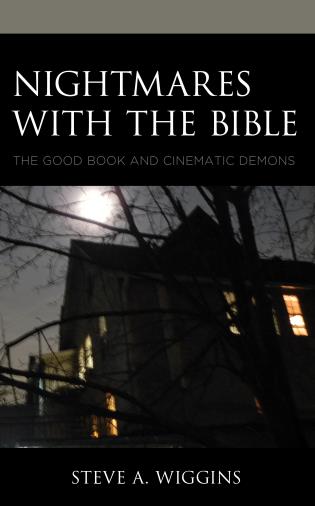
Although I’ve been focusing on my fiction writing lately, I still think about my poor, overlooked nonfiction books.  The other day I had an intriguing royalty statement from Bloomsbury.  (It’s not intriguing for the amount, which is negligible, but the implications.)    The name Bloomsbury is a story in itself.  Nightmares with the Bible was published by Fortress Academic and Lexington Books.  Lexington is (was?) an imprint of Rowman & Littlefield.  R&L was a fairly successful academic publishing brand, although not a university press.  A couple years back Bloomsbury, a British publisher, bought R&L.  Bloomsbury isn’t part of the “big five” publishers in English, but they did have the foresight, years ago, to sign up an unknown author by the name of J. K. Rowling.  Bloomsbury, cash in hand, began buying up smaller academic publishers.  That’s one way that publishers grow.

For me, that meant that Nightmares now had a new owner.  I have no idea which editor oversees it.  It’s a backlist title now, and I know from my own experience that when you inherit a backlist title, well, let’s just say there are more than enough frontlist and potential frontlist titles to keep you busy.  I was after my R&L editor for a paperback edition since Nightmares is my most expensive book, now that Gorgias Press has released a paperback of A Reassessment of Asherah.  This brings me back to my royalty statement.  On it there was a line for a paperback.  It even had an ISBN (9781978703209).  ISBNs cost money and many publisher don’t buy them unless they plan on using them.  Is there a paperback in the works?  I’m not getting my hopes up since ISBNs can be reassigned.

Earlier this summer I visited my local library to donate my books (if they would want them).  The head librarian kindly made time to discuss this and accepted Holy Horror and Sleepy Hollow As American Myth.  I left a little sad that I couldn’t offer Nightmares as well.  I only have two copies and I can’t afford to buy more, even with an author’s discount.  (Author discounts are usually between 40 and 60 percent; for a book that’s priced at over $100 that’s still not a bargain.)  I’m mature enough to know that a paperback wouldn’t fly off the shelves, but I consciously wrote Nightmares as a companion volume to Holy Horror—the two go together but were separated at birth.  You’ll pardon me for being excited at seeing a paperback ISBN, then.  I’ve been in publishing long enough now, however, not to read too much into it.


Pointedly

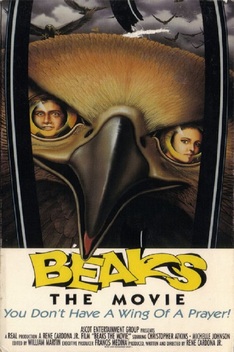
Beaks, aka Birds of Prey, is either a knock-off of, or tribute to Hitchcock’s The Birds.  Some have suggested it should be considered a sequel.  For my part, I was looking for an animals gone wild movie to watch one weekend when I was alone.  It was free on one of my streaming services, so why not?  The acting isn’t great and the dialogue feels a bit forced, but this 1987 movie wasn’t completely bad.  The plot we’ve seen before.  There is a stronger environmental message here—the birds are attacking because of environmental pressures brought on by humans—than in Hitchcock.  I’m on board with that.  The story follows Vanessa, a news reporter, and Peter, her cameraman, as they cover, reluctantly, birds attacking humans.  The pacing is a bit off.  The opening paragliding sequence is really too long and confusing (where are these people?).  I did wonder, however, how the birds had been trained.

That question kept coming back throughout the movie.  The attacking birds are mostly pigeons or doves, and in the scenes where they really look like they’re attacking I wondered how they managed them.  Of course, actors can act like they’re in distress as birds go after food placed on their person, but the effects made it seem more sinister than that.  For this aspect alone the movie deserves some credit.  The opening sequence involves attacks by eagles, a bit harder to manage, it would seem.  The fatalities at the beaks of pigeons, however, are less believable.  Yes, they could attack eyes and ears and noses, but the injuries seem sustainable, and not life-threatening.  The attacks, for the most part, are realistic enough.  (When child actors are involved the attacks are far less convincing.)  The critics, it seems to me, are a bit too harsh.

A Mexican movie in English, it was filmed in Acapulco, but also Spain, Italy, Puerto Rico, and Peru.  The travel sequences, which are apparently meant to show that this is a worldwide phenomenon, sometimes feel tacked on.  More could’ve been made of the firebirds of the Inca returning.  It would’ve made for a more speculative film, of course, but it could’ve been good.  Beaks isn’t the kind of movie to which I’d give any kind of unqualified recommendation, but it isn’t without merit.  You do have to put up with quite a bit to get to the payoffs, though.  Still, when it was over I was left with the temporary paranoia about birds that Hitchcock’s film creates, so it wasn’t all bad.


Lovecraftian Layers

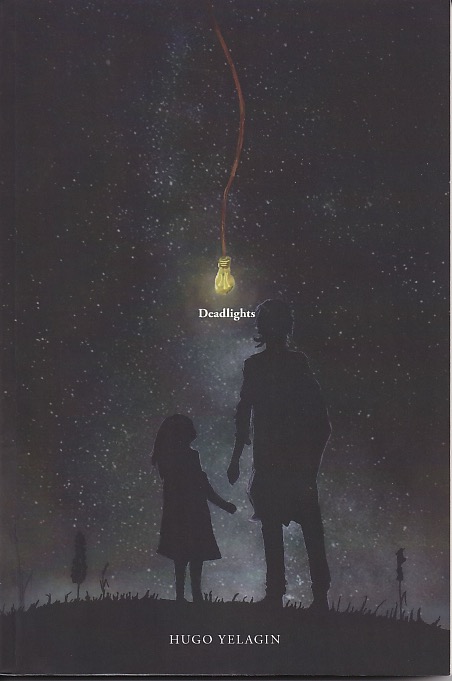
Lovecraftian dreams dominate Hugo Yelagin’s Deadlights.  A few major themes are addressed in this debut novel.  One, which always stands out to me for some reason, is the search for the father.  Maxwell Corvid, a former medical student at Miskatonic University, is returning home to his father’s once grand estate.  Accompanied by a banker who delights in pointing out that his father’s debts, Maxwell learns he’ll inherit debt rather than anything substantial.  Accosted by a brigand, the two leap into a huge sinkhole that has taken the estate.  Maxwell finds himself among moldy people transforming into fish (Lovecraftian, as I say), but befriends a young girl who knows her way around.  They find the banker and brigand and begin trying to solve the strangeness they encounter in this world.  A couple other major characters enter the tale, but I don’t want to give any spoilers.

While novels that heavily feature dreams aren’t my personal favorites, this dark fantasy intrigues you into turning pages.  I really couldn’t guess the ending, and, like a dream, not everything wraps up neatly.  The amazing thing about H. P. Lovecraft is that his vision has inspired so many others to grapple with his worlds.  Many modern writers find the call of Cthulhu irresistible.  The sloshy, watery fear of being transformed into something you’re currently not.  This, I think, is a second theme.  Transformation.  Realizing maybe the way you see someone isn’t the whole of that person.  And, of course, the theme of light.  This sinkhole world is dark and occasional lights help the characters to see.  And they learn that those different from themselves aren’t necessarily evil.  (Although one or two might be.)

I’m not sure I’d consider this a horror novel, although there are monstrous sorts in it.  It doesn’t try to scare like many horror novels do.  It does have a gothic setting, but the timeframe isn’t specified.  Lovecraft tends to conjure the Victorian period in my imagination, but his stories probably reflect his own time, as opposed to an earlier one.  I acknowledge my own weaknesses as a reader, and as someone with historical training, knowing “when” gives me a useful framework within which to paint a story in my head.  But then again, in worlds dominated by dreams that may be a moot point.  It’s just that, in my own canvas of this story, I do wonder what was, in this Lovecraftian world, really real.


Humanity Wrought

“What hath God wrought?”  So the first telegraph message read.  There was a wonderment and fear of technology in 1844.  Although at today’s rate of change, to us tech seemed to crawl back then, but it was changing rapidly.  What strikes me as I think about AI is that we’ve lost our humility.  “What hath humans wrought?” is the new motto, and one that presumes it can only be good.  How easily we forget Thoreau, even as we valorize him.  He feared that machines would end humanity, and in a way they have.  Fearing that trains would mean that schedules would be determined by clocks rather than human lives, he understood something that we’re still missing.  He feared trains would make humans in their own image.  And so they did.  We live by a 9-2-5 schedule, no matter how dehumanizing.

“What hath God wrought?”  With confident, angry atheists telling us there is no god, and that there is nothing more amazing than human intellect, we now see what we’ve wrought.  Many people object to AI.  They don’t want their power centers in their neighborhoods.  They don’t want the cost of electricity to rise just so Silicon Valley technocrats can get richer.  They know that as wildfires burn American cities, huge amounts of water are required for running data centers.  Even Three Mile Island is being restarted to help supply the electrical power they require.  Protest as loudly as you can, it will not stop them.  God is no longer in the equation.  God has left the building.  This is the age of humanity.  No, a very small segment of humanity.  A segment that thinks it’s god.

Technology is good if it serves to make our situation better.  AI is now starting, according to the New York Times, to both lie and cheat.  It is made in the image of humans, so of course it does.  Look at the White House and try to protest.  No longer does the imago dei hold any meaning.   We no longer aspire to that image of God in which we once could see reflected in our better natures.  No; we can so we do.  Even as Frankenstein keeps lumbering back to the screen, and new versions roll off the presses, we simply don’t get the message.  We have no time to stop and glance—no, stare—out over Walden Pond for hours at a time.  We must work so that our fellow humans can be put out of work.  What hath humanity wrought?


Dark Academy Series

With Prufrock Preparatory Academy, A Series of Unfortunate Events enters directly into dark academia.  Not only that, but The Austere Academy also introduces the V.F.D. that kept me guessing for quite some time the first read through.  But let’s start with dark academia.  Any gathering of young people with the intent of equipping them to get along in the world is a school.  And schools all have their dark corners.  That’s because adults trade in secrets and other shadowy things.  Of course, Lemony Snicket makes Prufrock Prep into a pretty dismal academy with harsh rules, boring classes, and unsatisfactory accommodations.  The Baudelaire orphans are found by Count Olaf, of course.  They do, however, make friends with the Quagmire Triplets and the larger scheme of what happened to their parents begins to unfold.  It does seem that the tales grow darker and not quite as funny as they reach this point.

The school motto is Memento Mori, “remember you will die.”  Although this is a good life lesson, it might be a bit harsh for children.  Some of us grew up with a religion that made sure we understood this from an early stage in our lives.  I can’t say that was a fun way to grow up, but I can see the wisdom in it.  Our culture is about the denial of death and then when it does come it can be devastating.  Of course, these are children’s books and they don’t linger on such thoughts too much.  And although Count Olaf is dangerous, his disguises are always a bit silly.  In The Austere Academy, as in The Miserable Mill, he stays somewhat in the background, orchestrating schemes that make the orphans fail, and offering to take care of them.  In this case his disguise involves a turban that he cannot remove for “religious” reasons.  A fascinating misuse of pluralism, it made me think how some people hide behind it.

Not having written books in a series, and not having had a publisher’s input into what I’ve written, I don’t know how far ahead Daniel Handler planned the series.  I do recall that from this point on the mystery of what V.F.D. is becomes important.  I’d completely forgotten about the Quagmire Triplets.  Reading books for young readers as an adult can reveal quite a lot.  Sometimes it’s easy to forget that they’re written by adults and they may have had to go through the same rejection trials that other creative adults face daily.  Trying to break into publishing can indeed be a series of unfortunate events. Dark academia indeed.  I’m glad Lemony Snicket broke through.


Geeology

Some of my fondest memories of the Midwest, apart from living my teaching dream, involve rockhounding.  The other day I was out in the garage trying to locate my rock tumbler when I came across many carefully labeled boxes from our rockhounding trips.  Not all of these trips were local, nor were all of them solely rock-based.  For example, my family took a driving trip around Lake Superior.  This was back before a passport was required to cross the border.  Part of the trip involved driving up to Copper Harbor in Michigan’s Upper Peninsula to look for agates and, well, copper.  Then there was the time when we drove to Hannibal, Missouri to hunt for geodes.  The mine was closed because of excessive rain so a couple months later we drove down with some friends we knew from Michigan and tried again.  This time with success.

The great, unfortunately departed, bookstore manager at Nashotah House was a great conversation partner.  Once I was talking to her about rocks and I stopped and apologized, “I don’t know why I’m so interested in rocks.”  She said, “You’ve got curiosity.  If it wasn’t rocks it would be something else.”  I took that to be the compliment it was intended to be.  Not everyone at the seminary was curious and many were only interested in matters ecclesiastical.  One night a huge windstorm blew over a very large cedar tree that barely missed our house.  Before the week was out, I was outside standing in the hole left by its roots, poking around the glacial till for interesting rocks.  I continued doing this until the tree was removed and the hole filled in.  I’ve had other interests, bordering on obsessions, in my life, but the geological interest started early.

When I was a child my brothers and I would go down to French Creek in Franklin, under the 13th Street bridge and look for fossils.  I wondered how this could fit together with the story of the world being only 6,000 years old.  We knew from school that fossils were millions of years in the making.  One time my mother bought us, at a rummage sale, a small cardboard “rock collection.”  It had a few little pieces of non-gem quality gemstones glued to the bottom.  A couple of them had been previously pilfered.  I was fascinated that such colorful things just came out of the ground.  Planning on being a minister, I never studied geology in school.  To be fair, I don’t think Grove City even offered a geology major.  Years later, teaching in a seminary in the Midwest, my old fascination caught up with me again.  And it left many fond memories.


Evil Ghosts

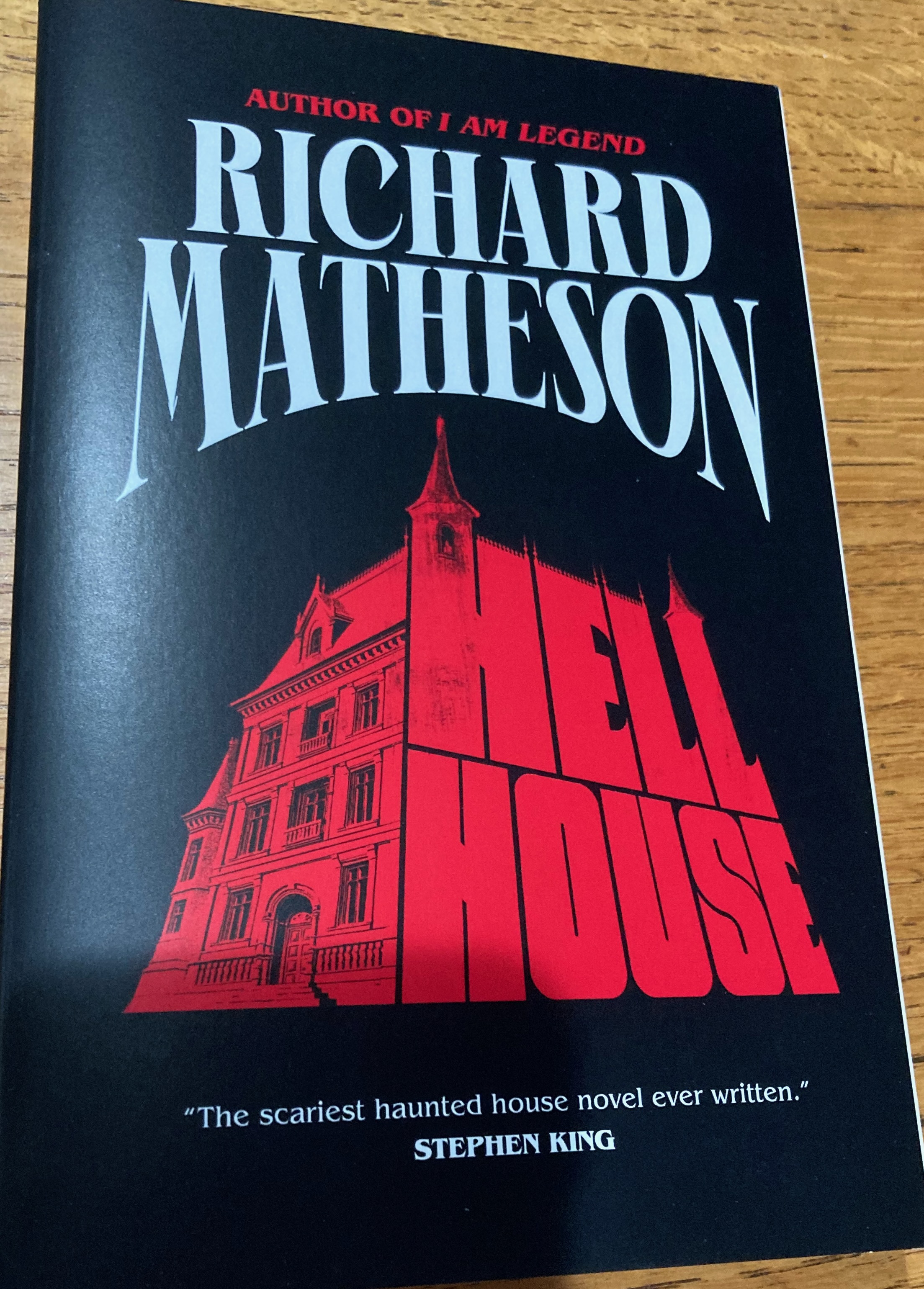
So, I did find the book.  Richard Matheson’s Hell House is somewhat of a classic, but, my usual complaint holds—it’s a bit too long.  It lingers too much over the various characters’ motivations and doubts.  It probably doesn’t help that I watched the movie first.  The screenplay was also written by Matheson, so it is fairly similar to the book.  Matheson had a history of writing for the screen.  He wrote several Twilight Zone episodes (indeed, Rod Serling blurbed the copy of the book I have).  The story is the same: a scientist and his wife, accompanied by two mediums (one mental and one physical), are sent to Hell House to demonstrate if there is an afterlife or not.  The scientist plans to prove that, although psychic power is real, it is merely electromagnetic radiation, not a survival of personality.  He has a machine that will demonstrate this.

Meanwhile the four spend the week at Hell House being tormented by ghosts.  Each member of the party winds up injured and two of them are killed.  In the end it turns out that ghosts do use (are made of) electromagnetic radiation and they are continuations of the spirits of the dead.  Only, at Hell House, there is one exceptionally powerful ghost.  One that makes others think there are many.  It’s a bit disappointing that the motivation for his evil behavior is that Belasco resented being short.  Those of us who are vertically challenged aren’t all sociopaths.  People can obsess over size, I know, but to what lengths would someone go?  Trying to haunt a house until eternity?  One thing the novel does explain better than the movie is Belasco’s overweening pride in being a giant of a man.  In reality, he’s maybe my stature.

Both the book and the movie use the Bible to help resolve the mystery, earning the latter a place in Holy Sequel.  Matheson was an influential writer in the horror genre.  I have to believe he was inspired by Shirley Jackson for this particular tale.  I found his I Am Legend a bit faster reading—another novel I read after seeing one or two of the film adaptations.  For some reason it felt shorter.  Having one person left in the world, an idea that was pondered by Mary Shelley in The Last Man, leaves plenty of room for pondering motives and psychology.  Maybe Hell House suffers for having four people to probe a little too deeply.  In any case, I’m glad to have read the book—it explained in a way the movie left a bit ambiguous, that both the scientist and the spiritualists were right in the end.


Holy Sequel

I’ve made reference, from time to time, to “Holy Sequel.”  This was a potential book to follow Holy Horror, in which further examples of the Bible in horror films would be explored.  While I only half-heartedly supposed I might write such a book, I have kept track of references to the Bible in the horror movies I’ve seen since my book was published.  I haven’t done this religiously, but it struck me that someone else, someday down the road, might want to do more research.  I recently uploaded my list of such movies in the section of this blog called Full Essays.  It also lists all the movies mentioned in Holy Horror.  (I may eventually add those from Nightmares with the Bible too.)  Not all of those movies are discussed in the book(s)—some are incidental references—but a good many of them are.  And as this bit of data shows, a good many more could be.  The main reason for adding the list to this website is to offer a filmography of movies that could’ve been in the book, but were discovered too late.  Or were produced later.

I watch horror with my Bible radar on.  It’s widely recognized that strong religious themes began in horror with Rosemary’s Baby in 1968.  One of the things noted both in Holy Horror and in the list on Holy Sequel is that the Bible appears in films earlier than that.  Its cinematic nature changes over time.  I should also note that some of the movies on Holy Sequel are marked as “maybe.”  The reason is that reference to the Bible isn’t terribly explicit, or, if it is shown it’s not done clearly.  In the book I discuss this explicitly if a movie is questionable, regarding its use of the Bible.  Another feature of Holy Sequel is that it will be updated; it is now my version of record.  In fact, since posting it a movie has already been added.

In my abundant free time (ahem), I’m adding links to the blog posts in which I discuss these movies.  As with my blog bibliography, this will take some time to complete.  I realize these posts are read on other formats such as Facebook and Goodreads, but the website itself has more information than simply the daily blog posts.  I do hope it’s a resource for those with similar interests.  There are many movies with the Bible in them.  There are no indexes or lists of such movies and I’ve stopped keeping track.  Except if the movie is horror.  If it is, it will eventually be added to Holy Sequel, if I find it.  It’s a book I likely won’t have time to write; my to-do list is far too long.


Many Thanks

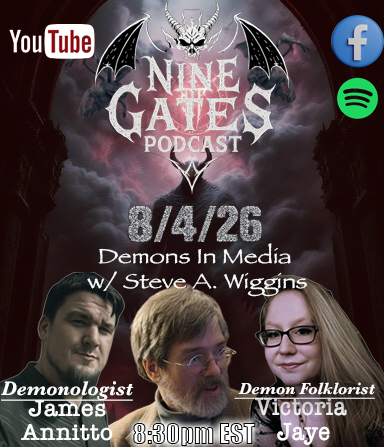
My thanks go out to James Annitto and Victoria Jaye for a delightful discussion about demons on last night’s Nine Gates Podcast.  I will put a link to it on Spotify on the Other Social Media & Interviews page on this website.  I have to admit that I was a little nervous about it.  I wrote Nightmares with the Bible in 2019 and ’20, mostly.  Since then, in addition to the 9-2-5 that never ends, I wrote The Wicker Man and Sleepy Hollow as American Myth.  I have a good deal of another nonfiction book written, but I’ve been polishing what I hope might be my second published novel lately.  In other words, would I have forgotten about demons?  The amazing thing about being a podcast guest is that it suddenly brings back the past.  It’s like a time machine.

On my Other Social Media & Interviews page I have links to the various podcasts to which my books have garnered invitations over the past few years.  Last December Biblical Time Machine had me on to talk about Asherah.  Amazingly, although I wrote that book over three decades ago, I remembered quite a lot.  Some details were fuzzy around the edges, of course, but writing a book seems to seal certain facts in your gray cells.  The Incarcerated Christian podcast had me on for three episodes, two for Holy Horror and one for Nightmares.  My gratitude always goes out to TheoFantastique for chats about all of my books since Holy Horror on.  It’s devilishly hard to get attention as an ex-professor.  Being an editor is a quiet job.  So I’m full of gratitude for all of those who’re willing to listen to me prattle on for an hour.

I realize, by the way, that some readers find these posts on Facebook, Goodreads, and other social media.  There’s actually more to my website than my daily posts.  (They are the largest part, no doubt.)  I have individual pages on each of my books.  There’s a bit of contextualizing biographical information on this old ex-professor.  And there are links to my attempted vlogs on YouTube.  Chatting with James and Victoria last night, I was reminded again how much I’d like to get back into doing videos.  The only thing stopping me is time.  Even a 20-minute video can take an entire weekend to put together.  Thankfully there are a few folks out there who find my efforts worth an evening’s (or weekend afternoon’s) discussion.  I am profoundly grateful to this who do, if you’ll pardon my brief stint of self-indulgence.


Not Hill House

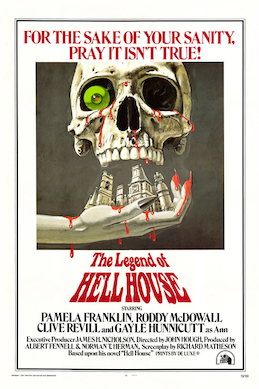
I was tardy in seeing The Legend of Hell House.  Part of the problem is the number of similarly titled films: The House on Haunted Hill was a 1959 movie with Vincent Price.  Shirley Jackson’s The Haunting of Hill House was published the same year.  It was adapted into a noted film, The Haunting, in 1963.  Richard Matheson’s novel Hell House was published in 1971 and this adaptation was released two years later.  Going back to the book versus film debate, I’d been hoping to read the book before seeing the movie, but circumstances—always the circumstances—meant that I’ve watched the cinematic version first.  Speaking purely for the movie (I haven’t read the book yet), there are resemblances to both the similarly named movies, but especially to The Haunting.  Not fast paced by current standards, the movie is nevertheless well made with an atmospheric haunted house and able actors.

The film opens with not a claim of being based on a true story, but a statement that such phenomena are indeed possible.  An elderly millionaire wants proof of the afterlife and offers a substantial sum to a scientist who might prove it.  Lionel Barrett agrees to take this on and brings his wife with him.  He will be accompanied by the spiritualist medium Florence Tanner and the sole survivor of a similar set up from two decades earlier, Benjamin Fischer.  Fischer is a physical medium.  Barrett intends to prove that spiritual energy is not a survival of the personality beyond life, but rather a form of energy that can be scientifically neutralized.  As the four gather at the house obvious manifestations take place and even Barrett doesn’t deny that they came come from external energy.  He just doesn’t believe that it’s personal survival.  He has a machine delivered that will drain the house of said energy.

Things don’t turn out as the scientist plans, although the machine does appear to work.  What Barrett failed to realize—that spirits are real—leads to his demise.  The movie is well made and has attained a kind of classic status, which is why I ended up seeing it before reading the book.  (That, and I found a streaming copy on sale.)  In many ways the story resembles Jackson’s classic.  Haunted house movies are among my favorites when it comes to horror films, so this one wasn’t a disappointment.  It has made me curious to read the book, so that will come in due course.  As long as I can keep the similar titles discrete.


Movie Memory

Memory is a funny thing.  And selective.  For a recent project I was going back over some movies I’d watched over the last few years and was amazed at how many I could barely recollect.  Others had stayed with me, some intensely.  Something in our brains makes them decide that this ninety minutes is worth storage space while that ninety minutes is not.  I’m not sure what it is.  It could be that when we discuss “good movies”—those that are well made—that we have encountered something qualitatively superior.  Even if we can’t say precisely how, we know that others have  also found them memorable.  Admittedly, I often watch movies to prevent myself from falling asleep on weekend afternoons, after the chores have been done.  Even so, some seen at that hour are fresh in my mind, after years, while others I saw a couple months ago left barely a scratch.

Photo by Denise Jans on Unsplash

Movies shape our views of reality.  The evidence is all around us.  I remember when Reagan was president (the beginning of an unfortunate spiral for the Republican Party), he used to cite things from movies as reality.  And it wasn’t just his senility.  We all do it.  Movies are impactful.  They’re more than entertainment.  We couldn’t afford to go to movies much when I was young.  I can remember, however, some scenes that influenced my perceptions of all kinds of things, from snakes to how scary dogs can be.  (My cynophobia likely goes back to a movie that included a segment called “The Tinderbox.”)  As a society we treat movies as if they aren’t such a big deal.  What an Odyssey!  It’s more than money.  Just ask anyone who’s quoted Ezekiel 25.17 (including current government officials).

I’ve never been too certain about reality itself.  I like to keep an open mind regarding what’s possible.  Science deals with measurable phenomena.  Even psychology is considered a “soft science” because it has to do with that squishy area of human consciousness.  I’ve said it before: our brains evolved to help us survive, not to determine what is objectively real.  We see movies and they get added to the evidence base against which we draw all kinds of inferences.  So, looking through the movies I watched over even the past year, why have some simply fallen out?  Sometimes the title gives me no clue.  I have to read my own blog post about them to recall what they were about.  If I’m remembering correctly, that is.


Demons, Once More

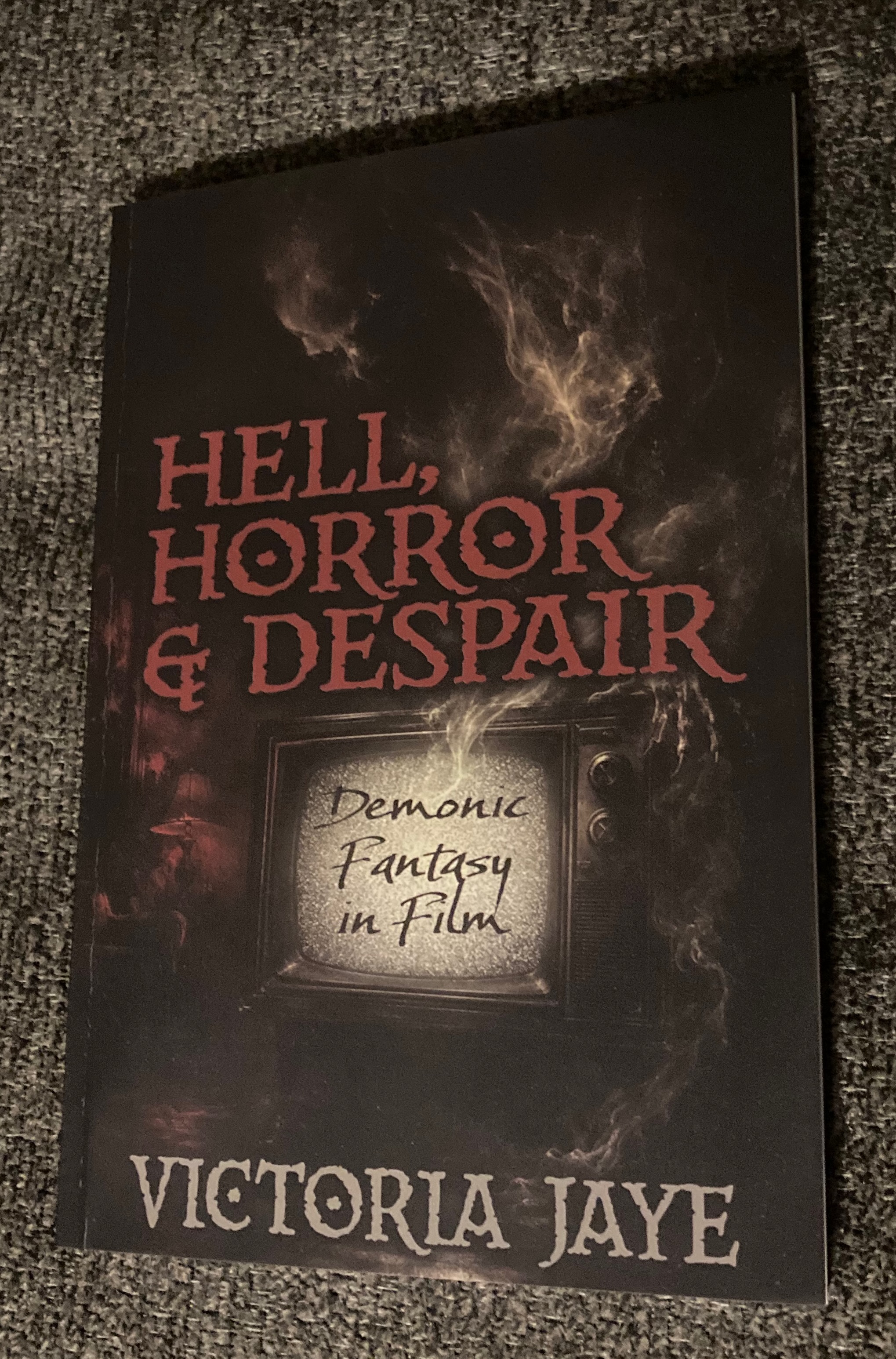
Victoria Jaye’s book got me thinking, once again, how powerful movies are.  Ever since I was a child, I think, I had some awareness that movies were more than simply entertainment.  Things I saw that scared me stayed with me.  They’d come back in nightmares or unguarded moments.  Indeed, they would frame what I thought of as real, or possible.  I read Hell, Horror and Despair in preparation for my appearance on the Nine Gates Podcast.  Perhaps it’s a combination of my age, how busy I am at work, and how I move from one project to another, but I do tend to forget things about the books I’ve written.  I needed to remind myself about Nightmares with the Bible, and reading Jaye’s book definitely helped ring a few bells.  I remain interested in all the subjects I’ve published on, from Asherah to Sleepy Hollow (and beyond).

Hell, Horror and Despair is about demonic fantasy—broadly, the ideas culture sustains about demons, largely influenced by movies.  Jaye recognizes, as many authors do, that The Exorcist was formative.  The more I ponder it, the more I think it might be the most influential horror movie ever.  William Peter Blatty famously wanted it to draw people back to faith.  I think it probably did that and mostly through the fear it inspired.  The money brought in attracted other filmmakers.  There’s gold in them thar hills!  Counting the number of movies I’ve seen featuring some kind of demon would take more than an hour or two.

And maybe they weren’t only fiction after all.  Demonic fantasy is fiction about demons that derives from the media.  The beliefs that The Exorcist kick-started have grown and evolved over the years until all kinds of beliefs about demons are held, but not tested against evidence.  Any evidence itself is dismissed by science, so people turn to the only available source: the fiction of movies and pop culture.  This is really a fascinating development.  Now we have congressional leaders, and a Vice-President, who believe UFOs are demons.  Talk about your Middle Ages!  Since science doesn’t investigate the immeasurable world, and since experts in religion tend to be unemployed these days, of course this kind of thing is going to happen.  Jaye’s book points out the problems with demonic fantasy.  Historically, prior to movies and television, it often contributed to literal witch hunts.  Today it is used to make political opponents seem evil.  And it contributes to a belief that demons are everywhere—something the Catholic Church tried to tamp down after the Dark Ages.  I’ll be on the podcast on Tuesday evening.