Just Handle It

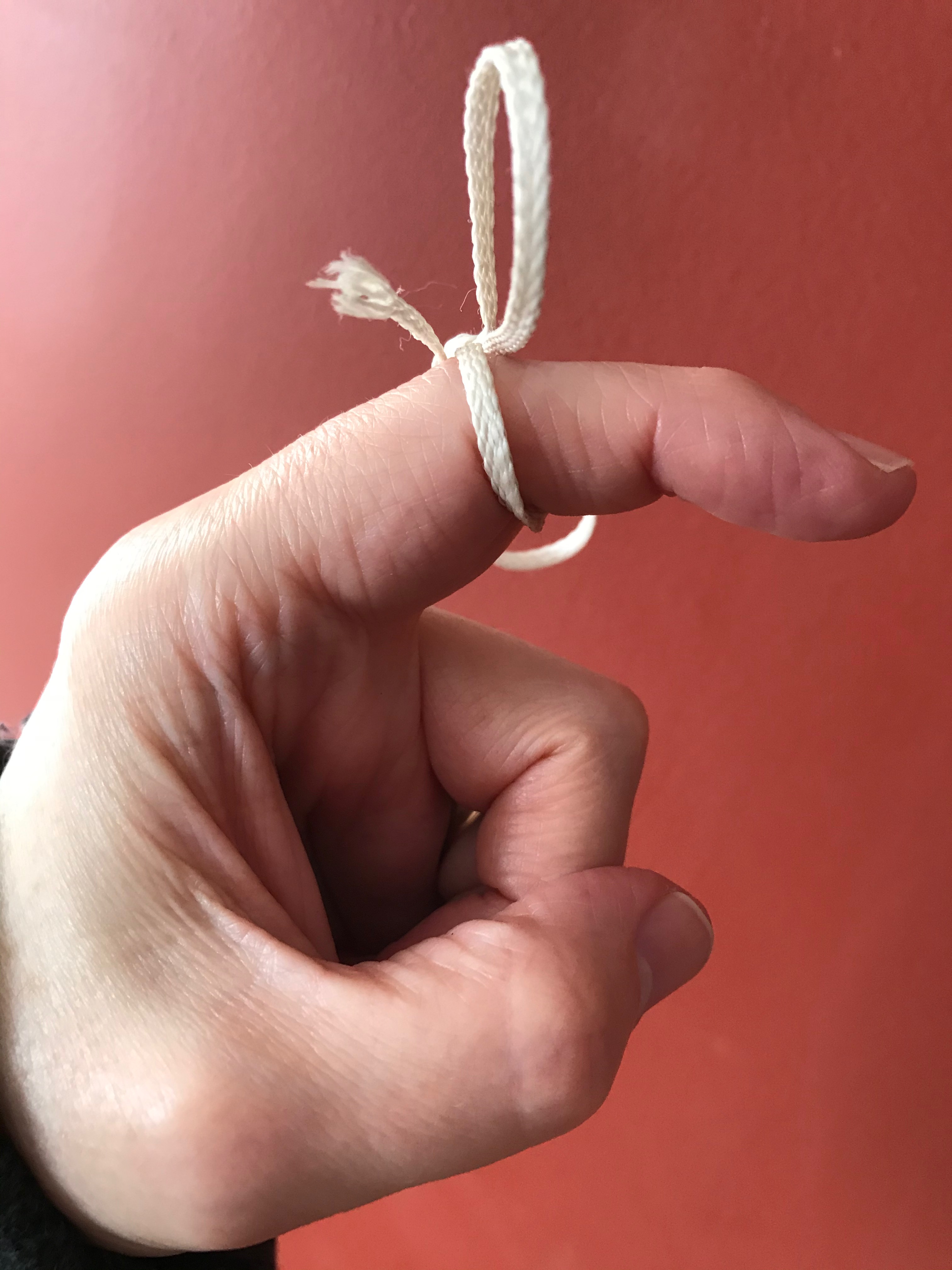
It happened again.  A few days ago I loaded my blog post and forgot to click “publish.”  The reason for this is probably silly.  Although I get out of bed between 2 and 4 a.m., I’m afraid that if I post that early other notices will get on top of anything I share and the post will be overlooked.  Well, more overlooked than my posts already are.  So I wait until 6 a.m. to click.  And some days, particularly on weekends, I’ll have the post loaded but I’ll get distracted and will forget.  I discover it the next morning, stare at it in confusion for a while and then think, “I forgot to post this.”  I have this conversation with one of my brothers, near my age, who insists he needs a handler.  You forget to do things.  Most of the time I’m pretty good at remembering—this blog is the center-point of my online existence, and I post every day.  If I don’t forget.
Weekends are very busy.  Almost as busy as work days with their shorted human hours.  And last week was particularly intense.  Two unexpected house repairs that required financing.  Two birthdays.  And grass that loved the high summer weather we had in April.  (Our neighbor is trying to sell his house and I want to try to attract a new neighbor who appreciates those who make an effort.)  As soon as I stepped outside, however, I was overwhelmed.  During the week of summer weather I’d lost the long-term battle I’ve been waging against ivy that claims both fence and garage.  And sapling trees that somehow thrive in the shaded north end of the garage that hardly ever see the sun.  And I’m trying to teach, manually, a vine how to grow up a pergola that receives too much love from carpenter bees.  Why can’t it learn from the ivy just over there?  You get the picture.  (Right now it is just 29 degrees outside.)

By the time I came back inside, I was exhausted and forgot that I hadn’t clicked “publish.”  These days it gets light around six, and on work days I get delayed by jogging.  Still, I know the click before I start work for the day.  Weekends are the danger zone.  I could use a handler.  Or maybe I should just accept the 24/7 reality of the internet and publish as soon as I load the post.  Does it make any difference?  I don’t know.  Please direct all questions to my handler.

Substitutes

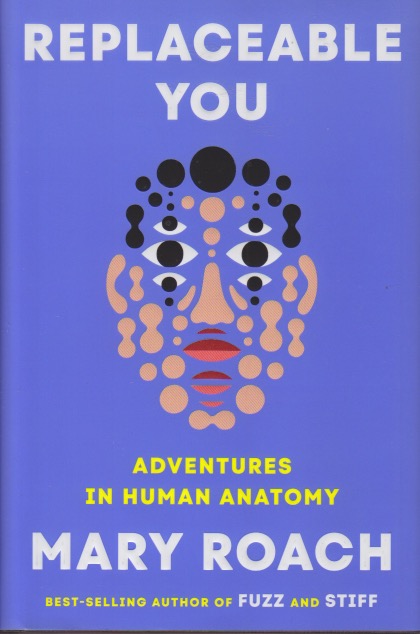
I discovered Mary Roach in a Borders store in Somerville, New Jersey.  Well, it might’ve been Raritan, technically, but it was right off the infamous Somerville Circle.  We were fairly new in town and I was looking for reading material.  I found Spook, her second book.  I enjoyed it so much I went back for her first book.  I introduced my wife to her third book and, starting with book number four, we’ve been reading them together.  (All of her books are at least mentioned on this blog; I rarely follow an author like that.) That brings us to Replaceable You, which published last year.  The subtitle, Adventures in Human Anatomy, gives you an idea of the content.  Roach is a charming science writer.  The two traits don’t often meet.  She peers at things that most of us shy away from, which, in a way, makes her a good potential horror writer.  Instead, she looks at her subjects with humor, often self-deprecating, and a sense of wonder.

Replaceable You isn’t my favorite of her books, but it’s not her fault.  Roach is about four years older than me and she too is facing aging.  This book is about parts of bodies that can be replaced, printed, or engineered.  Some of it is surprising and much of it almost incredible.  The reason that it isn’t my favorite is that it hits pretty close to home.  Two of my immediate family members have chronic health conditions.  (Life, of course, is a chronic health condition.)  I often think about the implications, but reading about them makes me uncomfortable.  As one reviewer once indicated, though, reading Mary Roach on any subject is enjoyable.

We are embodied creatures.  This is one reason that “artificial intelligence” will always retain the emphasis on the first word.  One of the surprising things I learned from this book was that organs/tissues are now starting to be 3-D printed.  Last time I looked, 3-D printing involved plastic, but in some places biological components are being used.  The tech isn’t far enough along to print actual organs yet, but there is incredible work being done.  It’s quite possible, and this is me, not Roach, that people born in a couple of decades (depending on whether we can get Republicans out of the White House, and science funding can be restored) may well be able to have biologically personalized health care that includes new organs made from their own cells.  That gets too close to eternity for my liking.  I enjoy living, but wouldn’t want to do it forever.  I’ll be okay along the way, however, as long as there are Mary Roach books to read.


Intensity

It was the biggest excuse for breaking up with me.  “You’re too intense.”  I lost track of the number of times college coeds told me that.  At the same time, the same adjective was whispered in awe when applied to professors in class.  You wanted intense professors, but not intense boyfriends.  Was “intense” bad or good?  I don’t deny being intense.  Some of us are just that way.  In personal relationships I’ve often managed to keep it under control.  It was one of the reasons, however, that I was such a good professor.  Students seem to have responded well, even if academia had no permanent home for me.  Thus, dark academia.  Which tends to be intense.  When I throw all my energy at something, it can become intense.  But it’s also true that I’m on the receiving end of it.  My mental mapping, especially in the fallow times, means that I must try to make sense of it all.

Some periods in life are intense.  I’m sure that’s true for everybody.  Or most people.  A concentration of events when time itself seems to have collapsed on top of you and you still have a 9-2-5 for five long days before you can start to deal with the residue.   So far, since the end of November many months ago, I’ve been in an intense zone.  So much is happening that I have trouble keeping up.  Unlike a dating relationship, I can’t beg off with intensity as an excuse.  A big part of it has been the calendar.  Thanksgiving fell late and January with its cold felt like it would last forever.  Both Trump and AI simmered in the background.  And, of course, 9-2-5.

Two major snowstorms were separated by only a few weeks.  As the second was tuning up, a death in the family.  The third in three years.  A novel was finished.  As was a nonfiction draft.  Two orders from Amazon went awry.  Who has time for returns?  Because of the storms, things became double-booked.  Preparations for the 2026 Lehigh Valley Book Festival.  With my expensive books.  I really didn’t think they’d select me as a participant, but was committed.  Or should be.  My wife’s 9-2-5 also hit an intense period.  We had to deal with two major household repairs simultaneously.  An unexpected auto repair.  I checked another website (No Kill Switch) to help define intensity.  What he has to say makes a lot of sense, but the question remains.  Is intensity good or bad?  It does seem to be the opposite of boredom, when you get time to deal with things, after work.  


Glowing Television

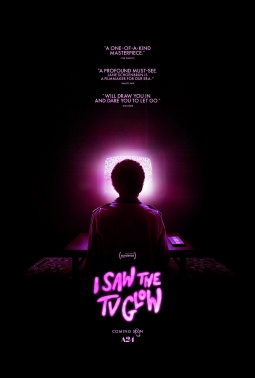
I saw some colleagues rather cagily recommending I Saw the TV Glow when it came out.  Considered psychological horror, it is a bewildering film.  This surreal story revolves around a television show, The Pink Opaque, which is ninth-grader Maddy’s favorite program.  She meets Owen, who’s in seventh grade, and asks if he’s watched it.  Since it’s on past his bedtime, he has to sneak to Maddy’s house to watch it with her.  Like her, he become hooked on it.  Maddy, however, has trouble distinguishing the show from real life.  Two years later she runs away from home, ostensibly to find reality in The Pink Opaque.  After a decade, Maddy finds Owen again.  He’s taken a dead-end job but feels that he knows what reality really is.  His parents dead, he carries on in his lackluster job.  Maddy tries to convince Owen that what he thinks is the real world is a television show and that The Pink Opaque is reality.  She wants to bury him alive so he can awaken to reality.

After twenty more years, Owen is still in the same degrading job, suffering in physical health and, apparently, mental as well.  After a breakdown at work, he discovers a television inside his chest.  It’s a bizarre tale, which is a clue that something more than meets the eye is going on.  A little reading reveals that Jane Schoenbrun, the writer/director, is trans and discovering that reality is what the film is about.  That does help make sense of it.  I tend not to read about movies before I see them, but I’d had this one recommended to me by a couple people whose judgment I trust.  Anyone who’s had an epiphany of self-discovery will probably be able to relate, at least in part.

There are some horror moments in the movie.  The implications of being buried alive—which comes up for four characters—is Edgar Allan Poe-nightmare material.  The ice cream man, in the original showing, is creepy.  And cutting open your chest to access a television inside is scary.  Also some characters have their hearts cut out.  All of this is surrounded by a pink glow and a pretty amazing soundtrack.  Unless a viewer has specific triggers though, I can’t see I Saw the TV Glow being especially frightening for anyone.  It’s not that kind of horror movie.  If, however, you are prone to existential horror, and sometimes wonder if reality is real, this could give you a bit of a jolt.


Crafting Byron

For a man who lived to be only thirty-six, Lord Byron tends to be featured in very long biographies.  I’ve been curious about him, but maybe not to the tune of 500-plus pages.  I’d seen references to Elbert Hubbard’s Little Journeys to the Homes of English Authors: Lord Byron, and since it was only a handful of pages, and not very expensive, I got a copy.  As a biography it turned out to be exceedingly slim.  And written with a flowery prose.  In fact, you could read this easily in a day.  I did learn about about Lord Byron, but in this instance the author took precedence over the subject.  I knew nothing of Elbert Hubbard.  A free-thinker of the turn of the twentieth century, he was born in Illinois in 1856.  He was a successful traveling salesman but then started a commune called Roycroft outside Buffalo, New York.

The Roycrofters were crafters and artists living together and producing, in some cases influential, artworks.  The community operated from 1895 to 1938.  The buildings, which survive, are now National Historic Landmarks.  Elbert Hubbard was a philosopher and artist, as well as a socialist and anarchist.  It’s not surprising he took a liking to Lord Byron.  One of the crafting supplies at Roycroft was a printing press.  Hubbard published a series of Little Journeys, some sumptuously bound, others with paper covers, and, from experience, uncut pages.  Lord Byron was volume seven, published in 1900.  Roycroft continued for the remainder of Hubbard’s life, and a little beyond.  Hubbard and his second wife died in the sinking of the Lusitania during World War One.  His son kept the community going for another couple of decades.

American history is filled with colorful and creative individuals.  All I knew of Elbert Hubbard was that he wrote a reasonably short treatment of the life of Lord Byron.  Reading it I learned a bit about the other intensely curious and talented writer who’d died just over thirty years before before Hubbard was born.  Byron was then still alive in memory for many.  It turns out that both subject and author lived extraordinary lives.  And each, in their own way, influenced larger society.  And now, having read this small book, I’m inclined to plan a trip to East Aurora, outside Buffalo, to see the settlement of the Roycrofters.  That’s not a bad thing to come from a brief book, not expensive, to read about a poet.


Reclaiming the Past

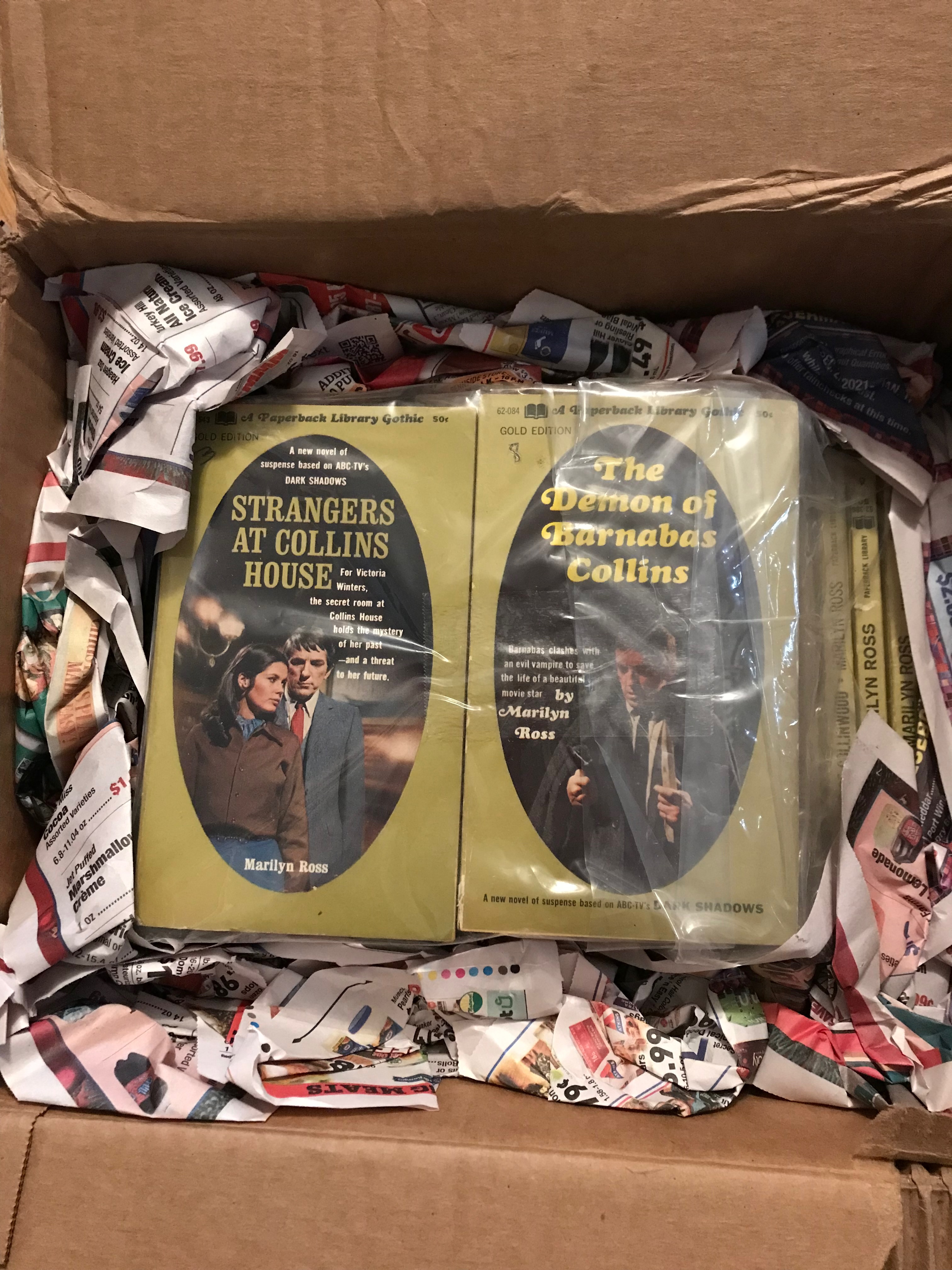
It started after Nashotah House.  That event shook me to my very core.  And I was approaching middle age.  I started taking an interest in my childhood.  I learned some uncomfortable truths that probably help explain the way that I am, but more tangibly, losing that job launched me back to both monster movies and the earnest need to collect books that I’d given up when I went to college to “grow up.”  Fortunately (perhaps) the internet had been invented and it was possible to locate used copies from the seventies.  I’ve written many times about the Dark Shadows books that I began collecting shortly after the incident in Delafield.  But there were others.  Many others.  Often it became a matter of identifying and finding the same edition that I’d had as a child.  (Modern reprints complicate this, but with enough patience the exact book editions can be found, and usually no more expensive than  contemporary bookstore prices.

The goal has never been to replace all of my childhood books, but those that evoked a palpable sense of wonder in my young psyche.  This was strange because I was very religious and these books sometimes challenged what my fundamentalist upbringing taught.  Some years back I had to find the exact edition of Erich van Däniken’s Chariots of the Gods? that I had.  The curiosity did not extend to several of his other books from the seventies.  I got rid of these because they caused me to question my faith.  Teenagers.  In any case, I also had a compulsion to replace a book of Twilight Zone adaptations.  The cover of that book still sends me back to Rouseville.  Then I had a hankering to reread Logan’s Run.  It’d been reprinted many times, and the one I had as a kid was itself a reprint.  I needed that exact one.

My wife has been very patient with me.  I’m seeking something here.  I’ve always been haunted by the truth and there is a nagging feeling that I had grasped, only by the very tips of my fingers, a little bit of it before college.  Facing higher education (the first in my family to do so), I felt I needed to “put away childish things.”  The library that sustained me through those difficult Rouseville years was scuttled.  There’s a saying about babies and bathwater.  I’m beginning to think there may be something to it.  There were some very dark incidents in my early childhood, before I learned to read.  I think of them often.  And yet, a sense of wonder remains.  Mostly in the escapism of  old, mass market paperbacks from the seventies.


Row Your Boat

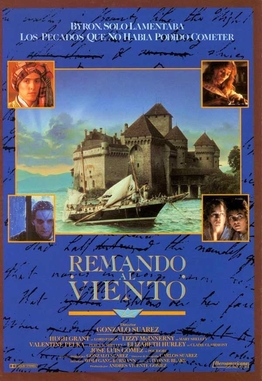
I’ve long wondered about what appear to be coincidences.  Specifically, about movies on the same topic that seem to come out at around the same time.  I saw Gothic about a year after it was released in 1986.  In 1988 two other versions of the Shelley-Godwin-Byron-Polidori-Clairmont meeting came out.  I’ve already written about Haunted Summer.  The third of these films was a Spanish production, Rowing with the Wind.  It is the most poetic of the three.  The dialogue is often poetic and it pulls out several historical details—some of which the other two films leave out.  Mary Godwin and Percy Shelley decide to elope, taking Claire Clairmont with them.  Lord Byron does not wish to see them.  He and John Polidori, his physician are out on a boat.  Boats play a large part in this movie.  Byron, played by Hugh Grant, soon comes to like Shelley.  Polidori’s role is underplayed and he dies by suicide before the party leaves Villa Diodati.

Mary Shelley’s monster, however, follows them.  Back in England it leads both Mary’s sister Fanny and Shelley’s wife Harriet to suicide.  Extending beyond the summer of 1816, the film follows the Shelleys and Clairmont to Italy.  They have their children with them.  When they come to Venice, they once again meet Byron, but Mary’s monster kills William Shelley (their son) and Allegra (Claire’s daughter).  Obviously, death is a major theme, along with boats.  (Historically, all of these people died, but not in such close time, but close enough to be tragic.)  The Shelleys stay with Edward Williams, a friend Percy met in Italy.  The monster then leads to Shelley’s death by drowning.  Byron’s death in Greece somewhat later is narrated by Mary but not shown.

The film is framed with a fictional arctic journey by Mary to pursue her monster.  Interestingly enough, no mention is made of Polidori’s story “The Vampyre.”  There’s not even any suggestion that he set out to write it.  Movies of this meeting often point out how the vampire and Frankenstein became famous because of it.  Rowing with the Wind is an arthouse movie rather than a studio blockbuster.  It isn’t a bad story.  It tries to tap into the sorrows of Mary, and again, historically she did suffer loss.  Her mother died shortly after she was born.  A child died before the first visit to Byron.  Percy’s first wife Harriet and Mary’s stepsister Fanny both died by suicide in 1816.  William died in Italy, as did her third child with Shelley.  Polidori poisoned himself.  Allegra died at five.  Shelley drowned in a storm at sea.  Byron died while trying to fight in Greece.  This film is a fitting tribute.


Confidential Hazing

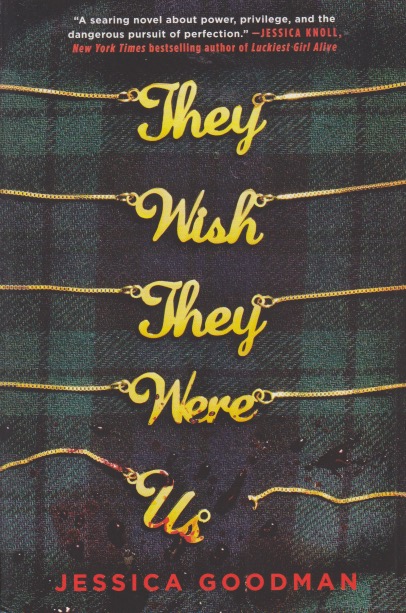
Set in a Long Island prep school, among a somewhat secret society called the Players, this is a dark academia tale of murder and discovery.  The Players, usually numbering eight in the senior class at Gold Coast Prep, are down to six.  One of their number was murdered and the one who confessed to that murder has been jailed.  Most of the students are extremely wealthy, but Jill Newman isn’t really rich.  This is what lies behind They Wish They Were Us by Jessica Goodman.  Although technically a young adult novel there are several disturbing elements here, some worthy of Lord of the Flies.  For that we need to dig a bit deeper.  To become a member of the Players, hazing is involved.  Since this isn’t an official program of the school, the hazing is entirely controlled by the seniors who are Players, to initiate their underclassmen into the club.

Some of the hazing is pretty intense, even for an adult reading the novel.  Kids aren’t always good about thinking through the consequences of traumatic activities on other kids.  People tend to be resilient, but at the same time scars heal in different ways.  In the course of one of the hazing tasks, something goes wrong and one of Jill’s friends, her best friend, ends up dead.  Since there’s a lot of drinking and drugs involved, it isn’t always easy to piece together what might’ve happened.  The crisis occurs for Jill when her younger brother joins the Players.  She has to watch him face the hazing, and at the same time comes to have suspicions about what really happened to her best friend.  Things get pretty tense.

As adults we can easily place ourselves, in our minds, back to our teenage years.  This is something that we didn’t appreciate as teens, and even now most teens don’t realize this about adults.  Wisdom, hopefully, comes with age.  In this fictional setting, rich adults are seldom around.  Their kids, with access to nearly unlimited money, can set their own rules.  Even the police treat them differently.  I’m deliberately not saying too much about the story since it would be too easy to give away the ending.  The school officials in the book care more about preserving the reputation of Gold Coast Prep than they do about the welfare of their students, even if this leads to blackmail to maintain its good name.  And this is something that teens will come to understand only once they start to work for a company with its own secrets.


Uncut

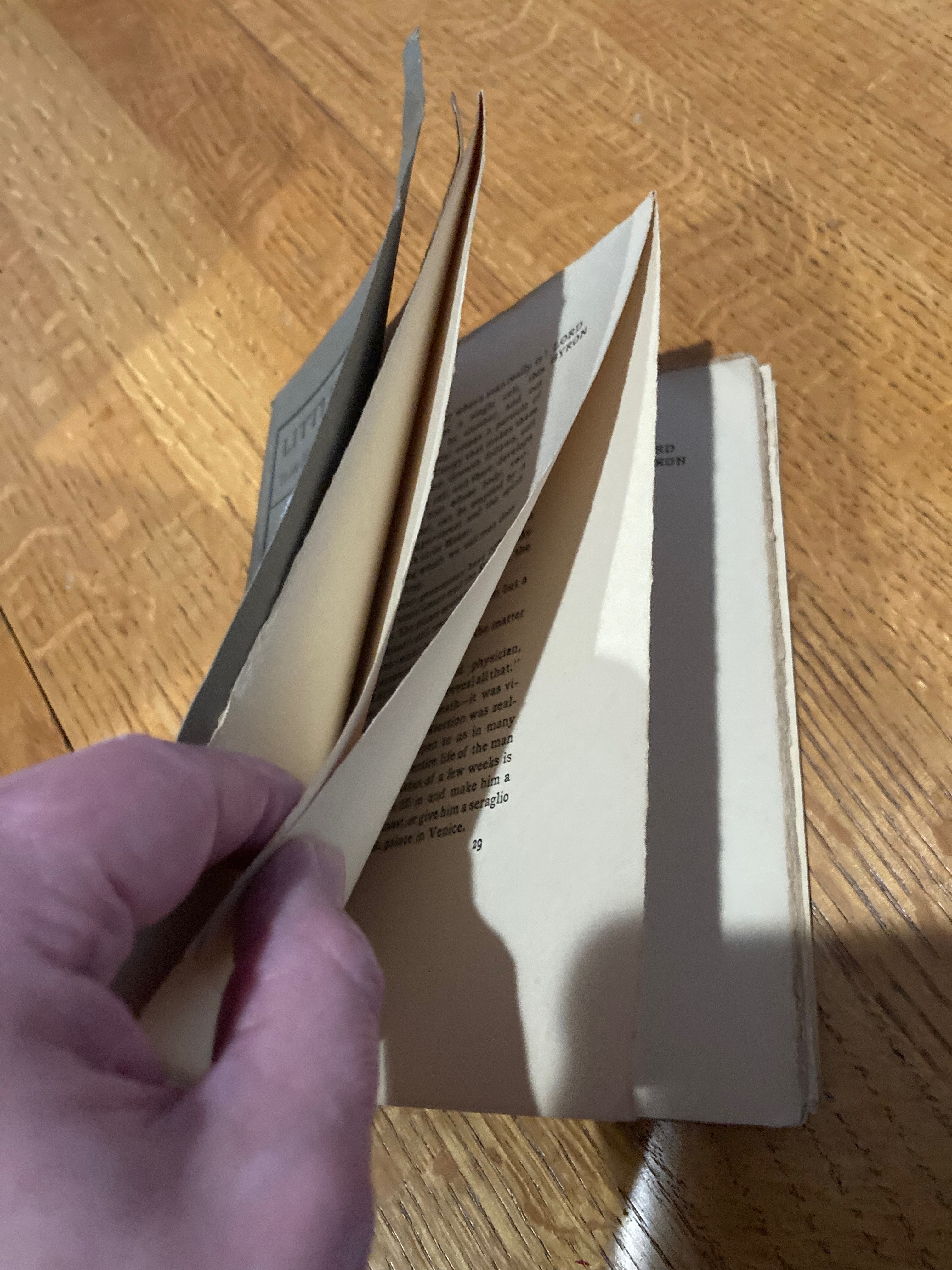
I remember well the first time I encountered a book with uncut pages.  It was in Edinburgh and the book was mine on inter-library loan.  This presented a dilemma: should I, a mere post-graduate student, cut the pages of a book older than me?  The librarian told me it was fine to do so.  I wasn’t sure how to go about it.  I’ve never trusted myself with scissors and this seemed like such a permanent act I was about to commit.  I settled on a butter knife, figuring a sharp knife might cut into the meat of the page.  It worked fairly well.  I later bought a book with uncut pages.  I didn’t do so well on it, but I need to read what was inside (and it wasn’t a cheap book).  

This is more common in Europe than it is in the United States.  I recently bought an out of print book for my research.  The pages were uncut.  Now we have the internet which can be useful from time to time.  The proper technique, it turns out, is to use an index card with a saw-like motion.  It works extremely well.  Fighting paper with paper.  And I love these old books.  The heavy paper.  The actual, clear imprint of where the type hit the page.  This was an object being crafted, not electrons cycling around a screen.  When it was done you were left with something that felt permanent.  Something that wouldn’t disappear when an online vendor went out of business.  These old books also give you an idea of how they were made.  Offset books (those made on a traditional printing press) are printed on paper that is then folded and bound together.  Most modern presses also trim the edges, but you can, on rare occasions, still see where metal met paper.

Substantial.  These books feel substantial.  Don’t get me wrong—I enjoy the trim, clean look of the modern book, but part of me misses the solidity of old fashioned books.  As much as I enjoy visiting new bookstores, I also like used bookstores.  There used to be several around here, but I think the pandemic killed them off.  You can browse their inventory online, but it’s not the same experience as that dusty, musty smell of books aging well.  Now that mass-market paperbacks are being discontinued, they have their own place of pride as being the books that brought reading to the masses.  Now people stare at screens and call it reading.  I, for one, will be keeping my index cards handy for the next book with uncut pages that comes my way.


Tambora Crisis

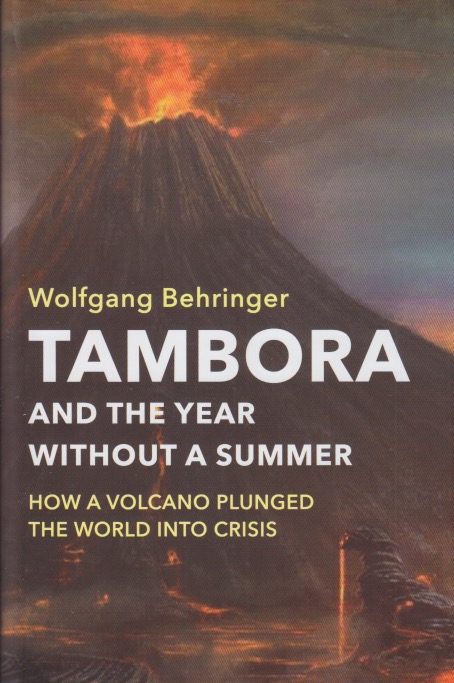
The name Wolfgang Behringer was familiar to me from his book Witches and Witch-Hunts, which I read several years back.  I’ve been interested in volcanoes lately, and Tambora in particular.  So when I saw his Tambora and the Year without a Summer I decided to indulge.  What Behringer attempts here, as indicated by his subtitle, How a Volcano Plunged the World into Crisis, is a massive undertaking.  The result is a rather rambling history that covers many of the troubles of the early nineteenth century, which, ultimately, were influenced by the crisis triggered by Tambora.  For context, the eruption of Tambora in 1815, in what is now Indonesia, was the largest volcanic eruption in recorded history.  It famously led to “the year without a summer” in many parts of the world, but, as the book points out, the effects were uneven.  Western Europe was cold and wet.  North America was cold and dry.  Both of these situations led to famines and many people died.

Nature doesn’t play favorites, though. Weather is variable, and local.  Eastern Europe, and Russia, experienced nearly ideal conditions for agriculture.  There was enough food to go around, but what was lacking was the infrastructure.  Western Europe was still putting itself together after the disruption of Napoleon and his wars.  The Americans were still recovering from fighting off the British.  And, being German, Behringer spends a lot of time explaining what was happening in Germany.  Reading this kind of spurred me onto a little genealogy kick, since much of what he describes took place in the regions where my mother’s ancestors were from.  That’s why I try to read widely—it has a Gumpian outcome, sometimes.  

The inherent problem with a global history is that the world is simply too big, and human history too long and voluminous, to fit it all into one place.  There were no doubt many crises caused by the atmospheric changes to which Tambora contributed.  There were also many innovations.  Behringer makes a good case that the Tambora crisis led to the development of meteorology as we know it.  The regular and meticulous keeping of weather records began around then.  Savings banks also emerged.  As always, those who suffered the most from the famine were those who couldn’t afford food.  In response, governments encouraged people to save up for a rainy day (or year).  And the early development of life insurance, again to help people weather financial difficulties with the death of a wage earner, began.  More about the crisis than the volcano itself, this is nevertheless, a chilling examination of how one crisis can change history.


Alien Signs

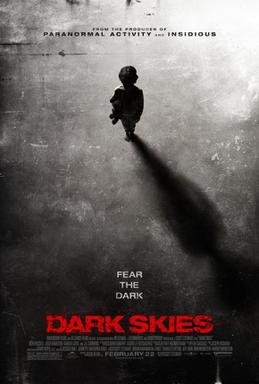
Personally, I find alien home invasion movies scary.  The combination of being awoken at night by a terror that seems plausible and the fact that there is nothing you can do to prevent it is genuinely terrifying.  Having said that, I wasn’t aware that was what Dark Skies was about when I decided to see it.  It does a good job of some things while others are less effective.  The Barrett family (parents, two sons) is going through a difficult patch when their younger son, Sammy, starts talking about “the sandman” visiting him at night.  At the same time, inexplicable events happen at night inside their locked house.  Daniel, the father, is unemployed and Lacy (mother) is having trouble at work.  The police think the kids are playing pranks but Lacy begins to realize they’re not alone in this.

Discovering the alien abductee phenomenon, she realizes that they have all the signs.  Having finally landed a job, Daniel doesn’t believe her.  Until he experiences it for himself.  The problem is nobody will believe them if they report it.  A fellow experiencer tells them they can fight back, but there is little they can hope to achieve.  The aliens, he says, take the one they first contact in a family.  When the aliens return, the Barretts try to protect Sammy, not realizing that Jesse, the older son, is really who they’re after.  There’s a lot of tension that works for this film but there’s also a number of questions raised.  The final reveal feels like a bit of a let down after all the build up.  The financial stress of Daniel’s unemployment seems to have done nothing for the plot.  And the burgeoning love between Jesse and a girl he likes simply drops.  As does the visit of child welfare.

Still, the ideas here are quite scary.  If you know something is happening and know nobody will believe you, that’s scary.  The idea that we are inferior to the technology of a more advanced race is also frightening.  The whole not knowing the motive of the monster works.  The tension build-up is good but the resolution leaves too much unaddressed.  Overall it isn’t a bad movie.  It did make me feel a bit paranoid after watching it, which is usually a good sign.  The acting is good, but the fatalism makes you wonder if there’s a point to the story other than to be afraid.  Dark Skies wasn’t bad for a last-minute pick for a rare free slot, if you can accept aliens as viable monsters.


Machen’s Monstrance

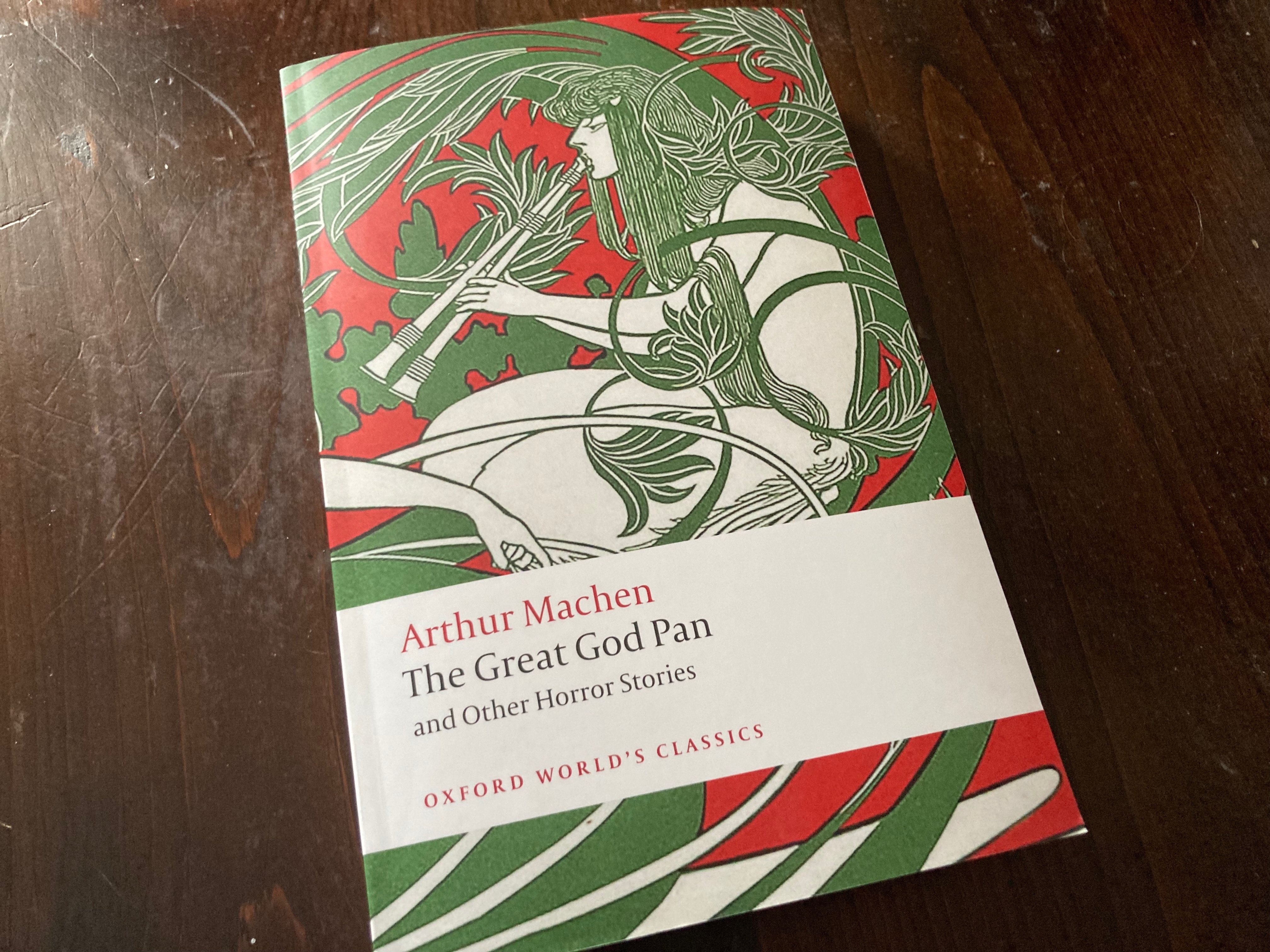
It was a coincidence worthy of a story written by a mystic.  Arthur Machen became famous for his novella The Great God Pan.  Descended from a clergy family, his interests were in supernatural stories, but Pan was considered extreme in his day, which, of course, made it famous.  I have the Oxford World Classics series volume of Machen’s stories and I had only a few minutes, not enough to read Pan.  Flipping through the table of contents, I noticed that the story “Monstrance” was brief.  I decided to read that one.  It’s about a German major-sergeant Karl Heinz, during World War One.  As he is trying, with several others, to set up a machine-gun emplacement unnoticed by the English, a vision he has been seeing leads him to cry out and die.  Through the discovery of his diary, it is learned that he’d committed a war atrocity at a church and the procession with the monstrance became a vision haunting, and ultimately killing him on the battlefield.

The coincidence grew even more appropriate when, reading about Machen, I learned that his probably second most famous story was “The Bowmen,” which also happened to be short, and which in the Oxford World Classics edition, is printed right before “Monstrance.”  Of course I had to read it also.  The reason I chose “Monstrance” in the first place wasn’t because of its famous neighbor, but because of the religious symbol of the monstrance and because it is brief.  Since I still didn’t have time for The Great God Pan, I was led to his second most well-known story by looking for something short and landing on the story immediately following it.

“The Bowmen” is also a war story in which a miracle occurs.  It led to the rumor that the event, which involves angels fighting for the British forces, actually happened.  It is, however, fiction.  As a result, “The Bowmen” became the second most popular Machen story.  I wouldn’t have read it—at least not any time soon—had it not been for its placement before “Monstrance,” even though the two stories are somewhat similar.  It’s easily imagined that God is fighting on your side, and it should be remembered that often the enemy believes the same thing.  That most futile of human activities, war, certainly spawns stories as so many lives are meaninglessly lost.  There is, however, a mystical element to these tales, in keeping with Machen’s outlook on life.  Not bad for having about 20 minutes to fill.


Still Growing

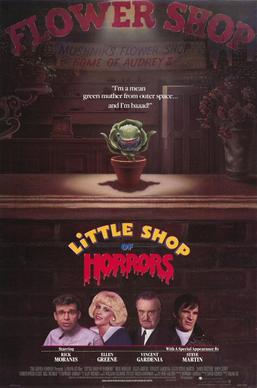
A couple of years ago I posted about Roger Corman’s Little Shop of Horrors.  Now life is so busy that when Friday rolls around my wife and I find ourselves at odds for deciding on a movie.  She’s not into horror and I’m often not in the mood for human drama after a week at work.  We recently compromised on the 1986 Little Shop of Horrors.  It has been many years since I’ve seen it although I watched it shortly after it came out.  Like Rocky Horror, the music makes the movie.  That and the appearances of Steve Martin, Bill Murray, Jim Belushi, and Christopher Guest.  The original was a comedy horror shot on a very short schedule but this Frank Oz production is a bit more lavish.  And the songs.  I’m a fan of classic rock-n-roll, and the show tunes here seem like a combination of Cats (the original) and Rocky Horror.  There’s an optimism to them.  And who couldn’t use a little hope?

Seeing the movie again brought home a phenomenon that’s been on my mind lately.  What you see first becomes your benchmark.  I only saw the 1960 version a couple years back.  Little Shop of Horrors was, to me, a musical.  It does use some classic horror tropes: thunderstorm at night, shadows of violence on the walls, and the ubiquitous fear of being eaten.  But unlike Roger Corman’s vision, this is primarily a love story about escaping Skid Row.  And, strangely, a feel-good film.  I suppose the lingering question is whether this is a horror movie or not.  Another phenomenon that’s been kicking through my gray matter lately is that “horror” really isn’t the best description for many movies so labeled.

My interest in origins led me to go back to the original a couple of summers ago.  That story developed because Corman had access to a set from a previous movie and wanted to shoot another using it.  The story took many forms before settling on a human-eating plant.  By the way, that still works for horror, as The Ruins shows.  Since his previous movie was a horror comedy, the movie I’m sitting down to watch on a Friday night was born.  Between the original and this one, the story was adapted into a stage play.  The movie version of the stage show was a box office success, and it still appeals to me on a night where we just have trouble deciding on a movie by which to unwind.


Recipe for Childhood

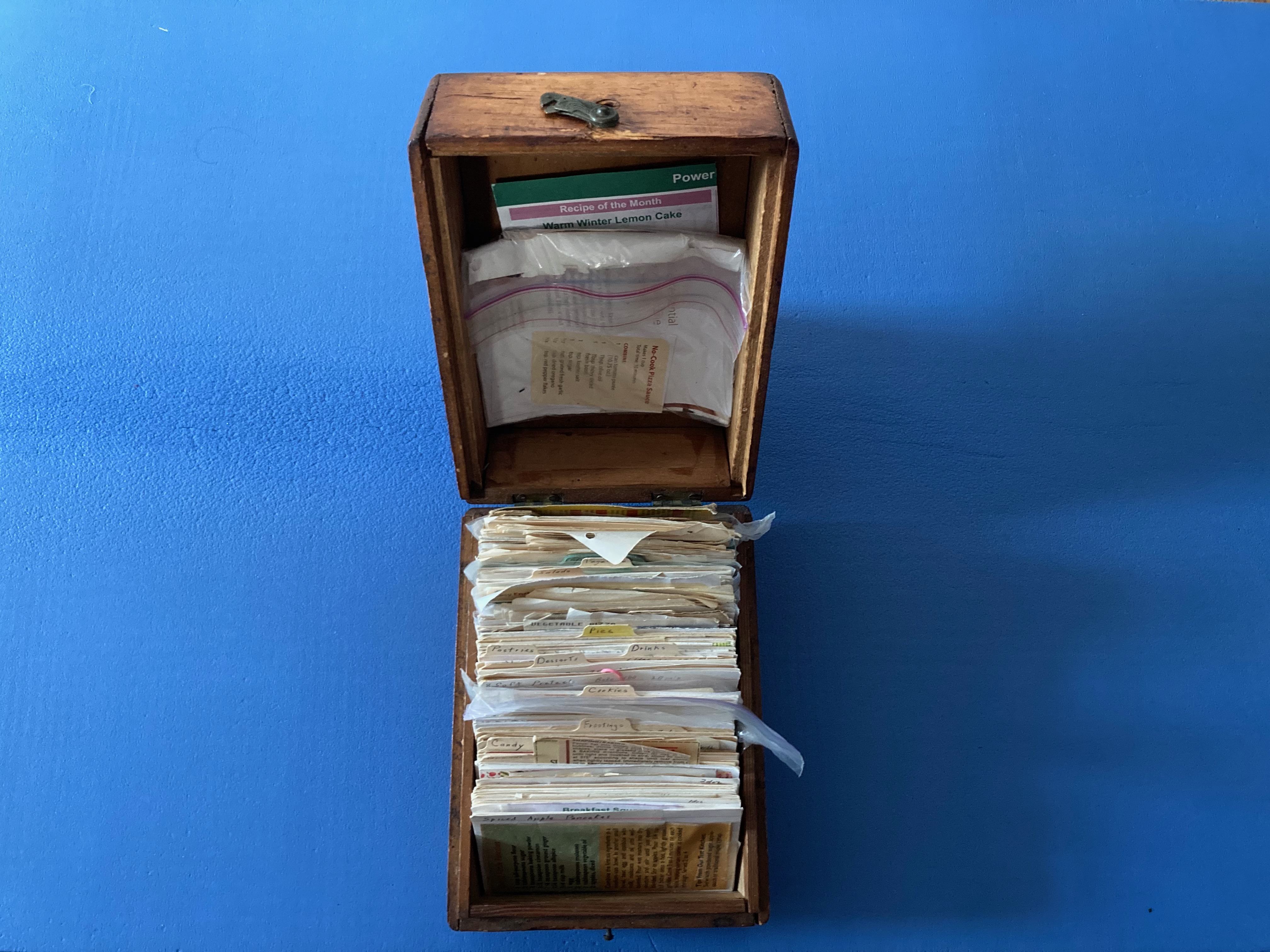
I once read that over the course of an average lifespan, an American will eat 73,646 pounds of food.  Think about that.  That’s over 36 tons of food.  Apiece.  No wonder recipe books sell so well!  This came to mind recently as I was thumbing through one of my mother’s mementos.  When she died I inherited her recipe box.  In liquidity terms it’s worthless, but inside is a great deal of my childhood.  I still find it poignant to look through her things although she died two-and-a-half years ago.  The memories are thick and tangible.  I only now had the courage to look through the foods she tried, liked, and sometimes didn’t.  (Some have notes, for example, saying what a friend didn’t like.)  We eat every day.  And variety is important for health.  So, recipes.

But not all cards are for things we eat.  The one that really jarred me was the recipe for play dough.  I grew up in a family of humble means, but not destitute.  I know, and still recognize instantly that Play-Doh smell.  It, along with Crayola, encapsulates childhood.  But I remember Mom making play dough for us.  The recipe is very simple: flour, water, salt, and a little oil (yes, it is edible) with food coloring.  I remember trying to mix the coloring in by hand and ending up with stained skin until the dye wore off.  And Play-Doh always makes me think of Silly Putty.  I think as a kid I kind of supposed the two were married.  Similar, but different in significant ways.  Kind of like cats and dogs, in my juvenile mind.

Childhood is strange.  We tend to cast a kind of rosy glow on it, even if it wasn’t very pleasant.  In my case, Mom was my protector.  I grew up without a father present and one of my greatest fears on becoming a father was that I didn’t know how to be one.  My role models were television figures and men I’d met and admired in my own life.  My father was a stranger but Mom made play dough for us at home when we couldn’t afford to buy it at the store.  After my daughter was born, and was old enough for them, the smells of Crayola and Play-Doh took me back to that pleasant version of childhood where things were fine and I had nothing better to do than to play.  Mom would prepare part of the many tons of food I would eventually consume.  And it all came from a simple wooden recipe box.


Leaving Soon

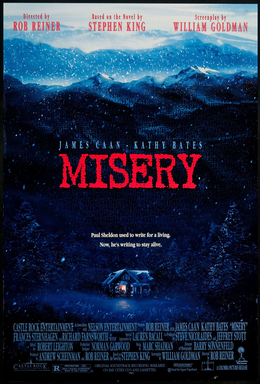
I’d been hoping to read the novel before seeing the movie, but there’s nothing like the words “leaving soon” on your streaming service to spur you into action.  So I watched Misery before I was ready to.  I remember the newspaper reviews from 1987, when the novel came out.  I didn’t read any Stephen King novels until those I’ve posted about on this blog.  There’s a full record here!  I do remember the reviews saying it was self-referential.  The protagonist, as in The Shining (is Jack Torrence a protagonist?), is a writer.  And the book is a writer’s nightmare.  When the movie came out in 1990, I had no interest in seeing it.  A couple of things changed my mind, however.  First of all, it is referenced all the time.  I didn’t even know how it ended.  Another factor was that it was a Rob Reiner horror movie.  And Reiner himself had been murdered a few weeks before I sat down to watch it.

I really wanted to read the novel first.  My reading pile is pretty high.  And currently the next Stephen King novel on it is The Dead Zone.  And yes, I have already seen the movie.  Unlike some critics, I think King is a substantial writer.  He has profound things to say, especially about religion.  And, of course, the movie Misery has plenty of that.  Annie Wilkes is a religious fanatic.  She’s also a fan of Paul Sheldon (the writer).  God tells her things.  She wears a cross.  She can’t stand swearing.  But even so, I wonder if King clearly had her religion in mind.  I would’ve guessed that, given her cinematic profile, she would’ve not been a wine drinker.  And I would’ve guessed that the Bible would appear in the movie.  She drinks and she doesn’t even quote the Good Book—at least not that I caught.

Some day, if I keep doing this long enough, I might make the connection between religion and horror plain.  I know scholars, not shackled by a 9-2-5 are working on that.  And like the books I have to read, there’s a waiting list for those I want to write.  One has my particular attention at this point, and I’ll be trying to put that to bed before starting on a new one.  Before working on such a book I’ll have to read Misery, the novel.  I do plan to do so.  I’m not a fast reader and I have quite a big stack.  In fact, I wouldn’t even be thinking about reading it now.  But my streaming service came up with those fatal words, “leaving soon.”