Missing Markers

Something truly remarkable happened this week.  The Society of Biblical Literature, which, along with the American Academy of Religion, meets annually in November, has canceled its in-person meeting.  I’ve been attending this conference since 1991 (with a few years off for good behavior).  It always meets the weekend before Thanksgiving, stretching to the Tuesday prior.  Some academics use the meeting to have an exotic Thanksgiving break with their families, particularly when it congregates someplace warm.  (It was scheduled for Boston this year.)  So I’m ruminating what this will mean for a year of missing markers.  Some of you may recall I missed two years ago, electing to stay in Newark Airport instead, but this is different.  We’re all being changed by this virus.

Missing markers.  That’s what my wife calls it.  March 12 was the day that Covid-19 became a crisis.  In my extended family that’s in the middle of birthday season.  Travel plans had to be altered.  Trips to see loved ones had to be delayed.  Then cancelled.  Memorial Day came and went.  It was a long weekend, but for most of us it was a long weekend at home.  Our usual summer trip to the lake was also a victim.  A remote lake may be the safest place to be, but you have to get there.  Flying doesn’t seem safe and we don’t have enough vacation days to drive all the way out and back.  Here we are halfway through the summer and each day feels pretty much like the one before, even if it’s a day off work.  Time seems out of whack.  Back in April it was hard to believe it was still 2020, now it’s difficult to comprehend that the year’s more than half over and there will be no AAR/SBL in November.

Growing tired of the phrase “unprecedented times,” I prefer “missing markers.”  Yes, the weather’s still doing its time-keeping job.  This summer has been quite hot around here, for the most part.  I remember shivering in my study sometime not so long ago, bundled up in layers and thinking that when summer rolled around this coronavirus would be a bad memory.  If only there were something governments could do to keep people safe.  If only there were people in the White House who cared.  I had visions of professors, hundreds and hundreds of them, wearing masks with their tweed.  It was a vision of wonder.  They’d walk up to you, extending an elbow to bump, but you’d back off.  That’s actually too close.  And lecturing spreads germs very effectively.  Over time 2020 itself will become a marker.  I’m not sure anyone will miss it, however.


Skywalker Arises

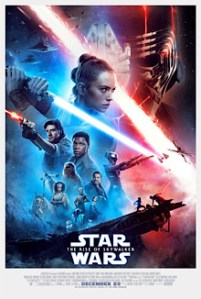
Maybe, if you’re like me, you find the Star Wars franchise a little hard to keep straight.  Ever since the end of Episode VI the number of characters with strange and oddly short names jumped.  The rate of light saber duals skyrocketed, and the story grew more complex (and not always with any payoff).  I suspect that like many I kept watching the second trilogy of episodes I through III out of a sense of duty, longing for that pathos that stayed with me after leaving the theater (remember theaters?) following episodes IV through VI.  Hope awakened along with the Force in Episode VII under the able hand of J. J. Abrams.  Then the stinker of Episode VIII, which my wife and I watched in a cold theater in Bernardsville, New Jersey, dropped us back into the realm of I through III.  I didn’t even notice when Episode IX, The Rise of Skywalker came out last year.  DisneyPlus, to which many people subscribed just to watch Hamilton, made it possible for us to round out the trilogy of trilogies on the small screen.

While better than The Last Jedi, the story ran into the standard sequel problems of probing relationships between characters that a crisp story tends to leave ambiguous.  But there were, to my religious eye, many themes that seemed quite Christian.  There was buzz when Kylo Ren’s cruciform light saber appeared in The Force Awakens, but the Christian tropes were more obvious as the series wound down.  Rey, for example, finds out about the wayfinder from the first physical book of the series.  It’s old and leather-bound and iconic.  This is a kind of Bible.  Jedis are shown to be increasingly messianic, and I thought having a female messiah was a nice touch.  I was going to write “as the series closed,” but with the money made there’s little doubt that more will come from a galaxy far, far away.

Rey’s impressive Jedi feats look like miracles and her ability to raise the dead (or dying) and to heal in a time of an evil empire (for ancient Christians, Rome) rings familiar to those with Bible radar.  The name Skywalker should’ve been a clue from the beginning (as it was for those of us who crowded the theaters in 1977), and the final shot of Rey on Tatooine where the setting of the binary stars make a halo around her head should eliminate any doubt.  There are many throwbacks to the original trilogy in this final installment, and although the plot was more complex than necessary, it leaves the armchair theologian in a nice place.  But some of us will always think of the holy grail as that found back when the evil in our own empire seemed, if briefly, to be waning.


Layers of Brick

If, like me, you can’t see a neighbor’s brickwork without thinking of “A Cask of Amontillado,” then I need not explain why I watch horror films.  I know that as of late some literary scholars have challenged the idea that Edgar Allan Poe wrote horror.  There is now, and always has been, a bias against the genre.  In fact, many would point out that Rod Serling’s Twilight Zone wasn’t really horror, no matter how creepy some of the episodes were.  Some would cast Ray Bradbury into that lot as well, and others would not.  I spend a lot of time pondering this because those of us who enjoy some of what’s called horror are often cast as misfits.  And misfits have a lot in common with monsters.

The connection with religion is a palpable, yet intangible one.  It does seem that religion has its origins in fear and as it branched out it came to have different emphases.  Jesus, for example, apparently stressed love, at least according to the gospel of John.  That religion of love came, eventually, back around to fear.  Calvinism, especially, is suffused with it.  There’s a reason that it is the religion expressed in particularly effective horror.  Apparently they meet similar needs, but psychology is not an exact science, and our tastes in it differ.  Even our interpretations do so.  As the bricklayer puts down row after row of masonry, the thoughts get walled up in days where work prevents serious consideration of the deeper questions.

It’s been years since I’ve read “A Cask of Amontillado.”  The story has stayed with me, however, whether it’s horror or not.  Stories about imprisonment are like that.  The other day a police car stopped outside our house.  We live in a working-class, but descent neighborhood.  From the bits and pieces glimpses out the window revealed, there was a problem with a car that had been parked on the street for quite a while, and that didn’t belong to any of the local residents.  The natural response to seeing that car just outside was fear.  We fear criminals and we fear the police.  We fear what Covid-19 is doing to us, even to those of us who’ve managed not to contract it.  Traditional religion would tell us punishment comes from the Almighty.  These things are all related.  And across the way the bricklayer keeps up his work, row after row.


Independence Day Wishing

It’s Independence Day and what we most need independence from is our own government.  History is full of ironies.  Federal holidays falling on a Saturday, for instance.  In any case, here we are on the Fourth of July and still stuck under a repressive government that a small portion of people like.  Republican groups supporting Biden are starting to arise, but we can only dream on Independence Day.  Many of us would like to be independent of the coronavirus, and not a few people are acting like we are.  Cases are spiking, so the rest of us are staying indoors.  Fireworks are okay, but I have trouble staying awake until dark these days and more often than not they just keep me awake as I’m starting to doze.

Maybe for Independence Day I’ll take leave of reality.  Maybe I’ll imagine a government that isn’t so utterly corrupt that some people might have some faith in it.  Maybe I’ll dream that black lives matter and that our leaders would believe it.  Maybe I’ll think what it would have been like if caring officials addressed the Covid-19 crisis directly instead of brushing it off, so that like all well-run nations cases would be going down here instead of back up.  There’s so many possibilities and the one thing they all have in common is that they point to independence from the Trump Administration, if that’s what it can be called.  Maybe it’s time to light a sparkler of hope.

Independence Day can be a day of looking forward instead of looking back.  If we can look ahead we might see a country where anyone will be allowed to exist and not be condemned by “Christianity.”  We can come to see that privileging any one “class” or “race” or “sexual orientation” is a form of bigotry from which we can and should be independent.  We can try to think what it must be like to experience life from somebody else’s skin.  We can try to understand instead of standing ready to condemn that which is “different.”  Fact is, everyone is different from everyone else, it’s only a matter of degree.  And difference can unite rather than divide.  The whole idea behind uniting different states was that those who were different could support one another and figure out how to make room for everyone to fit.  It won’t be easy to do, but we might use today to envision a country where we can work together, and figure out that leaders who bring people together are the only hope we have for the future.


X-Files Redux

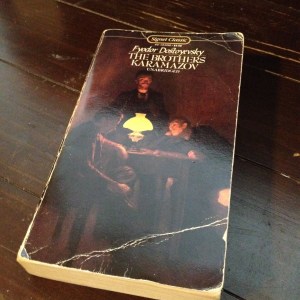
So, after writing a post about The X-Files, I finished season three, forgetting up until then that the last episode was “Talitha Cumi.”  Apart from being part of the alien mythology arc, the biblically literate recognize the title as the words Jesus said to Jairus’ daughter as he raised her from the dead.  Appropriately enough, the episode features an alien-human hybrid that is able to raise the dead and to shape-shift.  This particular episode also has an intriguing dialogue between the Smoking Man and Jeremiah Smith (the hybrid) where they discuss whether the alien agenda for people, or that of the shadowy cabal, is better.  With a theology drawn from the Grand Inquisitor chapter of The Brothers Karamazov (according to Wikipedia, and which I have no reason to doubt), they argue from different perspectives.  The Smoking Man explains that they have given people science instead of God and miracles will only confuse the issue.

While not exactly Fyodor Dostoyevsky, this scene raises some very real questions.  Are people happier not believing?  Not only that, but the cynicism of the Smoking Man matches rather precisely the modus operandi of our government some two decades later.  There’s a reason we keep coming back to the classics.  The X-Files mythology is, like the Cthulhu Mythos, woven throughout a larger tapestry whose warp and weft both seem to be religion.  It ran far longer than Sleepy Hollow ever did, and it would take considerable effort to tease all of the Bible, let alone religion, out of it.  They make the story far more believable.

This particular episode also displays the staying power of the classics.  Long, ponderous books like The Brothers Karamazov require concerted effort to read in these soundbite days of internet hegemony.  That Grand Inquisitor chapter, however, has been enormously influential.  (I recall during my most recent rereading of the novel that I hit that wonderful chapter and then realized I still had hundreds of pages to go.)  We often have trouble telling God from the Devil.  Just look at today’s political scene and try to disagree.  In the X-Files diegesis there is a shadowy, high-powered group that got to the extraterrestrials first.  They keep the secrets to themselves while the masses play out their insignificant lives that enrich those in charge.  Democracy, it seems, used to be about elected representatives seeing to the will of the people.  It perhaps assumes a greater educational base than we’ve been able to retain.  But still, with chapters like “Talitha Cumi” we see that there may be some glimmer of hope after all.


The Bible Files

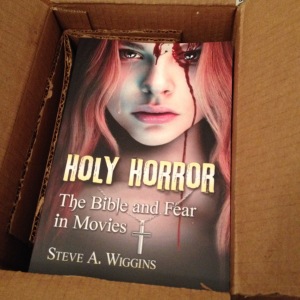
As intimated several posts ago now, my wife and I are rewatching The X-Files.  Neither of us has much free time, so this proceeds slowly over many weekends, and we’re now nearing the end of season three.  This exercise brings me back to an article I wrote on Sleepy Hollow, the Fox series that ran from 2013-2017.  That article, published in The Journal of Religion and Popular Culture, I later adapted into a chapter in Holy Horror.  At the advice of my editor I dropped that particular chapter and wrote a different one.  In the lost chapter, if I recall, I made the case that Sleepy Hollow was biblically based in a way that other monster-of-the-week series, like the X-Files, were not.  While I still have to hold to this, I must admit the X-Files are far more biblical than I recollected.

Somewhere about halfway through season one I started to jot notes when the Bible was mentioned or quoted.  Soon it became obvious that religion was a major theme in The X-Files pretty much from the beginning.  I’ve mentioned here before that some scholars of religion have begun to address the paranormal seriously.  One of the reasons for this seems to be that the two fields are related.  Some of the x-files derive from folk traditions, and these traditions often hold religious elements.  When those themes derive from American folklore the Bible creeps in.  There are quotes, visual displays, and even biblical themes.  How had I not noticed this the first time around?

I didn’t watch The X-Files during the actual airing of the series.  As a kid I was endlessly teased for having an interest in the strange and unexplained, and it bothered me that it had become mainstream after I’d already paid the price.  When the series became available on DVD, though, I had second thoughts.  My wife and I watched it all the way through some years ago, and, having finished rewatching another series several months back, we began slowly to make our way through again.  When I wrote my article on Sleepy Hollow I had vague recollections of X-Files episodes with some biblical content, but I’d forgotten how extensive it was.  Religion is that way.  It tends to permeate society, and even though we’re proudly secular, the base of it all is religion.  This should be obvious to anyone who takes the time to tally just how often it appears in the most secular of spaces.  Instead, there’s little interest in it.  Like the paranormal, lack of concern about religion is something we just can’t adequately explain.


Aching Backs

The other day someone mentioned to me (virtually, of course, since real conversation is limited to immediate family) that she was going to the chiropractor.  This simple spinal adjustment comment made me curious since my mother has used a chiropractor to manage back pain for as long as I can remember.  I also had heard many disparaging comments about chiropractors over the years and decided to look up some information.  Medical science, if we can hypostatize it that way, considers chiropractic a pseudoscience.  Part of the reason is that the medical training required to be a chiropractor doesn’t come up to the level of a MD degree.  The main reason, however, as far as I can determine, is that chiropractic was founded on the basis of receiving information from “the other world.”

Creator unknown, via Wikimedia Commons

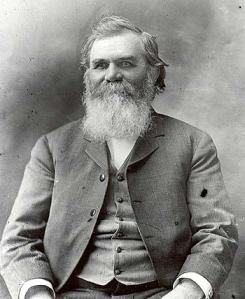
Daniel David Palmer founded chiropractic in the 1890s.  His knowledge of how to do it came from a doctor dead for half a century.  Some of the tenets of chiropractic are spiritual rather than physical.  Not being based on empirical studies going back to such traditional medical ancestors like Galen, the new way of understanding medicine was labeled as a kind of religion—an alternative medicine.  Now, I’m not a medical person.  In fact I’m rather squeamish.  I try not to look too deeply into biology, but this is fascinating.  There are more than 70,000 chiropractors in the United States alone.  If what they are doing doesn’t really help people then why do they keep going back?  Is it a matter of believing that you’ve been helped relieving pain?

Often cost effectiveness is given as the reason people use chiropractors.  In these days of Covid-19 we know that medical practitioners have been on the front lines for many months.  We also know that in the United States many people can’t afford standard medical treatment.  Our government has staunchly refused to nationalize health care, as every other government in developed nations has done, preferring to keep it a free market.  The end result is many people simply can’t afford to go to the doctor.  I don’t know if chiropractic is a pseudoscience or not, but if it provides at least short-term relief for people who can’t afford standard treatment is this a bad thing?  I don’t know much about the topic, but the whole thing seems worthy of further exploration.  Any time the mind in brought in to help heal the body, I suspect, we are knocking on the door of religious thinking.


Bible Horror

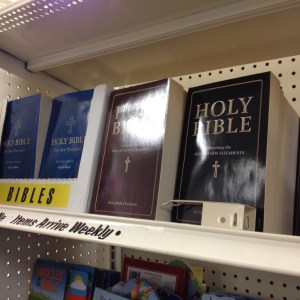
The combination may seem odd, but it is definitely a valid one.  The Bible and horror, I mean.  My colleague in this venture, Brandon R. Grafius, has published the first book in the Horror and Scripture series, Reading the Bible with Horror.  This is a fascinating little volume that explores the productive use of horror films when it comes to interpreting the Bible.  The Bible isn’t all horror, of course, but a good deal of it is.  That’s one of the keys of biblical interpretation—no one method covers it all.  At least when I was teaching I used eclectic methods both because some methods work better than others in some places and because no one method is the correct one.  Using horror to interpret the Good Book is one of the newest methods out there.

The methodology involves looking at horror films (mostly) and finding biblical parallels.  Both the Bible and the movies interpret one another.  This can be a kind of reception history—the idea that to understand Scripture we must look at how it has been “received.”  The way that people read Holy Writ after it was written is as important as the way biblical specialists read it.  We all know what literalism is, and biblical scholars are well aware of its shortcomings as a method.  There are tons of other methods that seek to show the relevance of the Good Book, and one of them is to see how horror makes it so.  To get to this point the reader must get beyond our social bias about horror as a degraded, evil genre.  Some of it is quite bad, of course, but much of it has redeeming value.  Redeeming value so obvious that it can be used to interpret the Bible.

Grafius studies only limited examples here, for instance, the book of Job with its human suffering and superhuman Leviathan.  He also looks at hauntings and biblical ghosts, as well as haunted locations.  His chapter on haunted houses made me stop and think quite a bit.  He concludes with what will be the most challenging concept for many—the idea that God can be monstrous in the Bible.  He clearly can.  Apart from theodicy, one of the major reasons critics attack Christianity is the character of God as portrayed in the Bible.  Grafius isn’t attacking Christianity but rather he’s trying to show how a most unlikely source can shed genuine light onto it.  Reading the Bible with Horror is an insightful step in that direction, even if it’s a step into a rather haunted house.


Juneteenth

Education is important.  For example, I never really knew what Juneteenth was, although I’d heard the name a few times.  Perhaps because of the “teenth” part I had it in my head that this was something to do with young people.  The amazing thing I’ve been learning over the past several weeks is just how deliberate the “white male” narrative has been in perpetuating the racist mechanism in the employment of capitalism.  Years ago I learned that race is a human construct—it has no basis in science or biology.  It has served various entrepreneurs throughout history, beginning in 1619 and has been perpetuated ever since in order to ring the last possible copper from the coffers.  Now we see what that looks like when a standing president holds these “truths” to be self-evident.

Juneteenth was proclaimed in Texas in 1865.  Even in the extreme and conservative Lone Star State it was recognized over a century ago that all people have the right to be free.  Of course we don’t celebrate it as a national holiday.  Give people too much time off and they might get to thinking.  If, perchance that thinking turns toward the heartless machine of capitalism it might be realized that there are better ways to ensure people are treated fairly, regardless of their skin color.  This year, for the first time I have seen, many organizations—some of them corporations, even—are closing in honor of Juneteenth.  Black lives do matter.  We should be able to see that, but it takes innocent deaths to make the obvious appear.

Yesterday I listened to three Pulitzer Prize winners discussing racial equality.  All three of them had written on the African-American experience.  All three knew the evils of racism.  Research has been done that indicates much of what stands behind white evangelical support of the Republican Party is racism.  Many of the movement’s leaders still buy into myths about race and believe it is something God built into the human soft machine rather than something we made up ourselves.  For political purposes.  We need Juneteenth.  We need reminders that the evil we’ve constructed can be dismantled.  People should not die because of a false human construct.  It wasn’t lack of curiosity that prevented me from learning about Juneteenth when I first heard of it.  No, it was being overwhelmed with the problems Washington was spewing out (and continues to), that I had to divide my energies depleted by the capitalist Moloch.  Now I realize, because by their fruits we shall know them.  Floyd George was murdered on camera and we need to expose the thinking that allowed that crime to happen.


Weather Gods

It’s funny how old fascinations have the power to reemerge with the slightest provocation.  I guess writing a book will do that to you.  I just finished Peter J. Thuesen’s Tornado God: American Religion and Violent Weather.  There’s a certain kinship among those of us enamored of this relationship.  Thuesen finds himself in Indiana, and I was in Wisconsin during my research and writing of Weathering the Psalms.  I still haven’t reconciled myself with tornadoes, which were far too likely during my years in the Midwest.  As Thuesen explains, there’s just something about them.  Neither scientist nor theologian can fully explain them and the feeling of awe spans both disciplines.  The book covers a wide range that includes early Protestant settlers and their ideas of providence as well as modern understandings of atmospheric dynamics.  Still, the tornadoes…

Randomness also lies behind both tornadoes and science.  The eerie function of quantum mechanics makes it seem if there’s a kind of willfulness to even particle physics.  Too quick to join in are those among the evangelical camp that want to raise the flag of intelligent design.  Thuesen interrogates their theology as he asks questions about both theodicy and global warming.  Tornadoes are notorious for killing one person and leaving another right next door completely unscathed.  Literally tearing families apart.  Some of those we meet in these pages have turned to black-and-white religion for answers.  Others tend to see things more in shades of gray.  Does God send storms or merely allow them?  Are victims singled out or simply unfortunate to be in the wrong place at the right time?  America’s armchair theologians have their ready answers, but the weather remains unpredictable.

Readers will find interesting connections throughout.  The celestial orientation of religion is pretty obvious as well.  Even though modern believers don’t accept a heaven directly overhead, the orientation is still there.  Their maddening obtuseness when it comes to global warming is more than just a little naive.  Either that or they’re secretly gunning for armageddon.  Whichever it is, Thuesen treats all comers with respect.  Storms are awe-inspiring events.  I recall standing on the edge of a farm field in Illinois and staring up at a lightning display in clouds towering thousands of feet above me.  Looking out the south window one night as a cloud continuously lit by lightning made its slow way from west to east just south of where I stood.  It was a religious experience.  How could it not be?  If any of this resonates with you, this is a book you ought to read.


Under the Plague

Some events transform a society.  While we keep waiting for things “to get back to normal,” many of us have already come to realize that there is no normal to which we can get back.  That’s my main impression after reading Albert Camus’ The Plague.  The story is set in 1940s Algeria where the Bubonic Plague breaks out in a single town that has to isolate itself from the rest of the world.  As the months and realizations of long duration develop, the emotions the characters go through are very much in line with what seems to be happening with Covid-19.  Indeed, that’s why the novel seems to be going through a surge of popularity right now.  I’ve always associated Camus with the great existentialist writers, but that slipped to the back of my mind while reading this poignant story.

Existentialism is all about making one’s own meaning in a meaningless universe.  This is precisely what Dr. Rieux does in Oran as his former life becomes one long ward call of service to the town.  He befriends characters who represent the best and the worst of human nature as they respond to the pressures of isolation and boredom.  Camus pointedly notes that despite the equalizing forces of death and hardship, the rich manage to make sure they have it better than the poor although they all end up in the same common grave.  There are morals to this story, and it’s clear that “leaders” in Washington have never read it.  Literature quite often teaches important lessons, but to get at them you have to read.

Rieux befriends Tarrou and it seems to me that Tarrou’s lengthy monologue on why he has volunteered to stay in Oran and help those who are suffering is the main message of the book.  Tarrou understands the lessening of suffering, the attempt to bring peace, as the main purpose of human beings.  He says at one point that it’s like becoming a saint.  Despite the ways saints are often worshipped these days, that is at the heart of their canonization.  Care for others.  Rieux points out that Tarrou doesn’t believe in God, and yet, as the story winds down it is clear that he has become a kind of savior figure.  The novel is disturbing in its simplicity and in its timeliness.  It would seem that if we’re to get anything at all out of being under the cloud of a modern plague that we need to take the view that others matter, despite what Washington says, perhaps even more than ourselves.


Learning To Shift

Beliefs have a way of shifting with time and learning.  A regular part of my job is to spend time on college, university, and seminary websites.  Indeed, an editor in my field has to know quite a bit about institutional affiliations.  No matter how much secularists dislike it, our institutions of higher education tended, historically, to be founded by religious organizations.  That’s not unexpected since the very idea of higher education grew organically from the concept of monasteries as the places that preserved learning.  Many, if not most, universities have grown away from their founders’ faiths.  Harvard University, for example, was founded largely for the supply of Congregational and Unitarian clergy.  Not officially affiliated, it nevertheless owed its founding vision to religious needs in the colony.  The fact of moving away from religious traditions is understandable in the cases of universities because learning is essentially a secular enterprise now.

Seminaries are a little different.  When searching for my first (and, to date only) full-time teaching job, I was acquired by Nashotah House because I was Episcopalian.  All the faculty were.  I’ve been turned down for a good many jobs over the years by seminaries silently stating that I wasn’t Catholic, Presbyterian, Methodist or ________ (fill in the blank).  Ironically, as I’ve come to know many seminary faculty members through work, most of them are not of the same denomination as their institution.  Quite often they are Bible faculty, which, when you think about it, is pretty surprising.  Denominations, especially Protestant ones, draw their lines in the sand over their interpretation of Scripture.  

All of this leaves me wondering what it really means to belong to a religious body.  After Nashotah House sympathetic Episcopalians were difficult to locate.  Even those in the academy seemed to accept my sudden disappearance with a studied lack of curiosity.  I’ve sat on the sidelines for a decade and a half now, watching others play the game.  Some win.  Many do not.  Some have denominations that open up for them.  Others do not.  Looking back at the origins of higher education, those of us who studied the original academic field are now considered non-essential even among the non-essentials.  And yet society feels like it’s reeling because of its lack of understanding regarding what religion is.  There are few places to go to learn what your particular brand teaches.  But then again, beliefs do have a way of shifting over time.


Biblical Museum

The Museum of the Bible has never successfully steered itself away from controversy.  Just a couple weeks back a story on NPR reported that federal authorities have determined that one of the MOB’s tablets of the Epic of Gilgamesh is a stolen artifact and it must go back to Iraq.  While I don’t question the decision, I was a bit surprised that the Feds knew or cared anything about cuneiform documents.  My academic specialization was Ugaritic, which is a language that was written in cuneiform.  I quickly learned after my doctorate that no jobs exist for Ugaritologists, so you have to style yourself as a biblical scholar.  The Museum of the Bible seems quite aware of the connection, but don’t go there looking for tablets.  They belong elsewhere.

There is a public fascination with cuneiform, it seems.  That doesn’t translate into jobs for those who know how to read wedge-writing since universities have become places of business.  Their product—what they sell—is called “education” but in reality it is accreditation.  Anyone who’s really driven can get a fairly decent bit of knowledge from the internet, if it’s used wisely.  The most reputable sources are behind pay walls of course.  What kind of civilization would give away knowledge for free?  Anything can be commodified, even the knack for reading dead languages.  One of the perks you pick up by studying this stuff officially is that artifacts really belong where they were found.  Unprovenanced pieces are now routinely ignored by specialists because they’re so easily faked.  That doesn’t stop those who can afford to from buying them.  Right, Mr. Green?  You’ve got to beware of the seller, though.

A few years back many of us watched with horror as extremists destroyed ancient artifacts kept in Syria’s museums.  These were objects we’d spent years of our lives studying, and which cannot be replaced.  They were “at home” where they belonged, but where some, at least, clearly didn’t appreciate them.  Those of us who’ve studied ancient history recognized such behavior, I’m afraid.  We’d read about it in documents as ancient as the artifacts being sledgehammered right there on the internet.  Or you can buy such documents illegally sold and put them in a museum dedicated to a book that says somewhere that “thou shalt not bear false witness.”  Such are the ironies of history.  But then, as its provenance shows, that sentiment is apparently a museum piece as well.

Photo credit: Chaos, via Wikimedia Commons


Sinning

The other day I was searching through the CDs we have and came across the Pet Shop Boys’ album, Actually.  Curious, I googled them and was surprised to learn that they are considered the most successful British pop duo ever, by some metrics.  Who knew?  I lost track of them after 1987.  As I played the album—and synth-pop really isn’t my style—I began to wonder why I’d bought it.  Then “It’s a Sin” played.  The Pet Shop Boys’ second number one hit from ’87, that song was part of my personal history that has led, indirectly, to my last two books.  Let me set the scene:

In 1987 I graduated from seminary.  I was just a small town boy, having grown up in rural northwest Pennsylvania.  My exposure to big cities was limited, and that was one reason I’d chosen Boston for said seminary.  It was there that I began to realize just how much popular culture referenced religion.  “It’s a Sin” is emblematic in that regard.  Everything the boys want to say or do is a sin.  Sounds like Calvinism to me. Still, the song was heard by millions.  I bought the album because of it.

As I recall, there were several pop artists singing about religion at the time.  Joan Osborne’s “One of Us” was still eight years away, but it was becoming obvious to me that people took religious cues from pop media.  I once described the ability to find references to the Good Book as “Bible radar.”  If you’re raised in that culture you learn to spot religion in the most unlikely places.  The concept of sin is a purely religious one.  We all have consciences (I hope) but to make an act Hell-worthy requires religion.  And according to some forms of Christianity just about everything is a sin.

That idea lay dormant for decades.  I read novels and found religion embedded in them, often in biblical form.  I saw it on television.  And in movies.  Even horror movies.  While I sometimes elected to expose myself to intentionally religious media, these references often came from secular sources.  As I began to research this, I came to realize that religion is intricately woven into the fabric of society.  Try to tease it out to isolate it and the cloth starts to come undone.  We like to think of ourselves as more sophisticated than that, but the truth is at some level we still believe it’s a  sin.


Weathering Frights

It reminded me of a nightmare.  The box, containing a book, was soaked through.  A sudden thunderstorm had come before we knew the box was even there on the porch and memories of several boxes of rain-ruined books came back uninvited.  Water and books just don’t mix.  This particular book, I knew, was Peter Thuesen’s Tornado God, which I had ordered back in December and which has just been released.  The irony wasn’t lost on me.  My own second book, Weathering the Psalms, was a rather inelegant treatment on a similar topic and I’ll discuss Thuesen’s book in further detail here once I’ve read it.  The point is that no matter how arrogant we become as a species the weather just remains beyond our control.  The rainbow at the end of this small storm was that although the packaging was soaked, I found the box before the book itself had time to get wet.

My research, ever since my first book, has largely been about making connections.  The weather is so quotidian, so common, that we discuss it without trepidation in casual conversation.  It is, however, one of the most dangerous things on our planet.  Severe storms kill both directly and indirectly.  Cyclones, typhoons, and hurricanes can do so on a massive scale.  So can their dramatic opposite, drought.  Snow and melting ice caps also threaten life, as do floating chunks of ice in chilly oceans.  It’s no wonder that the weather has been associated with gods from the earliest times.  Even today literalists will say God is in the sky although meteorologists and astronomers can find no pearly gates when they look up.  We just can’t shake the idea that weather is some kind of reflection of divine moodiness.

As weather becomes more and more extreme—it’s already a system that we’ve tipped seriously off balance—I suspect more and more people will start to assign it some kind of divine agency.  This June we’ve already gone from shivering mornings with frost on the roof to nights when sleep is impossible because it’s so warm and humid, all within a matter of a couple of days.  And this isn’t that unusual.  Wait’l the gods really get angry.  Weather is closely related to the water cycle, of course.  We can learn about such things from books.  We can’t take them out during a storm, however, and homeownership is all about keeping water out, or only in prescribed locations indoors.  When the delivery driver leaves a box on your porch, however, it remains within reach of the storm gods.