Divine Sex Change

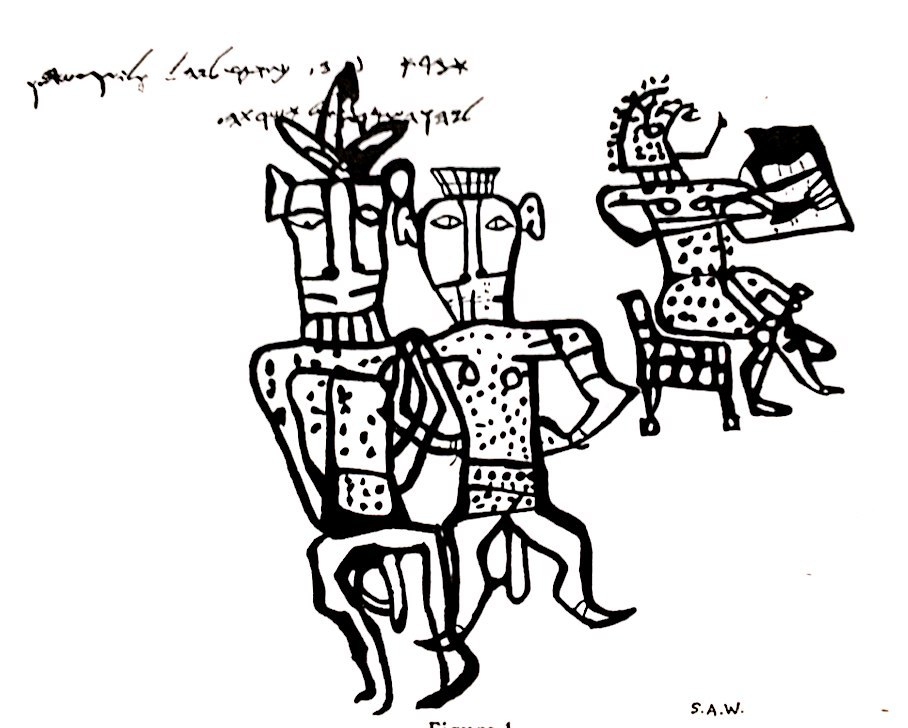
One of the greatest problems in reconstructing ancient religions is the ambiguity of the evidence.  Most ancient artifacts are not labeled (they probably didn’t need to be for the original viewers) and few have textual materials explaining them.  This became clear to me when studying the famed inscription found at Kuntillet Ajrud in the mid-1970s.  The most (in)famous aspect of this artifact was that an inscription overlapped a doodle, and due to the urgent desire to interpret the inscription a particular way, the line drawing was supposed to be an illustration of the inscription.  The inscription is commonly translated as something along the lines of “I bless you by Yahweh of Teman and his asherah.”  Many scholars took asherah to mean Asherah, the goddess, despite no evidence for pronominal suffixes on personal names in classical Hebrew.  The doodle shows three figures, perhaps related, of which two were said to be Yahweh and Asherah.  Despite the very clear resemblance to the Egyptian dwarf-god Bes (Kuntillet Ajrud is between Israel and Egypt), it was argued that the figures in the “foreground” should be considered Yahweh and his main squeeze, Asherah.

KuntilletAjrud

The artistic analysis of these doodles has always been torturous. Tiny, perhaps insignificant, details were ascribed great importance—particularly those indicating the gender of the figures.  For the Yahweh-Asherah connection to work, one had to be male and the other female (with the male preferably in front).  The problem was that both figures seemed to have penises (in keeping with Bes’s typical representation).  In order to make it clear that the right-hand figure was female it was claimed that she was wearing a lion skin and the “penis” was literally a tail, the leopard’s tail, seen between “her” legs. The problem seemed to be a possible scrotum appeared to be present.  The left-hand figure, larger (therefore, in front) had a clear scrotum, and that sealed the case, in a manner of speaking.  Little chestal circles were said to be breasts on the right-hand figure, but male nipples on the left-hand figure were lacking.  Oh, and they were dancing, as shown by the woman playing the harp in the “background.”  Believe it or not, seriously scholarly debate raged over this—nothing short of the discovery of Yahweh’s wife seemed to be at stake!  A colleague recently emailed me to tell me the final report of the archaeologists concludes that the “scrotum” on the right-hand figure was a mere dust smudge and so, aha!, she is a female after all!


I argued years ago that this drawing was clearly a representation of Bes. The connection with the inscription is accidental (the jug on which the inscription occurs is full of doodles); if someone wanted to illustrate an inscription, they would not draw figures that actually obliterate part of the caption. Assumption is built on assumption here, however, making for a very shaky foundation indeed. Don’t get me wrong: I would like to see Yahweh as happily married as the next deity. It is not good for the god to be alone. Still, it is going to take more than a divine sex-change operation to transform Bes into Asherah. If nothing else this divine gender-bender ought to serve as a cautionary tale for scholars, yet somehow I doubt that it will. We see what we want to see.


Esoteric Goddesses

250px-Statuette_Goddess_Louvre_AO20127One of the nice things about the internet is that you can indulge your unorthodox interests and nobody will much care (except, of course, the US government). The other day, while reading about monsters, I found a fellow WordPress site, EsoterX. More specifically, I found a blog post on Ashtaroth. Those who have more than a passing interest in my background know that I spent a few years of my life writing about the goddess Asherah. Asherah and Ashtaroth are sometimes easily confused by anyone not reading about them in the original languages, but I settled on Asherah because we simply don’t have much textual information on Ashtaroth. Ashtaroth has gone by a number of names over time: Athtart, Astarte, and, as I just learned from EsoterX, Lord Treasurer of Hell. I won’t try to repeat the clever observations of EsoterX, but I can’t help myself add my own two shekels’ worth.

Ashtaroth is clearly one of the bad girls of the Hebrew Bible. She tempts the upright astray, and she seems to have been a perennial favorite among the less-than-orthodox Israelites. The Bible doesn’t take much care to flesh her out fully, and she appears only in minor roles in the Ugaritic texts. Some in the ancient world easily associated her with Ishtar, and their names do seem to bear some kind of relationship. Ashtaroth is connected to the planet Venus, as was the latter goddess Aphrodite—named, appropriately enough by the Romans, as Venus. Ashtaroth was also a militaristic goddess associated with horses. That girl got around.

Unfortunately, in the literature that survives from the earliest period, we are left with only the sketchiest of outlines of this once important goddess. Many of the Semitic deities have been revived in popular mythology of the modern age, and Ashtaroth, with her sexy, yet belligerent nature, is always appealing to the puerile imagination of pubescent boys. She was taken with great seriousness long ago, however, although her origins are lost to history and her attributes have become general enough to fit just about any old generic goddess. I’m glad to see that EsoterX has given her a shout-out and has traced a brief history of the goddess through the ages. Maybe someday we’ll find some accurate information on her early days. If we do, will somebody please give me a poke? I will probably be busy reading EsoterX.


To a Fallen Goddess

One of my favorite places to visit in New Jersey is Grounds for Sculpture. Over the past several years that we’ve domiciled here, we’ve had the opportunity to take several friends and family members to see the whimsical, creative, and inspirational park over in Hamilton. When my daughter graduated from high school, she requested a visit to Grounds for Sculpture, and, since family were near at hand, we took the opportunity to see it again.

I’ve always been aware of the religious aspect of creativity. Perhaps it is because I like to flatter myself into thinking that I’m the creative sort, despite my years of academic training, or perhaps it is the kind of pipe dream for which the liberal-minded are easily accused. In either case, I have always found that the best art evokes something similar to a religious experience. There is an element of wonder, emotion, and awe here. Not every piece of art conjures it, just as a single god isn’t sufficient for the whole of humanity. As I wander the grounds, I grow convinced that this or that sculpture had a vision akin to what I’d call religion, that led to the creation of such a trenchant piece. I always leave feeling blessed.

Photo credit: Grounds for Sculpture, postcard

Photo credit: Grounds for Sculpture, postcard

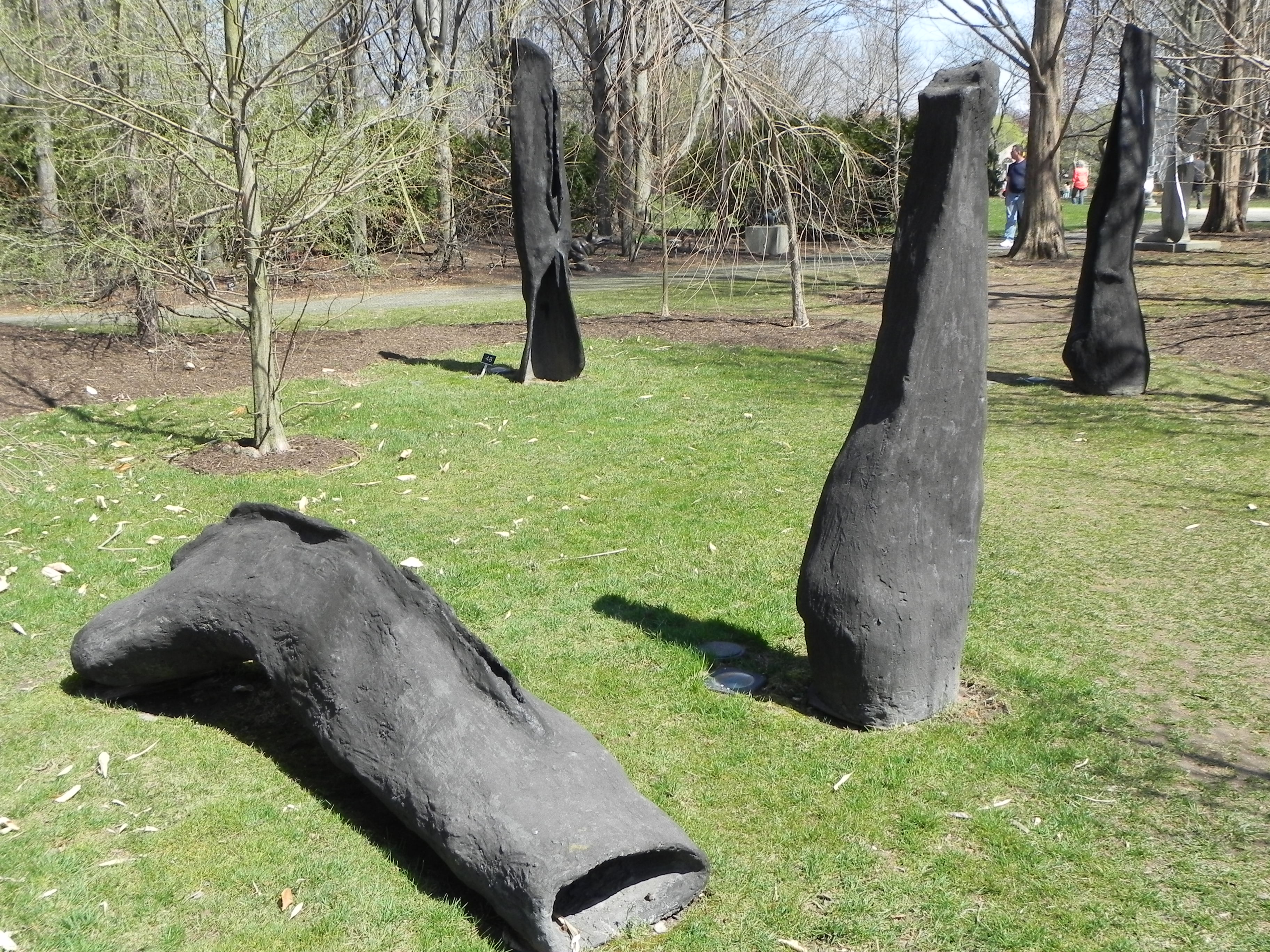
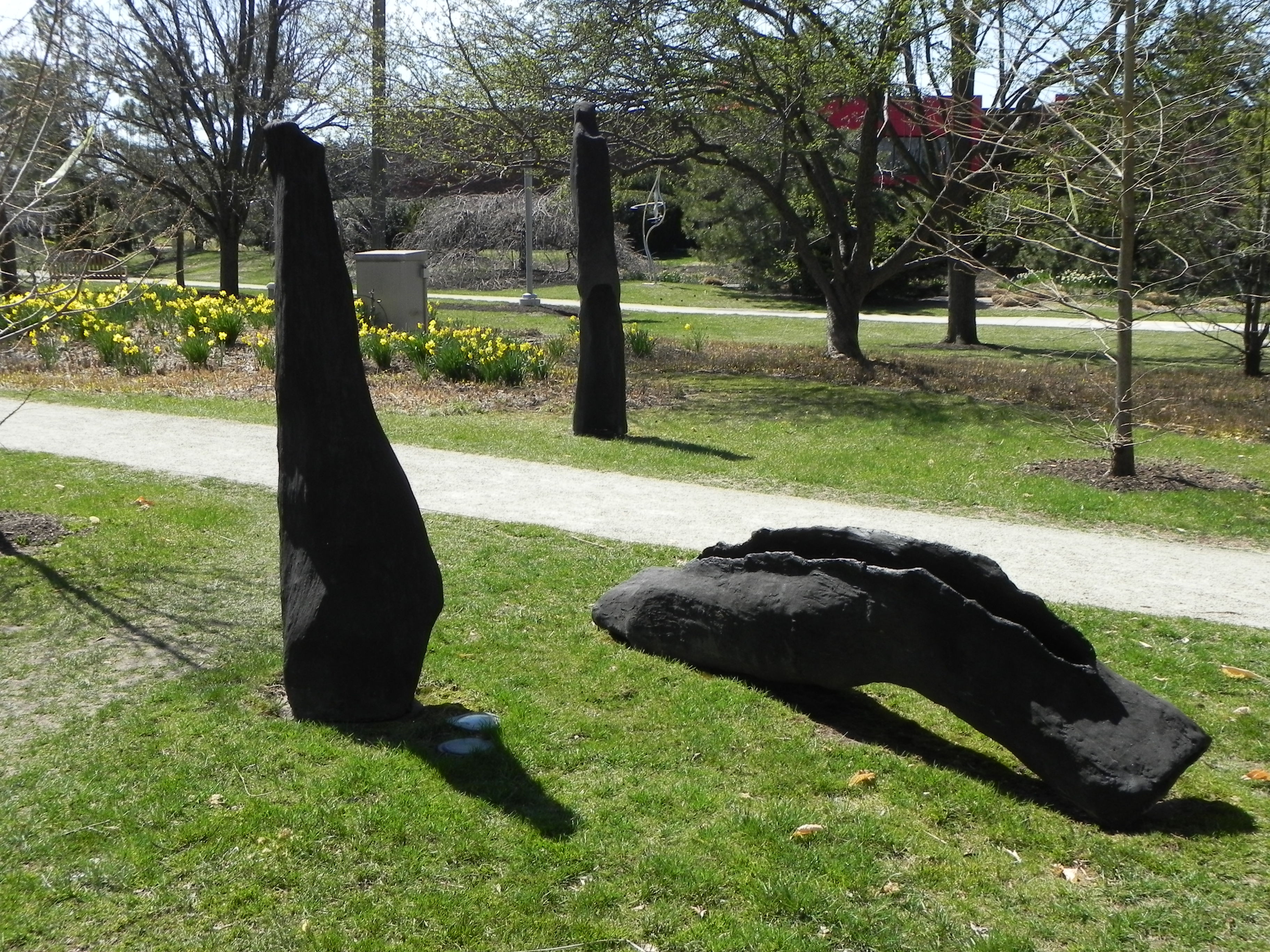
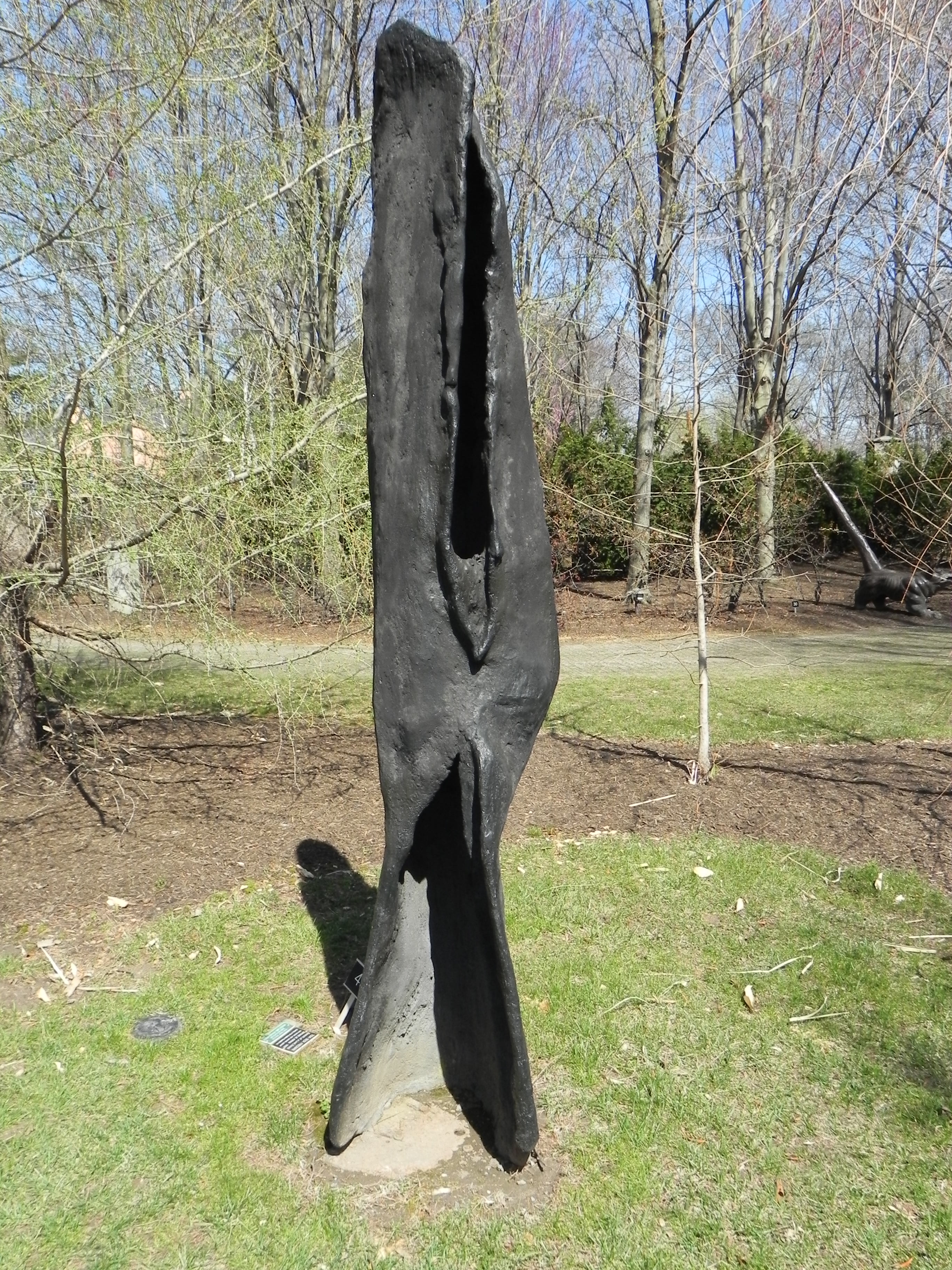
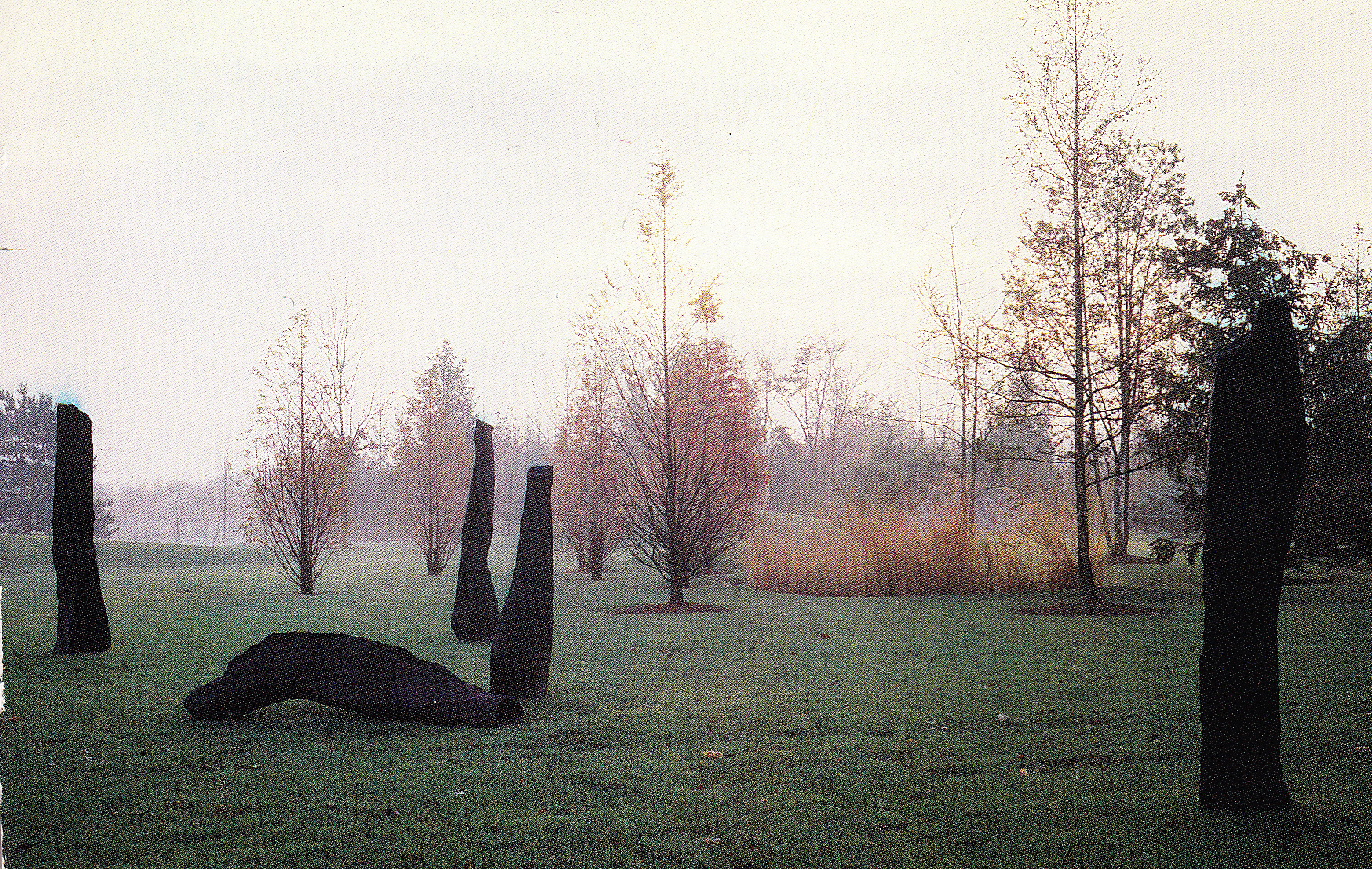
On this most recent visit, a very conscientious relative found, and later sent, a postcard of a sculpture I’d never seen. (It is possible that the sculpture is not currently on display, as the Grounds are continually evolving.) The piece is entitled “Excerpts of a Lost Forest: Homage to Ashera,” by Tova Beck-Friedman. Several of my relatives have me to blame for their awareness of Asherah; she is, after all, a relatively obscure goddess in the Hebrew Bible. The sculpture, however, speaks to me of the continuing ability of even extinct gods to inspire artists. Just as Asherah occupied several years of my academic life, I suspect she also haunts the work of sculptors who’ve come to realize that not all gods must be male, and not all gods must be real to be important. Quite the contrary, the collective deities of our heritage may still be found where art thrives.


Apples to Apples

Religion is all about death. Well, maybe not all, but still…

All religions deal with death in some detail. Perhaps that’s because death is such a universal experience. I think about it quite a lot—not to do so seems to be caught at a crisis without having thought through the implications—but mine are not always morbid thoughts (although, by definition, they may be). When I read Mary Roach’s Stiff a few years back, before I started this blog, I was amazed by the number of ways one could decide to have their “remains” treated. When I was a kid it seemed that there were only two options: bury them or burn them. To some religions the latter option felt a little close to Hell and was condemned as a sin. Occasionally I’ve posted here about various new methods that have made the news: having yourself morphed into a bullet or diamond.

In what I hope was not too much of a hint, my wife shared a further option with me—having yourself turned into a tree. Now while this seems what nature intended, it also feels profoundly Asherah-like. I have my doubts that Asherah was a generalized tree-goddess, but there is some kind of connection between wood and the goddess. Certainly by the Rabbinic Period of Judaism any tree in or near a sanctuary could be understood as the goddess and therefore a threat to monotheism’s hegemony. The solution: chop down the tree. Now Asherah whispers back, when you die, I can make you a tree.

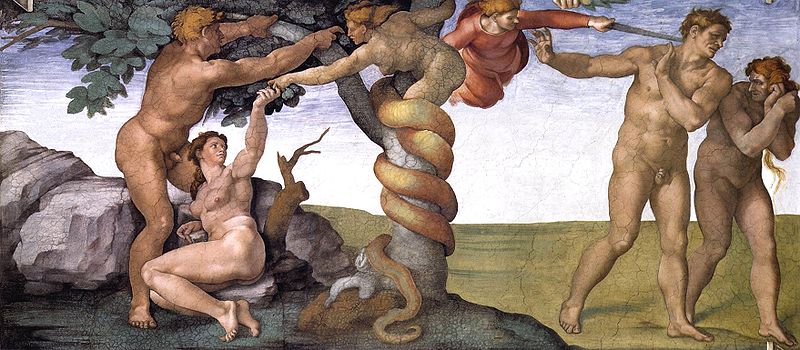
People, like all animals, biodegrade when they die. Some saints apparently avoid this fate while others are pickled to a state of perfection artificially, but for us regular folk nature has a plan. Animals eat the plants, plants eat the animals. We are all consumers. Bios Urn is the brainchild of Gerald Moline and features your deceased body packaged in a biodegradable urn along with tree seeds of your choice. All you need is a post-holer and a bit of rain. Some might wish to be a redwood with their aspirations to immortality. I think I would prefer to be an apple tree. Apple trees give back year after year. Plants, by their floral nature, are givers. The apple tree gives in a way that seems especially divine. After all, many are those who claim it is the very tree of Eden.

What everyone wants

What everyone wants


Tree Goddess

If you’re missing a virgin, I suggest you might try West New York. According to the local section of Friday’s New Jersey Star-Ledger an alleged image of the Blessed Virgin Mary has appeared in “an unusual tree” in West New York. The local diocese, no doubt correctly, suggests that the “image” is probably “just some discoloration that resembles Our Lady of Guadalupe.” Those inclined to accept pareidolia as fact, however, have already made up their minds. The tree has been barricaded off and flowers have been laid at its base and cell phone shutters are making their electronically fabricated snapping noises. A Google image search of “Virgin Mary West New York” brought up more than a million hits. People are desperate for a miracle.

Back when I was working on my dissertation, the tree goddess was inevitably Asherah. One of my unspoken speculations from those days was that trees are evocative plants, easily playing to the human imagination. In the right conditions a young tree can be mistaken for a person at a distance. The branches, particularly in late autumn and winter, resemble gnarled fingers reaching for the sky or any unwary passer by. And the natural knots and scars on tree trunks (such as in the current example) readily fire unlikely associations. They can be eyes, mouths, faces, or other anatomical bits—as people we project ourselves onto any likely (sometimes unlikely) avatars in the natural world. If images are to be believed, hundreds of people are devoutly weeping and praying at an entirely natural formation in the wood less than two miles from the most sophisticated city in the country.

Even with the Roman Catholic Church urging caution, blind belief is not dissuaded. What does it say about us that we so deeply desire a sign from above? This is the kind of question those who claim that a reasoned materialism will inevitably trump superstition must ask themselves in profound reflection. The fact is that people always have (and always will) assigned meaning to what they see. It is the gift and curse of evolution. “I think I shall never see / A poem as lovely as a tree,” Joyce Kilmer famously wrote before being killed in World War One. This New Brunswick, New Jersey native, who died at 31 in the killing fields of France, might wonder that so many stop at that first famous stanza. To those thronging in West New York, I would recommend a little Kilmer with their miracle. Let’s leave the last word to the poet: “A tree that looks at God all day, And lifts her leafy arms to pray…”


No God for Women

A friend recently asked me to write a post on the feminine image of God. Specifically, she noted that images of God tend to be overwhelmingly male, even today. Having written a book on the goddess Asherah, and being very interested in gender equality issues, I was intrigued by this request. Growing up male it seems natural in our culture to find representations of God as a man. It stands to reason that in a culture more open to feminine experience we should find female images of God. They are, however, still lacking. This combination of improbable facts kick-started some ideas about both religion and culture. To begin at the beginning, although the Bible makes passing references to God as either non-gendered or even female in rare places, clearly the predominant metaphor is masculine. The third-person masculine singular pronoun (i.e., “he”) is almost always used for God, beginning in Genesis 1 and running straight through. The Judeo-Christiani-Muslim deity is decidedly male in his demeanor. All three religions developed in circumstances of male social dominance.

Enter the 60’s (1960’s, that is. C.E.). Women were able to begin expressing their needs without the whole weight of a social McCarthyism bringing down the girth of the government upon them. Instead of finding feminine traits to the god of the Bible, interest in goddess worship revived. Now, serious scholars disagree on just how much a role the goddess played in the development of monotheistic religions. The end result, no matter how you parse it, is pretty masculine. Therefore some women found the goddess to be more conducive to fulfilling their needs. Problem is, there never was, historically, a goddess monotheism. There were always goddesses, plural. Without the unifying force of a single, female deity societies just never fully coalesced around a single, strong image of feminine deity. Some have tried to put Asherah in that role, but she was defined by her husband El and shared the stage with Anat, Shapshu, Ashtart, and a host of other potent females. In a world of two basic genders, monotheism favored the male.

Are there female images of god? Undoubtedly there are. There will be a great deal of difficulty finding them because Christianity very quickly invented the idea of heresy (something Judaism fortunately lacked). This assured that the “orthodox” voice would always be the loudest in the shouting match that we call religion. This situation has had two millennia to ferment and brew. Theologians (mostly male) early on stated that God really has no gender. After all, a male god does imply a lady somewhere in the wings—otherwise human maleness is really superfluous, theologically speaking. Rather than embrace castration, let’s just keep god male, the thinking seems to go. Religions are conservative by nature. They may breed radical free thinkers, but natural selection comes to their rescue by reinforcing the bearded, chastely clothed, divine father. Until society is ready to embrace true equality, however, religion will continue to privilege the big man upstairs.

Monotheism’s bete noir?


Internet Asherah

Things represented on the Internet are not always what they seem. Removed to the back-bench of academia, I don’t have the opportunity for research that I once had. Every now and again, however, I still like to see what people are saying about Asherah. When I check the popular goddess books available off the shelf, my book on the subject is not often mentioned. At least on the Internet some researchers seem to have noticed it. A recent search for Asherah on Google, however, brought some surprising results. The first item of interest was a quinoa-based, organic veggie burger from Asherah’s Gourmet. The Asherah in question here, however, is simply a woman’s name. As a vegetarian I thought I would put a word in for the product, in any case. I found this brand at a health food store last week, but miles from home and with an air temperature of over 100 degrees, I was afraid the frozen products wouldn’t make it home without half baking in the car.

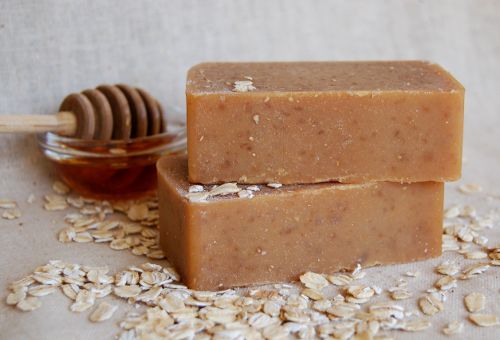
My next stop on the web was Sacred Suds. This New Age-themed site offers hand-made soaps, many of them associated with goddesses. The product entitled Asherah is named for “the Canaanite mother goddess” and is made with milk and honey. The website doesn’t actually state anything about washing away sins, but it seems difficult to go wrong by washing with a goddess. Another selling point—also not on the website—might be to point out that Asherah is known as the one who “walks upon the sea.” There is even a scene in the Baal Cycle from Ugarit where she is presented as doing her laundry in the sea. Asherah and soap, it seems, are a natural match.

One final product seems to be biding its time, although I suspect there is a market for it. The Asherah action-figure, privately made, does not appear to be commercially available yet. Garbed in an Egyptianizing cobra headdress, armed with a cobra staff, this heroine looks to be a suitable partner for Captain America, bringing the United States and Middle East together in an attempt to bring peace to a troubled region. Maybe heroes can accomplish what gods apparently can’t.

Not exactly big business yet, nevertheless Asherah appears to be on the move. Maybe once she breaks into the big time, those of us who’ve tried to make a living on her cape-tails might be dragged out of obscurity as well. In the meantime, it is about time for a veggie burger and a luxuriant bath.


One to Tree

Asherah’s in the news again. My book on the old girl safely moldering on obscure library shelves, I figure it is my academic duty to be a staid voice of reason on the subject. The jury’s still out on her status as Yahweh’s wife – no wedding pictures have yet surfaced – and her associations with lions and snakes have always been suspect. It is clear, from the Bible’s perspective anyway, that the physical object called by the goddess’s name was made of wood. Although such a slight association does not a tree-goddess make, it nevertheless runs counter to scholarly orthodoxy to suggest otherwise.

In the Rabbinic period it had become clear that just about any tree in the right location could serve as an asherah. So it was with a double-take that I looked at the cover of my Green Bible. I began using the Green Bible a couple of years ago because of the environmental impact of the millions of Bibles printed annually. Best estimates are that about six billion Bibles have been printed (about half of which have been sent to me by various vendors as textbook options) and I was hoping to at least use a recycled book to ease the burden. Then yesterday it clicked for the first time: the Green Bible has a tree on its recycled cover.

Asherah seems to have had the last laugh. If she was a tree-goddess. The fact remains that Asherah is a difficult goddess to qualify. She may have been associated with trees, or lions, or snakes, or wisdom, but none of these things has been proven beyond reasonable doubt. She was, however, the spouse of the high god El among the people of ancient Ugarit. And the Israelites accepted without qualm that El was essentially the same as Yahweh. Did he bring his former spouse along? We don’t know. Asherah, as her own person nevertheless, is a wonderful example of the feminine divine. Too bad she doesn’t have her own book.

God's wife on the cover of his book?


Holy Matrimony

BBC Two is currently airing a series entitled The Bible’s Buried Secrets, unfortunately not yet viewable in the United States. The episode “Did God Have a Wife?” is presented by my colleague Francesca Stavrakopoulou, who did, no doubt, an admirable job. So once again Asherah finds herself in the news. The issue of monotheism is intricately tied up with how gods related to one another in the ancient conceptual world of Israel and its neighbors. Since the gods were modeled on humans, their behaviors could be embarrassingly human as well. Myths of actual divine marriages are rare, and extra-consortial affairs seem to have been pretty common. This aspect survives in the classical Greek world where Zeus’ many trysts are among his most notable deeds.

In a society like ancient Israel where marriage was a regular expectation of all young people who survived to marriageable age, an obvious mystery attends a single god. If Yahweh is male – and the Hebrew Bible seems not to dispute this point – would he not require a spouse as well? The well known Kuntillet Ajrud and Khirbet el-Qom inscriptions appear to suggest that Yahweh had a wife, and if he had the Religious Right should only rejoice since that would seal their definition of marriage forever in this literalist nation. And yet, the Bible remains decidedly mute on this point. In the end, it is interpreted that male is superior to female, again, pleasing certain religio-political factions.

Marriage in a human institution. It is a practice concerning which the Bible is strangely taciturn. In ancient times marriages (unless among the gods) were secular, not sacred ceremonies. Among a human population in danger of dying out through attrition, marriage ensured prolific reproduction. According to Christianity, even God had a kid. In a world that has changed in ways that biblical writers could never have imagined, marriage as a source for an increasing population is more problematic than it is essential. It seems that the jealously guarded definition of marriage is really just another green-eyed monster lurking in the Neo-Con closet. Maybe once Yahweh’s marriage certificate surfaces the issue of what marriage is really about will be discussed rationally.


O Pomona!

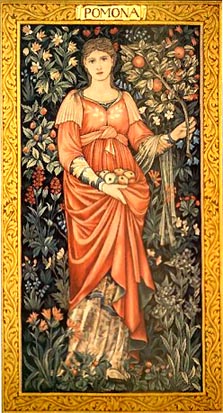
Ancient goddesses have long been a fascination with me. After writing my Edinburgh dissertation on Asherah, and taking employment at an Anglo-Catholic seminary that venerated the BVM – Blessed Virgin Mary, and not some underwear brand, as I had supposed – I realized that male-dominated religions still recognize the need for the sacred feminine. In my recent post on Halloween, I mentioned the Roman goddess Pomona. Roman religion is generally not treated with the finesse of classical Greek mythology, but it represents an important part of our western heritage. Pomona is an etiological goddess. Etiologies are stories of origins, and like other goddesses of the ancient world Pomona was used to explain the mysterious ways of nature.

The story that best describes Pomona is preserved by Ovid in his Metamorphoses. Pomona is one of the virgin goddesses, specifically the goddess of fruit. She has no known Greek antecedents. The myth involves her devoted chastity and her commitment to ripening fruit, particularly apples (and sometimes pears). Shunning all lovers, she was eventually wooed by Vertumnus, the god of changing seasons. Disguising himself as an old woman, Vertumnus visits Pomona and tells her of the wonders of love and of the attributes of Vertumnus especially. Eventually Vertumnus reveals himself, and Pomona, delighted at what she sees, loves him. Of course, apples ripen and seasons change. Winter is soon to come once the apples fall from the tree. The goddess has been subdued by masculine designs.

So it often is with goddesses. Men recognize the need for the divine feminine, but fear it and attempt to tame it. Pomona, however, survives. One of the memorable objets d’art at Nashotah House, where I sat in that chapel for over a dozen long years, was a frieze of the BVM. More technically, a Madonna and Child. The frieze hung over an altar in a side chapel behind the choir, so most people didn’t spend much time looking at it. Mary, holding Jesus, was surrounded by a frame of fruit rendered in plaster. Apples were prominent among them. There are those who suggest that apples show how Mary overcame the heinous sin of Eve. I believe, however, that the fruits surrounding the virgin demonstrate that Pomona, the virgin goddess who eventually succumbs to the advances of the male deity, still has a place in the patriarchal world of Christendom.


On the Origins of Goddesses

In what is fast approaching two decades ago, I was facing the prospect of meeting a thesis approval committee at the University of Edinburgh without a solid proposal. I’d meant to focus on Dagon, but the committee felt there was too little information on that deity to fill the requirements for a doctorate. I’d long been fascinated by the role of goddesses in ancient religion and their rather sudden disappearance – more properly sublimation – in what was becoming a male-controlled official religion. (Private religion could have been quite different, as it still is, from official theologies.) It was then that my attention was drawn to the, at that time, relatively understudied Asherah. Apart from having avoided excessive attention, Asherah was also the chief goddess of Ugarit, and possibly other cities.

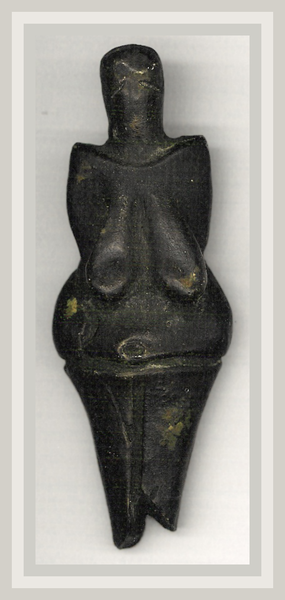
Turning the hands even further back, into prehistory, we find that goddesses seem to have been a natural part of human psyches of antiquity. Few things are as fundamental to human experience as the complementarity of the sexes; why would there be gods without goddesses, and vice versa? Prehistory is excessively difficult to read, existing as it does without written records to interpret artifacts. The discovery of Paleolithic female figurines, however, would seem to suggest that the female divine was a powerful force. The “Venuses” of Willendorf, Hohle Fels, Dolni Vestonice, Tan-Tan, Brassempouy, Galgenberg, Lespugue, Laussel and others demonstrate the acknowledgement of feminine mystery, if not divinity. With the advent of monotheism, one sex would have to accept subordinate status. A sexless divinity is simply too difficult to imagine.

Western religions thus began their descent into the omnipotent masculine. Even the Classical Greeks with their gender-mixed pantheon had to acknowledge the superiority of Zeus. In a monotheistic world, worship of the female divinity became heterodox, heresy, and “pagan.” There it has stayed for millennia, only to reappear in the cults of Mary and other chaste saintesses, clearly beneath the authority of Him. The origins of goddesses? They have been with us from the beginning. The real mystery is not where they came from, but whither have they gone.

Wiki-commons' Venus of Dolni Vestonice


Asherah in Australia

It has been one of those weeks dominated by a lady from my past. Asherah. Just when I thought I could forget her and get on with my life, she has reappeared with a fury. The problem is, I haven’t kept up with where she’s gone over the past few years and we all know what kinds of problems society has out there. Turns out she’s in Australia. At least according to a comment left on one of my old posts about Asherah. The author of the comment provided a tip that led me to abovetopsecret.com, a conspiracy theory website. One of the threads is from Brian Leonard Golightly Marshall, a man who claims to be the messiah – apparently he’s returned with his spouse Asherah, in her form of Mary Magdalene. Also, he states, Prince Charles is the anti-christ.

The internet has provided a forum not only for the serious exchange of ideas that help shape the future, but also a soapbox more massive than any other. In general I don’t believe conspiracy theories – just this week my daughter came home from school with news about Disney’s alleged subliminal smut, leading me to recall the hysterical claims made about the New World Order. The more things change, the more predictable they become.

So, is Asherah down under, waiting for a new apotheosis, or has the collective imagination of the internet just taken over? I’m not the one to judge. Nevertheless, while doing a little web research on Asherah I discovered that Asherah greeting cards are now available. They’ll have to wait until I find a job, however. Maybe once that happens I’ll also be able to afford a trip to Australia to see the goddess I’ve researched for so many years.


We Still Need Asherah

A very prominent documentary-making company contacted me today. It is in the research stage of planning a documentary on Asherah. I am overwhelmed that I have been asked for advice and that the old girl has finally received some public interest. Scholars are generally accustomed to spinning in smaller and smaller circles of specialization that have little draw for the wider public. Having said that, Asherah is, my own interests aside, a most fascinating deity.

One of the greatest obstacles to modern readers on ancient religion is the fact that gods don’t neatly fit into predetermined categories. We like to think of deities as the “god/goddess of –” where the blank is filled by some natural phenomenon. This is a fallacy that I once whimsically coined the “divine genitival construct.” It is easy to think of Baal as the god of rain, but he is so much more than that! I tell my students that they must think of deities as “persons” first; they are fictional characters, and like good fictional characters they have many aspects to their personalities. They are complex, multilayered, and often conflicted. This is especially the case with Asherah. She is a goddess who represents the royal female. Kind of hard to picture. Not queenship, but the power behind the throne. She is more familiar in the form of Hera in Greek mythology – the primary spouse who tries to keep a philandering husband in line. She is, however, a powerful goddess. She is mother of the gods, the character without whom no other lesser deities would exist. By extension, she is the producer of the gods who make our world possible.

Publications continue to emerge claiming all manner of hypostases for Asherah, many of which are unfounded. I believe it is because we all need the sacred mother, the female authority figure. Our society, still hopelessly patriarchal, yearns for the goddess who understands. Unfortunately, that is not this historical Asherah, it is the Asherah of the modern imagination. If she helps to assuage some of life’s inequities, however, even a mythical Asherah may still serve a valuable function today.

Not Asherah, unless you need her to be


Asherah to Asherah

Every great once-in-a-while I regret no longer being in a position to conduct active research and publication. In the days when a full-time teaching position afforded me that option one of my favorite subjects was the exposure of facile arguments made by otherwise careful scholars. Most of those arguments focused on the presence of Asherah as a fully formed goddess in ancient Israel. Extremely tenuous evidence for the association of the goddess with a variety of ambiguous artifacts has polluted the discussion for decades now. Any vaguely abstract image suggesting a female was declared an “Asherah” representation, sometimes even images as simple as a triangle or a mother cow.

A colleague of mine just pointed out the recent article by Garth Gilmour in Palestine Exploration Quarterly 141 (2009), entitled “An Iron Age II Pictorial Inscription from Jerusalem Illustrating Yahweh and Asherah.” Having more than a passing acquaintance with the goddess, I read his article with considerable interest. A potsherd discovered in the 1920s, but unpublished until now, bears an incised “inscription” of two figures that Gilmour plausibly argues to be highly stylized female (left) and male (right). Basing his analysis of possible identities for this Picassoesque pair on the now canonical interpretation of the Kuntillet Ajrud and Khirbet el-Qom inscriptions, he suggests this is none other than the happy couple of Yahweh and Asherah.

Loving spouses or battling foes?

I encourage creativity in scholarship; otherwise it has a way of becoming deadly dull. The supposed pairing of Yahweh and Asherah, however, has been excessively overblown by scholars who should know better. When it comes to the point that escapees from Flatland who bear the suggestion of gender must be Israel’s most famous bachelor and his main squeeze, I have to wonder what the basis of solid scholarship is. There are no words obliquely hinting that this is a divine couple, nor is there a sacred context to suggest this shard was in any way religious. Given the fact that the image had formerly been on a spouted jar, perhaps holding water, would not a suggestion of Marduk and Tiamat be more appropriate?

Rorschach tests aside, this incised image is an important piece of a puzzle with far too many pieces missing – the puzzle of the artistic life of ancient Israelites. Given the all-too-human interest in relationships between women and men, I would see no necessity of making deities out of a pair of prospective lovers or foes. Why can’t people just be people?


A Sigh for Cybele

As we fall out of the holiday season into that distinctly chilly and sometimes cheerless February, Cybele comes to mind. Over the past several weeks I have added posts focused on the holidays associated with December and January. In the course of my research for a children’s book on American holidays (not published), I was astonished at how frequently Cybele appeared among the origins of current holiday practices. Having researched ancient Near Eastern mythology long enough to complete a doctorate in the field, and to write a book on an ancient goddess (Asherah), the lack of reference to Cybele in my sources was unexpected. I pushed this question mark to the back of my mind, but as I was reading H. P. Lovecraft’s story “The Rats in the Walls,” I found Cybele once again.

Cybele eventually became a major Roman goddess, although she was never among the Greek Olympians. Her importance shows in her connections with several Roman festivals and practices of antiquity, some of which have survived even to the present. Greco-Roman adherents to Cybele worship considered her to have been of Phrygian origin. Many scholars, however, see in her name and character echoes of a Semitic goddess named after Gebal, or the native name for Byblos in Phoenicia. If so, she is one further piece of the puzzle connecting the classical world with that of the fertile crescent.

Wikipedia Commons Cybele

A standard title for Cybele was Magna Mater, or “great mother.” As such, she was frequently associated with the earth itself, widely considered to have been a primordial female deity in the ancient Near East. In many respects she resembles Asherah, although the two are never explicitly identified. In myths where she is associated with Atys (later Attis), she becomes the spouse of a “dying and rising god.” She is prominent in festivals around mid-March, at the time of the renewal of fertility in the Mediterranean basin. Matronly, stolid, and powerful, Cybele lurks in the background of religious sensibilities. Her association with spring offers something to look forward to as the overly long, yet short, month of February starts to become visible.