Scientific Seminary

Old Testament. New Testament. Church History. Pastoral Theology. Systematic Theology. Homiletics/Liturgics. This was a typical kind of seminary curriculum about a quarter-century ago. Obviously there were variations, but the basic topics were Bible and its application. When I attended seminary science was already in the ascendent (seriously, it wasn’t that long ago!). Nobody much worried about how it might impact religion. People in the United States still attended church in large numbers but no one I knew really considered science a threat to belief. They were essentially different realms of inquiry and although some on each side asserted the superiority of their enterprise, the debate seemed to be good-spirited and without excessive rancor.

IMG_1656The situation has, of course, shifted radically since then. We’ve become a society guided by business principles and technology, and religion has all the appearances of being quaint at best, likely just useless, and, at worst, dangerous and deadly. Civilization, however, was built on the premises of a religion that permeated every aspect of life. That influence has been slowly replaced by that of a materialistic reductionism that suggests all things, this blog included, are but the random results of dry atoms bumping about a cold universe. Naturally there has been a reaction. The most vocal of believers, the Fundamentalists of all stripes, have directly challenged science in the arena of veracity. As we all know, however, Fundamentalists aren’t really equipped to convince the masses. The Bible, the underlying strength of the literalist, has come under scrutiny and has been demonstrated to be more inclined to myth than history. What more does a scientific worldview need to weld shut its superior outlook? And yet, reasoning, non-reactive religion still exists. Still has a place in this mechanistic universe where miracles are disallowed.

I recently read about a Templeton Foundation initiative that is funding programs on religion and science at seminaries. Some scientists excoriate the Templeton Foundation for trying to keep religion in the picture, but my humble opinion is that Templeton and its money have nothing to do with it. Religion is a very human response to a universe it can’t fully understand. Empirical method seems to work, and the results are so complex that few can even hope to comprehend. All but the most hopeless, on the other hand, can understand “love thy neighbor.” Religion continues to guide countless lives—most of them for the good, and not for the incendiary responses of a challenged literalism. The time has come for seminary curricula to adjust to the world as we know it. That world is run by inhuman forces that may help or harm humanity in equal measure. Religion, however, need not battle with science. It must, however, add it to the curriculum.


Texodus

I’m not sure what Patheos is, but it has been on my web-radar (or is it “ping”?) for some time now. They host bloggers with a more substantial platform than mine, and often have a number of comments that must require a full-time coterie of first responders. As a working class blogger, however, I siphon off their success to spin my own ideas a little further. All of this is preface to the fact that a recent article by Michael Stone on Patheos comments on Texas’s approval of textbooks where Moses inspired “the American system of democracy.” We are all used to Texas shenanigans by now, but making laws with the ultimate lawmaker just as a movie is being released that portrays Moses as a warrior is apt in a way that Rick Perry’s stomping grounds may not truly appreciate. The need to validate outdated laws with a largely mythical biblical figure is telling. Revisionist history depends on the version of history that is more compelling at the moment, and I find Moses charging the Egyptian army on horseback eerily appropriate.

Textbooks are insidious. They are society’s first crack at young, and naturally open, minds. As we socialize the rising generations to support that with which we’ve always felt comfortable—not wanting to jeopardize our ease in our advancing age—it becomes important to provide the appropriate propaganda. As I speak with fellow scholars (if I may be so bold) I frequently hear them decrying textbooks. By their nature they are a leveling off of what naturally comes in mounds—heaps, even. They are a tool used to keep everything even in a world of rough knowledge. They are insidious in that they are hard to override. Those of us who’ve taught in college know how difficult credibility is when “the book says” is the standard line of recourse. If it was published by Pearson corporation, it must be true.

Revisionist history.

Revisionist history.

Of course, we venerate the published word. Today the Bible, I suspect, were it newly composed, would have difficulty finding a publisher. Since it was written a couple thousand years ago, however, it retains all the trappings of hoary wisdom that is required to make the elders comfortable. Even scholars of the Bible have, as a matter of course, questioned Moses’ role in the story for centuries. As early as the Middle Ages some sages were asking how Moses knew to write his own death scene. Even so, the vast majority took the word literally, and now that we’ve defined ourselves as a “Christian nation,” or at least the southern half of a Christian nation, we can use the Bible as a textbook. What could be more natural? On the big screen I anticipate Christian Bale charging the Egyptians on horseback. In the Pentateuch I read of Moses hiding behind Aaron’s eloquence. One is biblical, but is it believable? If it comes to a contest of force between the two, I’ll go with Ridley Scott every time.


Get Out of Town

If the Bible were to be written today, it would be more graphic. Those who’ve read it know that it is a graphic book already, but with no literal illustrations. Somewhat surprisingly for a post-Christian society where the Bible generally gets bad press, this year has seen the release of at least two major movies based, loosely, on scripture. Noah came with a flood of hype this summer, and even then we were told to keep an eye out for a movie on the exodus later in the year. The New York Times heralds the imminent arrival of Exodus: Gods and Kings with a movie preview. Like Noah the new movie will take liberties with the biblical accounts of the exodus. (The Bible itself is not consistent on the story in any case. The “Song of the Sea” in Exodus 15 differs considerably from the prior prose account.) Ridley Scott, who gave us Alien, has cast the iconic Batman, Christian Bale, as Moses. When I first read about this during the summer, I wondered how Bale would take the meek role of the humblest man on earth. With considerable chutzpah seems to be the answer.

The review by Michael Cieply and Brooks Barnes, however, make the most not of Moses but of his mentor, Yahweh. Using an eleven-year old, Isaac Andrews, as the deity, the movie “preserves the awful severity of the Old Testament God.” In this it touches on one of the sore-spots among biblical scholars and theologians both—the characterization of a bifurcated deity. God in the New Testament is frequently said to be loving and kind (except for the iron-clad rule that makes him (as he is male) sacrifice his own child), while the deity of the Hebrew Bible is said to be angry, mean, and vindictive. Others say he’s simply just just. We like to see a divinity who is swayed by mercy and is deeply aware of the human condition. The Bible presents, it seems, a conflicted God who is sometimes just as confused as we are.

800px-Lamentations_over_the_Death_of_the_First-Born_of_Egypt_by_Charles_Sprague_Pearce

Casting a deity who is forever young, however, may be a stroke of genius. In the Bible, in as far as there is a coherent storyline, God does seem to evolve. Sure, there are those who claim God always remains the same, but any deity whose first recorded words to Adam and Eve, after laying down the rules, take the form of an interrogative certainly must be able to learn and grow. Of course, it is very much like a human to suppose that the world could not have existed before we got here to see it. We who are so fascinated by the idea that the world could have carried on without us for the generations before we were born. What was God doing in those eons, besides playing with dinosaurs, like a child? I don’t suppose Exodus will delve into those questions, busy as it will be with battle scenes and other adult situations. At least if it’s true to the Bible, which, despite popular opinion is so graphic that would have a hard time retaining an R rating, if taken literally.


Flight of Fantasy

Today marks the end of the AAR/SBL Annual Meeting. As the last attendees who have stayed through to the final half-day make their way through the dreaded Tuesday-slots for papers and wander the exhibit halls in search of last-minute bargains, I wonder what impact we will have made in San Diego. Many of my conversations this year included lamenting over the state of higher education, particularly in the study of religion. Religion, which led to the very concept of higher education, is now perceived mostly as little more than a somewhat unsophisticated intrusion into the cold, hard reality of business. And educating future entrepreneurs is, make no mistake about it, business. Wither the institutions go, publishers will follow. The life of the mind is a perk that we no longer can afford. And yet, as colleague after colleague attests, this is what students really find fascinating. Perhaps even important.

As we get ready to head back to the airport, I reflect how it is so much like being a passenger on a plane. We’ve purchased tickets to get us near where we want to be, but we aren’t directing this jet. The pilot, isolated from us by an unsurpassable barrier, will, we trust, get us to the designated airport. That, however, is not really where we want to go. We won’t happily loiter there. Impatiently we’ll await our baggage at the carousel so that we can wend our way back to our homes. Where is the business end in that? Isn’t it, however, what we live for? And what of the San Diego we’ve left behind? How many people will say that their lives will have been improved by having the lion’s share of religion scholars in their neighborhood for a long weekend? Will the number of homeless have decreased? Will they have found jobs?

While those of us “not from around here” ride elevators more nicely appointed that some people’s houses, the televisions meant to prevent us from growing bored from the twentieth floor to the first, show how the other half lives. It’s sunny and nearing eighty today and Buffalo has snow higher than our heads. Reporters flock to the snow-locked city and wonder at nature’s extremes. It doesn’t seem to play along with our business plans. There must be some way to make some money out of this. But I have an unconventional theory. Maybe I’ve watched Bruce Almighty too many times, but I wonder if all those prayers made by children for a snow day may have been stored up in, what scripture assures us, is a great divine warehouse awaiting release. Perhaps the doors of that storehouse have been thrown open to remind us that sometimes the business of living is simply the wonder of watching it snow. No matter how inconvenient it might be. And lives will have changed for the better.

IMG_1825


Only Midway

Unlike some employers, my current one sees the wisdom in arriving early for a major conference. The American Academy of Religion and Society of Biblical Literature is meeting in San Diego this year, and for those of us in the New York area, it’s about as long a flight as you can have in the lower 48. Having arrived in good time, and not knowing much to do in San Diego (I don’t know of any famous writers from this area whose childhood homes I might haunt), I ended up walking to the USS Midway. I’ve never been on an aircraft carrier before, and, on the eve of a religion conference, it was a strangely moving experience. Maybe it was the recognition that I was standing on a floating city on which many people had died in various wars. Perhaps it was the fact that this was a massive piece of machinery designed for its destructive potential. Or it might have been the sheer determination that appeared in every placard: this was a cause we had to win.

No doubt, the Second World War was a just cause. The force of destruction had to stop and the aircraft carriers that enabled the war effort were a huge feature in the “Pacific theater.” Staring at these massive jets, the finest technology of their day, I knew that our greatest efforts had been poured into violence. These were not mere deterrents. Yes, people had died here, but those launched from these decks also killed. War makes claims that way. As I pondered these sobering thoughts, I came to the chapel. Obviously I had to see. An eerie recording of “Eternal Father, Strong to Save” came over the speakers as I walked in. Yes, those on a warship are in peril on the sea. If they are successful, others will have died.

IMG_1797

A little further along the corridor (or is it “hatchway”?), I came upon the chaplain’s room, along with my first Bibles of the trip. (I knew they would be here.) A mannequin of the chaplain, cookie in one hand, Bible in the other, sat, apparently, preparing a sermon. What does one say to those going to war? God is on our side, obviously. But what more? The Bible does not forbid warfare. It was a way of life in the centuries during which it was composed. We like to think we may have advanced since then. But as I prepared to exit back onto deck in the warm California air, I passed a display of aircraft carriers past and present. More sophisticated, more deadly weapons continue to be built. And in this day of nones, I wonder who their chaplain might be.


Sola Scriptura

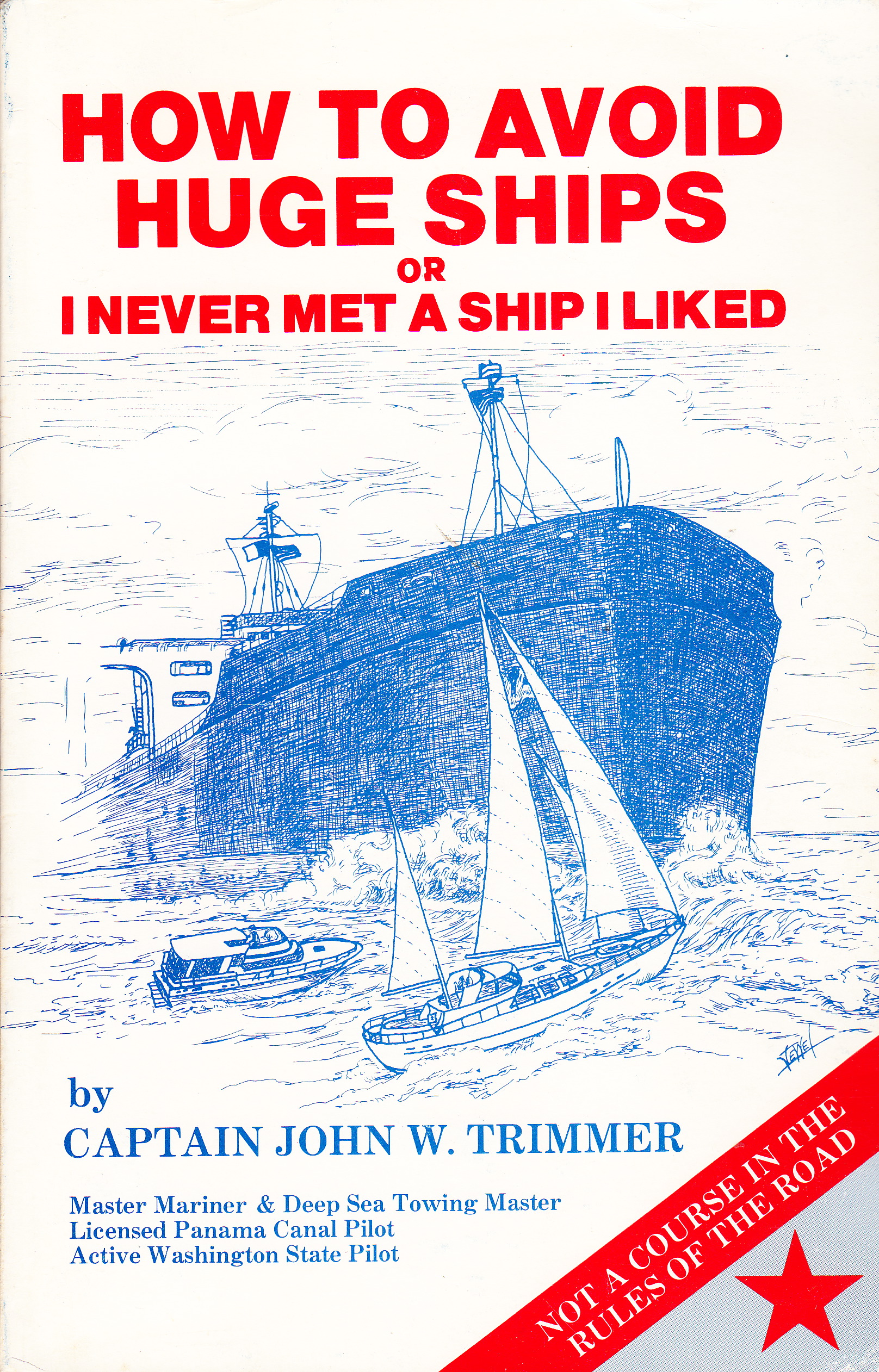
IMG_1641Would you buy a Bible from this man? “The trade is not a complicated one,” quoth Big Dan Teague. People are looking for answers. To making a living selling Bibles, however, requires some finesse in a world where scripture may be had for free. The trick is added value. Now, for those who approach this from a religious angle the obvious question is how you add value to what is claimed to be the word of God. It is, however, a matter of understanding it. Martin Luther, apart from starting the Protestant movement, also translated the Bible into German. The concept was simple: if the Bible contained the truth, the whole truth, and nothing but the truth, then if the laity read it, we wouldn’t need priests. Greek and Hebrew (and a smattering of Aramaic) are no longer the main elements of a well-rounded education so we need a version that anyone might read. Even the King James is a little rusty, what with words that don’t mean what they seem to—who wants to suffer? Especially in the biblical sense.

Contrary to Big Dan’s assertions, the Bible trade is a complicated one. The text of the Bible (if not specific translations) is in the public domain. The Bible is, however, more than words. It is ink, and paper, and binding. It is an object. By swearing with your hand on it, you can convince the court you’ll tell the truth. Or become president. Or raise a lot of money. Despite the Bible’s decline in academic prestige, it remains a source of popular trust. Not too many items that can be had for free can make such claims of power. It is the book that founded western civilization.

As I board a plane for San Diego, I know that I’m about to see lots of Bibles. Lots and lots of Bibles. Thousands of scholars who spend their lives studying it will gather to discuss its continuing significance and debate its finer meanings. Some will venture to purchase new Bibles. New versions of old words. See what others have to say about them. Somewhere distant I hear Big Dan breaking a branch from a shade tree. This, like most patterns, repeats itself endlessly. Some with tenure will argue that the whole thing ought to be abandoned. Others, forever denied tenure, will vociferously disagree. “One, find a wholesaler, the word of God in bulk, as it were.” And so the debate will continue long into the night. And over the weekend. In fact, ’til Tuesday.


Revisiting Jericho

I don’t get out from the office much. As those who commute to New York City will readily tell you, there is a constant anxiety about getting to and from the city that keeps you in the office (cubicle) as long as possible. Just yesterday my bus broke down on halfway there. I seldom take lunch away from my desk, and even more rarely get out to see what’s actually in Manhattan. Besides work. Earlier this week I wrote a post about the Berlin Wall. Wanting a picture that wasn’t somebody else’s work, I decided to visit the famous slab of the wall in Paley Park. Like many parks in Midtown, this is a mere pocket in the shadow of a high-rise, but a large slab of the Berlin Wall had been there for years, drawing tour guides and history buffs alike. It is only 19 blocks from my office. I’m a fast walker, and I made it all the way catching only three red lights. Since the anniversary of the wall’s Jericho moment had been twenty-five years and a day before, I expected crowds. Instead, no Berlin Wall was to be found. Businessmen smoking away their lives and lunch hours, but no oppressive wall. I double-checked my location. Triple-checked, with GPS. Then I walked 19 blocks back.

Photo credit: Gaurav1146, WikiMedia Commons

Photo credit: Gaurav1146, WikiMedia Commons

Visiting the comments on one of the wall’s websites, I saw that it had been, perhaps unintentionally symbolically, removed. After standing in this pocket park for nearly a quarter of a century, the slab had been absconded mere weeks before the anniversary when I, and given the number of cameras I saw, not I alone, had gone to see and to reflect. Where does one put the Berlin Wall? There was another piece, I read, at the United Nations gardens. You only had to pay 18 dollars to get in. Although it is close to my old office at Routledge, it is a lengthy walk from where I now find myself. Once I arrived home I searched for answers. The wall had been removed for restoration. A wall that had been sufficient to divide a city, scrawled with graffiti, apparently, required restoration. On the long walk back, I considered my similarly ill-fated trip a couple years back to find the closed Gotham Book Mart. Like the wall, have I become useless history?

My Germanic ancestors came to America nearly two centuries ago, and although I never knew that side of the family well, I suspect it was for economic, not religious reasons. It is sometimes easy to think, given all the rhetoric, that Europeans came here to be part of a Christian free-for-all. No doubt, some did. Many others, however, had more mundane motivation. A strong Protestant work ethic that somehow seems genetic, and a belief that somewhere else is better, will help you get along. So I’m told. So the tale goes in the book of Joshua. Israelites, wanting to cross the water to a new home, blowing their trumpets and raising a shout. Yes, the Berlin Wall did come down. Like the fallen wall of Jericho, it’s nowhere to be seen.


Biblically Literate Ichabod Crane

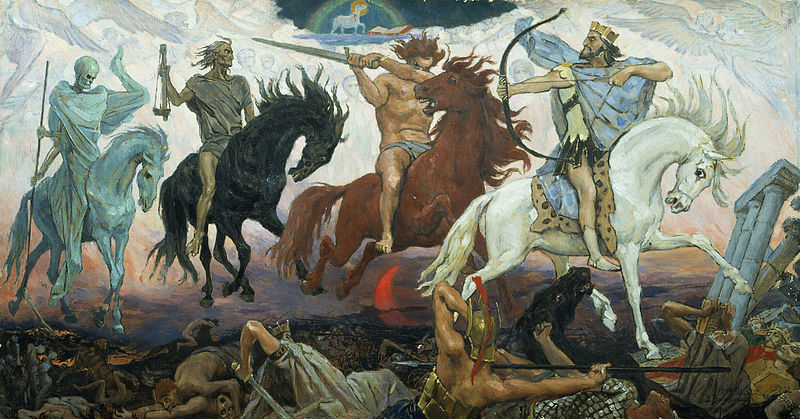
I’m trying to pace my viewing of Sleepy Hollow, but autumn is never long enough for me. In many ways the FOX series exemplifies the current love-hate relationship popular culture has with the Bible. While its dictates and commandments seem tedious and petty, its prophetic view is so very full of possibilities. The millennium has passed but we’re not weary of the apocalypse yet. Even from the pilot episode with its cringing reference to “Revelations” three or four episodes into season one tidied that book title down to the proper singular and have begun to introduce other biblical characters along the way. Since the conceit of the series involves the four horsemen, the Bible is never far from view. Forensics can’t figure out what’s climbing out of the woods of the Hudson valley, but we already know that the demon is Moloch. Many fingers, I trust, have been scampering across keyboards to investigate this biblical figure.

Moloch_the_godMoloch is a “Canaanite” deity. He is also one of the least understood of biblical archenemies. Scant references to making children “pass through the fire” for Moloch have led to widespread assertions of human sacrifice. Others have argued that the passing was just that—kind of like racing your finger through the flame of a candle—to appease the angry god. We don’t know that Moloch was angry. No extended myths about him have survived from antiquity. His name means “king,” an epithet fit for most gods. The vacuum left by the historical records allows imagination to fill in the gaps. Sleepy Hollow does that nicely, and although I haven’t reached the end of season one yet, I have my suspicions that he’ll be showing up for some time to come.

The Bible, viewed so disparagingly because of the ministrations of the likes of Jerry Falwell and Pat Robertson and their intolerant ilk, remains a mystery to many. Let’s face it—it’s a daunting book. Even with onionskin paper, it is a massive undertaking to read it all. Many a spiritual soldier lays slain on the beach-head of Leviticus, and that’s only three books in of the Protestant 66. What Leviticus doesn’t finish, Chronicles will polish off. And yet we have such colorful characters as Asherah, Resheph, Leviathan, and Moloch scattered throughout. Sleepy Hollow has brought back the dead. I regret that I no longer have classes of students to ask about such things, because I too, through the magic of television, am beginning to believe in resurrection again.


Parable of Jericho

It had been there my entire life. I hadn’t really noticed it, but it was a powerful symbol—not in the way that it was intended to be. Given the Teutonic nature of many of my musings, it probably occasions little surprise that much of my ancestry is German. I first heard about the Berlin Wall in German class in junior high school. It was a wall to ensure inequality. Then, while studying in Edinburgh, my wife and I came across a friend from Germany. He was standing outside a window, staring in at a television showing the Berlin Wall coming down. Younger than me, he couldn’t believe that this obstacle that seemed so permanent was finally, and suddenly gone. The next summer when we visited him in Germany, he took us to the former border between east and west. Bridges eerily stopped half-way across rivers. Sudden changes in affluence and outlook once you drove across an invisible line that separated us from them. It was all so surreal.

Photo credit: George Louis, Wikimedia Commons

Photo credit: George Louis, Wikimedia Commons

This week heralds the quarter-century mark on the fall of one of the starkest symbols of the Cold War. People hating people. And as the wall in Berlin came down, walls were about to be erected in other states around the world. Not-so-Great walls intended to keep them from getting to us. We stubbornly refuse to learn from history. Those who have have little patience with those who have not. The borders are all only in our minds. Even as the wealthy elites within our system refuse to admit that crime largely comes from unequal distribution of resources, our own nation looks at others and makes the same tacit refusal to acknowledge the obvious. If wealth is so good, why not share it?

Of course, you can buy a piece of the Berlin Wall. Anything from a fist-sized chunk to several tons. The websites say that the wall is of limited quantity. Buy your piece before it’s all gone. I’m afraid their fears are misplaced. The wall pieces may not come from Berlin, but there will always be pieces available, some day, from the West Bank Barrier, or the Peace Walls of Belfast, or the Green Line in Cyprus, or Operation-Hold-the-Line in the Lone Star State. There are many walls that eventually must tumble. Ironically the prophets of the biblical world declare that every hill will be brought down and every valley lifted up to ease the way back home. Of course, once you arrive at home you naturally lock the door to keep the other out. And now, a quarter century after the embarrassment of Berlin faltered, we continue to erect new follies rather than trying to learn to get along.


Literary Hunter-Gatherers

Perhaps the clearest place my hunter-gatherer roots show is in my tendency to collect. In principle, in Manhattan, I leave coins on the pavement for those less fortunate than myself. This past week on the way to work, I walked past a scattering of pennies on the sidewalk. It physically ached to leave the shiny coins there—one of my recurring dreams is to find a bunch of coins that will lead to the end of my constant fear of want. News of ancient hordes found excite me inordinately. As a child I collected odd things if they came in numbers: stamps and coins and baseball cards go without saying, but also fossils, bottle caps, little HO scale military figurines, even pockets full of punched metal slugs that had obviously fallen from a truck leaving the steel mill just across the river in blessed abundance. My mother asked, not unreasonably, “what do you plan to do with those?” My brothers and I had no answers, but we had found something in profusion. The hunter-gatherer urge was to collect.

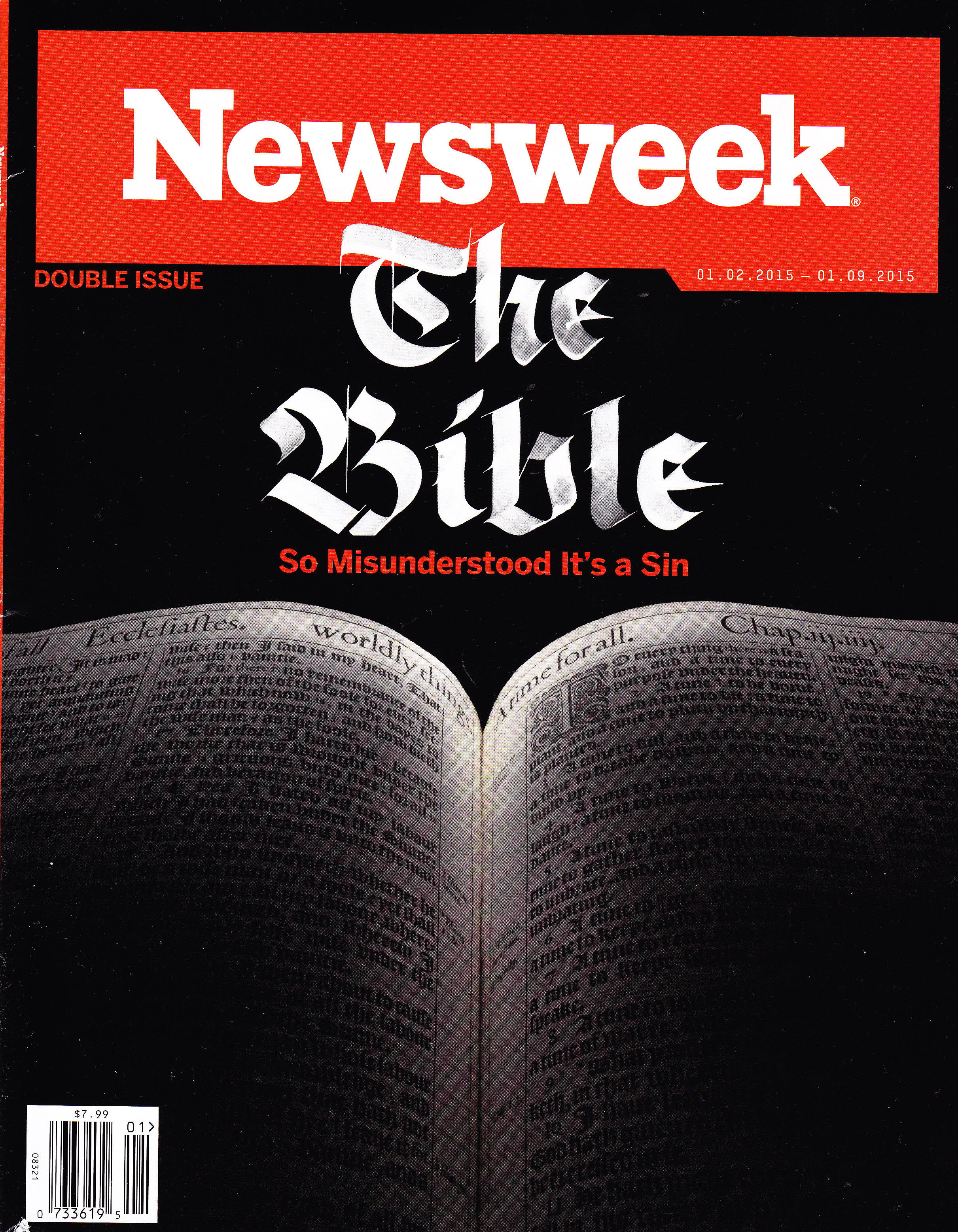
IMG_1642In my teenage years my collecting focused on books. It has remained there ever since. Even in times of penury when I’ve visited the used book store with intent to sell, I’ve always skulked out with more guilt than cash. The Judas Iscariot of the publication world. While sorting through some old files at work, I found a magazine called Bible Editions and Versions. Now, Bibles are books, and I have a fair collection of them, and have even read most of them cover-to-cover. I never knew, however, that Bible collecting was a recognized avocation. And one with a society and magazine. Looking closer, I found the address: www.biblecollectors.org, online home of the International Society of Bible Collectors. Yes, they have a website and the magazine still exists. Porn for sacred writ aficionados. The society has been around since I was two, but it took me half a century to find it.

The Bible is a totem. One colleague describes it as an iconic book. The more secular elements of society simply dismiss it until the loss of the senate makes them scratch their heads and say, “there are people who still take this stuff seriously?” While the numbers may have fallen off a bit, Bibles remain big business. Large print editions may be selling better these days, but the species is hardly endangered. In a world where so much seems uncertain, there is a natural appeal to a book that hasn’t really changed too much for a couple thousand years. Oh, and which claims to have God as its author. As I walk by that pile of pennies on the sidewalk, an almost magnetic force slows me down. I really want to stop and pick them up. I walk on knowing that in a box in my attic I have some real collectors items, in certain segments of society. For the ISBC I might be considered already a wealthy man.


Windmills of My Mind

Stonehenge may be the best known stone circle in the world, but it is by no means the only one. Not too many miles from its more famous cousin lies Avebury, a village that is built on the site of an ancient stone circle and henge. Far to the north, in the Orkney Islands the impressive Ring of Brodgar stands sentinel over Stromness on Mainland. My students were sometimes surprised to learn that the Middle East also has its ancient stone circles. Some speculate that the town of Gilgal in the Hebrew Bible derived its name from such a circle. In the 1920s a series of large stone circles were discovered in what is now the kingdom of Jordan, and these circles are back in the news as archaeologists try to decipher the purpose of these huge rings. Unlike their European relatives, the Jordanian circles are only a few feet high, but they are about 400 meters in diameter. Eleven are known. Clearly not high enough to pen animals, the circles remain a mystery even today.

Ring of Brodgar, Photo credit: Alex Cameron, WikiMedia Commons

Ring of Brodgar, Photo credit: Alex Cameron, WikiMedia Commons

Most ancient circles have uncertain functions. We don’t really know what they were for, but considering the tremendous amount of labor involved at such sites as Stonehenge and Avebury, clearly they were considered extremely important. Likely religious. Circles, of course, are an embodiment of mystery—they have no beginning or ending. Even pi, a necessary figure in circular calculations, seems to be an infinitely non-repeating decimal value. Adding to the questions of the Jordanian circles is the lack of a decisive date. They seem to be a couple of millennia old at least, perhaps significantly older.

Like the lines on the plains of Nazca in Peru, the significance of the circles can only be fully appreciated from the air. People have long left drawings for the gods, it seems. Circles, however, suggest a kind of utility as well as just a pleasing shape. One of the problems of archaeology, however, is that it can’t always tell us why people built unconventional structures. Archaeologists are sometimes left guessing just as much as the rest of us. The stone circles of antiquity are, in their way, humbling feats for us to ponder. If they were religious features of the landscape, their construction in an the neolithic period points to a significance beyond the level of the great medieval cathedrals of Europe. It seems no wonder, then, that religion has been with us ever since, despite its frequently announced demise. What are the Jordanian circles? Religion often steps in to explain what reason cannot. Given what we know, this guess may be the best solution.


Medusa on the Rocks

WreckOfTheMedusaShipwrecks possess a compelling resonance that is difficult to explain. I have seldom been on boats, but from my youngest days I’ve been drawn to the coast. While a student in Boston I made weekend trips to Gloucester to be near the place where ships go out to sea, sitting by the quote from Psalm 107 at the base of the famous fisherman statue. Moby Dick has passed under my eyes many times. While at Nashotah House I was frequently tormented with nightmares of sinking ships. Titanic was a huge movie late in those years, and even before watching it, I dreamed of going unceasingly down. In a used bookstore, Alexander McKee’s Wreck of the Medusa recently caught my attention. Although I’d never heard of the Medusa, the name suggested classic themes, and the shipwreck, I knew, would entail suffering and loss and human drama. I knew I had to take it home with me.

The true story of the wreck is tragic in just about every conceivable context. The year was 1816 and aristocracy was still openly practiced. The Medusa, bound for Africa from France, ran aground and, in echoes of what would happen (at least in some instances) a century in the future, the insufficient number of lifeboats were claimed by the wealthy and powerful. The most tragic aspect, however, was the matter of the raft. The masts were felled and a poorly designed raft was hastily constructed (the Medusa was grounded, not sinking). The greatest number of people were herded onto this raft where the water came up to nearly their waists, as the six boats towed the makeshift craft toward shore. At the instigation of the about-to-be-installed governor of Senegal, those towing the raft dropped the line and rowed themselves to safety. The raft, with no means of propulsion, was left adrift where 135 people of the 150 on board slowly died over the next two weeks. The governor and his party made it safely to their destination.

To me, this election week, it seems that I’ve just read a potent parable. We have public officials in place who, like those safely in the boats, cry out “we abandon them” before the masses of those who expect and deserve their protection. Power, it is said, corrupts, and as we witness the constant increase of political power over the sea of humanity taught that their religion favors the party able to quote the Bible the loudest, we sometimes forget that sinking ships may leave very long memories. In another week we will reach the commemoration of the sinking of the Edmund Fitzgerald. The Essex, the Medusa, and countless other tragically doomed ships may easily slip our minds now being propelled at full speed toward the spending frenzy of Christmas. Meanwhile, I urge us all to take a few November moments to consider where this ship is heading, and if there is yet time to change her course.


Non-Fiction Steampunk

TheVictorianInternetThe histories of Tom Standage approach familiar things from unfamiliar angles. Being interested in Steampunk, and a daily user of the internet who has trouble recalling what life was like before then, I found The Victorian Internet fascinating. Subtitled The Remarkable Story of the Telegraph and the Nineteenth Century’s On-line Pioneers, the story of the wiring of the world did resonate in any almost eerie way to the early days of the world-wide web. Despite my disclaimer, I do recall those days clearly when the only way someone could get in touch with you immediately was the telephone, and you had to be at home for it to work. Prior to the telegraph, news traveled even slower and you could go months without hearing from those closest to you, if they happened to be away. Samuel F. B. Morse knew that first-hand, as Standage tells it. His wife died while he was out of town, and although he rushed back right away upon hearing, she had been buried before he reached her. Such was life when news arrived only by letter. Morse was among those who invented the telegraph, a device that made the world realize that yes, it was possible to send information to distant places almost instantly. It soon become a wired world.

Standage is also more circumspect than some writers who declare, with breathless awe, that some new device will cure the world’s ills. Showing how the telegraph generated much the same hyperbole as the internet (that peace would reign now that people could communicate instantly, that technology had brought a miraculous rapprochement, etc.) he notes that people remained people. Wars continued—intensified, in fact, into World War One where technology was devoted to destruction. People had always been able to kill each other. Now they could do it faster, and in more hideous ways. Still, there’s no denying that once the idea of instant communication caught on that we would continue to develop it rapidly. You never need be away from a network that covers much of the developed world and you can talk on your phone from deep under the Hudson River to the top of the Empire State Building. You can order a pizza from anywhere.

Ironically, Morse dedicated part of his earnings to endow a lectureship concerning how science related to the Bible. It was clear that technology had achieved the impossible (okay, well, the improbable) and yet, Victorian society still relied on the truths contained in Scripture. The telegraph, which began with the words, “What hath God wrought,” ended with the attempt to figure out how the Bible fit into all this. Just because humans had crossed the great barriers of oceans with electric cables didn’t mean the Almighty was out of a job. Even today God can be found on the internet. Along with many other choices of distraction and business. God is not so much dead as commodified. The difference between Morse’s day and ours was that then they knew that the Bible impacted daily life. It continues to do so today, but we’ve become too sophisticated to give it much of a nod. We might be well served, however, to look back once in a while as well as to look forward. We might be surprised at how little things have changed.


Devil’s Food

One figure among the standard repertoire of Halloween characters has never appeared on my list of favorite monsters. I suppose it may be because as a child I fervently believed there was a devil that he never made my A-list. Satan was real, according to my church, in some almost biological, corporeal form. Even as a youngster I knew vampires, werewolves, Frankenstein’s monster, and the rest, really didn’t exist (even after I hid under my covers all night once, after putting my head down on a bat that had flown into my bedroom). The devil was, however, biblical. And I never felt tempted to dress up with red horns and pointy tail, carrying a plastic pitchfork. Halloween was always among my favorite holidays, but it was for pretend monsters and ghosts (which might perhaps be real, but which were not diabolical, according to my childhood economy of the spiritual world). The consequences of devil imitation seemed eternal, and even today, in the rational light of the twenty-first century, I can still be given pause even though I know the concept is a Zoroastrian one that morphed into early Christianity’s need for a kind of anti-Christ.

IMG_0276 copy

There are many who still believe in a real devil. Some branches of Christianity (and Islam) teach that a literal devil lurks about in our world. In western culture he is a figure instantly recognizable, although there are differences of opinion in his anti-iconography. Last weekend I visited a fine little restaurant in a New Jersey town that has a reputation for being haunted (the town, not the restaurant). It was a seat-yourself day and the table my wife and I ended up selecting had shellacked cards on top as part of the decoration. There in front of me was the devil. I pondered this. The cards, all captioned in Spanish, had mundane subjects: an umbrella, a musician, plants, a spider (okay, so that last one’s a little scary too), but only one supernatural figure. Perhaps the entire deck, had I seen it, might have had more. No doubt, for a world that postulates a good God, a devil covers, well, a host of evils.

The word “devil” is somewhat loosely applied these days. New Jersey has its own cryptid called the Jersey Devil, which has led to iconic names for sports teams and perhaps a public official or two. But even in the aftermath of 9/11 there were those who seriously postulated seeing the face of the devil in the tumbling debris of the twin towers. For a character of the religious imagination, the devil has managed to impress deeply on the human psyche. I know in my rational mind that I should simply dismiss all of this and get on with the business of enjoying the monsters that will show up at my door later this week. Nevertheless, when the waiter comes out with our food, I look down at the table and decide to pass on the hot sauce for today, just in case.


The Fate of Goddesses

The goddesses Asherah and Astarte are sometimes confused, even by experts. Astarte, also known as Ashtart, Ashtarte, Athtart, and Astaroth, among other names, is the lesser attested of the two among the Ugaritic texts. Indeed, to read some accounts of the latter goddess, she becomes dangerously close to being labelled generic, the sort of all-purpose female deity embodying love and war, and sometimes horses. In the Bible Astarte lived on to become the bad-girl of Canaanite goddesses. Her corrupting ways were a conscious danger to the orthodox (as much as that is read back into the texts). She became, over time, literally demonized. It seems that originally she, like most goddesses, had a soft spot for humans. Since she wasn’t the one true (male) God, however, she had to be made evil. It is an unfortunate pattern as old as monotheism. One of my original interests in studying Asherah (not Astarte) was precisely that—the obviously benevolent divine female seems to have been chucked wholesale when the divine masculine walked into the room. Why? Well, many explanations and excuses have been given, but whatever the ultimate cause, Astarte lingered on.

IMG_1620

In a local pharmacy the other day, I was looking over the Halloween tchotchkes. Amid the usual assortment of pumpkins, skeletons, and ghosts, I found bottle labels reading “Ashtaroth Demon Essence.” Although I’ve spent a good deal of my life cloistered in academia, I was not surprised by this. I know that in popular culture the goddesses of antiquity live on as supernatural powers, sometimes good, sometimes evil. Astarte, once depicted as the friend to at least some of the humans devoted to her, is now commonly a demonic force. The image on the bottle label, however, was most unflattering. I know, this is just kid’s stuff. Still, as I stood there among last-minute costume seekers and distracted parents, I knew that I was witnessing the influence of ancient religions in an unexpected way. Did any of the goddesses survive as a force for good? How could they when the only god was male?

We know very little about ancient Astarte beyond the fact that she took away some of the luster of the omnipotent (as now conceived) deity of the Bible. A jealous God, as Holy Writ readily admits, visiting iniquity down to the third and fourth generation. (That might explain a lot.) Prior to monotheism benevolence and malevolence could arise from goddesses as well as gods. Compassion, it was believed, was largely a feminine trait. Monotheism decided for the jealous male instead. We won’t find a bottle label for the Almighty, although the accouterment of the arch-enemy are everywhere evident this time of year. And speaking of the diabolical, the Ashtaroth Demon Essence, I noted, was available at a steep discount.