Darkest Night

One of the more endearing of human weaknesses is our fear of the dark. For those who live north of the equator, we have just experienced our longest night. It is no coincidence that the religious holidays that occur in winter feature light. In our helplessness against the encroaching darkness, we light our Christmas trees and Hanukkah candles, adding just a bit more light to the world. Among the oldest of all holidays is the day that marks the birth of light’s resurrection. One need not be a pagan to appreciate the solstice and the inherent hope it bears for the return of the sun.

In this season we often see signs and hear laments about the absence of Christ from Christmas. Jesus was not born in winter, according to our best reckoning. One of the carols that drives me mad with distraction is “In the Bleak Midwinter” with its maudlin description of “snow on snow on snow”—clearly written by someone with limited experience of winters in Israel. Christmas falls near the solstice because people have from earliest memory recognized the sacredness of this season. When Jesus was born nobody knew he was to become so famous as to have one of the most popular Facebook pages ever, and so nobody thought to write it down. Even the Gospels the disciples never give a rousing chorus of “Happy Birthday” while on the dusty highway. What we’re celebrating is that night will not reign forever.

Having evolved to favor our eyesight, but lacking the standard mammalian nocturnal nature, we feel vulnerable in the dark. Even if Jesus hadn’t been born we’d be celebrating at this time of year. It might have been the re-living of the mythic Golden Age of humanity under Saturn that the Romans called Saturnalia, or it might have been the rejoicing over the resurrection of the beloved god Balder among the Norse. We might have had to wait until the days were noticeably longer to fete the goddess Brigid with the Celts at Imbolc, but we would have marked the occasion. Instead of cursing the pagan darkness, as the saying goes, we would light our feeble candles as a sign of hope. The reason for the season is the fact that the longest night is over and once more our days will slowly return light to our lives.

Here comes the sun


Legislating Reality

The follies that plague humankind come in an almost cyclical form. As old Ecclesiastes wrote, “there is nothing new under the sun.” I just finished D. Graham Burnett’s Trying Leviathan: The Nineteen-Century New York Court Case That Put the Whale on Trial and Challenged the Order of Nature. Other than the fact that the subtitle accounts for a good portion of the book, this account shows just how little we’ve progressed. At the heart of the book is Maurice v. Judd, a New York case of 1818 in which a whale merchant contested an assessor’s fee on “fish oil” by claiming a whale was not a fish. In “trial of the century” style, star witnesses were called in, bringing science to the docket. It was known, even in these pre-Origin of Species days, that a whale was a mammal, but what soon became clear as Burnett laid out the facts of the case was that the Bible held sway. Genesis divides the classes of nature into beasts, birds, and fish. This simplistic taxonomy was held by many in the nineteenth century to be a sacred statement of fact. If whales lived in the water, they were fish. The fact that they nurse their young, who are born live, and that they share the skeletal template of land creatures and have warm blood, and breathe through lungs, simply did not matter. If Genesis says fish, fish it is.

My mind immediately jumped ahead just over a century to the Scopes Trial. Once again, science was bent over the knee of Genesis and poised for a paddlin’. And the challenges still have not stopped. Call it Intelligent Design, or Answers in Genesis—anything but mythology—and it will keep coming back for more. Already, in 1818, lawyers were arguing that science could be decided in the courtroom. Facts only muddy the issue. If Genesis weren’t enough, Jonah’s “great fish” was called a “whale” in the Gospels, so, QED. There is no debating Bible science. Just to prove the case, we’ll bring it to trial so that twelve people with no science training can decide the issue based on rhetoric. Disciples of dogma. No surprise that the jury found the whale to be a fish. There’s no stopping a true believer.

My wife gave me this book because of my enormous fondness for Moby Dick. In both books the discussion of killing and butchering whales bothers me immensely, but I know that Melville is running after a beast of a metaphor and that whale-boat skimming across the surface of the ocean has lanced a far greater prey than a white whale. The creationists, however, fail to see the beauty of mythic images. Anyone who’s even watched a court drama on television knows that the truth is not what courts seek. Courts seek to convince a jury, whether a person is guilty or not. No matter if it’s a while whale or a white bronco involved. Truth is much more subtle and fragile. Truth can be discerned by facts. But the Bible is a heavy book, and when dropped from a great enough height, can fracture even the laws of nature. Like Ahab, the creationists are never truly gone forever.


And Lowe

Hate is harder to muster for people just like us. I mean, if they live like us and look like us, what grounds do we have to distrust and fear them? This appears to be one of the premises behind the TLC show “All-American Muslim.” Many people know Muslims without knowing it and fear them without being aware of whom they fear. With this insidious kind of fear and hatred, religion must be involved.

Over the weekend, CNN online ran an article noting how Lowe’s is pulling advertising from the program. It seems that conservative Christian outcry is rising like the children of Israel in Egypt; the Muslims aren’t shown as bad guys—they’re like your next-door neighbor! Fear of takeovers has long been on the Neo-conservative agenda. If Romney is elected we will by overrun by Mormons. If we sleep, we’ll awake to Muslim neighbors. And we certainly can’t expect to all get along. If it weren’t for the media, we would probably never even know they held a different religion.

I’ve lived lots of places. With the exception of Grove City College and Nashotah House, I never once was aware of the religion (if any) of my neighbors. If they are civil and respect my right to believe what I will, they are entitled to the same. Religious supersessionism and maybe a pinch of jealousy play into this attitude of keeping others a minority. Is it because Muslims and Mormons are more effective at winning converts? The modern evangelicals have been relying on political bullying to get their way. Why not learn to appreciate your neighbor’s religion instead?

Religious freedom is a two-edged sword. Many of those who are worried now were quite happy when they were in the clear majority. When the lines get blurry the trigger finger gets itchy. Come on, Lowe’s! Educating ourselves about other religions is the best home-building project out there.


R-e-s-p-e-c-t A-l-l

Every great once in a while a politician makes a statement consonant with the principles of the nation. Over the weekend Robert Menendez, one of New Jersey’s U.S. senators, make a public announcement of his support for the Respect for Marriage Act. Admitting that 15 years ago he voted for the Defense of Marriage Act, which would not recognize homosexual unions, Menendez has searched his conscience (a rare commodity among elected officials) and has come to realize this “Defense” Act for what it is: legislated immorality. It is immoral for a government to deny rights to committed couples based on the gender of either party. Gender is a social construct that may or may not align with sex—even the concept of two completely distinct sexes is now seriously questioned by biologists. The old measuring rod of ability to procreate together just does not match reality: infertile couples are granted the same rights as other married couples, so why not same “gender” couples? As Americans we often like to vote without thinking too deeply about the topic.

The value of procreation is obvious. Birds do it. Bees do it. Even educated fleas do it. (Cole Porter knew what he was writing about.) When did we become so fixated on this one aspect of sexuality that we let it become the sole purpose of sexual behavior? Many religions recognize sexuality for what it is, a form of human interaction. The end result may be a new child, but it is not so as the result of the vast majority of couplings. Christianity (in some quarters) early on took a dim view of sex, and soon began to relegate it to procreational necessity only. Even then you were supposed to try hard not to enjoy it. The Catholic Church even relegates the biblical siblings of Jesus to the role of step-siblings; children of Joseph from a prior marriage, despite what the Bible says. Such distortion of nature could only come at the interference of religion. And as long as we’re busy regulating sex, let’s add a few statements about the only appropriate outlets for that committed relationship. Never mind who gets hurt. It’s all gonna burn.

I, for one, salute Senator Menendez for his willingness to open his mind. Too often the “government for the people” is excised from Lincoln’s Gettysburg address. When did we the people pass to the government the right to decide whom we might love? The agenda set by the Religious Right is religious wrong, and too many tax-paying citizens are the heirs of its paranoia. It is time the government began serving the entire electorate rather than just the Southern Baptists and their friends. Nobody is attempting to regulate their sex lives, as Ted Haggard, Jimmy Swaggart, and Newt Gingrich will gladly attest. Keeping the zipper firmly up is not the strong suit of televangelists or politicians. If we’re going to have double standards here, let’s at least open the game to same-sex marriages. Those who feel threatened by the fair treatment of others need to gaze long in the mirror and ask why.


‘Tis the Season

A news story last week related how a traditional park area in Santa Monica, California had been “taken over” by atheists who wanted equal time with traditional Christmas displays. The park, which houses 21 display areas generally populated by nativity scenes of one sort or another, had so many requests for space this year that a lottery was instituted—a lottery that the atheist groups won. Claiming 18 of the spaces, the atheists groups have vastly reduced the visibility of traditional Bethlehem mythology. Does anybody else feel a culture war coming on?

The whole “Keep Christ in Christmas” campaign that has been fermenting over the past decade or so has made many Christians paranoid. Society has forgotten, they claim, whose birthday we’re celebrating. A plain view of the facts, however, calls this assertion into question. No one bothered to record the date of Jesus’ birth. The stories about it, in the Gospels of Matthew and Luke, were written after a lifetime of reflection by people who were not eyewitnesses to any of the events. Historians of the era mention no celestial anomalies and there are no records of crazy old Herod killing babies among his own people. (His domestic affairs, however, may be quite another story.) What is absolutely clear is that the stories have grown with the telling. Many a child can tell you the names of the three wise men. Luke doesn’t even place them at the first Christmas, does not name them, and does not say there were three. No records of Zoroastrian migrations to Israel verify this story either.

The true loss is the loss of story. We live in a society that abuses the words “just” and “only.” That’s just a myth. That’s only a story. Ancient people—from the time of Jesus—appreciated the truths a story conveys. Consider the parables of Jesus. They cite not sources neither do they seek verification. They are only stories. They are also cited as the basis of many church teachings. Even atheists can be taught to appreciate the value of stories. Who could object to a myth advocating peace, harmony, and goodwill? Even if it’s just a myth.

Santa Claus might come to Santa Monica’s rescue. Yes, diehard fans of historical veracity will say there was a saint called Nicholas. We all agree that he didn’t wear red velvet trimmed in white and that he didn’t possess magical, northern latitude cervid stock. Even before the days of forced air heat he didn’t slither down every chimney in the world in one night. Few would dispute, however, the value of giving gifts of good will. Just ask any member of the Salvation Army who appear at this season every year. Instead of arguing about whom to exclude, why don’t we invite everyone to our celebration? Jesus, angels, Santa, Jack Frost, Heat Miser, and Christopher Hitchens—what a party this could turn out to be!

Is there no room in the manger?


Paradise Re-Lost

It is through the astute eye of my colleague Deane Galbraith that I came to know of my most recent reading project, Paradise Lust: Searching for the Garden of Eden by Brook Wilensky-Lanford. BWL (since the author’s name is a mouthful and since it took me four hours to get home tonight (at a distance of less than 30 miles) I’ll abbreviate her title. Being a fellow New Jerseyan, I’m sure BWL will understand) surveys various attempts that have been made over the past century-and-change to try to locate the Garden of Eden. Spurred on by the discovery that her own educated, rational great-uncle had also wondered about the mythical location of our mythical ancestors, she sketches various attempts to find Eden. Tracing a course that often crosses paths with my own academic background, BWL notes the pervasive—one might say undying—belief that once upon a time in a land far away there was a garden paradise.

Quite apart from the obviously folkloristic, and Mesopotamian, origin of the creation story, BWL demonstrates that the unifying factor behind the search for Eden is the four rivers mentioned in Genesis. The Tigris and Euphrates should be no-brainers, and no-brainer is a word that frequently comes to mind when otherwise intelligent people sincerely suggest Eden lies beneath the North Pole, or in Ohio, or Florida. Clearly this story left only psychological traces on the impressionable. Far more mysterious are the Pishon and the Gihon. The fact that these rivers have never been found (never existed) has fueled the economy of adventurers and bibliophiles for well over a century. The fact that people buy BWL’s book underscores the point. The end result is that any confluence of four rivers could potentially be Eden. What is lost is the biblical worldview.

The four rivers of Genesis 2 flow to the four points of the compass to water the entire earth since all ancient people seemed to have believed they lived in the middle of everything. The Genesis writer takes for granted that we’ve heard of them, and who, among the sophisticated, wants to admit otherwise? Since the story never happened, no physical evidence should be expected. And that’s what all of BWL’s explorers find. Nothing. Of course, if you want to run for President you’d better claim to believe in Eden, for plenty of Americans, despite our educational system, do. Many an ape is wiser. So if you want to find Eden, locate the center of the world. Given the traffic tonight, it surely must be New York City. If you’re going to look for it, you’ll want to take a book to read while the rivers of cars stop flowing. I’d suggest Brook Wilensky-Lanford’s Paradise Lust.


Crimes and Misogynies

Mill Creek Entertainment has, through no fault of its own, accounted for many an idle hour of my weekends. Assiduously gathering and collating public domain movies, mostly of dubious quality, into sets of fifty movies per box, sold at a rate that probably isn’t actually cheap since most of the movies are available free online, Mill Creek panders to the connoisseur of B, C, D, or even lower, movies. Sometimes, however, a good one slips through. That’s how I discovered Bluebeard (1944). One of John Carradine’s many movies, this version of the seventeenth-century tale of a murderous husband is set in Paris sometime in the not-too-distant past, Gaston Morel is a demented puppeteer who murders his models because of a religious incident. In the final confession scene Morel explains how he, as a starving artist, took a homeless girl to his studio to nurse her back to health. As he sketched her, he realized she reminded him of the Maid of Orleans—Joan of Arc. After her recovery, she turned to a life of debauchery, driving Morel insane with rage. He thus comes to kill his models due to his tattered faith (and fragile psychology).

Despite some typical overacting and strange plot twists (why would a Paris police inspector take his American girlfriend to examine evidence to solve a crime about which he is clueless? Was he planning to run for president later?), the movie manages to provide an intelligent number of turns in the plot to keep viewers interested to the end. The concept of a killer deranged by an idealistic fiction of a female victim is somewhat frightening because it continues to this day. Long before Eve bit the fruit, ancient Mesopotamians feared the demonic female of the night who later came to be called Lilith. When the unruly female entered Judeo-Christian tradition, however, she became the target of the hate and fears of too many men who had their own ideas (backed by their own religions) of how women should act.

Witch-hunts (of all varieties) have their basis in religion-fueled misogynies. Religious texts, written mostly by men, set the standard of female behavior. Those who fail to live up to it must be enemies of the world order of masculine ideals. They are the heretics, the expendable, the feminine. As someone raised by a woman without benefit of her husband, I have never had any doubts that women were just as, if not more, capable of making it in the world as men. Yet even then, in the 60’s, many women believed equal rights with men to be immoral because of the magisterial pronouncements of the male Bible. Remember, God for the Bible is a bearded man. And upon close inspection, at times at least, one may discern in that beard a touch of blue.

Parable


Bookless in Manhattan

I suppose the fact that I still harbor an inordinate love of dinosaurs, geology, ancient civilizations, and liberal politics should prepare me for the demise of books. The short road to extinction lies along the path of my interests. Except, of course, Bible. There must be a portrait of a very old, decrepit scroll somewhere in someone’s attic. The culture of books, apart from the library, is a fairly recent one in human history. Even the concept of stores dedicated to books is one that has had a very tenuous lifespan. Now that Borders is gone, I’m sometimes reduced to skulking about Barnes and Noble to find my quarry. So on my lunchtime yesterday I decided to visit the Barnes and Noble on Fifth Avenue and then swing by the Gotham Book Mart. I had heard of the Book Mart before—the store that hosted visits by Truman Capote, James Joyce, Arthur Miller and many, many more luminaries. I thought it would be a good antidote to B&N, and besides, the address is just blocks from my office.

Barnes and Noble is the last resort of a reading man. I don’t have much time for holiday shopping these days, so I figured I’d nip in with my list (nothing too obscure; in fact, I’d seen the titles in an indie bookstore over the weekend, but my family was with me) and be back out in a jiff. Fifth Avenue. Midtown Manhattan. The choice of books was atrocious. Purely lowest common denominator selection. It is symptomatic of America’s love affair with the ordinary, the lower-quality-if-higher-quantity mentality. Cosco of the intellect. Barnes and Noble is the only show in town and they don’t have the selection or panache of many a much smaller Borders. I had to walk out empty handed. Well, at least there was the Gotham Book Mart to look forward to!

I suppose my first clue should’ve been the fact that the photo on Google maps showed a storefront reading “Food World” at the address which still maintained the bookstore name. I thought maybe the Book Mart was behind it or something. No Gotham Book Mart. Back at the office, chewing a dry peanut butter sandwich, I stared crestfallen at the computer screen. Wikipedia informed me that the famed Gotham Book Mart closed four years ago. Rising rents in Manhattan and the very Barnes and Noble I’d just visited drove it out of business. e e cummings, George Gerschwin, Jacqueline Kennedy Onassis, and J. D. Salinger passed their hours here. Katharine Hepburn, Woody Allen, and Charlie Chaplin were no strangers here. When the remaining stock—valued at 3 million dollars—came up for auction, it was purchased for $400,000. By the landlords. So ended an era.

From monks hunched over their vellum by the sallow light of candles to the modern dreamer in the glow of her or his laptop screen, we have brought writing an unimaginable distance. Unfortunately, many of the landmarks along the way have vanished without the blink of an entrepreneurial eye.


Fecit potentiam

Yesterday at Princeton’s annual seasonal choral concert, the program consisted of Bach. The first piece was a Magnificat, a piece that, in prose form, I quickly memorized at Nashotah House. With our daily double dose of chapel services, liturgical standbys such as the Magnificat quickly became reflex recitations, made with little thought beyond getting on to the next piece. It occurred to me as I listened to it at leisure, the hopes of poor Mary haven’t really materialized after these 2000 plus years. After a couple of millennia, perhaps it is time for a state of the theology assessment.

Despite the veneration of Mary in the liturgical branches of Christianity, the collective handmaids of the Lord have made slow progress in being integrated fully into church leadership. Only with the last century, and fairly late therein, did many Protestant denominations finally recognize that Mary’s gender might have something to teach the men. Paul, for one, would have had none of it. Even today the Roman Catholic Church stalwartly refuses to consider female priesthood. Perhaps Mary’s prayer should be uttered yet again within its walls?

At the section labeled “fecit potentiam,” however, I noticed further lack of fulfillment. “God has shown strength with God’s arm,” the program translates, “God has scattered the proud.” The hopes expressed in the next several verses have been silenced beneath the greed of an economic system with no responsibility. “God has deposed the mighty from their seats.” When did that happen? Those of the Occupy movement who’ve received a face of pepper spray might beg to differ. “God has filled the hungry with good things, and the rich God has sent away empty.” Sent away to their summerhouses, their mansions, and their penthouse apartments? Away from the working class who oil the gears of their massive machines. No, it seems that the Magnificat has not fared so well at predicting the new era to be brought in by a special child.

Of course, Luke’s song of Mary is based on Hannah’s song at becoming the mother of Samuel from the Hebrew Bible. Samuel was the great judge and prophet who saw to the law and order in the land. Strangely, however, the Bible manages to confuse Samuel with his erstwhile enemy Saul, conflating their birth accounts. Isn’t it just like the Bible to confuse the oppressed with the oppressor? The strength shown with the divine arm, the wealthy inform us, is the strength they wield. After all, god and gold differ by only one letter.


Name Recognition

Some two and a half years ago when my brother-in-law Neal Stephenson suggested I start a blog (primarily for the podcasts to which I intend to return), he asked me what I would call such a site. “Sects and Violence in the Ancient World,” was my attempt at a witty, non-committal riposte. Since I was unemployed at the time and still hoping some deus ex machina might put me back into a full-time university post, complete with an Ancient Near Eastern religions component, the title seemed apt. I determined that I would not exploit my relationship to a best-seller author since I wanted to earn my own readership. Sects sells, does they not? Since then I’ve had a number of curious readers wonder why I tend to address modern religious issues, unlike my title suggests. The reason goes back to what I want to be when I grow up.

How many eighteen-year olds really know what their lives will hold in store? Our society asks them to select majors and pick a career path far too young. I had visions of clergyhood in my head so I majored in religion. Like many children of alcoholics, I tend to be addictive in my devotion, so after completing a Master’s in religion, I had to have just one more degree—then I’ll stop—and a doctorate in religion finished ossifying my career track. Having been weaned on the Bible, I’d stuck with it for three degrees and found that during that time the job market had evaporated around me. As I watched society from the sidelines, I saw so many people at the place I had started out, staring wistfully at the Bible, looking for answers. Uncritically, magically expecting a miracle. Just like Oral Roberts said. Once my teaching career had been derailed by misguided Fundamentalists, I realized my interests were much more in the effect religion has on people. It was too late, however, to go back to school.

My way of dealing with any dilemma is to parse its history. That’s why I studied pre-biblical religions along the way to my doctorate in Bible. A couple of things had become clear along the way: religions are very fragile and easily splinter into sects. And most of the large-scale violence in the history of the world has a religious basis. (Probably much of the small-scale violence does as well.) Its origins are literally more ancient than history. What is religion in today’s world if not the direct descendent of sects and violence in the ancient world? And since my idiosyncratic musings have passed the 200K hit mark, it seemed all right to acknowledge the role my brother-in-law has played in all this. So, in good academic fashion, I’d like to acknowledge the suggestions and support of Neal Stephenson in starting this blog, but any errors are, of course, my own.


Seedless

“And Onan knew that the seed should not be his; and it came to pass, when he went in unto his brother’s wife, that he spilled it on the ground, lest that he should give seed to his brother” (Genesis 38.9). During the conference last week the Routledge booth stood across from that of an evangelical publisher. One of the realities of conference life from the point-of-view of an exhibitor is over-exposure to what is fresh, clever, or cute upon first blush. Harper One’s continuous loop video, however, demonstrated that N. T. Wright, Desmond Tutu, and Bart Ehrman can sound repetitive, and even Colbert loses his punch when you hear the jokes for the twelfth time. The evangelical publisher across the way, however, had a large cartoon drawing that mapped out the believer’s life, book-by-book through the Bible. As probably anticipated, I can’t get that silly cartoon out of my head. After four days of exposure, I finally succumbed to asking for a flier. It was the usual evangelical fare, and the warning against adultery on back used the traditional term “seed” for “semen.” I found myself pondering the implications.

Since the King James Version shares the pre-scientific worldview of the ancients, the term “seed” has been preserved in the literalist mind. Even Alice Cooper uses it in his lyrics (his father was, after all, a preacher). Well, since the Bible is Holy Writ, it seems that semen has been transubstantiated into seed. The seed, as biologists tell us, contains all the genetic material to grow a new plant. Just add water, warmth, and a little light. Presto! Life sprouts. Since evangelicals tend to be fluent in biblicalese, even today men—the default, fully equipped model of humanity—come complete with abundant seeds. Agway should be so lucky. It feels, however, as if half of the equation is missing. If the Bible-writers had raised chickens, perhaps men would be full of eggs.

Thinking life cannot exist without metaphors. Metaphors are very dangerous in the hands of religion where they get taken literally. Too easily imagery slips into facticity. The male seed demonstrates a diabolical gospel truth: men alone provide the next generation. Women, as usual, are largely superfluous. The biblical male dominates the biblical female. The man owns the wife and must be enticed to share his precious seed. If conception fails, it is inevitably her fault. The metaphor has become a thumb-sized rod. Let us speak plainly here. The Bible has betrayed womankind. Judas Immaculate. In ancient times this was accepted fact. The microscope and biology should have buried this seedy metaphor centuries ago. But once again, the unthinking promulgation of a biblical trope survives at the expense of women. I have no seeds. No man since Adam has.

An obscene photograph?


Lost Knowledge

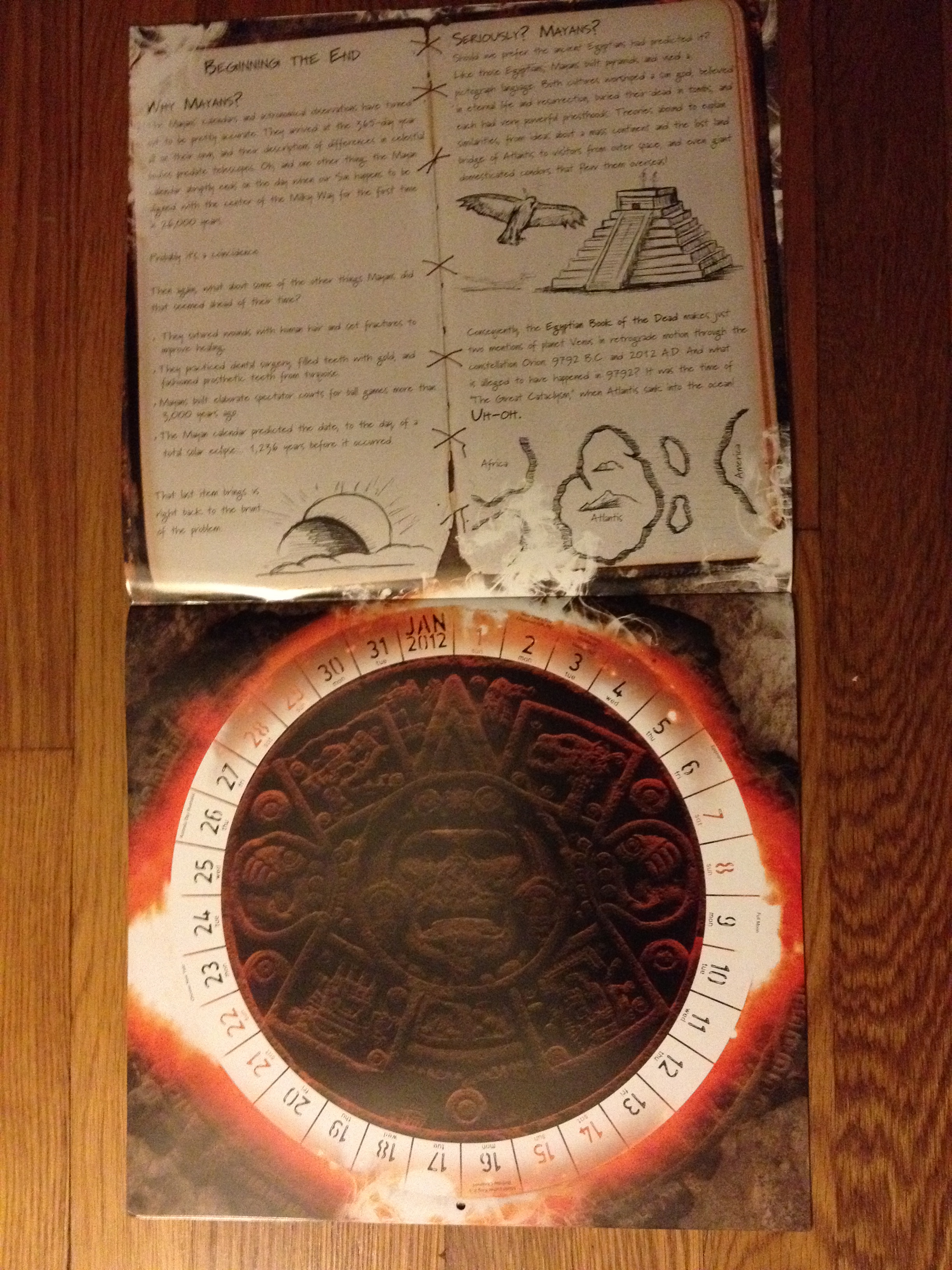
While an actual apocalypse for many turkeys ensued on Thursday, Fox News announced that a second reference to the Mayan apocalypse has been “admitted” by Mexican authorities. So I guess the world will end next year after all. And it figures, I just finally got a full-time job. For some reason, for all of our modern technology and scientific knowledge, many people still fear ancient “prophecies.” This remains true after countless failed apocalypses, two of them just this year proposed by Harold Camping in the name of the Almighty. People who trust the science of their cell phones—which, from any trip to the airport or bus station proves, humans are incapable of surviving without—nevertheless fear the “lost knowledge” of the ancients who believed myths were the most parsimonious means of comprehending a cold and uncaring universe. Yes, I’ll trust my entire life, finances, travel plans, social calendar, to a plastic box barely the size of a credit card. But if the Mayans said the world was going to end… these are the Mayans, after all! The Mayans!

Never mind that we know little about this antique people; we have had predicted ends to the universe from disaffected visionaries and disgruntled prophets ever since the Zoroastrians suggested this might not go on forever. And now that two predictions appear to coincide, it looks like its time to sell some stocks, cash in some IRAs and party like it’s 1999. When 2000 came in with its baleful symmetry, as some saw it, with events two millennia earlier, not many were dissuaded from the concept that never emerges. Doesn’t the book of 2 Peter state that the universe is reserved for a fiery destruction? Perhaps the Mayans had access to Holy Writ?

The fact is that most cultures concoct origin myths, stories of beginnings. The way the mind works, it is almost a necessary corollary to construct myths of the end as well. And somehow we trust that arcane knowledge on such matters is more accurate than the scientific scenario that, given the limited longevity of any single species, no humans are likely to be present when old Sol balloons out to be a red giant. Far more spectacular to suggest some ancient sage or savage saw it coming and grow anxious with the waiting. Strangely, many people seem ready to discard all the progress, the monuments, the essence of our humanity for the sake of ancient predictions. 2013 does not seem so far away. Many of us are planning to be here, even if they find an entire library of Mayan predictions. Perhaps the truest prophecy of all is that we, as humans, make our own future no matter what other humans have said in the past.


The Shawshank Reversal

You go away for a few days and look what happens to the neighborhood. With the Bible scholars safely out of town, a South Carolina woman used two hollowed out Bibles to smuggle weapons and drugs to a friend in prison. According to a story in the New Jersey Star-Ledger, the eviscerated Bibles contained knives, a cell phone, ecstasy and cocaine. Bibles often act as metaphors, and in this case the image of trouble coming in the form of a sacred book is poignant. No one thinks to suspect a Bible (well, Stephen King did), so conservative and clean-cut. What lies inside, however, is seldom closely examined. What is found there often defies biblical scholars and prison guards.

The Bible, as an icon, is spotless in the public eye. You can place a hand atop its venerable cover and, magically, you won’t be able to lie. You can heft it aloft and demons will flee in fright. You can even use it to measure chastity. (Back in my college there was a four-feet-six-inches rule. Men in women’s dorm rooms during brief, allotted visiting hours could sit next to their sweeties, but they had to keep all four feet on the ground and remain six inches apart—a distance, we were told—that could be filled by placing a Bible between the lovers. And the door had to be kept open, just in case.) The book has become the deity. Placing God between the desires of lovers is a metaphor ripe for the picking.

Few can forget the scene in The Shawshank Redemption when Warden Norton opens Andy Dufresne’s Bible to find the rock-hammer-shaped hole cut out of the pages. The Bible had set Dufresne free. And it did so unwittingly. The Bible’s message, in the film, was intended to keep prisoners in a state of submission, but human interest brought the Bible much closer to its noble purpose of setting the prisoner free. The Bible has been a privileged book throughout American history, and even before. In England it used to be chained to the lecterns of churches to prevent it from being privately studied. Its great power, however, lays not within the manipulation it excuses, but in the human spirit that finds liberation through, and sometimes despite, the famous black book.


The Self-Importance of Nothingness

Not that I’m aspiring to Sartre, but being in the presence of so many academics brings out the natural existentialist in me. Religion is a funny field to engage in higher education. We are studying an intangible. Many would say an illusion. If we are too bold about what we find, no shaking hand will deign to sign the paycheck, and so we carry on, innocuous, unperturbed, self-assured. At conferences like this I sometimes sit back and watch others walk by. Having entered the academic world from humble, uneducated beginnings, I have no pretensions about what I do. Or where I might go. Yet I hear idolatrous whispers following those who’ve made a name for themselves. God-struck grad students with that theophanic gaze leveled at the man (sometimes woman) whose name graces the cover of so many books. God’s very representative here on earth. Incarnate in this very room.

I entered religious studies because I arrived at college knowing nothing. An exasperated freshman advisor finally insisted I chose a major. I said I didn’t know. “But what are you interested in?” To me religion wasn’t as much an interest as an imperative. Some churches raise their young to believe that all else is vanity. Every moment should be spent seeking that elusive deity, the one whose very words the clergy speak. I fell into religious studies. I fell far. Reading the Bible multiple times as a teen, classes weren’t that challenging. Ideas were. There comes a time, undefined so as not to be pinpointed, when an invisible line is crossed. Then, when you look back, everything has changed. A dark secret has been planted deep in your psyche and you realize that you are a religion scholar. There is no turning back.

No Einsteins exist in the world of the academic study of religion, but gods abound. Watching colleagues who’ve achieved the dream, who’ve been tenured and pampered and paid well to deign to share their lofty thoughts with the rest of us, I feel like I’m watching shadow puppets against a blank wall. When will they get God into the laboratory and switch on their fancy, humming machines, and the one that goes “ping,” to uncover the truth of the universe? How much lower can we mere mortals stoop? It often feels like I missed that crucial first day of school. Having peered long over the ledge, however, I realize that we are all in this together. Has anyone ever bothered to count the homeless in San Francisco? Has anyone ever bothered to look into their eyes? And that guy with high name recognition? I’ll ask him to write a book. And I will fawn and coo. Why? Because I know the hand that signs the check, and I know the price of idolatry.


I Left my Bible in San Francisco

Gideon prays for a Bible

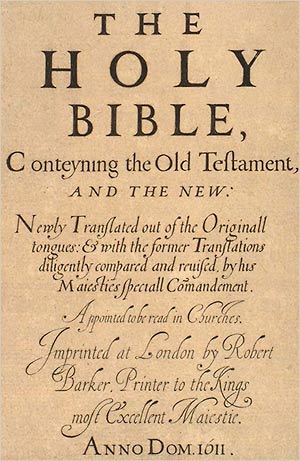
I’m staying at the Hilton, Union Square in San Francisco. Surrounding me are over 10,000 (is that a proper myriad?) religion and Bible scholars gathered for the American Academy of Religion and Society of Biblical Literature annual meeting. I travel light. Having left my Bible behind I went to look up something in the Gideon general issue. It is not here. The world’s largest academic conference focusing on the Bible, four hundred years after the King James Version hit the shelves, and I am Bible-less in my hotel room. Of course, once I get to work I will be surrounded by Bibles, some of them walking, talking resources who have the whole book memorized. Yes, the Society is that kind of place. The Gideon hotel Bible is an American institution. It feels like a constitutional right. When my daughter was very young and we stayed in a hotel, she found the Gideon Bible and asked what it was. We explained that the Gideons leave a Bible in hotel rooms all across the country. “That’s just weird,” she said with all the conviction of a pre-teen.

There are current movements to remove Gideon Bibles from hotels. They do, after all, represent a privileged position to Christianity in a nation founded on religious freedom. No one is forcing you to read that Bible, but it is there, like a tell-tale heart, in your bedside table drawer. Thumping incessantly. To read or not to read? What’s on the TV?

My favorite discussions at conferences like this are with scholars who find the privileging of one religion distressing. Our culture is so grown up in so many ways; we are more enlightened about sexuality and gender and race, and yet, and yet… We still like to have that Gideon Bible nearby. We like our political candidates Christian. Preferably Protestant, although a Catholic will do if he (inevitably he) is on the right side of the right issues. We are vaguely and implicitly afraid of those who don’t share our convictions.

In a moment of levity near closing time yesterday, a customer stopped by to say Routledge should have more gimmicks. Many publishers have giveaways, and some have little games that bearded, bespectacled professors sometimes even play. The customer suggest darts, or even a little shooting range. I said, “Guns and theology are sure to lead to trouble.” Although he laughed, I was serious. Few things in this world can be justified as easily as religiously motivated slayings, at least in the minds of the perpetrators. And to borrow a phrase from a budding genius, “That’s just weird.”