Coronation Bible

The scene from The King’s Speech doesn’t show it at all, but there was even more drama around the coronation of George VI than the movie reveals.  It may not be obvious, especially to Americans, but there is a great deal of prestige in being the supplier of a coronation Bible.  The two ancient presses in the United Kingdom, Cambridge and Oxford, vie for that honor.  In 1937 Oxford had won out.  Coronation Bibles are works of art and are extremely rare.  You’ll never find one at your local library’s used book sale.  As a recent Oxford University Press blog post indicates, the Bible at George VI’s ceremony was a last-minute replacement.  What could possibly go wrong with a ceremonial Bible, of all things?  Quite a lot, but this one had to do with an aging cleric.

Despite being the eve of war time, an elaborate Bible had been designed and manufactured.  Symbolism is important.  Britain faced not only the aggression of Hitler, but also the abdication of Edward VIII.  Instability was in the air.  In such times, as we’ve seen in American politics, leaders look to the Bible for support.  Printed on special paper, chased with gold on its cover, the coronation Bible was a work of art.  However, the Bishop of Norwich, Bertram Pollock, couldn’t lift it.  At 73 he wasn’t in the best of health, and he had a role in the ceremony.  At the last minute a lighter, replacement Bible was sent.  According to the OUP blog post, the Archbishop of Canterbury issued a rare apology to the press, but also noted “I cannot but wish that you had given some more consideration to the physical infirmities of those who would have to carry it.”
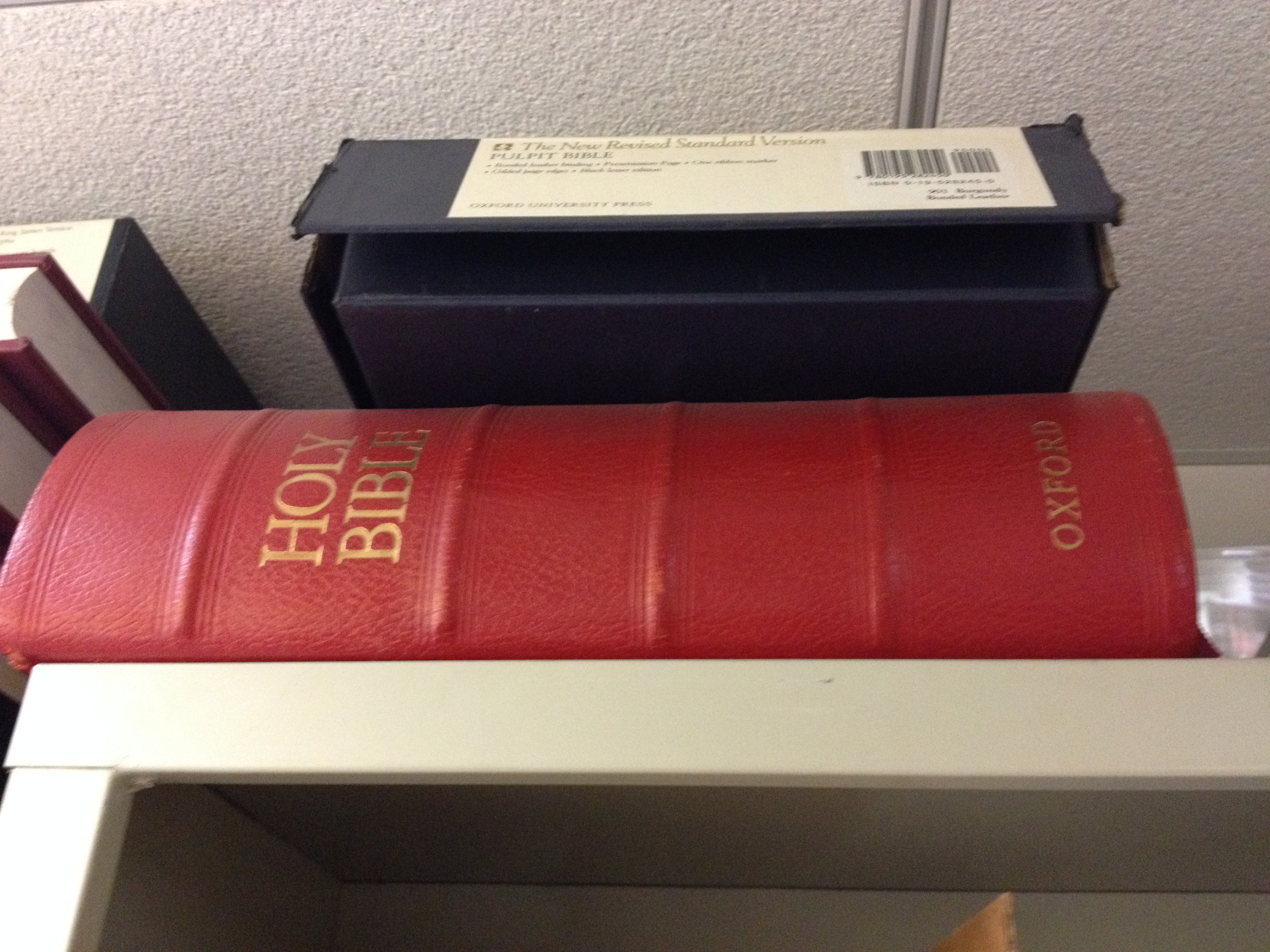
A big Bible

Swearing on the Bible is an archaism that seems likely to persist into the foreseeable future.  The future of the British monarchy (which I do not follow) itself seems in doubt, but to quote the Good Book, “The grass withereth, the flower fadeth: but the word of our God shall stand for ever.”  As long as many people believe this, such swearing will persist.  Even if such belief fades, the solemnity of swearing on a Bible is likely to continue.  The Bible has, in its tangible way, become a stand-in for God.  And as another archaism, a king, is sworn in today, it is to be hoped that the bishops involved have kept their muscle tone intact.  At least to heft, for a little while, a ceremonial Bible.

Spiritual Alterations

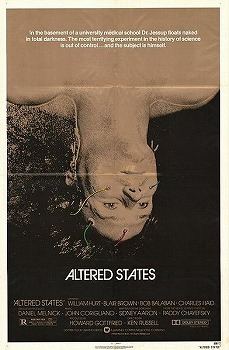
I’d been meaning to watch Altered States for quite a few years.  I suspect the reason (it’s been long enough that I can’t recall for sure) is that I knew it had a story line tied in with religion.  The tale follows Edward Jessup, a psychopathologist, who is attempting to understand schizophrenia.  He’s particularly taken by the religious nature of some schizophrenic delusions, and he uses sensory deprivation on himself to trigger something similar.  A trip among tribal Mexicans leads him to a psychoactive substance that he decides to combine with sensory deprivation to enhance the effects.  Along the way he explains to his girlfriend, and eventual wife, that his father was religious but died a horrible death.  He therefore became irreligious but his altered states of consciousness are often full of images from Revelation.

While the Bible theme eventually gives way to biological regression to pre-Homo sapiens, one of Jessup’s experiences has him coming to his dying father again and dropping a Bible on him which turns into the veil of St. Veronica on his face, which he then rips off and throws, flaming, to the floor.  Another instance of the Bible in horror, the film also uses crucifixes and hellish images to demonstrate the religious nature of these alternative states.  Jessup’s goal is to regress to the original thought, to encounter, as he puts it “God.”  This desire, combined with the potent Mexican drug, transforms him physically, and, in the end, emotionally.  Instead of being dissociated from his wife (whom he is planning to divorce), he realizes that love is the only thing that can save him from the terror of his experiences.

This is some profound stuff.  Paced like a movie from 1980, it has a quality not unlike 2001: A Space Odyssey.  The message seems to be sound—the need for encountering the “divine” ends up convincing Jessup (that may autocorrect keeps changing to “Jesus”) that love is really what it’s all about.  The transformation scenes, while not shown in the detail of An American Werewolf in London, are nevertheless convincing enough.  It’s a rare movie that treats religion respectfully.  Here Ivy-League scientists are motivated to understand it.  In real life, alternative states of consciousness are quite real, if poorly understood.  They’ve been part of religious practice from the beginning and are a far cry from sitting in the pew and singing anodyne hymns week after week.  The more movies I see, the more it seems that a sequel to Holy Horror will be necessary some day.  


Curses

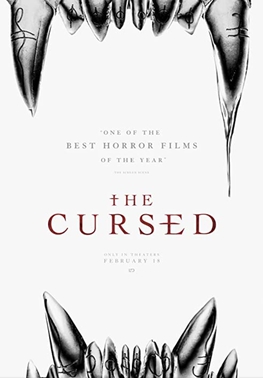
Once again I’m reminded that Holy Horror was never intended to be comprehensive.  I recently watched The Cursed (the 2021 one, directed by Sean Ellis).  This appeared after Holy Horror was published, but it’s a good example of religion (and the Bible) and horror.  It’s artfully done but rather gruesome and difficult to watch.  I suspect such aspects as gruesomeness are why many people dislike horror.  That certainly isn’t my favorite part either.  I watch for the story.  The lesson learned.  The moral delivered.  And also to get a sense of what’s going on in the wider culture.  People tell disturbing stories for a reason.  And quite a lot can be learned from them.  The Cursed has a complex story that was, I suspect, influenced by the historical incident of the Gilles Garnier killings in early modern France.

Set in France, this movie focuses on disputed land and the inappropriately extreme measures wealthy landowners will take to keep it.  A group of Romani (“gypsies”) have laid claim to some aristocratic lands.  Seamus Laurent, a local baron, decides (with the advice of the clergy) to kill them off.  Foreseeing this, one of the women had a set of silver teeth made and put a curse on them.  After she’s killed, the teeth are found by the children of the town and the teeth make monsters.  There’s some confused imagery here, but the story-line is clear.  The monster is revenge for the cruel treatment of and land theft from the Romani.  They may be dead, but betrayal leads to revenge.

That’s where the Bible comes in.  Apart from the locals fleeing to the church for safety, it turns out that the silver was from the thirty pieces given to Judas to betray Jesus.  One of the murder victims had a page torn from the Bible with Ezekiel 22.22 highlighted.  Unlike Pulp Fiction, this quote from Ezekiel isn’t made up and the “prophecy” is taken to refer to the beast conjured by the injustice done to the rightful owners of the land.  This film is subdued, moody, and gothic.  The story is sincere and well told.  It leaves enough gaps for discussion.  It also shows, once again, how religion and horror benefit from each other’s presence.  Stealing land is a biblical crime.  Although the church doesn’t ultimately protect, the absent God in this movie is on the side of those oppressed and tortured by the wealthy.  Maybe it’s time for a sequel.


Addenda

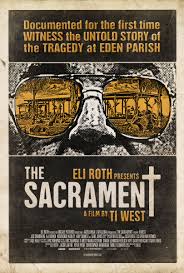
In retrospect, I suppose I wrote Holy Horror a bit prematurely.  Back when I started writing it, I had thought that the Bible in horror wasn’t as common as I’ve since found it to be.  I still stand by what I wrote, but I could’ve included a lot more movies that I’ve watched over the years since.  The Sacrament is one of them.  Based on the Jonestown massacre, the film sets the movie in the early twenty-tens.  A reporter for VICE is going to find his sister who’s joined a religious commune in some unspecified country.  In an effort to get him to join, she invited him to visit.  She was unaware, however, that he brought another journalist and cameraman with him.  The movie gives creepy vibes right away since they’re greeted at the helicopter landing site by men with guns.  Eventually they’re allowed to enter.

“Father,” the leader of the commune bears a resemblance to Jim Jones and soon it’s clear where this is going.  Along the way, however, Scripture gets quoted to justify their communal lifestyle.  There are many fictional aspects thrown in—the young women seduce the journalist whose sister invited him.  She makes no bones about saying they do it to convince him to stay.  The camera crew is almost convinced that this is the paradise it claims to be, but they start getting requests for help.  The writers clearly did their research on Jonestown since several details of the final weeks of the Peoples Temple are fictionalized here.  The mass suicide is shown in graphic detail.  The number of the dead, however, is only about a fifth of those who actually died in Guyana in 1978.

The movie clearly shows that the commune is problematic, but it also raises uneasy questions.  If it weren’t for the murder of Leo Ryan, would Jonestown ever have happened?  Probably, but the film shows “Father” making the point that nobody was being harmed.  That’s belied by the introduction of an abused girl and the number of people who want to leave.  It’s true of Jonestown that mind-control tactics were used and people weren’t permitted to leave, especially as Jones’ paranoia grew.  The movie leaves the viewer wondering whether utopian communes can ever work, people being what they are.  We crave our freedom, even when things look great.  The movie condemns the exercise, but not so much that it leaves lingering doubts about whether, had things been different, it might’ve worked.  And it would’ve worked, had I seen it earlier, for Holy Horror.


Glen Da

My current fascination with Ed Wood is, strangely, related to waking up too early.  I’ve tried for years to calibrate my schedule to more like a normal one—I’ve always been an early riser—but have had difficulty doing so.  Weekends at home, therefore, include afternoons when I’m always too sleepy to read, so I watch free movies.  I’d heard about Plan 9 from Outer Space for years before I finally watched it, and it was an epiphany.  Ed Wood, the hapless director, became posthumously famous for his poorly made films, and I’ve been catching as many of those as I can.  While Glen or Glenda wasn’t Wood’s first film, it is the one that kicked off his notoriety.  Considering that it was made in 1953 it is also way ahead of its time.  It is very cheaply made and contains what would eventually become many Wood hallmarks.

Ed Wood was a heterosexual transvestite.  Even today, some seventy years later, this is a category that often confuses hoi polloi.  That’s largely because sex and gender are often misunderstood as the same thing.  Gender is a societally ascribed role—men do this, women do that—based on often unconsidered stereotypes.  Today men dressing as women and vice versa is often played for laughs, or, if serious, is mistaken as an indicative sign of homosexuality.  Glen or Glenda is sometimes classified as a docudrama that attempts to explain this distinction.  Wood, who also stars in the movie, was an actual transvestite, something that wasn’t accepted in the button-down fifties.  After all, one command in the Bible prohibits cross-dressing (likely confusing it with assumed sexual behavior).

None of this makes Glen or Glenda a great movie.  Way ahead of its time, yes, but a strange mix of things nevertheless.  Star billing goes to Bela Lugosi, washed up by this point in his life.  His role as a scientist—often presented as “God”—is unclear.  The devil also appears in the movie, as do several vignettes, reportedly added by the producer, to make this more an exploitation film.  What comes through clearly is that this was a deeply personal film for Wood.  He was trying, as directors and authors often do, to explain himself to the world.  The most successful tend to do this with panache and style, and, let’s be honest, big budgets.  Hollywood, like the publishing industry, is unkind to those who don’t come with well-lined pockets.  It doesn’t mean that the rest of us don’t have stories to tell.  Ed Wood persisted in telling his and, as Glen or Glenda shows, being way ahead of the curve.


Love’s Life

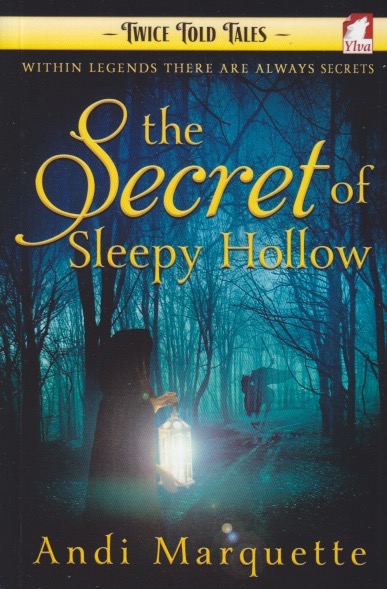
One of the things about literary classics is they open themselves to reinterpretation.  It’s often a lot of fun to trace these.  Andi Marquette is obviously an educated writer.  Her The Secret of Sleepy Hollow is one of those reinterpretations that has a unique take on the tale.  Set in modern times and featuring a member of the Crane family—Abby—as a graduate student, this story brings the tale into a contemporary context.  Abby meets another graduate student—Katie—in Sleepy Hollow and the two fall in love.  It turns out that Katie is a member of the Van Tassel family, thus bringing the two main families of Washington Irving’s “Legend of Sleepy Hollow” together again.  There’s even a headless horseman.

Like the biblical book of Ruth, this is a gentle tale of women’s love.  There’s no overt violence, no heads get chopped, but two women love and care for one another.  Many of the more modern repackaged versions of Sleepy Hollow tend to go for the violent, sometimes drug-fueled tales of bored youth in a small town facing an angry ghost.  Here the interest is more literary, a gothic romance.  The fact that it’s a lesbian love story makes me wonder why so many people have trouble with others’ love lives.  People are prone to curiosity about sex—that’s a simple fact.  What isn’t so simple is that mores based on culturally specific ideas from millennia ago don’t stand the test of time and yet cause misery in modern lives because they can’t accept what we now know—sex and love are anything but simple.

Marquette’s book is marked by that anxiety.  When people discover a love that’s often misunderstood, they face ridicule or worse.  The book of Ruth provides a good guide here—the acceptance of a normally forbidden love can bring good and happiness to people in what is often a difficult world.  There’s trouble enough—there are headless horsemen out there—that we don’t need to be causing more by judging the loves of others.  Even a cisgender heterosexual can understand that.  Life is complicated and we all try to find our way through.  Love is one of those things that can help to make it more bearable.  I found The Secret of Sleepy Hollow compelling in that way.  It may not be a literary classic—few books are—but it takes on a complex topic intelligently and with heart.  It’s a new take on an old story that still fits the modern world.


Off with Their

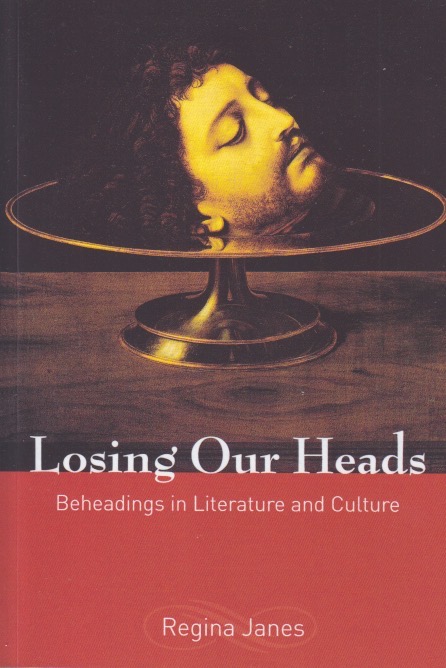
“Heads, I win,” is common enough as a call for flipping a coin.  That element of chance plays through Regina Janes’ Losing Our Heads: Beheadings in Literature and Culture.  You see, John the Baptist has a lasting place among the beheaded—indeed he’s featured on the cover of the book.  And since Janes is looking at the topic in literature and culture, you can’t very well leave John out.  I wonder what it says about humanity that there are so many other possible examples to include that this book is a mere sampler.  Applying literary theory to the process, it becomes, well, theoretical at points, but still it’s an eye-opening book.  Even if not always comfortable to read.  The first few chapters, which cover the development of European beheadings, aren’t sweetness and light.  There’s more happening here than meets the eye.  These heinous acts set the stage for symbolism, however.

The material on John the Baptist is fascinating and insightful.  It’s ironic, in some ways, that Jesus’ cousin is perhaps most famous for being beheaded.  He also sheds light on his more famous family member through literary parallels.  And, of course, it doesn’t end there.  The idea gets picked up and explored by others in various art forms.  You don’t really want to look, but since they’re there in the illustrations, you do.  Then the book moves on to African stories.  Playing off Conrad’s Heart of Darkness, Janes gives voice to African authors who explore beheading within their own cultural contexts.  All this goes back, historically, much further than John.  Indeed, beheading is part of very early myths as well.  It does make you stop and think.

I read books like this looking for clues.  There’s a larger object in mind.  And some of the insights I found were in examples afforded only a paragraph here or there.  I read this book because of a journey of which a colleague sent me through an innocent enough discussion.  There’s a reason we talk of excitement as “losing our heads,” and for some of us that excitement is research-laden.  Naturally squeamish, I’m an odd one for watching horror.  There’s something more to find here, however.  Although gruesome at points, you learn something from wandering through this museum of heads.  And when looked at through different lenses (of course, Freud is there) new perspectives emerge.  Beheading is violent and yet it’s been a part of human culture for a very long time.  There’s much to ponder here.


Foresight

God wasn’t thinking of search engine optimization (SEO) when he was writing the Bible.  First of all, he doesn’t seem to have considered that all the nice, short names he used would soon become the most common in the western world.  And he didn’t give all the characters last names.  Job is particularly egregious because you could be searching for employment and not a complaining old man (you can always find one of the latter here!).  Perhaps he wasn’t aware at the time just how popular his book would become so that just about everything in it appears on some twenty-million webpages and you need some distinctive keywords for SEO.  And this unfortunate high profile has also led to knock-on search problems.

I quite often have to search for bits of the Good Book together.  “Pentateuch” isn’t so bad because it’s a bigger word that most people don’t use every day.  But what about “historical books”?  It’s two words and search engines begin scouring the web for pages that have both words.  And there are plenty of historical books outside the Bible.  Writings?  Poetry?  Even Gospels is used all over the place.  I had to find something about the Catholic Epistles the other day.  My search engine found plenty of places with both words, but not linked together.  (I know the quotation mark trick, but bear with me here as I’m trying to make a point that will perhaps lead to divine intervention.)  I tried again with Pastoral Epistles but the same problem arose.  This is the burden of being so important that everyone copies you.

It’s the price of success.  God surely must’ve foreseen that.  The problem is that Holy Writ predates the internet by so many centuries.  Those who’ve determined how searching works have redefined our lives—have given us new commandments.  Thou shalt not put commas in titles, for example.  Thou shalt use distinctive keywords.  Pity the fool who must find information on a biblical character with only one name.  Perhaps that name is John.  Or David.  Or Mary.  Sure, you can add qualifiers but they’re all common words as well.  The Good Book is a victim of its own success.  And for containing all the prophecy that it does it is truly amazing that not even the creator of the universe didn’t see this coming.  We live in a world driven by tech and although the Bible had a direct role leading to that world, you wouldn’t know it by your standard Google search.


Feeling Disney

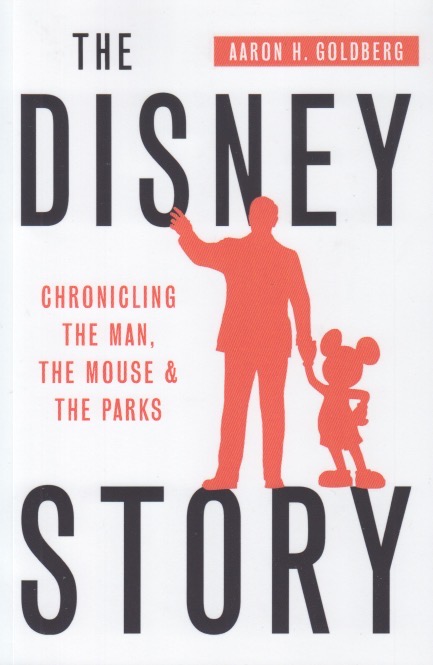
What’s the earliest Disney movie you remember seeing?  If you’re my generation this will’ve likely been in a theater since home recording wasn’t a thing yet.  I suppose it could’ve been on Disney TV, but if it was a new movie you wanted to see it just after it was out.  Mine was The Jungle Book.  Or, at least that’s how I recollect it.  Reading about Ub Iwerks made me curious about Disney so I decided to read Aaron H. Goldberg’s The Disney Story.  The subtitle, Chronicling the Man, the Mouse and the Parks, gives you an idea of what it covers in more detail.  Goldberg’s upfront in letting the reader know that newspapers and period media are his main sources.  The book is arranged chronologically.  It makes for an interesting story but I personally have never been tempted by a Disney theme park—quite a bit of the book discusses these—although there was that one time…

It was back in 1998—what a different world then!  Pre-9/11, pre-Trump, pre-pandemic.  I was still teaching at Nashotah House.  The American Academy of Religion and Society of Biblical Literature held their annual meeting in Orlando, on the Disney campus.  The experience wasn’t a good mix.  Academics and cartoon characters just don’t—wait, maybe they do.  In any case, you had to eat at the Disney estates, although you could sleep in an off-site hotel, that was a considerable shuttle ride away.  And no bars.  I did meet David Noel Freedman there.  It was in a room painted like the inside of a circus tent.  A strange place for a meeting of such gravitas to a still young scholar.

The point is, Walt Disney affects all of our lives.  He was a self-made man, but he had lots of help.  He didn’t live to see Walt Disney World (that’s the one in Florida) open, but he died knowing just about every child in the country recognized his name.  I never considered myself a Disney fan.  Yes, I watched a few of his movies and watched his Sunday evening television show, but I preferred Bugs Bunny and the Warner Brothers’ crowd.  Growing up with television you had your loyalties.  Still, we were well aware of Disney and especially his movies.  We couldn’t afford to see all of them, not by a long shot.  And those we did see were at the drive-in where kids could hide under a blanket in the back seat to economize a bit.  Still, we were infected.  Everyone was.


All About Blurbs

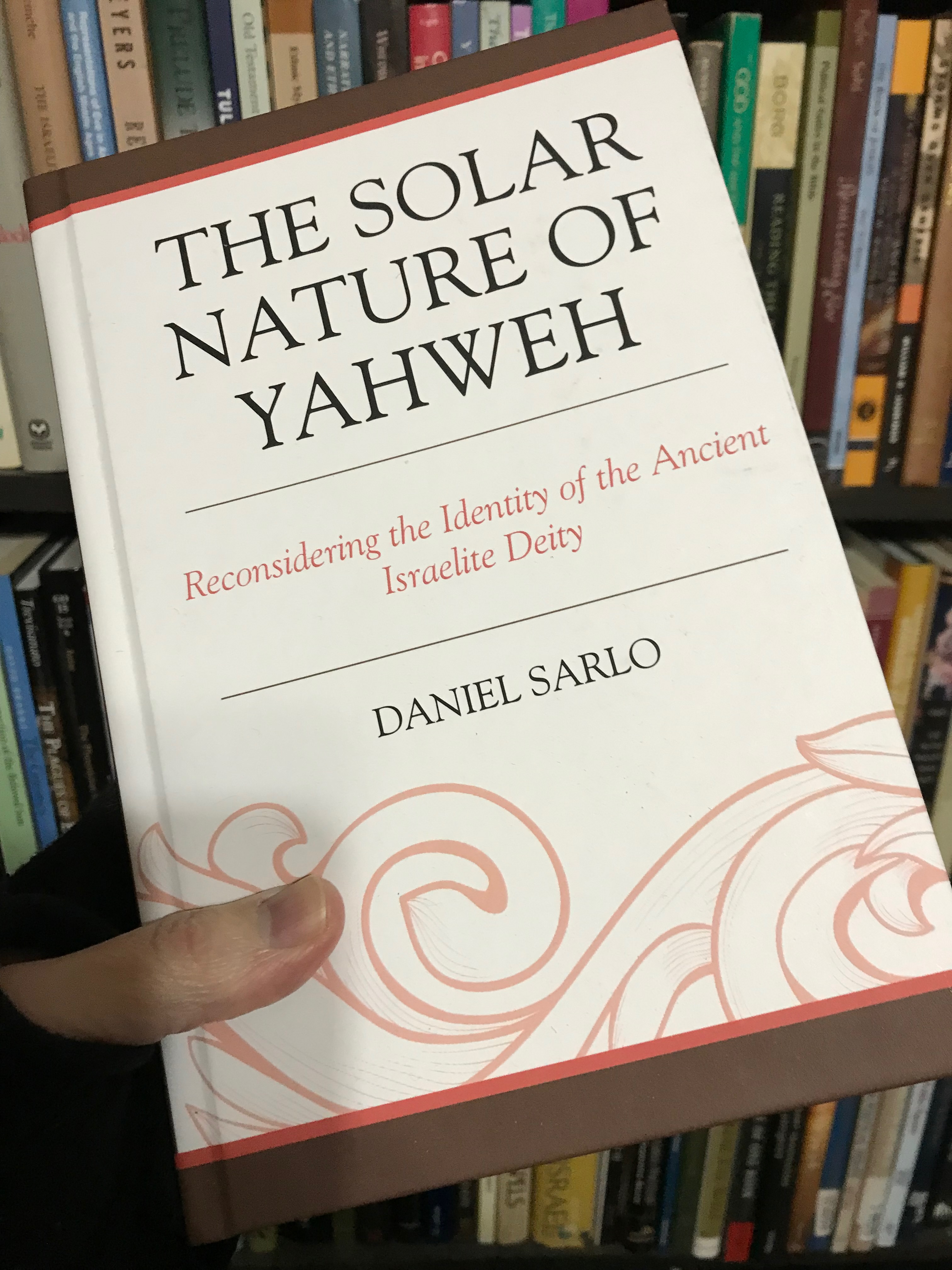
A book recently arrived.  It was unexpected, but when I saw the return address I knew what it was.  My young colleague Daniel Sarlo from the University of Toronto had kindly asked me to blurb his book The Solar Nature of Yahweh.  I’ve known Dr. Sarlo virtually for many years.  He’s engaged me a number of times on issues surrounding my research on solar worship in ancient Israel and Ugarit.  I had a book project in the works on the latter topic when other colleagues suggested going with something biblical for my next book, thus Weathering the Psalms was born.  Books, particularly academic ones, are in constant conversation with one another.  I’ve been writing on horror and religion now for over five years but my material on ancient West Asian religion is just now starting to get noticed.  It’s a funny old world.

One day I stumbled across a blurb lifted off my website for a book from Johns Hopkins University Press.  I was impressed.  First of all, that some author or editor had found my remarks on their book from this blog and that they’d liked them enough to cite them.  Getting blurbs can be a difficult task these days.  Academics are under a lot of pressure and time for such things is at a premium.  The payment is generally a copy of the book.  For some of us, though, it’s a thrill just to see yourself cited at all.  Once you’re no longer an academic you’re easily forgotten.  It has been a number of years since I’ve researched Yahweh and the sun, but someone, at least, still remembers.

Like book reviewing, reading a book for a blurb is one of those things you really can’t talk about pre-publication.  Book production is a slow process.  Like most things in life, it takes a complicated chain of events to lead to something as humble as a printed book.  And you need things like blurbs well before the release date.  As an author you often worry that—even in a field like ancient West Asian studies—your book will be outdated before it’s even published.  Some new find, or new idea might invalidate all that you’ve worked for.  Higher education should be one of the best venues for building humility in a person.  Your great learning is only one example among myriads of other scholars.  It’s a great accomplishment to get a book published in the midst of all that.  And this one, as the blurb indicates, is well worth reading.


The Denver Curse

I’m posting this early today because I’m flying to Denver for the American Academy of Religion and Society of Biblical Literature (AAR/SBL) annual meeting.  At least that’s the plan.  I don’t have a good track record with Denver and this conference.  I’d been attending AAR/SBL since 1991.  I can’t recall what year it was when I first attended in Denver.  I was still a professor then and had a paper to read.  I also had free time (something editors don’t have at conferences).  I decided to view the world-famous mineral and dinosaur exhibits at the Museum of Natural History the morning of my paper day.  While at the museum something very embarrassing happened—I got sick in public.  It was scene-from-a-cheap-movie bad.  Literally sprinting to a public waste can to throw up in front of strangers.  I’d never been sick at AAR/SBL before, despite the November timing.  When I went to read my paper that afternoon, the motion of my eyes made me sick again and I had to sit with my head between my knees while a bunch of biblical scholars looked on with what passes for concern in academic circles.

The second, and last, time I was flying to Denver  for the conference there was a small snowstorm.  I was flying out of Newark on an evening flight.  Because of the snow (which ended up being about two inches) my flight kept getting delayed and delayed.  They made the decision to cancel the flight after 11 p.m. by which time all local hotels were full from the earlier cancelled flights.  To make matters worse, there was no way out of the airport.  All public transit shut down.  Even if I could’ve caught a taxi where was I to go?  I live in Pennsylvania.  With no other choice, I slept on the floor of Newark’s Liberty International Airport.  I awoke early, having used my briefcase as a pillow (a step up from a stone, I expect) and found my way to Somerville, where we used to live.  My wife picked me up at the train station there and drove me home.  I missed the conference, needless to say.

And so you see that I’m a bit dubious about trying this again.  I have nothing against Denver.  Before getting sick I was enjoying my time there.  So, if things go according to plan, I’ll be on a plane headed that direction by the time I usually post my daily thoughts on this blog.  Will the Denver curse be broken?  Only the next few days will tell. Watch this space.

Photo by Acton Crawford on Unsplash

Monsters in Common

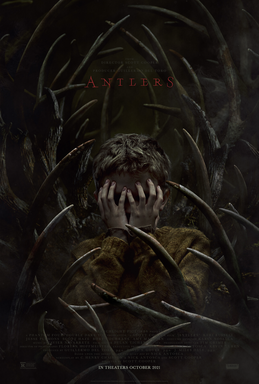
The thing about monsters is once they’re released they go wild.  Antlers is sometimes criticized for cultural appropriation—it takes the wendigo, an American Indian monster, and uses it in an Anglo story.  There’s perhaps some truth to that, but the wendigo is the perfect monster for the social commentary the film makes about the poor.  Those who’ve never been poor can’t really understand, and I can’t blame them for it.  Pointing fingers at symptoms like drug abuse is pretty typical.  It’s not directing the extinguisher at the base of the fire, but at the dancing flames that keep shifting as the base consumes.  In short, I found it a powerful movie, and one that is beautifully filmed.  Yes, it does lift an American Indian monster, but that monster was released long ago.

The wendigo was addressed by Algernon Blackwood in his 1910 story that goes by that name.  It has appeared in other horror venues as well.  Antlers is the first full-fledged horror movie I’ve seen to use it and it builds the story up nicely.  And it does so by tying religion into the narrative.  In brief, Lucas Weaver, a twelve-year old, is protecting his father and younger brother.  After being attacked by a wendigo, his father has become one.  Lucas’ teacher, Julia Meadows, was abused as a child and recognizes it in Lucas.  She become determined to care for him but his father has given over to the spirit of starvation that inhabits him.  

I could’ve used this in Holy Horror because when Julia is searching Lucas’ desk at school she finds, among other things, a Bible.  At one point Lucas’ brother asks if God is dead.  His father has told him that he is.  And when the police are trying to determine what they’re up against, the former sheriff, an American Indian, tells them about the wendigo.  Native beliefs are treated as superstitions, of course.  The wendigo is brought out because of cannibalism.  The use of a native monster and the role of the landscape in the film make this a fine example of folk horror.  And it’s a cautionary tale about the dangers of abandoning the poor.  Those who criticize the film for that have perhaps lost sight of the monster.  Monsters belong to everyone.  The golem, the wendigo, the mummy—these all play a role in someone’s religion and culture.  They also serve to haunt anyone who’s concerned with fairness and justice.  And that’s why we must chase any monster that roams free.


James and John

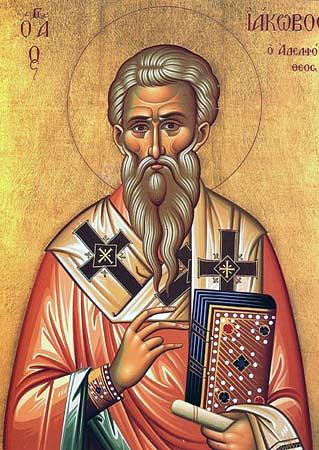
One of the first questions expectant parents are asked is if they have yet come up with a name for their child.  Quite often, and probably without realizing it, some of the most popular names are biblical.  Jacob is one of the most common boys’ names in English.  It derives from the story of Isaac’s younger son in Genesis.  Its popularity increases exponentially when its variant James is added to the total.  The name James comes into English from Old French where it was derived from the Latin Iacomus.  B and m are, phonetically speaking, bilabials (the former voiced, the latter not).  This Latin form also led to the Spanish name Iago, which many know from the apostolic name Santiago (“Saint James”).  Or Saint Jacob, only nobody calls him by that name anymore.  Biblical names are exceptionally common in the western world.  Even so, it often seems implausible that names like Jimmi could be alternatives to Jacob, but small steps make evolution possible.

It has been popular among evangelicals for years to know that Jesus is the Greek form of the name Joshua.  Having a savior named Josh just doesn’t have the gravitas we’re looking for, however.  Greek is an Indo-European language while Hebrew is a Semitic one.  While these two family trees have points of contact, their vocabulary and syntax developed quite independently.  Names change when they’re translated.  Many of our familiar New Testament names are translations from their Hebrew (or Aramaic) counterparts.  The New Testament was written in Greek and we receive Greek versions of such names.  John, for example, is another name that comes to us in many forms.

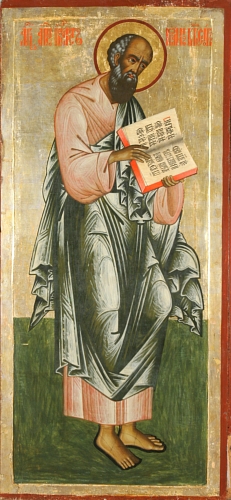
The apostle we call John was called Ioannes in Greek.  This was derived from the Hebrew name Yochanan.  John comes into English via the Germanic form Johannes, where the connection to the Greek becomes obvious.  From there it shortens to John.  It comes in many varieties too: Juan, Jan, Ivan, Han, Evan, Sean, Jonas, Giovanni, and even Jack.  The latter sounds more like Jacob, but in their original forms the names are quite different.  Apart from names, Indo-European borrowing from Semitic languages isn’t terribly common.  Throughout the Christianized world, names based on these two apostles, however, have become extremely popular.  In recent times parents have been branching out into more creative names for their children, but many of them still derive from their biblical antecedents.  This is just one more way that the Bible continues its influence in an increasingly secular world.  


Jason’s Javelin

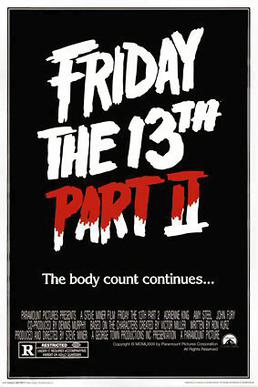
This past weekend was my third this year spent recovering from vaccinations.  The shingles jabs were worse, but this time it was a double-duty flu shot and bivalent Covid vaccine.  That’s as good an excuse as any for admitting to watching Friday the 13th, Part II.  In general I’m not a fan of sequels, but I’d read quite a bit about this one and I was curious because I hadn’t realized before watching the first installment years ago that Jason wasn’t the original killer.  I’m also not a fan of slashers, and I know that many people who dislike horror think all horror consists of such movies.  (It doesn’t.)  But still, Jason is a household name as a movie monster and I was having trouble concentrating with all those vaccines swirling around inside.

Utterly predictable, there are still a few jump startles that’ll catch a first viewing off-guard.  All I really knew about the film was Jason and Camp Crystal Lake and that generally teens get killed for having sex.  As many critics report, this kind of horror tends to have a “conservative” outlook—“sin” is brutally punished and the girl who refrains tends to be the last survivor.  That much you know just from doing your homework.  So as Jason hunts down the teens and dispatches them, along with a police officer and a crazy guy, you almost get bored.  There was one scene, however, that had unrecognized biblical roots.  Interestingly, I haven’t found anyone pointing that out.  When Jeff and Sandra go upstairs for sex, Jason takes a spear and thrusts them through, right in the act.

Analysts trace this scene to the movie Bay of Blood (which I’ve not seen), but in fact the inspiration comes from the Good Book.  In a genocidal mood in Numbers 25, Yahweh tells the Israelites to kill the Midianites among them.  Zimri is seen taking Cozbi into his tent, and Phinehas the priest grabs a javelin, rushes into Zimri’s tent and skewers the two of them in the act.  That scene stuck with my young mind as I read through the Bible, which is probably why it immediately came to mind while watching Part II.  Others may well have noticed this connection, but with the vaccine-induced lethargy I didn’t have the energy to go thumbing through my library to find it.  Besides, when I read things about movies I haven’t seen, they don’t often stay with me (which is one reason I give thorough descriptions of movies when I analyze them in my books).  This particular horror over, I know I don’t have to worry about the flu this year.


What Lurks

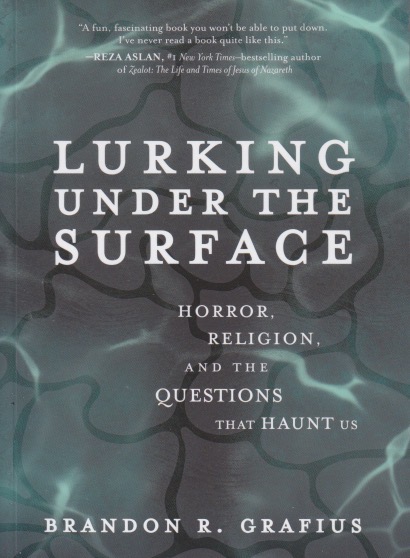
One question that I get asked by those who don’t understand is “Why horror?”  The asker is generally someone that knows I’ve been “religious” all my life, or affiliated with religion—which people think means sweet and light—and who associates horror with bitter and dark.  I know Brandon R. Grafius has been asked such things too, because I’ve just read his Lurking under the Surface: Horror, Religion, and the Questions that Haunt Us.  Like me, Grafius has been writing books on the Bible and horror—I’ve reviewed a few on this blog.  As in my former life, he teaches in a seminary.  People find this juxtaposition jarring.  This little book is Grafius’ struggle with various aspects of this question.  He’s not anti-religion, but he’s drawn to horror.

For those of us familiar with Grafius’ other work, this offers a more detailed explanation of what one religion scholar finds compelling about horror.  Specifically, he shows how various films deal with similar issues to his Christian faith.  The book deals with that for about half its running time, and the other half discusses similar themes in horror.  You get the sense that Grafius has been at this for a long time.  Scooby-Doo seems to have been his childhood gateway to horror and it raised some deeper questions as he explored further along the line.  If you read this blog, or search it, you’ll find such things as Dark Shadows and The Twilight Zone in my background, but then, I’m a bit older.  The point is, being a religious kid doesn’t discount finding monsters fascinating.

As usual with books like this, I’ve come away with several films to watch.  And more angles of approach to that tricky question of “Why horror?”.  A recent post on a panel discussion titled “Religion and Horror” led to an online exchange about religion and fear.  Grafius deals with that here as well, but from a more distinctly Christian point of view.  Although he’s an academic, this book is written (and priced) for wider consumption.  I found it quite informative to hear the story of someone else who grew up with monsters and the Bible.  He had the sense, however, to start addressing this early in his academic career.  We each have different paths to walk and for some of us it will take a jarring experience to chase us back to our childhood monsters.  And being religious is no barrier to that, as this brief book demonstrates.