To Thine Own Self

sexatdawnAmong the books that I would rate very important, Christopher Ryan and Cacilda Jethá’s Sex at Dawn would need to be on top, or nearly so. As I’ve often stated on this blog, religion and sex are very closely related. Every religion, in some way or another, intimates itself into sexuality. Like religious belief, however, it is something about which we blush, look at our feet, and politely change the subject. Perhaps it would be helpful to shift focus, then, to the subtitle: How We Mate, Why We Stray, and What It Means for Modern Relationships. Well, not even that reaches the depths to which this book plumbs. Ryan and Jethá actually peer back deep into prehistory and look at the changes that agricultural life brought onto humanity. Comparing that information to conclusions drawn from evolutionary theory and serious biological study, they derive a picture of a much more equitable culture for which humans clearly evolved. Agriculture, and just plain culture, changed all that.

With culture, you see, comes the materialist idea of possession. Hunter-gatherers, even today, are the best sharers in the world. Their generosity isn’t noble, as Ryan and Jethá point out, but entirely practical. In addition, their lives are longer, healthier, and happier than those of the modern, stressed-out, perpetually frustrated, “cultured” individual. We are constantly trying to get ahead, and own more. Of course, we don’t want to mention or think about the fact that when we die, all that ownership will mean nothing. We invent complex laws that so only our biological (we think) offspring will carry on that legacy until the last bit is parceled out so fine that all that remains is a name that few will remember millennia down the road. For that we suffer nearly constant frustration. I’ve not read a book in decades that made me want to throw all of this off and head out to the woods, sharpened stick in hand. (Problematic, since I’m pretty solidly vegetarian.)

Some of the larger implications, however, that Sex at Dawn doesn’t address, are the roles that religion plays in problematizing what we’ve evolved to be. Of course, sex scandals in churches are referenced, since they are such crucial evidence. What is overlooked, for the purposes of the book, is that religions have always tried to define and control sexuality, at least since the dawn of agriculture. We don’t often consider that agriculture, in addition to making us fat, and lazy, also gave us organized religion. It may be that religion came first, but it only grew into a coercive social force with the temple culture of ancient Sumer, and it has been with us ever since, dictating who may love whom, when, and for what purpose. Sex at Dawn is not for those who are set in their ways, nor for those who take a one-size-fits-all attitude toward life. For the rest of humanity, however, there is hope that perhaps we can learn to be a little more true to what nature intended us to be, and to understand that nature may be many things, but it is seldom evil.


Clearly Religion

GoingClear“There is no point in questioning Scientology’s standing as a religion; in the United States, the only opinion that really counts is that of the IRS;” so Lawrence Wright partially concludes Going Clear: Scientology, Hollywood, and the Prison of Belief. This is an important book, and one which once again demonstrates how seriously religions should be taken. New religious movements offer a ringside seat to how orthodoxies are born. Facts may be distorted or covered up, but there is information to be had on L. Ron Hubbard, Joseph Smith, and Mary Baker Eddy. We can learn from the way their ideas may move from fiction to fact, and how intelligent people still feeling spiritual yearning can turn to a religion invented recently as well as those invented millennia ago. As Wright points out, all religions make improbable claims. Fact-checking, however, is much more difficult for periods long gone that left only meager records. The distance in time may lend ancient assertions the benefit of the doubt, but the real decision-maker is money.

Given universities’ interests in lucre, one might logically conclude that religions would be of great interest. It is telling that, especially in the case of Scientology, that the factor most important to the status of the church is its money. Religions may claim tax-exempt status, setting them apart from purely commercial enterprises. This gives religions an advantage when they are careful with their finances, and the whole question of whether a religion is a religion is not left to scholars but to the lawyers of the Internal Revenue Service. The truth of religion lies in its bank-books, not its holy books. No doubt in the case of Scientology this is because of the high-profile court cases in which the status of the religion was challenged by government agencies. Nevertheless, when it comes to the laying down of the law, only money really matters in defining a religion.

As Wright discusses, one of the problems we face is that religion is poorly defined. Nobody can really assert much beyond that religions involve belief of some kind. Beliefs, in this case, about L. Ron Hubbard and his ideas. Although facts about his life are disputed, there can be no doubt that Hubbard was an intriguing man. He was a prolific writer with great imagination, and he clearly had keen insight into psychology. A religion used to be measured by the good it produced. Now it is measured by the dollars. As Going Clear illustrates, trying to construct an unbiased account of Scientology is a fraught enterprise. Like many modern religions, Scientology is very secretive. Even the early Christians knew that if everybody could join, then the club loses its appeal. Apart from belief, religions also must have outsiders and well as insiders. In a world measured by consumerism, wealth is the surest sign of blessing. No one should be at all surprised, therefore, that it takes the IRS to decide that which used to be taken by faith alone.


The Plague

Plagues&Peoples Sitting on the bus next to some guy with a consumptive cough may not be the best place to read Plagues and Peoples. But William H. McNeill’s book is considered a kind of modern classic, and since the Middle Ages have been on my mind, I persisted anyway. I did wrap my scarf around my face, though. Plagues and Peoples isn’t just the story of the Black Death, however. It is a sweeping account of pandemic and endemic outbreaks and how they form recognizable patterns with human populations. Perhaps the most striking aspect of McNeill’s study is how determinative plagues have been for many decisive aspects of human history, including religious ones. Indeed, religion keeps cropping up in the book. One reason is because of the roles religions play in human suffering—to be more precise, I should say in trying to alleviate human suffering. (Yes, some religions definitely cause it as well, but that’s a story for another time.) McNeill even suggests that fear of disease might have led to the parting of the ways between Swiss and German Reformers, playing a role in the divergence of what would become the Presbyterian and Lutheran flavors of Protestantism. The spread of some religions was facilitated by the ravages of disease.

During the period of the spread of the Plague, however, McNeill notes that those cultures attended by Christian and Buddhist institutions managed to fare better than irreligious, or, perhaps more accurately, folk-religion ones. Once people figured out Plague was contagious, they sensibly kept away from the sick, but the moral teachings of Christianity and Buddhism compelled the religious to tend to the ill, with the result that more people in those religious traditions survived. That’s not a universal declaration on McNeill’s part, but it is a fact worth bearing in mind. The risk to self paid off when more individuals cared for each other rather than just heading for the hills when the Black Death came along. On the other hand, religions frequently insist on behavior that spreads disease as well. The great pilgrimages to Mecca or the Ganges often brought great crowds together where disease could quickly spread. The passing of the peace in some churches is more like the passing of the plague.

In ancient, pagan times, disease had its own deities. In ancient Ugarit, Resheph, the archer, was also the god of pestilence. Pestilence frequently accompanied the horrors of warfare, and even Apollo opens the Trojan War by firing his arrows at the Greek troops. Gods are the source of disease. One of the ancient truisms, which may not be taken as true today, is that the force that wounds is also the force that heals. Instead of ignoring Resheph, you pray to him, make offerings to him. He can slay, but he can also heal. In the monotheistic and even non-theistic traditions McNeill mentions, the focus shifted to the care of those suffering rather than the offering of sacrifice to unhearing gods. Even the Romans were impressed by Christian care for one another. Of course, that was well before Obamacare offered the hope of medical treatment for those cut off from lucrative employment. The Christian response now, it seems, is to complain about others taking advantage of my surplus cash made over to a program to prevent illness in one’s fellow citizens. Take the bus to work, you’ll see what I mean.


Roman Undead

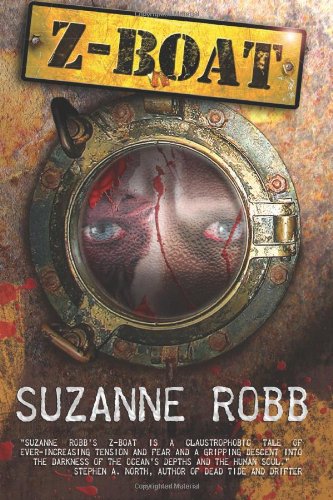
ZombieBibleLike most monster movie fans, I enjoy a zombie film now and then. I’ve even heard some very sophisticated people commenting positively on Shaun of the Dead. One of the standard features of the zombie is its forthright impossibility—reanimated dead are the stuff of humanity’s earliest nightmares, but in our rational minds we know that bodies missing vital organs, limbs, and blood, don’t just get up and try to eat the living. That doesn’t prevent me from watching zombie movies, and even considering participating in a zombie walk. Nevertheless, I’d not read any zombie books. That suddenly changed when I sat down with Stant Litore’s What Our Eyes Have Witnessed: The Zombie Bible. Literally the day I started reading it, a publisher sent me a copy of Suzanne Robb’s Z-Boat. I was surrounded by zombies.

I had decided to read What Our Eyes Have Witnessed because I was curious what a Zombie Bible might be. I quickly learned that it was an apologetic exercise where zombies are used as a vehicle for evangelization. It was difficult, however, to take the idea seriously. When a zombie breaks through the door of a Roman villa at the start of the book, I found the thought strangely funny. Many zombie movies go in that direction, acknowledging that they could never really happen, so they decide to give viewers a laugh or two along the way. Litore’s parsimony, however, became clear right away. This is a retelling of the martyrdom of Polycarp, but with zombies. It is a curious mix of Roman history, Christianity under persecution, torture porn, and the assurance of salvation. The premise is that Cain’s slaying of Abel resulted in zombies and their soulless souls must be put to rest. If they bite you, you become a zombie—you know the story. Meanwhile, the Roman authorities believe the Christians are to blame and decide to kill off the historical Polycarp.

The story dwells on the emotions of the Christians, in a kind of maudlin evangelicalism, as they try to avoid both flesh-eating zombies and Roman authorities. Zombies, it is said, are driven by their constant hunger and only Christianity has the true bread. This is a creative account of how the early Christian movement dealt with persecution. The zombies, however, feel somewhat superfluous in that situation, for the terror of imperial persecution was real enough. The zombies, however, aren’t after brains, and they don’t speak. They want to eat and the only thing they can digest, even if they have no stomachs, is other people. As an allegory it almost works, but zombies are a kind of fifth column in what was a very real struggle for early religious tolerance. Ironically, the undead and resurrection are never juxtaposed, although they are the most obvious way to connect the dots.


Disconnect the Dots

In the on-going loss of touch between academia and the world outside, we forever hear of the triumphal march of secularism. Academics are often loath to see the habits of the laity as being of much significance. In the book industry, however, publishers have to pay attention to what the public reads. This is one reason, I’m discovering, that some academics find it difficult to publish. Some research topics just don’t reach the wider readership’s interest. It’s an editor’s job to try to match readers with books. Among the tools we use are magazines such as Publisher’s Weekly and the Library Journal. Although it is impossible to say what people are actually reading, these periodicals trace buying and checking-out habits. And it doesn’t take a genius to see that books somehow tied to religion are frequently at the top of the list. One of the great industry trackers, Bowker, even has three distinct databases for book sales: children’s, academic, and Christian. Religion, in other words, is of tremendous interest.

IMG_1279In the January issue of the Library Journal, for instance, there is the list of top books checked out of libraries since the last reporting period. Topping the non-fiction lists? The top four spots are occupied by books tied in some way to religion: David and Goliath, Killing Jesus, I Am Malala, and Zealot. People want to know about religion. Academics just don’t want to hear it. As a perpetual bride’s maid, metaphorically speaking, of the higher education that jilted me almost a decade ago, I hopefully watch hiring trends as the rejection letters pile up in my inbox. It is a diminishing pool. Look at the industry reporting tools: religion is irrelevant at best, puerile or worse when it comes to measuring maturity. People are dying over it, but we’d rather just not know. No wonder they call it the ivory tower—spotless as, well, a bride.

It is often a surprise to many academics how few people buy their books. As someone who had written a couple of academic tomes, I know how I daydream that my work on some obscure topic will take off and suddenly appear in the Library Journal, or Publisher’s Weekly. In actuality, the reading public will decide on the basis of what publishers make available. A writer such as myself, an independent scholar, lacks credibility and is not asked to write books. And universities aren’t hiring scholars of religion much any more. Some seminaries have even moved more toward the secular in their hiring practices, since, universities tell them, that’s the direction things are going. Those who buy books, or check them out from libraries, however, are telling a much different story. But we are much too sophisticated to look for signs among the laity. The more we progress in knowledge, the less we really know.


Sowing the Wind

F5On May 31 in 1985, I was working at a church camp outside Uniontown, Pennsylvania when some severe storms rolled through the area. I had trouble sleeping through the thunder and lightning. I awoke the next morning to hear the news, in groggy disbelief, that tornadoes had invaded the county where my family lived. Frantic for their safety I tried to phone, but lines were down. It turned out all right—the nearest twister had been about five miles away from my home. This event was a shock because I grew up believing we never had tornadoes in Pennsylvania. I have always been terrified of them. I suppose that’s why I wrote my little book on weather in the Psalms. I just finished reading Mark Levine’s F5: Devastation, Survival, and the Most Violent Tornado Outbreak of the Twentieth Century. I’m not sure why I’m compelled to read about what scares me so much, but I suspect it’s because tornadoes have a whiff of the divine about them. Indeed, Levine’s book makes several reference to religious imagery when describing the utter destruction of Limestone, Alabama during the Super Outbreak of April 1974. It gives me little comfort that the storms that raked Ohio, Pennsylvania and Ontario eleven years later were the second deadliest outbreak following that of the book’s exploration, up to that time. There’s so much left to chance, with tornadoes.

Despite the complete lack of any intentionality behind the raw forces of nature, the phrase “finger of God” has become a fixture in the tornadic lexicon. Perhaps it is because the human perception of divine intervention has always been sporadically applied. One person’s miracle is another’s nightmare. Obeying only the complex rules of meteorology, the weather has ways of its own that even computer models cannot yet fathom. We still stand helpless in the face of the tornado. I have often thought, without a whole lot of data to back me up, that weather has played a major role in the human understanding of the divine. Quite apart from the obvious celestial orientation, the weather is easily forgotten until it turns bad, and when it does there is nothing humanly possible to do about it.

In April of 2011 a super outbreak of 358 tornadoes swept through the eastern United States and Canada, killing 348 people. In terms of damage, it was one of the costliest natural disasters in US history. And the capriciousness of the tornado stands at the center of it all. F5 is a hard book to read. The story practically turns its own pages, but the loss in human terms in the cold face of a planet that doesn’t exist for us is sobering indeed. Many religious people in the south were asking how God could allow children to be killed and hundreds of people maimed both physically and mentally for the rest of their lives. They prayed for answers that never came. And this may be the cruelest aspect of the apparently random nature of the weather. It maintains the right to kill, and prayers seem to bounce back from that brazen sky that comes just before a tornado strikes, and especially afterwards. Skies are silent. When they are not, it is time to duck and cover.


Heavenly Beings

FromAngelsToAliens Religious tolerance suggests that it’s less important what you believe than it is that you believe. After all, where you are born—socioeconomically as well as geographically—determines which options are open to you. And now that the world is virtually inter-connected, the media must play into the idea of what we believe as concepts mix and brew and distill. Lynn Schofield Clark’s From Angels to Aliens: Teenagers, the Media, and the Supernatural, is a study that takes all of this seriously. We know teens as the ultimate disenfranchised demographic. For those of us who were once there, no doubt concerning that status exists. But what of teens in an age where God seems to be effacing and angels and aliens invading? At least according to the media. Clark interviews several teens and their families about their belief in the supernatural, and, in keeping with what the statistics of national surveys continually show, belief in some world beyond ours is indeed deeply rooted. Many youth, however, have trouble distinguishing angels from aliens.

Not literally, of course. Rather, supernatural entities are so much a part of our media experience, and church attendance so little, that clear ideas of how these things all fit together, if they do, are lacking. Scientists are looking for life in space while denying that if it exists it ever could have intentionally travelled here. We are, after all, the most intelligent species in an infinite universe. (Did I say that belief in God was effacing?) Socially, however, angels are much more acceptable than aliens. Belief in aliens is easily equated with mental instability, while belief in angels is normal, if not a little naive. To the average person, it seems that we’re not alone. As many popular media portray, however, God remains silent and we have to wonder if there’s anyone really driving a universe with no real up or down and with an exploding singularity at its center. It’s all a little disorienting—rather like being a teenager.

Clark remains wonderfully open-minded as she asks her questions to the younger generation. I felt a bit of recognition when she mentioned her church experiences in theologically conservative western Pennsylvania, the area in which I grew up, and where neither aliens nor angels were particularly uncommon. And we were in a media black hole in those days. Stations from Pittsburgh or Erie didn’t boost their signal to reach those of us in the boondocks with much reception beyond the big three. Of course, there was nothing beyond ABC, CBS, and NBC. Well, there was PBS in the background, but this was a universe still awaiting its big bang. Angels were good, aliens were evil, and God never remained silent for very long. And nobody really cared what teenagers thought. We have evolved since then, but we still look to the sky and wonder who, if anyone, is out there.


Paying Goliath

A friend pointed me to the story of David and Goliath. Well, actually, it was the Malcolm Gladwell story of David and Goliath. TED talks have become a regular part of public education and I was a little surprised to see one based on a Bible story. If you’d blink you’d miss it. I’d seen Gladwell’s new book on David and Goliath in the bookstore, and I had assumed it was about some hidden principle based on little boys challenging giants to single combat. Who knows. So when I turned on TED and heard Gladwell describing pretty much what I would do in class, and knowing that he was raking in the bucks for doing so, I gave it some thought. Yes, it is clear that he’s done some research into ancient warfare. Most of us who read the Hebrew Bible do, since ancient warfare is a large part of Holy Writ. (Yet the world seems surprised when religions turn violent.) Gladwell’s perspective is refreshing, but I can’t help think that the Bible does indeed view David as the underdog. Yes, slingers were always an important factor in warfare, just as archers were before guns were invented. I seriously doubt David was actually packing the firepower of a .45, however.

The interesting thing is that Gladwell takes the story so literally. Historically David’s existence is questionable, although I personally see the weight of tradition as bearing on the tipping point here. There were just too many stories of the boy who killed the giant in the Bible to say it was all made up. The fact that they don’t agree in details adds a hoary venerability to the tales. But can we take it to the level of seeing Goliath as having double vision because of his gigantism, and saying to David “why do you come at me with sticks” even though the lad is holding only one? Perhaps Goliath can be pardoned for using the plural instead of dual form (he is, after all, a Philistine), but the point here is that it is a taunt. David is what the dog saw, compared to the seriously shielded Goliath. Gladwell makes some good points, but, in my humble opinion, misses the giant.

Saul, the king of Israel, fears to send David into combat because the kid will be slaughtered and Israel will be enslaved. Yes, ancient armies relied on slingers, but, like archers, in great numbers. Perhaps it was David’s accuracy that was in doubt. According to the Bible, however, Israel boasted slingers who could hit a hair at distance, and these from the tribe of Benjamin, Saul’s own people. So the point of the story is that David’s victory is a miracle. Miracles no longer fly, of course. Those who write bestsellers know best. It stands to reason. Okay, so I’ll buy Gladwell’s book now, but I somehow feel that those of us who have spent a life studying the Bible really deserve something more that jobless obscurity. I come at the giant with a tiny blog, but then, I’ve alway been an underdog. An outlier, you might say.

477px-071A.David_Slays_Goliath


Inhabit Eden

InhabitingEdenNashotah House, although now a name recognized by only a handful of mostly disgruntled Episcopalians, used to have a name in higher education. Real intellectuals found their way there—scholars who saw that spiritual life did not equal brain-death. Of course, for some that may be the case. While I was on the faculty there, one of the student wives (it is a fully residential campus) was castigated by others for going through the garbage and pulling out discarded recyclables. “How extreme can you get?” they’d say in disbelief. Not extreme enough, I’d say. I just finished reading Patricia K. Tull’s Inhabiting Eden: Christians, the Bible, and the Ecological Crisis. Tull, a retired seminary professor from Louisville Presbyterian, offers a much-needed perspective on the real apocalypse we’re bringing upon ourselves, often justified by the Bible. Many Fundamentalist sects declare the world to be short-lived and for our “domination” because of Genesis. Tull, a biblical scholar, challenges that myopic view of Genesis and suggests that the Bible commends care for our planet. Christians, she indicates, should lead the way in caring for our ailing planet.

Although it is written for the average educated reader, this is not an easy book. It is distressing to read about the many ways that we have blindly (and that’s only putting it in the least culpable language imaginable) set about destroying our environment. Misreading “have dominion over” as “dominate,” Christians have often seen their prerogative as mastery, frequently cruel, over all others. Pollution? The world’s going to end soon, so let’s get the rapture out of here—and throw your waste on those left behind. Economic inequality? You’ll always have the poor, so exploit them. Agri-business? People cannot live by bread alone, so let’s make a huge, exploitative business out of growing crops and processing them to death. Ironically, and not in the good sense, much of this thinking comes from “Christian” entrepreneurs, people who see nothing wrong with making a few extra bucks on the way off the planet. We fry ourselves with our greenhouse gasses and poison ourselves with our drinking water. It’s all gonna burn.

Tull gives the lie to all these misplaced concepts that some claim are biblical. Sure, the Bible is no environmentalist handbook, but then, things weren’t so extreme a couple of millennia ago. We hadn’t yet developed the technology truly to dominate, radiate, and eradicate this planet. Besides, the early Christians figured they’d be long gone a couple hundred centuries ago. It should’ve been clear, even as the Enlightenment lit up, that we were in this for the long haul. And we’ve got only one home. The ethical implications fall thick and fast—those who destroy the environment are worse than war criminals, for it is the entire planet that pays the price for such thoughtless greed. Many turn their noses up at the humble street person collecting bottles and cans for a few pennies. It may not be their motivation to clean up the planet, but then, saints who are willing to dig through the garbage are seldom recognized for what they are.


Apocalypse Then

Krakatoa Sometimes everything blows up in your face. Literally. Simon Winchester’s Krakatoa has been on my reading list for years. Boys seem to have a fascination with volcanoes that they never outgrow, and given the world-wide implications of Krakatoa’s 1883 eruption, it is a tragedy that keeps me ever curious. We live on an angry planet. I know that’s projecting agency on nature, but like thunderstorms, to a human sensibility, volcanoes are raging phenomena. As Winchester points out, many indigenous cultures in the “ring of fire” consider volcanoes either gods or messages from the divine world. Honestly, I didn’t read Krakatoa to find out about religion, but it was there nevertheless. For human beings, it has an unparalleled explanatory power.

Krakatoa caused a stint of global cooling after its nineteenth-century eruption, leading to failed crops throughout much of the world, and perhaps played into larger political issues that would stress a world already attempting to cope with fast changes in technology. The story of the volcano is fascinating enough, but the religious dimension, it seems, played itself out more than just in a Gilligan’s Island sort of way. Despite what analysts say, people take their religious beliefs very seriously. So when I reached the end of the eruption, I wondered how Winchester was going to spin this book out for another fifty pages. It turns out that among the effects of the volcano was a religious rebellion. The East Indies, as they were called, were under Dutch colonial rule. This led to a bit of tension with the native Muslims (Islam has long been a major religion in Indonesia). As Winchester points out, the Islam in the region before the eruption was a syncretistic, almost laissez faire, faith. It blended with Hinduism and local beliefs, and even tolerated the Christian Dutch.

Symbolically, or literally, after the explosion that killed thousands, a religious movement that had been waiting for a sign came to life. A more strict Muslim sect saw the events as a predicted display of divine anger. A short-lived rebellion broke out, cut off by Christian repeating rifles, that led to a more strict version of Islam in the region. Although Winchester doesn’t linger on this too long—he is writing about a natural disaster after all—it does raise many very human responses. In the event of a cataclysm, science is cold comfort. We may rationalize, but human beings also feel. And it is religion that will attempt to answer for that pit in your stomach or that worry in your head. That’s what it does best. Science tells us that we can’t really stop volcanoes—we are too small and the planet too overwhelming. Religion, on the other hand, offers a grip on the very forces behind cataclysm—imagined or not. Although seeing natural disasters as divine punishment is never reasonable it is, in the words of a famous philosopher, human, all too human.


Steampunk Messiah

HomunculusSteampunk emerged as a genre of science fiction just as I was finishing seminary. It went largely unnoticed as I continued my “serious” academic work, with my first introduction being Neal Stephenson’s The Diamond Age. Since then, I’ve picked up the occasional Victorian tale and enjoyed an escape into an alternative history. Most recently that escape took the form of one of the originals of the genre, James P. Blaylock’s Homunculus. Considered to be one of the first exemplars of the emergent literary type, it has rollicking, free-wheeling tone—full of strange characters who are attempting to find various hidden treasures. One of those characters is a latter-day prophet by the name of Shiloh, who believes himself the new messiah. Since, as an emerging genre, no rules had been established, steampunk was free to cast whatever characters it found intriguing. A religious fanatic who often drives the action through his own need for self assurance is a tried and true actor in any literature that considers what motivates the masses. Firmly in the cast of “bad guys” in the story, Shiloh patronizes the mad doctor who’s experimenting with reanimating the dead. And Blaylock manages to squeeze a bit of profundity into the role as well.

Nevertheless, the character with the best quote is the ambiguous Bill Kraken, on the side of right, generally, but deeply flawed. In a conversation about immortality, he says “I’m a man of science and the spirit both, and I don’t trust to neither one entirely.” In this he sums up the dilemma of the honest individual who takes science seriously, but who knows that science can’t completely encapsulate the human experience. He trusts science, but Kraken has seen the living dead. There’s an alchemy at work here, and that box he carries on his lap houses the very homunculus that gives the book its title. An alien, actually, the homunculus is sought after by Shiloh, who supposes him to be his father. It is the homunculus who animates the dead and flummoxes the scientists.

Fiction often leads us where fact simply cannot. I strongly suspect that Blaylock had no moralizing message here, other than perhaps to beware of fanatics, and yet a message remains to ponder. That which we seek the most is that which most wishes to escape us. In the end neither scientist nor religious aficionado ends up with the homunculus under control. This is an alternate reality, after all, and the limits of human experience remain untested. Perhaps such bright thinkers as Galileo, Newton, and Einstein had it right. Perhaps the universe in which we find ourselves is not either-or, but both-and. It was our religion that brought us to science, and it is sometimes our fiction that points to the facts.


The Edge

GirlattheEndoftheWorldElizabeth Esther’s Girl at the End of the World is finally out. I can’t remember the last time I read a book within two weeks of its release date. Of course, I have a soft spot for the religious memoirs of women, particularly when they manage to make their escape (I guess otherwise they wouldn’t be writing their experiences) from an unforgiving faith. Reading of the trials they have to go through to get there is far from enjoyable. But necessary. Often Bible-wielding males make the rules with a macho God behind them, and girls are abused in various ways so that the wrathful guy upstairs will be, well, a little less wrathful. I’ve read many of these accounts, and I worry deeply about the state of religion’s soul. Elizabeth Esther was raised in what she calls a cult, begun by her grandfather. This brand of fundamentalist Christianity taught the virtues of daily spankings of children, often beginning at about six months of age. The descriptions of how they used candy to tempt their children so that they could spank them to break their wills made me cringe. Evil wears many disguises, but none so effective as piety.

Religions are able to get away with quite a lot in a land of religious liberty. Elizabeth Esther proves that she’s made of some pretty stern stuff to have come through all of this, although she admits to still having panic attacks all these years later. She calls it Religious PTSD. She is right to do so. Although I grew up in a fundamentalism that scarred me for life, it wasn’t with the physical beatings that members of her grandfather’s religion doled out. When Elizabeth Esther describes the tendencies she has, the hyper-awareness of threat, I know that I am nevertheless still reacting the same way in my own life. After my fundie upbringing, I had the misfortune to be employed by a different kind of literalist religious institution. Faculty whispered about the new malady coming out of the Gulf when we started to develop nervous ticks and odd quirks after being kept under constant threat. When I contact many of my former colleagues I can still tell we were badly damaged there. Some religions, as Nietzsche long ago recognized, are life-denying to the point where a soul death would be more merciful. And yet we carry on.

Elizabeth Esther ends her book with a reluctant escape to Catholicism. She notes that even it doesn’t exist without its problems. We are, however, religiously evolved beings. It is in our constitution to seek the solace of communal worship, or at least a kind of spiritual solidarity. And there are those who will take advantage of people who simply seek their sense of self-worth from authority figures who claim to have it all worked out. Disproportionately those who are made to suffer are women. The Bible, although it cannot be blamed on the abuses heaped upon it in the name of the Judeo-Christian tradition, conveniently emerged from a patriarchal society. In the hands of some men it becomes an implement of torture. And many are left far poorer in life for having encountered this particular form of demon disguised as an angel.


Brave Old World

WorldFromBeginningsAs we continue to evolve, it is helpful to learn where we’ve been. Besides, the title, The World from Beginnings to 4000 BCE is difficult for an old Genesis reader to pass up. I knew Ian Tattersall’s book was about human evolution—a subject that has made me feel naughty ever since being raised to believe, quite opposite of reality, that evolution was a myth and Genesis fact. I remember the strange disconnect from my earliest years. Standing under the 13th Street Bridge, just before French Creek joins the Allegheny River, the main tributary of the Ohio, and, in turn, the Mississippi, my brothers and I would look for fossils. And find them we did. If you found the right kind of rock, preferably with a recent fracture, you could find the impressions of dozens of sea shells jumbled together in a glorious, fluted profusion. These were the exoskeletons of animals dead for millions of years, and thinking myself a budding scientist, I stared at them in awe, not quite sure what to make of it all. At church I learned the earth was young—not even a teenager in geologic terms—and yet, in my hand, encased in rock, contrary evidence.

Indeed, Tattersall begins his book, as many college-level texts do, apologizing to the culture that still somehow believes that the earth is just 6000 years old, despite the Tyrannosaurus towering over your head at the Carnegie Museum. Humans are latecomers on this scene, however. Tattersall gives a solid introduction to the current human family tree. Instead of being ashamed of our heritage, I’m more inclined to feel a little pride. Our ancestors, prey to large carnivores, took a distinctive evolutionary track that enlarged our brains to help us outwit our natural enemies and learn how to destroy the very planet we inhabit. Well, maybe pride is a little too strong a word. Good and evil, it seems, always stroll hand-in-hand. So we evolved, but not yet to perfection.

Evolution always makes me think of the future. A strange sense of accomplishment makes prominent thinkers, particularly those who declare themselves bright, marvel at our greatness. I can’t help but to think that something better must lie ahead. We’re told that evolution has no direction in mind—traits that help to survive until reproduction are all that really count—and yet, having the minds we do, it seems that something more might be going on. Have we built all this merely to have sex and die? Glorified May-flies? Isn’t the future a wonder of what we might become? Evolution takes so long, even with punctuated equilibrium, that we’ll never live to see it. I have a suspicion, however, that if we give it enough time, we might offer our as yet unimagined offspring a world as full of wonder as it always has been. And they’ll still be standing by the river, staring in amazement at animals made of stone.


Apes and Atheists

Bonobo&AtheistFrans de Waal is among the sanest of popular science writers. I’ve been following his non-technical work since Our Inner Ape through The Age of Empathy to The Bonobo and the Atheist. As de Waal himself explains, he tended to leave religion out of his earlier works since, for a scientist such topics are generally taboo. His direct address to religion in The Bonobo and the Atheist is refreshing and enlightened. As he notes, de Waal does not believe in God, but he doesn’t believe in the abolition of religion either. This sets him against his fellow biologist Richard Dawkins, who is so bright that the rest of us are burnt out dimmer bulbs by comparison. As de Waal soberly asks: what does science offer in place of religion? What is the point of taking away something that has evolved from our early primate days without offering anything to fill its spot? Even an ape would object.

What makes The Bonobo and the Atheist so engaging, apart from de Waal’s writing, is the openness of his outlook. De Waal suggests that the origins of morality and empathy can be glimpsed in apes and monkeys. He cites the reaction of chimpanzees to rain storms and even waterfalls that hint at early religious development. As I’ve suggested on this forum before, religion may even be allowed to animals. Their experience of religion is certainly not the same as ours, but there is evidence of both thought and feeling. When these are brought together they form religious belief in Homo sapiens. Why not in our ancestors and fellow animals? No, animals don’t develop elaborate doctrines or precious rituals. They do, however, reverence the powerful, ponder death, and feel emotion. Some of our great thinkers are ready to cast all that aside in the name of progress. More humbly, and circumspectly, de Waal considers that evolution is telling us something. And when evolution speaks, its children should pay attention.

Descriptions of reactions and behaviors that we consider unique to humans among the animal world draw me to de Waal’s books. As a scientist de Waal has to draw logical conclusions, and those conclusions point to an inner world that is not so much unique in humans as it is evolved. Religion, I believe, is one of those traits. If animals show some of the early stages of religious development, including a basic form of ethics, how does that devalue our human efforts to explain our universe? Religion is in good company, along with opposable thumbs and basic language comprehension. Looking at how we treat each other, I consider being related to animals a compliment most of the time. Without a doubt some of the ethics Frans de Waal illustrates among the bonobos exceed those I’ve experienced at the hands of many who think of themselves as made in the image of God.


Flatland

ThePowerOfPlaceThe world is flat—not.  Harm de Blij’s The Power of Place: Geography, Destiny, and Globalization’s Rough Landscape is, despite the author’s hope of improvement, a sobering read.  Geography is one of those subjects that studies show Americans consistently failing.  But de Blij begins and ends with one of my favorite themes: that place defines a person.  One of the realities with which all humans must reckon is that we have no control over where we’re born.  As de Blij demonstrates, not fatalistically, that place will determine to a great extent what life has to offer us.  Chances are that most of you reading this were born in what social geographers call “the core.”  The core is that affluent part of the globe that encompasses successful states with relatively good prospects for their citizens.  It is, numerically, the smaller part of the world’s population and it is the base of claims for the world’s flatness—that is, its apparent sameness across borders.  De Blij, who has crossed one or two of those borders, knows that there is a roughness inherent in this world, and those outside the core pay the highest price.

Among the many factors de Blij examines one—religion as an accident of birth—comes up repeatedly.  Religions quickly complicate efforts at fairness and equal distribution with various theologies of why the poor are poor and that we can justify leaving them that way.  Or worse, a religion may decide, since it alone is right, that those believing otherwise ought to be destroyed.  Internecine as well as international rancor is a commonplace of the news as religions compete for the alpha male spot on the human (actually man-made, gender distinction intended) hierarchy.  The religion you’re born into, for most of the world’s population, is the correct one.  Missionaries, by definition, disagree.  Theirs is the true correct religion and even if it doesn’t improve the lot in life of the poverty-stricken, it will at least make for a better afterlife, cold comfort though it may be.

One issue that de Blij touches upon only minimally is the sacredness of place.  Of course, that is often the ground for conflict, but in smaller ways we often feel an attachment to the place we enter the world.  Beyond visiting the relatives still near my hometown, sometimes I just want to go there and linger, pondering what this world intended for such as me.  The distress I feel when I see that the hospital where I was born has been closed down, the houses in which I grew up razed, and even my first school remodeled, touches something deep and undefinable.  It is a small part of who I am that has been erased, the silencing of the clock’s ticking.  Those rough hills were my home for the two most formative decades of my time on earth and I belong to them.  I owe them who I am.  This is the mystery of sacred geography.  The refinery fires, the childhood friendships, the Christian bookstore that propelled me in a direction I may alter but not eradicate.  It’s not rational, I know.  But like many animals, I feel the draw, and de Blij points out the many benefits and frightening realities that attend it.