Today’s Truth

I spend a lot of time on Amazon. My job is one of those where it is a legitimate form of research—finding authors, seeing what’s already available on any given topic, checking prices. It’s kind of like those old, heavy tomes, Books in Print. Only lighter and faster. Of course, Amazon also lets anyone become an author. Often I’ll spy a name that I don’t recognize even after years of being in biblical studies. Many of these books are written by someone with a keyboard and an ego, but no real training. Then I came across what is surely a death-knell to civilization: books that are collected and printed articles from Wikipedia. Yes, that’s right—the source your professors told you never to cite is now available in book form. University Press (university-press.org) sounds like a reputable publisher, but as the website explains, this is a place to get Wikipedia articles on related subjects bound in book form. Author not included.

I don’t wish to single out University Press; many individuals and small-time publishers exploit the fact that just about anyone can generate enough words to constitute a “book.” Long before Johannes Gutenberg was an ink-blot in his parents’ eyes, books were hand-written. That was a form of natural selection since most of the populace was illiterate. A thousand pages written by hand are authoritative by any measure. The printing press gave rise to publishers—the gatekeepers of wisdom. The publisher decided whether ideas were worthy of print or not. Of course, I’m a bit of a hypocrite for writing such things, since most of what I’ve published has been declined a time or two before being accepted. In any case, the role of the publisher was to ensure the accuracy and orthodoxy of the book. Thus it was from Gutenberg to Wales.

Wikipedia is the first stop on many a quest for new information. With a high search engine optimization, and a built-in collective corrective, in theory Wikipedia should be mostly accurate. Depending on when you access it. A few years back I was researching a historical individual when I came across a sophomoric comment about said individual’s paternity. Since anyone can edit, I deleted the statement and read on. Still, since that time, doubts have haunted me about the combined wisdom of the human race. To hear politicians tell it, universities are merely liberal propaganda tools and the truth resides in politicians’ mouths only. I shudder at the implications. It used to be on Amazon that I knew the books had been vetted by some kind of expert reader (although they even let such as me work as an editor in the industry). Now each item has to be examined closely. For depending on the day and hour, the great wiki of truth is ever changing.
From Wikipedia, of course.

From Wikipedia, of course.

Credo Universitas

DeclineSecularUniversity“I am a Christian gentleman and I teach my course as a Christian gentleman.” The quote was made to me by a colleague at a state university, regarding a former professor of Hebrew Bible, or, in this instance, “Old Testament.” The idea rankled me a bit. You see, religion departments come under pretty constant attack for such things, since in the secular university—especially one that receives state funding—the disestablishment clause looms large. How can one simply bring one’s personal beliefs into the classroom as if normative? I suppose that’s why C. John Sommerville’s The Decline of the Secular University gave me pause. Sommerville, an emeritus professor of History at the University of Florida is no crackpot. He raises some major questions that universities, of all places, should be debating.

While Sommerville is not a scholar of religion per se, he has written about religion before, and he raises some vital questions regarding the secular enterprise. It should be no surprise that secularism can become a kind of religion, especially since the definition of “religion” is anything but fixed. We still don’t relally understand what religion is, except that every human seems to have it. Some call it rationalism or science, but it is essentially belief. None of us has direct access to reality as a Ding an sich, and we all choose to believe senses, reason, and tradition, to varying degrees. Our universities should teach us to be skeptical, but can they excise belief all together? To do so would be to reduce students (and that endangered breed, faculty) to sub-human.

What is it that makes the educated so afraid of belief? I suppose it must feel like weakness to a harsh rationality. Like the implacable Romans of celluloid fame, unmoved by human emotion. Mr. Spock in charge of the nursery. Religion is quite at home in the realm of emotion, and like it or not, humans cannot survive by reason alone. We need our feelings—survival instinct, by itself, is not always rational. As a society, however, we’ve downgraded religion to the point that universities have trouble taking it seriously. I’m sure it would open a few administrators’ eyes very wide to sit in on the religion classes I’ve taught at secular schools. Although most of the students are not majors, all, in some sense of the word, are believers. Sommerville’s book contains much that is challenging, but I think his thesis is absolutely correct: any institution that claims to be human, but removes the possibility of belief, is deluding itself and all its customers.


Any Witch Way

Witches&WitchHuntsIt’s easy to feel smug over the past. At every moment of human civilization we deem ourselves higher than those who came before. There’s no doubt that the eradication of the thought-processes that led to the witch hunts of past centuries seems decidedly positive for all parties involved. Wolfgang Behringer’s Witches and Witch-Hunts, however, is a surprising book. I’ve read a fair number of studies of those dark ages when people were cruelly tortured and murdered in horrendous ways because they were deemed to be in league with Satan. As usual in such books, Behringer begins with that history. What makes his study surprising, however, is that he doesn’t stop in the eighteenth century when, in what we’re usually told, the witch trials ended. Behringer points out that witch hunts are still happening, and that the rates of those killed perhaps rival those, per capita, of the numbers during the Middle Ages. How can this be? In an era of global awareness, we sometimes forget that the focus isn’t always on Europe or America.

In many parts of the world, witches are still part of local belief systems. Not all of these are women, by the way. Many cultures favor the male witch. What these cultures do have in common, however, is their natural fear of black magic being suppressed by colonialism. More “civilized” westerners came and enacted laws which, to the minds of the locals, protected the witches! Local tradition of eradicating those who practice black magic was considered righteous, and now the government forbids it? That seems strange, especially when many of the colonizing forces were also interested in Christianizing as well. Missionaries wanted to affirm belief in the supernatural, and, ironically, often became the vehicles that allowed beliefs in witchcraft to continue. As Behringer points out, some populations converted to Christianity precisely because it allowed the continued belief in physical evil—therefore witches—and the eradication thereof.

This creates a vexing problem. When cultures meet they inevitably attempt to assert their values. When the technologically superior force their ways of life on those behind on that front, a kind of pressure of misunderstanding builds. Instead of bringing witches to trial, they lynch them instead. It seems we may have underestimated the pull that belief in witches has on people. Traditional societies uninfluenced by the developments in Europe also came up with the idea of witchcraft independently. Witches, it seems, stand for the classic issue of theodicy—explaining why things go wrong in a world that should be ordered by deities. Coincidence is always cold comfort in explaining loss. Even the rule of law breaks down. At the same time, how can it be right to allow the murdering of those suspected of witchery even in the enlightened twenty-first century? This fear is one of our most abiding demons, and the solution remains out of reach, unless, of course, we allow ourselves to resort to magic.


Weathering Qohelet

Over the weekend I finished the initial formatting of Weathering the Psalms, my long-suffering book on the weather terminology in the Psalter. While I’ll have to give it another going over, a strange cocktail of feelings has come over me in the process. Scholars age quickly. The time between putting that last period on that last sentence and the book showing up in a few dozen hands is generally over a year. You feel outdated. Not only that, but this book was finished, for all practical purposes, a dozen years ago. In this world of endless, indeed, almost insane academic publishing, many books and even more articles have appeared that I should have read, pondered deeply, and incorporated into my work. That, however, is a luxury reserved for those society deems fit to place in colleges, universities, and seminaries. The predominant feeling, apart from relief, was a kind of melancholy, however. The book represents a world that no longer exists. Indeed, a young scholar who no longer exists.

From the day I started teaching at Nashotah House in 1992 (or even before), I knew it would be a limited-time engagement. The then dean, interviewing me, knew that I was too liberal to fit the medieval theology then current (and still current) at the school. As a teacher of the “Old Testament,” however, the damage I might do was deemed minimal. I wrote several articles on my beloved Ugaritic, but no job interviews came. Those who’d sussed the system suggested I try publishing biblical material—after all, that’s where the jobs are. (Ha!) So I began. Weathering the Psalms took several years to research and write in scholarly isolation. I began rising at 4 a.m. to find the time to do the writing. Most of the book was written between four and six in the morning. Yes, it’s rough. And tentative. A young scholar unsure of himself. Now I’m an old man even more unsure of himself. Still, there are insights in that outdated tome that I hope some will find worth their time.

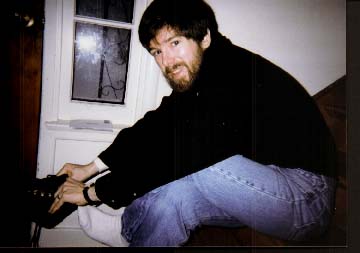
I have a photograph of myself that my daughter took at the time. I was putting on my boots to go shovel some snow. The face in the photograph is young. Optimistic, even. I was facing the weather. I’ve come to realize that all photographs are lies. They capture an instant of time that has already vanished. In my case, a livelihood. A dream that was shredded on the plains of some theologian’s ideological Somme. Winters seem to have become much harsher since then. Colleagues who’ve found jobs prosper while the rest of us fight against nightmares and that sense that all we ever tried to do was, in the end, vanity. One of the questions in the study, The Bible in American Life is, which is your favorite book of the Bible? Mine has always been Ecclesiastes. And even as I make final preparations to ship my manuscript to Wipf and Stock, I know that the preacher is right: there is nothing new under the sun.

snowman


The Cthulhu You Knew

DissectingCthulhuThe word “fan,” an apocopated form of “fanatic,” is a word borrowed from the realm of religion. Most often associated with sports, it can refer to any overly enthusiastic devotee. While I enjoy reading H. P. Lovecraft’s fiction, I think I would stop short of calling myself a fan, but were I to take that step I would have some serious competition. The circle of those truly enamored of Lovecraft have yet to break into the hallowed, or perhaps haunted, halls of the western canon. Fans there are, but not the sort who find regular play in literature classes. Still, as I read S. T. Joshi’s edited collection, Dissecting Cthulhu: Essays on the Cthulhu Mythos, I came to realize just how committed Lovecraft’s fans are.

My fascination with Lovecraft arises from his felicity with gods. Some argue that his gods are aliens, but even Erich von Däniken hasn’t stopped the true believers. Dissecting Cthulhu is a collection of articles from a variety of Lovecraft analysts debating the fine, and sometimes gross, points of the postulated “Cthulhu Mythos.” Cthulhu hardly requires any introduction these days. He has basked in his underwater fame since the internet has made a star of him. The eponymous deity of the alleged cycle, the divinity, or alien, was never really put front and center by his creator. Deities are all the more powerful for being unseen. Here is where Lovecraft the atheist becomes Lovecraft the theologian. By creating gods we tacitly admit their subtle power over our psyches. We may call them aliens or monsters, but compared to us, they’re gods.

After reading Dissecting Cthulhu, however, I’m not sure that I could say much more about him than before. This is often a problem shared by theologians—what more can you say about an entity that won’t sit still long enough to be interviewed? Gods will be gods. The rest of us are humble hermeneuts. There’s no doubt that Lovecraft touched on a deep and abiding current in human experience when he held alienation high as the standard of life on earth. Somehow we resent Cthulhu for not being there, even though his is no octopus’s garden under the sea. Other galaxies were discovered and partially understood for the first time during Lovecraft’s lifetime. Suddenly it felt pretty lonely down here with all that empty space up there. It is better to populate such a large expanse with gods. Not seeing is believing after all.


Shining Meaning

AllThingsShiningWriting with the hopes of eventually being included in the Western Canon, I suspect, is often somewhere in the back of an author’s mind. We want our efforts to be noticed and our voices to be heard. The Western Canon, however, is a very exclusive club, and the members don’t get selected easily or quickly. We value our classics. More amorphous than the biblical canon, the list of books that define western culture is slightly different with every analyst, but the biggies always make the cut. Hubert Dreyfus and Sean Dorrance Kelly see the great classics as a source of meaning in an increasingly secular world. All Things Shining: Reading the Western Classics to Find Meaning in a Secular Age is a fascinating consideration of how the writing we’ve turned to for inspiration has changed over time. Older members—including the Bible—don’t drop off the list, but newer ones are continually added. According to Dreyfus and Kelly the polytheism of Homer shone with possibilities, and monotheism led to necessary changes where the shining shifted to new characters and new stories. It is an intriguing concept.

Reading about writing generates a fire within. Some of the classics All Things Shining discusses are those you’d expect: The Divine Comedy and Moby Dick. Others are more personally meaningful, such as the work of Elizabeth Gilbert or David Foster Wallace. We all have the authors that shine for us. Moby Dick, of course, has been on my personal canon since seminary and the chapter on Melville helps to bring the thesis of this brief book together. We all know the white whale is more than an albino cetacean, and the world has benefitted from that fact ever since Melville put pen to paper.

As enjoyable as All Things Shining is to read, I was left with the impression that meaning itself has become greatly fragmented in the modern world. Without the social glue of religion, we’ve been left to chart our own course through parts of the universe yet unexplored. We select our crew by the books we read, and we decide whether Jesus or Captain Ahab is better able to guide us through such dangerous waters. They both, in their way, captain ships. Since this is an exercise in fragmentation, we don’t know upon which shore this craft will ultimately land. While Dreyfus and Kelly are philosophers, many of us have followed other paths and have come to our amateur ways of finding meaning. Some of our ships never come ashore at all. “One does not have to believe that the Greek gods actually exist in order to gain something deep and important from Homer’s sense of the sacred.” Well said! If only we could learn the lesson to be literary rather than literal, religions would allow for many ships upon this vast ocean. And still we hale each other with the words, “Have ye seen the great white?”


Holy Hollow

HollowCityEveryone wants to belong, to fit in. Growing up, I seldom felt I managed it. When you’re very young you don’t know enough to notice that you are more melancholy than other kids, or that you can’t afford the nice things they can. As you reach your teenage years, however, and you know that you come from the kinds of families that other parents warn their kids about (fairly poor, very religious, and just a bit peculiar). No wonder I find Ransom Riggs’ books so engaging. Yes, they’re written for young adults, but just about anything that Quirk Press publishes is worth the read. As an adult, if I’m honest with myself, I’m still waiting to feel like I fit in. The kids in Hollow City, the peculiars, know that they can never fit in. They have special, impossible talents that make them the targets of monsters called hollowgasts, or hollows, who try to gobble down as many as possible. Monsters, outsiders, and very human relationships—it’s a winning combination.

Quite apart from the spellbinding pace Riggs spins out (he’s a master of building tension), there are some quasi-religious elements in the books as well. I read Miss Peregrine’s Home for Peculiar Children a couple years back, and Hollow City develops the mythology a bit more. The real enemies are the wights—mean-spirited malcontents who rule the monsters. They learn that they can become demigods if they extract what makes a peculiar peculiar. That’s a religious concept: the essence that materialists tell us isn’t really there at all that makes us what we are. The children are self-sacrificial toward their mistresses, birdlike and godlike at the same time.

Peculiars have two souls, although most of us don’t know what to do with even one. The soul has, of course, come under great suspicion over the last century or so. There seems to be something that makes us what we are, and it isn’t just cells and DNA. Some call it consciousness, others personality. There are those with élan and others with spirit. We can’t call it “soul” because that smacks of superstition and yesteryear. So we read of children with two souls and none to spare. Even Philip Pullman had souls for his children in His Dark Materials. The soul, in both these book series, leaves a person completely dehumanized when it is excised. Of course, materialism will do that for free. Yes, I know it’s fiction—young adult fiction at that—but my money’s on Ransom here. Let’s hear it for those who have a surfeit of souls!


Witch Way

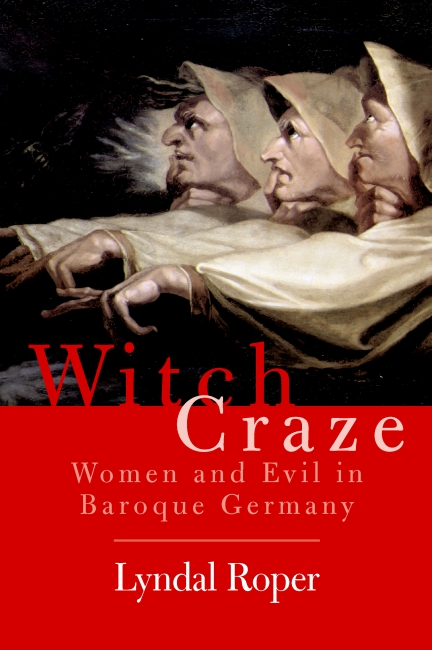
WitchCraze2Women generally bear the brunt of religious intolerance. This is an evil that has proven tenacious and insidious, and which has played out in history far too many times. Lyndal Roper’s Witch Craze: Terror and Fantasy in Baroque Germany brought this home to me once again. Books on witch hunts are deeply disturbing, but we need to engage with the brutality of the past if we want to prevent its reappearance. Roper points out that although many nations persecuted “witches” in the Middle Ages, even into the early modern period, Germany by far had the highest numbers. There were probably many reasons—no simplistic answer meets all the clues. One is clearly related to politics. Germany lacked the central cohesion of other European nations in this period. Feuding princedoms from a fragmented Holy Roman Empire had no strong central authority. When it is everyone for themselves, scapegoats are never far off. Roper doesn’t leave it at that. She points out that the central characteristic of the witch is the intent to harm Christians. Indeed, the witch is a monster born of religion, and which murdered thousands of women in the name of Christianity.

Compounding this unrealistic fear that Christians have always seem to have had, was the emerging Reformation. Distrust erupted in Germany. Was one’s neighbor a Lutheran or a Catholic? In either case, the other was heretical, from someone’s point of view. Distrust ran at premium prices. And women picked up the bill. Yes, there were male witches, most of them associated with women who’d been accused, as Roper points out. Even as the Enlightenment was burgeoning, renewed hunts for witches broke out, leaving innocent women dead in a land that valued fertility perhaps above all else. Women’s bodies, as Roper notes, were to focus of suspicion and fear on the part of a male power structure that dealt with its phobias by the use of violence. Even the Enlightenment couldn’t wipe this slate clean.

Today in the western world, secular thought has replaced superstition for many people. Women are not longer accused of witchcraft. Besides, witchcraft is a chic new religion in many places. But the longed-for equality is still not here. In many parts of the world religious violence is still directed at females by male power structures that should’ve died out with the fading of medieval Teutonic anxieties. Those who perpetrate such violence hide behind scriptures—even the Hebrew Bible acknowledges the reality of witches. Religion creates its own cadre of monsters, and those with stout conviction look for women to blame. The flames of the pyres did not lead to a universal enlightenment and the Tea Party tells us Christianity is still endangered in a world where it may spread largely unhindered. One truth, however, remains. The truly endangered are women, and men who don’t fight against the real monsters do not deserve to be called defenders of the faith.


Weathering the Psalms

Book contracts make me happy. In the case of an academic out of water, they are rare. Few people care what a PhD has to say unless s/he has a university appointment to back him or her up. Still, I wrote Weathering the Psalms while I was fully employed at Nashotah House. I carved the time out by waking at 4 a.m. to do my writing (a practice that has stayed with me ever since), and from 1995 to 2000, the bulk of the book slowly emerged. The day I was terminated at Nashotah I was working on a revision of the manuscript, a bit uncertain of what direction to go. After the trauma of that day, I couldn’t face my little project without the anxiety of association tainting the effort. It seemed to represent my failures in finding the job I knew I was meant to do. Such potent reminders soon weary even those of us who awake well before the sun.

Working in isolation, I had noticed that the weather is a very common motif in the Psalms. The problem is, any attempt to fit the evidence into an overarching scheme is artificial. I undertook a survey of all the weather references in the Psalms, and explained them as scientifically as a layman could. The result was not the smoothest reading, nor was it tied together with a strong thesis, but it was important. Although I have not been in a position to keep up with the research such a project requires, I’ve not seen anything similar emerge. The weather, however, still happens. And people still blame it on the divine. In ancient times there was no natural world. What we call nature was actively directed by the divine. The weather is probably only the most obvious example. We all know the phrase “everything happens for a reason.” This encapsulates the biblical view of the weather. This winter with its series of storms has reminded me of this, forcefully.

Photo credit: Don Amaro, wiki commons

Photo credit: Don Amaro, wiki commons

Ironically, editors started to show interest in the project only after I’d abandoned hope of ever getting it published. It was the fruit of my despair. It represented several years of my academic life, but, like its creator, it was growing older. So last week when a contract landed on my desk from Wipf and Stock, a profound happiness settled in. A sense of completion. I am not in a position to update the contents, but at least one academic publishing house sees the worth in the manuscript that came from so much personal experience. A decade is a long gestation period. I suppose if I had to write the book today it would reflect much more the experience of world-weariness that comes from not ever finding the job you know you were meant to do. Nevertheless, it is a small offering to the deity of the weather, and I am glad that, come next year, others will be able to share in my struggles to make sense of that world.


Faithful Places

PlacesOfFaith Is there any more American a diversion than the road trip? Those of us who live on large land masses with relative ease of travel sometimes like to go for, well, the fun of going. If you’re a sociologist, however, you might find funding for a road trip if you can put a thesis behind it. Christopher P. Scheitle and Roger Finke made such a trip and entitled the results Places of Faith: A Road Trip Across America’s Religious Landscape. This isn’t really an academic book, but it does contain some interesting information about faith communities that might otherwise remain off the radar (with the exception of mega-churches, one of which they visit in Houston). Religion, it becomes clear, is still a large part of life for many Americans, and not just small-town rubes like yours truly. Thriving faith communities are found in New York, San Francisco, Houston, Detroit, and Salt Lake City. Scheitle and Finke don’t neglect the smaller venues either, stopping at rural sites in Nebraska and Pennsylvania. Perhaps the biggest take-away from their book is that religion is diverse and deeply embedded in the United States.

While many claim that atheism is humanity’s next big step forward, it has to be admitted that freedom of religion (without which atheism might be problematic) has gone far. Although Places of Faith sticks pretty close to Christianity, Islam, Buddhism, and Judaism, there can be no question that many, many other religions constitute a nation where “mainstream” is not as normative as it may seem. As also became clear from the descriptions and photos the authors provide, religions are fond of splintering. Faith can be made of brittle stuff. As I’ve argued before, we are really each our own entity of personal religion. We share some traits with the larger group, but unless we’re an identical twin, likely nobody thinks quite the same way we do. Religious leaders know this well—uniformity is often a thinly veiled illusion.

Having studied religion for most of my life, I can’t say that there was too much new to me in this little book. It provides a tolerant, and colorful tour through some religions that will be less familiar to those who don’t consider just how broad the landscape is. You won’t become an expert in Mormonism or the Amish, but you might learn a thing or two about both. The authors encourage something that many religion majors know by rote: you learn a lot by exploring your local religious landscape. As a college student I tried not only Presbyterianism and Pentecostalism, but also the Jehovah’s Witnesses and the occasional foray into that mysterious realm of Episcopalianism. There was more diversity, even in that small town of Grove City, than I had the ability to explore on my own. This much was certain, however, people find meaning and comfort in their beliefs. To deny them that is to deny them what makes religious freedom the wonder that it is.


Strange Orthodoxies

SeriouslyStrangeI had already read three of his books before I called on Jeffrey Kripal. Reading his work created a strange longing in me, as if I had been missing something I once might’ve had, but had lost on my way to academia. Kripal is a fearless writer and a profoundly kind man. He gave me a copy of his edited collection, Seriously Strange: Thinking Anew about Psychical Experiences, (co-edited by Sudhir Kakar, part of the Boundaries of Consciousness series). Like myself, Dr. Kripal had come to the conclusion that a number of apparently disparate human experiences actually belong to the same overarching class. Religion shares not a little ground with monstrosity, heroes, and the paranormal. With the exception of religion (generally) the other phenomena are classed as puerile and not worthy of consideration beyond their juvenile appeal. No real scholar would bother with them.

The orthodoxy of knowledge is a funny thing. I have been fascinated by what science teaches us about the universe since I was I child. Some of it is seriously strange as well. I always thought that science was observing the world closely and drawing logical inferences. Somewhere along the line, science became theory driven—I suspect it was some time after Darwin; and even Freud recognized the draw of the uncanny and how it related to numinous regions of human experience. In any case, by the time I was able to comprehend (partially) the fantastically complex system that science had built up I found a universe teeming with black holes that nobody had ever seen, and sub-atomic particles that behaved very naughtily, not being consistent with what we’d expect. Indeed, uncertainty abounded. Uncertainty is crucial to the humility which is the only true adjunct to human knowledge. We can only know enough to say we wish we knew more.

In the last few decades, however, science has adopted a magisterium like that of the medieval Catholic Church. That realm of unchallenged knowledge ignores the anomalous and declares that everything is reducible to material. Ironically, it seems, material is reducible to energy, and energy is less well tamed. Our understanding of our universe is still in its infancy. We haven’t even learned to walk yet. From the beginning, however, we have been religious and even science suggests that it may be biologically beneficial. So Seriously Strange takes some of the borderlands of mainstream science and looks closely at them. Some of the assertions are modest, and nobody claims to prove anything here. The essays will, however, instill a sense of much needed wonder into a Weltanschauung that increasingly has no space for simply being human.


Myth-story

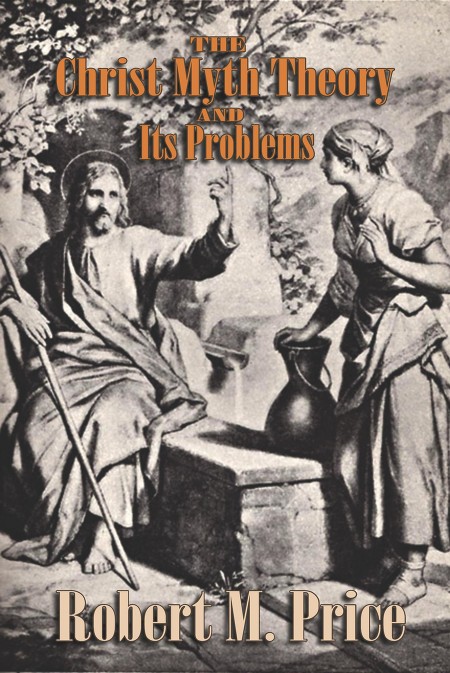
ChristMythTheoryEither there was, or there wasn’t. An historical Jesus, I mean. I just finished reading Robert M. Price’s The Christ Myth Theory and Its Problems, and I have to admit that it raises some interesting points. In short, Price positions himself among the Christ Myth school—scholars who doubt that there was an historical Jesus. This proposition may come as a shock to many who are raised never to question the orthodoxy of religion handed down from parent to child. Given the popularity of Christianity worldwide, it may seems like a difficult premise to accept. Price suggests that the figure of Jesus might’ve been a midrash (commentary) on Hebrew Bible texts. When you look closely at many of the Gospel episodes, they are couched in language from the Hebrew Bible, and for those familiar with ancient midrash, the elaborations he proposes aren’t that far-fetched. The real question, for me, is a bit more broadly based—how do we ever know what really happened? Religions, as I suggested yesterday, are echoes from the past. The past, despite the internet, is inaccessible to us beyond what ambitious writers and artisans have left behind for us. The bulk of making history is interpretation.

This should give us pause. Yes, there are undeniable events, witnessed and recorded by many. What really happened, however, is an atomistic enterprise. Take Lincoln’s assassination, for example. It happened, we’re pretty sure. What happened, we reconstruct from what we have left for us in witness accounts. But as National Treasure 2 shows, a little imagination can throw the whole picture askew. Or even closer to our own time—what really happened at John F. Kennedy’s assassination? Some of the facts we have, others we never will. Some posit high-level withholding of information. Try to put that together with a truly messianic figure that some claim is actually divine. The Gospels differ a bit on the details, particularly after Jesus’ execution. What really happened? A harmonization of the Gospels? Anything at all? Who was there to see it?

Religions are deeply tied to past events. Even the modern religions that are constantly emerging—new ones are formed on a nearly daily basis—soon distinguish themselves because of their histories. To get at those histories that we didn’t witness, we need to rely on the records of those who did. Some of those religions just won’t take off—the Shakers, for example, are slowing going extinct. The Oneida Community is already gone. Others, like the Church of Jesus Christ of Latter-Day Saints, scrape the stratosphere with their success. And these are just examples of religions from the Second Great Awakening. Did Joseph Smith really meet all those figures he claimed? How can we know? When it comes to Jesus, we might think we’re on solid ground (as Smith would agree, if he existed). Price asks us to consider that assumption anew. Direct evidence may not be plentiful, but on the strength of ancillary evidence, most of us see Jesus as historical. Of his life we have very little. What you make of him, however, is a question of faith. And interpretation.


Engineering Meaning

ExistentialPleasuresofEngineeringEngineers have been a part of my life in many ways. My mother’s father was an engineer. Although she did not know it, my grandmother’s grandfather was also an engineer. My wife’s father is an engineer, and grandparents on both sides of her family were either scientists or engineers. My daughter is studying engineering, and other relatives have made it their profession. In fact, had the peril of my everlasting soul not caught my early concern, I would likely have headed into the sciences myself. Not that I would have made it in the profession, but the interest is certainly there. Many years ago my wife bought me a copy of Samuel C. Florman’s The Existential Pleasures of Engineering. Unlike my claims about engineering, I can boldly declare myself an existentialist. The moment I found out what existentialism was, I knew it was my outlook. Now that I am firmly settled in a profession about as far from science and engineering as I can be, I decided to read the book.

Quite surprisingly, I found Florman turning to religion from time to time. Existentialism isn’t inherently religious, but engineering is inherently empirical. Florman notes that the New Testament, with its spiritual values over the physical, often presents serious problems to engineers, enmeshed, as they are, in this universe. That made sense, even if it surprised me a little. A few pages later, however, I was astonished that Florman praises the “Old Testament” for its more earthy viewpoint that has a great appreciation for the physical world its god has created. Perhaps there was a reason my life took this track after all. Although I’m not Jewish, I always felt an attraction to the Hebraic outlook. Maybe I should’ve been an engineer.

Toward the end of his extended essay, Florman once again turns his thoughts toward the spiritual. Noting that massive works of engineering tend to evoke the divine—the most obvious, but by no means only, example being cathedrals—we glimpse a sense of the sublimity in the greatest of human edifices, sacred or secular. The engineer still has recourse to the spirit which is, to a frustrated scientist, a cause for great hope. When I pulled a book on engineering off the shelf, I certainly did not expect to find any religion in it at all. Of course, the book was written before science and religion had become entrenched in such a shrill standoff as they seem to be today. There is balance here, and an appreciation of beauty. And when the engineer does the impossible, it is indeed a work of human divinity.


NC-17

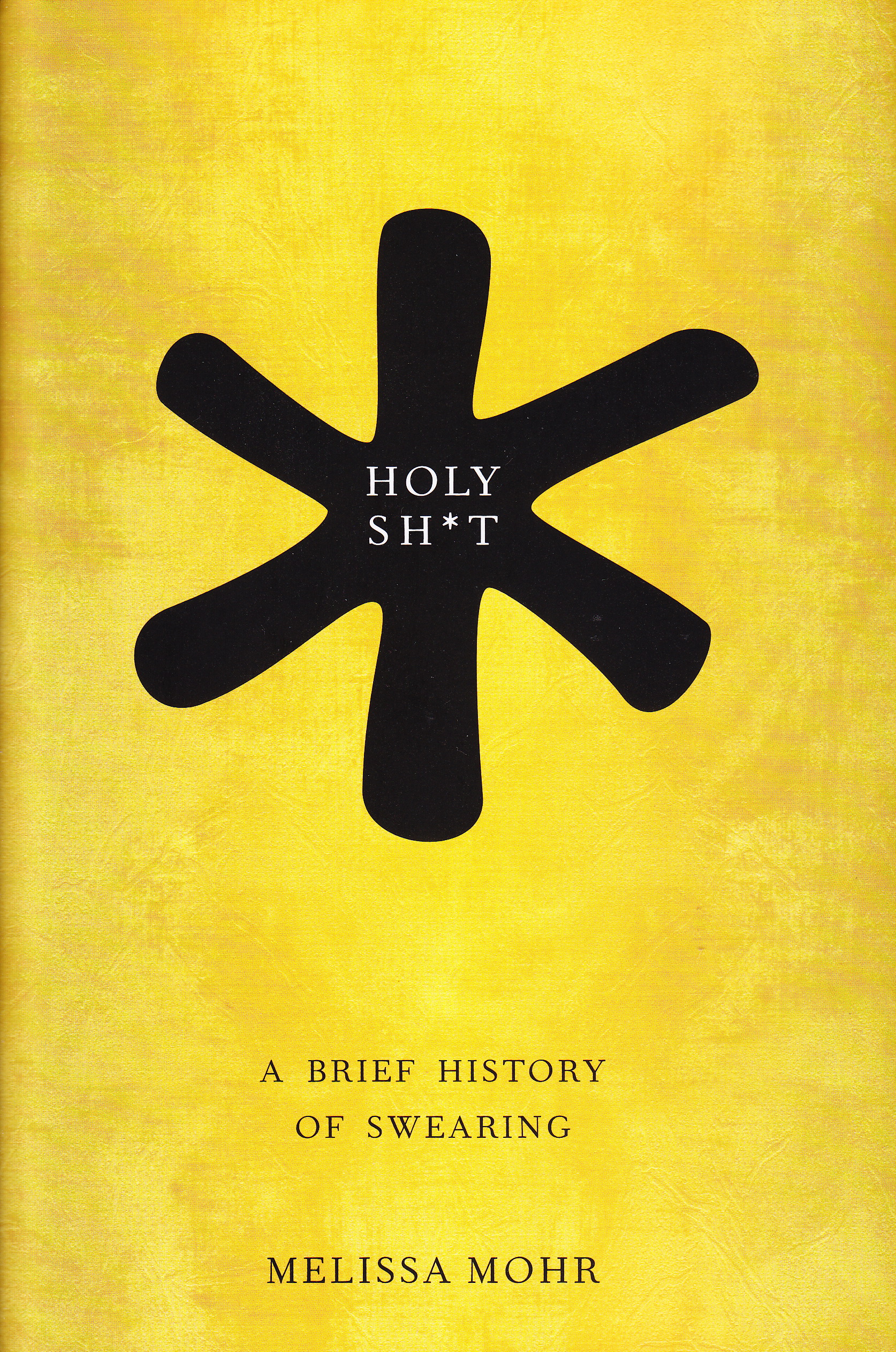
HolySh*tHoly Shit (in the philosophical mention sense, not the use sense), by Melissa Mohr, is a book I had intended to write. I’m glad Dr. Mohr beat me to it, however, since her treatment would be difficult to top. Few ideas are so arresting as the forbidden topics, and Mohr shows us that swearing occupies a compartment of the brain separate from regular speech, and it may even have therapeutic qualities. A Brief History of Swearing, to use the less offensive subtitle, is not an easy book to read in public. Since most of my reading time is spent in densely packed transit vehicles or waiting areas, I always wonder who might be reading over my shoulder. As a short guy that’s always an issue. Nevertheless, Mohr’s book is fun and informative, and I suspect I will read it again for all the information packed into it.

You see, Mohr uses both words of the title in a literal sense. Beginning with the Romans, but then stepping back to the Bible, clearly swearing has religious origins. While the Bible doesn’t prohibit coarse language in any direct sense, it does believe in oaths. Swearing oaths was serious business, and that seriousness led directly to the concept of swearing. Combine that with the idea of cursing (which the ancients also believed effective—ask Saint Peter) and you get the spectrum covered by the concept of “bad words.” (At least up until modern times.) Although I’ve studied religion my whole life, I was surprised how much I had to learn about the more earthy aspects of spoken sacred language.

As Mohr amply demonstrates, what counts as swearing changes with time. Giving the case of the Lindisfarne Gospels, she illustrates how a glossing priest causally dropped the equivalent of a medieval f-bomb right there on the pages of the holy Gospel. It wasn’t considered swearing at that historical moment in time (and besides, a fair amount of it goes on in the Bible). How far we’ve come. I recall one of my Nashotah House students telling me how he had to take a rather freely expressive classmate aside and tell him he was pretty sure that the f-word was an inappropriate adjective to use when referring to the Trinity. But now I see the wisdom of the ages at play. People use their most powerful words for what moves them most deeply. I doubt Mohr had quite that in mind, but if you read her delightful study you can find out what I may be full of after all.


Who Loves You?

DarwinLovesYouWonder is too easily lost in a reductionistic world. Even when we get to the level of quantum mechanics we’re told, “it’s just physics.” How depressing. Such ideas seem to have been in the mind of George Levine as he wrote Darwin Loves You: Natural Selection and the Re-Enchantment of the World. Don’t get me wrong, Levine does not back away from the secular starkness of biology. What he does, however, is ask whether or not evolution by natural selection shouldn’t create a kind of secular enchantment. Almost from page one Levine has to address religion, the tyrannosaurus in the room. Religion, for all its shortcomings, has provided people with a sense of purpose, even enchantment, from days long before any temples or priests existed. The materialist response of “buck up, there’s nothing more than biology going on here,” has proved to be of little consolation to the vast majority of people on the planet. One of the reasons, and I speak only for myself here, is that it just doesn’t feel true.

Truth is a slippery concept. In origin the word seems to derive from something like “to have good faith.” In terms of factuality it also has the meaning of conforming to reality. Reality, however, is equally perilous when it comes to authoritative definitions. Reality means nothing if it is not perceived. Perception may actually bring something to the table, if particle physics are to be believed. Empirical method is pragmatic—I believe that every time I grudgingly climb aboard an airplane, or turn on a computer. At the same time I sense that there may be more to it than that. No matter how much science I read, that perception simply won’t go away. The professors of materialism have learned to quash that still, small voice. The hollow feeling with which it leaves me, however, may be significant.

Evolution and religion are inextricably interwoven. Religion, although poorly defined, has to do with finding meaning in a world that is often harsh and cruel. No doubt such feelings evolved, and some of our animal kin may share them with us. When molecules break down into atoms, they generally lose the characteristics of the molecule. We now know that we can keep breaking even the invisible apart until we’re left with only theory as to what might be below. This may be true. At the same time, the wonder with which we might stand before a cyclotron or a little robot rolling around the surface of Mars, the question of truth emerges like a rock that wasn’t there just a few days before. A gnawing sense that we don’t have the full picture. A sense that no matter how far we tear apart, the total will always be far more than the sum of parts. Levine is right; evolution can induce wonder. And truth, at its very heart, is a matter of faith.