The Fault in Whose Stars?

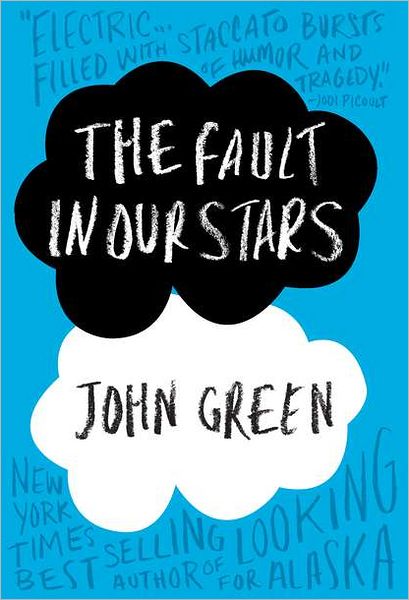
The_Fault_in_Our_StarsTheodicy. I’m no theologian, but the problem of suffering erects a wall ever higher between wanting to believe and actual experience. Many great thinkers have laid down their faith because of this insuperable hurdle. The movie version of John Green’s The Fault in Our Stars opened last night, but I didn’t see it. It was difficult enough to make it through the book. I have to admit feeling a bit wimpy about finding a young adult novel emotionally challenging, but it just is. As I mentioned a few days ago, Veronica Roth’s Divergent trilogy has been topping charts lately, but so has John Green’s novel of childhood cancer. Theodicy is deeply inscribed in this sad tale of loss and love. From a purely biological perspective, the death of the young is explicable, but that seems to be the easy way out.

I’ve been toying with The Fault in Our Stars since January. Picking it up long enough to read a few pages, then growing frightened and putting it aside for a few weeks. The story begins in “the literal heart of Jesus” in a church for a cancer support group where Hazel meets Gus, and, as young people do, falls in love. Green is clear on one point from the beginning: no novel where the protagonists are victims of cancer can ever have a happy ending. We just have to watch and wait for the inevitable. The children return time and again to the “literal heart of Jesus” but no healing comes. They face loss and every page you turn brings more imponderable questions. Yes, this is fiction, but we live in a world where childhood cancer exists. And childhood starvation. And childhood victims of abuse and violence. And still we try to find a way to fit it into a broken-down theology and wonder why we don’t smile more often.

I don’t shy away from provocative fiction. I read scary stories with all sorts of monsters. Finding ourselves, however, in a world where neither rationalism nor theology really makes all the sense they should, sometimes the scariest stories are the truest to life. John Green’s fiction, it comes as no surprise, is frequently banned. Reading it as an adult one finds parts predictable and parts handled too gently, but with enough realism thrown in to want to see it through to the end. Banning books, however, is merely an attempt to shield children from that which they need to see. We do no favors, hiding the truth from those best equipped by nature to accept it. The real question is whether theodicy itself can survive. Perhaps, like the characters in the novel, it will come to its own quiet termination with no real answers to offer.
Map and Territory

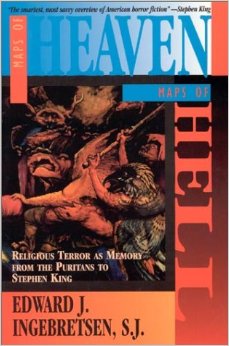
MapsHeavenMapsHellAt first glance the Puritan divines of early New England should seem to be as far from horror films, on the cultural divide, as phenomena can be. After all, academics long ago declared “genre fiction,” and particularly Gothic and horror fiction, to be lowbrow at best, and generally of no cultural worth. The amazing success of scary movies only underscores this point. Edward J. Ingebretsen (S.J.), however, begs to differ. His wonderfully insightful book, Maps of Heaven, Maps of Hell: Religious Terror as Memory from the Puritans to Stephen King, is a surprising study of how religion and terror share much that is essentially human. On this blog I have, from time to time, claimed that religion and horror are close cousins. In fact, they may be siblings. Since studies of Cotton Mather and Jonathan Edwards are often produced by Reformed, or at least Protestant, theologians, it may be that a Catholic thinker will catch aspects often overlooked. The Puritans, with their Calvinistic underpinning, had a worldview that holds much in common with standard horror fare. Ingebretsen suggests that to map Heaven, you must also map Hell.

The map conceit works well as the reader navigates through unconventional ways of thinking. The fears of the Puritans included the fear of God, and those who read or watch horror have noticed that nothing scares like the divine. It may not be on the surface, however. Even those not accustomed to deep digging can, upon a few moments’ reflection, see that the Gothic writers of the American canon have drawn repeated from this well. Many literary experts (well, some) celebrate H. P. Lovecraft’s atheistic rationalism, but enjoy his tales of the old gods nevertheless. His modern heir, Stephen King, is quite open about the potential fear of religion. He even blurbed the back cover of the book.

As society grows continually more secular, the religious impulse will not disappear. Sublimation, the process of changing states, may hide what is happening from the casual eye. A close look shows, however, that the same fears Mather and Edwards unleashed on witch-addled, spider-fearing New Englanders, have come back to us in pulp and celluloid. Religion has its earliest roots in a kind of holy fear, it seems. The innovative human mind, however, with its drive to rationalize, devised mythologies that make fears seem plausible. Those mythologies are relatively easy to believe. Everybody likes a good story. Stories, with all their twists and turns, can leave you lost in the woods. It’s good to have a map. I would suggest Maps of Heaven, Maps of Hell. You may still be scared, but you may feel more sophisticated for it.


Two Roads Divergent

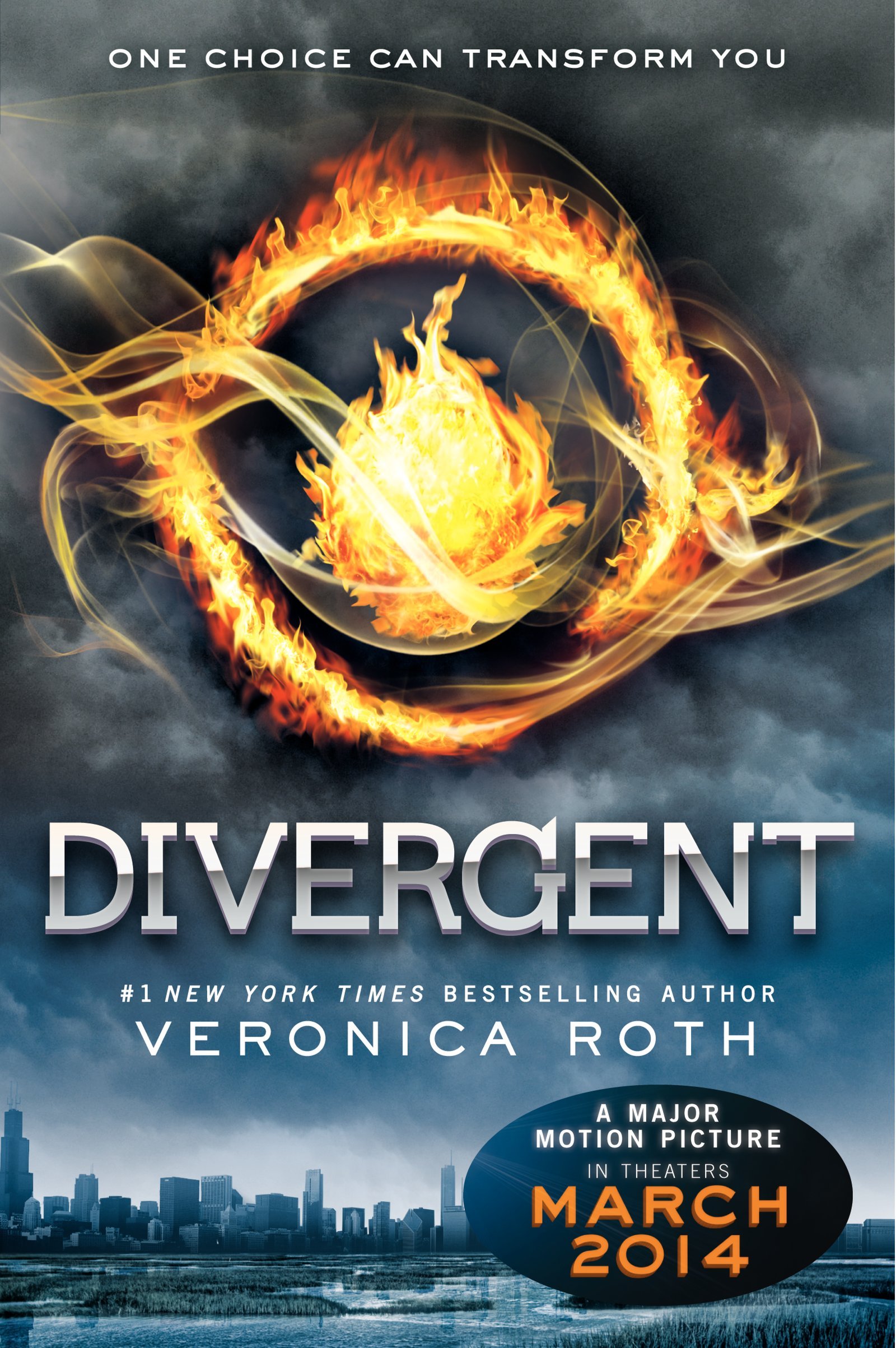
DivergentOne of the most hopeful signs for culture is the quality of young adult fiction on the market. Since I’m now in the book industry, Publisher’s Weekly is required reading. I always take a look over the fiction lists as well as the non, and over the past several months a couple of “teen fiction” books have been near the top for regular bestseller lists as well as for demographic-specific ones. (That is, adults seem to be reading them too.) One of those books is Divergent by Veronica Roth. While movie tie-ins certainly don’t hurt, as many of us opine, it is difficult to do justice to a complex story on screen. Divergent is one of those books that stays with you after you’ve closed the cover, and that suggests to me that something deeply meaningful is going on. What about dystopias is so compelling?

I’m not indulging in any spoilers to say that Divergent is a dystopia. Set at an indeterminate time in the future, civilization still exists—at least in Chicago—as society has fallen into five factions: Dauntless, Erudite, Candor, Amity, and Abnegation. Each group has its own beliefs as to why civilization collapsed, based on philosophical dispositions. Abnegation, the self-deniers, are the leaders of government. And clearly, the idea of Abnegation is a form of quasi-monastic Christianity. In fact, among the factions, Abnegation is the only one that seems to mention God. The other groups, stressing bravery, intellect, honesty, and peacefulness, don’t really have much need for the divine. To deny oneself, however, requires a powerful motivation. Even the protagonist’s name, Beatrice, is taken from its favored status among early Christians. I know little of Veronica Roth, but I have to wonder whether Dante is in the background here.

In the acknowledgements to the novel, Roth first gives thanks to God. As a high school convert to Bible-based Christianity, I suppose that’s only natural for a writer who is, at the moment, only twenty-five. Writers for young adults often have their religion close to the skin. Stephanie Meyer’s Mormonism translates into moral vampires. Orson Scott Card provides Ender Wiggin with values from the same faith tradition. People are, despite the logical implications, inherently religious. That doesn’t prevent Divergent from being a page-turner. Full of action and personal development, the first book of Roth’s trilogy bristles with self-sacrifice and belief in something better to come. Even if it’s a world we have to make ourselves. And like most human enterprises, it comes out as a well-meaning dystopia that underscores the value of reading for us all.


Victorian Secret

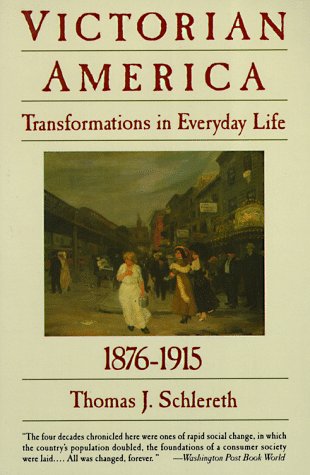
VictorianAmericaPerhaps it’s because the Steampunk World’s Fair is still on my mind, or perhaps because I’m increasingly curious about the way we came to be how we are, I read Victorian America: Transformations in Everyday Life 1876-1915. In this study Thomas J. Schlereth surveys the main aspects of daily existence during the turn of the nineteenth century into the twentieth. It is sobering to consider how quickly change has accelerated since then. Still, so much of what seems normal today was novel just a century or so ago. Although Schlereth doesn’t devote a chapter specifically to religion, he does tie it in with its natural analogue, education. We quickly forget that education was largely established because of religious principles. You can’t tell it today, but one of the main impulses behind higher education was the desire to educate people about the truths of religion so as to improve society.

Also developing in the late part of the nineteenth century was a new religious movement that considered five principles to be fundamental to Christianity. What’s more, those who promulgated this outlook also claimed it was true from the beginning of Christianity, although we know this is decidedly false. The inerrancy of Scripture, the virgin birth, Jesus’ divinity, the second coming, and atonement through Jesus’ sacrificial death—a few concepts that had rudimentary form earlier in the religion’s history—became non-negotiable. Fundamentalism, a new religion, was born in this era and claimed a right to parse true Christianity from false Christianity. This virulent form of belief quickly became politicized, and the relationship between religion and politics clearly impressed Americans from early days. We still reap its whirlwind.

Ironically, the Victorian Era, as designated by Schlereth, saw the birth of the Social Gospel. Doctrine wasn’t the first question on the minds of these reformers, but the human condition was. Yes, they tended towards Fundamentalism, but those who believed in the Social Gospel wanted first of all to eliminate human suffering and misery. It was they, not the Fundamentalists, who came up with the question, “what would Jesus do?” Education and religion eventually divorced, and the Fundamentalist children grew ever stronger in their conviction that they alone were right. The First World War brought a crisis to an optimistic culture that believed the second coming was just around the corner. Of course, we’re still waiting. In the meantime, if you’d like to learn how we got here, Victorian America is not a bad way to pass the time.


Akedah

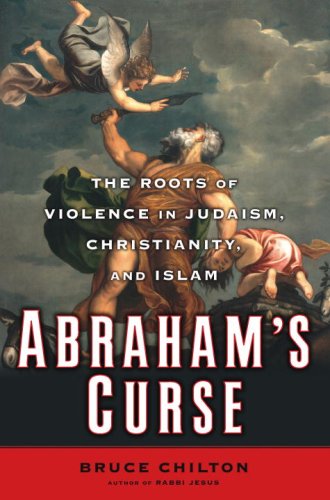
AbrahamsCurseViolence, in its most basic form, is to be blamed on evolution. Not the theory of evolution, but the fact of it. More precisely, violence is a reflex of the struggle for existence. To live animals have to eat and to eat, many have evolved to kill. While violence is endemic in the world, it isn’t so rampant that species overkill their own kind. That’s rather rare, actually. Human beings have engaged in violence against one another for our entire history, and it is only within the last century or so that we’ve made any concerted efforts to stop violence against those who are different than ourselves. Among the impulses both advocating and quelling violence is religion. Bruce Chilton’s important study, Abraham’s Curse, scours the monotheistic family tree for information on why all three major Abrahamic faiths advocate martyrdom. Or more disturbingly, why they insist on sacrifice, even of our own species.

Chilton begins with the story of Abraham and Isaac. The Akedah—the binding—or near-sacrifice of the beloved son. Since Judaism, Christianity, and Islam all share this story, and since it sets the tone of a God who seemingly demands human sacrifice, Chilton explores its implications and possible origins in sacred violence. Sacrifice predates any written records, although, as Abraham’s Curse points out, it became an established fixture in urban culture when temples began to play an important role in ancient society. No one knows why we sacrifice. By the time writing came along, it was already an established part of the picture. When the book of Genesis was penned, the story of the binding of Isaac became sacred scripture. Even in the earliest days of biblical interpretation scholars puzzled over what was going on here and its chilling implications. God, after all, comes up with the idea that Abraham should be tested with the cruelest of tests. Although the Bible isn’t explicit on the point, Abraham and Isaac never appear together again after the incident until Abraham is safely dead.

Building on this common story, Chilton takes the reader through the stories of the Maccabees where Judaism develops the concept of martyrdom, through Christianity where some actually begged for it early on, and into Islam, which still practices animal sacrifice. The idea that it is noble to lay down your life, and worse, the lives of others, points to a guilty Abraham who is a paradigm of faith. An Anglican priest, Chilton is no angry atheist. He does not, however, pull any punches. If monotheistic traditions gave us a violent heritage, they can also work to dismantle it. Ironically, it is when religions are in the ascendent that they exercise their power to perpetrate violence. All three major monotheistic religions officially advocate peace and justice. But somewhere in our deepest human experience, we know what it is to feel hunger and what an opportunistic animal does about it. Abraham’s Curse does offer solutions, however, if only we could get human beings to put down their spears and read.


Genizah Bible

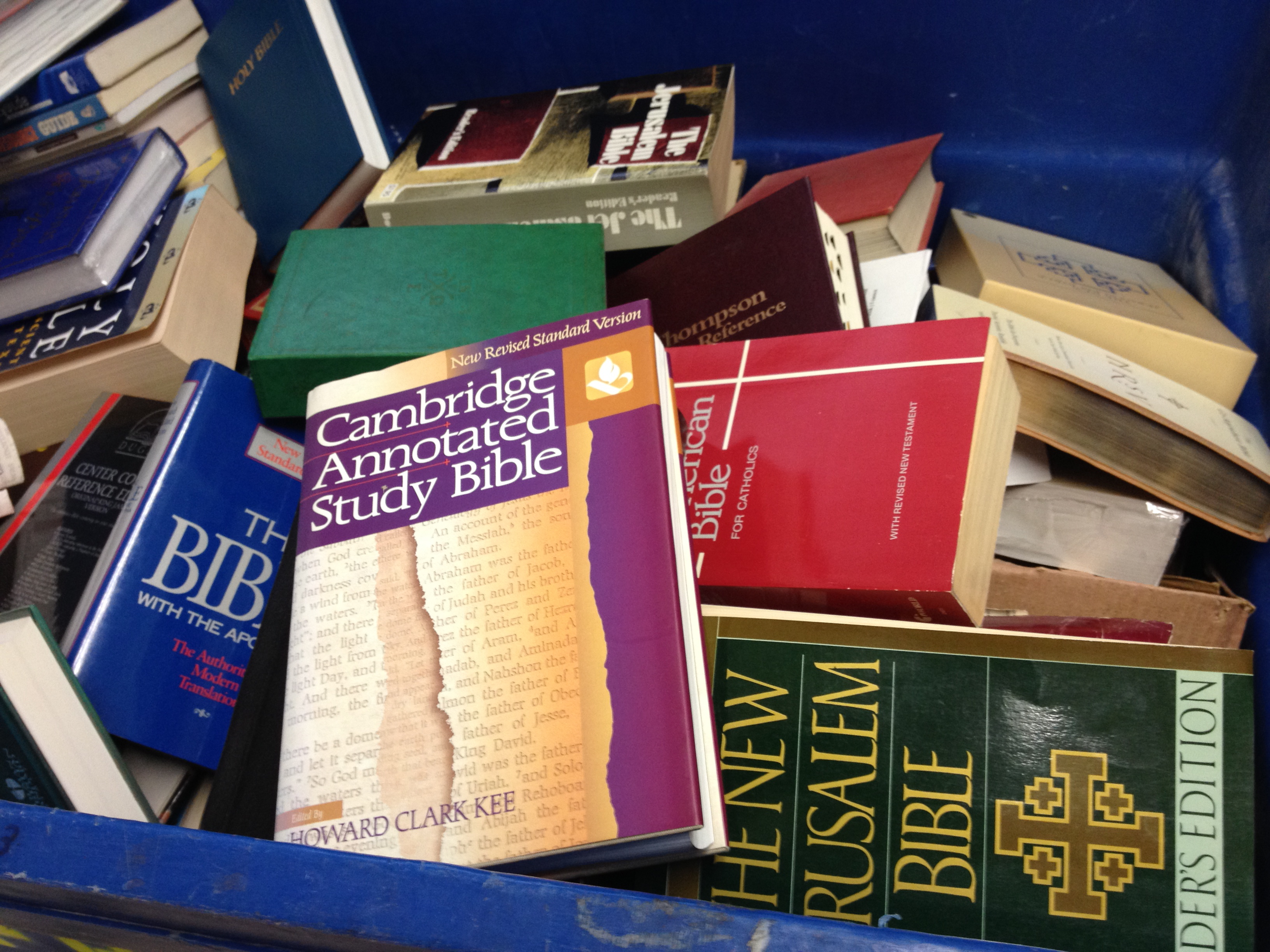
Overproduction is a survival strategy among many animal and plant populations. Just consider the number of acorns under one oak tree, or “propellers” under a maple in the spring. Swarms of ants or the legendary multiplication of rabbits. It’s as if nature knows most won’t survive, so you’d better prepare plenty. The same applies in the publishing industry. Every book is a gamble, and you can’t know which one will sell out and which one will collect the dust of ages on a warehouse shelf—a shelf you have to pay dearly to lease. This applies to best-sellers as well, such as the Bible. By almost any standard the Bible is among the best selling books of all time. Literally more than a billion have been printed. It exists in multiple translations and in many languages. And many copies end up sitting on the shelf. So many, in fact, that eventually a kind of limit is reached and you either need to rent another warehouse or thin the stock a bit. In my position, knowing what other publishers are doing is vital, so buying their Bibles is important. Then someone else needs your shelf-space.

A genizah is a repository for “retired” sacred scripture featured in some synagogues. Texts that are too sacred to toss into the garbage when they’re worn out may be buried among others of their kind in a genizah. Well, a storage room at work isn’t exactly a genizah, but it is a room where hundreds of out of print Bibles lie forgotten. Salvation in dry storage. As the new kid in the department, I get to clean the closet. Our own Bibles we are able to sell, but the hundreds amassed from other publishers over the years, well, we aren’t running a genizah here.

My instructions are: “see that dumpster over there?” For a kid who grew up believing that it was an order of sin even to place another book on top of a Bible, the idea of filling a dumpster with the good book presents a crisis of a greater magnitude. The simply is no room in the inn. Besides, I’ve lost a job or two already. And I’ve seen the damage that Bibles can wreak in the wrong hands. Still, I followed the Bible through three degrees, and in some form or another my entire life has revolved around that book. But I’m talking like an idolator. Bibles are big business. Few Bible publishers can’t turn a profit. And profits, we all know, lead us to produce even more.

IMG_1364


Real Life

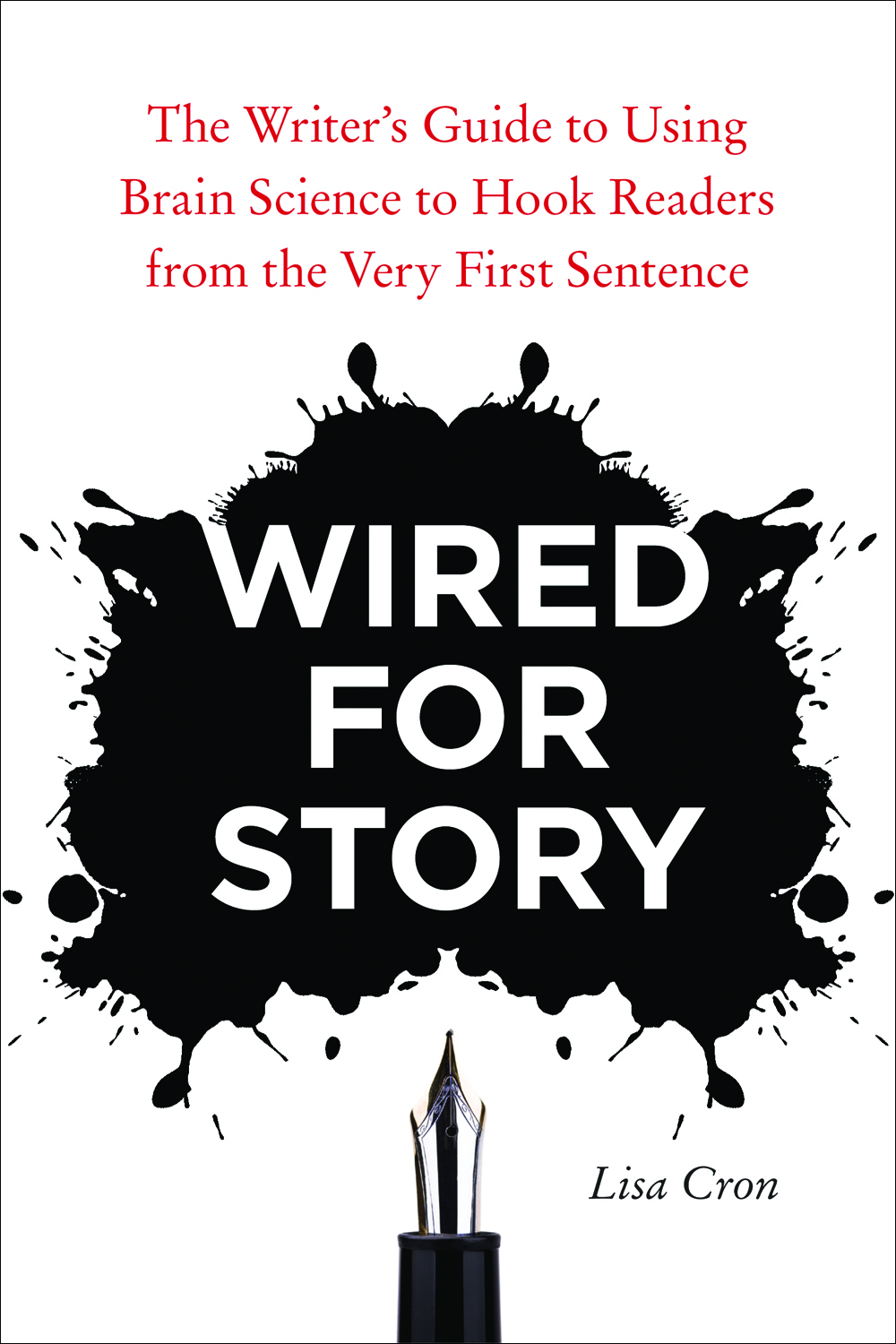
WiredForStoryThe brain, it seems to me, holds all of the cards. After all, what we call “reality” is actually a perception of what’s “really” there mediated by our brains. Philosophers and scientists have long warned us that direct participation with the universe is a figment of the, um, brain. This kind of thinking may have led me to trouble in certain jobs I’ve held, but there is no escaping it, unless we posit that there is another thinking center in the body. If there is, it must be invisible. As a dabbler in the literary arts, I couldn’t therefore pass up Lisa Cron’s Wired for Story. The premise spawns one of those “aha” moments so large that you wonder why nobody had tripped upon it before: brain science can reveal what makes a good story. For example, were I smarter, I would’ve begun with that wonderfully witty story told by Uncle Frank that kept us engrossed as kids, and left us roaring with leonine laughter. Only I don’t have an Uncle Frank, and the stories I grew up with were of the written species.

Cron, however, reminds us of a very important point: if it weren’t for feeling, thought would not be possible. This isn’t telling tales out of school. Even the most Spock-like rationalists know it’s true: emotions are essential to the thought process. Even the most proficient of thinkers can be stopped by the vague, “I don’t feel like—” (fill in the blank). To think well, we must feel that we can. When we greet someone we don’t lead with “how are you thinking?” but with “how are you feeling?” (often apocopated to “how are you?”). We interpret our world through a combination of reason and emotion. Both are necessary for survival. Think about it: does the world really make sense?

In writing, emotion plays an essential role. We lay aside the story that makes us feel nothing. Reductionistic materialists often espouse that getting down to the smallest piece of the smallest particle will eventually explain it all. The more spiritually inclined will ask them how it makes them feel. Emotion is the under-appreciated of these twins. While great ideas may come through in a novel (I can’t help but mention Moby Dick again), it is the feeling of the protagonist—the spiritual (call it what you will) struggle—that draws us in and keeps us reading. It may be secular or religious, but the realm of emotion reminds us that to be human is to feel. And if by chance you’re still reading this, I have a feeling that you might agree.


Underwater Zombies

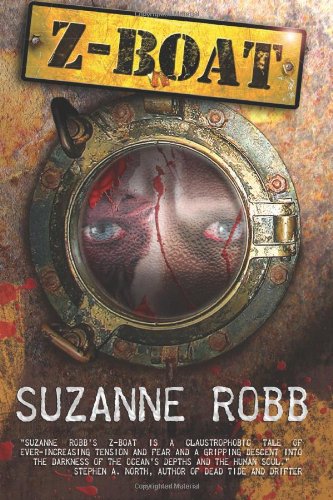
Z-BoatOne of the (many) benefits of blogging about zombies from time to time, is being sent books to read on the subject. Just as I cracked open The Zombie Bible volume What Our Eyes Have Witnessed, Permuted Press sent me an ebook of Suzanne Robb’s Z-Boat for comment. Z-Boat is an action novel with a strong female protagonist, that sets two naturally phobia-ridden subjects together: submarines and zombies. Since zombies, whether they acquire their undead status by vodou or by infection, are inherently a religious creation, they find their way onto this blog often. Unlike Stant Litore’s zombie universe, Robb’s is solidly secular, no mention of deities or demons anywhere. Set in a post-apocalyptic future (aren’t they all post-apocalyptic these days? We have difficulty envisioning anything much better), the crew of the submarine Betty Loo has to fight off a host of zombies intent on eating, and yes, converting, the living.

Zombies, whether conjured by spells and concoctions or by a contagious organism, while unthinking, always appreciate converts. The age-old human fear of being overwhelmed by swarms pertains just as well to the undead. We tend to avoid cemeteries at night, but death has a way of seeking us out in any case. I knew when my wife received a rather unsubtle flier in the mail advertising a local mausoleum that I too was likely on the list. Isn’t being a zombie all about the desire to survive, no matter what the cost? Still, it’s nice to know your custom is valued, right down to the end.

As I’ve mentioned before, zombie stories are difficult to take seriously in any rational world. Why a corpse with no stomach and no tongue would want to eat baffles the quasi-scientific mind I’ve installed. The Zombie Bible suggests that it’s hunger, and a metaphor is always appreciated in a room full of zombies. In Z-Boat the drive is more along the lines of the plot. You wouldn’t have a story without the undead. A potboiler, this is a page-turner, or, if you’re reading an ebook, a page-swiper. And although the function of a submarine is inherently like an ark—the preservation of breathing animals when overwhelmed by water—when the zombie organism eats its way into the crew, the only safety is found in escaping that ark. Robb’s tale is rollicking and rough, but her female Noah gives us all ground for hope.


Witches in History

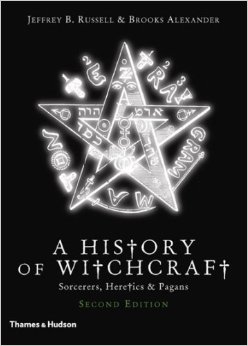
History of WitchcraftIn a rationalistic society, the concept of witches has no place. If only we knew what witches were. Sadly fascinated by the unfortunate—evil would be the more appropriate word—victimization of women in the late Middle Ages as partners of the Devil, I read Jeffrey B. Russell and Brooks Alexander’s time-honored study, A History of Witchcraft: Sorcerers, Heretics and Pagans. With its bold pentagram on the cover, I’d been afraid to take this on the bus, and so it sat in my reading pile until I figured out a way of keeping the cover from view while I perused the contents. The authors wisely spend the introduction with definitions. We define our world through lenses. For the most part, people today use the lens of science, as if that were the only way to view the universe. Still, even with that polished glass in hand, we have a difficult time knowing what “witch” is supposed to designate. Russell and Alexander suggest that it changes over time.

No doubt, witches still exist. The recognition of Wicca as an authentic religion (for tax purposes, the only true measure of a religion’s bona fides) demonstrates that. The problem is that Wicca is not in any sense a direct continuation of the witch hysteria that swept Europe, and parts of New England, centuries ago. As A History of Witchcraft demonstrates, this was a religion practiced by no one, but imagined, and feared, by many. Particularly men. Particularly religious men who had problems with women harboring hidden powers. It was a full-blown and horrible fantasy that led to many thousands dying for a religion that didn’t even exist. Modern witchcraft began in the 1930s and has become a nature religion that sees itself connected to that past, but which really only touches at the very edges.

Witchcraft was a way of looking at the world that saw all things as intimately connected. Russell and Alexander point out the similarity to chaos theory with its butterfly effect. We do see effects at a distance. Science tries to make them less spooky. Those who practiced witchcraft in ancient times, before the Middle Ages could even be dreamed, tried to bring such forces under human control. If some anthropologists are to be believed, some may have succeeded. This idea pulls at our darkest fears. Can we accept a world where we are manipulated by others in unseen ways? It happens every day. Not by spells or incantations, but by forces far more powerful than that. You don’t need to be a witch to see it. You only need to open your eyes.


Atheist Deities

HPL in Pop CultureAn atheist who created gods. That’s the basic skinny on H. P. Lovecraft. Perhaps all gods are thus created. I can’t know; I wasn’t there at the beginning. Among writers who failed to make much of an impression in their lifetimes, Lovecraft staged a remarkable comeback in his afterlife. Don G. Smith’s H. P. Lovecraft in Popular Culture attests to the fact that some academics are beginning to pay attention to one of Providence’s most famous children as his works continue to spin off new forms. With an almost Puritan devotion to rationalism, Lovecraft saw no need nor room for deities in the world. His most ardent fans claim the gods he created are mere aliens, voyagers from beyond.

I wonder why one has to be a theist to create gods. Part of the problem is definitional; what is a god? According to the three fifty-cent words in the explanatory section of my young-person’s Bible, the traits are being omnipotent, omnipresent, and omniscient. Problem is, in the Bible God doesn’t really seem to fit any of these particularly well. The closest match seems to be omnipotent, but omnipotence leads to logical conundrums in reasoning, creating rocks so large you can’t lift them, and all that. Gods are, by just about any ancient standard, defined in relational terms—they are more powerful than us. That’s true of Lovecraft’s gods as well. They are so powerful that merely viewing them could drive you insane, eh, Ezekiel? (Perhaps Ezekiel is a good choice to compare, since his God comes down from the sky as well. Some would claim in a spaceship.)

Lovecraft survived because he understood what scares a person. Power, without feeling, is frightening. I’ve seen it in the eyes of both Christian and Pagan and it always sends me away shuddering. Smith’s book is more concerned with the survival of H. P.’s ideas in the media. It is a pleasant stroll, or an unpleasant stroll, depending on your perspective, through the descendants of Lovecraft’s monsters and gods. There’s no shame in calling them deities. If we are honest with ourselves, we will admit that some kinds of entities are inherently frightening.


East of Nowhere

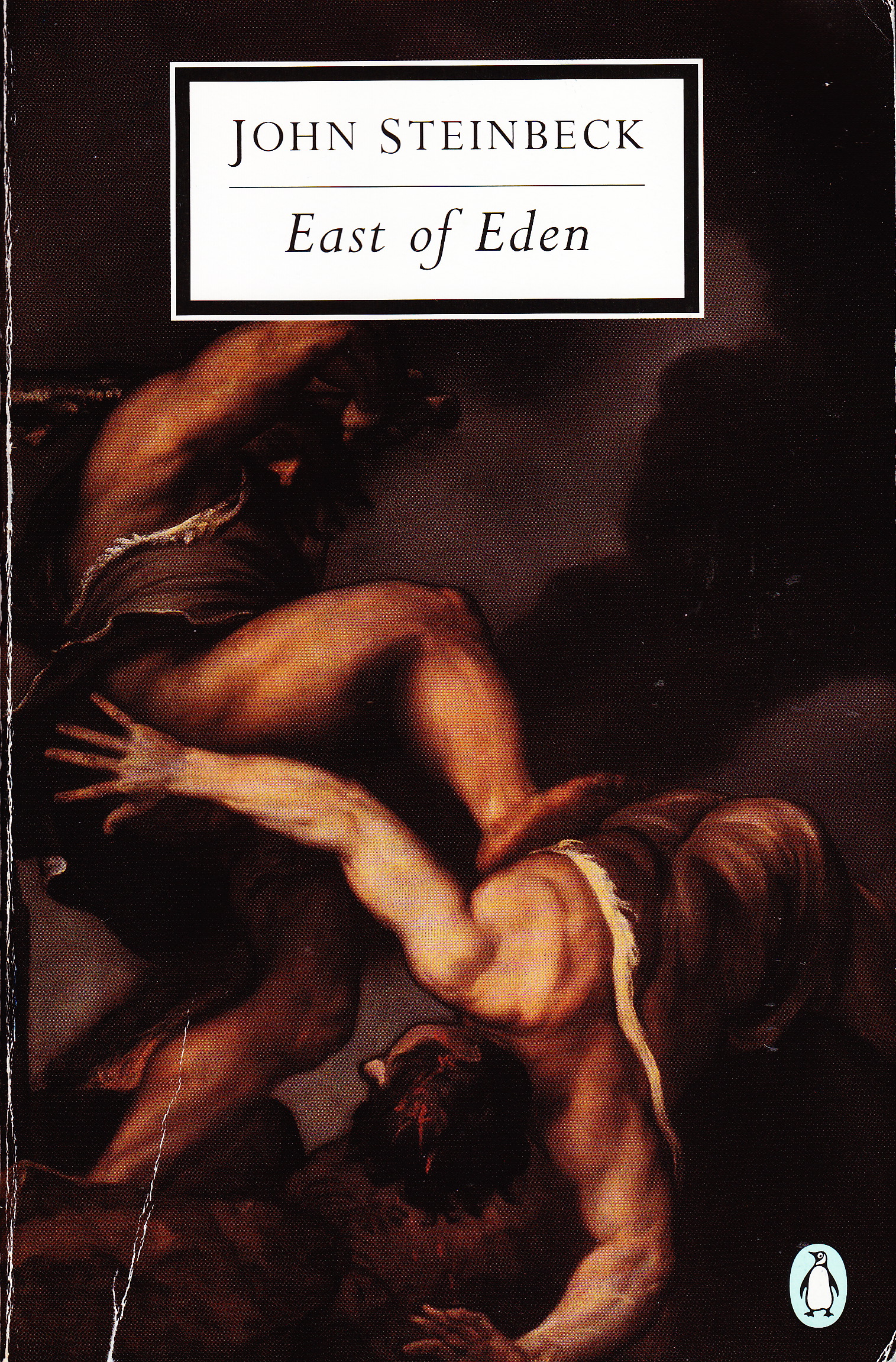
EastOfEdenThere was a time when you could assume a lot about your readers. Although it was only a little more than a half century ago, John Steinbeck could assume a biblically literate readership. East of Eden is so thoroughly pervaded with, one might say interlarded with, the Bible that the key scene could have three men sitting up half the night discussing 16 verses of Genesis, and not one of them being a priest or preacher. The earnestness of their conversation is haunting in its intensity. You know the boys will be named Cain and Abel and that only one of them will come out of this alive. Okay, so they decide on Caleb and Aron, but you get the picture. Of course their father is Adam. Even the title of the book is drawn from the last words of the 16th verse.

Ironically, this biblically literate author is one of the most frequently banned from high schools. Some censors can’t get beyond thinking that being good is the same thing as being a realist. In East of Eden, characters are flawed, and they tramp out the course laid in the Bible with an unwitting solemnity. The entire book hinges on the ability to change one’s fate, and yet, the characters dutifully enact their parts. Those who watch over the morals of youth are bothered by an occasional word with four letters, which, I must say, Steinbeck uses with moderation. They mistake the packaging for the message.

But why should we care? Hasn’t the world moved on inexorably these past sixty years? It is the wisdom of Lee, the Chinese servant, who answers this. “Any writing that has influenced the thinking and the lives of innumerable people is important.” This does not refer to the Bible alone—although at this juncture in the story it does—but it is a message that many who simply dismiss the Bible as just silly myths would do well to remember. Lee is a literate character who turns to Marcus Aurelius for comfort as well as other classics. Sometimes the Bible is regarded as so holy that we forget it too is a classic. Classics become what they are through the impact they have on innumerable people. East of Eden is considered a classic although the author walked this earth just half a century ago. And those who reject Steinbeck for their children would do well to read the Bible they would put back into schools in his place, if only to consider the irony.


The Cow Jumped

While digging through the attic for some reference material for a colleague this weekend, I came upon a box of Bibles. I actually have many Bibles around the place—often within an arm’s reach—despite the ease of internet biblical access. One thing of which I own few are leather-bound Bibles. Trying to be as vegetarian as I can, I have avoided leather in my apparel as much as possible (sometimes the alternatives are even more expensive), and apart from a rare, old book, I prefer cloth to leather, and, generally, paperback to cloth. Still, working in the Bible industry, I know that among the best selling Bibles are the leather variety—those that involve the ultimate sacrifice, although not of the human kind. Leather as a book-binding material is an early development. Leather is durable, and strong, even if a little kinky. Before synthetics, it was used to protect tomes that had been written by hand, representing hundreds, or thousands, of human-hours of work. You wanted it to last. So kill the fatted calf.

I was amazed, therefore, to discover that most leather Bibles are bound with pigskin. That’s right, the material tossed around the grid-iron Sunday afternoons from September through February is kin to the very binding on your standard Bible. Pig leather (never called that) is cheap and durable and is the routine binding for leather Bibles. You want a kosher holy book, you’ll need to buy calf-skin (one thinks of a savior dying at only 33), and it will cost you. Pigs, generally eaten by Christians, are unclean to Jews and Muslims, and books bound in pig cannot be touched by the most religious of the monotheistic sibling faiths. To me, I just see dead animals all around in any case, and wish we might find some way to protect our pages with something else.

Photo credit: Ben Salter, Wikimedia Commons

Photo credit: Ben Salter, Wikimedia Commons

A larger issue (isn’t there always a larger issue?) is a porcine one. Pigs, we are told, are very similar to humans. We use their organs to transplant for our own, and some scientists think they may have played a role in human evolution (although this is not the conventional view). Although I can’t claim Babe led me to vegetarianism, it certainly didn’t hurt. For that matter, neither did Charlotte’s Web. Still, the idea of swearing atop a deceased pig to tell the truth, or watching a televangelist beat a dead pig, definitely has some theological implications. So as I sit here staring into a Hammermill box full of Bibles, I wonder about the hidden costs. Not just to calves and pigs, but to the species who claim that this box of books contains a truth deeper than the many other tomes all around me. And I wonder just how naive I may have been on the finer points of the religion based on these books as well.


Take Twice Daily

Once in a way, when I feel a dusty archaism settling over me, and I realize my eyes don’t focus as well as they once did and that sedentary life in front of a computer screen is slowly killing me, I betake myself to a book sale. In this particular part of the country the big sales are in the spring. I’m told that the book business is dying, but if I can get out of a book sale with no bruises or scary brushes with over-eager buyers, I count myself lucky. I confess, I’m a bookaholic. I spend too many hours a week on public transit, and I consider it a moral obligation to read in public. Even in a city the size of New York, I’ve had people on the bus plop down next to me and say, “You’re that guy who reads.” Public displays of literacy. While some of the books I read are common enough, others are difficult to find in even university libraries. I know that’s an excuse, but my vice is buying books.

I once read a children’s story about a house actually constructed of books. I want that house. Although new books aren’t cheap, there are ways of making them fit into a modest budget. And although you really can’t build with them, they insulate the soul. Reading is more than fundamental—it is the very essence of learning. When I glance at Publisher’s Weekly and read that print sales aren’t what they used to be, I am buoyed by seeing the strong market in young adult literature. We have at least raised a generation that likes a good story. The earliest literature was religious, and many religions developed around written words. It’s a mistake to take religion for gullible belief. If there weren’t power in these words, why would anyone believe?

photo 2

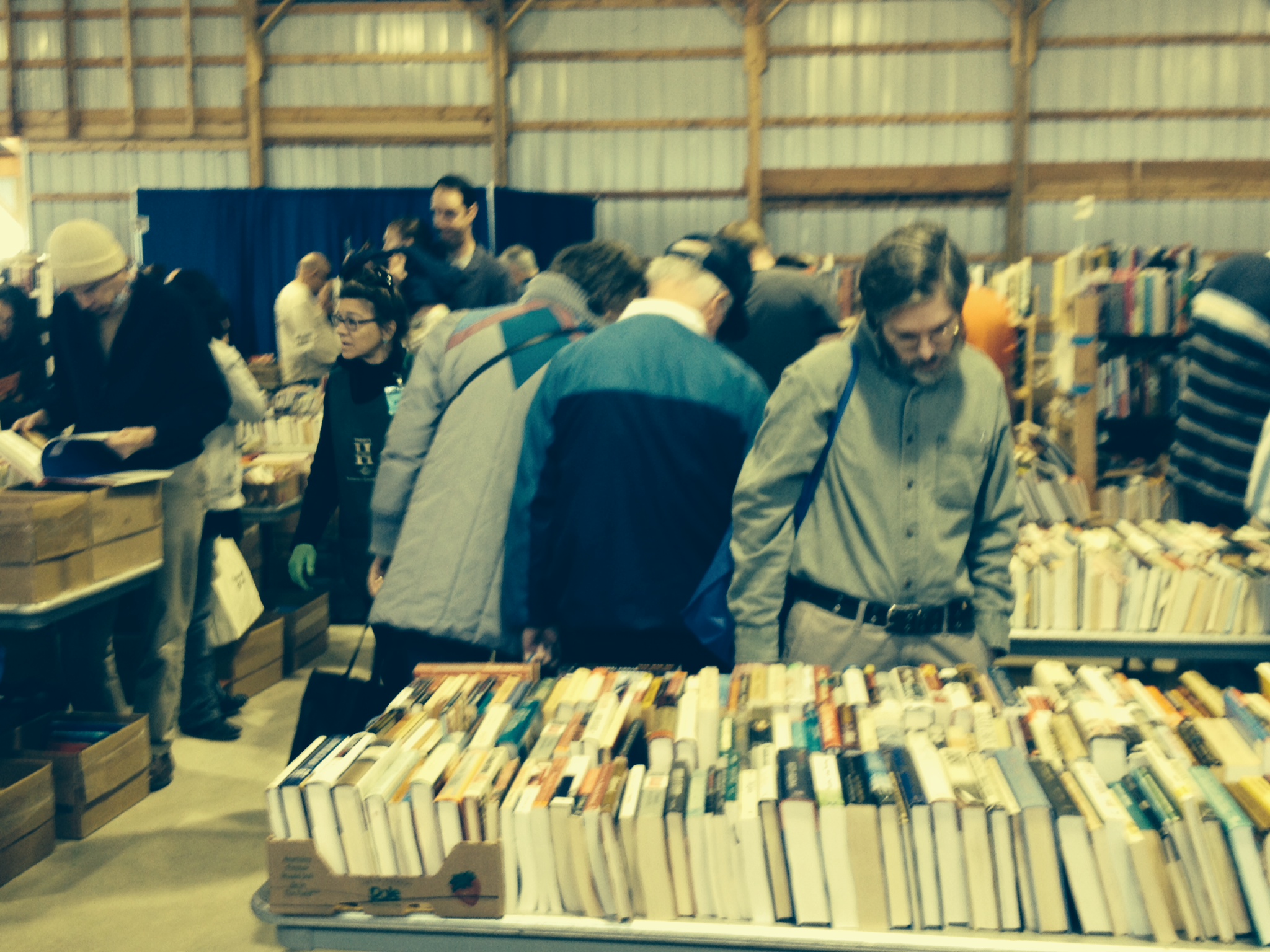
Local book sales can be huge events. Each year Bryn Mawr and Wellesley have a combined book sale in Princeton. If you get there after opening, there will be no place to park. The libraries of Hunterdon County in New Jersey hold a sale that, until this year, required off-site parking and a full three days of hiring a shuttle bus service to get hundreds of buyers back to their cars. And these venues are packed. People do buy books. And many of them are half my age. It is a seed of hope. Some people are surely looking for a quick read, maybe to take on vacation, but you can also see the seasoned, selective literati carefully examining the offers, backs bent, brows furrowed. For twenty dollars you can even get in early, before the goods have been picked over. The man checking me out said the sale gets bigger every year. Looking out over the sea of cars, I feel strangely ebullient, as if I’m atop Nebo looking over the promised land. Although it’s quite a drive, I’m already home.


Lord Have Mercer

Samuel Alfred Browne Mercer was an Assyriologist who failed to establish an academic legacy.  I quickly learned, when consulting his The Tell El-Amarna Tablets that his work was considered inferior, and that it would not have been published, had it not been for his wealthy wife.  Not a very ringing endorsement for a guy who wrote a grammar of Assyrian.  It was a little odd, then, in the library at Nashotah House when Mr. Tolan was clearing out shelf space, that he asked me if I would like a copy of Mercer’s autobiography.  The library had two and, well, needed more shelf space.  I thanked him for the slim volume and took it home to read.  The little book is self-published, and it had been typed with a sans serif font, something rare for a published volume in those days.  It had been annotated by hand, I presume by the author.  And it told a most interesting story.
 
Mercer, I was to learn, had been a student at Nashotah House.  Now, in my days at the seminary the internet had not yet made it that far into the backwoods of Wisconsin.  We eventually did get a dial-up connection and we thought we were so twenty-first century.  In any case, Nashotah House, when it finally established a website, did nothing so vainglorious as to list noted alumni or faculty.  The only two I ever heard praised were Gustaf Unonius and Michael Ramsey, the former for being the first graduate, and the latter as an adjunct instructor (and, incidentally, the Archbishop of Canterbury).  Samuel A. B. Mercer, as he styled himself, would not likely have raised even a unibrow.  He had written a couple of books on a learned topic, but had failed to impress.  Reading his life story was somewhat intimate, however.  He tells of riding on the top of a train in Russia to get from city to city with little money, and of visiting Ethiopia where, it seems, he was convinced the Ark of the Covenant might just be.  Had I not studied Akkadian and read about Assyriology, I might not have ever come across his name.  We were, however, touching at an odd juncture.
 
Not even rating a Wikipedia article, Mercer disappears into obscurity after his informal accounting of his life.  He apparently had a wealthy wife (home life is not the focus of his brief story), and a lasting desire to spend time in Kush.  Although it has been years since I’ve read his story, I recall that he did have a life of adventure and a little intrigue.  Maybe we were spiritual kin after all, for we each tried and failed to make an impression on an ivory tower world where those who tarry too long at Nashotah are deemed among the least important of academics.  After all, even the relatively comprehensive list of institutions of higher education on the University of Texas website (and Texas and Nashotah have a lasting connection) fails to mention the seminary.  Its little library, nevertheless, does hold evidence of a lost life-story or two.

SABMercer


Education for Hire

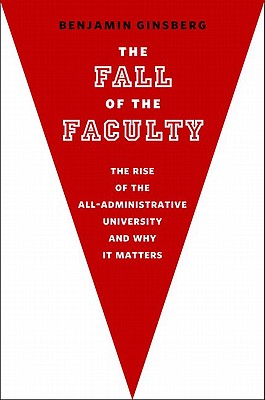
FallOfTheFacultyCapitalism takes no survivors. Ironically, the very concept of capitalism was the result of deep, intellectual reflection. Not that trade hadn’t existed before then, but the arguments that an economy could be based on these principles took an academic setting to become established facts. Universities have been the bastions of new ideas for centuries now. In the United States, however, they are being eroded into corporate playgrounds. Benjamin Ginsberg’s The Fall of the Faculty: The Rise of the All-Administrative University and Why It Matters, will, unfortunately, probably be read only by those who actually care about higher education—faculty and a few curious parents who wonder why they’re paying so much. This is a very important book, and Ginsberg addresses a theme that has been repeatedly expressed on this blog: higher education is in severe crisis because it is treated as a business, not as an educational enterprise. Unlike most situations in life where ambiguity reigns, there’s no question, in this case, whence the blame lies. Ginsberg places the finger firmly where it belongs: professional administrators do not understand, or really even care for, higher education. If you’re curious why you’re paying top dollar for your child’s education, and yet they’re being taught by adjuncts, look no further. Ginsberg has your answers.

Administration, while somewhat necessary, has become an end in itself. A self-perpetuating lackey of capitalistic double-speak. I’ve worked in corporate America enough to know that recognizing a person’s true strengths (what we used to call gifts) is not where managers excel. The bottom line is all they can see. Ginsberg’s is an angry book. And this anger is full of justification. Higher education has become just another garden-variety business, for profit at the heart of it, because faculty have let it slip away. I have been formally associated with eight institutions of higher education, and I’ve seen this pattern operate over and over and over again. Despite the fact that universities thrived in the centuries before professional administrators began treating them as “businesses,” even my alma mater, where Adam Smith himself once taught, could not help hiring a public relations firm to try to bolster the image of an institution which could claim David Hume, Walter Scott, Charles Darwin, and Alexander Graham Bell, among many others.

How the mighty have fallen. Ginsberg does offer some solutions, but is skeptical that many schools can be saved. The fact is, the highest growth rate in the higher education “industry” has been administrators. As faculty jobs are cut and diced ever finer, administrative posts increase at triple-digit rates, and their standards are those of businesses, not educators. Hindsight, of course, comes with greater acuity than foresight, but now that faculty realize they’ve been outmaneuvered, there is little hope of turning the ship in time. Nine-tenths of this iceberg lies hidden beneath the sea, and everyone presumed this ship was unsinkable anyway. Universities were devised by theologians, not entrepreneurs. Like ants crowding around cookie crumbs, business interests have been drawn to the great, untaxable bastions of what used to be called higher education. Factories come in many shapes and sizes. One of the most deceptive is that which bears the once honest nameplate of university.